
Our readers keep the lights on and the weekend projects moving. As an Amazon Associate, I earn from qualifying purchases.
The sneeze-stifling, tissue-destroying grind of allergic rhinitis has a unique signature—stuffed nasal passages that refuse to clear and a relentless itch deep in the throat. Choosing the right medicine means decoding the subtle difference between antihistamines that calm the histamine cascade and glucocorticoid sprays that address inflammation at the tissue level.
I’m Rikta — the co-founder and writer behind FitlyFast. I’ve spent years analyzing the active ingredients, onset times, and real-world symptom relief profiles of OTC allergy medications to separate marketing claims from measurable relief.
This guide walks you through the specific trade-offs between tablet-based antihistamines and intranasal corticosteroids so you can confidently select the allergy medicine for allergic rhinitis that targets your exact symptom pattern.
How To Choose The Best Allergy Medicine For Allergic Rhinitis
Allergic rhinitis is a localized inflammatory response driven by histamine release and subsequent tissue swelling in the nasal passages. The optimal medicine hinges on whether you need to block the histamine trigger at the cellular level or suppress the inflammation that causes congestion.
Antihistamine Tablets vs. Intranasal Corticosteroids
Second-generation antihistamines like loratadine, levocetirizine, and fexofenadine block peripheral H1 receptors and work best for sneezing, itching, and runny nose. They do little for nasal congestion because congestion is mediated by leukotrienes and cytokines, not histamine alone. Intranasal corticosteroids like fluticasone propionate and mometasone furoate directly reduce the inflammatory cascade inside the nasal mucosa, making them the superior choice for congestion—but they require consistent daily use for 3–5 days before peak effect.
Onset Time and Dosing Schedule
Oral antihistamines such as levocetirizine begin working within 45 minutes and offer 24-hour coverage from a single tablet. Intranasal sprays deliver localized relief within a few hours but must be used every day to maintain a therapeutic effect. If you wake up with a stuffed nose and need immediate relief, a rapid-onset antihistamine is practical; if you are planning ahead for allergy season, a corticosteroid spray is the stronger preventive.
Non-Drowsy Formulation and Side Effect Profile
The hallmark of second-generation antihistamines is their inability to cross the blood-brain barrier in significant amounts, which means minimal sedation. Fexofenadine has the lowest reported drowsiness rate among oral options. Intranasal sprays are inherently non-drowsy because the drug remains locally active. For children aged 2 and up, cromolyn sodium sprays offer a non-steroidal, non-sedating option that prevents mast cell degranulation, though it must be started before symptom onset.
Quick Comparison
On smaller screens, swipe sideways to see the full table.
| Model | Category | Best For | Key Spec | Amazon |
|---|---|---|---|---|
| Flonase Sensimist | Intranasal Corticosteroid | Nasal congestion & eye symptoms | Fluticasone furoate, 27.5 mcg/spray | Amazon |
| Xyzal 24 Hour | Antihistamine Tablet | Sneezing, runny nose, itchy eyes | Levocetirizine 5 mg per tab | Amazon |
| Kirkland Aller-Fex 180 mg | Antihistamine Tablet | Non-drowsy daytime relief | Fexofenadine HCl 180 mg per tab | Amazon |
| Claritin 24 Hour | Antihistamine Tablet | Everyday OTC allergy maintenance | Loratadine 10 mg per tab | Amazon |
| Kirkland Aller-Flo 5-Pack | Intranasal Corticosteroid | Congestion from seasonal allergies | Fluticasone propionate 50 mcg/spray | Amazon |
| Amazon Basic Care Nasal Spray | Intranasal Corticosteroid | Budget-friendly congestion relief | Mometasone furoate 50 mcg/spray | Amazon |
| NasalCrom 3-Pack | Mast Cell Stabilizer | Preventive, steroid-free relief | Cromolyn sodium 5.2 mg/spray | Amazon |
In‑Depth Reviews
1. Flonase Sensimist Allergy Relief Nasal Spray
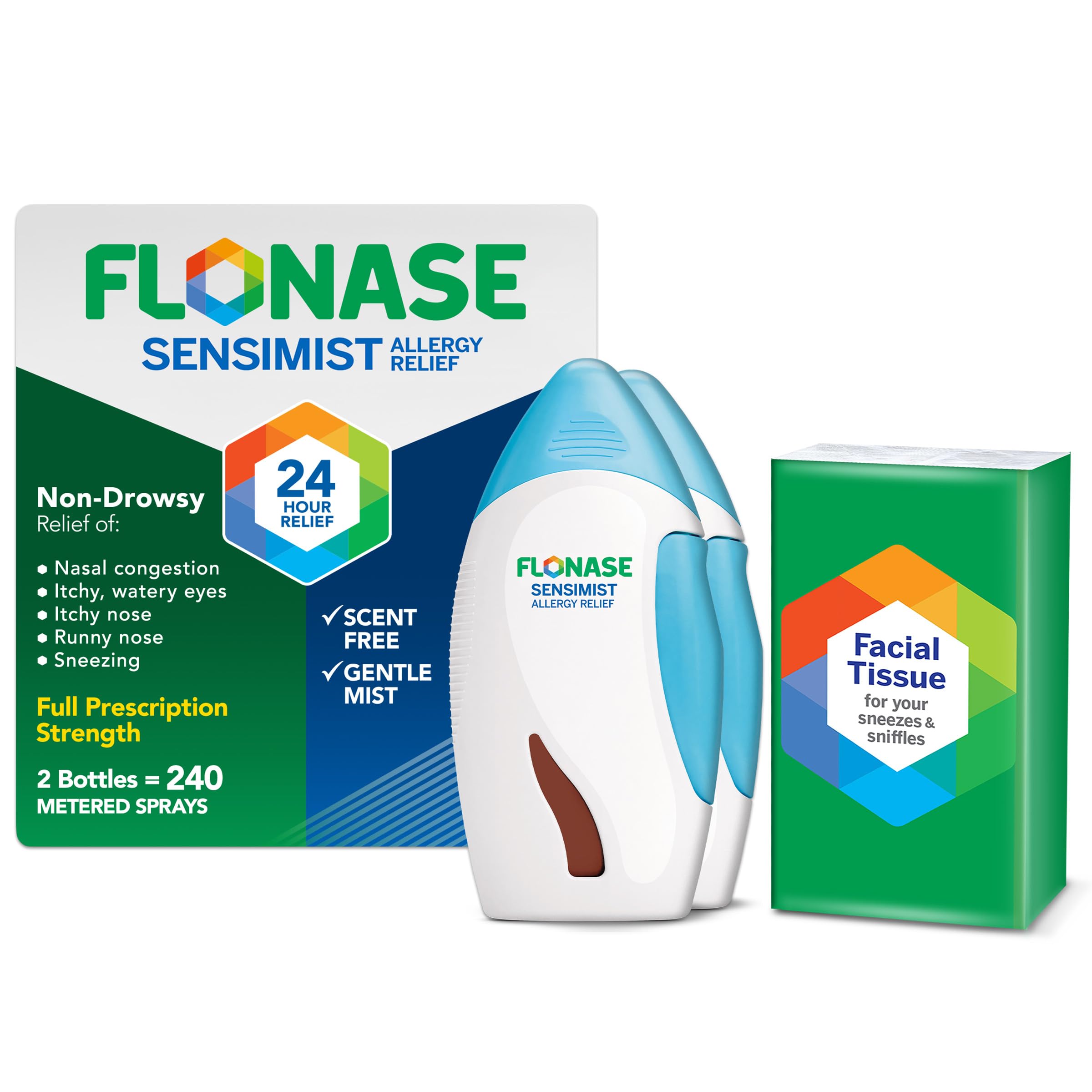
Flonase Sensimist delivers fluticasone furoate in an ultra-fine mist that users barely feel, which removes the sensory resistance many people have toward nasal sprays. The corticosteroid action directly reduces sinus inflammation, making it the strongest option among these seven for treating nasal congestion—a symptom oral antihistamines cannot fix.
This two-bottle pack provides 240 total sprays, enough for roughly eight weeks of once-daily dosing. Unlike oral tablets, Sensimist also targets itchy, watery eyes, bridging a coverage gap that standard intranasal sprays leave open. Users report noticeable relief within the first day and maximum benefit after three to four days of consistent use.
The scent-free formula eliminates the chemical taste some sprays leave in the back of the throat. For anyone whose primary allergic rhinitis complaint is a blocked nose accompanied by ocular symptoms, this is the most complete single-product solution.
Why it’s great
- Fine mist design is gentle and scent-free
- Treats nasal congestion plus itchy, watery eyes
- Non-drowsy and steroid-based for inflammation
Good to know
- Requires 3-4 days of daily use for peak effect
- Higher upfront cost than single-antihistamine tablets
2. Xyzal 24 Hour Allergy Relief

Xyzal uses levocetirizine, the active enantiomer of cetirizine, which means it provides the same antihistamine potency at a lower dose—5 mg versus 10 mg—with a slightly improved side-effect profile. Clinical feedback consistently cites rapid onset, around 45 minutes, making it the fastest-acting oral tablet in this lineup.
Users report it works well for sneezing, runny nose, and itchy eyes while causing minimal brain fog compared to first-generation antihistamines. Many take it at night so the drug reaches peak concentration during sleep, leaving them clear-headed the next morning.
The 80-count bottle covers over two months of daily use. For those who have built tolerance to older antihistamines like loratadine, the distinct molecular structure of levocetirizine restores efficacy without needing a prescription.
Why it’s great
- Fast-acting relief in about 45 minutes
- Lower dose with high potency against histamine
- Good option for those with tolerance to other antihistamines
Good to know
- May cause mild drowsiness in some individuals
- Does not treat nasal congestion directly
3. Kirkland Signature Aller-Fex 180 mg
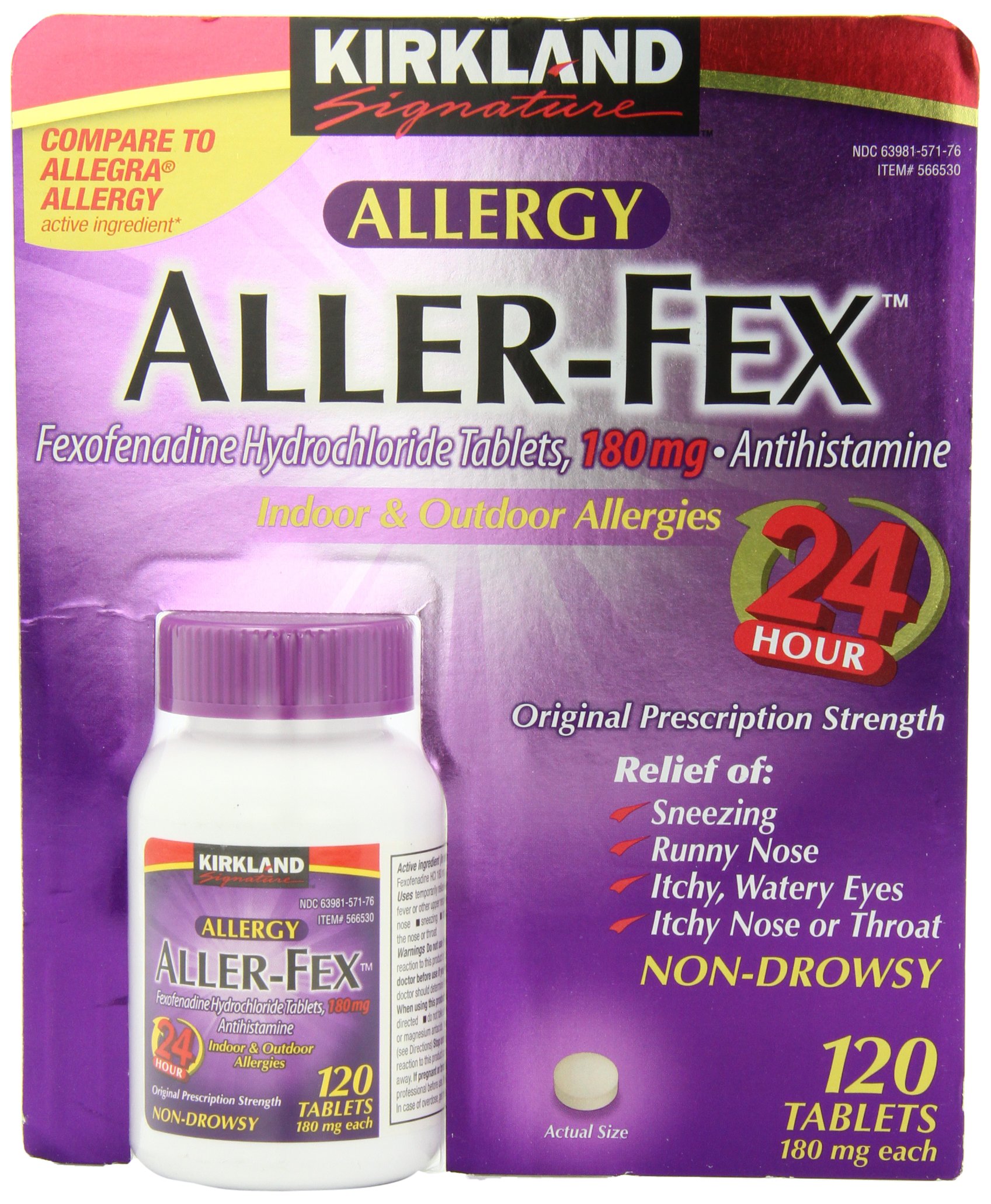
Aller-Fex is the generic equivalent of Allegra, containing 180 mg of fexofenadine hydrochloride—the antihistamine with the lowest reported drowsiness rate in its class. This makes it the default choice for people who need to remain alert during the workday without the sedating whispers that even levocetirizine can sometimes trigger.
Fexofenadine is a pure peripheral H1 antagonist that does not cross the blood-brain barrier appreciably. Users note it provides effective relief for about 12 hours, which means some people require a morning and evening dose for full 24-hour coverage, though the label instructs once-daily use.
The 120-tablet bottle offers a long supply at a cost-effective per-tablet rate. One consistent caveat from reviews: avoid consuming fexofenadine with fruit juices like grapefruit, orange, or apple, as they reduce absorption by roughly 30 percent.
Why it’s great
- Lowest sedation profile among oral antihistamines
- Large 120-count supply
- Effective for those who built resistance to loratadine or cetirizine
Good to know
- Duration may be closer to 12 hours for some users
- Absorption reduced by fruit juice consumption
4. Claritin 24 Hour Allergy Medicine

Claritin remains the benchmark OTC antihistamine for allergic rhinitis because it has the longest track record and the widest pediatric approval—ages 6 and up. The 10 mg loratadine tablet is small and easy to swallow, which matters for adults who dislike large pills and for children transitioning from liquid formulations.
Loratadine relieves sneezing, runny nose, and itchy eyes triggered by over 200 allergens, but it does not reduce nasal congestion. Many users find it works best as a daily preventive during spring and fall, taking one tablet each morning to stay ahead of symptom onset.
The 70-count bottle supports more than two months of once-daily dosing. A consistent theme in reviews is that Claritin is reliable for mild to moderate allergic rhinitis but may feel underpowered for severe congestion, at which point a corticosteroid spray becomes the logical upgrade.
Why it’s great
- Long-established efficacy and safety profile
- Suitable for children ages 6 and older
- Tiny tablet size makes it easy to swallow
Good to know
- Does not address nasal congestion
- May be less effective for severe symptom presentations
5. Kirkland Signature Aller-Flo 5-Pack

The Kirkland Aller-Flo 5-pack bundles five 120-spray bottles of fluticasone propionate, providing an extremely long-term supply for anyone who relies on intranasal corticosteroids as their primary treatment for allergic rhinitis. Each bottle lasts roughly 30 days with the standard two-sprays-per-nostril daily dose, so this pack covers five months of consistent use.
Fluticasone propionate is the active ingredient in brand-name Flonase, and it works by suppressing the inflammatory cascade inside the nasal mucosa. Users who switch from oral antihistamines to this spray consistently report that their congestion clears more thoroughly after the initial loading period of a few days.
The unbranded nature of Kirkland keeps the per-spray cost low. For households where multiple family members suffer from seasonal congestion, this bulk format removes the need for frequent reordering.
Why it’s great
- Five-month supply from a single purchase
- Low per-dose cost compared to brand-name Flonase
- Effectively treats nasal congestion
Good to know
- Takes several days of regular use before peak effect
- Not recommended for children under 12
6. Amazon Basic Care Allergy Nasal Spray
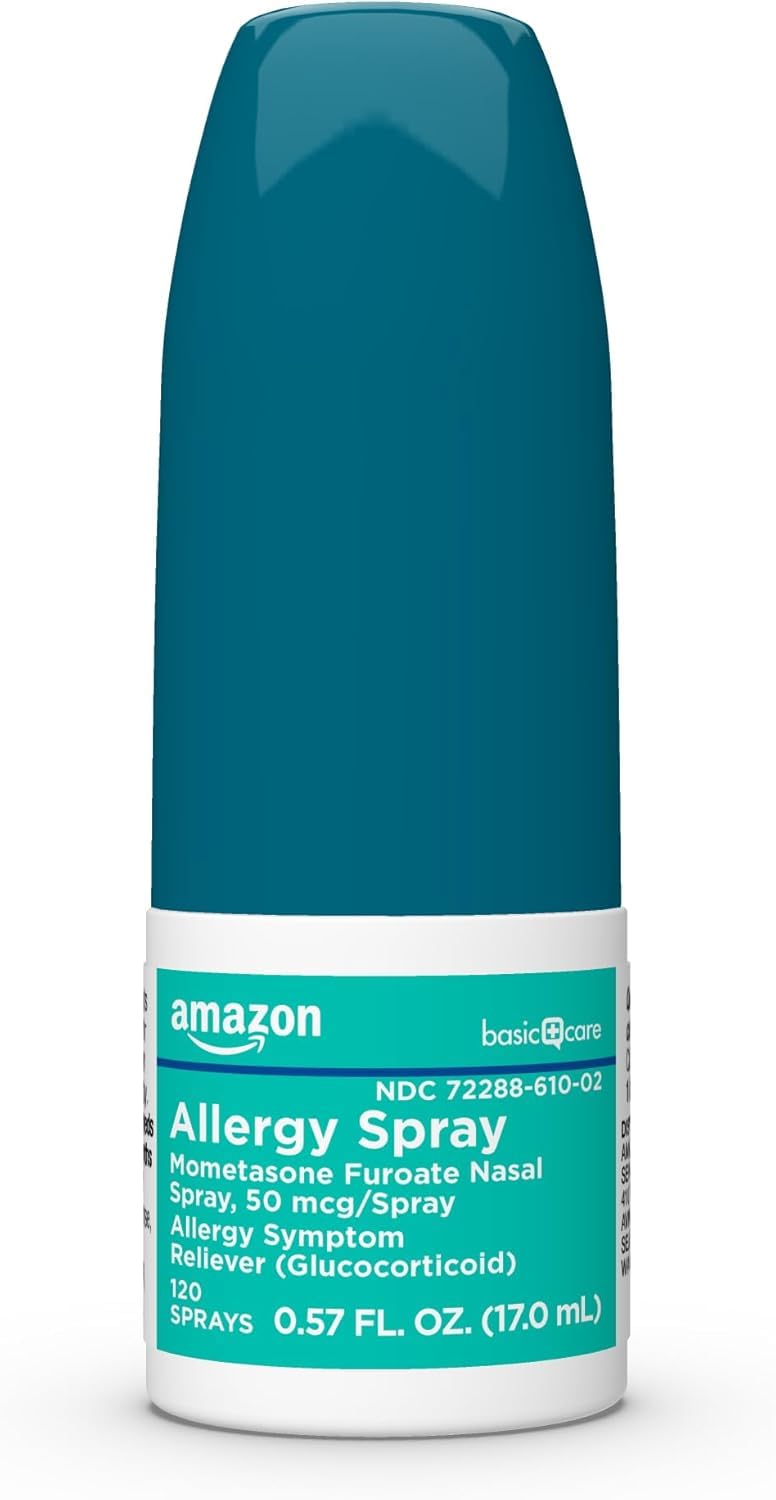
This spray contains mometasone furoate, the same glucocorticoid used in Nasonex, presented at a generic price point. It provides 24-hour relief from nasal congestion, runny nose, sneezing, and nasal itching with a once-daily dosing schedule that aligns with standard corticosteroid spray protocols.
The 120-spray bottle lasts about four weeks for adults (two sprays per nostril daily) or even longer for children aged 2–11 who need only one spray per nostril. The prescription-strength label reflects the 50 mcg per spray concentration, which is identical to the branded original.
Crucially, this spray is scent-free, which eliminates the olfactory fatigue some users experience with fragranced nasal sprays. For price-sensitive individuals who need a reliable corticosteroid alternative, this is the most accessible entry point.
Why it’s great
- Generic mometasone at a lower price point
- Scent-free formula avoids fragrance issues
- Approved for children as young as 2 years old
Good to know
- Newer generic, so fewer long-term user reports than fluticasone options
- Requires daily consistency for best results
7. NasalCrom Nasal Spray 3-Pack

NasalCrom operates on a completely different mechanism from the rest of this list—it is a mast cell stabilizer that prevents the release of histamine and other inflammatory mediators before they cause symptoms. This preventive approach requires consistent use starting one to two weeks before allergy season begins for full efficacy.
The active ingredient, cromolyn sodium, is not a steroid and has no systemic side effects, making it safe for children as young as 2 years old and for long-term daily use. Users who experience nosebleeds from corticosteroid sprays often switch to NasalCrom because it lacks the mucosal drying effect typical of steroids.
The three-pack provides 600 sprays total, and each bottle is small enough for travel. The trade-off is that cromolyn is less potent once the allergic cascade has already begun; it works best as a proactive shield rather than a reactive treatment.
Why it’s great
- Non-steroidal and entirely non-drowsy
- Excellent safety profile for children and long-term use
- Prevents symptoms before they start when used pre-season
Good to know
- Less effective if sinuses are already inflamed
- Requires advance planning for seasonal use
FAQ
Can I take an oral antihistamine and a nasal spray together for allergic rhinitis?
Why does my allergy medicine stop working after a few months of daily use?
Is it safe to use a corticosteroid nasal spray daily for more than six months?
Final Thoughts: The Verdict
For most users, the allergy medicine for allergic rhinitis winner is the Flonase Sensimist because it addresses the two most bothersome symptoms—nasal congestion and itchy, watery eyes—through a gentle, scent-free mist that users stick with consistently. If you want rapid tablet-based relief for sneezing and runny nose, grab the Xyzal 24 Hour. And for a steroid-free preventive that you can start before allergy season hits, nothing beats the NasalCrom 3-Pack.