
Our readers keep the lights on and the weekend projects moving. As an Amazon Associate, I earn from qualifying purchases.
When seasonal allergies trigger asthma flare-ups, every breath becomes a negotiation. You need a solution that targets both the histamine cascade and the airway inflammation without introducing drowsiness or additional respiratory strain.
I’m Rikta — the co-founder and writer behind FitlyFast. I’ve spent hundreds of hours analyzing the molecular mechanisms, clinical data, and real-user outcomes behind oral antihistamines, nasal corticosteroids, mast-cell stabilizers, and DAO enzyme supplements to understand which formulations genuinely support asthmatic airways.
After comparing seven distinct allergy relief approaches against asthma-specific criteria—non-drowsy profiles, steroid-safety margins, onset timing, and symptom overlap—I’ve assembled the actionable guide to allergy medicine for asthma that helps you choose the safest, most effective option for your respiratory health.
How To Choose The Best Allergy Medicine For Asthma
Selecting an allergy medicine when you have asthma isn’t simply about stopping a sneeze. It demands an understanding of how each active ingredient interacts with bronchial sensitivity. The goal is to calm the upper-airway allergy response without drying secretions or sedating the respiratory drive—two outcomes that can worsen asthma control. Prioritize non-drowsy formulations, evaluate the delivery mechanism (oral vs. intranasal vs. preventative), and confirm the active ingredient has a documented safety profile in asthmatic populations.
Intranasal Corticosteroids vs. Oral Antihistamines
Nasal sprays like fluticasone and triamcinolone deliver medication directly to the nasal mucosa, reducing local inflammation that often triggers lower-airway reactivity. Oral antihistamines such as fexofenadine and levocetirizine block systemic histamine receptors but can produce drying effects on mucus membranes—a concern for asthmatics who already struggle with thickened secretions. For moderate-to-severe allergic rhinitis with asthma comorbidity, a corticosteroid nasal spray usually provides superior symptom control at the source with minimal systemic absorption.
Mast-Cell Stabilizers and Preventive Approaches
Cromolyn sodium (the active ingredient in NasalCrom) prevents mast cells from releasing histamine before symptoms start. It is non-sedating, steroid-free, and safe for children as young as two years old. The trade-off is that it must be started one to two weeks before allergen exposure and used consistently four times daily. For asthmatics who experience predictable seasonal flares, a mast-cell stabilizer can act as a first-line defense without the risks associated with steroid overuse or antihistamine side effects.
DAO Enzyme Supplements and Histamine Intolerance
Some asthmatics suffer from histamine intolerance—a condition where the body cannot break down dietary histamine due to insufficient diamine oxidase (DAO) enzyme production. Symptoms mimic allergic rhinitis and can trigger asthma exacerbations. DAO supplements like VitaMonk HistaResist provide exogenous enzymes to degrade histamine in the gut before it enters the bloodstream. While not a replacement for standard allergy medications, these can be a meaningful adjunct for individuals whose asthma worsens after high-histamine foods such as aged cheese, wine, or fermented products.
Quick Comparison
On smaller screens, swipe sideways to see the full table.
| Model | Category | Best For | Key Spec | Amazon |
|---|---|---|---|---|
| Flonase Sensimist | Nasal Corticosteroid | Daily asthma-safe congestion relief | Fluticasone 50mcg/spray, scent-free fine mist | Amazon |
| Xyzal 24 Hour | Oral Antihistamine | Systemic relief with minimal drying | Levocetirizine 5mg, 90 tablets | Amazon |
| Amazon Basic Care Allergy Relief | Oral Antihistamine | Cool-mint coated, budget-friendly option | Fexofenadine 180mg, 70 count pack | Amazon |
| Nasacort 24HR | Nasal Corticosteroid | Scent-free, non-drowsy nasal relief | Triamcinolone 55mcg/spray, 240 sprays | Amazon |
| HealthA2Z Allergy Relief | Nasal Corticosteroid | Dye-free, cost-effective 2-pack | Fluticasone 50mcg/spray, 240 sprays total | Amazon |
| NasalCrom Nasal Spray | Mast-Cell Stabilizer | Steroid-free preventive care | Cromolyn Sodium 40mg/mL, 200 sprays | Amazon |
| VitaMonk Histamine Blocker | DAO Enzyme Supplement | Histamine intolerance support with meals | DAO + Bromelain + Vitamin C, 60 capsules | Amazon |
In‑Depth Reviews
1. Flonase Sensimist Allergy Relief Nasal Spray
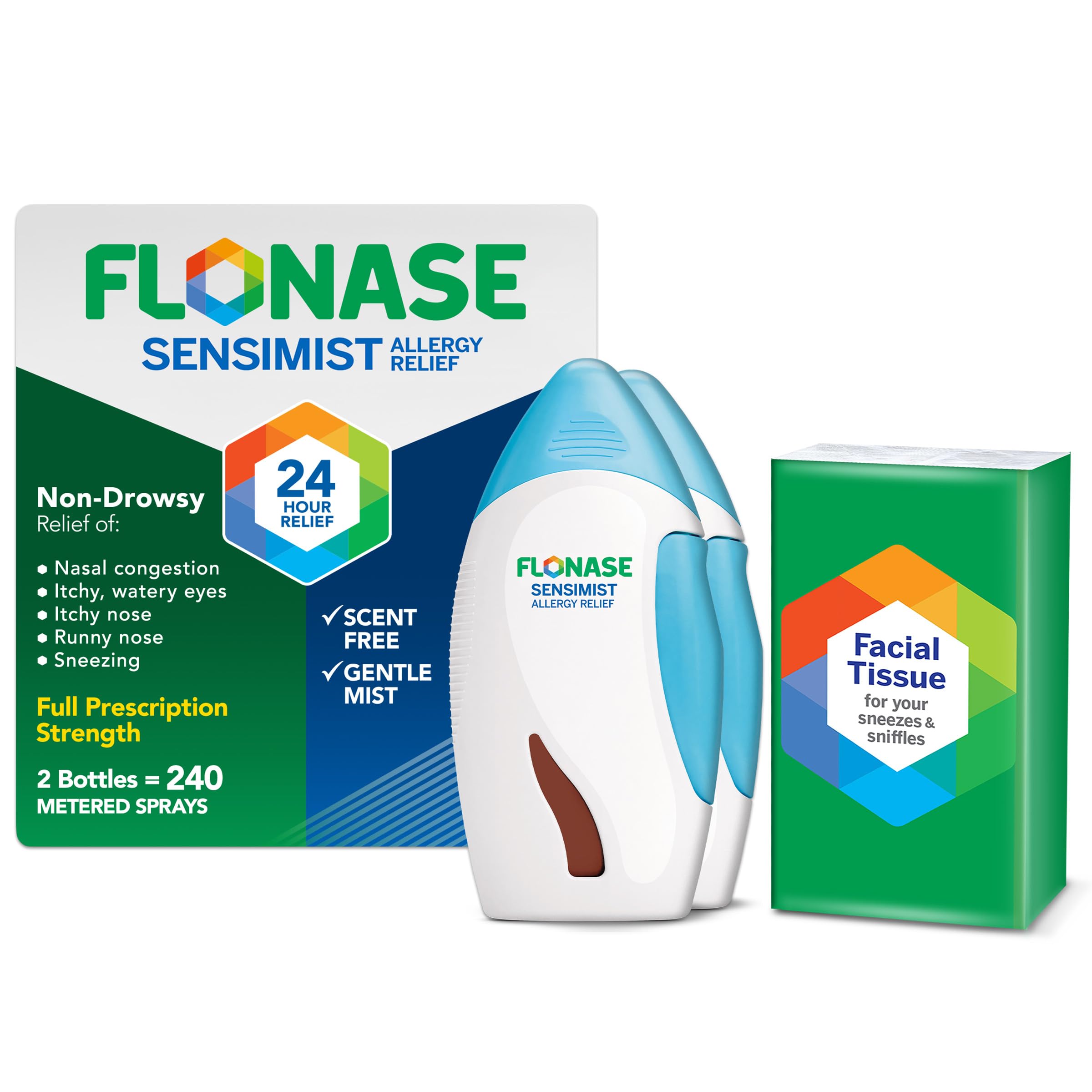
Flonase Sensimist delivers fluticasone propionate—a corticosteroid that directly targets nasal inflammation without the systemic load that can concern asthma patients. The Sensimist formulation produces a barely-there fine mist that does not trigger the throat-drip sensation that sometimes aggravates cough-variant asthma. Most users feel relief within eight hours of the first dose, with peak benefit settling in after three to four days of consistent daily use, making it ideal for seasonal transitions when pollen counts surge and airways tighten in tandem.
Unlike single-ingredient oral antihistamines that ignore nasal congestion, Flonase Sensimist addresses six allergy symptoms simultaneously including the congestion that often precedes asthma exacerbations. Each bottle provides 120 sprays—roughly one month of once-daily treatment—and the two-pack covers nearly two full allergy seasons. The scent-free formulation means no chemical odor lingers in the nasal cavity, which is a meaningful consideration for asthmatics whose sense of clean air is already compromised.
Users consistently report that Flonase Sensimist eliminates the post-nasal drip that plagued them with the original Flonase formulation. The bottle is FSA/HSA eligible, which helps offset the mid-range price point. For asthmatics who need reliable, non-drowsy, congestion-focused relief that starts working on day one, this nasal spray represents the most targeted and asthma-conscious choice available.
Why it’s great
- Fine mist is gentle on sensitive nasal passages and doesn’t trigger cough reflex
- Treats congestion that oral antihistamines alone cannot resolve
- Two-month supply at one-morning-per-day dosing
Good to know
- Requires three to four days of consistent use for maximum effect
- Higher upfront cost than store-brand fluticasone options
2. Xyzal 24 Hour Allergy Relief Medicine
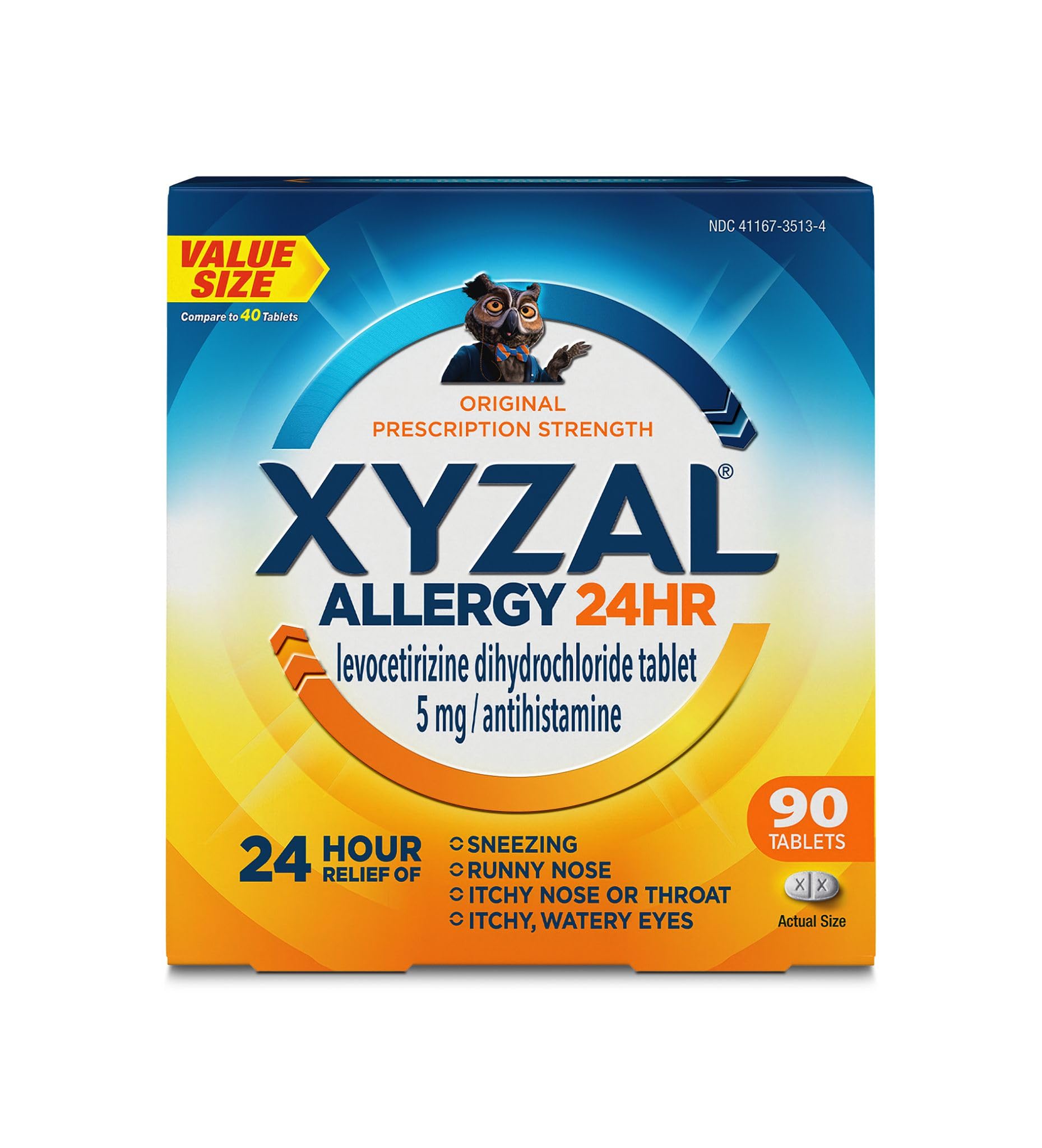
Xyzal uses levocetirizine—the purified R-enantiomer of cetirizine (Zyrtec)—which delivers antihistamine potency with roughly half the sedating potential of its parent compound. For asthmatics, this matters because drowsiness can mask the subjective experience of respiratory effort. Taking Xyzal at night provides 24-hour coverage so that morning symptoms—often the worst period for asthma due to nocturnal allergen accumulation—are suppressed before you open your eyes.
Clinical data shows levocetirizine reaches peak plasma concentration within 45 minutes, making it useful for breakthrough symptoms that flare during high-pollen afternoons. Users consistently report that Xyzal outperforms both Claritin and Allegra for controlling sneezing, itchy throat, and watery eyes—the triad of symptoms that often precede an asthma attack. The small, tasteless tablet is easy to swallow, and patient feedback spanning seven years of use shows no tolerance buildup.
Asthma specialists sometimes recommend rotating antihistamines to prevent receptor desensitization, and Xyzal’s distinct molecular profile makes it an ideal candidate for rotation schedules. The 90-count bottle provides three months of daily coverage at a mid-range price. If your asthma worsens alongside intense allergen exposure and you need a systemic antihistamine with minimal drying of respiratory mucus, Xyzal is the non-drowsy benchmark.
Why it’s great
- Works in 45 minutes and stays effective all 24 hours
- Less drowsy than Zyrtec while providing the same spectrum of symptom control
- No tolerance buildup reported over years of continuous use
Good to know
- Some users still experience mild drowsiness at the 5mg dose
- Does not treat nasal congestion—consider pairing with a nasal spray
3. Amazon Basic Care Allergy Relief, 24 Hour
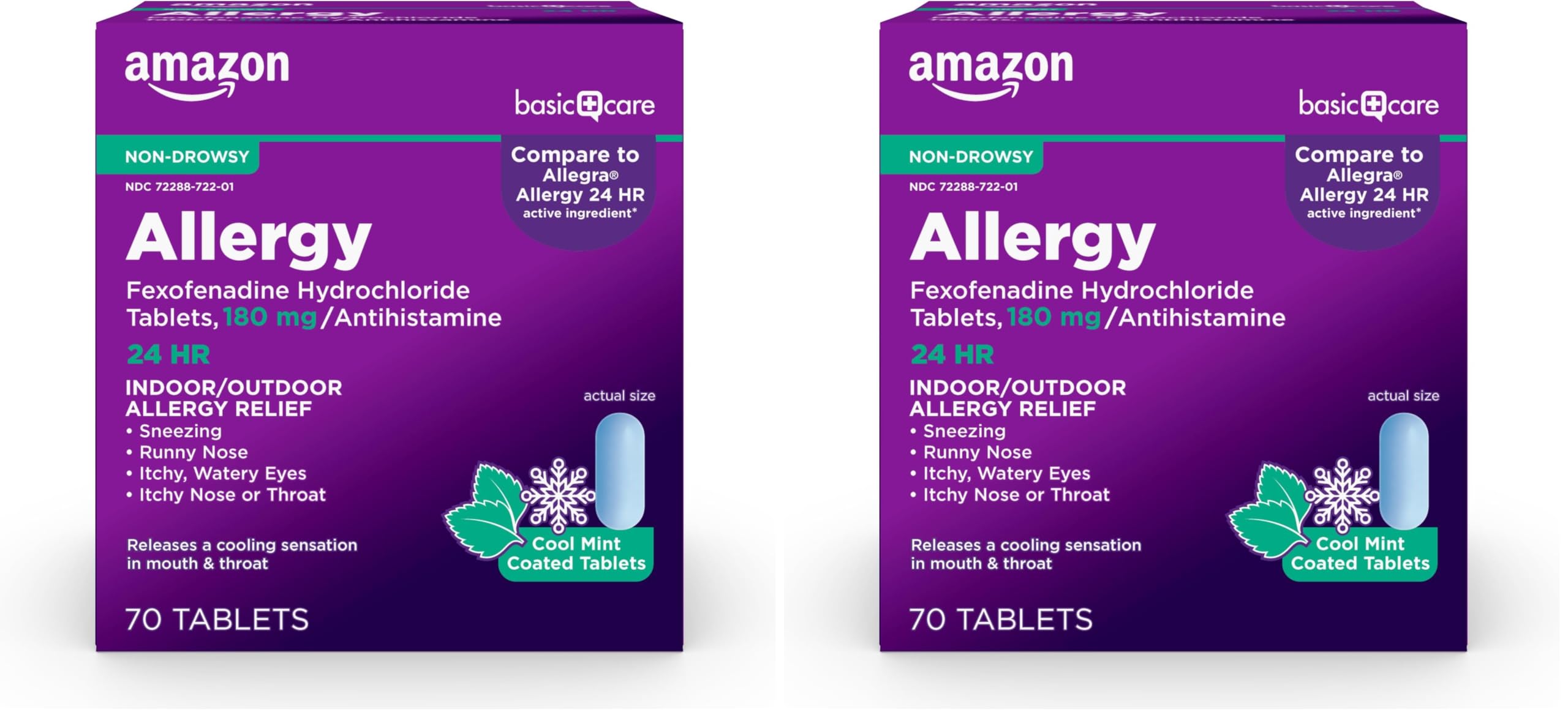
Amazon Basic Care packages fexofenadine hydrochloride 180mg—the active ingredient in Allegra Allergy 24HR—into a cool mint coated tablet that addresses a real compliance barrier: swallowing oral antihistamines when your throat is already irritated from post-nasal drip or asthma coughing. Fexofenadine is widely regarded as the least sedating oral antihistamine among the second-generation group, making it the preferred choice for asthmatics who need to maintain full alertness while managing allergic rhinitis.
The 70-count pack provides two and a half months of once-daily dosing at a price point significantly below national brand equivalents. Users report that the mint coating provides a pleasant cooling sensation during swallowing without leaving a lingering toothpaste flavor that interferes with meals or beverages. Multiple verified buyers specifically note that one tablet per day controls both allergy symptoms and persistent skin itching—a common comorbidity in individuals with allergic asthma.
A small percentage of users report that the mint coating can upset sensitive stomachs, so asthmatics with concurrent GERD—a common pairing—should test with food on the first dose. Otherwise, this is the most cost-effective route to high-quality fexofenadine. For asthma patients whose primary need is itch, sneeze, and watery-eye control without sedation risk, this is the value champion.
Why it’s great
- Least sedating oral antihistamine available over the counter
- Cool mint coating improves swallowability for irritated throats
- Gluten-free and effective for both allergy symptoms and chronic itching
Good to know
- Mint coating can cause mild stomach upset in sensitive individuals
- Does not address nasal congestion—requires separate treatment
4. Nasacort 24HR Allergy Nasal Spray for Adults
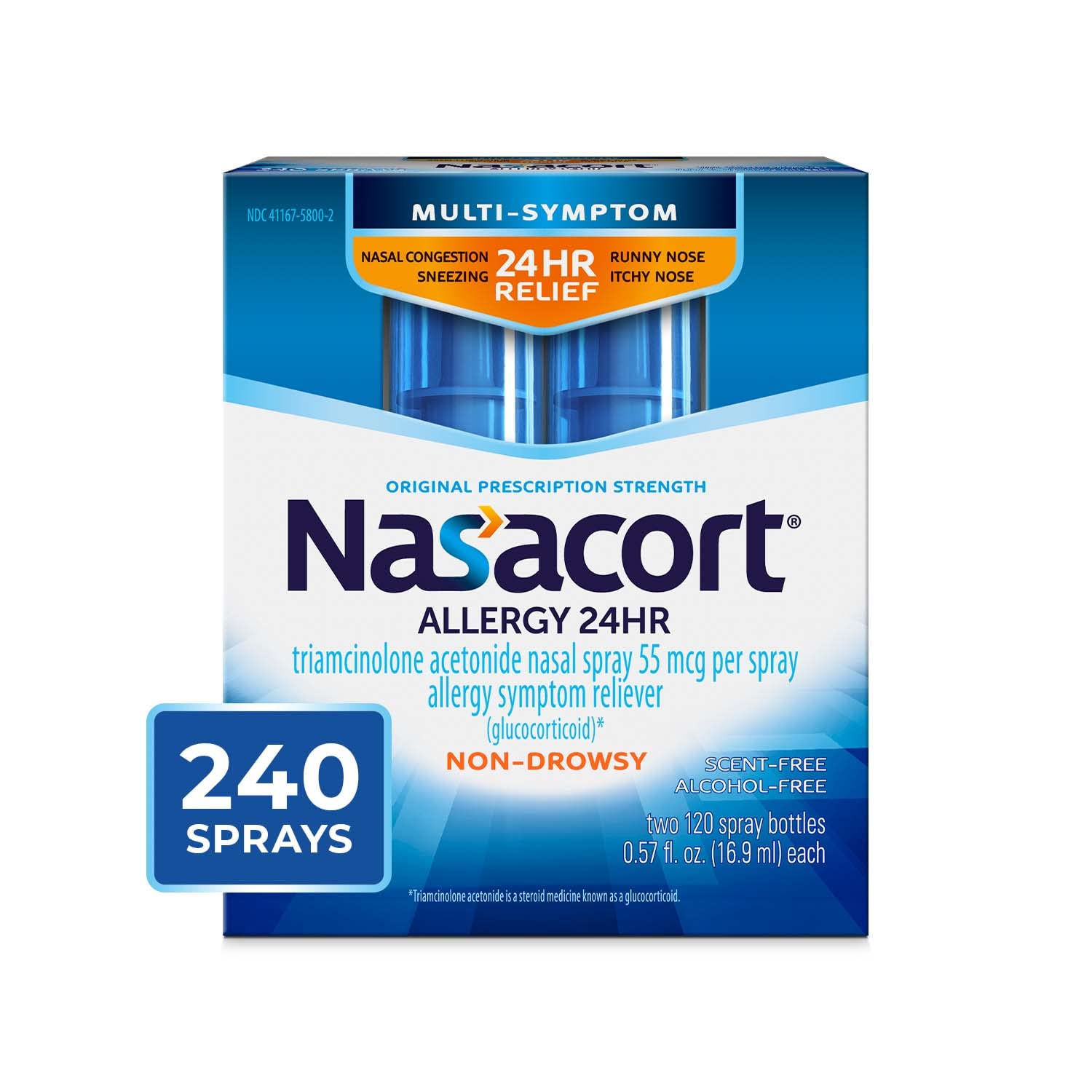
Nasacort uses triamcinolone acetonide, a corticosteroid that has been on the market for decades with a well-established safety record in asthmatic populations—many asthma patients were originally prescribed it in its inhaled form. The 55mcg-per-spray intranasal formulation delivers 24-hour relief from congestion, sneezing, and runny nose with no scent and no harsh taste. For asthmatics who wake up congested and cannot clear their airways enough to use a rescue inhaler effectively, Nasacort can break the cycle of morning mucus buildup.
The two-pack provides 240 sprays total, and the bottle is compact enough to keep on a nightstand for pre-bed dosing. Users who experienced nosebleeds with other nasal sprays report that Nasacort’s gentler delivery mechanism causes significantly less irritation to delicate nasal membranes—a meaningful consideration when chronic asthma has already sensitized the upper airway. The spray is alcohol-free, which eliminates the burning sensation common with older formula antihistamine sprays.
Regular users note that Nasacort begins noticeably reducing sneezing episodes within one to two days of first use, with full congestion control by day three. The fine mist disperses evenly across the nasal mucosa without dripping down the throat. For asthmatics who need a predictable, non-drowsy nasal corticosteroid that does not interfere with nighttime respiratory function, Nasacort provides reliable daily relief.
Why it’s great
- Doctor-recommended type of medicine specifically for nasal allergy congestion
- Alcohol-free formula minimizes stinging and irritation
- Two-bottle pack covers two months of consistent daily use
Good to know
- Works best when used daily for full effect; not ideal for as-needed rescue
- Some users require two sprays per nostril on high-pollen days
5. HealthA2Z Allergy Relief, Fluticasone Propionate 50mcg
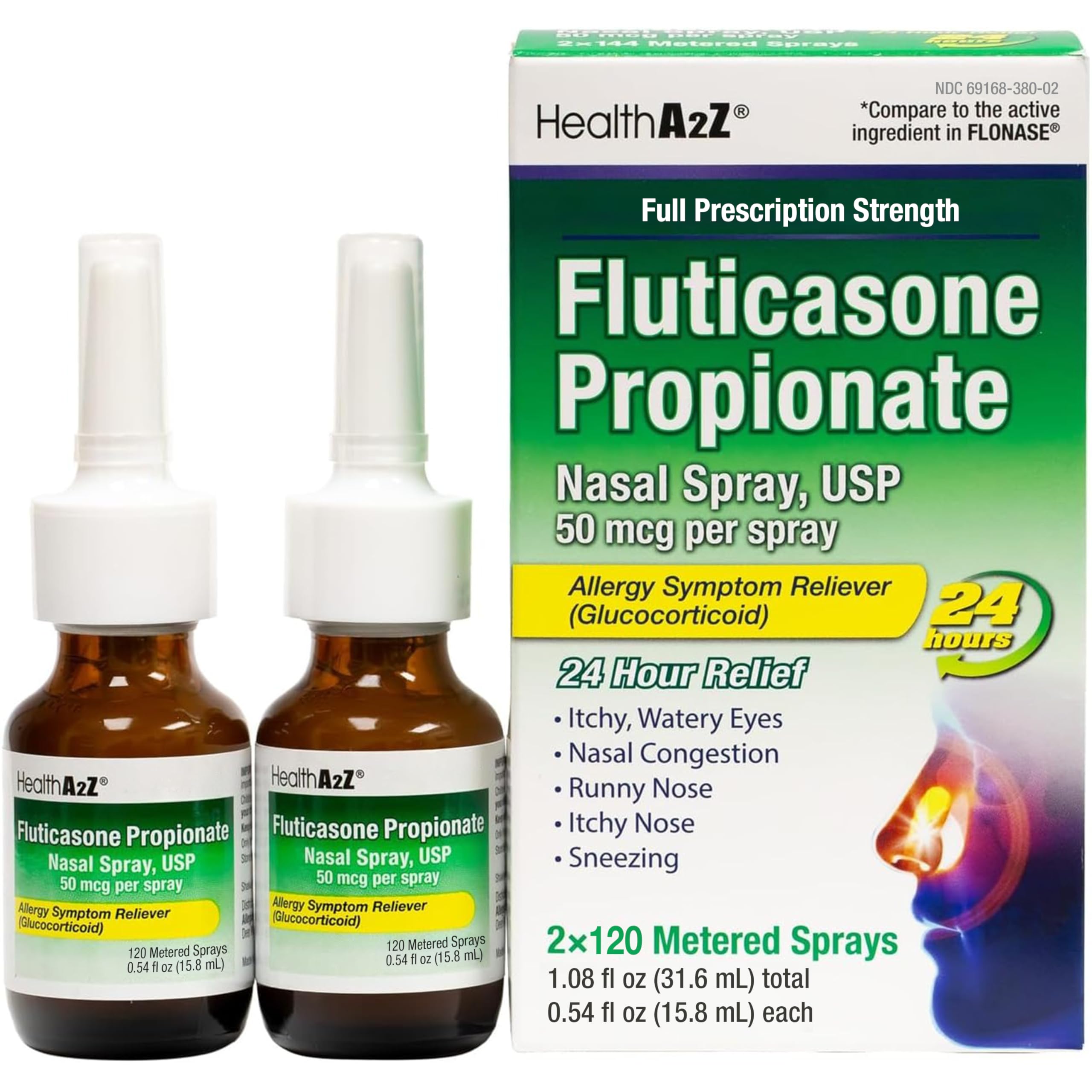
HealthA2Z delivers fluticasone propionate—the same active ingredient found in Flonase—at a per-spray cost significantly below the brand-name version. Each 50mcg dose targets nasal congestion, runny nose, sneezing, and itchy watery eyes, which covers the main upper-airway symptoms that can trigger asthma flare-ups. The dye-free formulation removes unnecessary color additives, a meaningful detail for asthmatics who also manage chemical sensitivities or fragrance intolerances.
The two-pack provides 240 total sprays, making it one of the most generous values in the nasal corticosteroid category. Users switching from prescription fluticasone report no difference in symptom control, confirming that the generic formulation achieves bioequivalence. Several verified buyers specifically mention that this product reduced their seasonal allergy symptoms by 75% within the first week, allowing them to reduce their rescue inhaler usage during pollen season.
A small number of users note that this generic version may require an extra spray per nostril on peak symptom days compared to brand-name counterparts. The bottle also requires initial priming with five test sprays before first use, which is standard for all fluticasone devices. For asthmatics who want the proven effectiveness of fluticasone without paying for brand packaging or artificial dyes, this is the most financially sensible option.
Why it’s great
- Bioequivalent to brand-name fluticasone at a lower cost per spray
- Dye-free formulation suitable for chemically sensitive individuals
- Proven to reduce rescue inhaler dependency during allergy season
Good to know
- May need an extra spray per nostril on severe symptom days
- Requires several days of consistent use for maximum benefit
6. NasalCrom Nasal Spray Allergy Symptom Controller

NasalCrom is fundamentally different from every other product on this list. Its active ingredient—cromolyn sodium—is a mast-cell stabilizer that prevents histamine release rather than blocking histamine after it is already circulating. For asthmatics who know their trigger seasons in advance, starting NasalCrom one to two weeks before pollen emergence creates a preemptive barrier against the entire allergic cascade. This approach is particularly valuable for exercise-induced asthma triggered by cold, allergen-laden air.
The steroid-free mechanism makes NasalCrom appropriate for children as young as two years old and safe to combine with any oral antihistamine or corticosteroid nasal spray. Users who cannot tolerate steroids due to long-term side effect concerns—including adrenal suppression risks that disproportionately worry asthma patients—find NasalCrom to be a viable first-line option. It produces no drowsiness, jitters, or habit formation, and it is equally safe for daily year-round use or seasonal rescue.
The primary limitation is dosing frequency: NasalCrom requires four applications per day for best results, which can be challenging for patients with busy schedules. However, the three-pack provides 200 sprays at a premium price point. Users report that it eliminates the chronic runny nose that forces public sniffing and that it remains effective even when sinuses are already inflamed, unlike some preventive medications that lose efficacy once symptoms are established.
Why it’s great
- Prevents allergic reaction before it starts—ideal for predictable seasonal triggers
- Completely steroid-free with no systemic side effects
- Safe for children ages two and up and can be used with other medications
Good to know
- Requires four-times-daily dosing, which is more frequent than other options
- Must be started one to two weeks before allergen exposure for optimal effect
7. VitaMonk Histamine Blocker for Histamine Intolerance

VitaMonk HistaResist is not an allergy medication in the conventional sense—it is a diamine oxidase (DAO) enzyme supplement designed for individuals whose bodies cannot efficiently break down dietary histamine. For a subset of asthmatics, histamine intolerance masquerades as allergic rhinitis: symptoms include nasal congestion, sneezing, and headache after consuming high-histamine foods like aged cheese, wine, fermented vegetables, or cured meats. This product provides the missing enzyme to metabolize histamine in the gut before it enters circulation and reaches the airway.
The formula combines DAO with bromelain and vitamin C—ingredients that support a balanced inflammatory response and histamine degradation. Users with diagnosed mast cell activation syndrome (MCAS) or confirmed histamine intolerance report that HistaResist reduces food-triggered respiratory symptoms and allows them to reintroduce previously avoided foods. The 60-capsule supply provides roughly one month of support when taken before meals containing high-histamine ingredients.
One important caveat: the formulation contains ascorbic acid, which can cause reactions in individuals sensitive to that specific form of vitamin C. A small number of users with MCAS found that the ascorbic acid triggered their symptoms before the DAO could compensate. For asthmatics exploring histamine intolerance as a root cause, starting with a single capsule alongside a low-histamine meal is the safest approach. For the right candidate, this supplement can reduce the overall allergic burden on the respiratory system.
Why it’s great
- Addresses histamine intolerance directly with exogenous DAO enzyme
- May allow reintroduction of high-histamine foods without respiratory symptoms
- Non-sedating and safe to combine with standard allergy medications
Good to know
- Contains ascorbic acid which can trigger MCAS symptoms in sensitive individuals
- Not a replacement for conventional allergy medicine in moderate-to-severe cases
FAQ
Can I take oral antihistamines with my asthma inhaler?
Will nasal spray steroids affect my adrenal function?
Why do some allergy medicines make my asthma worse?
How long should I use a nasal steroid spray before expecting results?
Can a DAO enzyme supplement replace my regular allergy medicine?
Final Thoughts: The Verdict
For most users, the allergy medicine for asthma winner is the Flonase Sensimist because its fine-mist fluticasone delivery treats congestion at the source without systemic side effects and provides 24-hour coverage that directly supports asthma control. If you want a systemic antihistamine with minimal drying and fast onset, grab the Xyzal 24 Hour. And for steroid-free preventive care that stops allergic reactions before they start, nothing beats the NasalCrom Nasal Spray.