
Our readers keep the lights on and the weekend projects moving. As an Amazon Associate, I earn from qualifying purchases.
That tight, scratchy sensation in your throat from seasonal allergies doesn’t just annoy you—it robs your voice of its clarity, range, and endurance. When histamines cause post-nasal drip and tissue inflammation, your vocal cords become the collateral damage, leading to that unmistakable hoarseness that makes every conversation feel like a strain. Finding the right formula isn’t about grabbing the first antihistamine off the shelf; it’s about selecting a targeted solution that reduces the underlying allergic response while directly soothing the delicate vocal tissues.
I’m Rikta — the co-founder and writer behind FitlyFast. My deep market research into OTC allergy and voice-care remedies has focused on analyzing bioavailability, ingredient synergy, and delivery methods to determine which products genuinely restore vocal function during allergy season.
This guide cuts through the noise to help you find the most effective allergy medicine for hoarse voice, from systemic antihistamines to specialized sprays and lozenges designed for vocal relief.
How To Choose The Best Allergy Medicine For Hoarse Voice
When allergies attack your voice, you’re fighting two fronts: the histamine-driven inflammation in your sinuses and the local irritation on your vocal cords. Choosing a solution means understanding whether you need systemic symptom control, direct topical soothing, or a strategic combination of both. Here’s what to consider before picking your product.
Systemic Antihistamines vs. Topical Soothers
A systemic antihistamine like loratadine works at the source, blocking the histamine response that causes post-nasal drip and tissue swelling. This is essential for preventing the cascade that leads to a hoarse voice. However, it does little to immediately lubricate or numb already-irritated vocal folds. Topical treatments—sprays and lozenges—deliver ingredients like menthol, honey, or benzocaine directly to the throat, offering rapid but temporary relief. The best strategy often involves using a daily non-drowsy antihistamine as a base layer with a targeted topical product for flare-ups.
Check for Numbing vs. Coating Action
If you need immediate relief to speak or perform, look for active numbing agents like benzocaine (found in products like Cepacol) which provide a temporary anesthetic effect. On the other hand, demulcents like honey, propolis, and herbal extracts (found in sprays like Singer’s Saving Grace or Vocal Eze lozenges) work by forming a protective, lubricating film over the mucous membranes. Numbing is best for acute pain; coating is better for maintaining vocal functionality and preventing further drying.
Consideration of Alcohol and Additives
Many standard throat sprays contain alcohol, which can exacerbate tissue dehydration and worsen the vocal cord surface tension over time. For a hoarse voice, especially if you use your voice professionally, a non-alcoholic formula is typically a better choice. Also, watch for artificial colors, preservatives, and excessive sugar, which can stimulate mucus production and create more phlegm. Clean, plant-based formulas are generally preferable for supporting delicate vocal mechanics.
Quick Comparison
On smaller screens, swipe sideways to see the full table.
| Model | Category | Best For | Key Spec | Amazon |
|---|---|---|---|---|
| Claritin 24 Hour | Systemic Antihistamine | Daily allergy prevention | 10 mg Loratadine per tablet | Amazon |
| Vocalzone Throat | Pastille | Singers & speakers | 24 pastilles per pack | Amazon |
| Jakeman’s Honey & Lemon | Menthol Lozenge | Itchy allergy throat | Dual-action menthol | Amazon |
| Herbs Etc. Singer’s Saving Grace | Herbal Spray | Dry, irritated cords | Non-alcoholic formula | Amazon |
| Cepacol Extra Strength | Numbing Lozenge | Sore throat pain | Benzocaine & Dextromethorphan | Amazon |
| Clear Voice Oral Spray | Vocal Spray | On-the-go hydration | 1 oz spray | Amazon |
| Vocal Eze Manuka Honey | Natural Lozenge | Clean ingredient relief | Manuka Honey UMF 10+ | Amazon |
In‑Depth Reviews
1. Claritin 24 Hour Allergy Medicine

Claritin stands out as the foundational choice for managing hoarseness because it addresses the root cause—systemic histamine release. With 10 mg of loratadine, this non-drowsy antihistamine prevents the post-nasal drip and sinus inflammation that directly irritate the vocal cords. It’s a preventative powerhouse, stopping the allergic cascade before it forces your voice to strain.
The tablet formula ensures consistent dosing and 24-hour coverage, making it ideal for those with persistent seasonal allergies. Users consistently report that daily use dramatically reduces the scratchy sensation in the throat, allowing them to speak without constant clearing. It’s the silent workhorse that keeps your throat environment stable.
While it excels at prevention, it’s not designed for immediate symptom relief. If you already feel the raspiness, a topical agent works faster. But for long-term control and maintaining vocal clarity throughout allergy season, this is the tier-one starter. A doctor often recommends Claritin for patients who suffer from allergy-induced laryngitis.
Why it’s great
- Relieves the underlying allergic inflammation causing hoarseness
- Non-drowsy formula supports a normal daily routine
- One tablet provides full day relief
Good to know
- Does not provide instant or topical soothing for already irritated cords
- May not be enough for severe acute flare-ups
2. Vocalzone Throat Pastilles (Pack of 2)

Vocalzone is a legendary staple in the professional vocal community, and for good reason. These pastilles are engineered specifically to combat vocal fatigue, dryness, and hoarseness from overuse or allergic reaction. Their classic formula targets the mucous membranes of the throat, promoting clearer projection and reducing the need to strain. Many worship leaders and performers swear by them as a pre-show essential.
The unique taste is often described as an acquired one, but users universally agree that the functional relief justifies it. Reviews highlight that these pastilles restore range and reduce cracking within hours, a critical difference from candy-like lozenges that merely mask symptoms. They actively work to normalize vocal cord tissue function.
They are most effective when used as a proactive treatment during allergy season rather than waiting for a full hoarseness event. Unlike simple menthol drops, Vocalzone’s formulation offers a deeper-level recovery for the voice. If your hoarse voice is a recurring professional issue, this is the targeted fix.
Why it’s great
- Specifically formulated for professional voice users
- Restores vocal range and reduces fatigue
- Provides long-lasting relief from dryness
Good to know
- The taste is strong and may need getting used to
- Less effective for general sore throat pain
3. Jakeman’s Honey & Lemon Menthol Lozenges

Jakeman’s distinguishes itself with a distinctive texture—they melt smoothly rather than cracking into shards, providing a longer-lasting, more consistent coating of the throat. The honey and lemon base is naturally antibacterial, while the menthol acts as both a cough suppressant and a mild oral anesthetic. This dual action makes them exceptional for the simultaneous itchiness and rawness of an allergy-affected throat.
These lozenges are a favorite among those who experience seasonal allergies, with users noting they effectively ease the scratchy sensation without the harsh chemical burn of some synthetic drops. The blend is free from artificial colors, which is a strong point for those sensitive to additives. They feel more like a comforting remedy than a medicinal treatment.
Because the menthol is active at a moderate level, they are less likely to cause the sensory overload some people experience from stronger numbing agents. They are an excellent mid-layer choice for someone who needs sustained comfort throughout a workday exposed to allergens. The 4-pack format provides substantial backup for a full season.
Why it’s great
- Smooth melting texture for prolonged soothing
- Natural honey and lemon base with added menthol
- No artificial colors or harsh chemicals
Good to know
- Not for severe throat pain or heavy numbing needs
- The package may contain fewer units than expected
4. Herbs Etc. Singer’s Saving Grace Spray
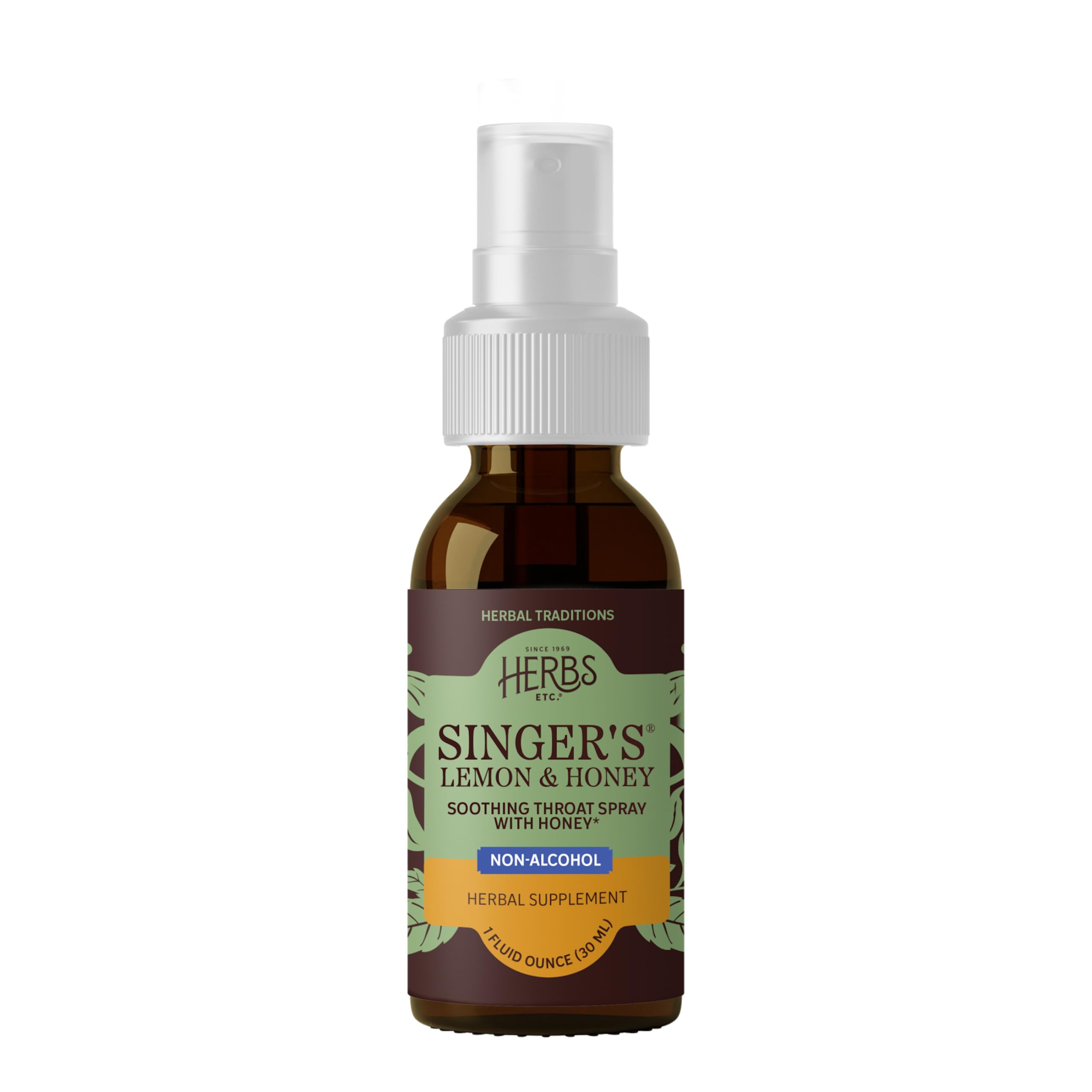
This spray is a non-alcoholic, plant-based marvel that actively coats the throat tissue rather than just wetting it. Users report that it forms a hydrating film that relieves the discomfort of a dry, rough voice within minutes. The honey and lemon flavor is gentle, and the formula excels at rehabilitating vocal cords after long rehearsals, calls, or cheering events.
For allergy sufferers, it is particularly useful because it does not rely on drugs to work. The herbal extracts provide a physical barrier that protects the mucous membranes from the drying effect of mouth breathing common during allergy congestion. It is also gluten-free, making it safe for those with dietary restrictions.
It is best used as a frequent maintenance spray rather than a heavy-dose rescue. Many users find they need only a couple of spritzes to reset their voice texture. The 2-pack provides one for the desk and one for the car, ensuring you can address hoarseness wherever you are. It’s an excellent partner to a daily oral antihistamine.
Why it’s great
- Non-alcoholic formula prevents further drying
- Creates a protective coating on irritated tissue
- Plant-based and gluten-free ingredients
Good to know
- Some may find the herbal taste unpleasant
- May not provide enough relief for severe allergic reactions
5. Cepacol Extra Strength Sore Throat & Cough Lozenges

When the hoarseness comes with genuine pain from inflammation, Cepacol Extra Strength delivers the fastest relief. The combination of benzocaine (local anesthetic) and dextromethorphan (cough suppressant) is designed to aggressively manage the symptoms of a sore, over-irritated throat. For a short-term, high-impact solution, it is incredibly effective.
The mixed berry flavor is significantly more pleasant than many medicinal-tasting drops, making the numbing experience less of an ordeal. It is the #1 Pharmacist recommended brand, which speaks to its reliability. For acute episodes where your voice hurts to use, this is the most direct chemical shield available.
It’s important to note that the numbing effect is strong, which can impact the gag reflex. While it quiets the cough reflex effectively, users with certain health conditions should check ingredients. This is not a long-term daily solution but an essential rescue tool for when allergy symptoms spike and your voice needs immediate anesthetic protection.
Why it’s great
- Provides fast, maximum numbing strength
- Combines throat pain relief with cough suppression
- Pleasant mixed berry flavor
Good to know
- Ingredients may conflict with some health conditions
- Not meant for regular daily voice maintenance
6. Clear Voice Oral Throat Spray

Designed by a musician for vocalists, Clear Voice offers a simple, natural mist that tackles dry mouth and scratchy throat at its root. The fresh mint flavor provides a cooling sensation that signals immediate hydration. It is small enough to fit in a pocket or gig bag, making it an excellent option for on-the-go re-lubrication.
Its primary strength lies in its ability to moisturize the vocal folds without any drugs. For someone whose hoarseness stems from a dry, ambient environment or from the dehydrating effects of antihistamines, this spray is a gentle, effective countermeasure. Users with chronic dry mouth find it invaluable for maintaining vocal cord pliability.
It won’t calm a severe allergy flare-up on its own, but as a supportive layer, it is hard to beat. It is the most discreet method to keep your throat moist during meetings or long conversations. If additive-free hydration is your primary need, this is your best bet.
Why it’s great
- Pure hydration with no medications
- Pocket-sized for immediate use
- Pleasant cooling mint sensation
Good to know
- Does not treat underlying allergy inflammation
- Relief is temporary and requires reapplication
7. Vocal Eze Manuka Honey Cough Drops

Vocal Eze harnesses the potent antimicrobial and anti-inflammatory power of Manuka honey, graded at UMF 10+, to soothe a hoarse throat. The ingredient list is refreshingly clean—organic cane syrup, brown rice syrup, bee propolis, and natural lemon flavor. It’s a lozenge for the purist who wants functional relief without a single artificial ingredient.
These drops are particularly effective for the kind of scratchy, raspy throat that results from allergic irritation. The bee propolis and Manuka honey provide a thick, coating sensation that stays with you, reducing the urge to constantly clear the throat. Users with voice strain from GI issues have also found them uniquely helpful.
The primary consideration is the cost per lozenge, which is higher than standard brands due to the premium Manuka honey. However, for those who need a clean, effective solution that tastes like a high-quality confection, it’s a worthy investment. It is a nature-first tool for protecting vocal function during allergy season.
Why it’s great
- High-grade Manuka honey provides strong soothing properties
- Completely natural and organic ingredients
- Strong coating action for persistent dryness
Good to know
- Higher price point per serving
- Distinct licorice-like taste may not appeal to everyone
FAQ
Can a standard antihistamine alone fix my hoarse voice?
Are menthol lozenges good for a dry, hoarse throat from allergies?
Should I use a throat spray or lozenges for my allergy hoarseness?
Why does my throat feel worse after taking some allergy medications?
Final Thoughts: The Verdict
For most users, the best allergy medicine for hoarse voice winner is the Claritin 24 Hour because it tackles the root systemic inflammation that causes the voice to suffer, providing a stable foundation for vocal health. If you want a professional-grade topical rescue for a strained or cracking voice, grab the Vocalzone Throat Pastilles. And for those seeking a gentle, alcohol-free daily hydration spray to keep cords pliable during allergy season, nothing beats the Herbs Etc. Singer’s Saving Grace.