
Our readers keep the lights on and the weekend projects moving. As an Amazon Associate, I earn from qualifying purchases.
Waking up at 3 a.m. with a throat so scratchy you can’t swallow and a nose that’s completely sealed shut is a specific kind of misery. The right antihistamine for nighttime use doesn’t just stop the sneezing—it works with your body’s sleep architecture, not against it, so you actually stay unconscious through the histamine storm.
I’m Rikta — the co-founder and writer behind FitlyFast. I’ve spent hundreds of hours analyzing over-the-counter antihistamine formulations, comparing their molecular half-lives, active-ingredient onset curves, and the real-world trade-offs between first-generation sedation and next-day cognitive fog.
After cross-referencing clinical data on doxylamine succinate, diphenhydramine HCl, and the critical difference between allergy suppression and sleep induction, I built this guide around the single best allergy medicine to take at night for uninterrupted rest and clear mornings.
How To Choose The Best Allergy Medicine To Take At Night
Selecting a nighttime allergy medication is not about picking the strongest sedative—it’s about matching the right active ingredient, dose, and formulation to your specific symptom profile and sleep schedule. The wrong choice leaves you either awake from histamine or asleep but wrecked the next morning.
Active Ingredient: Diphenhydramine vs. Doxylamine
Both are first-generation antihistamines that cross the blood-brain barrier and cause sedation, but their potency differs. Diphenhydramine (Benadryl) at 25 mg provides reliable allergy symptom suppression with moderate drowsiness. Doxylamine succinate (Unisom SleepTabs) at 25 mg is roughly twice as sedating per milligram—so it’s a stronger sleep inducer but also carries a higher risk of next-day grogginess. For allergy sufferers, diphenhydramine is usually the better fit because it targets histamine receptors effectively without the hammer of a dedicated sleep aid.
Dosage Form: Tablet vs. Softgel vs. Capsule
Softgels deliver the active ingredient in liquid form, which generally speeds up absorption—useful when allergies strike fast at bedtime. Standard tablets are easier to split for a half-dose adjustment, which is valuable for managing tolerance over time. Capsules fall in the middle. If you have trouble swallowing pills, the smaller tablets (like Benadryl Ultratablets) or the Unisom SleepGels are easier to get down.
Tolerance and Long-Term Use
First-generation antihistamines build tolerance quickly—after about 4 to 7 days of nightly use, the sedative effect diminishes, and you may need a higher dose for the same sleep quality. This is why these medications are labeled “non-habit forming” in terms of addiction, but your body can still develop a functional tolerance. Rotating between diphenhydramine and doxylamine, or taking weekend breaks, helps keep the effectiveness alive.
Quick Comparison
On smaller screens, swipe sideways to see the full table.
| Model | Category | Best For | Key Spec | Amazon |
|---|---|---|---|---|
| Benadryl Ultratablets | Diphenhydramine | Fast symptom relief with moderate sedation | 25 mg diphenhydramine HCl per tablet | Amazon |
| Unisom SleepGels | Diphenhydramine | Maximum strength for severe allergy insomnia | 50 mg diphenhydramine HCl per softgel | Amazon |
| Unisom SleepTabs | Doxylamine | Deep sleep when allergy symptoms are minor | 25 mg doxylamine succinate per tablet | Amazon |
| Kirkland Sleep Aid | Doxylamine | Budget-friendly sleep aid with allergy benefit | 25 mg doxylamine succinate per tablet | Amazon |
| Rite Aid Antihistamine | Diphenhydramine | High-volume supply for daily allergy control | 25 mg diphenhydramine HCl per capsule | Amazon |
| Equate Allergy Relief | Diphenhydramine | Benadryl equivalent at commodity pricing | 25 mg diphenhydramine HCl per capsule | Amazon |
| Diphenhydramine 50mg Softgels | Diphenhydramine | Maximum strength at the best per-dose cost | 50 mg diphenhydramine HCl per softgel | Amazon |
In‑Depth Reviews
1. Benadryl Ultratablets 25 mg
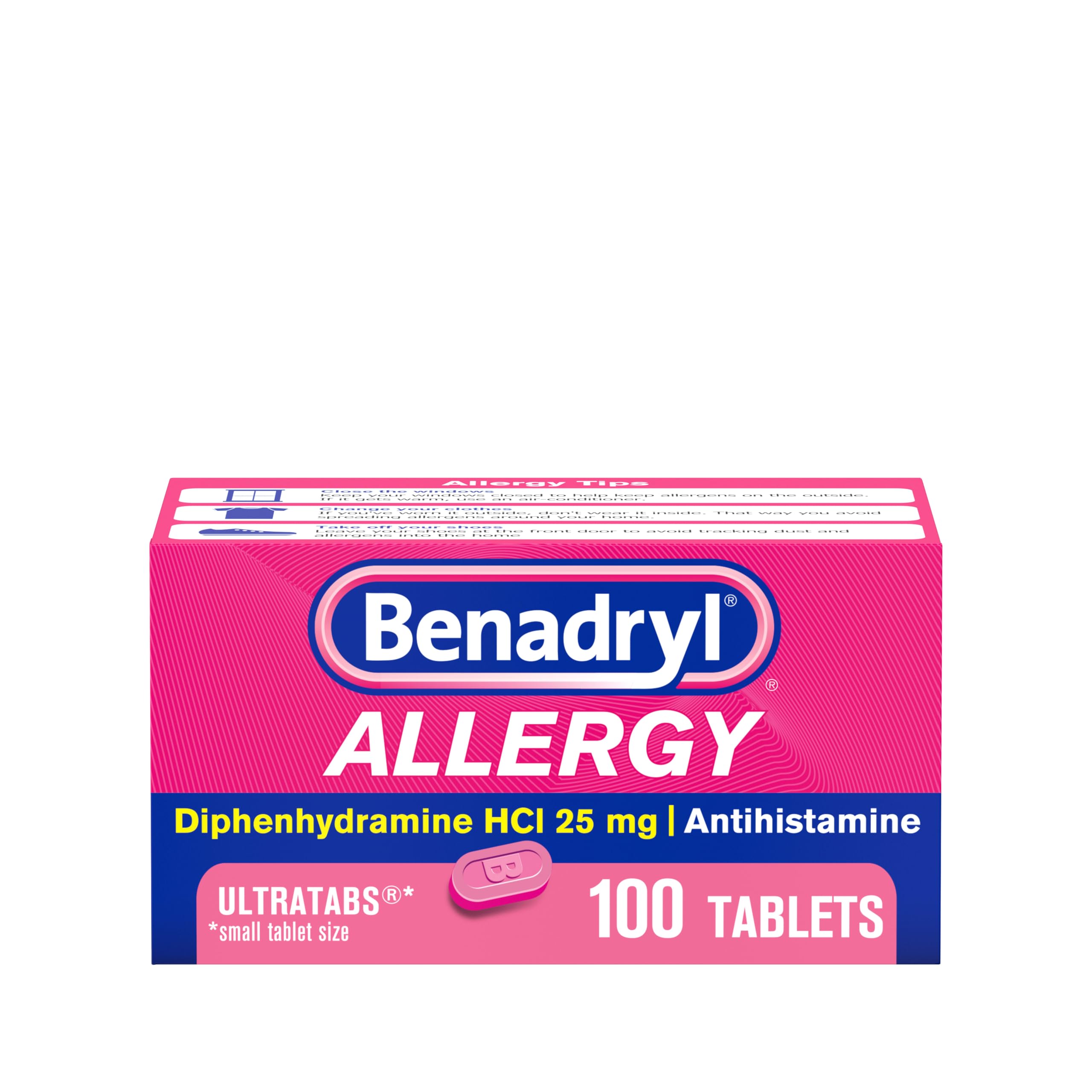
The Benadryl Ultratablet is the standard against which all other nighttime allergy medicines are measured—not because it’s the strongest, but because it hits the exact sweet spot between symptom relief and sedation. Each tablet delivers 25 mg of diphenhydramine HCl, enough to shut down histamine-driven sneezing, runny nose, and itchy eyes within 30 to 45 minutes, while the drowsy side effect is manageable enough that a single dose rarely ruins the next morning. Users consistently report fast, predictable relief that turns a fitful allergic night into unbroken sleep.
The tablet itself is notably small and easy to swallow, with a smooth coating that avoids the chalky texture of cheaper generics. This 100-count bottle offers a solid mid-range quantity that fits both seasonal allergy stacks and emergency acute-reaction use. The brand’s reliability is reinforced by a five-star average across thousands of reviews, with many users describing it as a non-negotiable staple in their medicine cabinet for spring pollen outbreaks and dust-mite flare-ups alike.
Where it falls short is the unnatural bright pink color, which some users find off-putting, and the fact that the sedative effect does diminish with continuous nightly use over two weeks. For the majority of allergy sufferers who need occasional or seasonally intermittent relief, however, this remains the most balanced and dependable choice available.
Why it’s great
- 25 mg diphenhydramine offers reliable symptom suppression without over-sedation
- Small, easy-to-swallow tablet with fast-onset action
- Trusted brand with decades of clinical track record
Good to know
- Unnatural bright pink coloring may bother some users
- Sedative effect builds tolerance with nightly use over 2+ weeks
2. Unisom SleepGels 50 mg

The Unisom SleepGel is the heavy hitter of this lineup, packing 50 mg of diphenhydramine HCl per liquid-filled softgel—double the standard dose. This is the option you reach for when allergy symptoms are severe enough that a standard 25 mg tablet barely takes the edge off, or when the histamine reaction itself is keeping you awake. The liquid formulation is absorbed faster than a compressed tablet, with many users reporting onset within 30 to 45 minutes and the ability to stay asleep through the night even with nasal congestion.
The softgel design eliminates any aftertaste and makes swallowing effortless, which is a meaningful advantage if you’re already dealing with a scratchy throat or post-nasal drip. The 100-count bottle competes well on per-dose value for a maximum-strength product. Users describe waking up surprisingly refreshed after taking this, with the caveat that a small percentage do experience some next-day grogginess or vivid dreams—one reviewer memorably reported being chased by a tuna sandwich.
This is not a medication to take lightly. The 50 mg dose amplifies both the antihistamine and sedative effects, meaning tolerance builds faster and the risk of morning drowsiness is real if you take it less than eight hours before waking. Use it for acute flare-ups rather than as your nightly maintenance allergy medicine.
Why it’s great
- 50 mg maximum strength for severe allergy insomnia
- Fast-absorbing liquid softgel with no aftertaste
- Excellent value per dose in the 100-count bottle
Good to know
- Higher risk of next-day grogginess than 25 mg alternatives
- Not ideal for nightly long-term use due to rapid tolerance
3. Unisom SleepTabs 25 mg

Unisom SleepTabs use 25 mg of doxylamine succinate rather than diphenhydramine, and this molecular swap changes the entire experience. Doxylamine is roughly twice as sedating per milligram as diphenhydramine, meaning a 25 mg dose produces a deeper, heavier sleep effect—ideal if your primary complaint is that allergy symptoms prevent you from falling asleep, rather than that symptoms interrupt your sleep. Clinical data cited by the manufacturer suggests users fall asleep 33% faster compared to placebo.
The tablets are small and easy to swallow, with no taste or aftereffect. The 80-count bottle provides nearly three months of occasional use. User reviews consistently highlight the dramatic improvement in sleep quality: falling asleep more easily, staying asleep through the night, and waking up without the groggy hangover that often accompanies higher-dose diphenhydramine. A minority of users report strange or vivid dreams, which is a known side effect of doxylamine’s stronger central nervous system penetration.
The trade-off is that doxylamine is a weaker antihistamine for pure allergy symptom control. If your main problem is a runny nose and itchy eyes, diphenhydramine will serve you better. Unisom SleepTabs are best for allergy sufferers whose primary struggle is the insomnia caused by mild-to-moderate allergic irritation.
Why it’s great
- Clinically shown to help users fall asleep 33% faster
- Deep sleep effect with minimal next-day grogginess for most users
- Non-habit forming when used as directed
Good to know
- Weaker pure antihistamine effect compared to diphenhydramine
- Can cause vivid or strange dreams in some users
4. Kirkland Signature Sleep Aid 25 mg

The Kirkland Signature Sleep Aid is a massive 192-count bottle of 25 mg doxylamine succinate tablets, making it the highest-volume option in this list and the most cost-effective choice for consistent nighttime allergy-sleep support. It directly compares to Unisom SleepTabs in active ingredient and dosage, but at a per-tablet cost that makes nightly use financially painless. The blue pills are small and easy to swallow, with no chalky residue or unpleasant taste.
User reviews consistently praise its fast onset and ability to keep them asleep through the night without waking. Several long-term users report that a half-tablet (roughly 12.5 mg) is sufficient for their needs, which further extends the already generous supply. The brand’s no-frills packaging means you’re paying for the active ingredient, not marketing—every tablet is identical in potency to the name-brand alternative.
The critical consideration with doxylamine is, again, tolerance. A reviewer who used this for several years noted severe itching (a histamine rebound effect) upon discontinuation, which is a documented withdrawal symptom of chronic first-generation antihistamine use. This is a product to use strategically, not as a permanent nightly crutch.
Why it’s great
- 192-count bottle offers the best per-dose value in this category
- Small, easy-to-swallow tablets with fast onset
- Half-tablet dosing possible for sensitive users
Good to know
- Doxylamine builds tolerance with extended nightly use
- Discontinuation may cause histamine rebound symptoms like itching
5. Rite Aid Antihistamine Allergy Relief 25 mg

The Rite Aid Antihistamine Allergy Relief is a full-year supply in a single bottle—365 capsules of 25 mg diphenhydramine HCl, enough to cover daily dosing for twelve months. This is the ultimate buy-and-forget option for anyone whose nighttime allergy regimen is a long-term necessity rather than a seasonal adjustment. Each capsule is individually banded for protection, and the active ingredient is identical to what you’d get from Benadryl.
Users who switch to this from name-brand alternatives report no difference in efficacy. The capsules are easy to swallow and absorb quickly. For a household where multiple members use nighttime allergy relief, this single purchase eliminates the need to restock for an entire year. The price per dose is among the lowest in the diphenhydramine category.
The downside is that committing to a 365-count bottle of a single dose strength gives you no flexibility to adjust your dose. If you find that 25 mg becomes ineffective after months of use, you’re stuck with a year’s worth of pills that no longer deliver the same sedative effect. Consider your tolerance history before buying in this volume.
Why it’s great
- 365-count bottle provides a full year of nightly doses
- Individually banded capsules ensure freshness and quality
- Active ingredient identical to name-brand Benadryl
Good to know
- Large volume commits you to one dose strength for a long time
- Tolerance may build before the bottle is empty
6. Equate Allergy Relief Diphenhydramine 25 mg

The Equate Allergy Relief comes as a two-pack of 100-count bottles, giving you 200 total capsules of 25 mg diphenhydramine HCl. This is a direct Benadryl generic that matches the active ingredient, dosage, and efficacy while undercutting the name brand’s price. The capsules are banded for individual protection, and the liquid inside starts dissolving almost immediately upon ingestion, offering a slightly faster onset than compressed tablets.
Long-term users in the reviews confirm that these are identical to Benadryl in effect, calling them “Benadryl without the name brand.” The two-bottle format is practical for splitting between home and office, or for sharing with a partner. The capsules absorb more quickly than tablets, which can mean faster relief when allergies strike close to bedtime.
The only practical limitation is that capsules are harder to split than tablets if you want to dial in a half-dose. If you consistently need less than 25 mg, you’ll be forced to take a full capsule anyway, making it harder to manage tolerance over time.
Why it’s great
- Two 100-count bottles offer great value over name brands
- Capsule format absorbs faster than compressed tablets
- Fully equivalent to Benadryl in active ingredient and effect
Good to know
- Capsules cannot be split for half-dosing
- Tolerance may develop with nightly use over extended periods
7. Diphenhydramine 50 mg Softgels
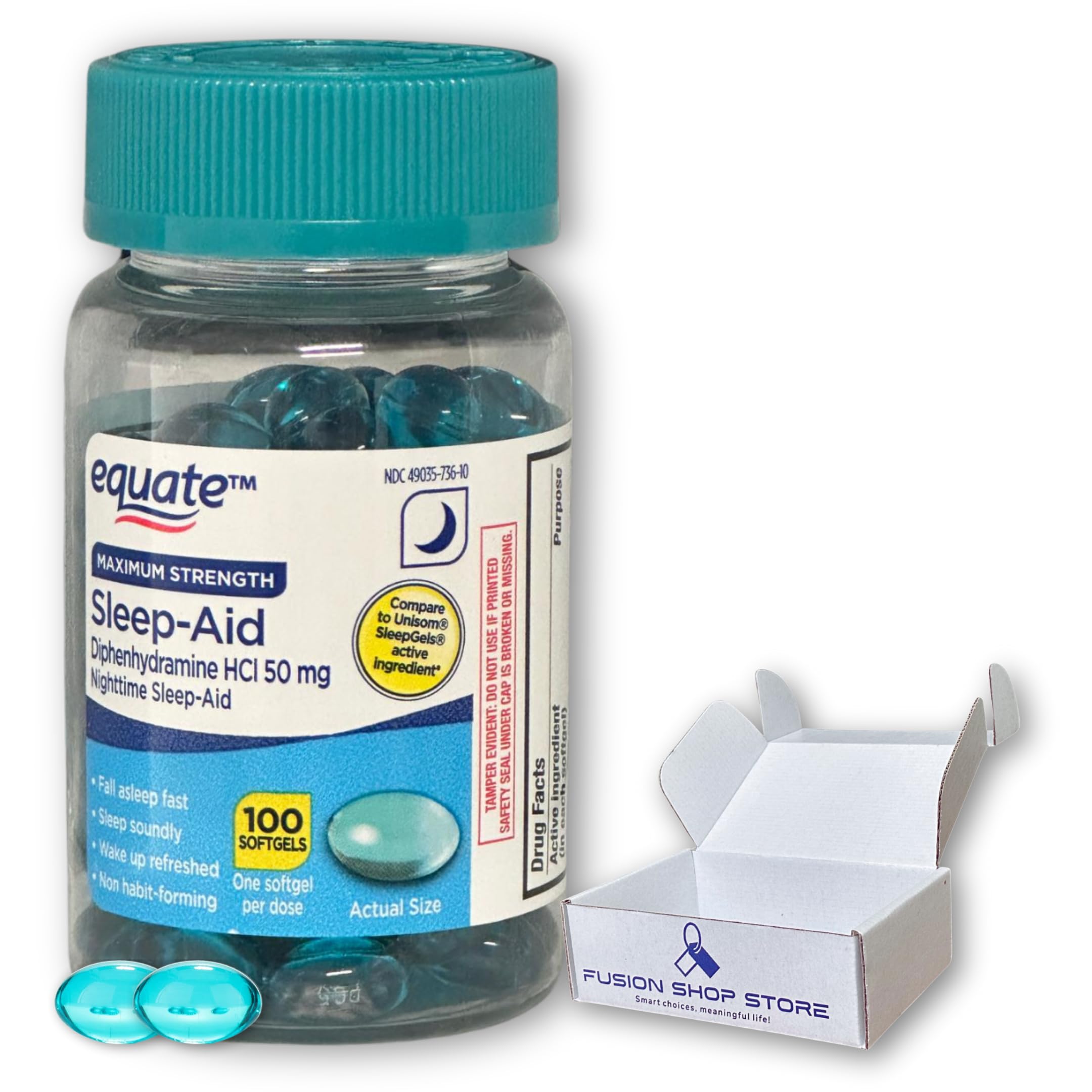
This 50 mg diphenhydramine softgel is the maximum-strength whip-crack option for nights when standard 25 mg simply doesn’t cut it. Manufactured by Equate, it delivers the same active ingredient as Benadryl’s max-strength formulation but at a significantly lower per-dose cost. The liquid-filled softgel ensures fast absorption, and the 100-count bottle provides enough ammunition for three months of acute-use scenarios.
Users who have switched from other maximum-strength brands confirm that the effect is identical—deep, rapid-onset sleep with effective allergy symptom suppression. Several reviews note that they wake up without feeling like they took a sleep aid, which suggests the 50 mg dose is well-tolerated for those who need it. The price per softgel undercuts the major brand alternatives significantly.
The same caveats apply here as with all 50 mg diphenhydramine products: this is not a nightly maintenance dose. The higher the dose, the faster tolerance builds, and the more pronounced the withdrawal effects can be if used continuously. Reserve this for peak allergy seasons or flare-ups, and alternate with lower doses when symptoms are manageable.
Why it’s great
- 50 mg maximum strength for severe allergy and insomnia
- Liquid softgel for rapid absorption
- Strong per-dose value compared to name-brand max strength
Good to know
- Rapid tolerance build-up with nightly use
- Not suitable as a long-term daily maintenance dose
FAQ
Can I take allergy medicine at night if I have to wake up early?
Why does Benadryl make me drowsy but Claritin does not?
Is it safe to take allergy medicine every single night?
Final Thoughts: The Verdict
For most users, the best allergy medicine to take at night winner is the Benadryl Ultratablets 25 mg because it provides reliable antihistamine symptom relief with a moderate, predictable sedative effect that supports sleep without guaranteeing a groggy morning. If you need deep, fast-acting sleep induction when symptoms are severe, grab the Unisom SleepGels 50 mg. And for the best value on a high-volume doxylamine supply that doubles as a sleep aid and a mild allergy reliever, nothing beats the Kirkland Signature Sleep Aid 192-count.