
Our readers keep the lights on and the weekend projects moving. As an Amazon Associate, I earn from qualifying purchases.
Drinking aloe vera juice daily is a ritual tied to digestive comfort, but finding a bottle that doesn’t taste like bitter pond water or arrive broken on your doorstep is the real challenge. Between whole leaf versus inner fillet, filtered versus unfiltered, and the maze of brand claims about polysaccharide content, most shoppers end up with a jug that either burns going down or offers zero noticeable benefit. This guide cuts through the sticky mess to highlight the seven bottles worth your pantry space based on purity, processing, and real user results.
I’m Rikta — the co-founder and writer behind FitlyFast. I’ve spent countless hours analyzing supply chains, comparing processing methods, and cross-referencing lab values and customer feedback across the aloe vera juice market to determine which brands deliver consistent daily value without hiding behind marketing fluff.
Inside, you will find a carefully curated selection of the most reliable aloe vera juice to drink daily, ranked by purity, taste, and digestive support potency so you can make an informed purchase with confidence.
How To Choose The Best Aloe Vera Juice To Drink Daily
Jumping into the world of aloe juice without a framework is a recipe for buying overpriced sugar water or a bottle that wrecks your stomach. Focus on these three factors first to filter out the noise and land on a daily-friendly bottle.
Whole Leaf vs. Inner Fillet
The source of the juice defines its chemical profile. Whole leaf juice includes the rind and latex layer, which contains anthraquinones — compounds known for strong laxative effects. Whole leaf products are typically more bitter and better suited for short-term cleansing. Inner fillet juice comes only from the clear gel inside the leaf, producing a milder taste and gentler effect that is far more appropriate for uninterrupted daily use. A daily drinker should prioritize inner fillet or a whole leaf juice that has been filtered to reduce anthraquinones below 5 parts per million.
Polysaccharide Content (Acemannan Level)
The primary active compound in aloe is a long-chain sugar called acemannan, which is a form of mucopolysaccharide. This molecule drives the immune modulation, digestive soothing, and skin benefits that aloe is prized for. A quality juice will have a measurable polysaccharide content, often listed on the label as mg per liter. A reading of 7,000 mg per liter or higher indicates a potent concentrate. Products that do not list this spec are often diluted, reprocessed, or made from reconstituted powder that has lost its bioactivity.
Processing and Preservatives
Because raw aloe gel degrades quickly when exposed to oxygen and light, manufacturers either pasteurize, add chemical preservatives, or employ cold-fill processing. Look for brands that use aseptic or minimal-heat pasteurization without added citric acid, potassium sorbate, or sodium benzoate. A high-quality juice will require refrigeration after opening and use a vacuum-sealed or nitrogen-flushed bottle to prevent oxidation. If a juice sits unrefrigerated on a shelf for months without spoiling, it is either over-processed or chemically loaded — neither is ideal for daily internal use.
Quick Comparison
On smaller screens, swipe sideways to see the full table.
| Model | Category | Best For | Key Spec | Amazon |
|---|---|---|---|---|
| George’s Always Active | Premium | Daily hydration / Taste-Free | 100% distilled aloe, no bitterness | Amazon |
| Forever Living Aloe Vera Gel | Premium | Immune & gut support | 99.7% pure inner leaf gel | Amazon |
| Nature’s Sunshine Aloe Vera Juice | Premium | Potent digestive soothing | 7,000 mg polysaccharides per liter | Amazon |
| Lily of the Desert Vera Juice | Mid-Range | Full-body wellness & skin health | Enhanced with Aloesorb polysaccharides | Amazon |
| Lakewood Organic Aloe Vera Gel Juice | Mid-Range | Pure organic / Acid reflux | Certified organic, no added thickeners | Amazon |
| Aloe 80 Organics Stomach Formula | Mid-Range | Acid reflux & bloating relief | Fresh mint taste, inner leaf | Amazon |
| 365 by Whole Foods Whole Leaf Juice | Budget-Friendly | High volume on a budget | 128 fl oz / <5 ppm anthraquinones | Amazon |
In‑Depth Reviews
1. George’s Always Active Aloe Vera – 128 fl oz

George’s uses a proprietary distillation process that strips out the bitter latex compounds and aloin — the chemicals responsible for the sour flavor and laxative effect found in most aloe juices. The result is a crystal-clear liquid that tastes indistinguishable from water, which is the single biggest barrier for people trying to stick with a daily aloe habit. Multiple long-term users report taking two ounces morning and night on an empty stomach without any gag reflex or aftertaste, making it the most sustainable daily option available.
The 128-ounce bottle provides a generous supply at roughly a month’s worth for a standard two-ounce serving, and the formula contains no preservatives, additives, or artificial flavors. The brand has also built a strong track record among users managing acid reflux, IBS, and mouth sores, with anecdotal reports of healing intestinal inflammation within days of consistent use. Reviews consistently note that the product has been repurchased repeatedly over several years, which is a strong indicator of both efficacy and habitability.
On the downside, the large bottle is heavy and poorly suited for travel, and some customers have reported dented bottles upon delivery due to the 8-pound weight. The lack of added flavoring also means it offers zero masking if you are used to sweetened beverages, though most users find that the water-like profile actually encourages higher water intake throughout the day.
Why it’s great
- Completely tasteless — drinks like water
- No preservatives, additives, or artificial flavors
- Proven track record for acid reflux and IBS management
- Gluten-free, vegan, and non-GMO
Good to know
- Large bottle can arrive dented or leak during shipping
- Not ideal for travel due to size and weight
2. Forever Living Forever Aloe Vera Gel – 33.8 fl oz (Pack of 2)
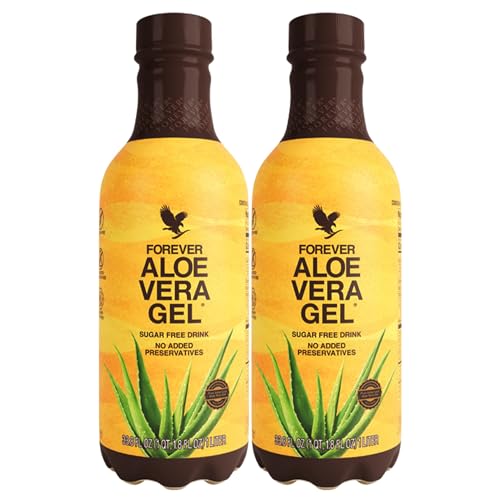
Forever Living is one of the few vertically integrated aloe producers, meaning they own the farms, harvest the leaves by hand, and process the gel within hours of cutting. The 99.7% pure inner leaf formulation means the product is almost entirely whole-plant gel with only trace water and stabilizers, delivering the highest concentration of acemannan among mainstream brands. This potency translates directly into real user-reported results, including complete heartburn cessation when taken 30 minutes before meals and noticeable immune support during seasonal transitions.
The aseptic processing method avoids high-heat pasteurization, which preserves the enzymatic and polysaccharide activity that many competitors destroy during bottling. Each bottle is packed under sterile conditions so no preservatives are required, though the brand does recommend refrigeration after opening. The two-pack format provides a two-month supply for daily drinkers, and the gel consistency sits between water and syrup, making it palatable straight from the cap or mixed into cold juice.
Value is the primary trade-off here — this is a premium-priced product that costs considerably more per ounce than budget alternatives. A minority of users have also noted that the packaging occasionally arrives dented or with small leaks, though the inner seal typically remains intact. If you suffer from severe heartburn or want the highest acemannan concentration available, the extra expense is backed by real clinical-grade potency.
Why it’s great
- 99.7% pure inner leaf gel — highest concentration
- Aseptically processed without preservatives
- Clinically proven acemannan levels for immune and gut support
- Two-pack offers two months of daily servings
Good to know
- Significantly higher price per ounce relative to competition
- Packaging can arrive dented during shipping
3. Nature’s Sunshine Aloe Vera Juice – 32 fl oz

Nature’s Sunshine is one of the few brands that publishes a specific polysaccharide count — 7,000 mg per liter — which is the concrete metric that separates genuine aloe from diluted impostors. This high mucopolysaccharide content means the juice retains its ability to soothe the intestinal lining and modulate inflammation, benefits that are lost in heavily filtered or reconstituted products. The brand has a long history in the herbal supplement space since 1972, and the inner leaf concentrate is formulated with only the intense cleansing components removed, preserving the full spectrum of naturally occurring salicylates and prostaglandins.
User reports are heavily skewed toward people with diagnosed digestive conditions such as acid reflux, gastritis, and ulcerative colitis, with several reviewers noting that it provided relief after pharmaceuticals failed. The taste is described by most as tolerable but not pleasant — a mild vegetal note that can be masked with fruit juice. Because it is a concentrate, the serving size is modest at one to two ounces per day, meaning a 32-ounce bottle lasts between two and four weeks.
The product has a dedicated following, but some first-time buyers are unpleasantly surprised by the lack of sweetness, since most commercial aloe drinks are loaded with added sugar. It also comes in a smaller bottle compared to gallon-sized alternatives, making the per-ounce cost slightly higher. If your primary goal is measurable polysaccharide potency for structural digestive repair rather than general hydration, this is a top-tier choice.
Why it’s great
- 7,000 mg polysaccharides per liter — potency you can measure
- Minimally processed for maximum benefit retention
- Strong track record for acid reflux and gastritis relief
- Full spectrum of naturally occurring compounds
Good to know
- Not sweet — bitter flavor requires mixing for some
- Smaller bottle size per ounce
4. Lily of the Desert Vera Juice – 128 fl oz

Lily of the Desert stands apart due to the Aloesorb enhancement, which is a proprietary concentrated polysaccharide fraction that boosts the bioavailability of the naturally occurring acemannan molecules in the juice. This means the active compounds are absorbed more efficiently by the body compared to standard aloe juices that offer the same raw polysaccharide content. The brand farms its own organic aloe in Texas, giving full control over the growing and harvesting environment, and the whole leaf is filtered to retain broad-spectrum plant nutrients while removing the bitter aloin compounds.
The 128-ounce gallon size makes this one of the most cost-effective premium options available, especially for households where multiple people drink aloe daily. Users report benefits ranging from improved skin clarity and eczema management to noticeable joint recovery during exercise, which suggests that the enhanced absorption reaches both systemic and topical tissues. The flavor is described as clean and neutral with a mildly vegetal note, and many users dilute it with water or citrus juice to offset the slight bitterness.
The downsides are largely taste-related — the product is unsweetened and has a natural leafy profile that conflicts with palates accustomed to sweet commercial juices. Some users also note that the price has risen steadily over recent years, though the gallon format still offers strong per-ounce value. If you are looking for a well-researched, high-volume juice with enhanced absorption technology, this is a strong daily contender.
Why it’s great
- Aloesorb enhancement for superior polysaccharide absorption
- 128-ounce gallon provides great value for daily use
- Organically grown in Texas with supply chain control
- Positive reports for skin, joint, and digestive health
Good to know
- Unsweetened taste may not appeal to everyone
- Price has increased over time
5. Lakewood Organic Aloe Vera Gel Juice – 32 fl oz

Lakewood operates on a farm-to-bottle model where the aloe is grown in certified organic soil, pressed on-site, pasteurized, and vacuum-sealed without any preservatives or added thickeners. This minimal processing chain preserves the natural polysaccharide profile and yields a juice that is noticeably thicker than most competitors — consistent with the “gel juice” label. The full-strength product contains no reconstituted powder, which is a rarity in the aloe market where many brands dilute with water or sugar after concentrating the raw gel.
Users consistently describe this as the purest tasting aloe they have found, with a mildly sour vegetal flavor that becomes gelatinous when chilled. The product has a dedicated following among people managing acid reflux, with multiple reviewers noting that it soothes immediately after ingestion. Despite the thickness, the liquid pours easily and seals without leaking, a packaging quality that is notably better than many larger gallon bottles. The 32-ounce size is also a practical choice for single-person households or first-time buyers who want to test the product before committing to a larger volume.
The texture is the main trade-off — some users expect a watery consistency and are put off by the gel-like mouthfeel, which is a characteristic of high-quality pure aloe rather than a defect. The sour taste also requires a strong stomach or a chaser for some drinkers. This is the best option for anyone who wants certified organic purity without added stabilizers or chemical preservation.
Why it’s great
- Certified organic from farm to bottle
- No preservatives, added water, or sugar
- Full-strength gel with noticeable thickness
- Reliable packaging with no leaks
Good to know
- Gel-like texture may be unexpected for first-time users
- Sour, vegetal taste requires a chaser for some
6. Aloe 80 Organics Stomach Formula – 32 fl oz
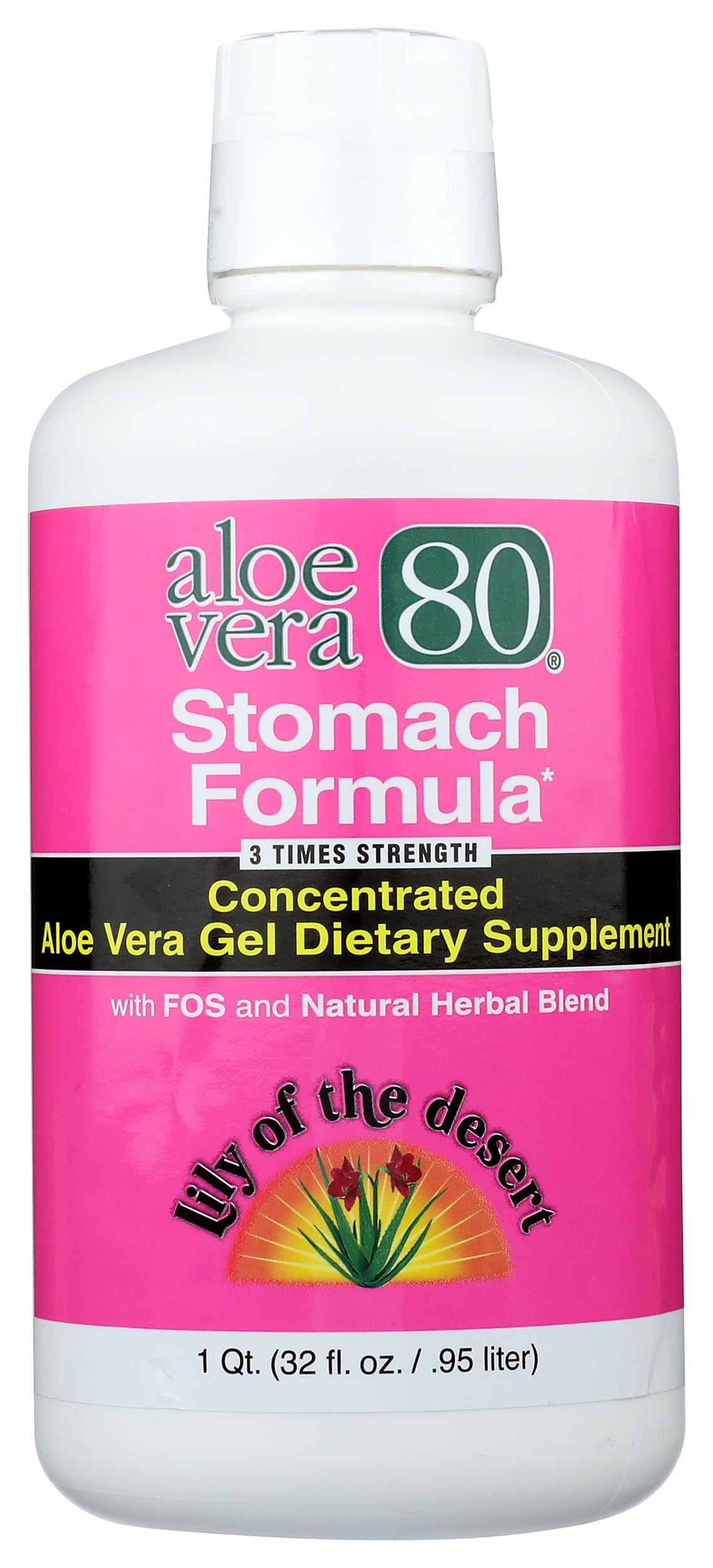
Aloe 80 Organics markets their product specifically as a stomach-targeted formula, which is reflected in the formulation that includes peppermint for an extra layer of digestive calming. The inner leaf concentrate is processed to retain high levels of naturally occurring polysaccharides and vitamins, and users with reported issues like bloating, acid reflux, and H. pylori burping note that this product delivers relief almost immediately. The peppermint addition is a practical move — it provides a genuinely different taste profile that masks the typical aloe bitterness and adds a cooling sensation that soothes nausea.
Customer reviews suggest this product works better than prescription medications for some users, particularly for severe acid reflux and gastritis. It blends easily into juice or water, and the 32-ounce bottle offers a sensible month-long supply at a moderate price point. The product is also manufactured by Lily of the Desert, a brand with a strong aloe cultivation history, which adds a layer of production trust.
The peppermint flavor is a double-edged sword — while it helps many users tolerate the drink, some customers with acid reflux actually experienced worsening symptoms when consuming mint, as peppermint can relax the lower esophageal sphincter. The brand acknowledges this feedback, and a few users have requested a peppermint-free version. It is also not certified organic, which may be a dealbreaker for purists. If you are sensitive to mint or have a confirmed case of GERD, this may not be the best fit for daily use.
Why it’s great
- Peppermint improves taste and provides nausea relief
- Fast-acting for bloating and acid reflux
- Manufactured by trusted aloe grower Lily of the Desert
- Good value for a stomach-specific formula
Good to know
- Mint can worsen GERD symptoms in some individuals
- Not certified organic
7. 365 by Whole Foods Organic Whole Leaf Aloe Vera Juice – 128 fl oz

Whole Foods’ house brand offers a surprisingly solid entry-level option that checks the major boxes — organic certification, whole leaf processing, and filtering to reduce anthraquinones below 5 ppm, which helps minimize the laxative effect that often scares users away from whole leaf products. The 128-ounce bottle provides the highest volume per ounce of any product in this guide, making it the most accessible starting point for households on a budget who want to incorporate daily aloe juice without a huge upfront investment. The smooth flavor is designed to be mixed easily with fruit juice or used as a base for smoothies.
The whole leaf origin means the product contains the full range of aloe polysaccharides, including those from the outer leaf that are absent in inner fillet-only products. Users who purchase this for non-dietary purposes, such as as an ingredient in homemade lotions or cold-process soap, find that it works excellently as a liquid additive without wasting premium-grade concentrate. The value proposition is strong for large households or individuals who go through a gallon within three weeks.
The biggest recurring complaint is packaging fragility — the gallon bottles often arrive damaged, leaking, or upside down with the cap cracked during shipping, resulting in lost product and soggy cardboard. The taste also receives mixed reviews, with several users describing it as sour due to the lemon used for preservation, and some noting that the watery texture feels less “potent” compared to thicker gel-based alternatives. If you can get past the packaging risk and the somewhat sharp taste, the volume-to-cost ratio is unmatched.
Why it’s great
- Lowest cost per ounce of any option
- Organic whole leaf with low anthraquinone content
- High volume ideal for families or multi-purpose use
- Smooth enough for mixing into juices and smoothies
Good to know
- Frequent shipping damage — bottle cracks or leaks
- Sour, sharp taste due to lemon preservation
FAQ
How much aloe vera juice should I drink daily?
What is the difference between whole leaf and inner fillet juice?
Why does my aloe juice taste bitter or sour?
Can I use aloe vera juice for skin or external applications?
Is it normal for aloe juice to be thick and gel-like?
Final Thoughts: The Verdict
For most users, the aloe vera juice to drink daily winner is the George’s Always Active Aloe Vera because it eliminates the taste barrier entirely while delivering reliable digestive and hydration benefits without preservatives or additives. If you want the highest acemannan concentration with clinical-grade potency for serious gut repair, grab the Forever Living Forever Aloe Vera Gel. And for a measurable polysaccharide count and minimal-processing philosophy that directly supports digestive tissue repair, nothing beats the Nature’s Sunshine Aloe Vera Juice.