
Our readers keep the lights on and the weekend projects moving. As an Amazon Associate, I earn from qualifying purchases.
For caregivers managing a bedridden loved one, the constant cycle of manual repositioning to prevent pressure ulcers is exhausting and often ineffective. An alternating air pressure mattress pad automates this critical care task, using a quiet pump to cyclically inflate and deflate air cells, redistributing weight and promoting blood flow to vulnerable areas like the sacrum, heels, and hips. Choosing the right system means understanding cycle times, pump noise levels, and the specific needs of the patient.
I’m Rikta — the co-founder and writer behind FitlyFast. I’ve analyzed dozens of these medical-grade mattress overlays, comparing pump reliability, air cell durability, and real-world user feedback to separate effective solutions from those that fail when they are needed most.
This guide breaks down the best options for preventing and managing pressure sores, focusing on the critical specs that matter for long-term care. Read on to find the best alternating air pressure mattress for your situation.
How To Choose The Best Alternating Air Pressure Mattress
Selecting the right alternating pressure mattress pad goes beyond a simple price comparison. Key factors like the pump’s noise output, the depth of the air cells, and the availability of a static mode can make the difference between a therapeutic tool and a frustrating piece of equipment. Here’s what to evaluate.
Pump Noise and Cycle Time
The pump is the heart of the system. Look for models advertising whisper-quiet operation around 23 dBA, as louder units can disturb sleep, especially in a home care environment. The cycle time—how often the air cells alternate—typically ranges from 5 to 12 minutes. A shorter cycle provides more frequent pressure redistribution, which is often preferred for higher-risk patients, while longer cycles can be less disruptive for lighter sleepers.
Air Cell Construction and Depth
Not all air cells are equal. The number, shape, and material of the individual bubbles determine comfort and effectiveness. Medical-grade PVC is common, but some users report a strong vinyl odor that can be off-putting. A greater cell depth (e.g., 5 inches vs. 2.5 inches) provides more immersion and better protection against “bottoming out,” where the patient’s body presses against the underlying mattress, rendering the system ineffective.
Static Mode and Comfort Layers
While the core therapy relies on alternating pressure, some patients find the constant motion unsettling or uncomfortable, especially when trying to fall asleep. A static mode locks all cells at a consistent pressure, offering a stable surface. Higher-end models may also include a snap-on comfort layer that adds a softer, more familiar feel on top of the alternating cells, easing the transition for first-time users.
Quick Comparison
On smaller screens, swipe sideways to see the full table.
| Model | Category | Best For | Key Spec | Amazon |
|---|---|---|---|---|
| Lunderg PressuRelief | Mid-Range | Comfort & Alternating Therapy | 23 dBA Pump + Snap-2-Pad Layer | Amazon |
| Drive Medical Med Aire | Mid-Range | Standard Hospital Beds | 130 Air Cells, 5-min Cycle | Amazon |
| Vive 5″ Alternating | Mid-Range | Deeper Pressure Relief | 5-inch Air Chambers | Amazon |
| Lunderg Queen Size | Mid-Range | Queen Beds & Static Mode | 23 dBA Pump, 320 lbs Cap. | Amazon |
| Brace Direct Alternating Pad | Budget | Stage 1 Sore Prevention | 130 Durable PVC Air Pockets | Amazon |
| Proactive Med Protekt Aire 3000 | Premium | Standard Hospital Fit | Gel Memory Foam + Pump | Amazon |
| Invacare Premier Foam Mattress | Premium | Non-Powered Foam Support | 6-inch High-Density Foam | Amazon |
| Drive Med-Aire Low Air Loss | Premium | Full Mattress Replacement | 20 Replaceable 8-in Bladders | Amazon |
| Roho Prodigy Overlay | Premium | Non-Powered & No Noise | 3.5-inch Dry Flotation Depth | Amazon |
In‑Depth Reviews
1. Lunderg PressuRelief Alternating Air Pressure Mattress Pad

The PressuRelief from Lunderg addresses the most common caregiver complaint: patients reject alternating pads due to discomfort. Its unique snap-on comfort layer provides a plush, familiar feel over the alternating PVC cells, making it easier for users to accept and benefit from the therapy. The whisper-quiet pump rated at 23 dBA is among the most discreet on the market, ensuring it won’t disrupt light sleepers.
The system includes a static mode that holds all cells fully inflated when alternation is not desired, which is particularly useful for sitting up in bed or during initial adjustment periods. The quick-connect air hoses simplify setup, and the pad supports up to 300 pounds. As a flagship twin-size system, it is designed to work effectively on both standard home mattresses and hospital bed frames.
User feedback consistently highlights the near-silent operation and the genuine comfort improvement the snap-on layer provides. Some users noted that the static mode button can be inadvertently activated, but the overall effectiveness for pressure relief and the pump’s quiet reliability make this the most complete package for home care.
Why it’s great
- Snap-2-Pad comfort layer improves patient acceptance
- Ultra-quiet 23 dBA pump for undisturbed rest
- Includes both alternating and static modes
Good to know
- Static button can be accidentally pressed during repositioning
- Pad is a twin size, check fit for larger mattresses
2. Drive Medical Med Aire Alternating Pressure Pad

The Drive Medical Med Aire is a long-standing, trusted option in the alternating pressure overlay category. Its straightforward design features 130 individual air cells that alternate every 5 minutes, providing a consistent cycle of pressure redistribution. The durable heavy-gauge vinyl construction is built to withstand regular use, and the integrated end flaps help secure the pad firmly onto the mattress.
The pump offers both a fixed and variable pressure setting, allowing caregivers to fine-tune firmness based on the patient’s weight and comfort level. With dimensions of 123 inches by 36 inches, it fits most standard hospital beds and can be adapted for use on queen home mattresses with the use of the flaps. The system supports up to 300 pounds and is a well-established entry in this category.
Reviews note that the pad is effective at preventing new bedsores and comfortable for patients weighing under 100 lbs when set to lower pressure. However, the pump is not described as whisper-quiet by all users, with some reporting a noticeable hum that can be a factor in very quiet rooms. The unit is also inherently basic, lacking extra features like a comfort layer or static mode.
Why it’s great
- Proven, reliable 5-minute alternating cycle
- End flaps keep the overlay securely in place
- Adjustable pressure for personalized comfort
Good to know
- Pump noise can be noticeable in quiet settings
- No static mode or comfort layer included
3. Vive 5″ Alternating Pressure Mattress
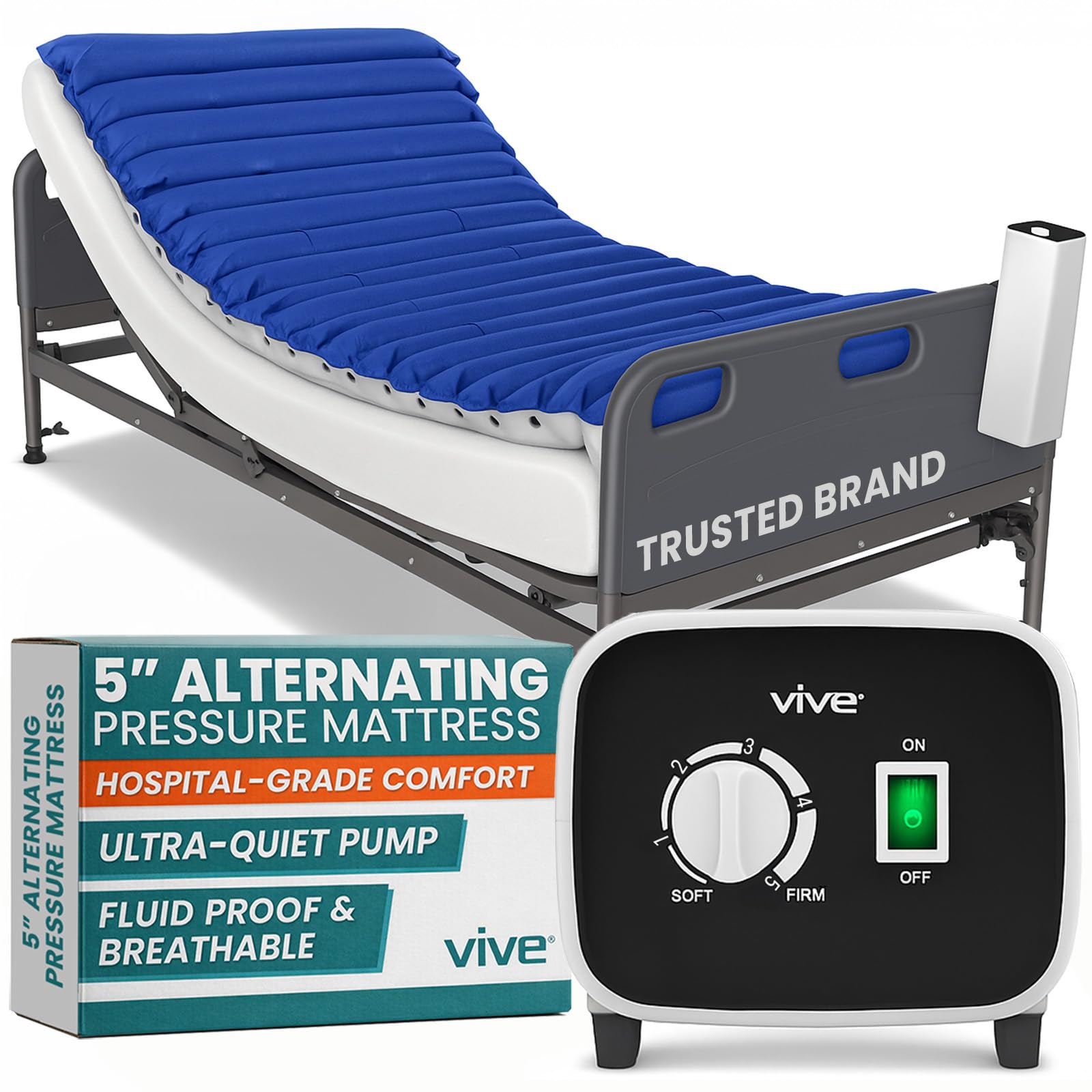
The Vive 5″ Alternating Pressure Mattress stands apart due to its significantly deeper air chambers, which measure 5 inches in height. This added depth is crucial for heavier patients or those at a higher risk of bottoming out, as it provides more material to immerse into before hitting the underlying mattress. The system features 16 separate sealed air chambers connected to a variable pressure pump with an ultra-quiet motor.
The bed sore prevention system comes with a latex-free, waterproof vinyl cover that is breathable to help dissipate heat and is easy to wipe clean. As an FSA/HSA eligible product, it offers a financial benefit for those with qualifying accounts. The pump includes a pressure dial for adjusting firmness from soft to firm and also has low-pressure alarm features that alert caregivers to issues.
Users report that the deep air cells are very effective at preventing and even healing existing pressure sores, with one user noting their 91-year-old mother’s sore nearly healed after use. A common criticism is the difficulty of keeping the pad in place, as the provided straps are not always reliable on all bed types. Some initial user manuals have been found lacking, and the low-pressure alarm can be confusing if the CPR plugs are not correctly seated.
Why it’s great
- 5-inch deep chambers prevent bottoming out
- FSA/HSA eligible purchase
- Waterproof, breathable cover is easy to clean
Good to know
- Straps for securing the pad are not always effective
- Some units may arrive with unclear instructions
4. Lunderg Queen Size Alternating Air Pressure Pad
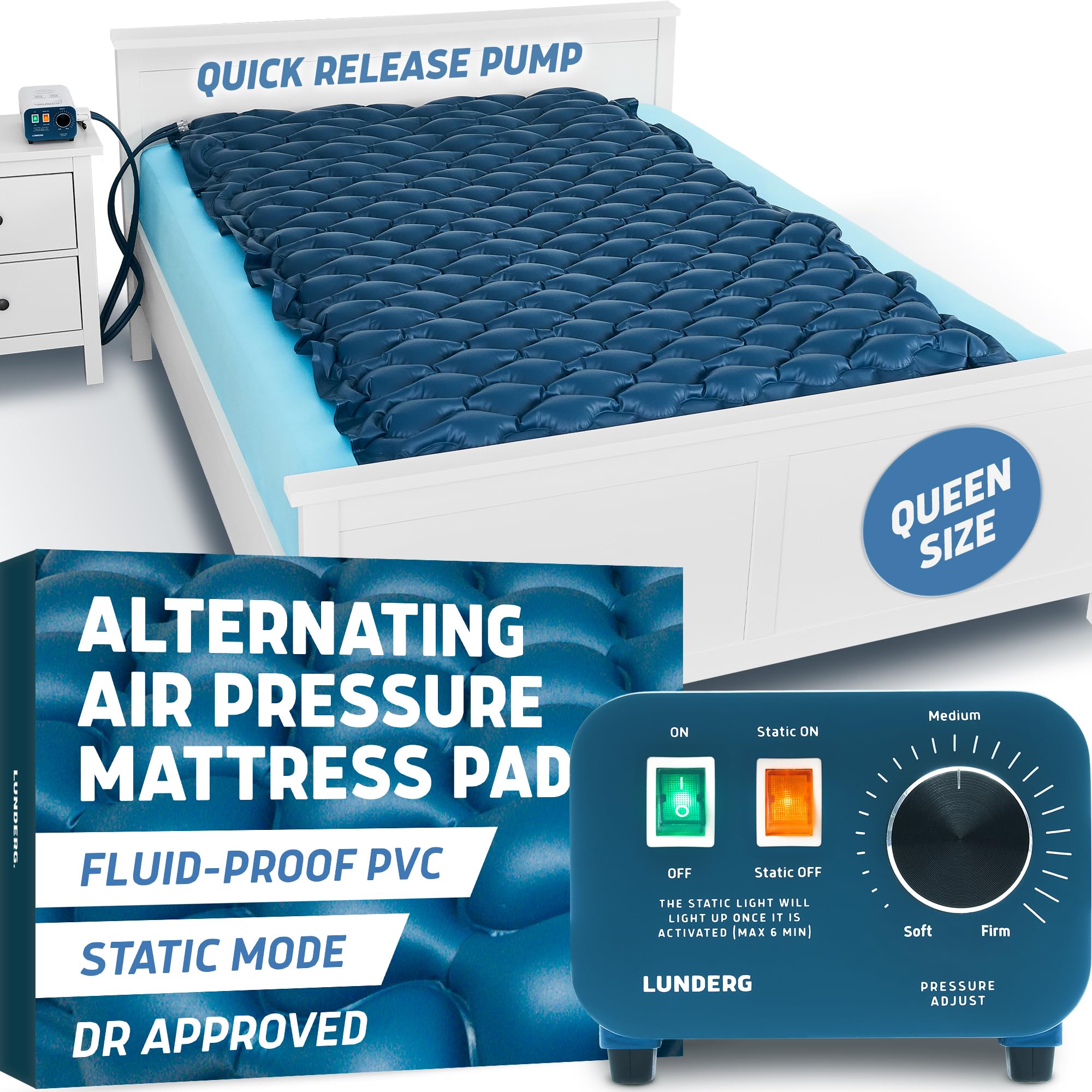
This Lunderg model is specifically designed to fit queen-size beds, a key distinction for home care users who need pressure relief on a larger mattress. It measures 53×77 inches and supports a higher weight capacity of 320 pounds, making it suitable for larger individuals. The system is powered by the same whisper-quiet 23 dBA pump as the PressuRelief model, ensuring it won’t disturb rest.
Like its flagship sibling, this pad features a Static Mode for when patients need a break from the alternating motion. The design uses individual air cells rather than long tube rows, which some users find more relaxing and effective for redistributing pressure across the body. The set also includes a waterproof mattress topper to protect the pad and the underlying bed.
Feedback from paraplegic and tetraplegic users is positive, noting that the pad prevents red marks and is comfortable for extended periods of lying down. One user at 230 lbs mentioned a slight flattening under the buttocks when sitting up, but found it excellent for sleeping. The primary compromise is the lack of a dedicated comfort layer, which some lighter or more sensitive patients might miss.
Why it’s great
- Designed for queen-size beds with high weight capacity
- Ultra-quiet 23 dBA pump
- Includes a useful static mode
Good to know
- No added comfort layer for sensitive skin
- May flatten slightly under heavier users when sitting up
5. Brace Direct Alternating Air Pressure Mattress Pad

The Brace Direct pad is a budget-friendly entry point into alternating pressure therapy, designed to fit standard hospital and home care beds. It features 130 medical-grade PVC air pockets that create a cooling airflow while reducing pressure points for stage 1 sore prevention. The quiet electric pump is engineered to operate without disturbing rest, making it a viable option for home healthcare.
The manufacturer emphasizes that it is an American-owned company and offers a free video fitting session to ensure proper setup. This customer service touch is a differentiator for the price point. The pad is lightweight and easy to install, providing full-length coverage for effective prevention of bed sores and ulcers in bedridden patients.
Mixed user reviews highlight a significant quality divide. While some report it successfully clears up pressure sores in just a few days and is firm enough for users up to 300 lbs, others have flagged two major issues: a strong, persistent “pool toy” vinyl odor that the “odorless” claim does not solve, and reports of the system failing or tearing within just a few months. This makes it a gamble for long-term reliability.
Why it’s great
- Budget-friendly entry-level option
- Offers free video fitting session for setup help
- Cooling PVC design for comfort
Good to know
- Some units have a strong vinyl chemical odor
- Reports of the pad tearing or failing within months
6. Proactive Medical Protekt Aire 3000
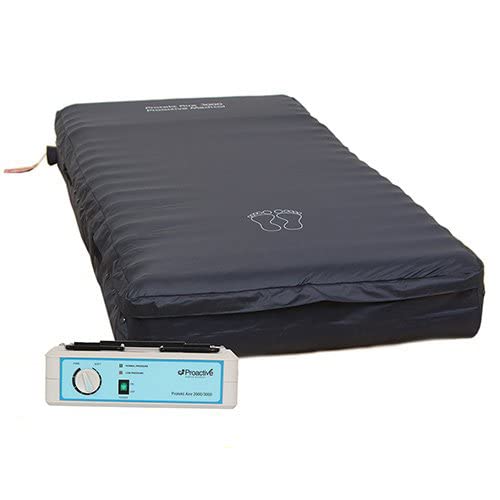
The Protekt Aire 3000 is a premium system that combines a gel memory foam top layer with an alternating pressure pump, aiming to offer the comfort of foam with the therapeutic benefits of air. The zippered, machine-washable nylon cover is a practical bonus for infection control and hygiene in a care setting. It is designed to fit a standard hospital bed frame.
The pump is reported to be very quiet, and the system is easy to assemble and adjust for comfort. The gel memory foam is intended to help with cooling and pressure redistribution, while the alternating air cells beneath provide additional cycle-based therapy. The unit is marketed for both pressure sore prevention and general patient comfort.
Owner experiences are polarizing. Many praise the value, comfort, and quiet operation, noting that it helps heal bedsores and provides significant pain relief. However, a recurring and critical complaint is that the system’s durability is poor, with multiple users reporting that it lasts only about one to two years before losing pressure or completely failing. One account of a catastrophic collapse at night is a serious safety concern to consider.
Why it’s great
- Gel memory foam adds superior comfort and cooling
- Machine-washable cover for easy hygiene
- Very quiet pump operation
Good to know
- Potential durability issues; may fail after 1-2 years
- Some reports of catastrophic pressure loss
7. Invacare Premier Hospital Bed Mattress

This Invacare Softform Premier is not an alternating air pad but a high-density foam mattress replacement often considered alongside them for pressure injury prevention. Its static foam construction uses a single-piece U-core with a contoured insert to redistribute pressure, making it suitable for patients up to “Very High Risk” classification. It supports a weight capacity of 500 lbs, significantly higher than most air overlays.
The mattress features a 3-zone construction with a firm mid-section and softer head and foot zones to support proper body alignment and safe transfers. The fluid-resistant, four-way stretch polyurethane cover is easy to clean and durable. The foam itself comes with an 8-year warranty, underscoring the manufacturer’s confidence in its longevity, which is a stark contrast to the typical lifespan of an air pump system.
Users who choose this foam mattress appreciate its firm edges for safe patient transfers, its comfort, and its ability to significantly reduce the risk of bedsores. The main downside is that it lacks the active pressure redistribution of an alternating air system, meaning manual repositioning is still required. It also took some users days to fully expand to its 6-inch thickness.
Why it’s great
- Extremely durable foam with an 8-year warranty
- High 500-lb weight capacity
- Firm edges for safe transfers
Good to know
- It is a static mattress, not an alternating pressure system
- Requires manual patient repositioning for pressure relief
8. Drive Medical Med-Aire Low Air Loss Mattress System
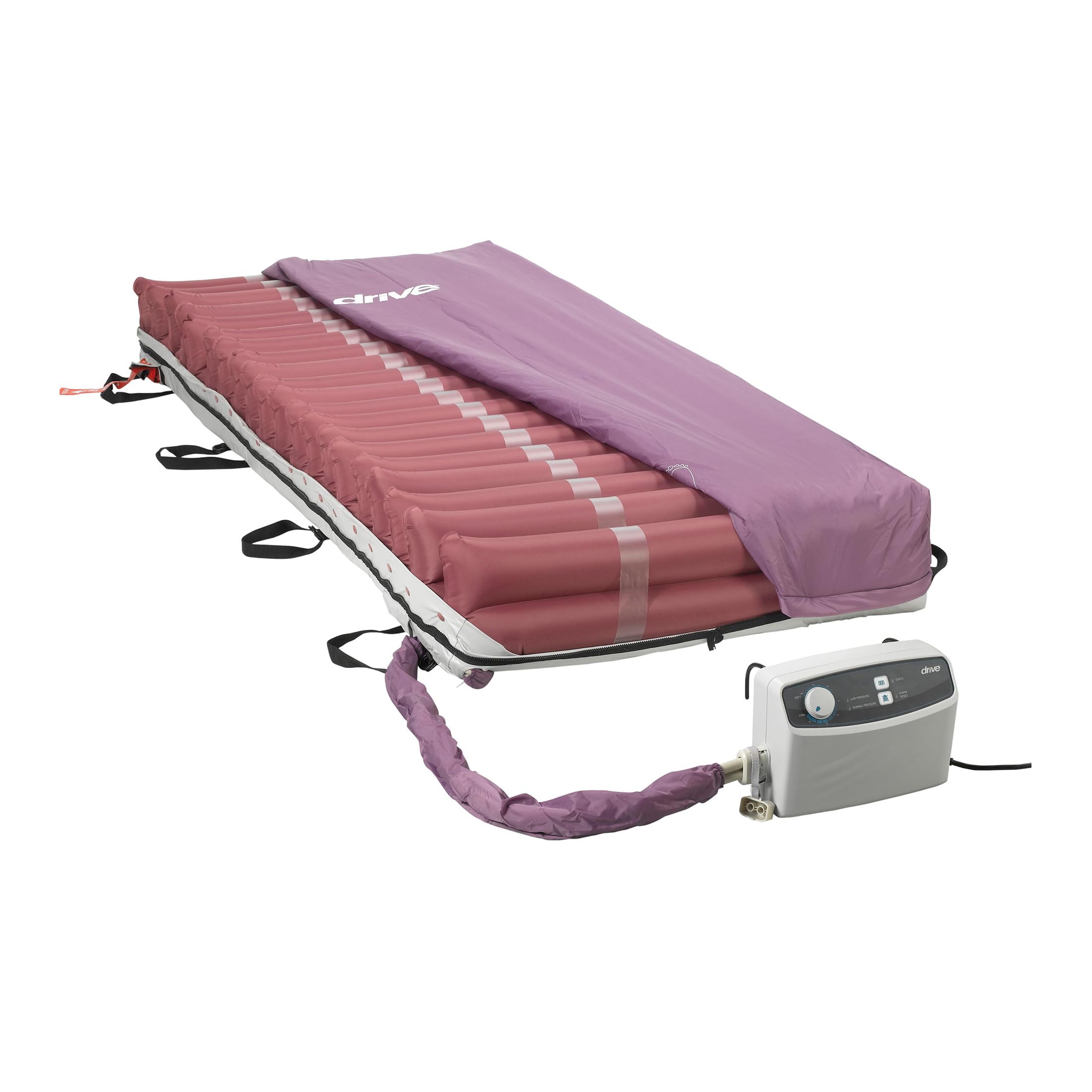
The Drive Med-Aire system represents a higher tier of care: a mattress replacement rather than an overlay. It features low air loss technology, which continuously circulates air through the cover to wick away moisture and heat, keeping the skin dry and cool. This is paired with an alternating pressure function (which can be disabled) for comprehensive pressure redistribution. The system includes 20 individual replaceable 8-inch air bladders.
This full replacement mattress is designed for high-risk patients in both home and facility use. The vapor-permeable cover reduces friction and shear, making it easier to reposition the patient. It includes an audio-visual low-pressure alarm for caregiver safety and automatic pressure monitoring to maintain consistent support. The built-in pillow feature enhances head stability.
Users consistently report this system is effective at preventing and even healing bedsores, particularly the low air loss feature which helps keep skin maceration at bay. The noise from the pump is described as a moderate hum, and the hissing from the low air loss can be noticeable. A critical caveat is that it deflates quickly during a power outage, so a backup generator is highly recommended for home use.
Why it’s great
- Low air loss feature keeps skin dry and cool
- Replaceable air bladders for long-term maintenance
- Comprehensive system with alarms and auto-pressure monitoring
Good to know
- Deflates quickly during a power outage
- Pump and low air loss hissing produce noticeable noise
9. Roho Prodigy Premium Mattress Overlay

The Roho Prodigy is a radical departure from electric alternating pressure pads. It uses a non-powered “dry flotation” technology where individual air cells are connected by internal air passageways, allowing the user’s body to displace air and self-adjust for pressure relief. Roho claims it offers a superior 3.5-inch depth of immersion that will never bottom out, a common failure point for budget alternating pads which typically offer only 1.5 inches.
This overlay has zero moving parts, meaning no noise, no heat generation, no electricity consumption, and no air filters to replace. It features 3 separate zones (head/upper body, hips/coccyx, and legs/feet) that can be independently set to different air pressures for targeted support. Made in the USA, it is backed by Roho’s 45-year reputation in pressure relief, and it is the only non-powered option on this list.
Users commend its ability to eliminate pressure points and allow for a full night’s sleep without pain, and its design avoids the heat retention common with air pumps. However, the lack of active alternation means it is best for mobile or lighter individuals, as some very heavy or completely bedbound users have reported that heels and elbows can sink to the base. It can also be squeaky and requires a monthly air pressure check.
Why it’s great
- No noise, no heat, no electricity required
- Superior immersion depth prevents bottoming out
- Independent zone control for customized support
Good to know
- Not ideal for completely immobile, very heavy users
- Can be squeaky and requires periodic air pressure checks
FAQ
Can an alternating air pressure mattress be used on a regular home bed?
How often should I change the cycle time on the pump?
What does static mode mean on a pressure mattress pump?
Final Thoughts: The Verdict
For most users, the best alternating air pressure mattress winner is the Lunderg PressuRelief because it solves the primary problem of patient discomfort with its innovative snap-on comfort layer while maintaining an ultra-quiet pump and essential static mode. If you want a proven, no-frills system for a hospital bed that is known for reliability, grab the Drive Medical Med Aire. And for a quieter, electricity-free solution that offers deep immersion for mobile users, nothing beats the Roho Prodigy.