
Our readers keep the lights on and the weekend projects moving. As an Amazon Associate, I earn from qualifying purchases.
Finding the right milk after the infant stage can feel overwhelming. Whether your toddler has sensitivities, you’re exploring plant-based options, or you simply want a convenient on-the-go solution, the nutritional needs of a child ages 1-3 are distinct and demand more than just a simple milk swap.
I’m Rikta — the co-founder and writer behind FitlyFast. I’ve spent countless hours analyzing the nutritional profiles, ingredient transparency, and feeding practicality of the most popular milks for toddlers to help families make an informed choice.
After reviewing dozens of formulas and reading through hundreds of parent experiences, these are the seven best options you should consider for your alternative milk for toddlers that balance nutrition, taste, and convenience.
How To Choose The Best Alternative Milk For Toddlers
Not all milk alternatives are created equal for a toddler’s developing system. You need to look beyond the branding and check the label for protein content, the type of fats, and whether key nutrients like DHA and Vitamin D have been added. Here’s what to prioritize.
Nutritional Density: Protein, Fat, and Iron
Toddlers need about 13 grams of protein per day and plenty of healthy fats for brain growth. Many plant-based milks (like standard almond or oat milk) are protein-poor compared to dairy or pea-protein alternatives. Check that your chosen milk delivers at least 4-8 grams of protein per serving and is fortified with iron and Vitamin D.
Gut Health: The Prebiotic Connection
Ingredients like HMOs (human milk oligosaccharides), inulin, and B. animalis probiotics help establish a healthy gut microbiome. Powders like Kabrita Junior and Similac Go & Grow specifically include these to support digestion and reduce gas or bloating in sensitive tummies.
Convenience vs. Freshness
Shelf-stable cartons and powdered sachets are lifesavers for travel or busy mornings. Whole milk powders (like Voyager) offer TSA-friendly packets that mix with room-temperature water. However, fresh refrigerated options often have a cleaner taste. Decide based on your family’s routine, not just the price tag.
Quick Comparison
On smaller screens, swipe sideways to see the full table.
| Model | Category | Best For | Key Spec | Amazon |
|---|---|---|---|---|
| Ripple Kids Original | Plant-Based | Allergy-Prone Toddlers | 8g Pea Protein | Amazon |
| Kabrita Junior Goat Milk | Powdered Goat Milk | Sensitive Tummies | Prebiotic Inulin + Probiotic B. Animalis | Amazon |
| Similac Go & Grow 360 | Nutritional Drink | Complete Nutrition | 5 HMO Prebiotics | Amazon |
| Enfagrow Premium Vanilla | Dairy-Based Formula | Transitioning from Infant Formula | 26mg DHA per Serving | Amazon |
| Orgain Organic Kids Vanilla | Vegan Protein Shake | Picky Eaters | 23 Vitamins & Minerals | Amazon |
| MALK Unsweetened Almond Milk | Clean Ingredient | Minimalist Families | 3 Ingredients (Almonds, Water, Pink Salt) | Amazon |
| Voyager Toddler Milk Powder | Travel-Ready | On-the-Go Families | Single-Serve 15g Sachets | Amazon |
In‑Depth Reviews
1. Ripple Kids Original Plant-Based Milk
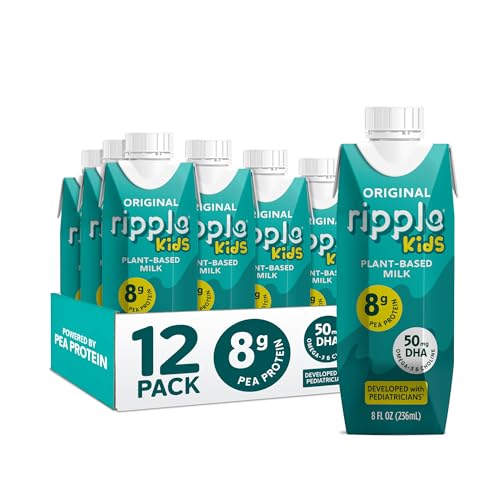
Ripple Kids is a standout because it solves the biggest problem with plant-based milks: low protein. Each 8-ounce serving packs 8 grams of pea protein — eight times more than standard almond milk — making it a legitimate nutritional swap for dairy. It also delivers 50mg of DHA omega-3 from algal oil to support brain development, plus prebiotics for digestive health.
Parents of toddlers with multiple allergies love this milk because it’s free from dairy, soy, nuts, gluten, and lactose. Reviews consistently mention that it tastes closer to real milk than any other plant-based option, with a creamy texture that works for drinking, baking, and cooking. The shelf-stable cartons are perfect for stashing in a diaper bag or pantry.
The main trade-off is the price point, which sits at the upper end of the mid-range. Some parents note that the vanilla flavor is mild, so picky eaters who prefer sweeter drinks might need a gradual introduction. Overall, it’s a pediatrician-recommended powerhouse that covers the bases.
Why it’s great
- 8g of complete pea protein per serving — highest among plant-based options
- Free of the top 9 allergens, safe for most sensitive kids
- Shelf-stable and travel-friendly packaging
Good to know
- Premium price tier compared to basic almond milk
- Flavor is subtle; some toddlers may need time to adjust
2. Kabrita Junior Goat Milk Powder
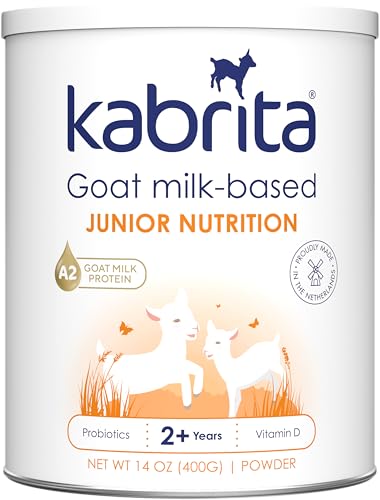
Kabrita Jr. is specifically designed for children ages 2-7 who struggle with cow’s milk digestion. It is made from A2 goat milk protein, which is naturally easier on the stomach than the A1 protein found in most cow’s milk. The formula is fortified with prebiotic inulin and probiotic B. animalis, creating a dual-action gut health support system.
Parents report that even toddlers who rejected other milks happily accept Kabrita, noting its naturally sweet taste and mild smell. The powder format is convenient for mixing into smoothies, oatmeal, or sippy cups. It also adheres to strict European standards that limit antibiotics and growth hormones, offering peace of mind.
However, this is a goat milk product, so it is not suitable for families avoiding all animal-based foods. Some toddlers may need a few tries to get used to the slightly different flavor profile. At a mid-range price, it offers excellent value for parents seeking a gentle, nutrient-dense option.
Why it’s great
- Gentle A2 goat milk protein ideal for sensitive tummies
- Contains both prebiotic inulin and probiotic B. animalis
- Non-GMO and made under strict European safety standards
Good to know
- Not suitable for vegan or dairy-free diets
- Distinct goat milk taste may require an adjustment period
3. Similac Go & Grow 360 Total Care

Similac Go & Grow 360 is the first US toddler drink to feature an exclusive blend of 5 HMO prebiotics, which mimic the structure of breast milk to support healthy gut bacteria. Beyond digestion, it provides DHA for brain and eye development, lutein for eye health, and Vitamin E for cellular support — a comprehensive trio for early growth.
Parents transitioning from infant formula often choose this for its familiar brand reputation and complete nutritional profile. It is a powdered formula that mixes easily with water, making it budget-friendly per serving compared to ready-to-drink cartons. The can is compact and easy to scoop, and many reviewers note that their toddlers readily accept the taste.
The powdered format can be a slight inconvenience compared to grab-and-go cartons, and it does include some processed ingredients typical of toddler formulas. It is also not suitable for those seeking a whole-food or minimal-ingredient approach. For parents prioritizing comprehensive nutrition without breaking the bank, this is a strong mid-range contender.
Why it’s great
- Exclusive blend of 5 HMO prebiotics for digestive health
- Comprehensive DHA, lutein, and Vitamin E for brain and eye development
- No artificial growth hormones and non-GMO verified
Good to know
- Powder form requires mixing, not as instantly convenient as ready-to-drink
- Contains processed ingredients typical of toddler formulas
4. Enfagrow Premium Toddler Milk Vanilla
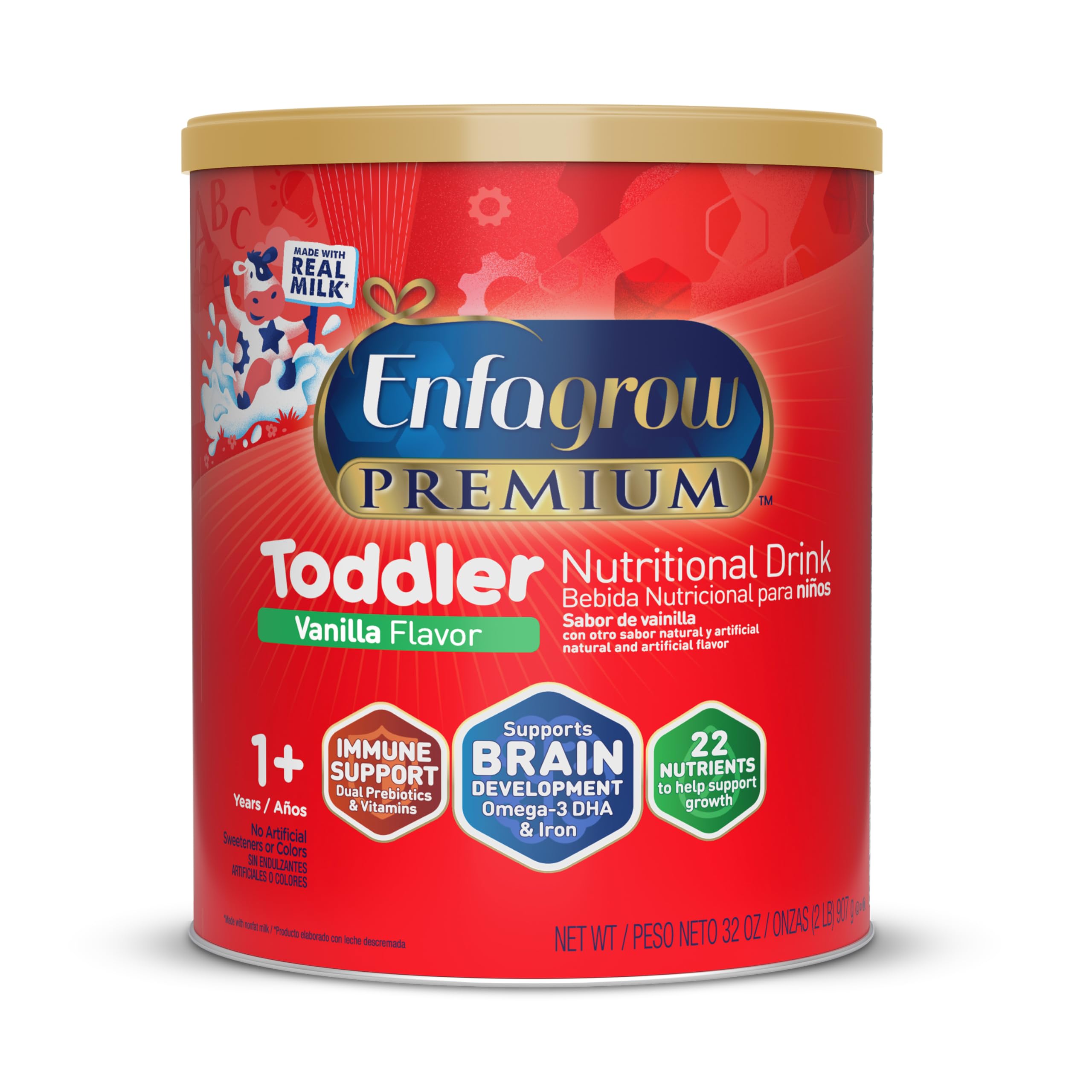
Enfagrow is made with real milk and fortified with what they call the “Brain Trio” — 26mg of DHA, iron, and protein — plus 19 other key nutrients. This makes it an excellent choice for toddlers transitioning from infant formula who are ready for a slightly more mature milk taste, but still need concentrated nutrition to fill the gaps left by picky eating.
Parents frequently report that Enfagrow tastes noticeably better than Pediasure, with less sugar, and that their picky toddlers happily drink it. The vanilla flavor is pleasant without being cloying, and the powder mixes well with minimal clumping. Many families use it as a supplement for meat-averse toddlers who need extra iron and protein.
Because it is dairy-based, it is not suitable for lactose-intolerant or dairy-free toddlers. The price sits in the mid-range, offering solid value for its nutrient density. Some parents note the can size could be larger for families with heavy usage, but the scoop system makes portioning easy.
Why it’s great
- Real milk base with 6g protein and 26mg DHA for brain development
- Contains prebiotics for digestive health support
- Lower sugar than many competing toddler drinks
Good to know
- Not suitable for dairy-free or lactose-intolerant children
- Powder format requires mixing, not instant
5. Orgain Organic Kids Vegan Protein Shake Vanilla
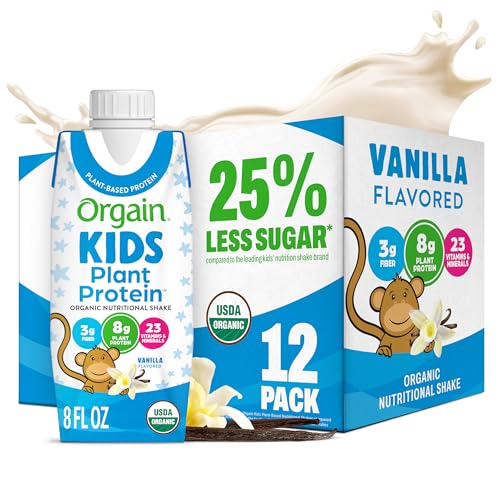
Orgain Kids Shakes are a convenient, ready-to-drink solution for families navigating picky eating or food allergies. Each carton delivers 8g of plant protein (from peas, brown rice, and chia), 23 vitamins and minerals, and 3g of fiber from an organic fruit and veggie blend. It is USDA Organic, Gluten-free, and free from the top 9 major allergens.
Parents of dairy-allergic or vegan families often call this a “lifesaver.” The vanilla flavor is smooth and creamy without an artificial aftertaste, and children compare it to a milkshake. Many families use it for breakfast, lunchboxes, or post-play recovery. The shelf-stable format means you can stock up without worrying about refrigeration.
The shake does contain organic cane sugar for sweetness, making it a bit sweeter than unsweetened milks. It is priced at a premium per-ounce cost compared to powdered options, so it is best reserved for families who value convenience and clean ingredients. Some reviewers note the chocolate flavor is less popular than the vanilla.
Why it’s great
- 8g organic plant protein plus an organic fruit and veggie blend
- 23 essential vitamins and minerals in every serving
- Free from the top 9 allergens; USDA Organic and Non-GMO
Good to know
- Contains organic cane sugar, sweeter than plain milk
- Premium price point compared to powdered formulas
6. MALK Unsweetened Almond Milk
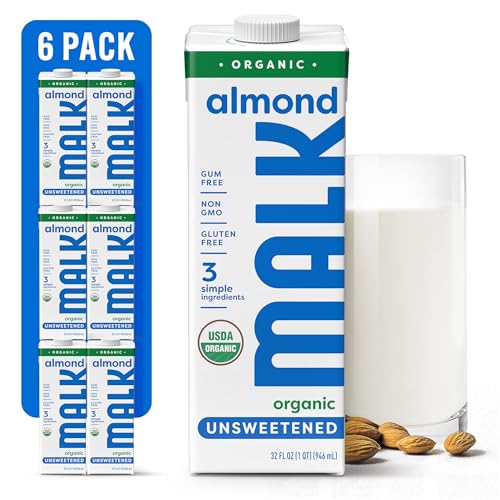
MALK proudly list their ingredients as simply: organic almonds, filtered water, and Himalayan pink salt. No gums, fillers, emulsifiers, or preservatives. For families who prioritize ultra-clean eating and avoid processed additives, this is the purest non-dairy milk option on the list. It’s shelf-stable and comes in a 6-pack that keeps well in the pantry.
Users praise its fresh, clean taste and creamy texture, noting it doesn’t have the watery feel or chalky aftertaste of many commercial almond milks. It works well in smoothies, coffee, cereal, and pancakes. Parents who are strict about Whole30, vegan, or paleo diets often turn to MALK as their go-to plant milk for the whole family.
The nutritional profile is leaner than other options here — it has only 1g of protein per serving and is not fortified with DHA or iron. For toddlers who eat a varied, balanced diet, this can be a fine hydrating beverage, but it should not be the primary source of nutrition. The premium price reflects the high-quality, minimal ingredients.
Why it’s great
- Only three organic, simple ingredients — no gums or fillers
- Clean, creamy taste without artificial aftertaste
- Shelf-stable 6-pack is convenient for pantry stocking
Good to know
- Low in protein and not fortified with toddler-specific nutrients
- Premium price reflects the high-quality ingredient sourcing
7. Voyager Toddler Milk On The Go Powder
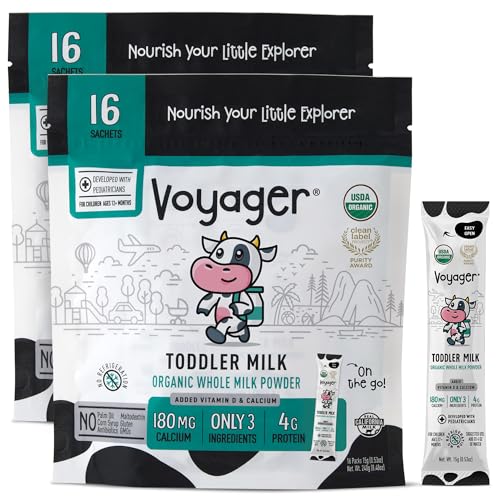
Voyager is a specialized product that solves a very specific problem: providing clean, organic whole milk for toddlers when you don’t have access to a fridge. Each sachet contains just three ingredients — organic whole milk from grass-fed cows, organic Vitamin D, and calcium — and mixes with 4 ounces of water to create a fresh-tasting milk.
Parents who travel frequently, take long flights, or spend days at theme parks and campsites swear by these. The powder dissolves cleanly in room-temperature water without clumping, and toddlers accept the taste as comparable to fresh milk. It is TSA-approved and fits easily into a carry-on or diaper bag.
The premium price is the biggest barrier — it is significantly more expensive per serving than any other option here. However, for its specific use case (portable, clean-label whole milk), the value is unmatched. It is also worth noting that the sachets make just 4 oz of milk, so you may need multiple sachets for a full serving.
Why it’s great
- Single-serve sachets are perfect for travel and on-the-go feeding
- Only three organic ingredients — no fillers or added sugars
- Sourced from 100% grass-fed cows on US family farms
Good to know
- Premium price per serving is significantly higher than other options
- Each sachet makes only 4 oz, may need two per feeding
FAQ
Can I give my 1-year-old almond milk as a full replacement for formula?
How do HMO prebiotics in toddler milk benefit my child?
What is the difference between powdered toddler milk and ready-to-drink?
Final Thoughts: The Verdict
For most users, the alternative milk for toddlers winner is the Ripple Kids Original because it combines high plant-based protein, DHA for brain health, and a clean allergen profile in a shelf-stable format that parents trust. If you need a gentle option for a sensitive tummy, grab the Kabrita Junior Goat Milk. And for families who travel constantly or need TSA-friendly milk on the go, nothing beats the Voyager Toddler Milk Powder.