
Our readers keep the lights on and the weekend projects moving. As an Amazon Associate, I earn from qualifying purchases.
Waking up strapped to a machine that forces air down your throat, battling mask leaks, dry mouth, and the distinct feeling you’re sleeping in a wind tunnel — the daily reality of CPAP therapy pushes many to search for a better way. For those who simply cannot tolerate the pressure or the bulky equipment, the need for a practical, comfortable solution that genuinely opens the airway and stops disruptive breathing pauses is a critical health and lifestyle priority.
I’m Rikta — the co-founder and writer behind FitlyFast. I have spent hundreds of hours dissecting clinical data, analyzing thousands of verified customer reports, and comparing the material science behind every major category of sleep apnea and snoring intervention to build a guide that moves past marketing fluff.
Whether the issue is positional apnea, nasal obstruction, or bruxism complicating your sleep, this guide cuts through the noise to present the real-world winners. After deep research, these are the top options for any alternative to cpap worth considering.
How To Choose The Best Alternative To CPAP
Ditching the CPAP machine is not about finding one magic gadget; it is about identifying why your airway collapses in the first place. Are you a back sleeper? Does your jaw drop open at night? Do you have chronic nasal congestion? Each cause demands a different device. Misidentifying the problem leads to a drawer full of failed solutions. The following breakdown covers the primary categories that have the strongest clinical and user-reported success rates.
Positional Therapy: The Back-Sleeping Fix
Over half of sleep apnea cases are classified as positional — meaning they only occur (or are significantly worse) when you sleep on your back. For these individuals, a device that simply prevents supine sleeping can be as effective as a CPAP machine. Look for the “Back Pressure Ball” design: a pouch worn on the back that forces you to shift to your side when you roll over. The key spec is ball firmness and harness adjustability. A rigid ball can cause back pain, while a harness that shifts ruins the effect. The best models use a breathable mesh and secure, fabric-only closures that won’t snag sheets or pajamas.
Oral Appliances: Mandibular Advancement vs. Dental Guards
This is the most common alternative category, but it contains two very different mechanisms. An anti-snoring mouthpiece (mandibular advancement device) physically holds your lower jaw forward to prevent the tongue and soft tissue from collapsing the airway. This is the direct oral alternative to CPAP for mild to moderate apnea. The key spec here is adjustability: a device with 3-5 progressive settings lets you dial in the exact forward position needed without maxing out jaw strain. In contrast, a dental night guard (for bruxism) simply protects teeth from grinding — it does not open the airway. If you are a grinder and a snorer, you need a mandibular advancement device, not a guard. BPA-free materials and FDA clearance are non-negotiable safety specs for any oral appliance.
Nasal Dilators and Airway Supports
For many, the primary obstruction point is not the tongue or soft palate, but the nasal passages. If you wake up with a dry mouth (indicating you switched to mouth breathing during the night) or have a deviated septum, a nasal dilator can be a game-changer. Unlike adhesive strips that pull on the outside, the best internal nasal dilators use flexible flares that expand the nasal vestibule from the inside. The critical spec is the increase in airflow — look for models claiming 50% or greater expansion. Also important: material flexibility to avoid sore spots on the septum and the ability to reuse the device for multiple nights (some last up to two weeks).
Titrate Your Comfort: Inclined Pillows
A simple but often overlooked tool is the inclined pillow. Elevating the head by a slight angle (around 10 degrees) can use gravity to pull the tongue and soft palate forward, reducing collapse. This is not a stand-alone solution for severe apnea, but for those with mild snoring or positional issues, it can produce a surprising reduction in AHI (Apnea-Hypopnea Index). The key spec is foam density and incline angle. Memory foam that is too soft will collapse under the head, negating the angle. Look for a medium-firm memory foam with a permanent 9-10 degree cutoff. Also crucial: a removable, washable cover, as sleep sweat is a hygiene reality.
Quick Comparison
On smaller screens, swipe sideways to see the full table.
| Model | Category | Best For | Key Spec | Amazon |
|---|---|---|---|---|
| ApneaShield Classic | Positional Trainer | Supine-dependent apnea sufferers | 8.8 oz harness, hard ball insert | Amazon |
| SilentZPro 2.0 | Mandibular Device | Adjustable jaw advancement | 5 progressive fit settings | Amazon |
| Pyramid Pillow | Inclined Pillow | Mild positional snoring relief | 9.5° incline angle | Amazon |
| SleepRight Intra-Nasal | Nasal Dilator | Nasal congestion and mouth breathing | 58% airflow increase | Amazon |
| Resolve Night Guard | Custom Mold Guard | Bruxism and clenching with apnea | Microwave custom fit | Amazon |
| The Doctor’s Nightguard | Boil-and-Bite Guard | Budget bruxism protection | BPA-free boil-and-bite | Amazon |
| enCore Custom Soft Guard | Dental Lab Guard | Lab-quality custom soft guard | Professional impression kit | Amazon |
In‑Depth Reviews
1. ApneaShield Classic

The ApneaShield Classic directly addresses the most common root cause of sleep apnea: supine sleeping. Its Back Pressure Ball design is a positional therapy device that uses a rigid foam ball sewn into a breathable mesh pouch worn around the chest. When you roll onto your back, the ball creates an uncomfortable (but not painful) pressure point that instinctively prompts you to shift to your side — training the body without alarms or straps that snag on sheets.
User reports are striking. Several verified buyers describe eliminating the need for CPAP altogether after switching to the ApneaShield. The harness is lightweight at just 8.8 ounces, and the lack of velcro means it won’t damage delicate sleepwear. The breathable mesh prevents overheating, a common complaint with positional pillows or full vests. It is a simple, mechanical solution that works because it tackles a specific, measurable problem.
There is one consistent trade-off: the supplied ball can feel too hard for some users. Several reviewers note needing to pad it with socks or replace it with a tennis ball to find the right pressure without discomfort. The harness itself is adjustable and comfortable, but the ball’s rigidity is the single point where personal anatomy dictates success. If you are a pure back sleeper with positional apnea, this is the most direct non-mask path to a quiet night.
Why it’s great
- Directly addresses positional apnea by preventing supine sleep
- Lightweight (8.8 oz) and breathable mesh prevents overheating
- Velcro-free design protects sheets and pajamas
Good to know
- The back ball can feel hard; some users pad it with socks
- Requires nightly commitment to retrain sleeping position
2. SilentZPro 2.0
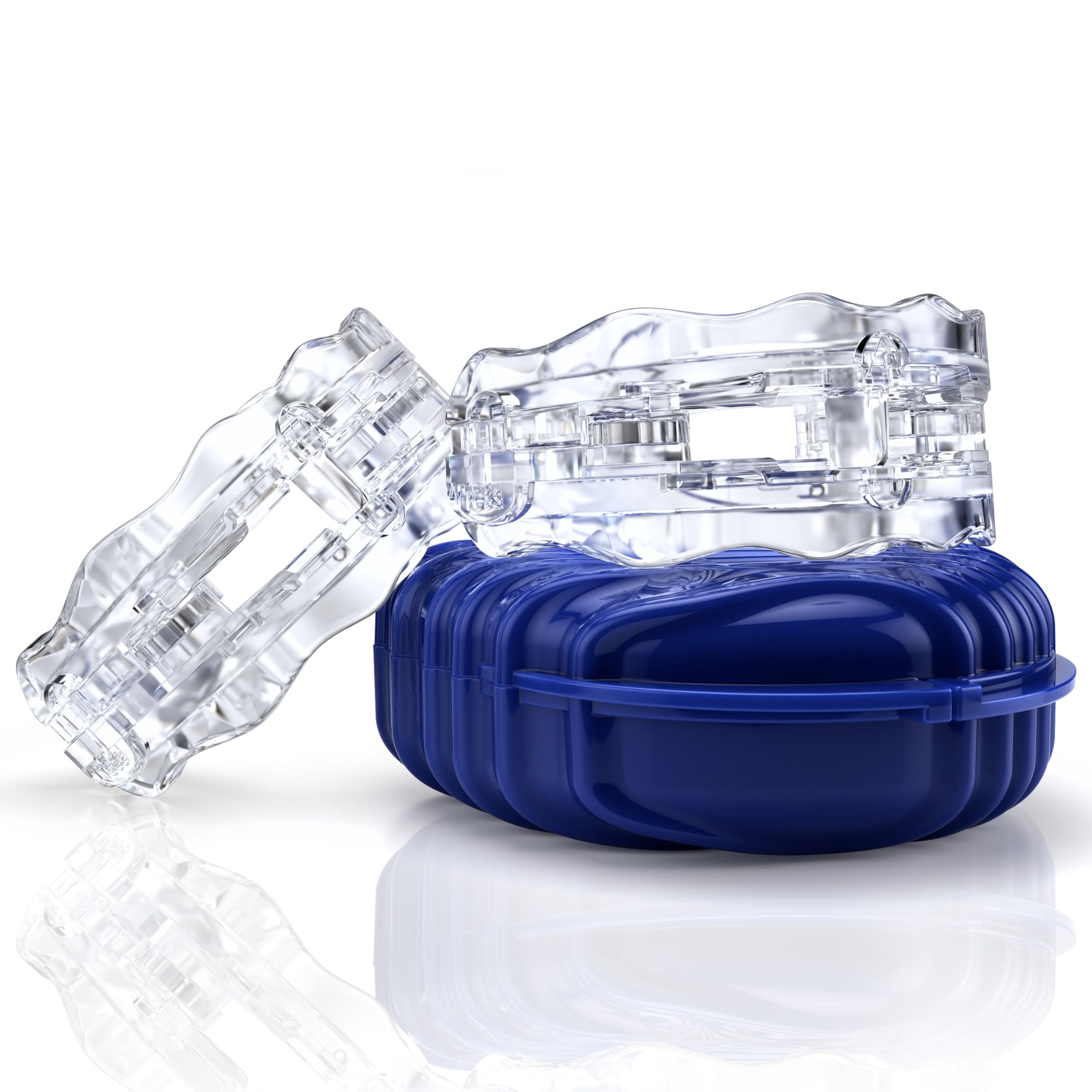
The SilentZPro 2.0 is a mandibular advancement device (MAD) designed to pull the lower jaw forward, creating space in the airway behind the tongue. Its defining differentiator is the five progressive adjustment settings, which allow you to start at a minimal forward position and gradually increase over several weeks. This incremental approach is critical — jumping directly to max advancement can cause severe jaw pain and user rejection.
FDA clearance and BPA-free materials provide the safety assurance required for a nightly oral appliance. The patented design permits both vertical and lateral jaw movement, which mimics natural jaw motion better than many rigid boil-and-bite competitors. Verified users report a significant reduction in snoring volume, with several noting that their fitness trackers showed improved sleep scores within the first week of use.
The learning curve is real. A 3-4 week adjustment period is normal, during which users report moderate jaw tightness and increased drool as the mouth adjusts to the new position. Some users find that the device does not eliminate snoring entirely — particularly when sleeping on the back — but reduces it to a non-disruptive level. The trade-off for the custom adjustability is the commitment to a multi-week titration process.
Why it’s great
- 5 adjustable settings for gradual jaw positioning
- FDA-cleared and BPA-free for safety
- Allows lateral and vertical jaw movement for natural feel
Good to know
- Significant adjustment period of 3-4 weeks required
- Common side effects: jaw tightness and drool during adaptation
3. Pyramid Pillow
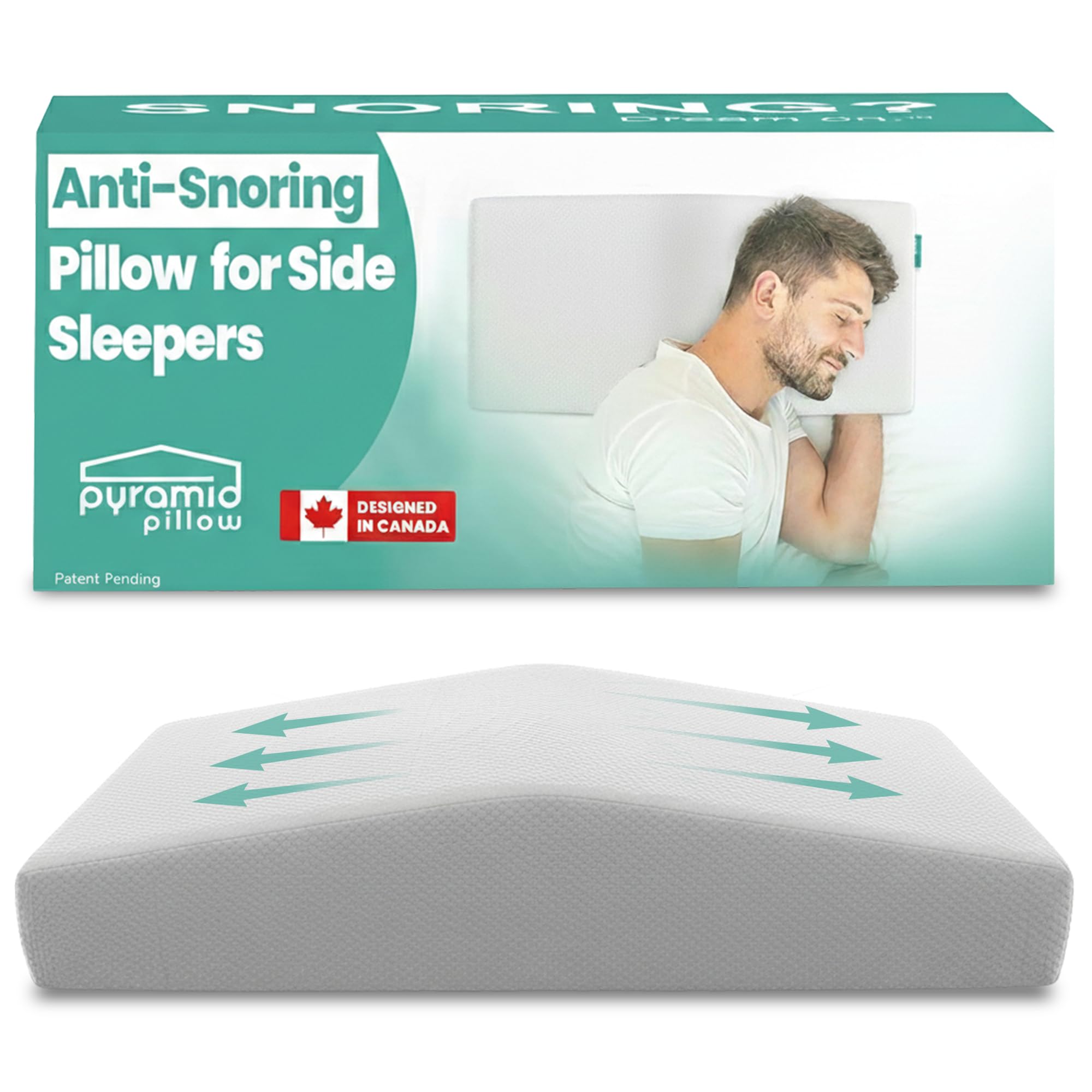
The Pyramid Pillow is a deceptively simple intervention: a wedge-shaped memory foam pillow with a 9.5° incline, purpose-built for side sleepers. The incline uses gravity to pull the tongue and soft palate forward, reducing airway collapse without any device in the mouth or on the body. For mild positional snoring or apnea that is aggravated by neck flexion, this can produce noticeable improvements with zero adaptation discomfort.
The medium-firm memory foam hits the balance between support and comfort — soft enough to cradle the head, but firm enough to maintain the 9.5° angle without collapsing under weight. The polyester cover is removable and machine washable, a practical feature for hygiene. Users can adjust the effective height by sleeping nearer the center (full thickness) or the edge (thinner profile), giving a personalized range within the same pillow.
Results are variable. Some users report a 50% reduction in snoring volume confirmed by sleep apps, while others find the effect fades after two weeks. The pyramid shape requires an adjustment period as the sleeper learns to position themselves on the downward slope. It is a low-risk, high-comfort entry point for those unwilling or unable to wear an oral appliance, especially if their primary issue is mild neck alignment rather than severe airway collapse.
Why it’s great
- Zero adaptation — no mouthpiece or body attachment needed
- Medium-firm memory foam holds the 9.5° incline all night
- Washable cover and adjustable sleep position within the pillow
Good to know
- Effectiveness can fade after two weeks for some users
- Pyramid shape requires a few nights to find your spot
4. SleepRight Intra-Nasal Breathe Aids

The SleepRight Intra-Nasal Breathe Aids are internal nasal dilators that physically flare the nasal passages open from the inside. Unlike adhesive strips that can irritate the skin, these silicone flares sit inside the nostrils with no adhesive. The manufacturer claims a 58% increase in airflow — a significant spec that directly addresses the root cause of mouth breathing and the resulting tongue collapse that drives apnea events.
User reports are emphatic: many describe these as “life-changing” for nasal breathing. Several reviewers combining these with saline sprays report gaining 1-1.5 hours of sleep extension. The reusability is notable — a single pair lasts up to 15 days, making them a low-maintenance option. They also work during exercise, broadening their utility beyond sleep.
The main caveat is the two-week adjustment period where users report soreness and scabbing inside the nostrils. Regular lubrication with petroleum jelly or saline spray is necessary during this phase. For those with a deviated septum, these can be highly effective, but the initial irritation can cause some to abandon the product before adapting. If you are a mouth breather, this is the most direct path to keeping your airway open without a mask.
Why it’s great
- Directly increases nasal airflow by up to 58%
- No adhesive means no skin irritation from strips
- Reusable for up to 15 days per pair; also works during exercise
Good to know
- Initial soreness and scabbing inside the nostrils for ~2 weeks
- Requires regular lubrication to maintain comfort
5. Resolve Night Guard with FlexiFit Technology
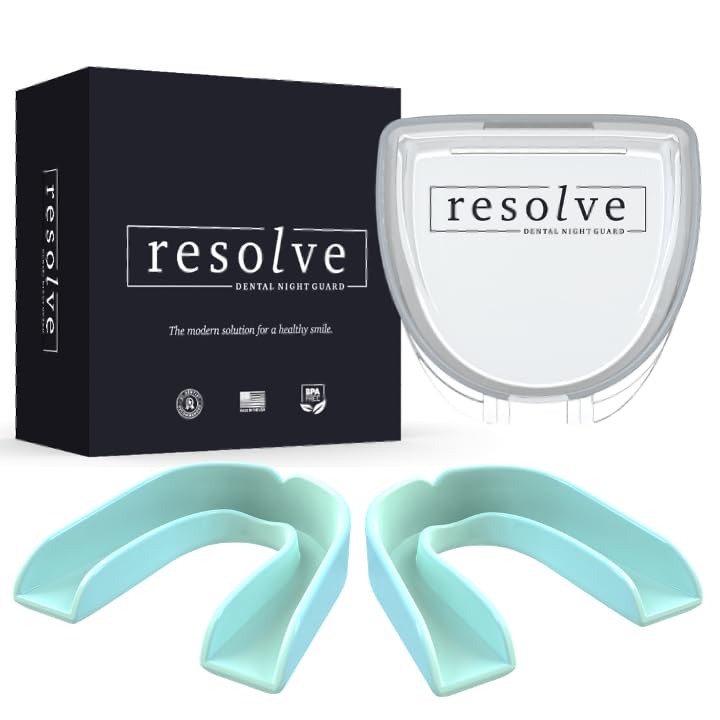
The Resolve Night Guard uses a microwave-fit technology that creates a custom mold without boiling water. You microwave the guard with a wet paper towel for under 5 minutes, then bite down to form a perfect impression. This process avoids the hot-water splashing risk of traditional boil-and-bite methods and produces a guard that hugs the teeth and gums securely.
This is primarily a bruxism guard, not a mandibular advancement device. It protects teeth from grinding and clenching, which can be a secondary complication for those whose apnea is tied to jaw tension or TMJ. The 2-pack provides a backup for travel. The material is slim and designed to feel natural in the mouth, with user reviews specifically noting it is less bulky than expected for a moldable guard.
The fit quality depends entirely on precise execution of the microwave instructions. Some users report a good initial fit that becomes uncomfortable over time, requiring reheating and remolding. The guard is effective for mild to moderate grinding but is not designed to reposition the jaw for airway opening. If your primary need is protecting teeth at night rather than opening the airway, this is a solid entry.
Why it’s great
- Quick microwave molding eliminates boiling water risks
- Slim, low-profile fit suitable for those with a gag reflex
- 2-pack provides a backup for travel
Good to know
- Not a mandibular advancement device; does not open the airway
- Mold quality depends on precise microwave and bite timing
6. The Doctor’s Nightguard

The Doctor’s Nightguard is a classic boil-and-bite dental guard for teeth grinding. It is a slim, BPA-free guard that you submerge in hot water, then bite down to mold. The design is slim enough that users can talk and breathe while wearing it, and it includes two guards in the box — a practical detail for those who want a spare or alternate sizes.
User loyalty is high: some buyers report buying this guard for years, with a single guard lasting about six months before needing replacement. The mold instructions are straightforward, and the price point makes it an easy entry into night guard use. For those whose apnea is compounded by clenching (leading to morning headaches or jaw pain), this can provide relief without the high cost of a dental lab guard.
Like all boil-and-bite guards, the fit depends entirely on your molding accuracy. The material is thicker than a custom lab guard, which can feel bulky inside the mouth. It is also a simple guard — it protects teeth but does nothing to reposition the jaw for airway opening. If your apnea is mild and your primary issue is nighttime clenching, this is a low-risk starting point.
Why it’s great
- Simple boil-and-bite process with slim design
- 2-pack provides a backup at a fair price
- Each guard lasts up to 6 months with proper care
Good to know
- No mandibular advancement; purely for grinding protection
- Thicker and bulkier than custom laboratory-fabricated guards
7. enCore Custom Soft Dental Night Guard

The enCore Custom Soft Guard is the gold standard for at-home dental night guards. You receive a professional impression kit, take an impression of your upper or lower teeth using dental-grade materials, and mail it back to the laboratory. Board-certified dental technicians fabricate a custom soft guard based on your specific bite. The result is a fit that rivals (and many users say surpasses) what you would get from a dentist’s office.
The soft material is specifically indicated for mild bruxism — it is pliable and comfortable, far more so than the rigid boil-and-bite alternatives. User reviews are consistently 5-star, with comments about immediate headache relief and elimination of morning jaw clenching. The guard eliminates the “bulky” feel problem because it is made to your exact dental arch, not a generic mouth shape.
The cost and process time are the barriers. You must complete the impression correctly — a bad impression means a bad guard. The turnaround time from sending in the impression to receiving the guard adds shipping days, so it is not an overnight solution. The guard is also for bruxism, not mandibular advancement. For those with grinding-related sleep disruption, however, the comfort and precision are unmatched.
Why it’s great
- Professional laboratory fit from an at-home impression kit
- Soft, pliable material eliminates the bulky feel of boil-and-bite guards
- BPA and latex-free; sourced from US and German materials
Good to know
- Requires you to complete a professional-level impression correctly
- Turnaround time includes shipping impressions and waiting for fabrication
FAQ
Can a positional trainer like the ApneaShield completely replace a CPAP machine?
Does a mandibular advancement device hurt your jaw permanently?
Why would a dental night guard help with sleep apnea if it does not move the jaw?
Final Thoughts: The Verdict
For most users, the alternative to cpap winner is the ApneaShield Classic because it directly targets the root cause of positional apnea with a simple, mechanical solution that requires zero mouth insertion and has the strongest user evidence of eliminating CPAP dependency. If you want precise, titratable jaw advancement, grab the SilentZPro 2.0. And for nasal congestion-driven mouth breathing, nothing beats the SleepRight Intra-Nasal Breathe Aids for keeping the airway open from the nostrils up.