
Our readers keep the lights on and the weekend projects moving. As an Amazon Associate, I earn from qualifying purchases.
Finding a dairy-free milk that pours well in coffee, blends into smoothies, and doesn’t separate in your cereal bowl while also avoiding gums, oils, and added sugars is the real challenge most shoppers face. The sheer volume of cartons on the shelf turns a simple swap into a research project.
I’m Rikta — the founder and writer behind FitlyFast. I’ve spent years combing through ingredient decks, comparing protein counts, and tracking which plant-based milks actually froth without splitting to bring you a focused shortlist.
After reviewing dozens of brands based on purity, protein density, and coffee performance, these picks represent the absolute best alternative to milk for anyone wanting clean ingredients without sacrificing taste or texture.
How To Choose The Best Alternative To Milk
The right dairy-free milk comes down to three non-negotiable pillars: the ingredient deck, the protein profile, and how it behaves when heated. A milk that separates in hot coffee or leaves a gritty residue on your tongue fails the test regardless of the health halo on the carton.
Ingredient Purity — The Three-Ingredient Rule
Premium plant milks stick to three core ingredients: water, the base nut or grain, and salt. Any addition of gums (gellan, guar, xanthan), emulsifiers (sunflower lecithin), or refined oils (sunflower, canola) indicates an attempt to stabilize a low-quality slurry. The cleanest options skip these entirely and rely on the natural fat and fiber of the whole ingredient.
Protein Density and Satiety
Soy milk leads the category with 12 grams of complete protein per serving, making it the only plant milk that rivals dairy’s macronutrient profile. Pea protein-based options come second at 8 grams, while oat and almond milks typically land between 1 and 4 grams. If you’re replacing milk for meal replacement or post-workout recovery, prioritize protein count over creaminess.
Barista Compatibility — Heat Stability and Froth Texture
Not all plant milks survive contact with hot espresso. Barista-blend milks include a small amount of oil or enzymatic treatment to resist splitting at high temperatures. For everyday coffee drinkers, check whether the milk is explicitly labeled “barista blend” or has verified froth performance — general-purpose cartons often curdle or turn watery in a latte.
Quick Comparison
On smaller screens, swipe sideways to see the full table.
| Model | Category | Best For | Key Spec | Amazon |
|---|---|---|---|---|
| Edensoy Organic Soymilk | Premium | High Protein | 12g protein per serving | Amazon |
| Califia Organic Oat Barista | Mid-Range | Barista Frothing | Barista-blend certified | Amazon |
| SPROUD Barista Pea Milk | Premium | Nut-Free Coffee | 8g pea protein per serving | Amazon |
| Mooala Organic Simple Almond | Premium | Cleanest Almond | 3 ingredients only | Amazon |
| Mooala Organic Almond Unsweetened | Premium | Everyday Almond | Roasted almond base | Amazon |
| Califia Organic Unsweetened Almond | Mid-Range | Simple Almond | 3 ingredients, no gums | Amazon |
| Pacific Foods Organic Almond | Budget-Friendly | Bulk Value | 12-pack of 32 oz cartons | Amazon |
In‑Depth Reviews
1. Edensoy Unsweetened Organic Soymilk

Edensoy is the only plant milk on this list that delivers 12 grams of complete protein per serving — a figure that matches whole dairy milk without any protein isolates or additives. The ingredient deck is astonishingly short: organic whole soybeans and reverse-osmosis purified water, plus a pinch of kombu seaweed (which aids digestibility). There are no gums, oils, natural flavors, or sweeteners hiding in the carton.
In practice, this soymilk has a rich, full-fat mouthfeel that emulsifies beautifully into coffee and froths better than most barista-labeled alternatives. The taste is clean with no beany aftertaste — a common failure point for lesser soy milks. Long-term drinkers report consistent texture across subscription cycles, and the aseptic carton keeps it shelf-stable for months before opening.
The only caveat is the premium positioning, which puts it at a higher price tier than many almond or oat options. But when you consider the protein density and ingredient purity, the cost-per-gram-of-protein lands competitively. The Cornucopia Institute ranks Edensoy number one out of 62 brands, a credential that backs up the everyday performance.
Why it’s great
- Highest protein content at 12g per serving
- Only two core ingredients — soybeans and water
- Froths well for lattes without barista additives
Good to know
- Higher price per carton than generic alternatives
- Packaging can show minor denting during shipping
2. Califia Farms Organic Oat Barista Blend

Califia’s Organic Oat Barista Blend solves the two biggest oat milk frustrations: separation in hot coffee and watery texture. This blend is formulated to steam and froth into microfoam that holds its structure, making it a direct competitor to brands like Oatly for espresso-based drinks. The organic certification guarantees the oats are grown without synthetic pesticides, and there is no added sugar — the sweetness comes naturally from oat enzymes.
The 32-ounce cartons are shelf-stable, allowing you to stock up without refrigerator space. When poured into dark roast coffee, the oat milk adds creaminess without masking the bean’s flavor notes. Multiple long-term users report using it for both morning lattes and cooking applications like creamy soups or sauces, where it behaves similarly to whole milk in terms of body.
Some drinkers find this particular batch less creamy than Califia’s regular oat milk, citing a slightly thinner consistency. If you prioritize maximum thickness, look for a full-fat oat brand instead. But for daily coffee use where froth quality is paramount, this barista-grade option remains a top contender among oat-based alternatives.
Why it’s great
- Exceptional froth and microfoam for latte art
- Organic oats with no added sugars
- Shelf-stable packaging for extended pantry storage
Good to know
- Slightly thinner consistency than some full-fat oat brands
- Some users report a mild odd aftertaste
3. SPROUD Dairy Free Milk Barista Flavor
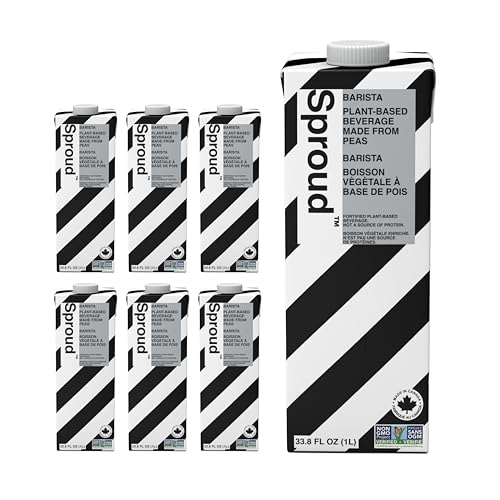
SPROUD occupies a unique niche as a pea protein-based milk that is simultaneously nut-free, soy-free, and gluten-free — making it the safest option for people with multiple food allergies. The protein content sits at 8 grams per serving, placing it squarely between soy milk and almond milk in terms of satiety. The barista formulation includes a proprietary blend that resists splitting when poured into hot espresso, producing a silky microfoam that reviewers say surpasses Oatly Barista in texture.
Taste-wise, SPROUD is described as thick and neutral, without the strong beany notes of soy milk or the grassy finish of some oat brands. It works particularly well in cortaditos and lattes where the milk is the dominant flavor component. The shelf-stable 6-pack reduces refrigeration needs before opening, and the eco-friendly packaging uses less water and land than almond or oat cultivation.
The main drawback is a subtle pea taste that some drinkers detect in cold applications like cereal or protein shakes. For hot drinks, the flavor is negligible. The price also runs higher than basic almond milks, though competitive with other barista-grade options. If you need an allergen-friendly milk that holds up to coffee heat, this is the strongest candidate.
Why it’s great
- Complete pea protein with 8g per serving
- Microfoams better than leading oat barista brands
- Free from all top allergens — nuts, soy, gluten
Good to know
- Mild pea aftertaste noticeable in cold drinks
- Price premium over standard plant milks
4. Mooala Organic Simple Almond Milk

Mooala’s Simple Almond Milk proves that three ingredients — organic almonds, Himalayan pink salt, and filtered water — are enough to create a satisfying dairy-free milk. There are no gums, no oils, no fillers, and no natural flavors. This is the almond milk equivalent of homemade, and the taste reflects that purity: a subtle, clean almond flavor without the cardboard notes that plague mass-market brands.
The texture is surprisingly smooth for a gum-free product. It doesn’t separate aggressively like some additive-free milks, though a good shake before each pour is still necessary. In coffee, it froths moderately well for a standard almond milk, though it won’t create the thick microfoam of a barista blend. It excels in smoothies and cereal, where its thin, water-like viscosity blends seamlessly without weighing down the dish.
The shelf-stable format is ideal for RVs, camping, or pantry stockpiling. The main trade-off is cost — the 6-pack lands at a higher price tier than conventional almond milks. But for anyone avoiding gums and emulsifiers due to digestive sensitivity, the price is justified by the ingredient list alone. A slight peanut-butter aftertaste is noted by some drinkers, though most find it negligible.
Why it’s great
- Only three organic ingredients with no additives
- Smooth, clean flavor without cardboard notes
- Shelf-stable for flexible storage
Good to know
- Higher price per ounce than standard almond milks
- Mild peanut-butter aftertaste reported by some
5. Mooala Organic Almond Milk Unsweetened
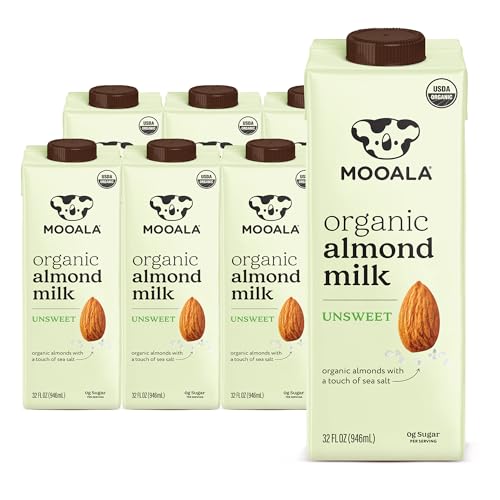
Mooala’s standard unsweetened almond milk uses roasted organic almonds, which gives it a deeper, nuttier flavor compared to the Simple line. The ingredient list remains clean — roasted almonds, sea salt, and water — with added calcium and vitamin E for nutritional fortification. It’s dairy-free, soy-free, and gluten-free, covering the major dietary restrictions without relying on chemical stabilizers.
In practical use, this milk froths surprisingly well for a non-barista almond milk. Regular drinkers use it for cappuccinos and report good foam structure, though it won’t match oat milk’s microfoam density. The flavor is described as deliciously creamy with no chalky aftertaste, and the sodium content sits at a reasonable 120mg per serving, which is lower than many competing almond milks. The shelf-stable format means you can buy in bulk without immediate refrigeration.
The main limitation is occasional stock inconsistency — this product goes in and out of availability on auto-ship programs. The price also sits at a premium tier, though subscribers note that each case lasts about three weeks for daily use. If you want an almond milk that tastes closer to roasted nuts than raw almonds, this is the pick.
Why it’s great
- Roasted almond base offers deeper flavor profile
- Froths well for a standard almond milk
- Good source of calcium and vitamin E
Good to know
- Availability can be spotty for subscription orders
- Premium price per carton
6. Califia Farms Organic Unsweetened Almond Milk

Califia’s organic unsweetened almond milk mirrors the three-ingredient philosophy of Mooala Simple but with a slightly different execution: purified water, organic almonds, and sea salt. The result is a milk that drinkers consistently describe as having a “homemade taste,” with no gums, oils, or carrageenan to artificially thicken the texture. The USDA Organic certification ensures the almonds are grown without synthetic inputs.
In coffee, this milk performs adequately for a standard almond milk. It doesn’t curdle in hot tea or coffee, a common failure point for less stable plant milks, and the flavor remains neutral enough to let the coffee’s notes come through. The shelf-stable cartons maintain quality for 7-10 days after opening, which is typical for this category. Long-term users report consistent taste across years of purchasing, citing the reliability of the formula.
The biggest complaint comes from a design flaw in the carton spout — the inner stopper tabs can break during opening, causing leakage when shaken. Several reviewers resorted to cutting the carton open and transferring the milk to a separate container. This packaging issue is frustrating enough that some drinkers switched to other brands despite liking the taste. If you can tolerate the potential spout trouble, the liquid inside is excellent.
Why it’s great
- Three clean ingredients with no gums or oils
- Homemade taste with consistent quality across years
- Does not separate or curdle in hot beverages
Good to know
- Carton spout design prone to breaking and leaking
- May require transfer to a separate container
7. Pacific Foods Organic Unsweetened Almond Milk
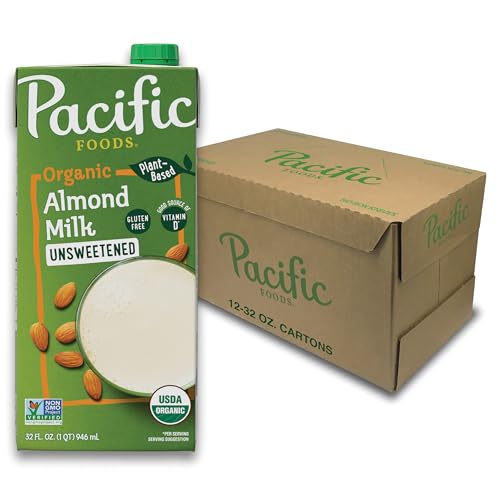
Pacific Foods delivers the biggest volume play in this roundup with a 12-pack of 32-ounce cartons — a total of 384 fluid ounces. The milk itself is made from gently roasted organic almonds, giving it a creamier and slightly sweeter taste than many unsweetened almond milks. Each serving provides 10% of the daily recommended value for vitamin D, a meaningful addition for those using milk alternatives as a nutritional staple.
Drinkers praise the smooth, thick consistency that feels less watery than most almond milks. It blends well into smoothies and cereal without separating, and the flavor is mild enough to avoid interfering with other ingredients. Some users describe it as having a “sweet treat” quality despite being unsweetened, thanks to the natural sugars released during almond roasting. It also froths adequately for basic coffee drinks, though not at barista-grade levels.
The main trade-off is physical volume — the 12-pack weighs over 25 pounds, which makes storage and handling cumbersome. The price per ounce is competitive for organic almond milk, but the upfront investment is higher than smaller packs. If you have the pantry space and consume almond milk daily, the bulk format reduces per-carton cost and minimizes shopping trips.
Why it’s great
- Best value per ounce with 12 cartons in one order
- Creamy, slightly sweet taste from roasted almonds
- Fortified with vitamin D for nutritional support
Good to know
- Heavy package at over 25 pounds — awkward to carry
- Requires significant pantry space for storage
FAQ
Which plant milk has the highest protein content?
Why do some plant milks contain gums and oils?
Can I use any plant milk for steaming and latte art?
How long does shelf-stable plant milk last after opening?
Is organic certification important for plant-based milk?
Final Thoughts: The Verdict
For most users, the alternative to milk winner is the Edensoy Organic Soymilk because it delivers the highest protein count, the cleanest ingredient deck, and reliable frothing performance in a single carton. If you want the best barista-grade frothing for daily lattes, grab the Califia Organic Oat Barista Blend. And for a nut-free, soy-free option that handles espresso without splitting, nothing beats the SPROUD Barista Pea Milk.