
Our readers keep the lights on and the weekend projects moving. As an Amazon Associate, I earn from qualifying purchases.
Buying your first serious camera is a maze of sensor sizes, lens mounts, and acronyms that seem designed to confuse. You know a good photo when you see one, but translating that into the right gear feels like a foreign language test you didn’t study for. The result is paralysis—or worse, a purchase you regret after a single weekend shoot.
I’m Rikta — the co-founder and writer behind FitlyFast. I’ve spent hundreds of hours combing through customer feedback, analyzing side-by-side specs on sensor performance, autofocus coverage, and low-light capability to separate the gear that holds amateurs back from the tools that actually accelerate their learning curve. This guide focuses on actionable, real-world comparisons, not marketing fluff.
Whether you need a compact travel companion or a studio-capable workhorse, this guide cuts through the noise to help you find the right amateur camera that matches your skill level without emptying your wallet or overwhelming you with complexity.
How To Choose The Best Amateur Camera
Choosing your first camera means matching your ambition with a body that won’t fight you. Start by understanding sensor size: APS-C gives you a fantastic balance of image quality and price, while full-frame offers superior low-light performance at a higher entry cost. Mirrorless cameras are generally lighter and more modern, but a used DSLR often provides incredible value. Avoid getting stuck on megapixel counts—most amateur work benefits far more from reliable autofocus and a solid kit lens than from raw resolution.
Sensor Science: APS-C vs. Full-Frame
The sensor is the heart of the camera and determines how much light is captured. APS-C sensors are the standard for entry-level and mid-range cameras, offering excellent image quality in a compact, affordable body. Full-frame sensors are larger and excel in low-light conditions, providing a shallower depth of field for that professional “bokeh” effect. For an amateur, the jump to full-frame is significant in cost, and an APS-C camera with a fast prime lens often produces better results for the same money.
Autofocus and Stabilization
Fast and accurate autofocus (AF) is non-negotiable for capturing sharp images of kids, pets, or any moving subject. Look for phase-detection AF points that cover a wide area of the sensor. The number of AF points is a strong indicator of tracking ability. Equally important is image stabilization. In-body image stabilization (IBIS) is a premium feature that allows you to shoot at slower shutter speeds without blur, especially critical in low light or when using non-stabilized lenses. This single feature can save more photos than a few extra megapixels.
Quick Comparison
On smaller screens, swipe sideways to see the full table.
| Model | Category | Best For | Key Spec | Amazon |
|---|---|---|---|---|
| Sony a7 III | Full-Frame | Low Light & Versatility | 693 AF Points | Amazon |
| Panasonic S5II | Full-Frame | Hybrid Photo & Video | Phase Hybrid AF | Amazon |
| Canon EOS RP | Full-Frame | Travel & Everyday Shooting | 26.2 MP Sensor | Amazon |
| Sony Alpha 6100 | APS-C | Fast Autofocus Performance | 0.02 sec AF | Amazon |
| Sony ZV-E10 | APS-C | Vlogging & Content Creation | 425 AF Points | Amazon |
| OM System E-M10 IV | Micro 4/3 | Portable Creative Shooter | 5-Axis IBIS (4.5 Stops) | Amazon |
| Panasonic Lumix G85 | Micro 4/3 | Budget Video & Stills | Dual I.S. 2 | Amazon |
| Nikon Z 30 | APS-C | Compact Social Media Creator | 209 AF Points | Amazon |
| Canon EOS R100 | APS-C | Entry-Level Mirrorless | 143 AF Zones | Amazon |
| Canon Rebel T7 Bundle | DSLR | Full-Kit Beginner Setup | 9 AF Points | Amazon |
| Nikon D3200 (Renewed) | DSLR | Ultimate Budget Entry | 24.2 MP Sensor | Amazon |
In‑Depth Reviews
1. Sony a7 III Full-Frame Mirrorless Camera with 28-70mm Lens

The Sony a7 III remains a gold standard for entry-level full-frame. Its 24.2MP back-illuminated sensor delivers excellent dynamic range and low-light noise control far beyond any APS-C camera in this list. The 693 phase-detection AF points cover 93% of the frame, making focus tracking reliable for both portraits and action. The 28-70mm kit lens is functional but average; purchasing a fast prime like the 50mm f/1.8 unlocks the sensor’s true potential.
Build quality feels premium and the battery life is outstanding, often lasting a full day of mixed shooting. The menu system is dense, which can intimidate a new user, but the core shooting experience is rewarding. It also offers 4K video with full pixel readout, making it a capable hybrid shooter. Many users report this camera remains competitive years after its release due to the quality of its output.
For the amateur who is serious about growing their skills and does not want to upgrade next year, the a7 III is a long-term investment. The in-body stabilization and fast mechanical shutter add versatility without requiring an immediate lens collection. It is heavier and more expensive than entry-level mirrorless options, but the image quality dividend is immediate and consistent.
Why it’s great
- Excellent full-frame low-light performance
- Incredible autofocus coverage and speed
- Long battery life for day-long shoots
Good to know
- Menu system is complex for beginners
- Kit lens requires upgrade for best results
2. Panasonic LUMIX S5II with 20-60mm & 50mm Lenses
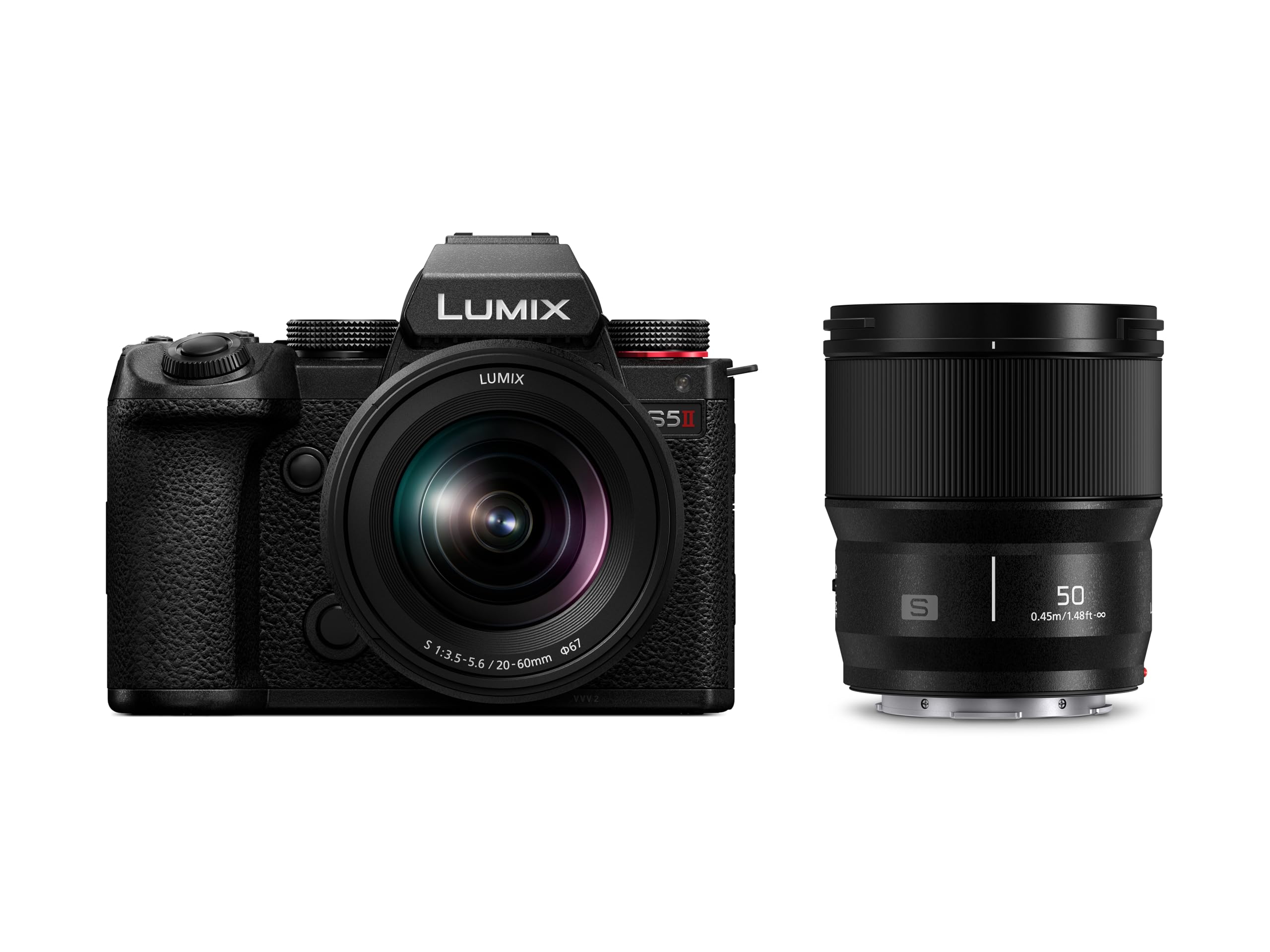
The Panasonic S5II marks a turning point for the Lumix line with its new phase-hybrid autofocus system, which finally delivers reliable subject tracking that rivals Sony and Canon. Bundled with both a 20-60mm and a fast 50mm f/1.8 prime lens, it provides immense value out of the box. The 24.2MP full-frame sensor captures excellent detail, and the Active I.S. technology smooths out handheld walking shots impressively.
Video creators will appreciate the unlimited recording time, made possible by an internal cooling fan, and 14+ stops of V-Log dynamic range for professional color grading. The dual card slots and weather-sealed body add reliability for serious work. On the downside, some users report a noticeable rolling shutter effect during fast pans, which limits its use for sports or high-motion scenarios.
For an amateur who wants a true hybrid camera capable of professional video work, this is the strongest package. The dual-lens kit provides a standard zoom and a portrait-capable prime immediately. The menus are highly customizable but take time to set up. Pair it with a fast SD card to unlock its full burst rate and video bitrate potential.
Why it’s great
- Excellent dual-lens kit with fast prime
- Unlimited 4K video with active cooling
- Reliable phase-detect autofocus
Good to know
- Rolling shutter is noticeable in fast pans
- Lens ecosystem smaller than Sony/Canon
3. Canon EOS RP with RF24-105mm F4-7.1 IS STM Lens

The Canon EOS RP is the lightest and smallest full-frame body in this roundup, making it the ideal travel companion for the amateur who values portability. Its 26.2MP full-frame sensor produces sharp, color-rich images that are characteristic of Canon’s color science. The RF 24-105mm IS STM kit lens is compact and stabilized, offering a versatile zoom range that covers wide-angle to short telephoto.
The autofocus system is fast and reliable in good light, with face and eye detection that simplifies portraiture. However, the RP has a smaller battery that drains faster than the a7 III’s, and the 4K video mode introduces a significant crop and lacks Dual Pixel AF at 4K. The electronic viewfinder is decent but not class-leading. It uses a Digic 8 processor, which is a generation behind.
Where the RP shines is in its simplicity and ergonomics. The menu system is beginner-friendly, and the price entry for full-frame is the lowest available. It is not a speed demon, but for landscapes, portraits, and everyday documentation, it delivers beautiful results without the weight or complexity of higher-end models. Spare batteries are a necessary accessory.
Why it’s great
- Lightest and smallest full-frame body
- Excellent image quality and color science
- Very beginner-friendly menu system
Good to know
- 4K video has a crop and no Dual Pixel AF
- Battery life is below average
4. Sony Alpha 6100 with E PZ 16-50mm Lens

The Sony a6100 is built around speed. With a claimed 0.02-second autofocus acquisition and 425 phase-detection points, it locks onto subjects almost instantly and tracks them continuously at 11 frames per second. This makes it the best option on this list for amateur photographers who want to shoot action, pets, or any fast-moving subject. The 24.2MP APS-C sensor delivers solid images with good dynamic range for its class.
The 16-50mm power zoom lens is compact for travel but optically average; it’s a starter lens that will be outgrown. The body is lightweight and the tiltable touchscreen is useful for vlogging, though it does not fully flip forward. The menu system inherits Sony’s notoriously dense layout, which can require some patience to learn. It lacks a headphone jack for video monitoring.
For its price point, the autofocus performance is unmatched. If your priority is capturing sharp images of a moving toddler or a running dog, the a6100 is the most capable APS-C body here. Pairing it with a brighter lens like the Sigma 30mm f/1.4 transforms it into a low-light performer. The lack of in-body stabilization means you rely on lens stabilization or a tripod.
Why it’s great
- Breathtakingly fast autofocus for action
- 11 fps burst with continuous tracking
- Excellent image quality from APS-C sensor
Good to know
- Menu system is not beginner-friendly
- Kit lens is optically average
5. Sony Alpha ZV-E10 Mirrorless Vlog Camera
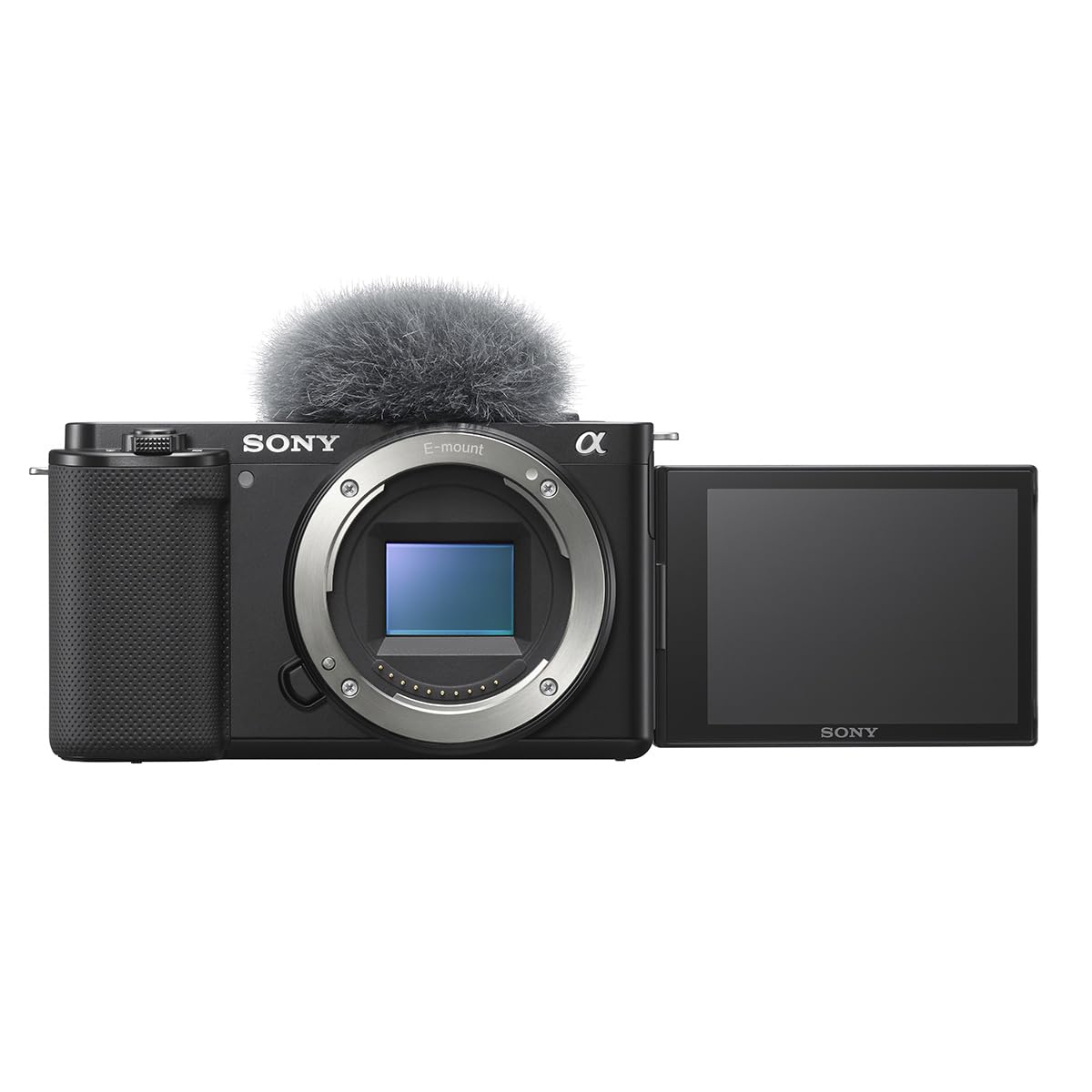
The Sony ZV-E10 is optimized for content creators, not photographers. It shares the same 24.2MP APS-C sensor and fast autofocus as the a6100 but adds video-focused features like a Product Showcase mode that smoothly transitions focus from your face to an object you hold up. The Background Defocus button instantly creates a blurred bokeh effect, and the three-capsule directional microphone is noticeably better than most built-in mics.
The body is lightweight and the fully articulated flip screen is ideal for self-recording. However, it lacks a built-in flash and a mechanical viewfinder, which limits its use in bright sunlight for stills photography. The 4K video is oversampled from 6K, producing sharp footage, but the rolling shutter can be severe, and the small LCD screen can be hard to judge focus on without an external monitor.
If your primary use is YouTube, TikTok, or general vlogging, this is the most purpose-built tool in the list. The USB streaming capability makes it a plug-and-play webcam for high-quality live streams. Battery life in video is short, so a pack of spares is essential. The lack of in-body stabilization means you need a gimbal or stabilized lenses for smooth walking shots.
Why it’s great
- Excellent video autofocus with eye tracking
- Product Showcase mode is very useful
- Better built-in microphone than competitors
Good to know
- No viewfinder for bright daylight stills
- Severe rolling shutter and short battery life
6. OM SYSTEM Olympus E-M10 Mark IV with 14-42mm Lens

The OM System E-M10 Mark IV is a stylish, compact Micro Four Thirds camera that punches above its weight. Its 20MP sensor is smaller than APS-C, but the in-body 5-axis image stabilization compensates brilliantly, allowing for sharp handheld shots at shutter speeds that would require a tripod on other cameras. The flip-down monitor and dedicated selfie mode make it one of the most user-friendly cameras for casual shooting.
The camera is physically small and light, making it genuinely pocketable with the pancake kit lens. It includes a suite of creative art filters (like Instant Film) that are fun for beginners to experiment with. However, the autofocus is contrast-detection based, which can hunt in low light more than phase-detect systems. The Micro Four Thirds sensor also shows more noise at high ISOs compared to APS-C or full-frame.
This camera is ideal for the amateur who values portability and creative fun over ultimate image quality. The IBIS is top-tier, enabling creative long-exposure shots without a tripod. The lens ecosystem for Micro Four Thirds is mature and affordable. It is not a low-light champion, but in good light, it produces excellent, shareable images with a distinct retro charm.
Why it’s great
- Class-leading 5-axis in-body stabilization
- Extremely compact and lightweight
- Fun creative modes for beginners
Good to know
- Contrast-detect AF hunts in low light
- Smaller sensor limits high-ISO performance
7. Panasonic LUMIX G85 with 12-60mm Power O.I.S. Lens

The Panasonic Lumix G85 offers incredible value for the budget-conscious amateur. Its 16MP Micro Four Thirds sensor lacks a low-pass filter, resulting in sharper fine detail than many other 16MP sensors. The Dual Image Stabilization 2 (IBIS combined with lens OIS) is outstanding, producing stable handheld footage and sharp photos even in challenging conditions. The body is weather-sealed, a rare and valuable feature at this price.
The camera is well-built with a magnesium alloy frame and has ergonomic controls that make manual shooting a pleasure. The 4K video is excellent, with no crop and access to 4K Photo modes for extracting high-res frames. The kit lens has good clarity and a useful 24-120mm full-frame equivalent zoom. However, the 16MP sensor is older and shows its age in dynamic range compared to newer 20MP+ sensors.
For an amateur on a budget who wants a rugged, versatile camera for both photos and video, the G85 is a top contender. The lack of a headphone jack is a drawback for serious videographers. The autofocus, while adequate, can be sluggish in very low light. This camera rewards users who learn manual controls and take advantage of its excellent stabilization to create sharp content without expensive gear.
Why it’s great
- Excellent dual stabilization for handheld use
- Weather-sealed, durable build quality
- Excellent value for money
Good to know
- 16MP sensor is behind in dynamic range
- Autofocus slow in low light
- No headphone jack
8. Nikon Z 30 Mirrorless Camera (Body Only)

The Nikon Z 30 is Nikon’s most compact interchangeable lens camera, designed specifically for vloggers and social media creators. Its 20.9MP APS-C sensor delivers sharp, Nikon-quality images with excellent color. The flip-out touchscreen selfie monitor and a red REC light make video recording foolproof. The autofocus includes eye tracking for people and pets, keeping subjects sharp during movement. It streams live in Full HD 60p over USB-C with no extra hardware.
The major trade-off is the lack of an electronic viewfinder, which makes framing shots difficult in bright outdoor conditions when the rear screen washes out. It also lacks in-body image stabilization, meaning you must rely on stabilized Z-mount lenses for smooth video. The body is very lightweight and comfortable for extended handheld use. It pairs perfectly with compact Z primes like the 24mm f/1.7 for a capable, pocketable setup.
This camera is ideal for the amateur whose primary output is social media stories, YouTube shorts, or casual live streaming. The dedicated webcam functionality is seamless. While the Z 30 is not the best choice for traditional photography in bright sunlight, its image quality and ease of use for video creation are top-notch. A good external mic is recommended for the best audio.
Why it’s great
- Very compact and lightweight mirrorless body
- Excellent webcam functionality out of the box
- Good autofocus with pet and eye tracking
Good to know
- No electronic viewfinder
- No in-body image stabilization
9. Canon EOS R100 with RF-S18-45mm F4.5-6.3 IS STM Lens

The Canon EOS R100 is the smallest and most affordable camera in Canon’s EOS R mirrorless system, serving as an ideal entry point. Its 24.1MP APS-C sensor and DIGIC 8 processor produce vibrant, sharp JPEGs straight out of the camera with Canon’s excellent color science. The Dual Pixel CMOS AF with up to 143 zones provides fast and accurate focusing with human and animal eye detection, a huge upgrade from older entry-level DSLRs.
The 4K video is capped at 24fps, which may frustrate videographers seeking 30fps. The burst rate of 6.5 fps is modest but sufficient for everyday shooting. The body lacks a fully articulating screen, only offering a tilt-up design, and the flash is an add-on. The kit lens has a slow variable aperture, making low-light indoor shooting challenging without a faster prime lens or external flash.
For the absolute beginner looking to step into a modern mirrorless system with interchangeable lenses, the R100 is a solid foundation. The user interface is clean and guided. The compact size makes it easy to bring anywhere. It is a camera that grows with you, offering manual controls when you are ready. Just be aware of the video limitations and the need for better glass for indoor photography.
Why it’s great
- Compact, lightweight entry into mirrorless
- Excellent Dual Pixel AF with eye detection
- Great out-of-camera JPEG colors
Good to know
- 4K video limited to 24fps
- Kit lens is slow in low light
10. Canon EOS Rebel T7 DSLR with Accessory Bundle
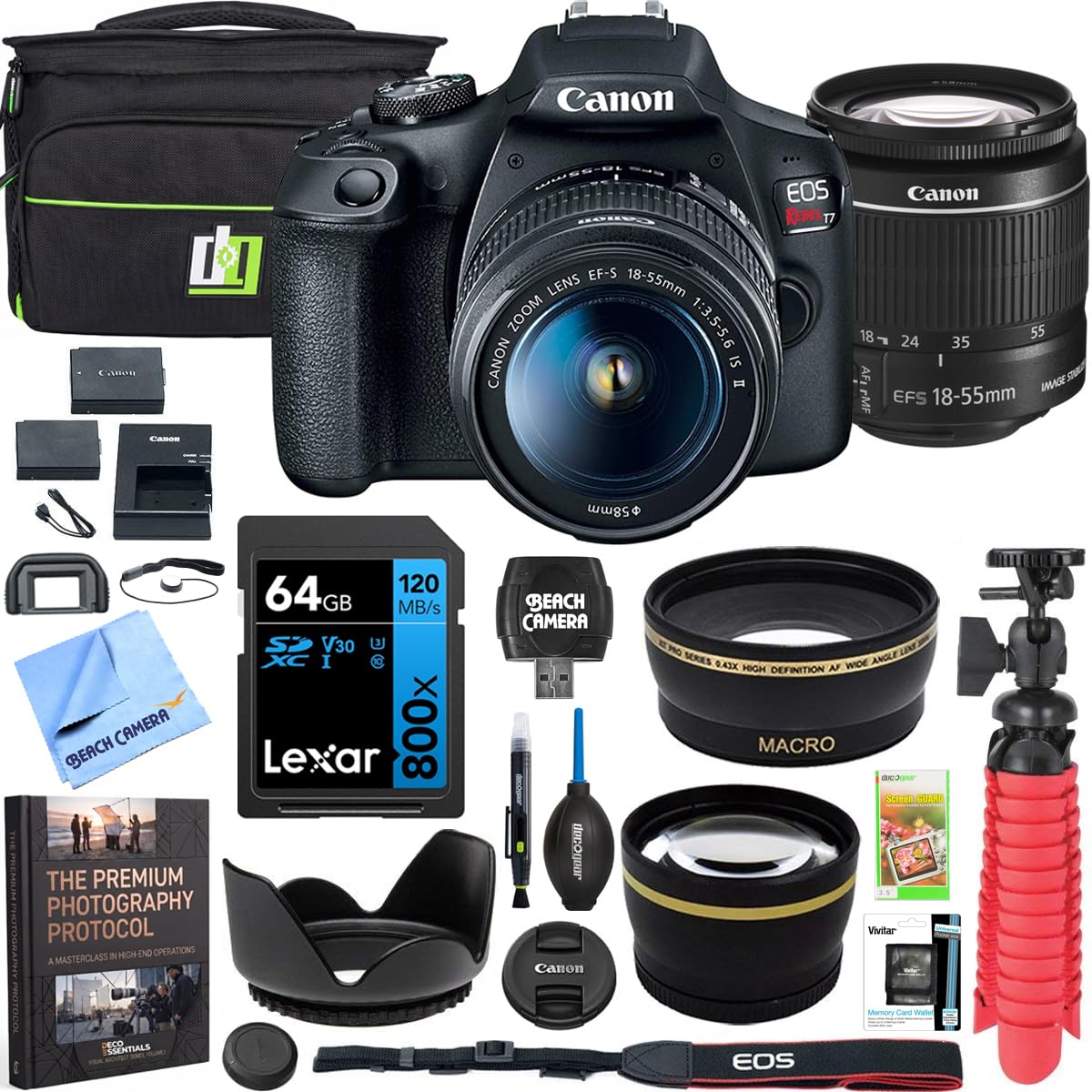
The Canon EOS Rebel T7 is a classic entry-level DSLR, and this bundle turns it into a complete starter kit. The 24.1MP APS-C sensor and reliable 9-point autofocus system are straightforward to use. The included 60-inch tripod, extra battery, 64GB SD card, and cleaning kit make it a true one-box solution. The optical viewfinder provides a clear, lag-free view of the scene and excellent battery life is a hallmark of DSLRs.
However, the 9-point AF system is very basic compared to modern mirrorless systems, and the body feels dated in performance and size. The Wi-Fi functionality is present but slow. Some users in reviews report battery drain issues with the included third-party battery. The bundle accessories, while generous, include items of basic quality. The camera itself is a proven performer for learning the fundamentals of exposure and composition.
This bundle is a fantastic gift for a complete beginner who wants a robust platform to learn photography without needing to buy extra accessories for months. The optical viewfinder is a powerful teaching tool for understanding light. For the price, you get a functional DSLR and everything else needed to start shooting immediately. Just be prepared to upgrade the kit lens and SD cards once your skills grow.
Why it’s great
- Complete all-in-one kit includes everything needed
- Reliable and proven beginner DSLR platform
- Excellent battery life for long days
Good to know
- 9-point AF system is very basic
- Bundle battery and accessories are budget quality
11. Nikon D3200 24.2 MP DSLR with 18-55mm Lens (Renewed)
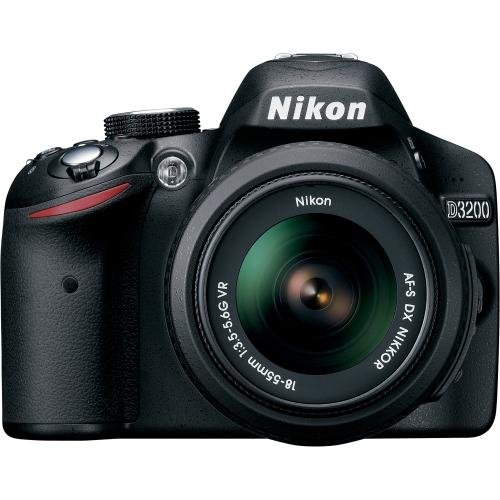
The Nikon D3200 is a legendary entry-level DSLR that still holds up remarkably well. Its 24.2MP DX-format CMOS sensor produces sharp, detailed images that rival many modern cameras in good light. The EXPEED 3 processor keeps the camera responsive, and the 11-point autofocus system, while not as dense as modern mirrorless, is accurate and reliable. This renewed model offers an incredible value proposition for a tight budget.
The image quality is the star here. Shooting in RAW gives you massive flexibility for editing. The battery life is excellent, and the overall Nikon lens ecosystem is vast and affordable. The main downsides are the lack of Wi-Fi connectivity for easy photo sharing and a screen resolution that is lower than today’s standards. The camera is also bulkier than any mirrorless option. It does not shoot 4K video, only 1080p at 30fps.
For the budget-conscious amateur who prioritizes still image quality above all else, the renewed D3200 is an outstanding starting point. It is a fantastic learning tool that forces you to understand the fundamentals of photography. The price leaves room to immediately invest in a fast 35mm f/1.8 lens, which will transform its low-light performance. It is a no-frills, pure photographic experience that rewards patience and skill.
Why it’s great
- Best value for an image-quality-first budget
- 24.2MP sensor output is excellent for its class
- Great battery life and reliable operation
Good to know
- No Wi-Fi for wireless transfer
- No 4K video, only 1080p
FAQ
Is a full-frame camera worth it for an amateur?
How many autofocus points do I actually need?
Should I buy a new camera body or invest in better lenses first?
What is the difference between a kit lens and a prime lens?
Final Thoughts: The Verdict
For most users, the amateur camera winner is the Sony a7 III because it delivers full-frame image quality and professional-grade autofocus at a price that remains competitive with mid-range APS-C options. If you want compact, travel-centric full-frame without the weight, grab the Canon EOS RP. And for the budget-conscious amateur who prioritizes still image quality above all extras, nothing beats the value of the Nikon D3200 (Renewed).