
Our readers keep the lights on and the weekend projects moving. As an Amazon Associate, I earn from qualifying purchases.
Whether you’re prototyping a production part or printing complex figures, the build quality of your machine defines the ceiling of what you can create. The US 3D printing market is flooded with imported machines, but discerning makers know that sourcing American-made 3D printers means investing in higher grade components, stricter quality control, and long-term firmware support that cheap clones can’t match.
I’m Rikta — the co-founder and writer behind FitlyFast. I have spent countless hours analyzing the hardware specifications, extruder systems, heated chamber designs, and motion control architectures that separate a real workhorse from a hobbyist toy in the American-made 3D printer space.
Whether you need multicolor capabilities for artistic prints or a large-format CoreXY for industrial prototyping, this guide breaks down the nine machines that define the best american made 3d printer landscape today — with no fluff and no filler.
How To Choose The Best American Made 3D Printer
Before you add a printer to your cart, you need to match the machine’s core technology to your actual use case. An FDM printer with a 65°C active heated chamber is non-negotiable if you’re printing high-temp materials like PC or PPS-CF, while a resin MSLA machine like the ELEGOO Jupiter 2 delivers unmatched XY resolution for miniature figures but demands post-processing cleanup. The biggest mistake beginners make is buying a budget open-frame printer for engineering materials that warp without a heated chamber — you save upfront but waste filament on failed prints.
Motion System: CoreXY vs. Bedslingers vs. IDEX
The motion architecture dictates both speed and print quality. CoreXY systems (like the QIDI Max4 and Prusa XL) move the print head while the bed only moves on Z, enabling high speeds up to 800 mm/s without shaking the part loose. Traditional bedslingers are cheaper but suffer from ringing at higher accelerations. If you need two identical parts fast, an IDEX machine like the Raise3D E2 can print duplicate copies simultaneously in Duplication Mode, effectively halving your per-part time.
Build Volume and Heated Chambers
Large build volumes (400 mm³ and above) let you print full-size prototypes or batch-produce small parts in a single run. But large format means nothing if the printer can’t maintain a stable ambient temperature. A 65°C active heated chamber — found on the QIDI Max4 — reduces warping on ABS, nylon, and carbon-fiber composites. The segmented heated bed on the Prusa XL also cuts energy waste by heating only the zones under your print footprint.
Material Support and Nozzle Systems
Hardened steel nozzles and all-metal hotends are essential for abrasive filaments like carbon-fiber PA or glow-in-the-dark PLA. The QIDI Max4 and Creality K2 both offer 300+°C nozzles and high-flow hotends rated at 40 mm³/s, allowing you to print engineering-grade materials without swapping parts. For resin printers, look for a monochrome LCD with high UV light uniformity — the ELEGOO Jupiter 2 uses an enclosed light source with no light leaks for consistent layer curing across the full 302.4 mm build height.
Quick Comparison
On smaller screens, swipe sideways to see the full table.
| Model | Category | Best For | Key Spec | Amazon |
|---|---|---|---|---|
| Anycubic Kobra 3 V2 Combo | FDM Multicolor | Budget multicolor prints | 600 mm/s, 4-color ACE Pro | Amazon |
| Creality K2 Combo | FDM Multicolor | Quiet 16-color printing | 600 mm/s, 16-color CFS | Amazon |
| Creality K2 Combo (V2) | FDM Multicolor | RFID auto-filament detection | 600 mm/s, 300°C nozzle | Amazon |
| Creality Ender 5 Max | Large-Format FDM | Print farms & oversized parts | 400×400×400 mm, 700 mm/s | Amazon |
| ELEGOO Jupiter 2 | Resin MSLA | High-res large format models | 16K, 20 µm XY resolution | Amazon |
| Original Prusa MK4S | FDM Professional | Reliable daily production | Input Shaping, 9.84×8.3×8.6 in | Amazon |
| QIDI Max4 Combo | Large-Format FDM | Engineering-grade materials | 390×390×340 mm, 65°C chamber | Amazon |
| Raise3D E2 | IDEX FDM | Mirrored & duplicate production | IDEX, 300°C nozzle, 110°C bed | Amazon |
| Original Prusa XL | CoreXY Professional | Industrial multi-material | 14.17 in³, 2-toolhead, heated zones | Amazon |
In‑Depth Reviews
1. Original Prusa MK4S
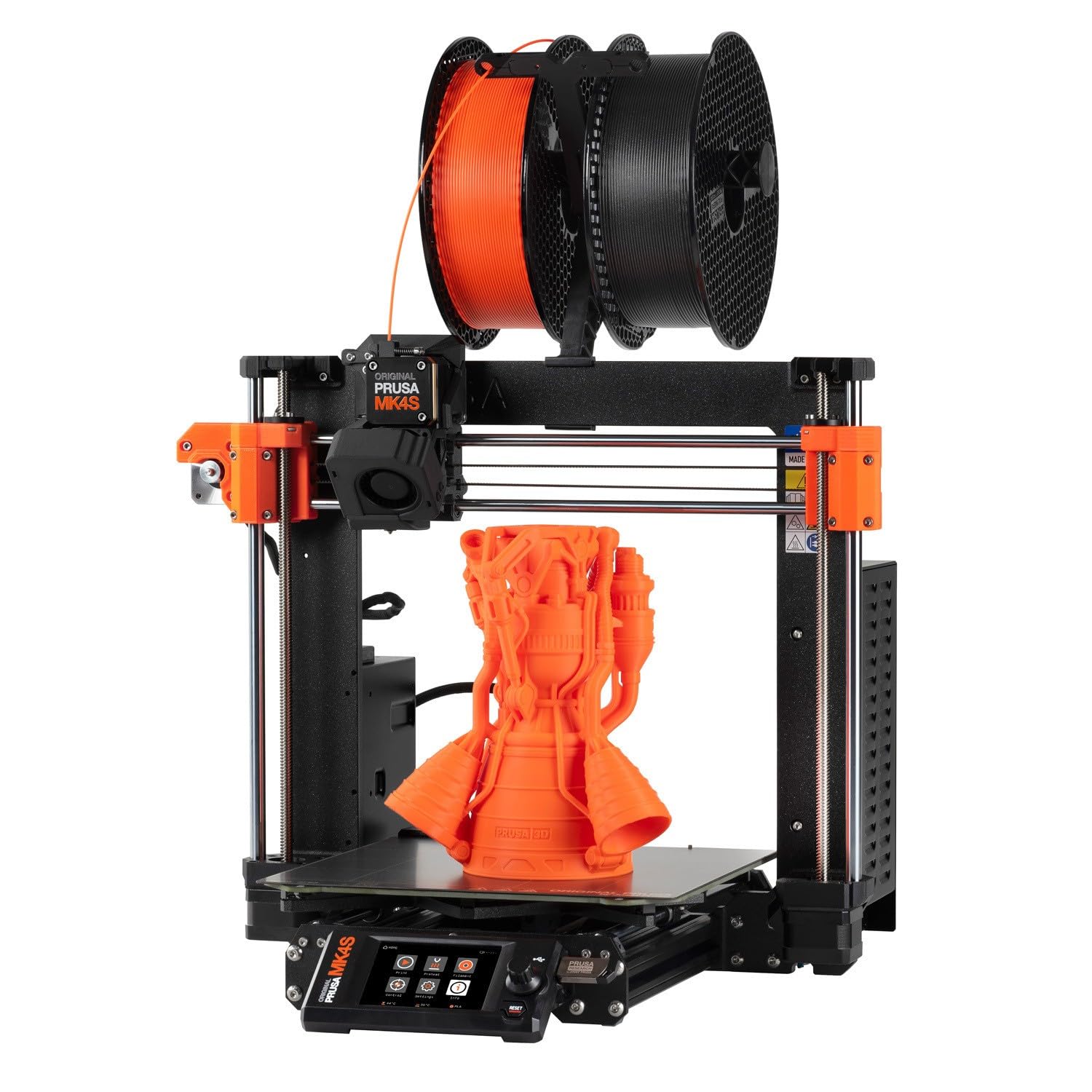
The MK4S is the benchmark that other FDM printers are measured against, and for good reason. Its Input Shaping firmware compensates for mechanical resonance, letting you push speeds without sacrificing the sharp corners and clean overhangs that made Prusa famous. The fully assembled version arrives with a PEI powder-coated spring steel sheet that grips PLA like glue when hot and releases parts effortlessly once cool.
Under the hood, the MK4S uses a Nextruder with a load cell sensor that checks the distance to the bed multiple times per layer — this eliminates first-layer failures that plague cheaper machines. The 32-bit Buddy board runs Marlin-based firmware that’s fully open-source, meaning you can modify, update, or repair the printer without needing manufacturer approval. It also includes a 1 kg spool of Prusament PLA Galaxy Black out of the box.
The only real compromise is the build volume: 9.84 × 8.3 × 8.6 inches is fine for most prototypes, but too small for large single-piece prints like drone frames or automotive ducts. For those who need a larger platform, the Prusa XL exists — but at nearly three times the price. The MK4S earns its premium placement because it just works, day after day, with minimal tinkering.
Why it’s great
- Load cell auto-leveling eliminates first-layer guesswork
- Input Shaping enables high speeds without ringing artifacts
- Open-source firmware and hardware with long-term support
Good to know
- Small build volume limits large single-part prints
- Premium price relative to competing 300 mm/s printers
2. QIDI Max4 Combo
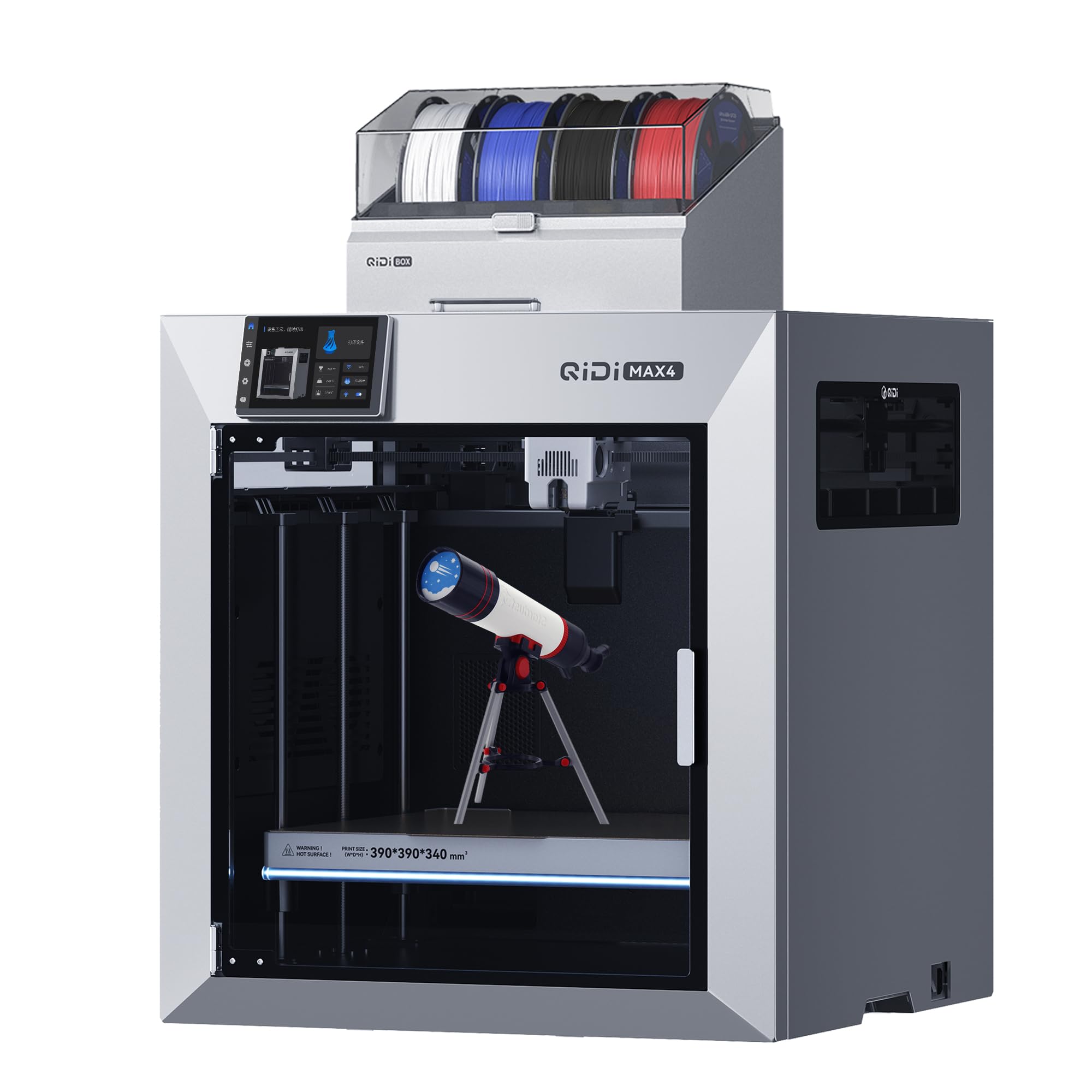
The QIDI Max4 Combo is a large-format powerhouse that competes with machines costing twice as much. Its 390 × 390 × 340 mm build volume fits full-size automotive ducts, drone arms, and industrial prototypes without splitting. The 65°C active heated chamber — a rarity at this price tier — lets you print ABS, PC, and carbon-fiber nylon without the warping that plagues open-frame printers.
The closed-loop stepper motors on the X and Y axes maintain positional accuracy even during aggressive 30,000 mm/s² accelerations, and the 2 mm lead screw on Z eliminates the vertical banding that cheaper leadscrews introduce. The QIDI BOX add-on enables up to 16-color multicolor printing, but the purge waste is higher than competing CFS systems. The hardened steel nozzle handles CF-reinforced filaments out of the box, and the Polar Cooler (sold separately) is recommended for PLA users who want faster part cooling.
QIDI’s customer support is praised for honoring the right-to-repair philosophy, quickly sending replacement parts like a warped bed without requiring the printer to be returned. Some users report a choppy touchscreen UI and high initial power draw from the heated chamber, but for engineering-grade materials, the Max4 Combo is the best value on this list.
Why it’s great
- 65°C active heated chamber prevents ABS/PC warping
- Closed-loop motors maintain precision at high speeds
- Excellent customer support with right-to-repair policy
Good to know
- Polar Cooler for PLA is an extra purchase
- UI can feel clunky compared to newer panels
3. Creality Ender 5 Max
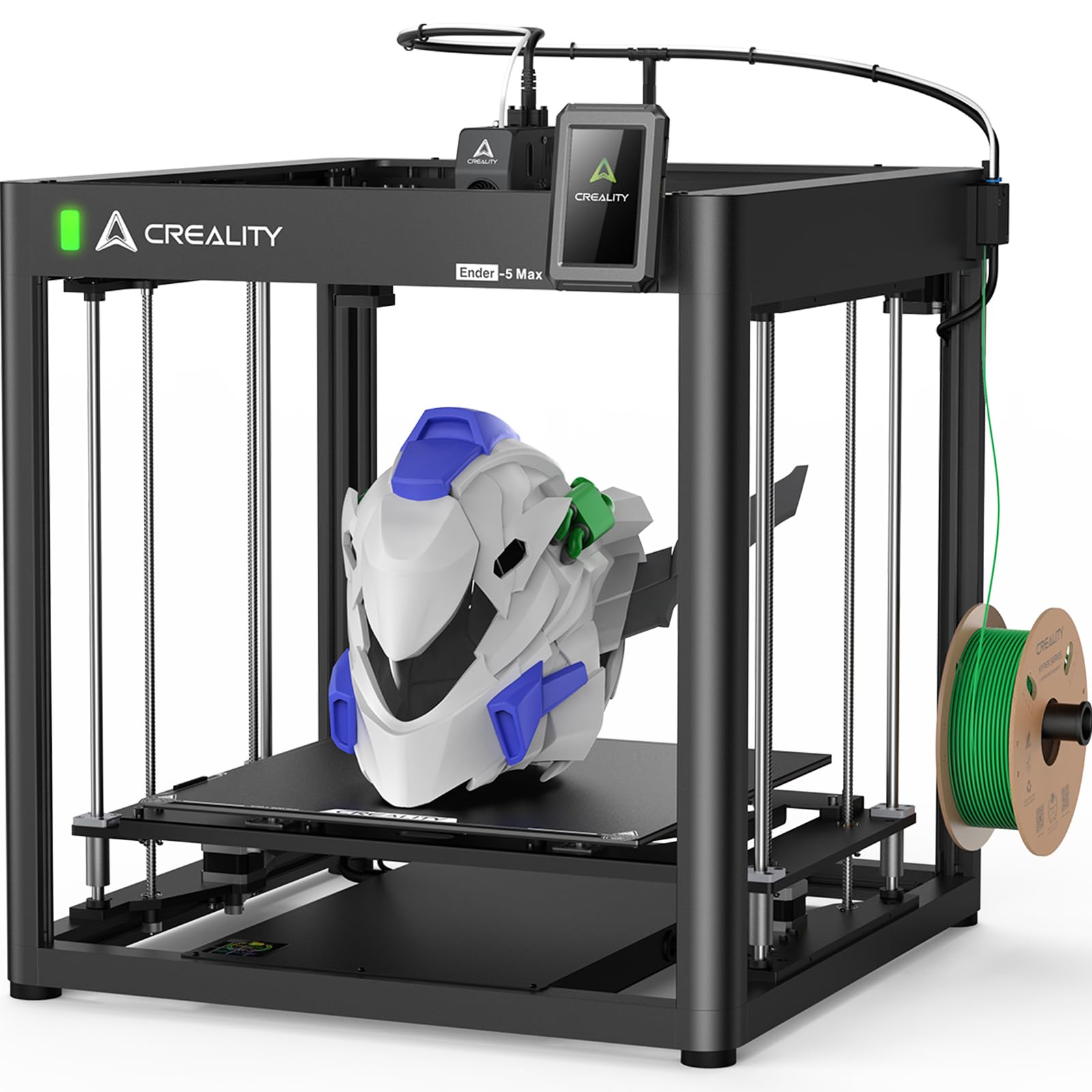
The Ender 5 Max is Creality’s answer to the large-format production market, offering a 400 × 400 × 400 mm build volume in a CoreXY configuration. The all-metal die-cast aluminum frame keeps vibration low even at 700 mm/s, and the 1,000 W rapid-heating bed reaches ABS temperatures in minutes. The 64-point auto-leveling system with auto Z-offset removes the manual calibration dance that made older Enders frustrating.
The direct-drive dual-gear extruder is designed for 24/7 print-farm operation, with hardened gears that resist wear from abrasive filaments. WLAN multi-printer control lets you manage a bank of these machines from one dashboard, and the tri-color status indicator on the top rail is visible across a room — useful for operators running multiple units simultaneously.
Reliability is a mixed bag: some users report excellent results with PLA and PETG, while others experience adhesion failures and shaking that broke the extruder casing. The enclosure is an open frame, so you’ll need to add your own panels for high-temp materials. For the price, the build volume is unmatched, but expect to do some tuning before it becomes a true production workhorse.
Why it’s great
- Massive 400 mm³ build volume for oversized prototypes
- CoreXY system enables 700 mm/s with low vibration
- WLAN grouping for print-farm management
Good to know
- Open frame requires enclosure additions for ABS
- Inconsistent quality control out of the box
4. Creality K2 Combo
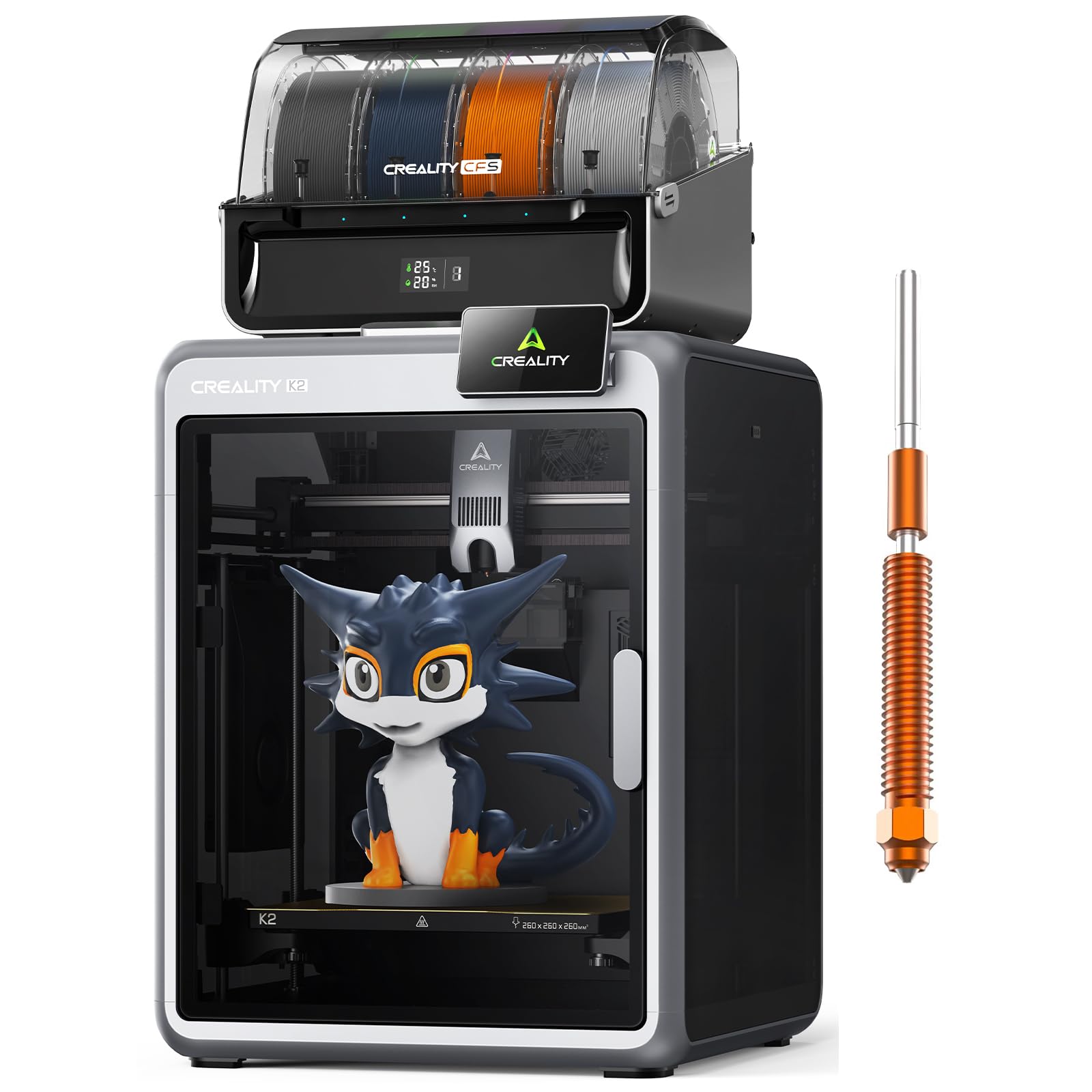
The K2 Combo delivers multicolor printing at a price that undercuts competitors by hundreds. The CFS (Creality Filament System) supports up to 16 colors when four units are daisy-chained, and the RFID tags on official Creality spools automatically set the right filament profile. The step-servo motors dynamically adjust torque in under a millisecond, enabling 600 mm/s prints with near-silent operation — the fan noise is lower than a laptop under load.
The 260 × 260 × 260 mm build volume is standard for the mid-range, but the hardened steel nozzle and 300°C hotend allow engineering materials like PET-CF. The AI chamber camera watches for spaghetti failures and idling, though detection accuracy is inconsistent. Setup is genuinely plug-and-play: attach the screen, load filament, and the auto-leveling probe maps only the relevant print area for faster calibration.
Watch out for spool compatibility — the CFS doesn’t accept standard cardboard spools without printed adapters. Some users also report CFS feeder errors with certain filaments. For the price, it’s a capable multicolor machine, but the firmware still feels less refined than Prusa’s ecosystem.
Why it’s great
- 16-color multicolor via four CFS units
- RFID auto-filament detection saves manual tuning
- Step-servo motors enable near-silent printing
Good to know
- CFS doesn’t fit standard cardboard spools
- AI failure detection is not always reliable
5. ELEGOO Jupiter 2
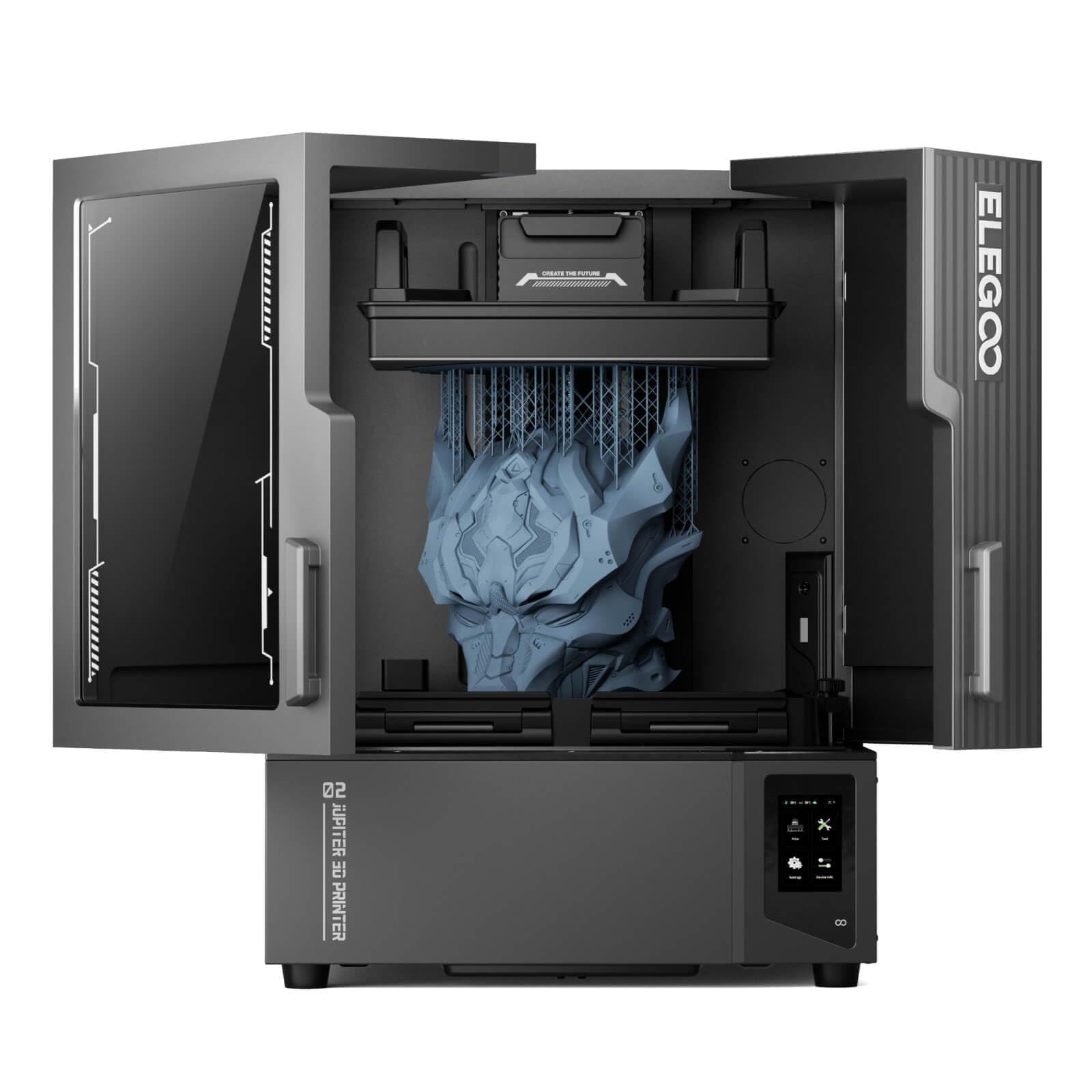
The Jupiter 2 is a large-format resin MSLA printer that delivers 16K resolution (15,120 × 6,230 pixels) across a 302.4 × 161.98 × 300 mm build volume. The 20 × 26 µm XY resolution captures fine details like fur texture and mechanical gear teeth that FDM printers simply can’t match. The enclosed light source eliminates UV light leaks, ensuring uniform layer curing from the first layer to the last.
Smart features include multi-point auto-leveling, smart tank heating that maintains a precise 30°C for stable resin viscosity, and an automated resin feeding system that prevents mid-print shortages. The double-door design with a transparent window lets you monitor prints without opening the chamber, and the laser-engraved build plate features quick-release for easy part removal. ELEGOO’s Marsmate air purifier is compatible for odor control.
Some users note that the Jupiter 2 is slower than competing resin printers, but the quality is worth the wait. The PFA release film is superior to cheaper ACF films, and replacement parts are affordable. However, the machine is not plug-and-play for beginners — you’ll need to dial in exposure times and supports for optimal adhesion across the full build plate.
Why it’s great
- 16K resolution with 20 µm XY detail
- Smart tank heating maintains consistent 30°C
- Auto-resin feeding prevents mid-print failures
Good to know
- Slower print speed compared to smaller resin printers
- Must be paired with a compatible wash/cure station
6. Raise3D E2

The Raise3D E2 is designed around Independent Dual Extruders (IDEX), which lets you print two separate models simultaneously, mirror a single model for symmetrical parts, or use one extruder for a water-soluble support material (like PVA) while the other prints the main model in PLA or ABS. The 330 × 240 × 240 mm build volume is modest, but the IDEX capability effectively doubles your output for batch production.
Video-assisted offset calibration guides you through aligning the two extruders via the 7-inch touchscreen, and the auto-bed-leveling probe checks 25 points across the bed. The flexible build plate makes removing finished parts easy, and the filament run-out sensors and power-loss recovery prevent wasted prints. Wi-Fi and Ethernet connectivity paired with a live camera lets you check progress remotely.
The E2 is built for offices and studios rather than print farms — the HEPA air filtration keeps VOCs low, and the 110°C heated bed supports TPU, TPE, and nylon. However, some users report 90% failure rates with the right extruder feeding Raise3D’s own filament, making support a critical factor. The IDEX workflow is powerful, but the E2 demands patience during setup and calibration.
Why it’s great
- IDEX enables mirror/duplicate/hybrid printing
- HEPA filtration suitable for office environments
- Video-assisted offset calibration simplifies dual alignment
Good to know
- Some users report frequent extruder feeding failures
- Support response can be slow for warranty claims
7. Original Prusa XL
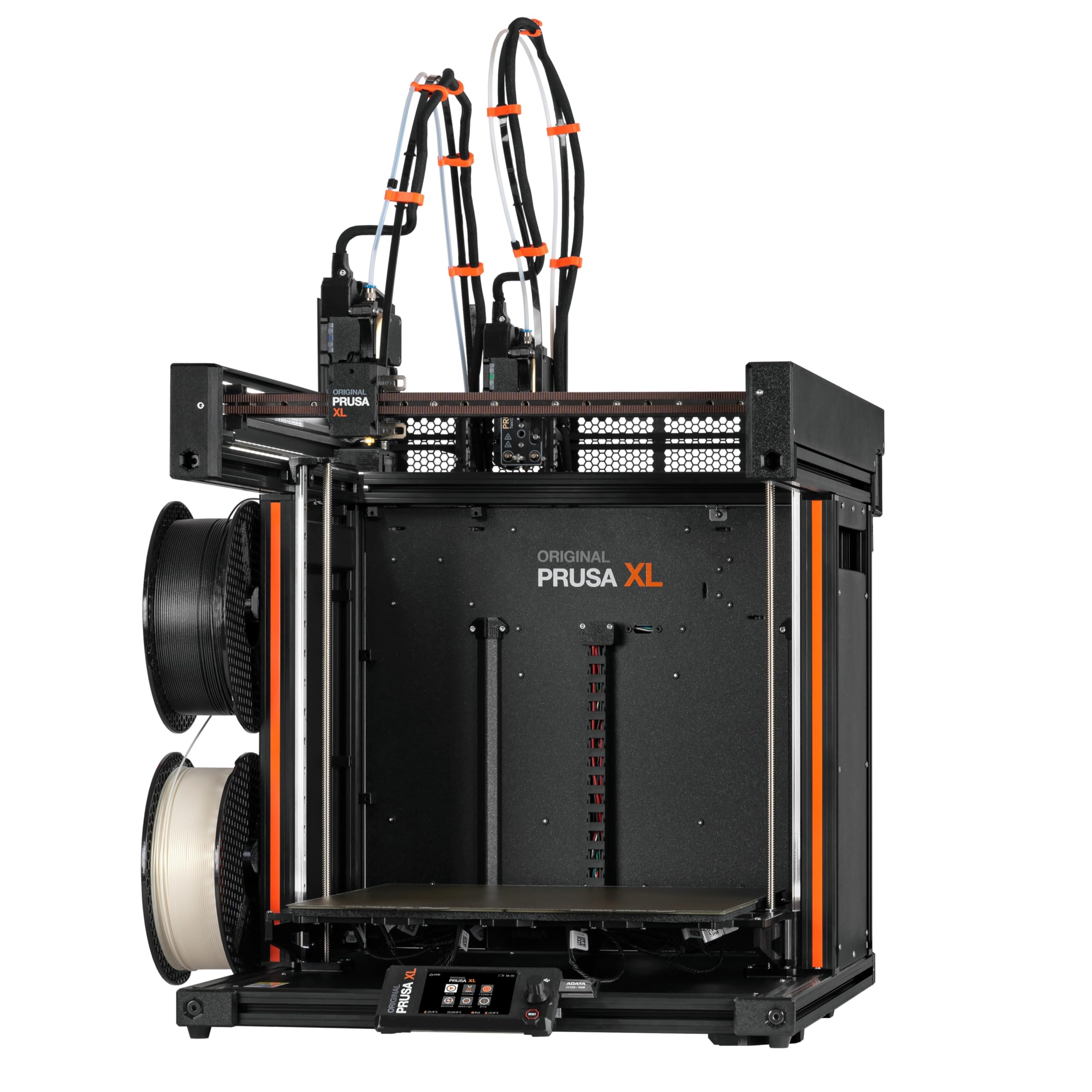
The Prusa XL is the large-format sibling of the MK4S, built on a CoreXY motion system with a 14.17-inch cubic build volume. The segmented heated bed has five independent heating zones that only warm the area under your print, cutting energy consumption and reducing warping. The 2-toolhead system supports multi-material prints with soluble supports, and the intelligent tool switching minimizes purge waste compared to single-nozzle multicolor setups.
The XL runs the same Prusa ecosystem — PrusaSlicer profiles are tuned for every filament in their library, and Printables.com offers thousands of community-made models. The included 1 kg spool of Prusament PLA lets you start printing immediately after assembly. The machine ships with the LCD, extruder assembly, and Wi-Fi antenna packed separately for safe transport, requiring about an hour of assembly.
At this price point, the XL expects an experienced operator. Some users report receiving units with broken plastic parts from shipping, and the Ethernet-only connectivity model doesn’t support Wi-Fi out of the box. For teams that need consistent, large-format multi-material output, the XL is a reliable choice — but the learning curve is steeper than the MK4S.
Why it’s great
- Segmented heated bed reduces warping on large prints
- 2-toolhead with intelligent purge waste minimization
- Fully integrated with PrusaSlicer and Printables
Good to know
- Requires some assembly and advanced troubleshooting
- Shipping can arrive with broken plastic components
8. Anycubic Kobra 3 V2 Combo
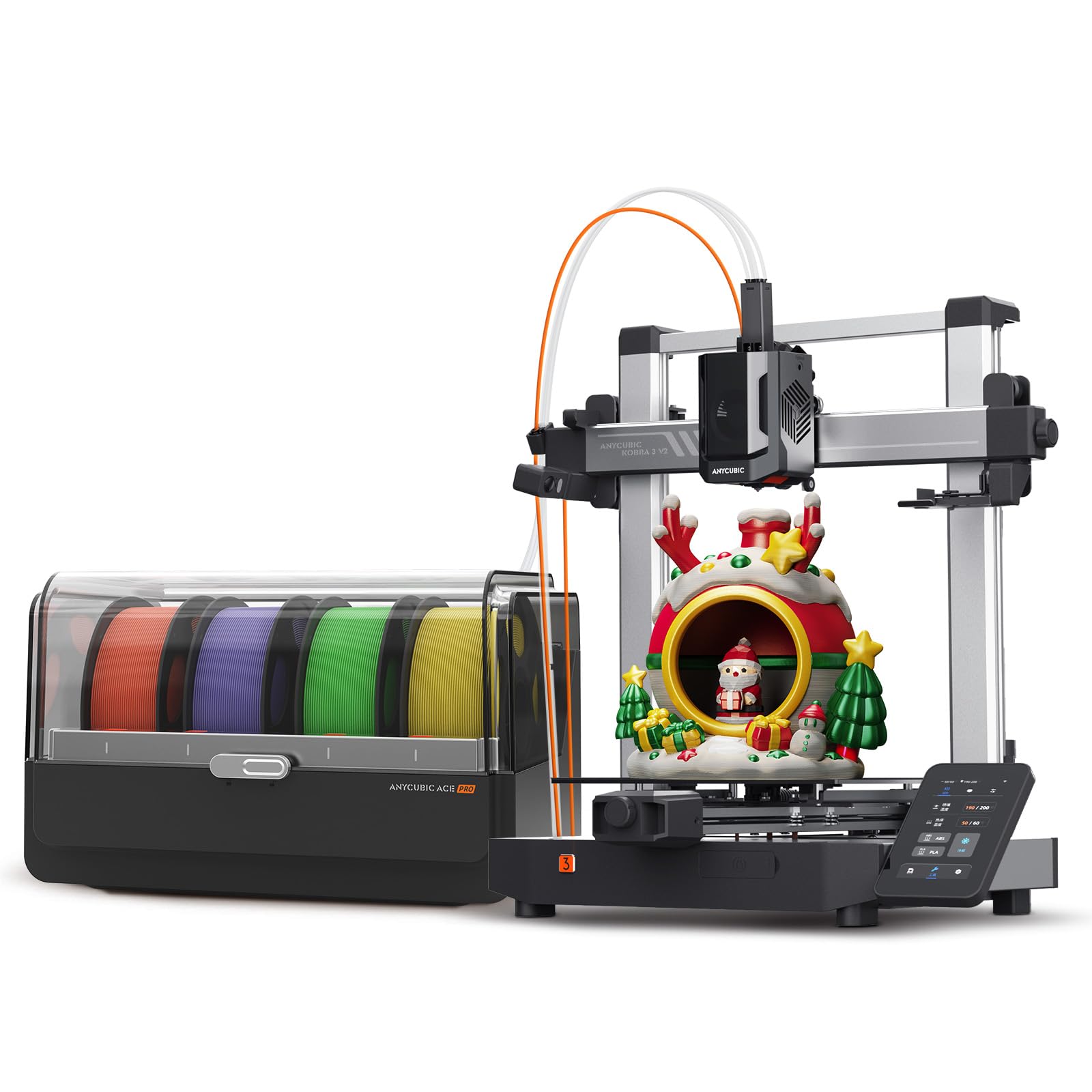
The Kobra 3 V2 Combo is the most affordable entry point into multicolor FDM printing on this list. The ACE Pro unit enables 4-color printing out of the box (expandable to 8 colors with a filament hub), and it includes an active filament dryer that maintains temperatures between 35-55°C for up to 24 hours — no need to buy a separate dryer box. The 720p camera lets you monitor prints via time-lapse, though image quality is described as poor in reviews.
The nozzle technology is borrowed from the higher-end Kobra S1, reducing material leakage and surface blobs. The recommended speed is 300 mm/s (max 600 mm/s), and the 20,000 mm/s² acceleration produces a bench boat in just over 11 minutes. Setup requires minimal calibration — the auto-leveling system works reliably out of the box. Some users report that the USB drive shipped with the unit contained malware, so use your own drive for transferring files.
Filament waste on retraction is higher than competing systems, and the ACE Pro has trouble with cardboard spools. For the price, the print quality is excellent, but the software ecosystem and build quality don’t match the reliability of Prusa or QIDI. This is a capable starter multicolor printer, but expect some tinkering to dial in perfect results.
Why it’s great
- Active filament dryer in the ACE Pro unit
- Lowest price for multicolor FDM printing
- Fast 600 mm/s speed with auto-leveling
Good to know
- Some USB drives shipped contain malware
- Higher filament waste on color changes
9. Creality K2 Combo (V2)
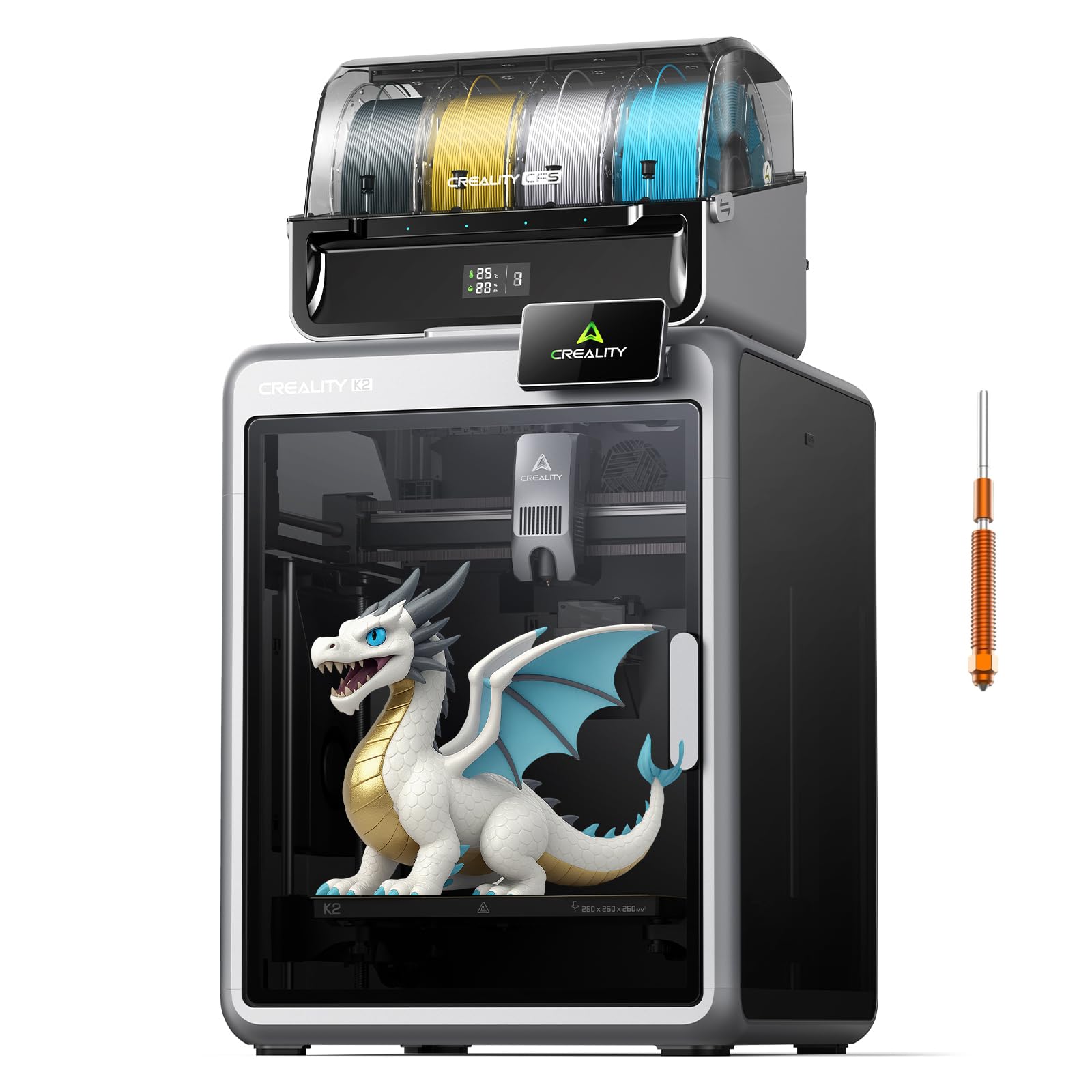
This variant of the Creality K2 Combo places extra emphasis on the RFID-enabled filament system and the AI chamber camera. The CFS unit reads the RFID tags on Creality spools to automatically set print temperature, retraction, and flow rate — removing a major source of user error for beginners. The AI camera monitors for spaghetti failures and idling, though detection remains unreliable based on user reports.
The aerospace-grade aluminum frame with a steel X-axis rail and dual Z-axis ensures virtually zero wobble even during 20,000 mm/s² acceleration. The 40 mm³/s high-flow hotend with a hardened steel nozzle handles PLA, ABS, PETG, and engineering filaments. The built-in air purifier filters VOCs during long prints, and the 8 GB local storage lets you queue prints without a PC tethered.
The K2 Combo prints vibrant multicolor models with smooth layer transitions straight out of the box. However, some users report that the CFS feeder slots get clogged with brittle filament, and the extruder banging against the side during homing is a known issue. The documentation is sparse, and Creality support can be slow. For those who want RFID convenience without the Prusa price, this is a solid mid-range option.
Why it’s great
- RFID auto-configuration simplifies filament setup
- Aerospace-grade frame ensures stable high-speed prints
- Built-in air purifier for VOC reduction
Good to know
- CFS can jam with brittle or poorly wound filament
- Documentation and support need improvement
FAQ
Do I really need a heated chamber for PLA?
What does the ASTM F42 standard mean for 3D printers?
How often should I replace the nozzle on an FDM printer?
Final Thoughts: The Verdict
For most users, the american made 3d printer winner is the Original Prusa MK4S because it delivers professional-grade reliability, Input Shaping for clean high-speed prints, and fully open-source firmware that won’t lock you into a proprietary ecosystem. If you need to print engineering-grade materials like ABS-CF and craving a 65°C heated chamber, grab the QIDI Max4 Combo. And for high-detail resin prints or large-format multicolor production, nothing beats the ELEGOO Jupiter 2 or the Original Prusa XL respectively.