
Our readers keep the lights on and the weekend projects moving. As an Amazon Associate, I earn from qualifying purchases.
A garden tool that snaps mid-season isn’t just an inconvenience — it’s a betrayal of trust. When you’re severing roots, turning clay, or yanking dandelions, the last thing you need is a blade that warps or a handle that splinters. The difference between frustration and satisfaction often comes down to the origin of the steel and the hands that forged it.
I’m Rikta — the co-founder and writer behind FitlyFast. I spend my time analyzing material thickness, handle ergonomics, and blade retention across the premium tier of domestic hardware, so you don’t have to guess which tools earn their place in your shed.
This guide breaks down the heaviest, sharpest, and most durable options built on American soil, helping you avoid offshore shortcuts and choose the best american made garden tools for real soil work.
How To Choose The Best American Made Garden Tools
Sorting through domestic tools means looking past marketing labels and into material gauge, heat treatment, and handle construction. A tool that’s truly made in the USA will feel heavier in the hand and tougher on the soil — here’s what separates the keepers from the pretenders.
Steel Gauge and Blade Material
Thicker steel means less flex under load. 12-gauge heads resist bending when you hit rocks or compacted clay, while thinner 14- or 16-gauge blades dull and warp faster. Tempered carbon steel or recycled agricultural disc blades hold an edge longer and sharpen cleanly with a file, unlike cheap stainless that rolls under pressure.
Handle Construction and Length
A 58- to 60-inch handle lets you work upright, saving your lower back during long weeding sessions. Fiberglass handles with polyester veils resist splintering and moisture, while waxed ash handles offer a natural grip that won’t peel like varnished alternatives. Bamboo is lightweight but less suited for heavy prying.
Socket to Handle Connection
The weakest point on any garden tool is where the blade meets the handle. Look for over-welded sockets, extended steel ferrules, or square peg designs that lock the head in place. A tool that rattles after a season likely used a pressed or friction-fit connection — avoid those.
Quick Comparison
On smaller screens, swipe sideways to see the full table.
| Model | Category | Best For | Key Spec | Amazon |
|---|---|---|---|---|
| Bully Tools 12-Gauge Garden Hoe | Draw Hoe | Heavy chopping & soil turning | 12-gauge tempered steel head | Amazon |
| Hoss Stirrup Hoe | Stirrup Hoe | Shallow weeding & edging | 6″ spring steel oscillating blade | Amazon |
| Rogue Hoe 7″ Wide Blade | Field Hoe | Sod busting & root clearing | 7″ recycled disc blade steel | Amazon |
| A.M. Leonard Deluxe Soil Knife | Hori Hori | Detail digging & root cutting | 6″ serrated stainless steel blade | Amazon |
| Bully Tools Warren Hoe | Warren Hoe | Precision furrow digging | 12-gauge 6.25″ steel head | Amazon |
| Grampa’s Weeder | Stand Up Weeder | Taproot weed removal | 4-claw alloy steel head | Amazon |
| Original LÖWE Anvil Pruner | Pruning Shears | Cutting dry branches & twigs | Carbon steel anvil blade | Amazon |
In‑Depth Reviews
1. Bully Tools 12-Gauge Garden Hoe

The Bully Tools 12-gauge garden hoe is the closest thing to a bulldozer in handheld form. Its tempered steel head resists bending even when you’re chopping into rocky clay, and the over-welded socket eliminates the wobble that cheaper hoes develop within weeks. The powder-coated finish protects against rust, though early buyers noted it benefits from a light oiling after extended wet-season storage.
The 58-inch fiberglass handle is wrapped in a polyester veil that won’t splinter like raw wood, and the rubber grip reduces hand fatigue during long cultivation sessions. At 3.2 pounds, the head carries enough heft to break compacted soil without requiring excessive downward force from your shoulders. Assembly takes under a minute with a Phillips head screwdriver and pliers.
Customer reviews consistently describe this as a “beast” that cuts garden work in half. The 12-gauge thickness is 30% heavier than standard foreign-made alternatives, which translates to less deflection on impact and a longer useful life. This is the hoe you reach for when you need to reshape a whole bed or clear tough sod.
Why it’s great
- 12-gauge tempered steel head resists bending under heavy impact
- Over-welded socket prevents head loosening over time
- Rubber grip reduces blistering on long jobs
Good to know
- Heavier than lighter draw hoes — not ideal for quick touch-ups
- Powder coat may require occasional oiling to prevent rust
2. Rogue Hoe 7 Inch Wide Blade

The Rogue Hoe is built from recycled agricultural disc blades — steel that’s already proven itself in commercial fields. The 7-inch wide cutting edge takes a razor-sharp finish with a file and slices through sod, roots, and small brush with a single swing. The socket and blade are welded together rather than crimped, so there’s no weak joint to fail under torque.
The head weight sits at roughly 4 pounds, giving it substantial momentum for chopping tasks. The long handle lets you maintain an upright posture, which experienced gardeners confirm is the key to avoiding lower back fatigue during hours of weeding. The blade width also makes it effective for mounding soil around crops or clearing blackberry runners.
Seasoned users describe this as a “lifetime tool” that holds its edge longer than any standard hardware-store hoe. The steel can be sharpened many times before the blade thickness becomes a concern, and the recycled disc material resists chipping better than stamped alternatives. Protective linseed oil treatment on the handle extends its outdoor life.
Why it’s great
- Recycled agricultural disc steel holds an aggressive edge
- Welded socket eliminates head separation
- Wide 7-inch blade clears large areas fast
Good to know
- Heavier than most hoes — not a quick-scuffle tool
- Handle may need linseed oil treatment to prevent drying
3. Hoss Stirrup Hoe

The Hoss Stirrup Hoe uses a 6-inch spring steel blade that oscillates 20 degrees in both directions, cutting weeds whether you push or pull. This back-and-forth action makes it incredibly efficient for shallow weeding in flower beds and vegetable rows, especially after rain when the soil is soft. The unique square peg design locks the blade firmly to the frame, preventing the wobble that plagues stirrup hoes with round connections.
The waxed ash handle is a smart choice — it won’t peel or crack like varnished wood, and the natural texture provides grip without a rubber sleeve. At 60 inches, the handle accommodates taller gardeners without requiring a stoop. The powder-coated steel frame resists corrosion, though the blade edge may fold slightly after extended use on compacted soil.
Customer feedback highlights how this hoe makes weeding “fun again” by eliminating the need to bend or kneel. The oscillating blade is particularly effective on shallow-rooted annual weeds, though deep taproots may require a different tool. Some users noted the handle is narrow, so adding a grip tape can help if slippage becomes an issue.
Why it’s great
- Oscillating spring steel blade cuts on push and pull strokes
- Waxed ash handle won’t peel or splinter
- Square peg design prevents head wobble
Good to know
- Blade edge may fold on hard, dry soil
- Narrow handle may require grip tape for larger hands
4. Bully Tools Warren Hoe
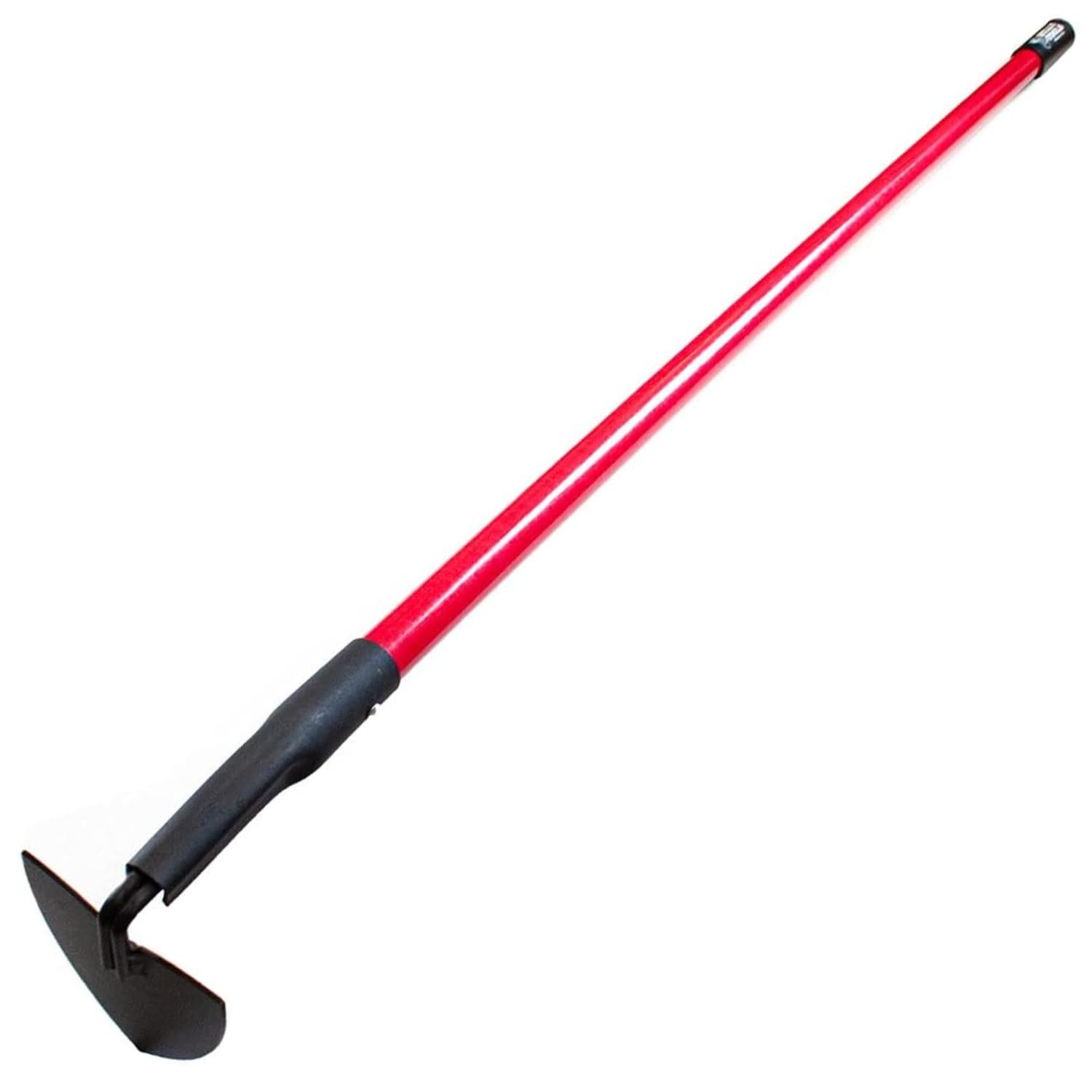
The Bully Tools Warren Hoe is essentially the same 12-gauge steel construction as its draw hoe sibling, but with a pointed, arrow-shaped head designed for furrow digging and precision cultivation. The extra-thick steel and extended ferrule make this one of the most durable warren-style hoes available, capable of withstanding years of repeated impact without loosening.
The fiberglass handle with triple-wall construction is both lightweight and strong, reducing overall tool weight to around 3 pounds for easier handling during detailed tasks. The bright powder-coated finish helps visibility if you leave it in the garden bed. Assembly is simple, though the head may need sharpening out of the box for optimal performance in hard soil.
Owners report that this hoe holds up to heavy commercial use, and Bully Tools honors its limited lifetime warranty with hassle-free replacement. The warren shape is ideal for opening seed furrows, hilling potatoes, or scraping weeds in tight row spaces. For a mid-range investment, this offers the same build quality as premium options at a more accessible tier.
Why it’s great
- 12-gauge steel with extended ferrule for maximum durability
- Pointed warren design perfect for furrows and detail work
- Limited lifetime warranty with responsive customer service
Good to know
- Blade may need sharpening before first use
- Not ideal for wide-area clearing or heavy sod busting
5. A.M. Leonard Deluxe Soil Knife

The A.M. Leonard Deluxe Soil Knife is the multitool of the garden world. Its 6-inch stainless steel blade features a deep serrated edge on one side for sawing through roots and a tapered slicing edge on the other for clean cuts. The blade is rated to withstand 300 pounds of pressure, meaning you can pry out rocks or lever up compacted soil without worrying about snapping it.
The bright orange composite handle includes a wide safety guard and a twine-cutting notch that eliminates the need to switch tools when tying up plants. Depth gauge markings along the blade help you plant bulbs or seedlings at consistent depths. The spear point tip is aggressive enough to punch through sod and crabgrass mats.
Master gardeners and professionals alike call this an indispensable tool for detail work — transplanting, dividing perennials, and spot-weeding. The Lifetime warranty applies when purchased directly from A.M. Leonard. It’s not a replacement for a full-size hoe, but for precision tasks, it’s the best companion tool you can keep in your back pocket.
Why it’s great
- Dual-edge serrated and slicing blade for versatility
- 300-pound pressure rating handles prying and digging
- Twine notch and depth markings add functionality
Good to know
- Very sharp — leather sheath recommended for storage
- Twine notch edges can cause cuts if handled carelessly
6. Grampa’s Weeder

Grampa’s Weeder is a century-old design that solves one specific problem: pulling taproot weeds like dandelions and thistles without bending over. The 4-claw alloy steel head grabs the weed at the base, and the 45-inch bamboo handle gives you the leverage to extract the entire root system in one smooth motion. It’s not a tool for mass clearing — it’s a surgical instrument for lawn care.
The bamboo handle is lightweight at around 2.3 pounds total, making it easy to carry around the yard. The claws work best on softer soil, ideally after a good rain or watering. On hard clay or rocky ground, the claws may struggle to penetrate, and thin-stalked weeds like clover can slip through the gaps. The family-owned company in the Pacific Northwest backs it with a lifetime guarantee.
Customer reviews consistently emphasize how this tool saves aging backs from strain. It’s not a silver bullet for all weed types, but for broadleaf lawn weeds with deep roots, it’s the most effective non-chemical solution available. The lack of bending makes it a favorite among gardeners with mobility concerns.
Why it’s great
- Removes deep taproots without bending or kneeling
- Lightweight bamboo handle for easy portability
- Lifetime guarantee from a family-owned American company
Good to know
- Ineffective on hard clay, rocky soil, or thin-stalked weeds
- Not for large-scale weeding — best for spot removal
7. Original LÖWE Professional Anvil Pruner

The Original LÖWE anvil pruner is built for cutting hard, dry, and old wood that would dull or jam bypass-style shears. The carbon steel blade is coated with sliding lacquer for corrosion resistance and reduced friction, meaning cleaner cuts with less hand effort. The one-hand safety lock is positive and secure, staying put until you deliberately release it.
The anvil design crushes the branch against a flat surface rather than slicing past it, which provides superior leverage for thick or dead wood. The plastic handles are ergonomically shaped for medium to large hands, and the 22-millimeter cutting capacity handles most pruning tasks in the home garden. All parts are replaceable, so a broken spring doesn’t mean a new tool.
German engineering shows in the tolerances — there’s no lateral play in the pivot, and the blade stays aligned cut after cut. Users who comparison-shop between this and Fiskars consistently report that the LÖWE feels more substantial and cuts more cleanly on woody material. It’s a purpose-built tool for the pruning station, not a general-purpose garden knife.
Why it’s great
- Carbon steel anvil blade powers through dead, dry wood
- Sliding lacquer coating reduces friction and resists corrosion
- Replaceable parts extend tool life indefinitely
Good to know
- Anvil design can crush green stems if positioned poorly
- Heavier than bypass pruners — less ideal for delicate cuts
FAQ
What does 12-gauge steel mean for a garden tool?
How do I verify a tool is actually made in the USA?
What is the difference between a stirrup hoe and a draw hoe?
Can I sharpen a garden hoe blade at home?
Why should I choose an anvil pruner over a bypass pruner?
Final Thoughts: The Verdict
For most users, the best american made garden tools winner is the Bully Tools 12-Gauge Garden Hoe because 12-gauge tempered steel with an over-welded socket is the benchmark for domestic durability at a realistic price. If you want a precision weeding tool that saves your back, grab the Hoss Stirrup Hoe. And for clearing heavy sod or roots with a single swing, nothing beats the Rogue Hoe 7-Inch Wide Blade.