
Our readers keep the lights on and the weekend projects moving. As an Amazon Associate, I earn from qualifying purchases.
The difference between a decent home audio setup and one that truly captivates you often comes down to one component: the amplifier. It’s the engine that drives your speakers, and a poor choice leaves even the finest towers sounding flat, lifeless, or strained at higher volumes. Finding the right amplifier means matching power, connectivity, and sonic character to your specific speakers and listening habits.
I’m Rikta — the co-founder and writer behind FitlyFast. I have spent over a decade researching audio hardware specifications, analyzing customer feedback on thousands of amplifier models, and breaking down the technical specs that separate a genuinely musical amplifier from a mediocre one.
This guide breaks down the best options across every tier and use case so you can confidently choose the ideal amplifier for home audio that suits your system and budget.
How To Choose The Best Amplifier For Home Audio
Choosing an amplifier for your home is about more than just power output. You need to consider the type of amplifier that matches your sources (vinyl, streaming, TV), the impedance and sensitivity of your speakers, and the features you will actually use. A well-matched amplifier will deliver clear, dynamic sound without distortion, even at high volumes.
Power Output and Speaker Matching
Look at the continuous RMS wattage per channel into 8 ohms. This is the honest power rating. More sensitive speakers (over 90 dB) require less power to play loudly, making them a great match for lower-wattage tube amps or integrated stereo amps. Less sensitive speakers (under 86 dB) need more robust power to come alive without distortion. Always match the amplifier’s impedance rating (usually 4, 6, or 8 ohms) to your speakers to avoid overheating or clipping.
Connectivity and Digital Features
Consider your sources. If you play records, you need a built-in phono stage. If you stream music, look for Bluetooth with aptX HD or Wi-Fi with AirPlay 2 and Chromecast. For a TV setup, an AV receiver with HDMI ARC or eARC is essential for synced audio and 4K pass-through. For a dedicated music system, optical and coaxial digital inputs connect CD players or smart TVs, while analog RCA inputs remain the standard for turntables and external DACs.
Amplifier Topology: Class AB vs. Class D
Class AB amplifiers, like the Denon PMA-600NE and Marantz PM6007, are known for their warm, natural sound and high current delivery, but they run warmer and are less energy efficient. Class D amplifiers, like the WiiM Amp Ultra, are compact, run cool, and can deliver high power with very low distortion — ideal for modern streaming setups and smaller cabinets. Neither is inherently better; the right choice depends on your thermal tolerance and aesthetic preferences.
Quick Comparison
On smaller screens, swipe sideways to see the full table.
| Model | Category | Best For | Key Spec | Amazon |
|---|---|---|---|---|
| WiiM Amp Ultra | Streaming Amp | Modern streaming & TV | 100W, ESS DAC, RoomFit EQ | Amazon |
| Denon PMA-900HNE | Integrated Stereo | Multi-room & vinyl | 85W, HEOS, MM/MC phono | Amazon |
| Marantz PM6007 | Integrated Stereo | Pure analog music | 45W, toroidal transformer | Amazon |
| Onkyo TX-RZ70 | AV Receiver | High-end home theater | 140W, Dirac Live, THX | Amazon |
| Denon PMA-600NE | Integrated Stereo | Analog & Bluetooth blend | 70W, AHC circuit, phono | Amazon |
| Cambridge Audio AXA35 | Integrated Stereo | Pure analog hi-fi | 35W, phono, front aux | Amazon |
| Yamaha RX-V4A | AV Receiver | 5.2 surround & gaming | 5.2ch, YPAO, 8K pass-through | Amazon |
| Reisong A10 EL34 | Tube Amp | Warm sound with high-sensitivity speakers | 12W, EL34 tubes, hand-wired | Amazon |
| Pyle 5.2 Channel Receiver | AV Receiver | Budget home theater | 1000W max, Bluetooth, DAC | Amazon |
In‑Depth Reviews
1. WiiM Amp Ultra

The Wiim Amp Ultra is a modern powerhouse that redefines what a streaming amplifier can do. Packing an ESS Sabre DAC and dual TI TPA3255 amps, this tiny unit delivers 100W per channel with remarkably low distortion (~106 dB THD+N). The built-in RoomFit room correction uses your smartphone’s mic to auto-calibrate the sound for your specific space — a practical blessing for anyone dealing with acoustic challenges.
Connectivity is genuinely next-gen: Wi-Fi 6, Bluetooth 5.3 with LE Audio, and HDMI ARC for seamless TV integration. The 3.5-inch touchscreen display shows album art and system settings, making it a joy to interact with. It supports Spotify Connect, TIDAL, Qobuz, Amazon Music, Roon Ready, and Chromecast — essentially every major streaming platform. The only notable omission is AirPlay support, so Apple users will need to use Chromecast or Bluetooth.
Customer reviews rave about the clarity and power upgrade over previous amps, with many noting the bass management and parametric EQ as standout features. The compact build runs cool, unlike traditional Class AB designs. For those building a streaming-first system without sacrificing audiophile sound, the Wiim Amp Ultra is an easy recommendation.
Why it’s great
- Excellent ESS Sabre DAC delivers clean, detailed sound
- RoomFit EQ auto-calibrates for your room
- Compact, runs cool, and easy to set up
Good to know
- No AirPlay support
- No coaxial input
2. Denon PMA-900HNE

The Denon PMA-900HNE is an integrated stereo amplifier that brings Denon’s Advanced High Current (AHC) circuit technology into a modern streaming-ready package. With 85W per channel, it drives a wide range of speakers with authority, delivering smooth, recessed highs that are easy on the ears and tight, controlled bass. The Class AB topology ensures a natural, musical sound that many listeners prefer over digital amplification.
HEOS built-in enables whole-home wireless audio, supporting Spotify Connect, TIDAL, Pandora, and more. You can stream to other Denon HEOS speakers in different rooms or just enjoy a single source. The built-in phono input supports both moving magnet (MM) and moving coil (MC) cartridges, making it a fantastic choice for serious vinyl enthusiasts. Voice control via Alexa, Siri, or Google Assistant is seamless.
Customer feedback highlights the Pure Direct mode for slightly improved clarity and the well-built, sturdy chassis. The fixed 100Hz subwoofer crossover is a minor limitation for some users, and the HEOS app can be a little clunky compared to dedicated music services. However, the combination of analog purity and modern streaming makes this a top-tier integrated amp for multi-room systems.
Why it’s great
- Warm, natural Class AB sound with tight bass
- HEOS multi-room streaming and MM/MC phono stage
- Pure Direct mode for cleaner analog playback
Good to know
- HEOS app can be less intuitive than native apps
- Subwoofer crossover is fixed at 100Hz
3. Marantz PM6007

Marantz has been a benchmark in hi-fi for decades, and the PM6007 continues that legacy with a toroidal transformer that delivers clean, low-noise power. At 45W per channel into 8 ohms, it may seem modest on paper, but this integrated amplifier punches well above its weight, driving speakers with exceptional detail, soundstage, and nuance. The internal optical DAC is excellent, making it a strong choice for CD players or smart TVs.
The build quality is classic Marantz: solid, weighty, and aesthetically refined. It includes a phono input for turntables, four RCA inputs, and a high-quality headphone output. The sound is lively without being bright, with a forward presence that brings vocals and instruments to life. Owners praise the separation and clarity, often noting it outperforms mid-range AV receivers from the same price tier.
One common observation is that while 45W is sufficient for most bookshelf speakers, pairing it with low-sensitivity floorstanders can push its limits. The lack of Bluetooth or Wi-Fi means it’s purely analog music-focused, which is exactly what purists want. If your goal is a no-compromise stereo system for vinyl and high-res audio, the PM6007 is a timeless choice.
Why it’s great
- Toroidal transformer ensures clean power delivery
- Outstanding detail, soundstage, and forward presence
- Excellent internal optical DAC and phono stage
Good to know
- No Bluetooth or Wi-Fi streaming
- Limited to 45W, may need high-sensitivity speakers
4. Onkyo TX-RZ70
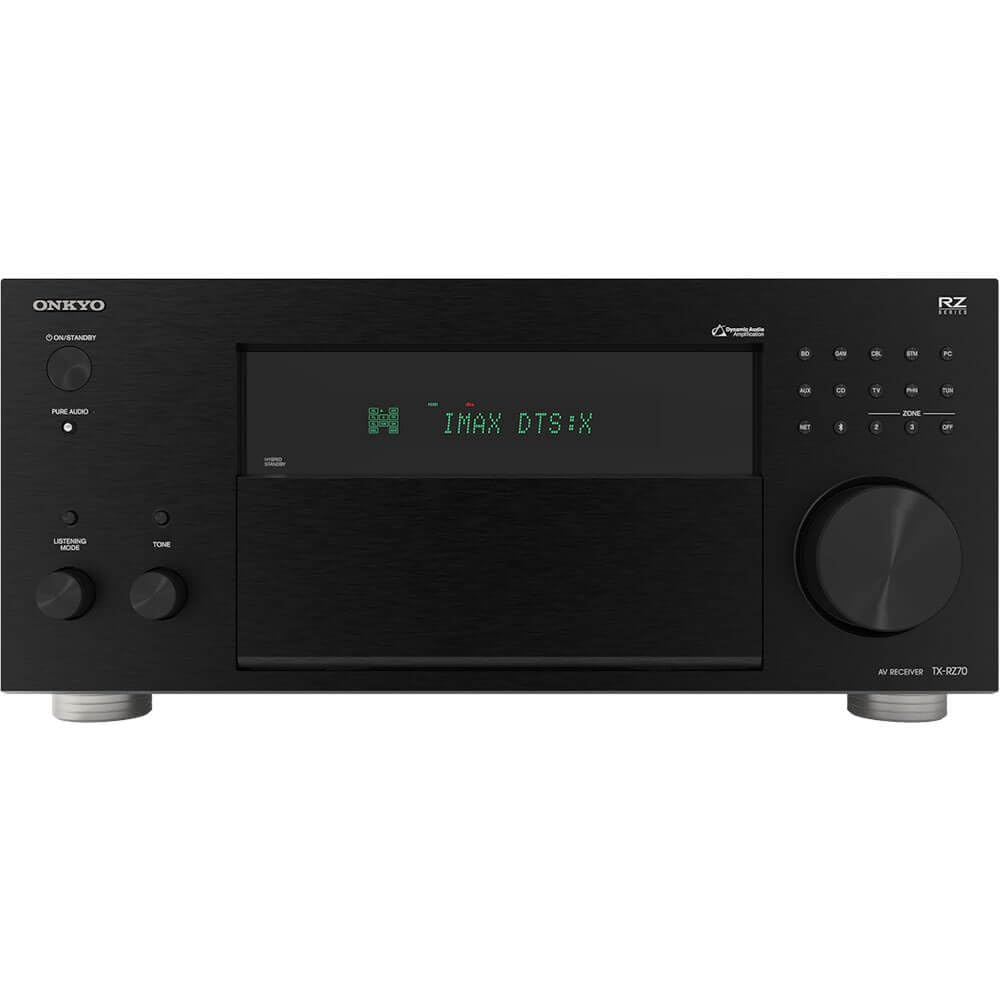
The Onkyo TX-RZ70 is a beast of an AV receiver, delivering 140 watts per channel across 11.2 channels, with THX certification and Dirac Live room calibration included out of the box. This is not just a home theater amp — it is a high-end reference processor designed for those building a dedicated 7.2.4 Atmos system. The ESS Sabre DACs inside ensure every detail is preserved, whether you are watching movies or listening to high-res audio.
Dirac Live Full Bandwidth is exceptional, using machine learning to adapt your audio to your specific room’s acoustics. The IMAX Enhanced mode delivers cinema-accurate picture and sound, and the Klipsch Optimize Mode automatically sets perfect crossover values for compatible speakers. Connectivity is state-of-the-art: HDMI 2.1 with 4K/120Hz, VRR, eARC, and Roon Ready support. The sheer weight of this unit (over 57 pounds) speaks to the robust power supply and engineering inside.
Customers consistently report that the TX-RZ70 delivers clean, dynamic sound with precise imaging and runs surprisingly cool given its power. The main trade-offs are its enormous size — it requires a heavy-duty AV cabinet — and the remote that feels cheap compared to the rest of the build. For anyone building a no-compromise home theater under , this is the definitive choice.
Why it’s great
- Dirac Live room calibration included for full bandwidth
- THX certified and IMAX Enhanced for cinema-quality performance
- Plenty of power (140W) with clean, dynamic sound
Good to know
- Extremely large and heavy (over 57 lbs)
- Zone 2 control is poorly designed
5. Denon PMA-600NE

The Denon PMA-600NE offers the best of both worlds: warm Class AB sound with digital connectivity. Its Advanced High Current (AHC) power amplifier delivers 70W per channel into 4 ohms, comfortably driving most bookshelf and tower speakers. A unique Analog Mode disengages the digital circuits entirely — turning off Bluetooth — for an undivided analog experience that fans of pure audio will appreciate.
The built-in phono stage is excellent for vinyl, and the DAC handles optical and coaxial digital inputs from TVs, CD players, or streaming devices. The slim, vibration-resistant design fits easily into a cabinet, and the remote control and source selection buttons are clearly laid out. Owners describe the sound as spacious, warm, and detailed, with a smooth treble that avoids fatigue over long listening sessions.
One minor quibble is the dim LED indicators and the relay clicks when switching inputs, which some find slightly annoying. The headphone output is adequate for low-impedance headphones but not for high-impedance beasts. That said, for a mid-range integrated amp that balances modern convenience with classic Denon warmth, the PMA-600NE is hard to beat.
Why it’s great
- Analog Mode for pure, uninterrupted analog playback
- Warm, spacious sound with excellent detail
- Built-in phono and digital DAC with optical inputs
Good to know
- Dim LED indicators and relay clicks with input changes
- Headphone amp is only suitable for low-impedance cans
6. Cambridge Audio AXA35

The Cambridge Audio AXA35 is a no-frills integrated amplifier that focuses entirely on sound quality. With 35 watts per channel into 8 ohms, it is not going to shake your walls, but it delivers a warm, rich, and spacious sound that reveals incredible detail even at low volumes. It includes a front-panel 3.5mm aux input for easy connection to smartphones or portable DACs, and a built-in phono stage for turntables.
The analog-only design means no Bluetooth, no Wi-Fi, and no digital inputs — just four RCA inputs and a phono input. This simplicity is its strength, as every engineering dollar goes into the amplification circuit. The metal chassis feels solid, and the volume knob has a satisfying mechanical heft. Owners praise its ability to drive bookshelf speakers like the Wharfedale Diamond series and B&W 600 series with impressive clarity and musicality.
Potential downsides include the lack of a remote control (a basic one is sometimes included, but not always) and the single set of speaker outputs. The display on the front is also not legible from across a room. For a pure, entry-level high-fidelity system built around analog sources, the AXA35 is an exceptional value that soundly outperforms its price.
Why it’s great
- Rich, warm analog sound with excellent detail at low volumes
- Built-in phono stage for vinyl playback
- Solid metal build and satisfying volume knob
Good to know
- No Bluetooth, Wi-Fi, or digital inputs
- Front display is hard to read from a distance
7. Yamaha RX-V4A

The Yamaha RX-V4A is a 5.2-channel AV receiver that offers excellent value for building a home theater system. It supports HDMI 2.1 with 4K/120Hz pass-through, making it a perfect match for next-gen gaming consoles. YPAO automatic room calibration quickly optimizes sound for your space, and MusicCast multi-room audio allows you to stream to other Yamaha speakers around your home.
Connectivity includes 4 HDMI inputs with HDCP 2.3 and eARC, Bluetooth, AirPlay 2, and built-in Wi-Fi for Spotify Connect, TIDAL, and Pandora. Voice control with Alexa and Google Assistant is a convenient addition. The sound is clean, detailed, and powerful — easily driving 140W towers and a center channel without strain. Owners highlight the YPAO calibration as particularly effective at fixing timing issues and detecting reverse polarity.
Some users report that the on-screen setup menus are a bit confusing and the remote has very small buttons. A few isolated HDMI switching issues have been noted, but these seem to be unit-specific. For a mid-range AV receiver that delivers clean power for movies, gaming, and music, the RX-V4A is a very strong contender.
Why it’s great
- HDMI 2.1 with 4K/120Hz for next-gen gaming
- YPAO room calibration cleans up timing and polarity
- MusicCast multi-room and voice control support
Good to know
- Setup menus can be confusing
- Remote has very small buttons
8. Reisong A10 EL34
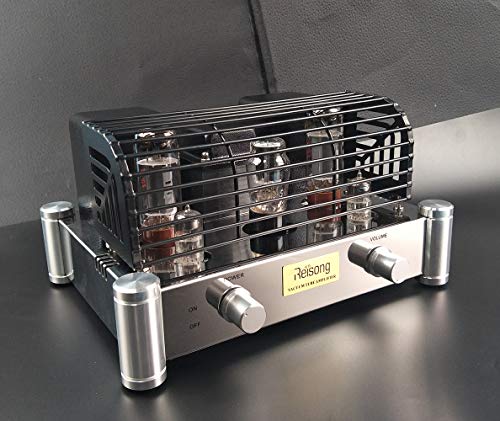
The Reisong A10 EL34 is a single-ended Class A tube amplifier that delivers just 12 watts per channel, but those watts are pure musical magic. It is designed for high-sensitivity speakers (89 dB or more) — think Klipsch Heresy or other efficient bookshelf models. The point-to-point hand-wired construction and upgraded output transformer (76×40) ensure excellent signal purity, and the EL34 tubes produce a warm, spacious, and “alive” sound that many audiophiles adore.
Setup is straightforward with auto-bias, so there is no need to measure tube current. The heavy steel and aluminum chassis (12 kg) feels premium, and the protective tube covers add safety. Owners rave about the wide soundstage, natural mids, and tight bass — some even prefer it over solid-state options costing much more. Tube rolling (swapping tubes for different sonic signatures) is a popular tweak, with Gold Lion KT77 tubes being a common upgrade.
The biggest limitation is power: it will not drive low-sensitivity floorstanders or fill a large room with high volumes. A few users have reported minor quality control issues like bent switches or faulty tubes, but the seller generally provides good support. For a dedicated near-field listening setup with efficient speakers, the Reisong A10 is a wonderfully musical entry into tube amplification.
Why it’s great
- Warm, spacious, and “alive” tube sound with excellent soundstage
- Point-to-point hand-wired construction and auto-bias
- Heavy, premium build quality for the price
Good to know
- Only 12W, requires high-sensitivity (89dB+) speakers
- Some quality control issues reported (bent switch, faulty tube)
9. Pyle 5.2 Channel Receiver

The Pyle 5.2 Channel Hi-Fi Receiver is a budget-friendly option that packs surprising versatility into a single box. With 1000 watts of peak power (RMS is significantly lower), it supports 4K Ultra HD video pass-through via HDMI, Bluetooth wireless streaming, and a digital-to-analog converter (DAC) for computer audio. The 5.2 channel surround sound is fine for creating a basic home theater setup in a small apartment or dorm room.
The built-in protection circuits (overcurrent, short circuit, overvoltage) provide peace of mind, and the included remote control makes basic operation easy. It includes FM radio, front-panel aux input, and USB playback. Customers who paired it with older speakers like Panasonic towers or Infinity bookshelves found it to be a reliable, surprisingly powerful budget receiver that connected seamlessly via Bluetooth to their phones.
However, the limitations are real: Bluetooth range is limited, the optical audio output can produce scrambled audio on some setups, and the remote control quality is questionable. Some units have arrived with defects. For a first-time home theater builder on a tiny budget, the Pyle can work well, but it is best viewed as a temporary or entry-level solution rather than a long-term audio investment.
Why it’s great
- Very affordable entry into 5.2 surround sound
- Bluetooth streaming and 4K pass-through
- Built-in protection circuits for safety
Good to know
- Bluetooth range is limited; build quality is budget-level
- Some units have defective remotes or audio output issues
FAQ
What is the difference between an integrated amplifier and an AV receiver?
How many watts do I really need for my home speakers?
What is the benefit of a separate phono stage versus a built-in one?
Does room correction software really make a difference?
Final Thoughts: The Verdict
For most users, the amplifier for home audio winner is the WiiM Amp Ultra because it combines audiophile-grade sound, modern streaming features, and room correction in a compact, affordable package. If you want a pure analog system with a warm tube character, grab the Reisong A10 EL34. And for a no-compromise home theater with surround sound, nothing beats the Onkyo TX-RZ70.