
Our readers keep the lights on and the weekend projects moving. As an Amazon Associate, I earn from qualifying purchases.
The promise of analog photography isn’t nostalgia—it’s intentionality, where every frame costs a real moment and every roll is a deliberate creative exercise. But finding a dependable body with a sharp lens, accurate metering, and a transport mechanism that won’t chew your film is harder than the hype suggests.
I’m Rikta — the co-founder and writer behind FitlyFast. I’ve spent hundreds of hours evaluating the mechanical reliability and optical performance of vintage SLR systems and modern reissues, cross-referencing user longevity reports to separate the keepers from the paperweights.
Whether you’re entering this world for the first time or returning to it, this guide cuts through the romantic haze and focuses on the hard specs that actually matter. Here is the definitive, no-fluff analysis of the best analog film camera currently worth your money.
How To Choose The Best Analog Film Camera
Choosing a film camera isn’t about picking the prettiest body; it’s about matching a transport mechanism, a meter type, and a lens mount to your shooting style. Start with the film format—nearly everyone lands on 35mm for availability and cost, but half-frame options (like the Pentax 17) effectively double your shot count per roll, which changes how liberally you shoot.
Metering and Exposure Control
A dead or inaccurate light meter turns a functional SLR into a guessing game unless you carry a separate meter or rely on the Sunny 16 rule. The Pentax K1000’s match-needle meter is famously reliable and simple, while the Canon AE-1’s shutter-priority TTL metering offers more automation. For a point-and-shoot, the KODAK Snapic A1’s auto-flash and fixed exposure force you to work around its limitations, especially in low light. Always confirm the meter powers on and responds before buying.
Lens Ecosystem and Mount Compatibility
The body is just a light-tight box; the lens is the actual instrument. Canon EOS bodies (Rebel 2000, Rebel G) use the EF mount, compatible with modern autofocus lenses if you want cross-system utility. The Canon AE-1 uses FD mount lenses—excellent optics but not adaptable to modern digital EOS bodies without an optical-element adapter. Pentax K-mount is one of the most versatile, with decades of manual and autofocus glass available cheaply. Factor in lens availability and adapter compatibility if you plan to build a kit.
Build Quality and Condition of Renewed Units
A film camera is only as good as its shutter curtains, foam light seals, and mirror mechanism. A renewed camera should have its light seals replaced—if they’ve turned to sticky goo, light leaks ruin every frame. The Canon AE-1 and Pentax K1000 have all-metal bodies that survive decades, while plastic-bodied cameras like the KODAK Snapic A1 and Canon Rebel series are lighter but more fragile. Always check for smooth film advance, snappy mirror slap, and a shutter that fires consistently across all speeds.
Quick Comparison
On smaller screens, swipe sideways to see the full table.
| Model | Category | Best For | Key Spec | Amazon |
|---|---|---|---|---|
| Canon AE-1 | SLR Vintage | Classic manual-creative hybrid | TTL shutter-priority, 50mm f/1.8 FD | Amazon |
| Pentax 17 | Half-Frame Compact | Everyday carry, 72-shot rolls | 25mm f/3.5 HD, zone focus | Amazon |
| Pentax K1000 | Manual SLR | Pure manual learning and durability | 50mm f/2, match-needle meter | Amazon |
| Canon Rebel 2000 | Autofocus SLR | Modern autofocus with 35mm | 7-point AF, 28-80mm EF zoom | Amazon |
| Canon EOS Kiss (Rebel G) | Autofocus SLR | Budget autofocus with ISO 3200 | 35-80mm EF, ISO 100-3200 | Amazon |
| KODAK Snapic A1 | Point-and-Shoot | Entry-level simplicity and double exposure | 3-element glass lens, 2-zone focus | Amazon |
| OM SYSTEM OM-3 | Digital (Not Film) | Vintage-styled digital alternative | 20MP BSI, 5-axis IBIS, MFT | Amazon |
In‑Depth Reviews
1. Canon AE-1 35mm SLR with 50mm f/1.8 (Renewed)

The Canon AE-1 is the benchmark for an accessible yet feature-rich SLR. Its shutter-priority TTL metering lets you set the speed while the camera picks the aperture—a perfect middle ground between fully automatic and fully manual. The included 50mm f/1.8 FD lens is fast enough for indoor available light and sharp enough to make film grain look deliberate and beautiful.
What sets a well-renewed AE-1 apart is the all-metal chassis and the buttery smooth film advance lever. The shutter speed range from 1/1000 to 2 seconds plus Bulb gives you real creative flexibility, though you’ll want to test the slower speeds for consistency. Renewed units from reputable sellers often come with replaced light seals, which is critical for preventing fogging on your negatives.
Yes, it’s a vintage camera with no autofocus, but that’s the point—the AE-1 rewards the patient shooter. The match-needle meter is intuitive, the viewfinder is bright, and the FD lens ecosystem is deep and affordable. For the photographer who wants tactile control without the steepest learning curve, this is the body to chase.
Why it’s great
- TTL shutter-priority metering simplifies exposure decisions
- Fast, sharp 50mm f/1.8 prime included
- Metal body feels substantial and lasts decades
Good to know
- Requires manual focus and zone awareness
- FD lenses need an adapter for modern Canon digital bodies
- Slow shutter speeds may need calibration after decades
2. Pentax 17 Half-Frame 35mm Film Camera

The Pentax 17 resurrects the half-frame concept with modern execution, capturing two vertical 17x24mm images on a single standard 35mm frame. The result is 72 shots per 36-exposure roll, which dramatically reduces the per-shot cost and encourages you to shoot more freely. The 25mm f/3.5 HD-coated lens delivers sharp, detailed negatives with a slight vintage character that looks excellent on social media crops.
Build quality is genuinely impressive—top and bottom covers are solid magnesium alloy, and the retro-styled body is compact enough for a jacket pocket. The zone-focus system with six distance marks is a deliberate choice for speed over precision, and the manual film advance lever recreates the satisfying tactile rhythm that made film addictive in the first place.
At its price point, this is a significant investment for a fixed-lens point-and-shoot, but the Pentax 17 offers something no other modern camera does: a genuinely new, warrantied, repairable half-frame system. For the photographer who wants to double their storytelling per roll without switching to a sub-35mm format, this is the only current game in town.
Why it’s great
- 72 shots per 36-exposure roll halves film costs
- Magnesium alloy build feels premium and durable
- Modern HD coating on lens for contrast and flare resistance
Good to know
- Fixed lens with no interchangeable option
- Zone focus requires distance estimation
- Premium price compared to vintage half-frame alternatives
3. Pentax K1000 Manual Focus SLR with 50mm f/2 (Renewed)

The Pentax K1000 is often called the “student camera” for a reason—it strips photography down to shutter speed, aperture, and focus, with a simple match-needle meter that requires one LR44 battery. The entire camera can survive a fall that would shatter a modern mirrorless body, and the all-mechanical shutter fires reliably without any power. If the meter dies, the camera still works; you just need a handheld meter or an app.
The included 50mm f/2 SMC Pentax lens is one of the best normal primes ever made—sharp in the center, with pleasant bokeh and minimal chromatic aberration. The K-mount is also one of the most adaptable platforms, with lenses available from the 1970s through today. The downsides are real: no auto-exposure modes, no built-in flash, and the weight of an all-metal body.
Renewed units vary wildly. The best ones come from shops that replace the foam light seals and verify the meter accuracy against a known source. A bad unit with a dead meter or sticky shutter is a paperweight, so buy from a seller with a track record and a return policy. For the photographer who wants to truly learn exposure without any electronic crutch, the K1000 is still the ultimate teacher.
Why it’s great
- All-mechanical operation works without batteries (except meter)
- Sharp 50mm f/2 SMC lens with legendary coatings
- K-mount ecosystem is vast and affordable
Good to know
- No auto-exposure or built-in flash
- Renewed units require careful seller vetting
- Heavier and bulkier than polymer-bodied alternatives
4. Canon Rebel 2000 SLR with 28-80mm EF Zoom (Renewed)
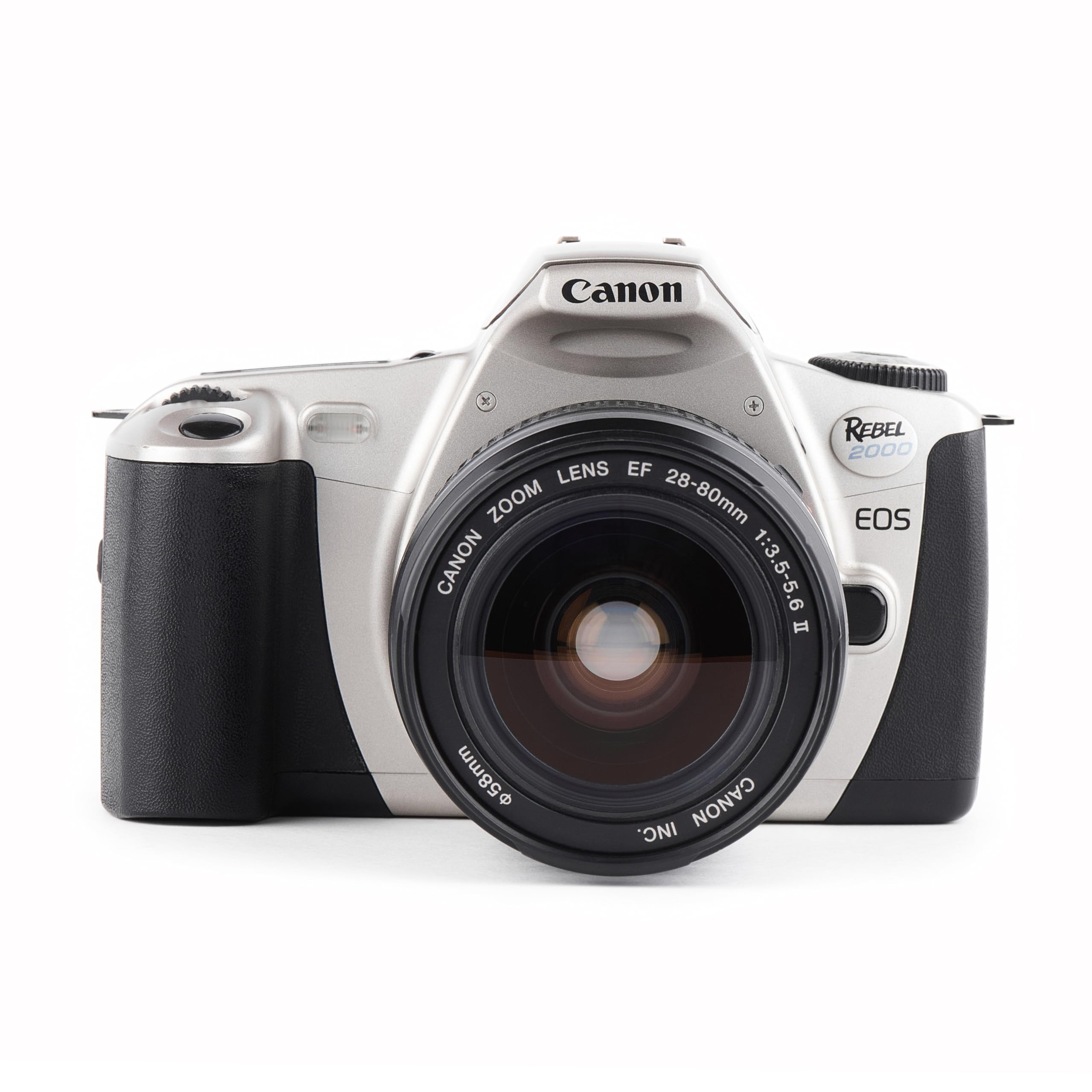
The Canon Rebel 2000 brings genuine 7-point autofocus and full program-auto convenience to a 35mm body, making it the easiest entry point for someone transitioning from digital. The EF mount means you can use the same lenses you might already own for a Canon DSLR—the 28-80mm zoom included is a comfortable walk-around range, though it’s not optically stellar. Automatic film loading, advance, and rewind remove the friction that intimidates new film shooters.
Exposure modes include Program, Aperture Priority, Shutter Priority, and full Manual, so you can gradually take control as you learn. The built-in pop-up flash is serviceable for fill or close-range snapshots in low light. The body is mostly polymer, so it’s lightweight and comfortable for all-day carrying, but it lacks the bulletproof feel of the all-metal AE-1 or K1000.
The biggest risk with renewed units is the condition of the battery compartment and the zoom lens’s focus ring. Some reviewers reported long shipping times and missing accessories, so prioritize sellers with clear photos of the actual unit and a solid return window. For the budget-conscious shooter who wants autofocus simplicity in a 35mm package, this is hard to beat.
Why it’s great
- 7-point autofocus works well for everyday shooting
- EF lens compatibility with modern Canon DSLR glass
- Full range of exposure modes from Program to Manual
Good to know
- Polymer body feels less durable than metal predecessors
- Kit zoom lens is adequate but not sharp at edges
- Renewed units can vary in completeness and battery condition
5. Canon EOS Kiss (Rebel G) with 35-80mm EF (Renewed)

The Canon Rebel G (sold as the EOS Kiss in Japan) is essentially the same platform as the Rebel 2000 but often available for less, making it one of the most affordable autofocus SLR entry points. The 35-80mm EF zoom covers a useful focal range, and the camera’s auto-exposure modes handle 90% of situations without fuss. The ISO range extends to 3200, giving you real low-light flexibility with fast film stocks.
User feedback consistently praises the reliable autofocus and the intuitive layout of controls, especially for hobbyists and students. The wide-area autofocus point is forgiving for quick snapshots, and the built-in flash provides adequate fill for daytime shadows. The body is compact and lightweight, though the plastic construction means you should treat it with care.
The renewed units from the seller reviewed here arrived with fresh batteries, working meters, and clean glass, but as with any older electronics, the LCD screen and button contacts can degrade. At this price point, the Rebel G offers tremendous value for someone who wants a working autofocus film camera without the risk of a flea-market unknown.
Why it’s great
- Affordable entry into autofocus 35mm shooting
- ISO range up to 3200 works with fast film stocks
- EF mount accepts Canon’s entire autofocus lens lineup
Good to know
- Plastic body less robust than metal SLR alternatives
- LCD screen and buttons may show wear on older units
- Kit lens is basic; upgrading the glass improves results significantly
6. KODAK Snapic A1 35mm Point-and-Shoot (Ivory White)
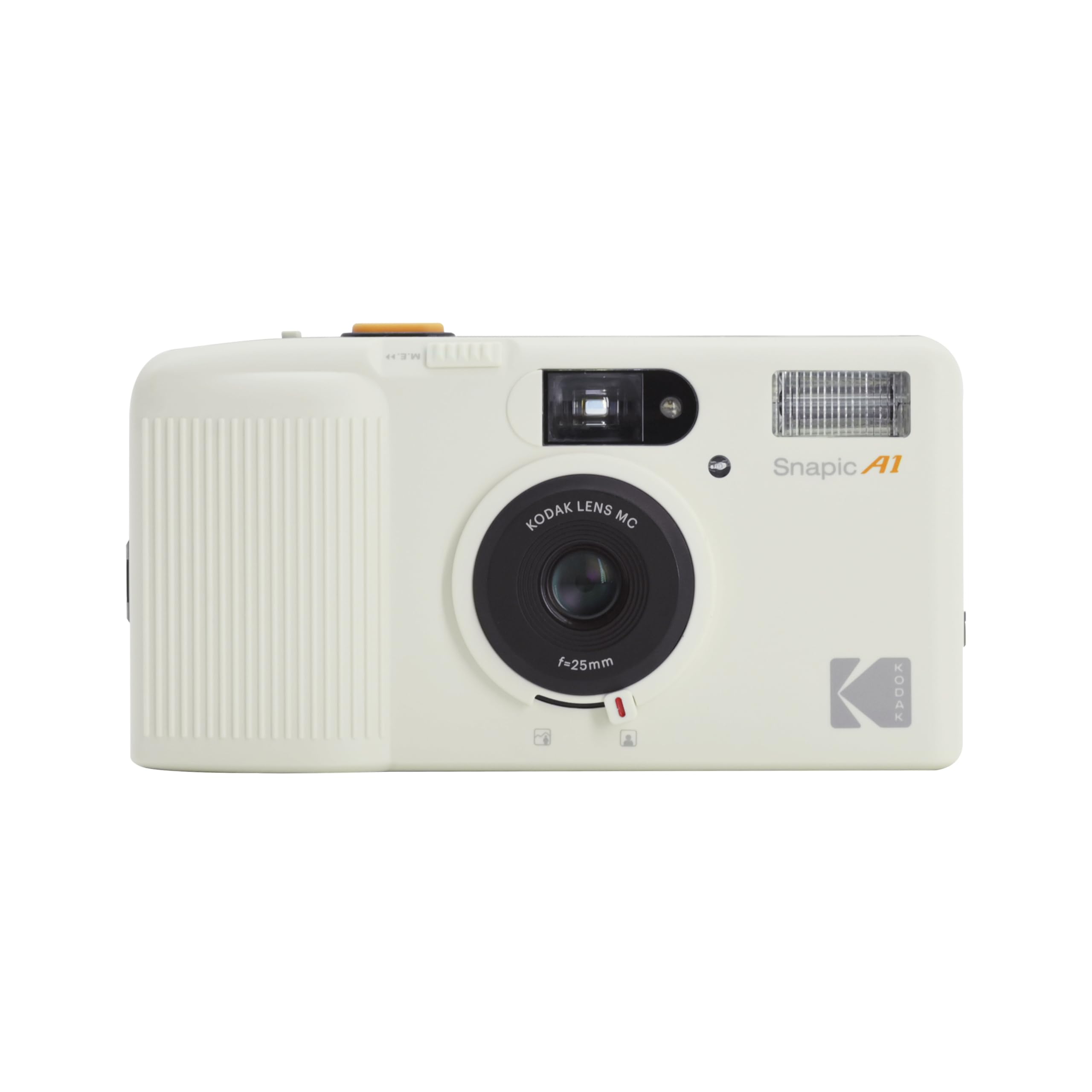
The KODAK Snapic A1 is a modern point-and-shoot designed to replace single-use disposable cameras with a reusable body. Its 3-element glass lens produces noticeably sharper images than plastic-lens disposables, especially when paired with Kodak Gold 200 in bright daylight. The 2-zone focus system lets you toggle between portrait and landscape distances, and the built-in auto flash with red-eye reduction works well for fill light.
The standout feature here is the multiple-exposure mode, which lets you layer two different scenes onto a single frame—a genuinely creative tool that’s rare at this price point. The camera is compact, light, and simple enough for a child or absolute beginner to pick up and shoot. It does require AAA alkaline batteries (not rechargeable NiMH, as reviewers noted), and the flash button is easy to press accidentally, potentially flattening batteries.
For the cost of three disposable cameras, you get a reusable body that delivers better image quality and a creative double-exposure function. It’s not going to satisfy a seasoned SLR shooter, but as a party camera, travel companion, or gift for a new film-curious friend, the Snapic A1 delivers exactly what it promises without pretension.
Why it’s great
- Glass lens is sharper than plastic disposable cameras
- Double-exposure mode enables creative layering
- Compact, lightweight, and very beginner-friendly
Good to know
- Flash button placement leads to accidental activation
- Only works with alkaline batteries, not rechargeable NiMH
- Struggles in low light; best suited for daytime use
7. OM SYSTEM OM-3 Micro Four Thirds (Digital)

The OM SYSTEM OM-3 is not a film camera—it’s a digital mirrorless body engineered in the aesthetic spirit of the classic OM-1 film SLR. It earns a place here because it offers the tactile, intentional shooting experience of analog with the convenience of modern digital. The 20MP stacked BSI sensor is the same class as the flagship OM-1 Mark II, delivering fast readout, wide dynamic range, and excellent high-ISO performance.
The physical controls are the highlight: dedicated dials for ISO, shutter speed, and exposure compensation sit atop a magnesium-alloy body with IP53 weather sealing. The Creative Dial lets you dial in color profiles or monochrome looks in-camera, mimicking the way film stocks change your approach to a scene. The 5-axis in-body stabilization is class-leading, letting you handhold at shutter speeds that would challenge a tripod.
This is a premium tool for the photographer who loves the ritual of analog but needs the efficiency of digital files for client work or social sharing. The price is substantial, but the OM-3 is currently the cheapest camera with a stacked sensor, and the combination of build, stabilization, and computational features makes it a unique hybrid. It’s a digital camera for people who think like film shooters.
Why it’s great
- Stacked 20MP sensor with fast readout and great dynamic range
- Class-leading 5-axis IBIS for handheld stability
- Weather-sealed magnesium body with tactile physical controls
Good to know
- This is a digital camera, not analog film
- Micro Four Thirds sensor is smaller than full-frame alternatives
- No grip on front requires technique for one-handed shooting
FAQ
Is the Canon AE-1 better than the Pentax K1000 for a beginner?
What does half-frame mean on the Pentax 17?
Can I use modern Canon EF lenses on an old Canon film body?
Final Thoughts: The Verdict
For most users, the best analog film camera winner is the Canon AE-1 because it offers the ideal blend of manual creative control, reliable TTL metering, and a fast prime lens at a price that still makes sense for a shooter who wants to grow. If you want a modern, repairable system with the unique economy of 72 shots per roll, grab the Pentax 17. And for the purest manual learning experience with the toughest build in the game, nothing beats the Pentax K1000.