
Our readers keep the lights on and the weekend projects moving. As an Amazon Associate, I earn from qualifying purchases.
Specs are compiled from manufacturer listings and verified buyer reviews and can change over time — please confirm the key details on the product page before buying.
You’ve drilled into a hollow-core door, pushed in the anchor, and the moment you tighten the screw it spins uselessly in the cavity. That’s the core problem this guide solves: finding an anchor that actually bites into thin, empty panels so your hooks, racks, and handles stay put for good.
I’m Rikta — the founder and writer behind FitlyFast. This guide is built by comparing the manufacturers’ published specifications and the patterns across verified customer reviews, so you get each pick’s real strengths and trade-offs instead of marketing spin.
These picks cover toggle-style, molly, and petal-nut designs, each rated for hollow doors so you choose the right one for your project. The best anchor for hollow door balances grip strength, ease of install, and how much weight it will actually carry.
Our Picks at a Glance

How To Choose The Best Anchor For Hollow Door
Not every anchor sold for “walls” works inside a hollow door. A hollow-core door is just two thin skins of material with an empty space between them, so the anchor has to expand and grip the back of that thin layer — not bite into solid wood or drywall.
Know Your Door’s Skin Thickness
Most hollow doors have faces between 1/8″ and 1/4″ thick. An anchor that needs a thicker material to grip will either not expand fully or will blow out the face. Check the anchor’s stated material thickness range and match it to your door before you buy.
Expansion Style Matters More Than Brand
You have three main ways to hold a screw in a hollow door, and each spreads the load differently. Toggle anchors flip open wings inside the cavity for a wide grip. Molly bolts crush a metal sleeve flat against the back. Petal nuts bloom into a flower shape that flattens the collar. All three work, but they install differently and need different tools — so think about if you want to hammer, squeeze a tool, or turn a screw.
Weigh What You Are Hanging
Tensile strength is the pull straight out of the door, while shear strength is the downward load. A heavy mirror pulls differently than a towel hook. Always leave a big safety margin, and remember a single anchor is rarely the only thing holding a fixture — two or four spread the load.
Quick Comparison
| Model | Best For | Type | Material | Qty | Amazon |
|---|---|---|---|---|---|
| TOGGLER Toggle TA★ Best Overall | High strength in thin panels | Toggle | Polypropylene | 100 | Amazon |
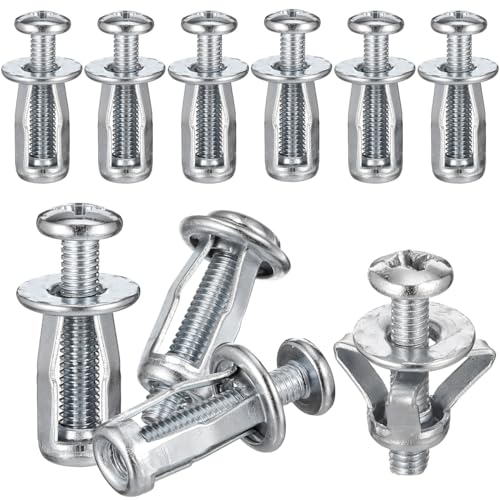
| ULTECHNOVO Expansion ScrewMetal Pick | Simple install in hollow cores | Expansion | Carbon Steel | 10 | Amazon |
| LIBRATON Molly Bolts | Versatile multi-size kit | Molly Bolt | Metal | 30 | Amazon |
| BENLIUDH 304 Stainless | Rust resistance in damp spots | Expansion | Stainless Steel | 10 | Amazon |
| Yaocom Petal Nut Kit | Multi-size kit with tool | Petal Nut | Carbon Steel | 46 | Amazon |
| Hollow Wall Fixings M4 | Extra-short reach in thin skins | Expansion | Carbon Steel | 20 | Amazon |
In‑Depth Reviews
1. TOGGLER Toggle TA Hollow Door Anchors
Our pick — over 4★ from 250+ verified ratings; the strongest balance of quality and price.
The 100-pack toggle that delivers serious holding power on thin 1/8″ to 1/4″ panels.
This anchor handles the heaviest loads here, with a rated tensile strength of 124 lbs. when used in 1/4″ plywood with a #8 x 1-1/4″ screw, so it handles heavy fixtures like shelves and racks.. That number is the pull force trying to yank the anchor straight out of the door — so this high rating means you can trust it for heavier fixtures like shelves and racks, not just towel hooks.
The design is a true toggle: you push the anchor in, tap the red push pin with a hammer to flip open the wings inside the cavity, then drive your screw through the fixture. Buyers report they “carry a heavy load with ease,” and the grip is so dependable that some owners use them on hollow doors and walls with zero wiggle once installed. The trade-off is the plastic push pin — a few owners find it breaks too easily, so tap it gently rather than whacking it hard.
You get 100 anchors in the box, making this the best value per unit here by a wide margin. The catch is screws are not included, so you need to buy #8 to #12 screws separately. That minor extra step is worth it for the confidence that comes from anchors made in the USA with this level of tested strength.
Why it wins
- Rated for 124 lbs tensile strength in 1/4″ plywood
- Works on panels as thin as 1/8″
- 100 anchors per box — best quantity here
- Made in the USA
What to note
- Screws are not included — buy #8 to #12 separately
- Plastic push pin can break if hammered too hard
- Confirm your door is truly hollow before installing
Reach for this if: you want maximum holding power and a bulk supply for multiple projects on thin doors and panels.
Look elsewhere if: you need an all-in-one kit with screws included, or you prefer a metal-bodied anchor over plastic.
2. ULTECHNOVO Expansion Screw Hollow Door Anchor
A compact carbon-steel expansion anchor that feels rock-solid once tightened in a hollow core.
This is the anchor for the classic hollow-core door situation, and it holds up to 22 lbs. of mounting weight, plenty for coat hooks, pictures, and small shelves.. That is plenty for coat hooks, pictures, and small shelves. The body is carbon steel with a zinc-plated finish, so it resists corrosion and keeps its grip in normal indoor conditions.
Owners who tried other solutions first found this one finally worked: as owners mention, “they work great in a hollow core door and once tightened feel very firm and solid grip.” The install process is straightforward — drill a hole matching the 0.43-inch retainer diameter, insert it, compress with the tool, then run the screw through your item. It also works on aluminum cladding, iron sheets, and hollow plastic panels, so it is not limited to doors.
The one quirk is the lack of anything on the back to stop rotation while you get the screw started. A pair of needle-nose pliers solves that in seconds. At just 1.28 ounces each, the anchors are light and unobtrusive, and the 10-piece pack is enough for a couple of doors or a closet refresh.
Solid and simple: a metal-bodied expansion anchor with a 22-lb weight capacity and a wide material range, offered in a tidy 10-pack.
The starter’s catch: the anchor can spin during the first turns — hold it with pliers and it seats fine.
3. LIBRATON Molly Bolts for Drywall & Plaster Wall
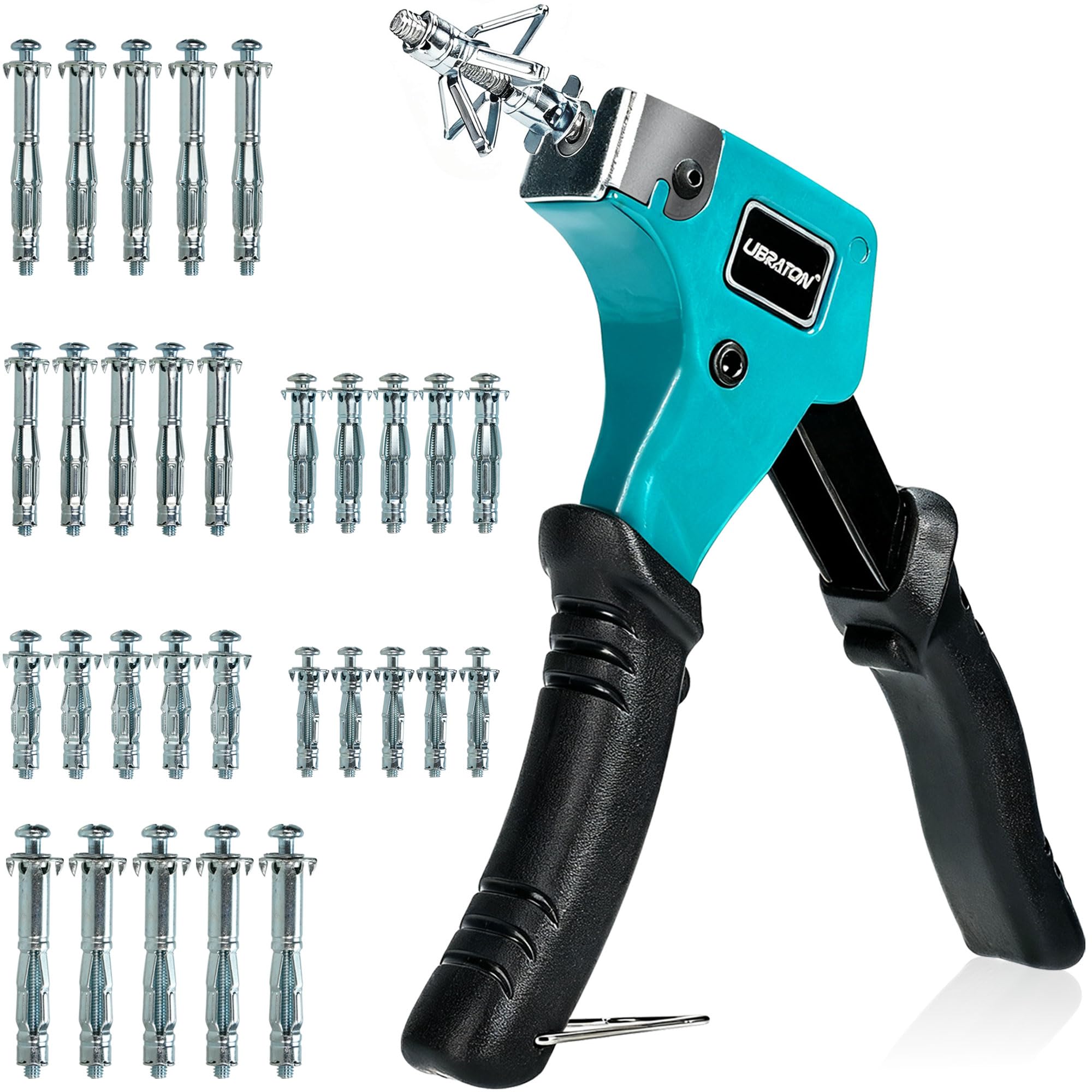
A 30-piece, six-size molly bolt kit with a lever-action setting tool for quick, clean installs.
This kit covers nearly every hollow surface you will meet, with 30 molly bolts across six sizes — M4x32mm, M4x46mm, M5x37mm, M5x65mm, M6x52mm, and M6x65mm — sized for material thicknesses from 0.12″ up to 1.52″. The brand rates the hold at up to 65 lbs., the strongest claim in this lineup and a good fit for TV mounts and heavier mirrors., which is the strongest claim in this lineup and a good fit for TV mounts and heavier mirrors.
The standout is the pro-grade setting tool: an aluminum body with an A3 steel impact head that uses a lever action to expand the anchor with one squeeze instead of hammering. The 360° swivel expansion spreads the force evenly, which owners say protects thin drywall from cracks. It works on drywall, plasterboard, fiber cement, and wood composite panels, so it is a contractor-grade option that a DIYer can also manage.
There is a real quirk to know before you buy: the smallest 4mm bolts are too small for the setting tool to grip properly, so you may need to seat those by hand. Owners also note the screws hold a great amount of weight once the tool works correctly, with occasional trouble on a few bolts chalked up to user error. This is the kit to grab if you want one box that handles doors, walls, and everything between.
What stands out
- Holds up to 65 lbs — strongest rated claim here
- 30 bolts in 6 sizes cover many projects
- Lever-action tool expands anchors without hammering
Know before you buy
- Smallest 4mm bolts don’t fit the setting tool well
- Heavier kit at 1.96 lbs — not a pocket carry
Best for: anyone tackling a mix of doors, drywall, and plaster with one versatile kit and a tool that speeds the job.
Think twice if: your only job is a single small hook — a 30-piece kit is more than you need.
4. BENLIUDH 304 Stainless Steel Hollow Wall Anchors
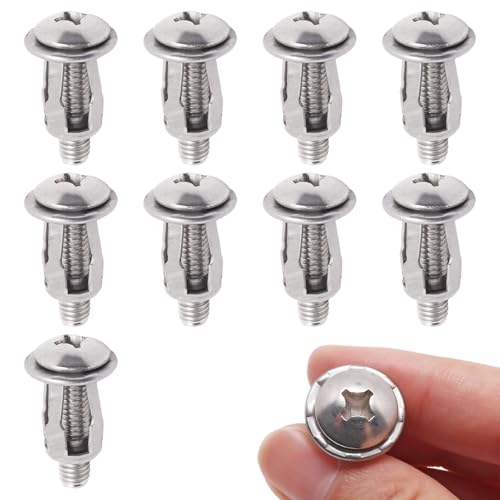
A 10-pack of stainless steel anchors sized M6 x 1″ for thin walls and damp environments.
This is the set to reach for when rust matters. The anchors are built from 304 stainless steel, which resists corrosion far better than plain carbon steel — a real advantage on an RV, a boat interior, or any door in a humid space. The M6 x 1″ size is a machine-style thread designed for thin panels like doors and RV walls.
Owners have put these to serious work: one used them to repair the top hinge on a storm door after the original sheet metal screws pulled through, calling this “a much more sturdy and secure attachment.” Another confirmed they bite into a thin RV wall even with foam insulation behind it. The 304 stainless construction is the reason those thin-wall jobs hold.
The fair caveat is installation: the data clearly notes you need a puller or setting tool to flatten the collar against the back side of the wall, or a pair of vice grips to hold it while you turn the screw. Without that, the inner section can spin and cause damage. If you are comfortable with that extra step, this is a tough, corrosion-resistant anchor at a very reasonable price.
Built for damp spots: 304 stainless steel construction makes this the go-to for RVs, boats, and humid rooms where rust would ruin lesser anchors.
Plan the install: you want a setting tool or vice grips on hand, since the inner section can spin without them.
5. Yaocom Petal Nut & Setting Tool Kit

A 46-piece petal-nut kit with a setting gun that stops spinning and speeds up hollow-door work.
This is the petal-nut specialist in the lineup: 45 carbon-steel nuts in three sizes — M4, M5, and M6, with 15 of each — plus one metal setting tool. The petal design blooms open inside the cavity to grip the back of the panel, and the galvanized finish resists rust for a longer service life. The 20mm and 25mm lengths keep the anchors compact enough for thin surfaces.
The included setting tool is the real hero here. Owners describe it as essential — the tool holds the nut steady so it cannot spin while you tighten, and one buyer estimated it saved over 45 minutes on a job. The kit has been used to reattach a garage door stiffening rib, mount wire baskets, and work on fiberglass projects without damage. The screws are machine-threaded, so you can unscrew and remove them later if needed.
The one thing to know is that the Amazon listing mislabels the thread size — the actual nuts are metric (M4, M5, M6), not the 1/2-20 listed. If you are a detail-oriented DIYer, this is the most complete petal-nut setup you can buy in one box, and the tool alone is worth the price.
Why buy this kit
- Setting tool prevents spinning and saves real time
- 45 nuts in M4, M5, M6 cover many jobs
- Machine threads allow later removal
Watch out for
- Listing shows wrong thread size — actual is metric
- Heavier kit due to the metal tool
Pick this if: you want a complete petal-nut system with a tool that makes hollow-door installs fast and frustration-free.
skip it if: you only need a handful of anchors for one hook — the bulk kit is more than a single project needs.
6. Hollow Wall Fixings M4x20mm Extra Short
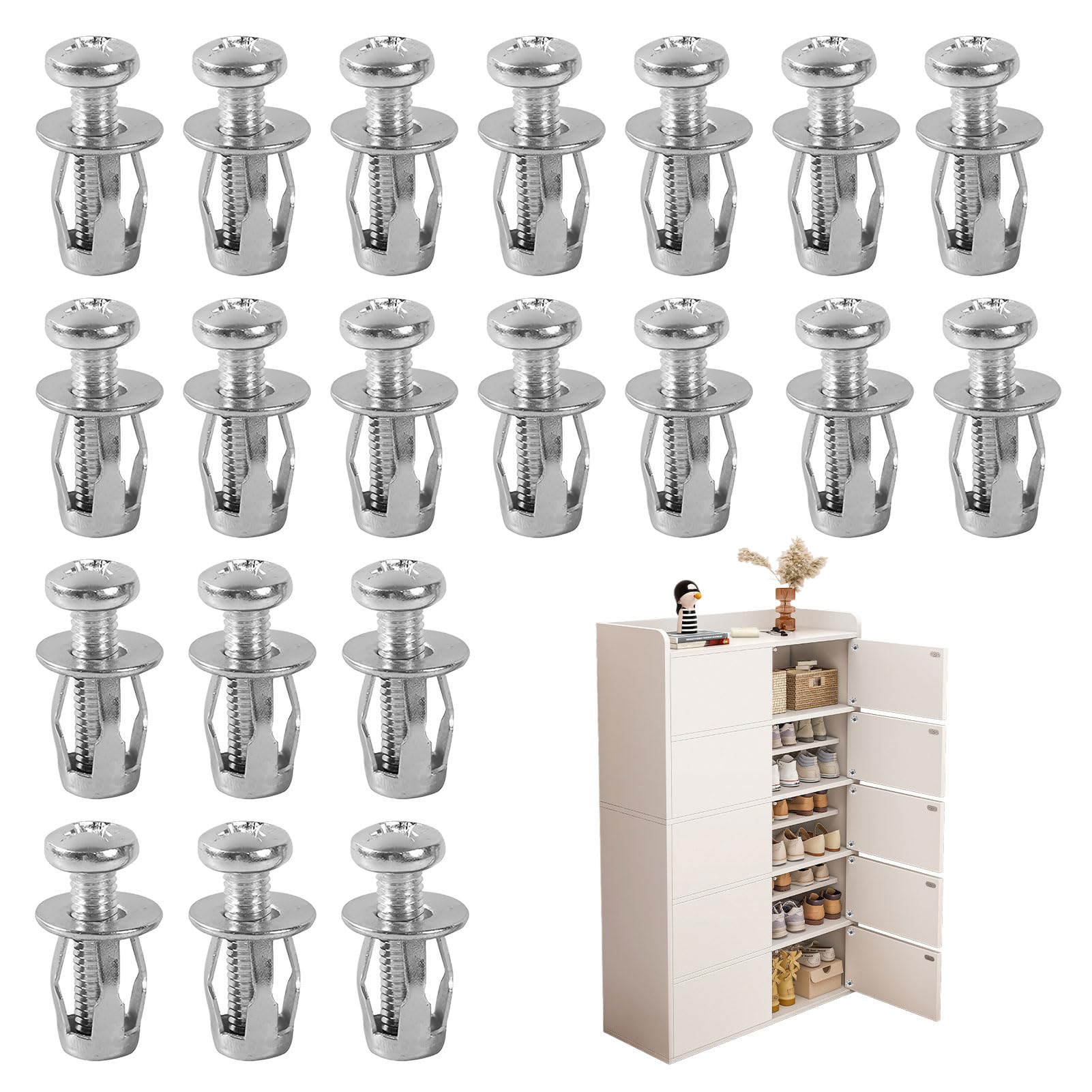
An extra-short M4x20mm anchor for the thinnest hollow panels where depth is tight.
This set is built for the narrowest situations, with a 20mm-long body that fits where deeper anchors cannot. The compact profile is the whole point — an extra-short anchor that provides a snug, secure fit in hollow walls without poking through the far side. The carbon-steel body has a galvanized surface for hardness and rust resistance.
Owners confirm it holds strongly: one mounted a bar with three coat hooks on the inside of a hollow door and reported the fixings “hold very strongly.” Another used them to replace missing bolts on mirrors and shelves. The included setting tool is meant to make install quick, though the package contents have been inconsistent — some customers note the tool missing from the box.
The honest trade-off is that these fixings lack the small teeth that stop rotation during anchoring, so you may need pliers or mole grips to hold them steady while you tighten. One owner solved the distortion problem by leaving the screw in while tapping the fitting through the hole. For thin-panel work where depth is the constraint, these are a solid, compact choice.
Depth-saver: the extra-short M4x20mm body fits thin panels where longer anchors would blow through the other side.
Expect a little fuss: no anti-spin teeth means holding the anchor steady with pliers is part of the job.
Understanding the Specs
Tensile vs. Shear Strength
Tensile strength is the force pulling an anchor straight out of the door — like a hook being yanked toward you. Shear strength is the downward load, like a shelf pressing straight down. The TOGGLER rates 124 lbs. tensile and 126 lbs. maximum shear, so it resists both pulling and hanging forces well., which tells you it resists both pulling and hanging forces well. For safety, always use a quarter or less of the maximum listed values as your working load.
Material Thickness Range
This is the spec that decides whether an anchor works at all in your door. Most hollow-core door skins measure between 1/8″ and 1/4″ thick. The TOGGLER is rated for exactly that range, which is why it is the safest bet. The LIBRATON kit covers a wider 0.12″ to 1.52″ range, making it more versatile across different wall types. If a product does not state its range, assume it is not designed for your door.
Anchor Body Materials
Polypropylene plastic (like the TOGGLER) is light, rust-proof, and plenty strong for most indoor jobs. Carbon steel (ULTECHNOVO, Yaocom, Hollow Wall Fixings) adds stiffness and is often zinc-galvanized to fight rust. Stainless steel 304 (BENLIUDH) is the premium choice for damp locations like RVs and boats. Match the material to your environment — a bathroom door in a humid climate deserves stainless or a well-galvanized anchor.
Setting Tools
Anchors that expand inside a cavity often need a tool to compress the collar against the back of the wall. The LIBRATON and Yaocom kits include purpose-built tools that hold the anchor steady so it cannot spin — a common failure point. If a product lacks a tool, you can use a pair of vice grips or needle-nose pliers to hold the collar while you turn the screw, as many owners do.
FAQ
Will a regular drywall anchor work in a hollow door?
What is the difference between a toggle anchor and a petal nut?
How much weight can I hang on a hollow door anchor?
Why does my anchor spin when I try to tighten it in a hollow door?
Are stainless steel hollow door anchors worth the extra cost?
What size hole should I drill for a hollow door anchor?
Can I remove a hollow door anchor after installation?
Will these anchors work on a foam-filled door?
Is a setting tool really necessary for hollow door anchors?
How many anchors do I need for a hollow door project?
Final Thoughts: The Verdict
If you want one dependable pick, the anchor for hollow door winner is the TOGGLER Toggle TA because its 124 lbs. tensile strength and 100-piece count make it the strongest and best-value option for thin panels. If you want a versatile multi-size kit with a setting tool, grab the LIBRATON Molly Bolts. And for damp environments like an RV or boat, the BENLIUDH 304 Stainless anchors are the ones to reach for. The crowd favorite in this group is the Yaocom petal-nut kit, earning 4.6 stars from 47 owners — a rare top score that tells you the included tool makes a real difference in everyday use.
How We Picked
We do not accept paid placement. Every pick is matched to a real buyer and a real use-case; we do not hands-on test units.
Sources & Methodology
Specifications: manufacturer listings and product documentation. Review insights: verified customer reviews, as of August 2026. Pricing: not shown on this page (it changes often); check the current price via the retailer link.
As an Amazon Associate, FitlyFast earns from qualifying purchases. This does not affect which products we feature.