
Our readers keep the lights on and the weekend projects moving. As an Amazon Associate, I earn from qualifying purchases.
Plaster walls have a reputation for crumbling the moment you drill into them. Standard drywall anchors often spin uselessly or punch right through, leaving a hole bigger than the one you started with. Choosing the right anchor for this demanding material means understanding thread design, base material, and expansion mechanics — because once plaster crumbles, patching it is a whole separate project.
I’m Rikta — the co-founder and writer behind FitlyFast. This guide is the result of deep market research and hours spent analyzing the specific holding mechanisms, metal gauges, and installation forces that determine whether an anchor grips plaster or destroys it.
Whether you are hanging a mirror, securing a shelf, or mounting a towel rack, the right anchor for plaster walls can mean the difference between a rock-solid install and a frustrating repair job the next day.
How To Choose The Best Anchor For Plaster Walls
Not all wall anchors work on plaster. The material itself — lime-based or gypsum-based, often reinforced with horsehair or wire mesh — behaves differently than drywall. A wrong choice can cause the anchor to spin in place, crush the surrounding plaster, or fail under load. Focus on three core factors before buying.
Expansion Mechanism: Molly Bolts vs. Self-Drilling vs. Ribbed Plugs
Molly bolts with a dedicated setting tool are the safest option for plaster walls because they expand outward without twisting the anchor body against the wall. Self-drilling anchors require a large, sharp thread that can cut cleanly through plaster instead of shattering it. Simple ribbed plastic plugs rely on friction alone and are the weakest choice — they often spin out or push the plaster away.
Anchor Material and Holding Strength
Glass-filled nylon (like the TOGGLER brand) offers high tensile strength without the brittleness of standard plastic. Zinc-plated or galvanized carbon steel molly bolts handle up to 65 pounds or more in plaster, but the thin wall of the plaster itself must be the limiting factor. Always look for a rated holding capacity of at least 50 pounds for medium-duty items like mirrors or curtain rods.
Screw Thread and Point Design
Self-drilling anchors for plaster need a sharp, deep thread that can grip the hard surface without requiring a large pilot hole. A coarse thread with a pointed tip minimizes the cracking that occurs when the drill bit or anchor first contacts the plaster. Avoid blunt-tipped anchors unless you are drilling a dedicated pilot hole first.
Quick Comparison
On smaller screens, swipe sideways to see the full table.
| Model | Category | Best For | Key Spec | Amazon |
|---|---|---|---|---|
| TOGGLER SnapSkru SP | Self-Drilling | Medium-duty hanging in plaster | 79 lb tensile strength (1/2″ drywall) | Amazon |
| FixMaster Plaster Bite | Self-Drilling | No-pilot-hole plaster installs | 75 lbs holding strength | Amazon |
| KURUI Hollow Wall Anchors | Toggle Bolt | Heavy loads behind hollow plaster | 3 sizes (1/8, 3/16, 1/4 in) | Amazon |
| FOREVTL Molly Bolts | Molly Bolt Kit | Varied plaster thickness (0.12-1.52″) | 65 lbs capacity, 8 sizes | Amazon |
| AKKTOL Molly Bolts | Molly Bolt Kit | Complete system with storage box | 6 sizes, 40-65 lbs capacity | Amazon |
| JoblikeBrez Molly Bolts | Molly Bolt Kit | Thicker plaster (up to 1.28″) | 55 lbs capacity, 3 sizes | Amazon |
| HangDone Ribbed Anchors | Ribbed Plug | Light-duty budget plaster mounts | 100-pack, #8-#10 size | Amazon |
In‑Depth Reviews
1. TOGGLER SnapSkru SP Self Drilling Drywall Anchor

The TOGGLER SnapSkru uses glass-filled nylon — a material that resists the brittleness common in standard plastic anchors. This makes it a smart choice for plaster because the nylon expands behind the wall without applying rotational force to the plaster itself. The self-drilling design eliminates the need for a pilot hole, reducing the chance of cracking the plaster surface during installation.
With an ultimate tensile strength of 79 pounds in half-inch drywall, this anchor handles medium-duty loads like shelving, curtain rods, and mirrors without issue. The expanding jaws open as the screw is driven, creating a mechanical grip that resists vibration and pull-out far better than ribbed plastic plugs. Users consistently report that these anchors avoid the spinning problem that plagues cheaper alternatives in hard wall materials.
The only real caution is the screw head: it sits relatively flush, so plan to paint over it or use a washer if the load needs a larger bearing surface. Also, tightening by hand with a screwdriver is recommended to avoid stripping the plastic drive socket with a power tool. For anyone looking for a reliable, all-purpose anchor for plaster walls, this is the benchmark.
Why it’s great
- Glass-filled nylon body resists cracking in plaster
- Expanding jaws provide 79 lb tensile strength
- No pilot hole required for clean installation
Good to know
- Hand-tightening recommended to avoid stripping the drive socket
- Included screw heads may require washers for large objects
2. FixMaster Plaster Bite Self-Drilling Drywall Anchor
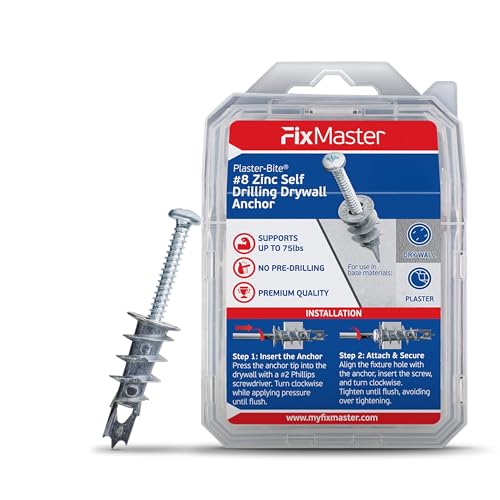
FixMaster designed the Plaster Bite anchor specifically to address the crumbling problem. The deep, sharp zinc thread cuts into plaster without needing a pilot hole, and the included high-strength carbon steel screw locks tight against the anchor without spinning the body. The 75-pound holding strength puts it in the same league as the TOGGLER, but with an all-metal build that may feel more substantial to users who distrust plastic anchors in older walls.
The kit comes with 50 anchors and screws packed in a durable plastic case — a thoughtful detail for anyone who wants to keep hardware organized in a workshop or tool bag. Multiple handymen in the reviews praise these as superior to nylon alternatives, noting that the zinc body doesn’t deform or strip out the way soft plastic can during high-torque installation.
However, the design requires the plaster to be intact and not too crumbly. One reviewer reported that the anchor failed when the plaster around it disintegrated during installation, so pre-drilling a small pilot hole may still be wise for very old or powdery plaster. For modern plaster walls and plasterboard, this anchor is a top-tier choice that installs quickly and holds securely.
Why it’s great
- Deep zinc thread cuts into plaster without a pilot hole
- 75 lb holding strength with carbon steel screws
- Comes in a sturdy plastic storage case
Good to know
- May still fail in extremely crumbly or powdery old plaster
- Pre-drilling a pilot hole can help in brittle walls
3. KURUI Hollow Wall Anchors Assorted Kit

When plaster walls are actually hollow behind the surface — common in lath-and-plaster construction — a toggle bolt provides distributed support that plastic anchors cannot match. The KURUI kit includes 44 galvanized steel toggles in three diameters (1/8 inch, 3/16 inch, and 1/4 inch), giving you the flexibility to choose the right size for the load. The butterfly wings fold flat for insertion and then spring open behind the wall, spreading the force across a large area.
This spreading action is critical for plaster because it prevents the concentrated pressure that causes the material to crack around the installation point. Users report using these to fix failed plastic anchors that had left enlarged holes — the toggle bolts fit through the damaged openings and restored the stability of towel racks and curtain rods. The galvanized finish resists corrosion, which matters in bathrooms or kitchens where moisture can compromise cheaper fasteners.
That said, toggle bolts require a larger hole than other anchor types (you have to fit the folded wings through), so the damage is irreversible if you ever remove them. The closing mechanism on some units can be slightly sticky, requiring a little manipulation to ensure the wings open properly inside the wall. For permanent heavy-duty mounts, though, this is one of the most reliable systems available for hollow plaster walls.
Why it’s great
- Butterfly wings distribute load across a large area behind plaster
- Three sizes handle light to heavy hanging tasks
- Galvanized steel resists rust in humid environments
Good to know
- Requires a larger drill hole to insert the folded toggle
- Opening mechanism can be sticky and may need manual coaxing
4. FOREVTL Molly Bolts for Drywall & Plaster Walls
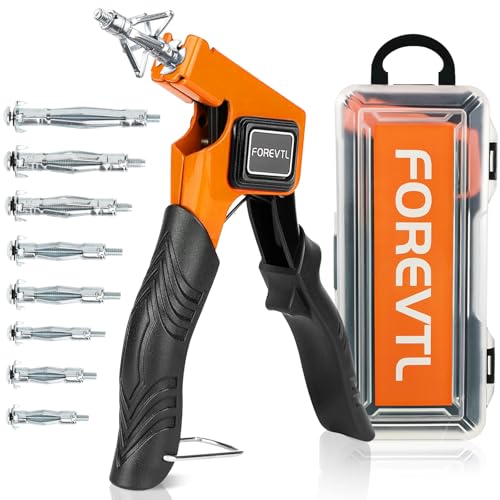
The FOREVTL kit addresses the most common failure point with molly bolts in plaster: the twisting motion that can collapse the anchor’s expansion strips before they fully open. By including a dedicated setting tool, this system lets you compress the anchor outward without rotating it, preserving the plaster around the hole. The kit includes 32 anchors across eight sizes, covering plaster thicknesses from 0.12 inches up to 1.52 inches.
Each anchor is made from zinc-plated carbon steel with a heat-treated setting tool that resists bending under pressure. The 65-pound holding capacity is generous for most residential applications — towel racks, coat hooks, and small shelves are well within range. The double-sided storage box keeps all sizes separated and labeled, which saves time on the job. Users who have struggled with molly bolts in the past find the tool makes installation almost foolproof.
The tool does have a learning curve: the jaws need to be centered precisely on the anchor’s collar, and if the screw bends during the initial compression, you may need to swap it out from the spare anchors. Some batches reportedly have soft metal in the anchors themselves, though the tool construction is universally praised. Overall, this is a strong all-in-one solution for anyone working with multiple fastener sizes on plaster walls.
Why it’s great
- Setting tool prevents twisting that damages plaster
- 8 anchor sizes cover 0.12 to 1.52 inch plaster thickness
- Organized double-sided storage box for quick selection
Good to know
- The tool requires proper alignment to avoid bending screws
- Some anchors may have softer metal than expected
5. AKKTOL Molly Bolts for Drywall & Plaster Walls

AKKTOL’s molly bolt kit uses a 2.5-millimeter heat-treated carbon steel setting tool that is noticeably thicker than budget alternates, making it less likely to flex or break under repeated use. The kit contains 36 anchors in six sizes (M4 through M6 diameters), each rated between 40 and 65 pounds depending on size. The ergonomic grip on the tool reduces hand fatigue if you are setting multiple anchors in a single project.
The setting mechanism works by first driving the anchor into the wall with a hammer tap, then squeezing the tool handles to pull the screw outward, expanding the anchor’s arms behind the plaster. This two-step process minimizes the rotational force on the wall, which is the primary cause of plaster cracking around the hole. The storage box organizes the different sizes clearly, though users report that the included screws use metric threads, which can be an issue if you need to replace them with standard-threaded fasteners later.
The anchors themselves have been criticized for being somewhat soft — one user reported they could collapse the arms with two fingers before installation. This suggests the anchors are designed for medium-duty loads rather than extreme weight. For hanging mirrors, coat hooks, and curtain rods, the softness is rarely a problem. The tool, however, is durable enough to outlast several boxes of replacement anchors.
Why it’s great
- Thickened 2.5mm setting tool is built for repeated use
- Two-step expansion process protects plaster from rotational damage
- Six anchor sizes in a well-organized storage box
Good to know
- Anchors are relatively soft and best for medium-duty loads
- Metric threads on screws may not match standard fasteners
6. JoblikeBrez Molly Bolts for Drywall Plaster Walls

The JoblikeBrez molly bolt kit focuses on the most commonly used sizes — M5 diameters in 37mm, 52mm, and 65mm lengths — making it a streamlined option for users who do not need a 40-piece assortment. The built-in setting tool works like other molly bolt compressors: you insert the bolt, back the screw out a quarter turn, load it into the pliers, and squeeze. The hardened carbon steel tool is rated to handle repeated setups without deformation.
Each anchor is made from galvanized steel with a flat-head screw that sits flush against the expanded anchor body. The 55-pound holding capacity is slightly lower than the other molly bolt kits reviewed here, but it is still sufficient for TV mounts, curtain rods, and towel racks. The internal thread design allows the screw to be removed and reinserted multiple times without losing grip — useful if you need to reposition an item without replacing the anchor.
Users note that the tool is surprisingly heavy for its size, which speaks to the metal gauge but can make one-handed operation awkward. Also, because the kit focuses on only three sizes, you may need a separate purchase for very shallow plaster walls (under 0.12 inches) or very thick ones (over 1.28 inches). For standard plaster thickness, this is a well-engineered, no-frills solution.
Why it’s great
- Focused 3-size kit covers the most common plaster thicknesses
- Galvanized steel resists rust and corrosion
- Removable screw allows for repositioning without new anchors
Good to know
- Only three sizes — won’t cover very thin or very thick walls
- Setting tool is heavy and can feel awkward in one hand
7. HangDone Ribbed Wall Anchors #8-#10 100-Pack

When the budget is tight and the load is light — picture frames, small mirrors, or bathroom accessories — the HangDone ribbed plastic anchors offer an economical solution. This 100-piece kit includes both the nylon ribbed plugs and matching #8 x 1-1/4 inch Phillips head screws, so there is no need to hunt for compatible fasteners. The anchors are made from ABS plastic, which is more durable than basic polyethylene but still a fraction of the cost of metal options.
The ribbed exterior of the anchor is designed to bite into the wall material as the screw is driven, creating friction that resists pull-out. For concrete and brick, these anchors grip well because the material is dense enough to hold the ribs. In plaster, however, the performance is more hit-or-miss. The anchors require a 3/16 inch pilot hole, and the installation relies entirely on friction — there is no expansion behind the wall, so the anchor can spin or pull out if the plaster is crumbly or if the hole is slightly oversized.
Several users note that the included screws are longer than the anchors (1-1/4 inches for a 7/8 inch anchor), which can be problematic if the screw bottom out against the lath or a stud before the anchor is fully seated. Clipping the screw tips can solve this, but it adds an extra step. For permanent heavy mounts on plaster, a molly bolt or toggle anchor is a better choice. For quick, light-duty jobs on sound plaster, this pack delivers massive quantity at a low per-anchor cost.
Why it’s great
- Large 100-pack is extremely cost-effective for small projects
- ABS plastic is more durable than basic nylon plugs
- Includes matching screws for a complete kit
Good to know
- Friction-only grip can spin or pull out of crumbly plaster
- Screws are longer than anchors on some units and may need trimming
FAQ
Can I use standard drywall anchors in plaster walls?
Do I need to pre-drill a pilot hole for molly bolts in plaster?
Why does my plastic anchor keep spinning in plaster when I try to tighten the screw?
Final Thoughts: The Verdict
For most users, the best anchor for plaster walls is the TOGGLER SnapSkru SP because its glass-filled nylon body and expanding jaws deliver strong holding power without the rotational stress that cracks plaster. If you want a dedicated molly bolt system with a setting tool that protects fragile walls from twisting damage, grab the FOREVTL Molly Bolts kit. And for heavy loads like large mirrors or curtain rods behind hollow plaster, nothing beats the distributed support of the KURUI toggle bolt assortment.