
Our readers keep the lights on and the weekend projects moving. As an Amazon Associate, I earn from qualifying purchases.
Misplacing keys is a daily friction point that most people accept as unavoidable. The right Android key finder changes that by providing a direct, audible path to your lost items and a digital breadcrumb trail back to them when they wander further than your pocket can reach.
I’m Rikta — the co-founder and writer behind FitlyFast. After spending dozens of hours analyzing Bluetooth tracker specs, battery chemistries, volume output levels, and ecosystem lock-in across the current Android-compatible market, I’ve mapped out exactly which trackers deliver real reliability and which ones just add another thing to lose.
Below, I break down the seven best options available right now, covering volume, range, battery longevity, and Google ecosystem fit so you can confidently choose the android key finder that matches your daily carry.
How To Choose The Best Android Key Finder
Picking an Android key finder is less about brand loyalty and more about understanding three interconnected systems: the phone network it plugs into, the battery architecture, and the physical alarm loudness. Each factor directly determines whether the tracker saves you five minutes or a whole afternoon of searching.
Google Find Hub vs. Samsung SmartThings vs. Tile/Life360
The biggest decision isn’t the tracker itself — it’s the network it relies on. Google’s Find My Device network (critical for non-Samsung Android users) uses millions of nearby Android phones to report the location of your tag when you’re out of Bluetooth range. Samsung’s SmartThings Find network offers similar crowd-location but only works with Galaxy phones. Tile and Life360 use their own dedicated apps and network, which means fewer crowd-nodes in many areas. If you own a Samsung phone, the Galaxy SmartTag2 offers the deepest integration. For everyone else, a Google-certified tracker is the safer bet for consistent out-of-range location updates.
Battery Type and Service Life
Every key finder in this guide uses a coin-cell battery. The critical spec is whether that battery is replaceable. A replaceable CR2032 battery lets you keep the tracker alive for years with a simple swap every 12 to 24 months, while a sealed unit forces you to replace the whole device. Also pay attention to the battery life rating under normal use versus power-saving mode — some trackers cut their update frequency dramatically to double or triple battery life, which reduces real-time accuracy when you actually need it.
Loudness Measured in Decibels
A key finder’s speaker volume is the single most important feature for the 90% of searches that happen within Bluetooth range. Trackers rated at 95 dB to 100 dB are loud enough to hear through a closed drawer or a couch cushion. Models rated below 90 dB often get swallowed by fabric, forcing you to rely on the app’s proximity circle instead of your ears — which is slower and less intuitive. If you frequently lose keys in noisy environments (construction sites, busy households, or with a TV on), prioritize the loudest models.
Quick Comparison
On smaller screens, swipe sideways to see the full table.
| Model | Category | Best For | Key Spec | Amazon |
|---|---|---|---|---|
| Samsung Galaxy SmartTag2 | Bluetooth + UWB | Samsung phone owners who want precision finding | 500-day battery; Compass View | Amazon |
| WATSABRO 4-Pack | Google Certified | Getting a 4-pack for every bag and keychain | 100 dB alarm; 2-year battery | Amazon |
| KIUP Air Tags 4-Pack | Google Find Hub | First-time buyers wanting accessories included | 98 dB speaker; 2-year battery | Amazon |
| Life360 Tile Mate | Tile Network | Users already in the Life360 family safety ecosystem | 100 dB; 3-year battery; SOS button | Amazon |
| Ajblg Air Tracker 4-Pack | Google Certified + IP68 | Outdoor use needing full waterproofing | IP68 waterproof; 120-ft range | Amazon |
| Delumu 2026 Air Tracker 4-Pack | Google Certified | Maximum Bluetooth range in a 4-pack | 260-ft range; IP67 rating | Amazon |
| TIMU Dual-System 4-Pack | Dual OS | Households mixing Android and iOS devices | 80–100 dB; supports Find My + Find Hub | Amazon |
In‑Depth Reviews
1. Samsung Galaxy SmartTag2

The Galaxy SmartTag2 is the most refined single-tag option for Samsung phone owners. It uses UWB precision finding with Compass View, which gives you directional arrows and distance readout on your phone screen — meaning you don’t just know the tag is nearby, you know exactly which chair cushion or drawer it’s under. The IP67 water resistance and 500-day battery on power-saving mode make it a low-maintenance addition to a keychain or luggage tag.
Setup takes roughly 30 seconds through the SmartThings Find app, and the two programmable buttons let you trigger smart home routines or locate your phone even when it’s on silent. Reviewers consistently mention the reliable “left behind” notifications that fire when the tag moves out of Bluetooth range without your phone, a feature that catches dropped keys before you’re out the door.
The main limitation here is ecosystem lock-in. The SmartTag2 only works inside Samsung’s network, meaning non-Galaxy Android phones can’t use the crowd-location or precision finding features. The speaker also isn’t the loudest in this roundup — some users note it can be hard to hear inside a heavy coat pocket or a deep bag compartment. But if you’re already on a Samsung phone, the integration depth is unmatched.
Why it’s great
- UWB precision finding with Compass View for exact directional locating
- Replaceable battery with up to 500 days of life on power-saving mode
- IP67 water and dust resistance for incidental rain and splashes
Good to know
- Only works with Samsung Galaxy phones and tablets
- Audible alarm is moderate — not as loud as some 100 dB competitors
2. WATSABRO Bluetooth Tracker 4-Pack
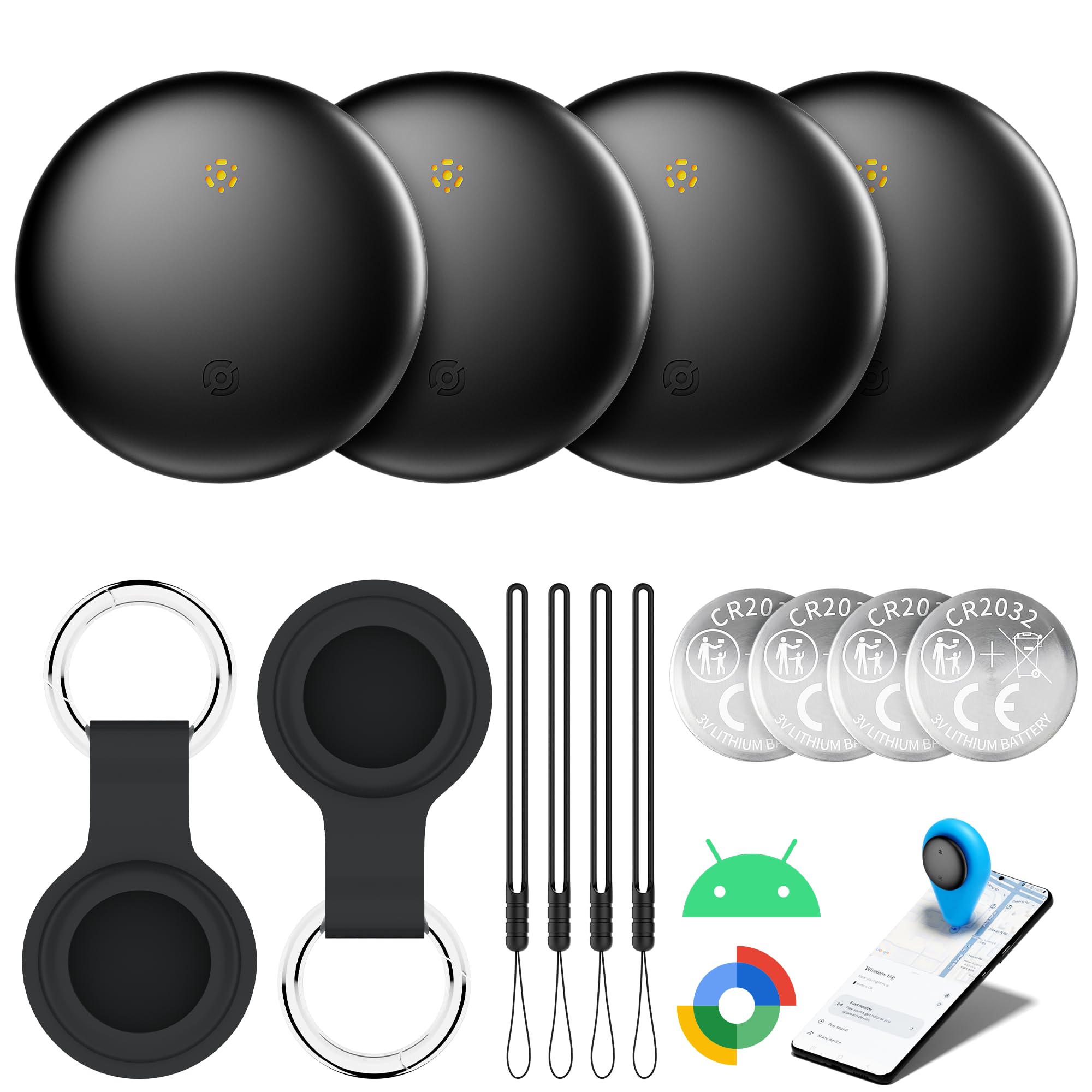
This four-pack from WATSABRO is one of the most compelling multi-tag bundles for the non-Samsung Android crowd. Each tracker is Google-certified and connects directly to the Find My Device app — no extra app required. The 100 dB speaker is noticeably louder than most competitors, making it easier to hear inside a noisy gym bag or buried under a car seat.
The included IP66 silicone case adds extra protection for outdoor use, and the replaceable CR2032 battery is rated for up to two years of typical use. Users report that the pairing process is frictionless on Samsung and Google Pixel phones alike, and the growing-circle interface in the app provides a visual distance guide that works well in low-visibility scenarios where you can’t hear the alarm immediately.
Some users have reported that the location updates are not instantaneous — the tag only refreshes its position when it’s within Bluetooth range of a phone on the network. This is a limitation of any non-UWB tracker but is worth noting if you need real-time, second-by-second movement tracking for a pet or a vehicle rather than just location recovery of a lost keychain.
Why it’s great
- Loud 100 dB alarm easy to hear through fabric and clutter
- Works natively with Google Find My Device on any Android 9+ phone
- IP66 waterproof case included, plus replaceable 2-year battery
Good to know
- No UWB precision finding — relies on Bluetooth signal strength
- Occasional reports of stale “last seen” location updates
3. KIUP Air Tags 4-Pack
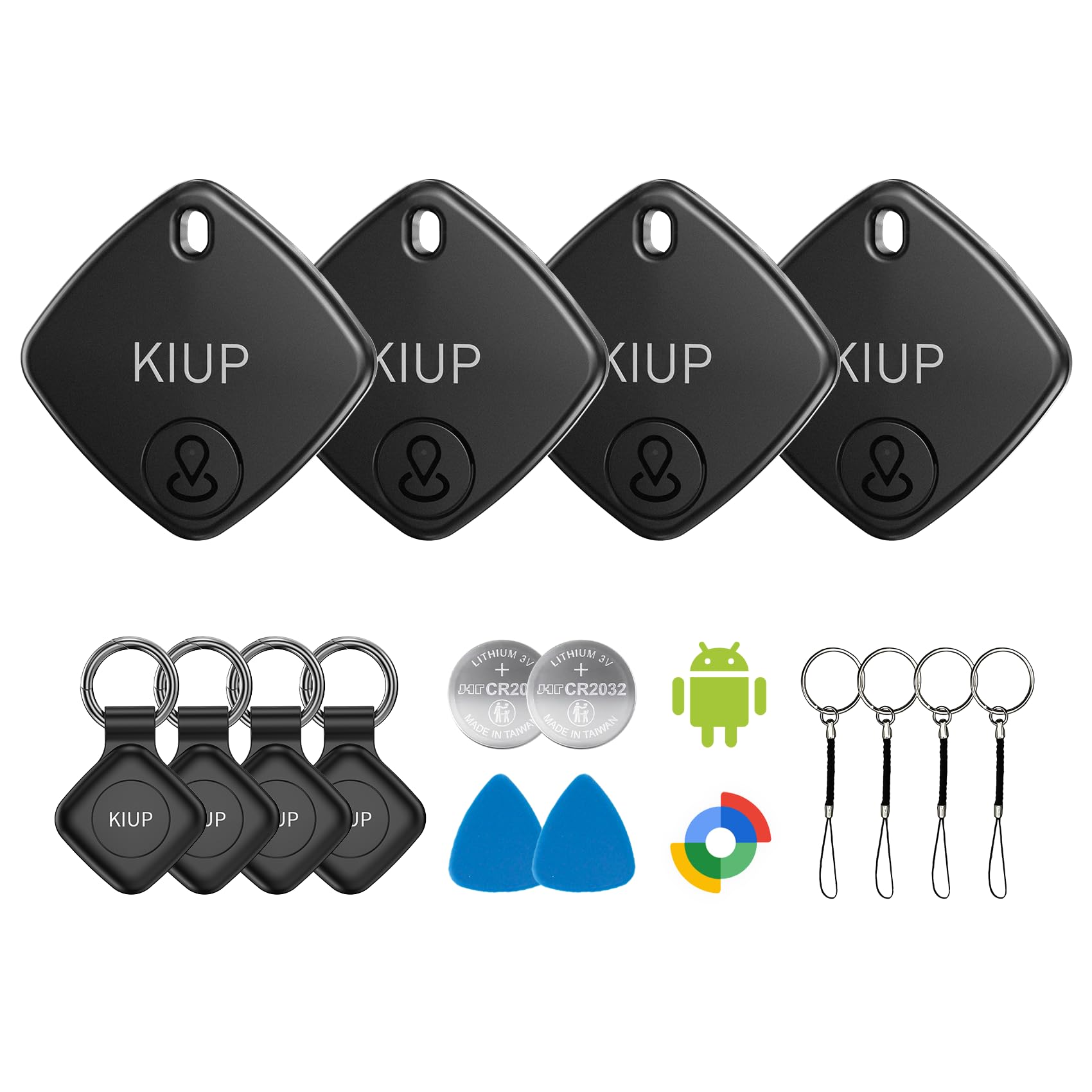
The KIUP 4-pack stands out mainly for the accessories bundle it ships with: four silicone cases, four keychain inserts, loop holders, extra batteries, labels, and a battery tool are all in the box. That matters because by the time you buy cases and extra batteries separately for other packs, the total cost often exceeds this bundle’s price. The tracker itself uses Google’s Find Hub network, connects within seconds on Android 9 and above, and has a 98 dB speaker — just a couple of decibels shy of the loudest options but still enough to hear across a typical living room.
Users consistently describe the setup as “five minutes or less,” and the inclusion of extra batteries means you won’t have to hunt for a CR2032 when the first one dies. The compact design is smooth and unobtrusive, which is a plus for wallets, but some users note the loop holes are small, making attachment to thicker key rings or pet collars slightly awkward.
The main drawback is the battery serviceability — KIUP specifies the battery as non-serviceable, which contradicts the presence of extra batteries in the box. Based on user teardowns, the battery is held in by a removable panel and can be swapped with the included tool, so this appears to be a documentation error rather than a design flaw. Still, it’s worth confirming before you attempt a replacement in a year.
Why it’s great
- Comprehensive accessory kit: cases, keychain loops, extra batteries, labels
- Works with Google Find Hub — no separate app needed
- Rated for up to 2 years of battery life per tag
Good to know
- Battery replacement process not clearly documented by manufacturer
- Loop holes are small — not ideal for thick keyrings or wide pet collars
4. Life360 Tile Mate
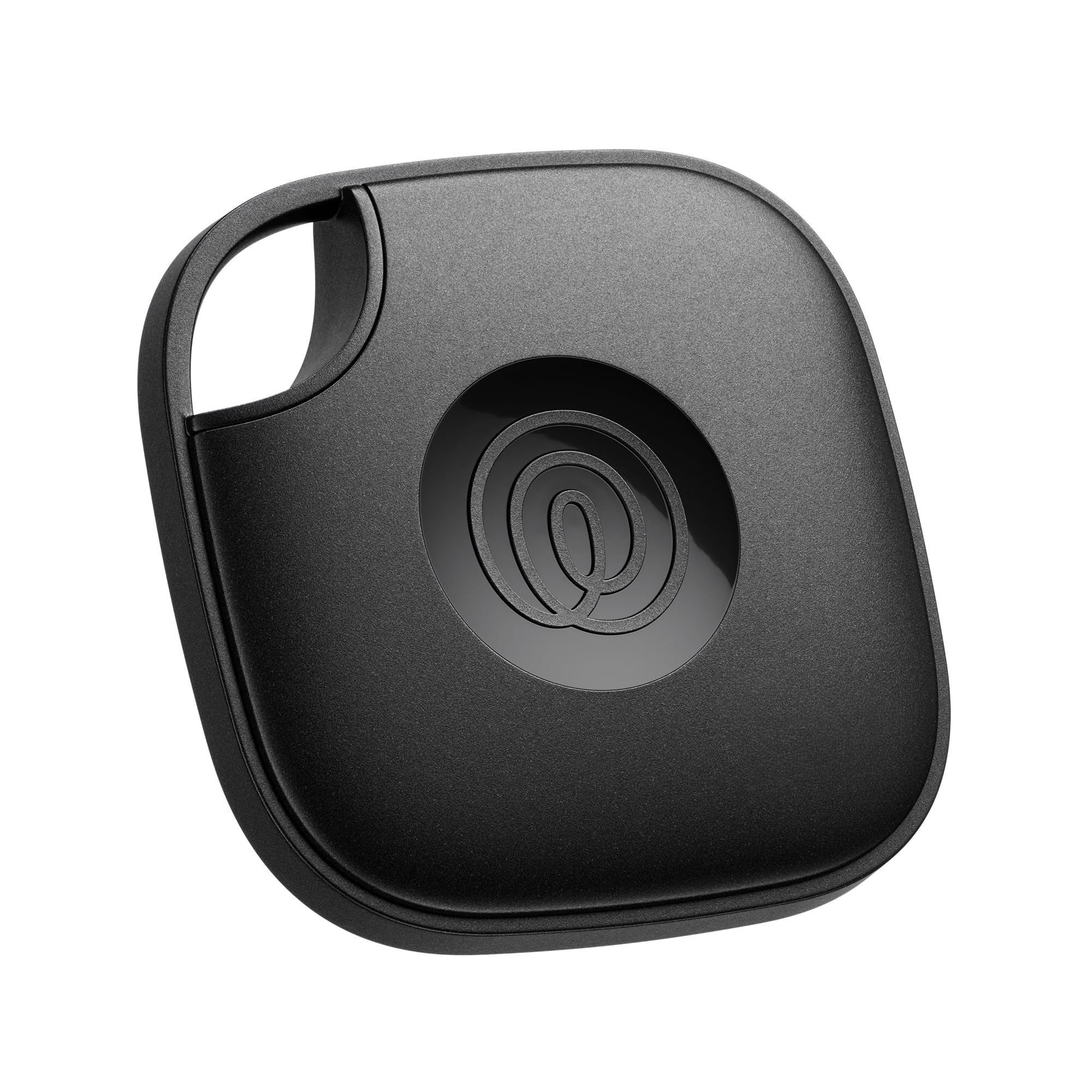
Tile is the most established name in the key finder category, and the Tile Mate (now under Life360) carries that legacy forward with a 100 dB alarm and a slim, credit-card-friendly profile. The standout feature here is the 3-year battery life — the longest of any tracker in this comparison — which means you can attach it to your keys and essentially forget about it until the battery replacement reminder pops up in the app.
The SOS button is a unique addition that the other trackers in this list don’t offer. Pressing it triggers an emergency alert through the Life360 app to your designated contacts, which adds a layer of personal safety that goes beyond key recovery. The phone finder feature also works reliably even when the phone is on silent, something many generic trackers struggle with.
The catch is network size. Tile’s community-finding network is smaller than Google’s and Samsung’s because it relies on Tile app users rather than every nearby smartphone. In dense urban areas this is rarely an issue, but in less populated regions the out-of-range location updates can be sparse. The Tile Mate also lacks UWB precision finding, so it’s entirely dependent on Bluetooth signal strength for in-range location.
Why it’s great
- Industry-leading 3-year battery life on a replaceable cell
- Built-in SOS button pairs with Life360 app for emergency alerts
- Phone finder works even when the phone is set to silent
Good to know
- Tile community network is smaller than Google or Samsung networks
- No UWB precision finding — uses Bluetooth signal strength only
5. Ajblg Air Tracker 4-Pack
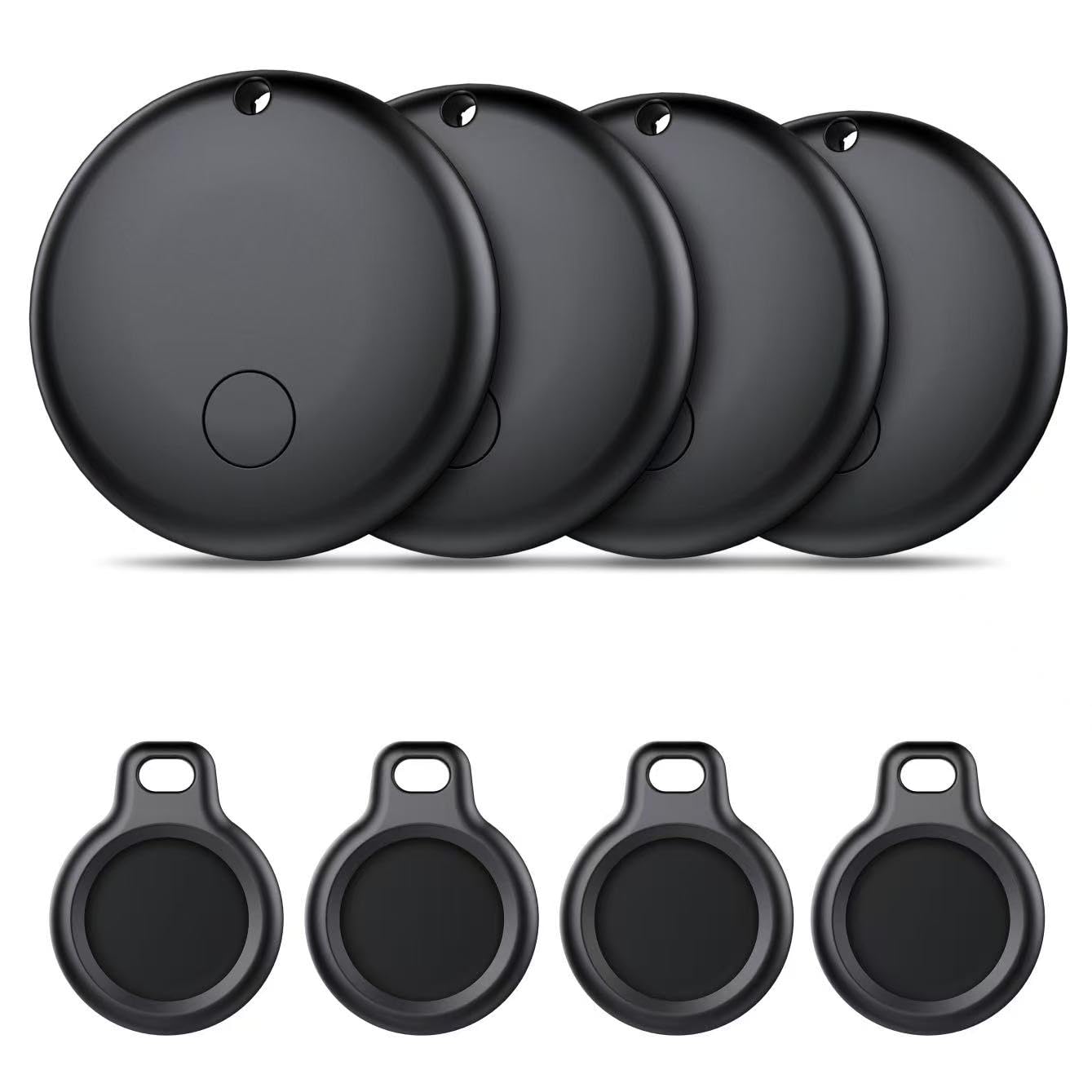
Ajblg’s 4-pack earns its premium position through the highest waterproof rating in the lineup: IP68, meaning these trackers can survive submersion in 1.5 meters of water for up to 30 minutes. For anyone attaching trackers to camping gear, bike bags, or dog collars that might end up in a puddle, this is a meaningful durability upgrade over the IP66 and IP67 ratings on other models.
The Google-certified connection works with the Find My Device app, and the 120-foot Bluetooth range is slightly wider than the typical 100-foot spec you see on most key finders. The speaker can hit 100 dB at its loudest setting, putting it in the same loudness class as the WATSABRO pack. Each tag runs on a replaceable CR2032 battery, and the manufacturer offers a 2-year warranty, which is better than the standard 1-year coverage most budget trackers provide.
The most concerning user feedback involves quality control: in one reported instance, three out of four tags in a pack worked correctly while one was defective from the box, and the seller required a full Amazon return rather than a single-unit replacement. This suggests batch consistency may vary, so testing all four units immediately upon arrival is wise.
Why it’s great
- IP68 waterproof rating — fully submersible for outdoor and adventure use
- 120-foot Bluetooth range above the category average
- 100 dB peak speaker volume for clear audible location
Good to know
- Some users report occasional defective units in multi-packs
- 1-year battery life is shorter than the 2-year ratings on comparable models
6. Delumu 2026 Air Tracker 4-Pack
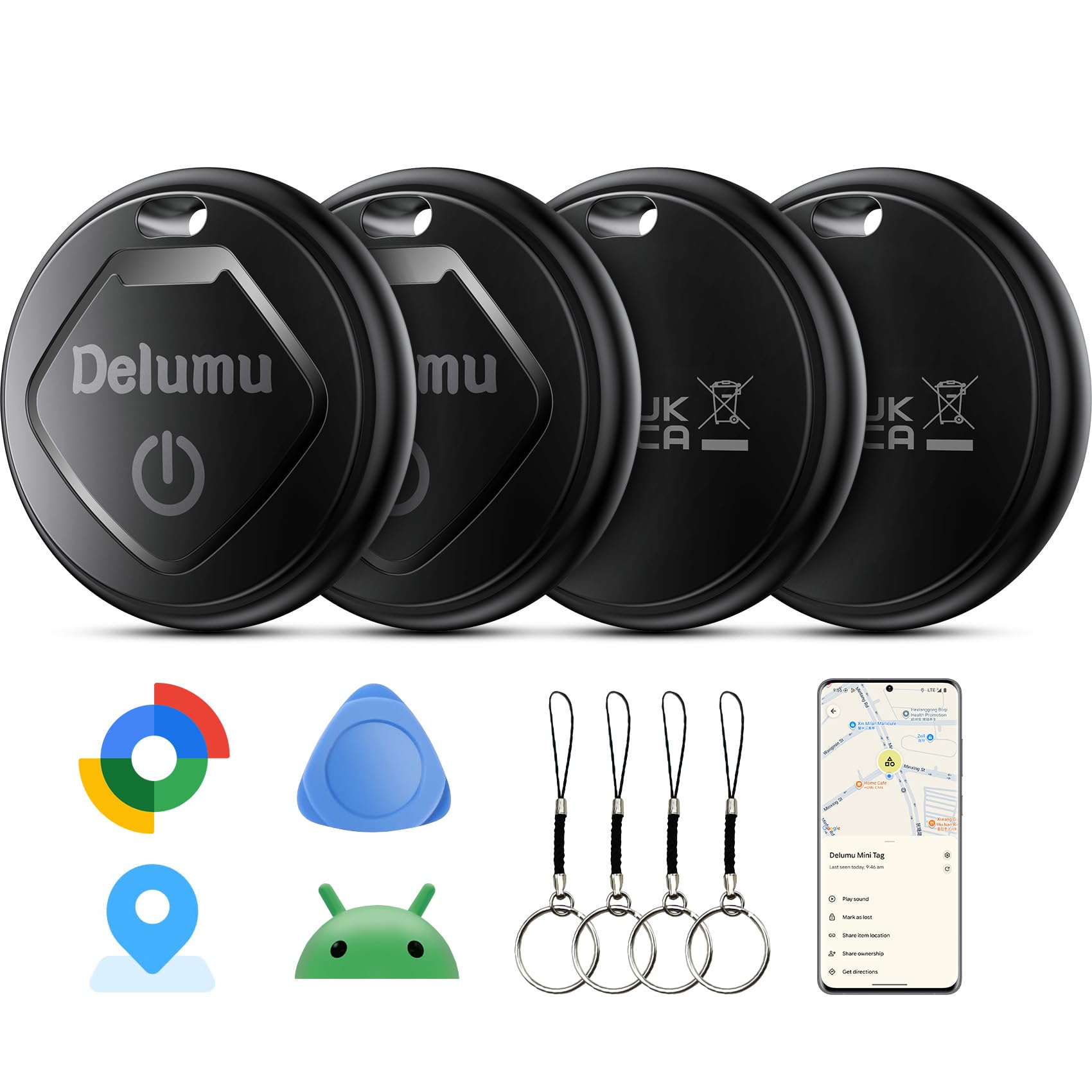
The Delumu 4-pack is built around Bluetooth range. With a claimed 260-foot line-of-sight connection, it doubles the reach of most key finders in this guide. That matters if you tend to leave your keys at one end of a house while your phone is at the other, or if you lose items in a garage or yard where 100-foot trackers might not connect.
Lost mode uses the Google Find Hub network to send anonymous location updates when other Android phones pass near your tracker. The process is encrypted, and no location history is stored on the tag itself. Users consistently praise the quick setup — the Find Hub app recognizes the tags immediately on Android 9 and above — and the IP67 waterproof rating means rain or sprinkler exposure won’t kill the device.
The trade-off for that extended range is a slightly larger physical footprint compared to the slim KIUP or Tile Mate. The Delumu tags are also the priciest of the pure-Android trackers here, and some users report that the “growing circle” proximity indicator in the app can feel imprecise compared to the directional arrows of a UWB-based system like the Samsung SmartTag2. The 90–100 dB speaker is adequate but not the loudest in the lineup.
Why it’s great
- 260-foot Bluetooth range — the longest in this comparison
- Google-certified with full Find Hub support and lost mode
- IP67 waterproof and replaceable battery
Good to know
- Larger physical size than many competitors
- Proximity indicator lacks the precision of UWB-based trackers
7. TIMU Dual-System 4-Pack
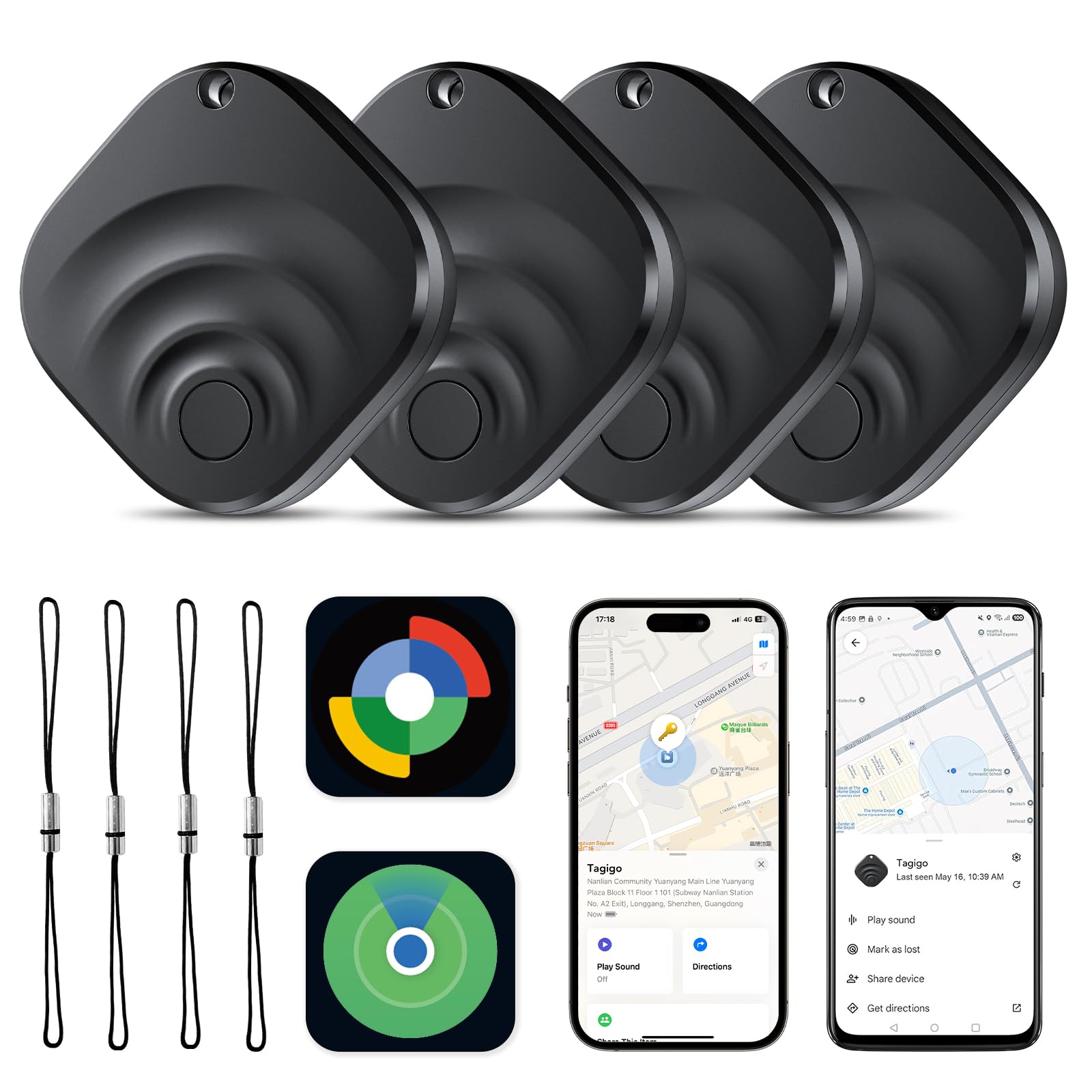
The TIMU 4-pack is the only option in this guide that supports both Google Find Hub and Apple Find My on the same tag — though it can only pair with one platform at a time. That dual-system compatibility is useful for households with a mix of Android and iOS users, since you can hand a tag to a family member regardless of their phone brand and it will work natively without a third-party app.
The tags use a CR2032 battery, but the pack ships without batteries installed — you’ll need to provide four coin cells yourself. The speaker hits 80–100 dB, which means it can be loud or quiet depending on the phone’s volume setting at the time you trigger the alarm. Some users note the alarm isn’t “super loud,” but it handles typical couch-cushion and drawer searches without issue.
The range of 36 meters (around 118 feet) matches most of the pack, but the lack of any waterproof rating in the Title 1 description is a notable omission for a tracker at this price point — user comments suggest the build feels solid but no IP certification is explicitly claimed. The 2-year manufacturer warranty covers defects, and users report that setup is straightforward and the connection stays stable once paired.
Why it’s great
- Supports both Google Find Hub and Apple Find My in one tracker
- No subscription fees on either platform
- 2-year manufacturer warranty for peace of mind
Good to know
- Batteries are not included — must purchase separately
- No official IP waterproof rating mentioned in spec sheet
FAQ
Can I use an Apple AirTag with an Android phone?
Will an Android key finder work if my phone is offline or has no data?
How often do I need to replace the battery in an Android key finder?
How does Google Find Hub crowd-location work if the tracker is out of Bluetooth range?
Final Thoughts: The Verdict
For most users, the android key finder winner is the Samsung Galaxy SmartTag2 because its UWB precision finding and 500-day battery make daily key recovery fast and reliable — but only if you own a Samsung phone. If you use any other Android device, grab the WATSABRO 4-Pack for the loudest alarm and native Google Find Hub integration at a multi-tag price. And for households that mix Android and iOS, nothing beats the TIMU Dual-System 4-Pack for cross-platform flexibility without subscription fees.