
Our readers keep the lights on and the weekend projects moving. As an Amazon Associate, I earn from qualifying purchases.
Nothing kills a day of bass fishing faster than a heavy, poorly balanced paddle that turns every cast retrieval into a shoulder burner. Angler-specific paddles differ from recreational ones in critical ways — integrated hook retrievers, blade shapes designed for power strokes against current, and ovalized shafts that reduce hand fatigue during long trolling sessions. Whether you’re navigating narrow creeks, punching through wind on open water, or sneaking into a bed of lily pads, the right paddle determines how much energy you save for the fight.
I’m Rikta — the co-founder and writer behind FitlyFast. I’ve spent hundreds of hours cross-referencing blade materials, shaft flex profiles, and ferrule mechanisms to identify which paddles deliver real-world durability and stroke efficiency for dedicated anglers.
This buying guide cuts through the noise to help you find the best angler kayak paddle for your boat width, typical water conditions, and budget — no fluff, just specs that matter.
How To Choose The Best Angler Kayak Paddle
Fishing kayaks are typically wider (32–36 inches) and heavier than rec boats, so standard paddles often produce inefficient, splashy strokes. The right paddle compensates with length, blade surface area, and shaft stiffness. Below are the four specs that separate a good paddle from a tournament-worthy one.
Blade Material and Flex
Entry-level paddles use straight polypropylene or nylon — these blades flex noticeably under hard acceleration, wasting energy. Fiberglass-reinforced nylon (found on the Pelican The Catch and Carlisle Magic Angler) offers a stiffer platform for better power transfer without the brittleness of pure carbon. Full carbon-reinforced nylon, as used on the Bending Branches Angler Ace, combines low weight with near-zero blade flutter, critical for keeping a loaded fishing kayak moving against wind.
Length and Kayak Width Matching
Most recreational paddles cap at 230 cm, but fishing yaks with beams over 34 inches often require 240–260 cm. A paddle too short forces you to lean sideways, creating shoulder strain and reducing stroke efficiency. Measure your kayak’s beam width at the cockpit — for every inch above 34 inches, consider adding 5–10 cm to your standard torso-height-based length calculation.
Integrated Angler Features
Dedicated fishing paddles include extras like J-notches or serrated edges for cutting snagged fishing line, built-in rulers for measuring catch, and textured grip zones. The Backwater Assassin even features a serrated tooth edge for launching off docks or hard surfaces. These features add marginal weight but save serious time when you’re untangling a lure mid-strike.
Ferrule Quality and Feathering
A loose ferrule introduces rotational play that destabilizes every stroke. Look for snap-button or push-button mechanisms with positive lock — the WONITAGO carbon paddle uses a ±60° quick pin button that allows feathering adjustment without tools. Ovalized shaft indexing (present on Pelican’s Symbiosa) tells your hand where to grip without looking, reducing hot spots during all-day sessions.
Quick Comparison
On smaller screens, swipe sideways to see the full table.
| Model | Category | Best For | Key Spec | Amazon |
|---|---|---|---|---|
| Bending Branches Angler Ace | Carbon Hybrid | Serious anglers wanting zero-compromise weight | 240 cm, carbon shaft, ~1.5 lb | Amazon |
| Backwater Assassin | Carbon Hybrid | Anglers who need serrated edge for line cutting | 250–260 cm, ABS injected nylon blade | Amazon |
| Pelican The Catch | Fiberglass | Fishing-specific with built-in hook retrieval | 250 cm, fiberglass shaft, 16 oz | Amazon |
| Carlisle Magic Angler | Fiberglass Wrap | Weedy water with J-notch line release | 230 cm, wrapped fiberglass shaft | Amazon |
| Pelican Symbiosa | Fiberglass | Tall paddlers needing extra length | 240–250 cm telescoping, 2.1 lb | Amazon |
| WONITAGO Carbon Fiber | Carbon/Fiberglass | Budget-conscious wanting carbon shaft feel | 220–240 cm adjustable, 2 lb | Amazon |
| Bending Branches Whisper | Aluminum | Entry-level backup or spare paddle | 230 cm aluminum shaft, 16 oz | Amazon |
In‑Depth Reviews
1. Bending Branches Angler Ace Snap-Button Kayak Fishing Paddle
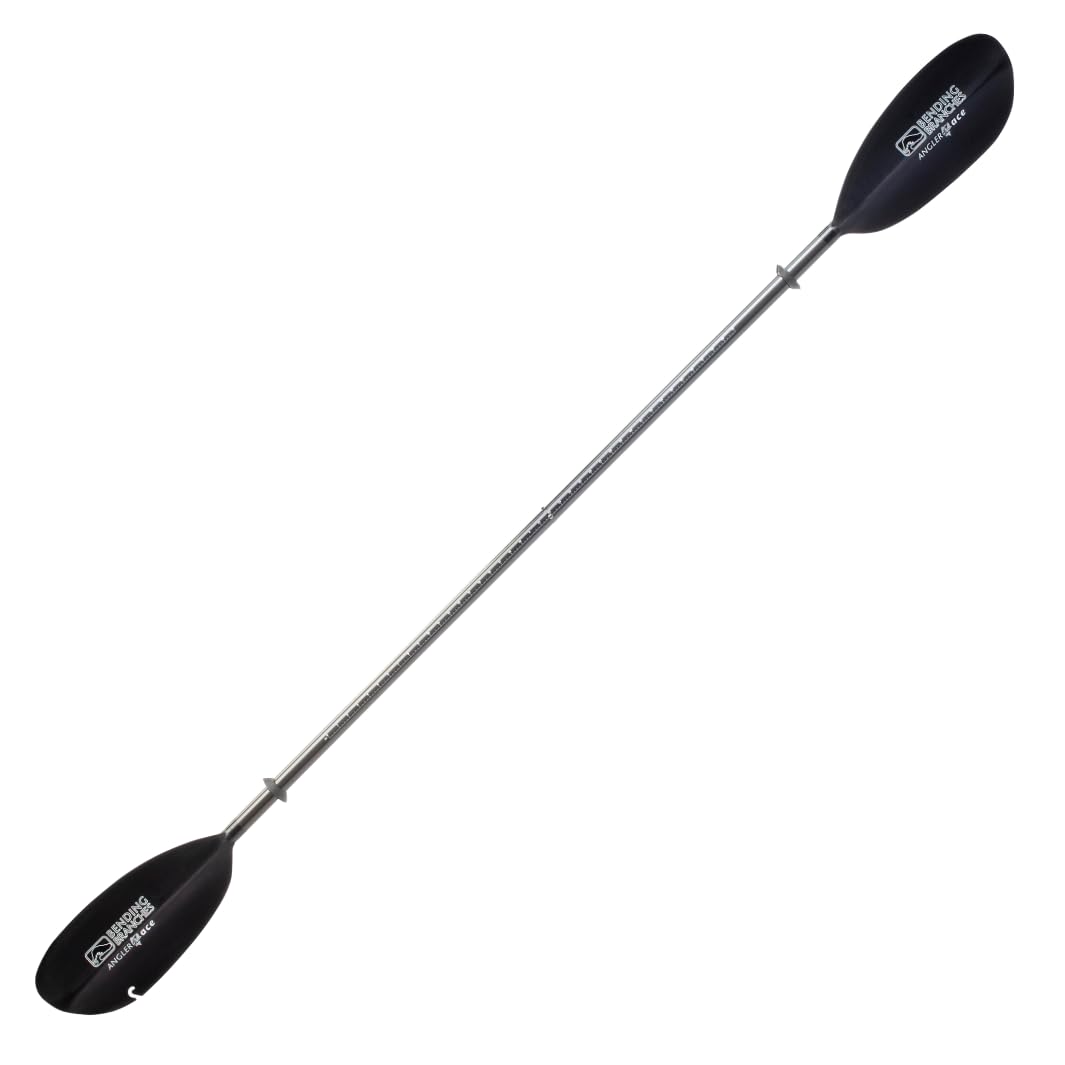
The Angler Ace is the benchmark for serious fishing kayak propulsion. Its full carbon shaft and carbon-reinforced nylon blades deliver a stiffness-to-weight ratio that makes even a 240 cm paddle feel feathery, with near-zero blade flutter during hard acceleration. Users report shedding up to 18 ounces compared to stock aluminum paddles — a meaningful reduction in repetitive torque on your shoulders across a 6-hour session.
The snap-button ferrule locks positively with no rotational play, and the ovalized grip zone keeps your hands properly indexed without looking. While the 240 cm works well for kayaks up to 35 inches wide, anglers with wider boats may wish for a 250 cm option. The packaging is minimal (cardboard sleeve inside a bag), so inspect on arrival, but the paddle itself is built to handle impacts with rocks and docks without delaminating.
Shipping is the only common complaint — some units arrive with cosmetic marks from thin packaging. The paddle’s performance, however, is undeniably elite. It’s the single upgrade that transforms a mediocre fishing day into an effortless one.
Why it’s great
- Extremely lightweight (carbon shaft) reduces arm fatigue significantly
- Carbon-reinforced nylon blades provide stiff, flutter-free power transfer
- Secure snap-button ferrule with no play
- Ovalized shaft indexes hand position naturally
Good to know
- Only available in 240 cm; some wide kayaks may need 250+ cm
- Minimal packaging can lead to cosmetic damage during shipping
- Premium-tier pricing reflects the materials, not a budget option
2. Backwater Assassin Paddle

The Backwater Assassin earns its name from a thoughtful addition: a serrated tooth edge along the blade that lets you push off docks, stumps, and hard banks without damaging the blade face. Combined with an integrated hook feature for grabbing lines, decoys, or branches, it’s a purpose-built tool for anglers who navigate tight, obstacle-heavy waters.
Available in two length ranges (230–240 cm and 250–260 cm), the Assassin uses an ABS injected nylon blade mated to a carbon hybrid shaft. At roughly 2.7 pounds, it’s heavier than full-carbon alternatives, but the trade-off is exceptional durability — multiple reviewers confirm it stands up to rock contact and heavy vegetation abuse. The adjustable feathering mechanism and drip rings round out a package that prioritizes function over weight savings.
A small but notable issue: the ferrule screws can sometimes loosen during transport if not thread-locked. Owners recommend a drop of blue Loctite on reassembly. Once locked, the two-piece connection is solid, with no lateral slop during strokes.
Why it’s great
- Serrated edge allows safe push-offs from hard surfaces
- Integrated hook feature retrieves snagged lines and objects
- Tough ABS injected nylon blade resists chipping on rocks
- Adjustable length ranges cover most kayak widths
Good to know
- Heavier than pure carbon paddles at ~2.7 lb
- Ferrule screws may loosen; thread lock recommended
- Hook feature can tangle in kelp during ocean fishing
3. Pelican The Catch Kayak Paddle
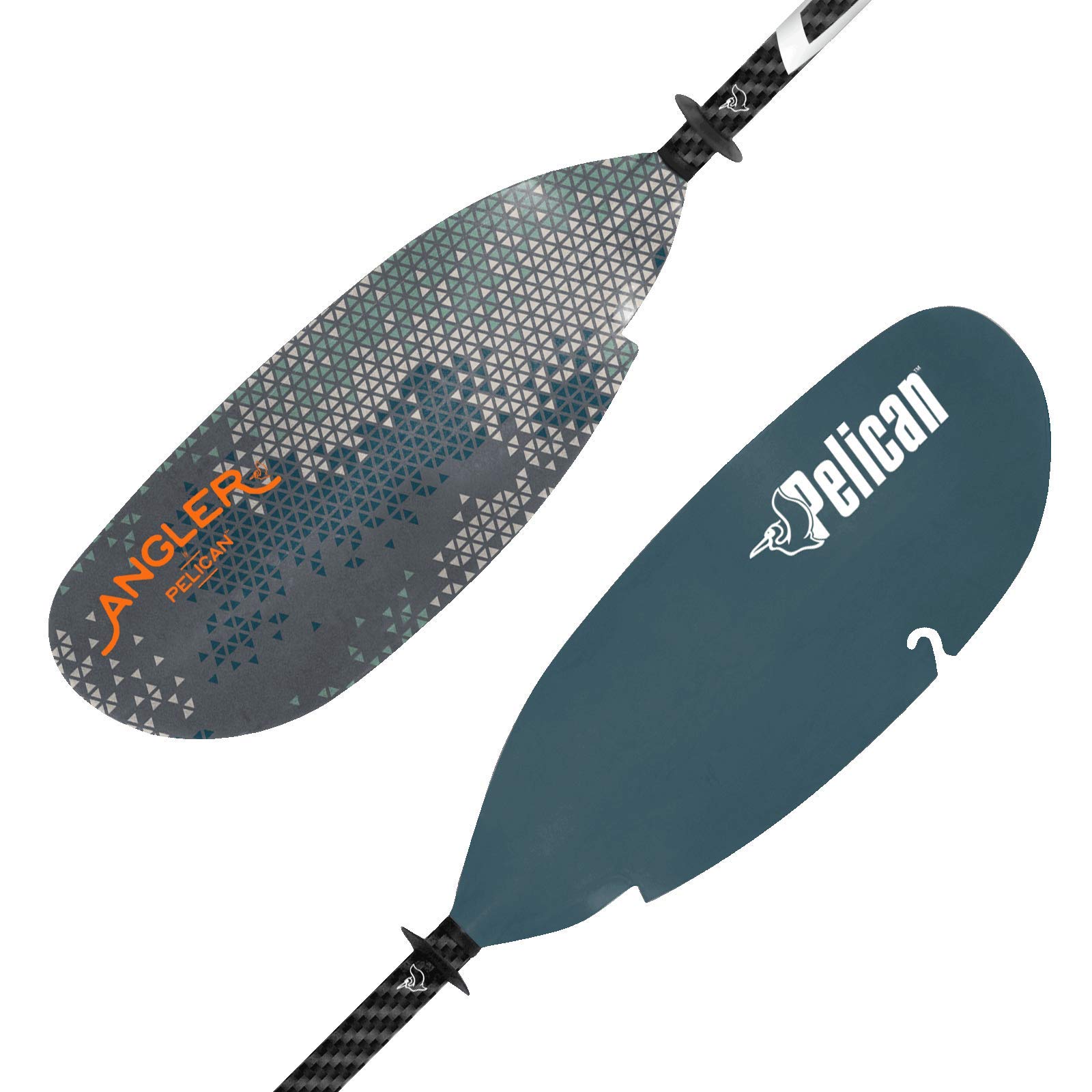
Pelican’s The Catch is a mid-range contender that punches above its weight class with fishing-specific features you’d expect on paddles costing twice as much. The integrated hook retrieval slot on the blade works exactly as advertised — slide it over a snagged line and pull to free your lure without leaning overboard. A measuring tape printed along the shaft lets you gauge your catch without pulling out a separate tool.
The fiberglass shaft and impact-resistant, fiberglass-reinforced nylon blades keep the weight to just 16 ounces, making it lighter than the Carlisle Magic Angler and noticeably less fatiguing over long paddle-ins to secluded spots. The ovalized indexing shaft and adjustable drip rings are well-executed, and the 0° to 65° blade angle adjustment covers both right- and left-handed paddlers.
At 250 cm, it’s long enough for kayaks over 34 inches wide. Some users note the ruler printing is subtle, but legible in good light. The blade shape is optimized for efficient low-angle touring strokes, ideal for covering distance without exhausting your shoulders.
Why it’s great
- Integrated hook retrieval system works brilliantly for freeing snagged lures
- Built-in measuring tape along the shaft is handy for catch documentation
- Lightweight fiberglass construction (16 oz) reduces fatigue
- Wide angle adjustment range from 0° to 65°
Good to know
- Printed ruler can be hard to read in low light
- Blade shape optimized for touring, not aggressive maneuvering
- Not the lightest option if every ounce matters
4. Carlisle Magic Angler Kayak Paddle
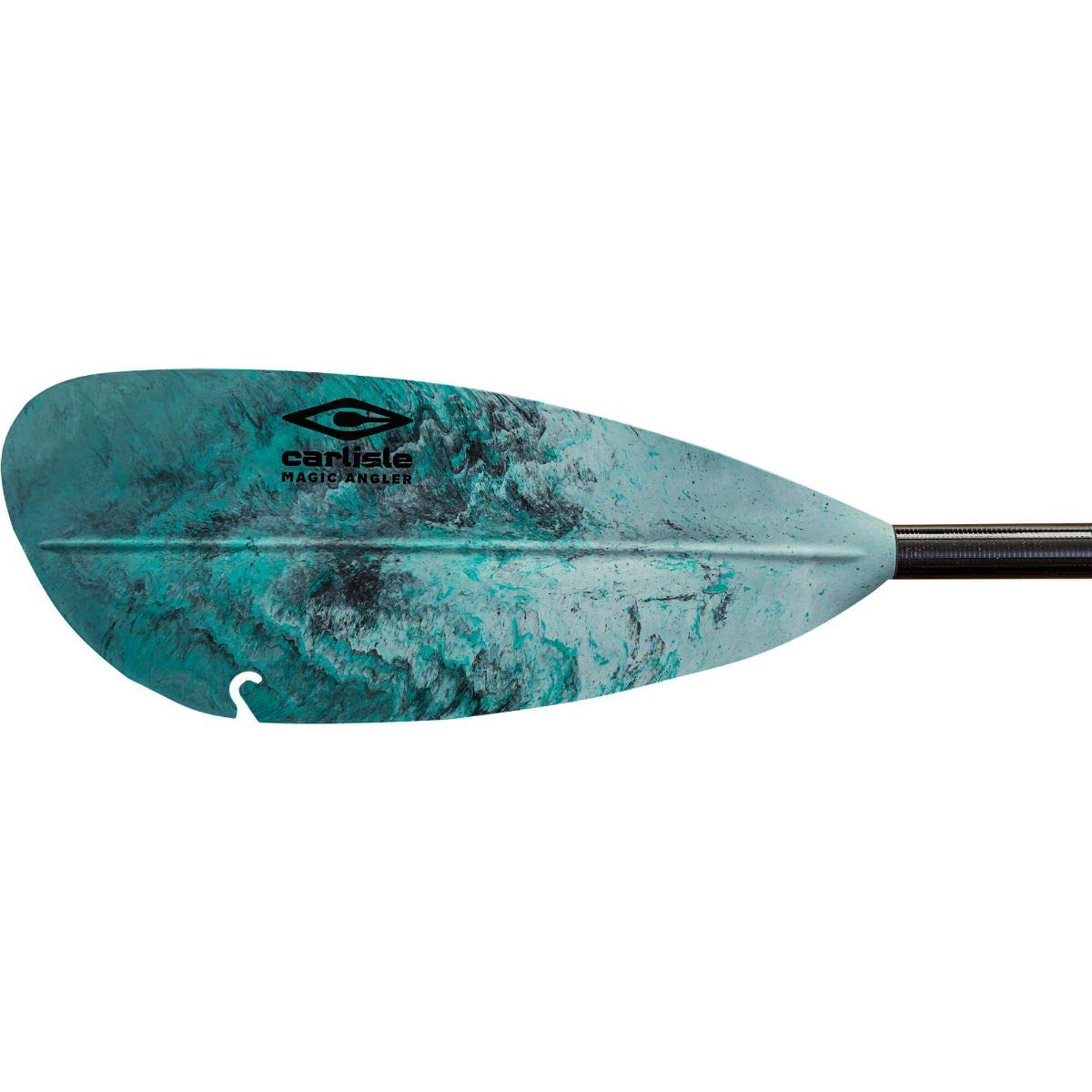
Carlisle’s Magic Angler has been a lodge-fleet favorite for years, and the updated version retains the DNA that made it a staple: a wrapped fiberglass shaft that offers a tactile, weather-resistant grip surface, and glass-filled polypropylene blades that balance stiffness with impact resistance. The asymmetrical, slightly curved blade shape cuts cleanly through lily pads without excessive suction.
The standout feature is the J-notch cut into the blade — slide a snagged fishing line into the notch and rotate to break free without tipping your boat. It’s simpler than a full hook retrieval slot and doesn’t collect weeds. The no-fail push-button ferrule allows 0° or 60° feathering adjustment (left or right), and the two-piece breakdown makes storage in a hatch or trunk straightforward.
At 2.5 pounds and 230 cm, it’s on the shorter side, so paddlers with wide fishing kayaks (34+ inches) or tall torsos (over 5’10”) should consider the 250 cm variant. Some users note the bare fiberglass shaft can cause blisters during long days — adding a thin layer of bicycle bar tape solves the issue neatly.
Why it’s great
- J-notch provides quick line release without adding blade drag
- Wrapped fiberglass shaft offers excellent grip in wet/cold conditions
- Rigid, glass-filled blades don’t flex under power strokes
- Proven durability from a brand trusted by rental fleets
Good to know
- 230 cm may be too short for wide fishing kayaks
- Bare shaft texture can cause blisters on long trips
- J-notch can trap fine weeds in some conditions
5. Pelican Symbiosa Kayak Paddle

The Pelican Symbiosa is a niche solution for a common problem: tall paddlers with wide kayaks. Its telescoping ferrule extends from 240 cm to 250 cm, giving you an extra 10 cm of reach without committing to a fixed long paddle. That adjustability makes it a smart choice for households where different-sized paddlers share the same gear.
The fiberglass shaft features ovalization — a subtle flattening of the shaft profile that tells your right hand where to grip without looking. Combined with 360° blade angle adjustment, you can fine-tune feathering to match your stroke mechanics. The blade design is low-angle touring-friendly, producing clean entry and exit with minimal splash. At 2.1 pounds, it’s lighter than the Carlisle but heavier than the Pelican The Catch.
One quirk: the telescoping mechanism uses a twist-lock that can loosen slightly during extended high-cadence paddling. Owners recommend checking the lock periodically on long days. The blade shape also flexes more under maximum power than fiberglass-reinforced nylon alternatives, so it’s better suited for endurance touring than sprinting into heavy chop.
Why it’s great
- Telescoping design (240–250 cm) accommodates different paddler heights
- Ovalized shaft indexing improves hand placement without visual cues
- 360° blade angle adjustment for perfect feathering
- Lightweight fiberglass construction for its class
Good to know
- Telescoping lock can loosen during hard paddling
- Blade flexes more than rigid composite options
- Not ideal for aggressive maneuvering or power strokes
6. WONITAGO Carbon Fiber Kayak Paddle
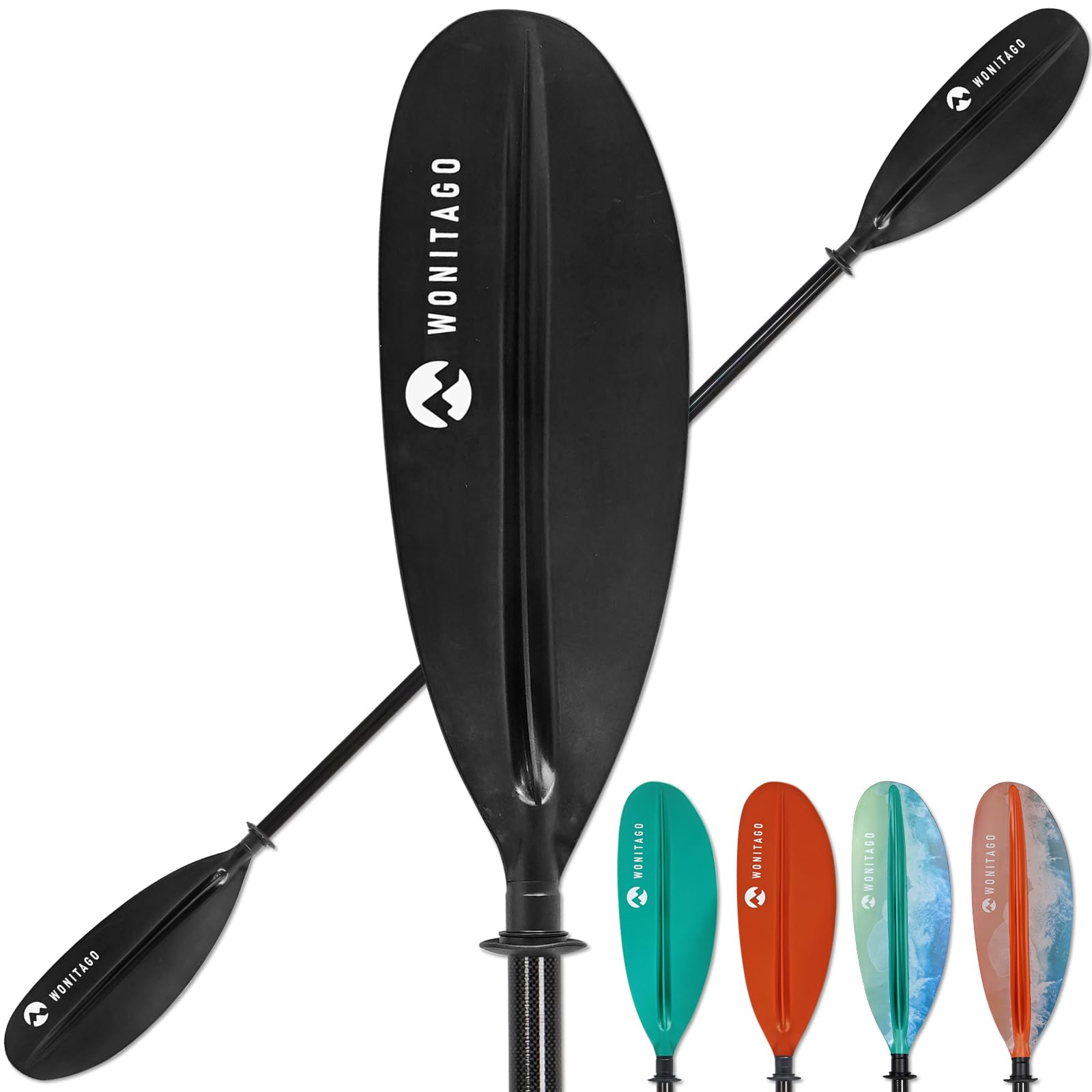
The WONITAGO is the budget entry that refuses to feel cheap. A genuine carbon fiber shaft mated to fiberglass-reinforced polypropylene blades delivers a sub-2-pound weight that rivals paddles costing multiples more. The three-piece breakdown is genuinely travel-friendly, fitting inside most car trunks or overhead bins, and the ±60° quick-pin button allows rapid feathering adjustment.
The blade design produces acceptable flutter at full power but smooths out at cruising cadence. For recreational fishing on lakes and slow rivers, the performance is more than adequate — reviewers consistently compare it favorably against + paddles. The 220–240 cm adjustment range covers most paddler heights, though the 7-inch blade width trades some acceleration for stability.
The biggest caveat is long-term durability. Some units develop slight play at the ferrule connection after extended use, and the plastic push-button mechanism feels less robust than metal alternatives. For light-to-moderate use, it’s an exceptional value. For weekly tournament-level abuse, spend up.
Why it’s great
- Real carbon fiber shaft at an entry-level price
- Three-piece breakdown is ultra-portable for travel
- Lightweight (under 2 lb) reduces shoulder fatigue
- Quick-pin feathering adjustment with no tools needed
Good to know
- Ferrule may develop slight play with heavy use
- Blade flutter more noticeable at high cadence
- Plastic push-button less durable than metal alternatives
7. Bending Branches Whisper Kayak Paddle
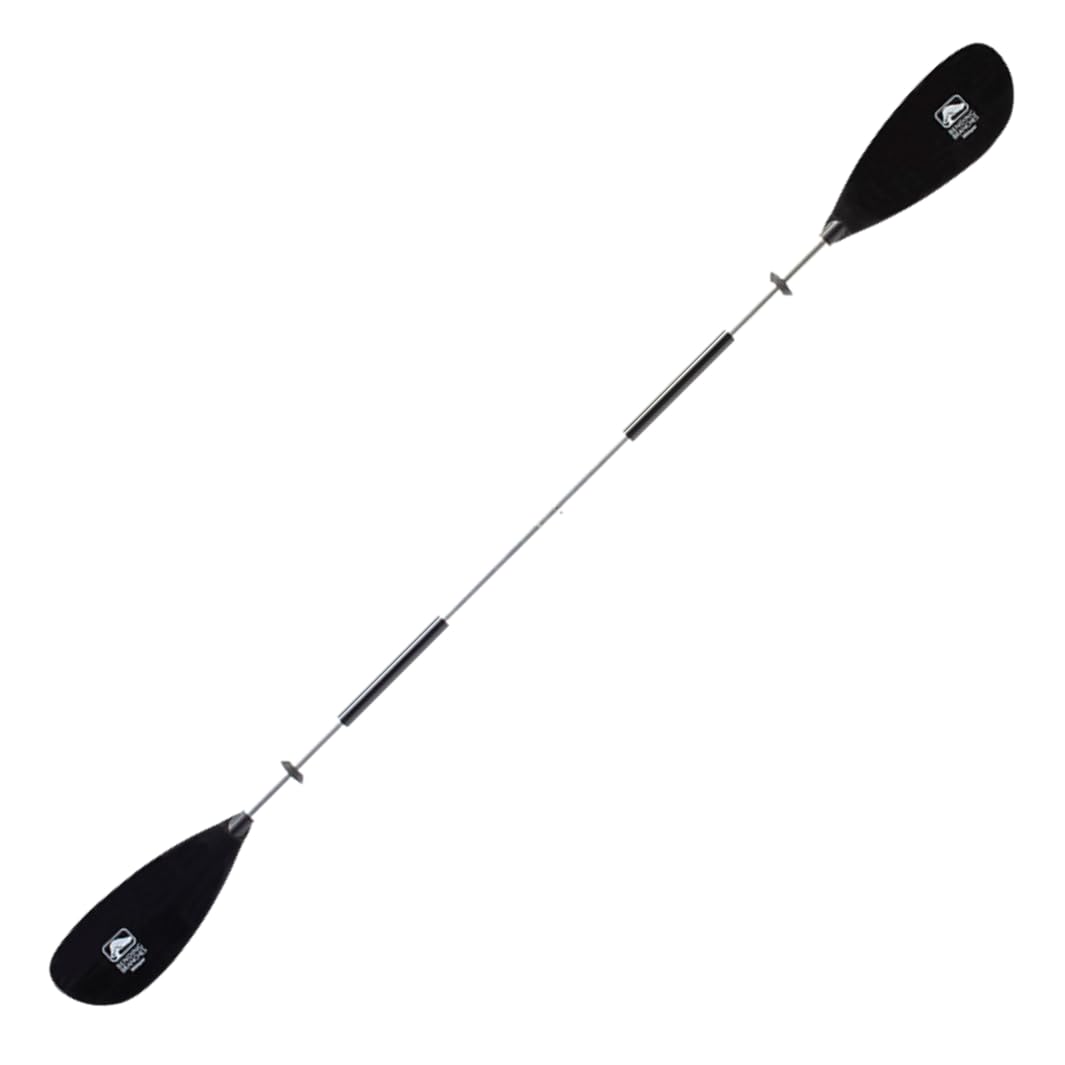
The Bending Branches Whisper is North America’s best-selling recreational paddle for good reason — it’s lightweight for aluminum, durable, and hand-built in Wisconsin. At 16 ounces, it’s nearly as light as some carbon alternatives, thanks to a thin-wall aluminum shaft and compact polypropylene blades. The 3-hole snap-button ferrule offers 0° or 60° feathering options, and the two-piece breakdown makes it easy to stow.
The dihedral blade design reduces flutter significantly compared to flat aluminum blades, producing a smoother stroke that beginners and experienced paddlers alike appreciate. The comfort grip with 3M material provides solid purchase even when wet. For fishing-specific use, it lacks integrated features — no hook retrieval, no ruler, no serrated edge — so it works best as a backup or loaner paddle for casual lake trips.
Some units arrive with minor cosmetic scuffs from the thin shipping packaging, and the aluminum shaft can feel cold in early-season conditions. The fixed 60° offset may not suit paddlers who prefer blades inline (0°). It’s a proven, reliable design that won’t scare your budget.
Why it’s great
- Lightweight for aluminum (16 oz) — rivals some carbon paddles
- Hand-built in the USA with quality control
- Dihedral blade design reduces flutter
- Comfortable 3M grip even when wet
Good to know
- No fishing-specific features (no hook retriever, no ruler)
- Fixed 60° offset may not suit all paddling styles
- Thin packaging can result in cosmetic shipping damage
FAQ
What blade angle should I set my fishing kayak paddle to?
Can I use a recreational kayak paddle for fishing?
How do I measure the right paddle length for my kayak?
Do I really need a carbon fiber paddle for kayak fishing?
Final Thoughts: The Verdict
For most users, the angler kayak paddle winner is the Bending Branches Angler Ace because it combines the lightest carbon shaft with stiff, flutter-free carbon-reinforced nylon blades and a rock-solid snap-button ferrule. If you want integrated hook retrieval and a built-in measuring tape without the premium price, grab the Pelican The Catch. And for anglers who need a serrated edge for line cutting and dock push-offs, nothing beats the Backwater Assassin.