
Our readers keep the lights on and the weekend projects moving. As an Amazon Associate, I earn from qualifying purchases.
The transition out of a heavy walking boot can feel like stepping onto a tightrope. After weeks of rigid immobilization, your ankle muscles have weakened, proprioception has dulled, and every surface feels uneven. The wrong next step, literally, can set your recovery back months.
I’m Rikta — the co-founder and writer behind FitlyFast. My focus is on the clinical transition protocols and biomechanical data that separate a safe recovery from a re-injury, analyzing how braces, stays, and compression systems support the vulnerable post-immobilization ankle.
Choosing the correct rehabilitation tool is the most critical decision in this fragile phase. After reviewing the structural support, compression systems, and stability metrics of top braces, I’ve compiled this guide to the best ankle brace after walking boot options that protect your healing while restoring your confidence in every single step.
How To Choose The Best Ankle Brace After Walking Boot
Selecting the right ankle brace for the post-immobilization phase is about balancing protection with mobility. You need a brace that restricts dangerous inversion and eversion, but allows your proprioceptive system to relearn movement patterns. The following factors are critical.
Lace-Up and Speed-Lace Systems
A full lace-up or speed-lace design offers the most customizable compression. Laces allow you to tighten and loosen specific zones of the brace, accommodating the swelling that can persist for weeks after boot removal. Speed-lace systems dramatically simplify the process, which is crucial when the ankle is still sore and stiff.
Figure-8 Straps for Inversion Control
The figure-8 strapping system is the clinical benchmark for preventing the ankle from rolling. These straps wrap under the heel and cross over the top of the foot and ankle, providing a direct mechanical block against the lateral and medial instability that is most dangerous post-immobilization. This feature is non-negotiable for early-phase recovery.
Removable Semi-Rigid Stays
Stays are the rigid or semi-rigid inserts that run along the sides of the brace. Removable stays allow you to start with maximum ankle immobilization and gradually reduce support as your strength returns. This progressive weaning process is key to re-training your ankle stabilizers without risking a sudden shift to zero support.
Low-Profile and Breathable Build
After the bulk of a walking boot, you want a brace that fits comfortably inside your regular shoes. A low-profile profile means you don’t have to change your footwear, making it easier to maintain a normal gait. Breathable materials prevent moisture buildup and skin breakdown, a real concern after weeks in a boot.
Quick Comparison
On smaller screens, swipe sideways to see the full table.
| Model | Category | Best For | Key Spec | Amazon |
|---|---|---|---|---|
| DonJoy Stabilizing Speed Pro | Mid-Range | Maximum transitional stability | 800D Ballistic Nylon / Removable Stays | Amazon |
| Fitomo Triple-Lock Brace | Mid-Range | Secure fit without readjustment | Triple-Lock System / Removable Stabilizers | Amazon |
| Fitomo Ultra-Thin 1.5mm Brace | Mid-Range | All-shoe compatibility | 1.5mm Microfiber / Breathable Grid | Amazon |
| Ossur FormFit Ankle Brace | Premium | Premium proprioceptive recovery | Single Pull Speedlace / Semi-Rigid Stays | Amazon |
| Med Spec ASO Ankle Stabilizer | Premium | Trusted athletic recovery | CoolFlex Padding / Durable Nylon | Amazon |
| MUELLER The One Ankle Brace | Premium | Doctor-prescribed alternative | Figure-8 Straps / Speed Lacing | Amazon |
| Vive Wedge Post-Op Shoe | Mid-Range | Heel pressure offloading | Offloading Wedge / Rocker Base | Amazon |
In‑Depth Reviews
1. DonJoy Stabilizing Speed Pro Ankle Support Brace

The DonJoy Stabilizing Speed Pro is built with 800D ballistic nylon, making it one of the most durable braces for the intense transitional phase. Its full circumferential elastic strap locks all the strapping down, providing a critical layer of tibia and fibula compression that helps re-stabilize the ankle after weeks of immobilization. The articulated medial and lateral stays are removable, allowing you to slowly wean off rigid support as your proprioception improves.
The speed-lace system is a standout feature for the post-boot user. Instead of fumbling with long, tangled laces, you pull four laces at once using a single Velcro tab. This fastens securely in under ten seconds, respecting the limited range of motion and swelling that still plagues the recovering ankle. The lightweight, low-profile design fits easily inside running or casual shoes.
Customer feedback confirms it is frequently recommended by surgeons and physical therapists for the specific transition from cam boot to normal activity. A common note is that the lacing stability strip may warp after several months of heavy daily use, but for the 6-12 week weaning period, it holds up exceptionally well. Some users mention the D-rings can create pressure points, but proper sizing minimizes this issue.
Why it’s great
- 800D ballistic nylon for long-term durability
- Speed-lace system for quick, easy application
- Removable articulated stays for weaning support
- Lightweight and low-profile design fits in shoes
Good to know
- Lacing strip can warp with prolonged heavy use
- D-rings may cause pressure points on some ankles
- Sizing must be precise to avoid bunching of heel material
2. Fitomo Triple-Lock Ankle Brace with Quick Lace Up
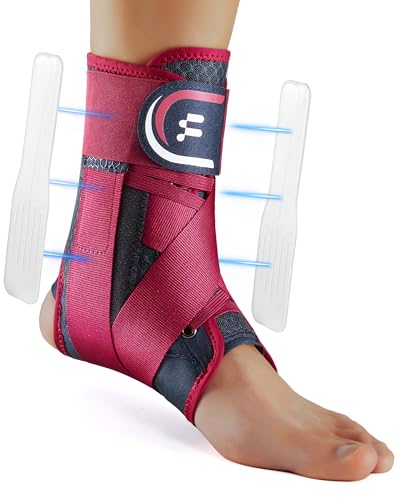
The Fitomo Triple-Lock system delivers confidence through redundancy. It combines a top strap for overall compression, dual removable side stabilizers for lateral stiffness, and cross straps that create a figure-8 pattern to restrict dangerous rolling. For the post-boot user, this layered approach means you can start with all three locks active for maximum safety and progressively remove components as your strength returns.
Its figure-8 strap design allows you to fine-tune compression for different activities without re-lacing the entire brace. This is a huge advantage during the recovery phase when you might be moving from a slow walk to controlled balance exercises. Users report the Velcro stays tenacious, holding firm throughout the day without needing constant readjustment, which is a common complaint with lesser braces.
Real-world feedback highlights its use after ORIF surgery and other post-cam boot transitions, with users praising how it fits inside sneakers and provides just enough support to walk normally without fear. A minor observation is that sizing can run slightly large for slender ankles, but the adjustable straps help mitigate this. FSA and HSA eligibility make it an accessible choice for those with health spending accounts.
Why it’s great
- Triple-Lock system with removable stabilizers for progressive weaning
- Adjustable figure-8 strap for activity-specific compression
- Stays secure without constant readjustment
- FSA/HSA eligible for easy purchase
Good to know
- Can run slightly large for very narrow ankles
- Some users expected a two-pack for the price point
- Limited color options may not appeal to all
3. Fitomo 1.5mm Ultra Thin Ankle Brace
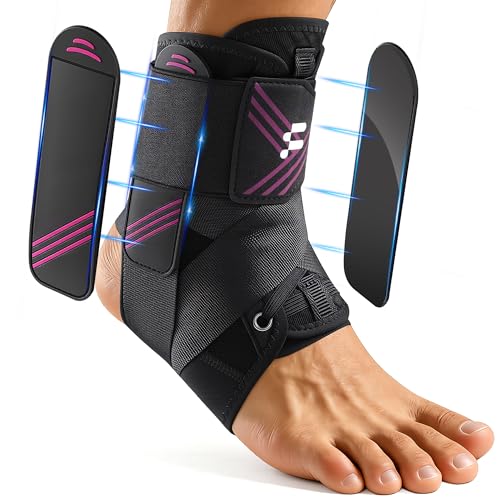
The Fitomo 1.5mm Ultra Thin brace is engineered for the user who needs stability but refuses to sacrifice shoe fit. Its Microfiber fabric is only 1.5mm thick with visible air vents, making it virtually invisible under socks and comfortable in snug sneakers. This is perfect for the late-stage recovery phase where you want protective support but can tolerate less immobilization.
Its three-layer system includes an inner silicone grip, a figure-8 stabilizing strap, and a flexible support panel that works together to provide dynamic, movement-responsive support.
Customer reviews emphasize its excellent fit inside everyday shoes and its breathability, a welcome change from the heat and moisture of the walking boot. The learning curve for putting it on is slightly steeper than a simple lace-up, and it can feel complicated to adjust properly. Users also caution that it can get hot in warm conditions, so for very active days, a more ventilated option might be better.
Why it’s great
- Ultra-thin 1.5mm build for universal shoe compatibility
- Three-layer system with silicone grip for movement support
- Visible air vents for superior breathability
- FSA/HSA eligible for easy purchase
Good to know
- Can be complicated to put on initially
- May get hot in very warm conditions
- Thinner design offers less raw stability than thicker braces
4. Ossur FormFit Ankle Brace with Speedlace

The Ossur FormFit is a premium rehabilitation tool that uses a single-pull speedlace and figure-8 straps to provide a highly customizable fit. The semi-rigid stays are removable, making this a versatile option for both the early post-boot phase and the later strengthening stage. Its ability to offer near-custom immobilization while still being breathable sets it apart from bulkier alternatives.
The brace’s single-pull closure system is a major convenience for tender ankles. You simply pull one cord to tighten the lace core, then secure the top strap and figure-8 straps for a locked-in feel. Users report that it provides excellent support for Achilles tendonitis and bone spurs, confirming its utility for a range of post-immobilization conditions beyond simple sprains.
Endurance is a highlight, with many users reporting months of daily use without failure. The most common durability concern is the heel stitching, which can show fraying after a year of almost constant wear due to excess material. Proper sizing based on ankle circumference (not shoe size) is critical, as the fit is intentionally snug to maximize proprioceptive feedback.
Why it’s great
- Single-pull speedlace for quick and easy application
- Removable semi-rigid stays for progressive weaning
- Excellent for Achilles tendonitis and bone spurs
- Top quality build used by orthopedists
Good to know
- Sizing based on ankle circumference, not shoe size
- Heel stitching may fray with very long-term daily use
- Thicker build may not fit in the tightest shoes
5. Med Spec ASO Ankle Stabilizer
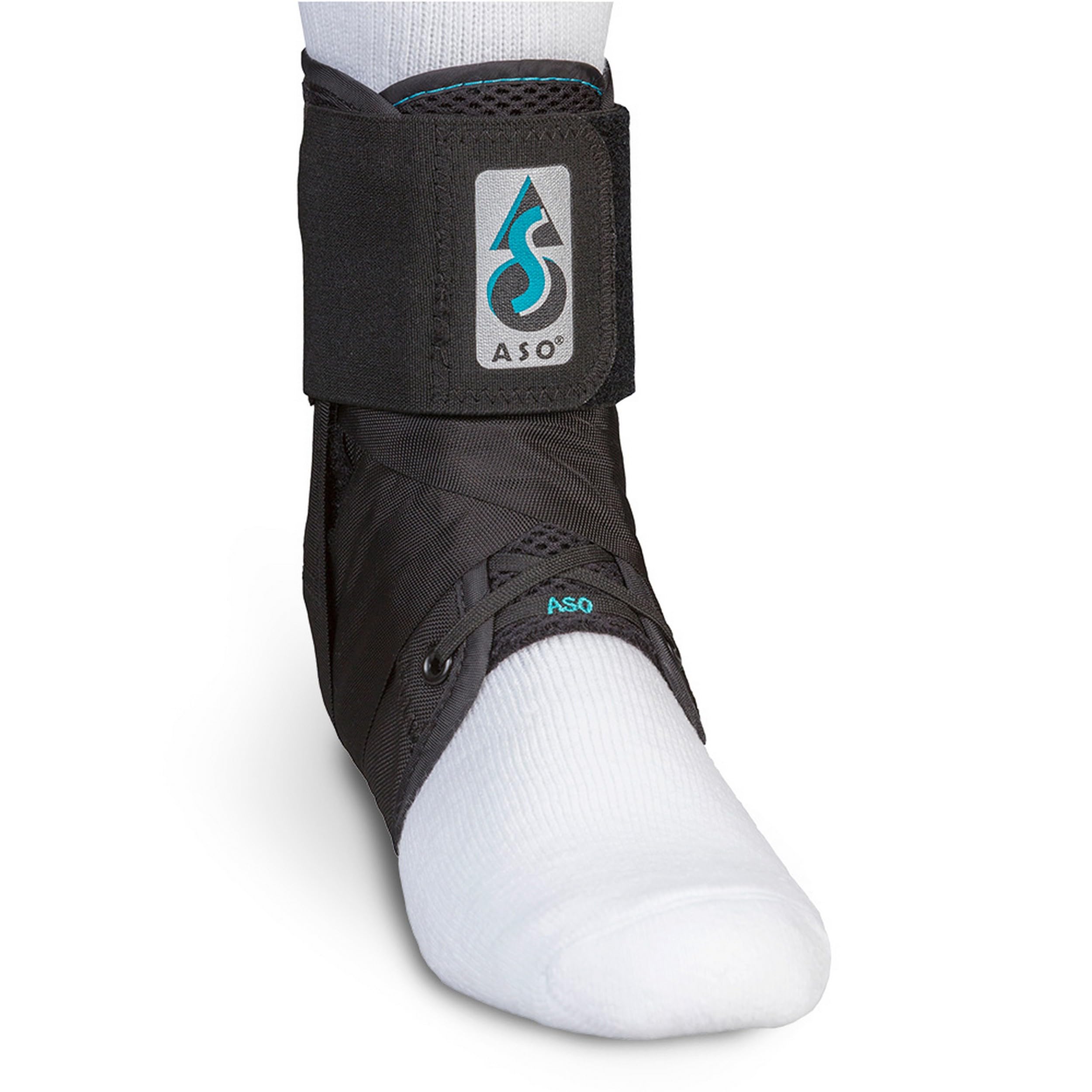
The Med Spec ASO Ankle Stabilizer is a clinical staple in athletic training rooms, and for good reason. Its CoolFlex padding and durable nylon construction prevent irritation during extended wear, making it an ideal choice for the post-boot user who needs to return to a more active, even athletic, lifestyle. The figure-8 straps are built for maximum control, limiting painful twists while still fitting inside most athletic shoes.
The combination of a full lace-up closure and figure-8 straps provides a level of stabilization that competes with athletic tape. The lace-up system allows for zone-specific compression, perfect for targeting lingering swelling in the ankle while leaving the foot comfortably snug. The bilateral design works for either foot, a convenient detail for anyone who might need to support the uninjured side after weeks of compensatory gait.
Widely recommended by doctors and trainers, the ASO is trusted for sports recovery. Users with a size 9 shoe report a near-perfect fit, and the ability to adjust the laces with an even-knot feature prevents pressure points. One minor trade-off: the full lace-up system takes significantly longer to put on than a speed-lace option, which may be frustrating in the early days of recovery when bending is difficult.
Why it’s great
- Full lace-up with figure-8 straps for maximum stabilization
- CoolFlex padding for irritation-free, long-wear comfort
- Widely recommended by athletic trainers and doctors
- Lightweight and breathable for active recovery
Good to know
- Full lace system is slower to put on than speed-lace options
- May require assistance to achieve a snug fit
- Less support than athletic tape for high-risk returns to sport
6. MUELLER The One Ankle Brace Premium

The MUELLER The One Ankle Brace combines over 60 years of sports medicine expertise into a single cohesive product. Its unique figure-8 strapping system is engineered specifically to prevent ankle inversion and eversion sprains, the two most common post-boot re-injury mechanisms. The integrated speed lacing system uses fewer eyelets and flat laces, making fastening and unfastening significantly faster than a traditional lace-up brace.
Its easy slide-on design and adjustable Velcro straps offer a near-custom feel without the complexity of multiple components. Users who have had their doctor prescribe a specific figure-eight brace find the MUELLER model to be an exact, more affordable alternative. The soft, smooth material is comfortable against the skin, reducing the risk of chafing during the all-day wear that recovery demands.
Customer experiences highlight its durability through multiple sports seasons and its effectiveness for post-fracture transition. A minor issue reported is top-of-foot bruising after a re-injury while wearing the brace, though normal wear does not cause this. The foot trim piece can show ripping at the seam after a full year of daily use, which is typical wear for a product in this category.
Why it’s great
- Figure-8 straps for direct inversion/eversion prevention
- Speed lacing with fewer eyelets for quick on/off
- Doctor-prescribed design with comfortable, low-profile fit
- Durable enough for active teens and multiple sports seasons
Good to know
- Foot trim seam may rip after a year of daily wear
- Can cause top-of-foot bruising after a significant re-injury
- Sizing is based on shoe size, which can be less precise than ankle circumference
7. Vive Wedge Post-Op Shoe

The Vive Wedge Post-Op Shoe takes a different approach to the post-boot transition. Instead of wrapping the ankle, it offloads the heel entirely, shifting the impact of each step to the toes and midfoot. This is the right choice for users whose ankle injury is complicated by heel pain, plantar fasciitis, or a specific heel or calcaneus fracture that needs direct pressure relief.
Its modified rocker base promotes a smooth, natural gait, which is crucial for re-learning how to walk after a boot. The open square toe box accommodates bandages and swelling, and the dense foam padding provides a level of cushioning that a standard brace cannot offer. The adjustable fasteners allow for a personalized fit, even when the foot is still swollen.
Customer reviews confirm its effectiveness for short-term heel pressure relief. Users with heel spurs and plantar fasciitis report significant reduction in stabbing pain during walking. The primary durability concern is that it can rip apart after several months of daily use, which limits its lifespan for long-term recovery. It also lacks the active ankle stabilization a brace provides, so it is best used in conjunction with other recovery measures.
Why it’s great
- Offloads heel pressure for specific post-op relief
- Modified rocker base promotes a smooth gait
- Open toe box accommodates bandages and swelling
- Lightweight and non-skid base for safe walking
Good to know
- Can rip apart after 2-3 months of daily use
- Lacks active ankle stabilization of a brace
- Material can feel hard and unsupportive
- Does not provide lateral ankle support
FAQ
Can I wear a post-boot ankle brace inside any shoe?
How long should I wear a brace after the walking boot comes off?
Should I always wear the removable stays inside the brace?
How do I measure my ankle for a correctly fitting brace?
Final Thoughts: The Verdict
For most users, the ankle brace after walking boot winner is the DonJoy Stabilizing Speed Pro because its combination of ballistic nylon durability, speed-lace convenience, and removable articulated stays gives you a complete weaning system in one product. If you prioritize a secure fit that never needs readjustment, grab the Fitomo Triple-Lock Brace. And for maximum shoe compatibility while still getting figure-8 protection, nothing beats the Fitomo 1.5mm Ultra Thin Brace.