
Our readers keep the lights on and the weekend projects moving. As an Amazon Associate, I earn from qualifying purchases.
An anterior talofibular ligament (ATFL) tear doesn’t just hurt—it destabilizes every step, pivot, and landing you take. The right brace must resist inversion without limiting natural motion, or you risk re-injury and chronic instability.
I’m Rikta — the co-founder and writer behind FitlyFast. I’ve spent years analyzing recovery gear, studying how materials like ballistic nylon and figure-8 strapping systems directly affect ligament healing and proprioception.
After comparing seven top-tier models, I’ve pinpointed the brace that delivers the precise mix of rigid stabilization and low-profile comfort. Keep reading to find the best ankle brace for atfl tear for your recovery phase and activity level.
How To Choose The Best Ankle Brace For ATFL Tear
Selecting a brace for an ATFL tear is different from picking a general sprain support. The anterior talofibular ligament is the most commonly injured ankle ligament, and it resists inversion stress. A brace that fails to control that specific movement—or one that is too bulky to wear inside a shoe—will slow your recovery. Focus on these three factors.
Stabilization System: Figure-8 vs. Lace-Up vs. Removable Splints
Figure-8 strapping patterns mimic the taping technique athletic trainers use, directly resisting inversion and eversion without immobilizing the joint. Lace-up designs provide even compression but rely on the integrity of the laces to hold tension. Removable splints offer the highest rigidity, which is critical in the acute phase of an ATFL tear but may be overkill for later-stage rehab. Look for a brace that combines at least two of these elements for layered support.
Profile Height and Shoe Compatibility
An ATFL brace that doesn’t fit inside your everyday footwear will end up in a drawer. Thin microfiber builds (like 1.5mm models) slide into sneakers easily but may lack the lateral wall stiffness needed for ligament tears. Mid-profile braces with ballistic nylon and articulated stays offer a better balance—they fit in most lace-up shoes and boots while providing the proprioceptive feedback your brain needs to avoid rolling the ankle again.
Breathability and Long-Term Comfort
An ATFL tear recovery often means wearing the brace for weeks. Materials like Oxford nylon with honeycomb venting or air-perforated microfiber keep the skin dry during all-day wear. Avoid neoprene-heavy designs that trap heat and moisture, especially if you plan to wear the brace during sports or physical work. A sock-like lining and open heel design also reduce chafing on the Achilles area.
Quick Comparison
On smaller screens, swipe sideways to see the full table.
| Model | Category | Best For | Key Spec | Amazon |
|---|---|---|---|---|
| Med Spec ASO Ankle Stabilizer | Lace-Up | Chronic instability & sports | Figure-8 straps + 800D nylon | Amazon |
| McDavid Ankle Brace Ultralight 195 | Figure-8 Wrap | High-impact court sports | Figure-6 strapping pattern | Amazon |
| DonJoy Stabilizing PRO | Premium Lace-Up | Grade 2 ATFL recovery | Articulated medial/lateral stays | Amazon |
| Ultra 360 Lace Up Ankle Brace | Lace-Up | Volleyball & basketball | Figure-8 + lace hybrid | Amazon |
| Fitomo Triple-Lock Ankle Brace | Mid-Range | All-day wear & rehab | Removable side stabilizers | Amazon |
| Fitomo 1.5mm Ultra Thin Brace | Low Profile | Minimal shoe clearance | 1.5mm microfiber thickness | Amazon |
| AGPTEK Ankle Brace | Budget | Entry-level recovery | Triple-support system | Amazon |
In‑Depth Reviews
1. Med Spec ASO Ankle Stabilizer
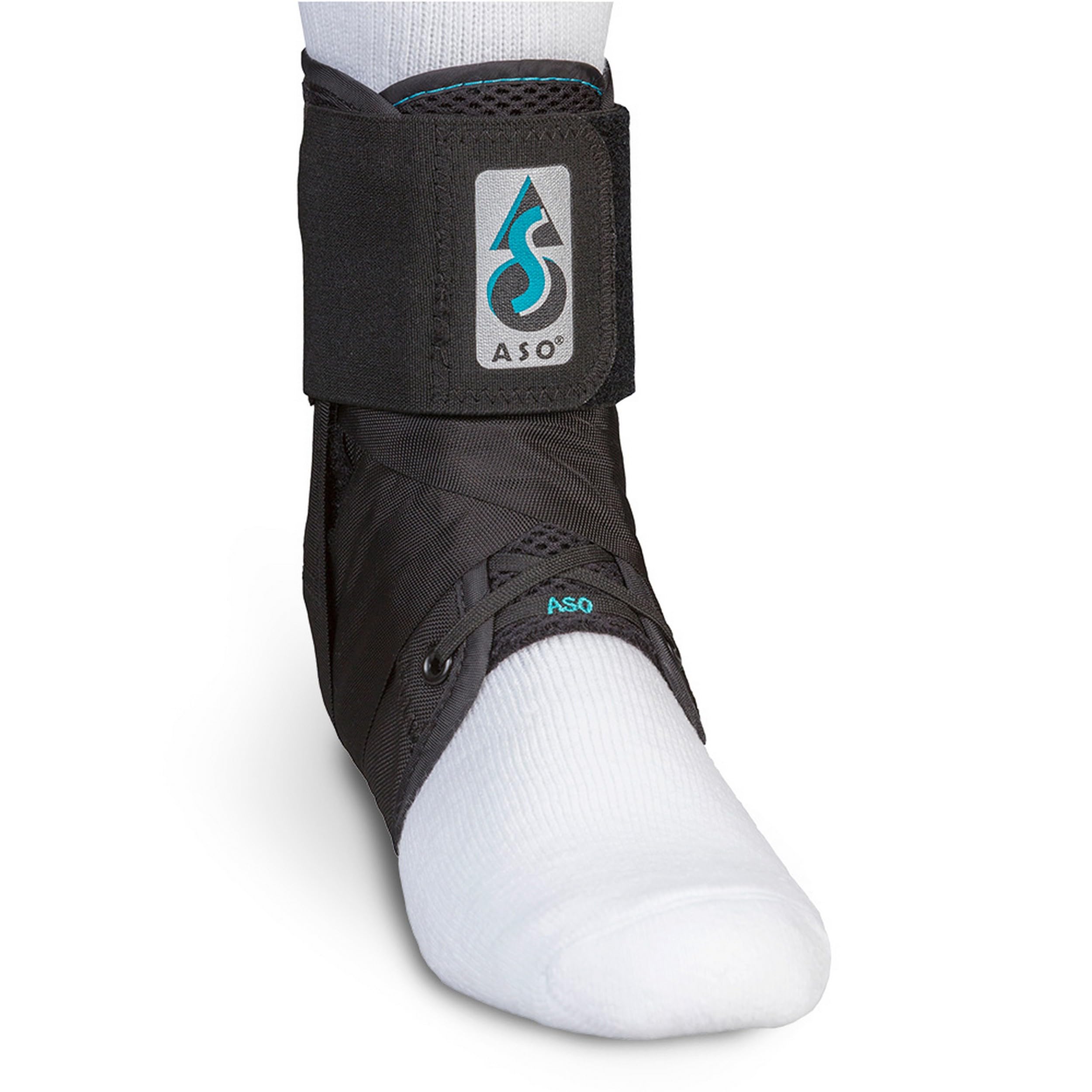
The ASO is the gold standard for ATFL tears because its figure-8 strapping system directly targets the lateral ligament complex. The laces allow you to dial in snug compression around the midfoot, while the nylon shell resists stretch through months of daily wear. Multiple athletic trainers and sports medicine doctors specifically recommend this model for Grade 1 and Grade 2 ATFL sprains.
CoolFlex padding and the tongue design reduce irritation on the anterior ankle, a common complaint with stiff braces. It fits inside most basketball shoes and running sneakers without feeling cramped. The bilateral design works on either foot, so you can wear it during rehab and then transition to sport-specific training.
One downside: the white finish shows dirt quickly, and the long laces require a few seconds of patience to balance tension evenly. Users with high arches may need to adjust the lace pattern slightly to avoid pressure points. Still, the support-to-comfort ratio is unmatched for ATFL recovery.
Why it’s great
- Trusted by PTs and orthopedists for ATFL support
- Figure-8 straps mimic athletic taping precisely
- Breathable nylon resists stretching over time
Good to know
- White color shows wear quickly
- Long laces take practice to tension evenly
- May require help to put on initially
2. McDavid Ankle Brace Ultralight 195
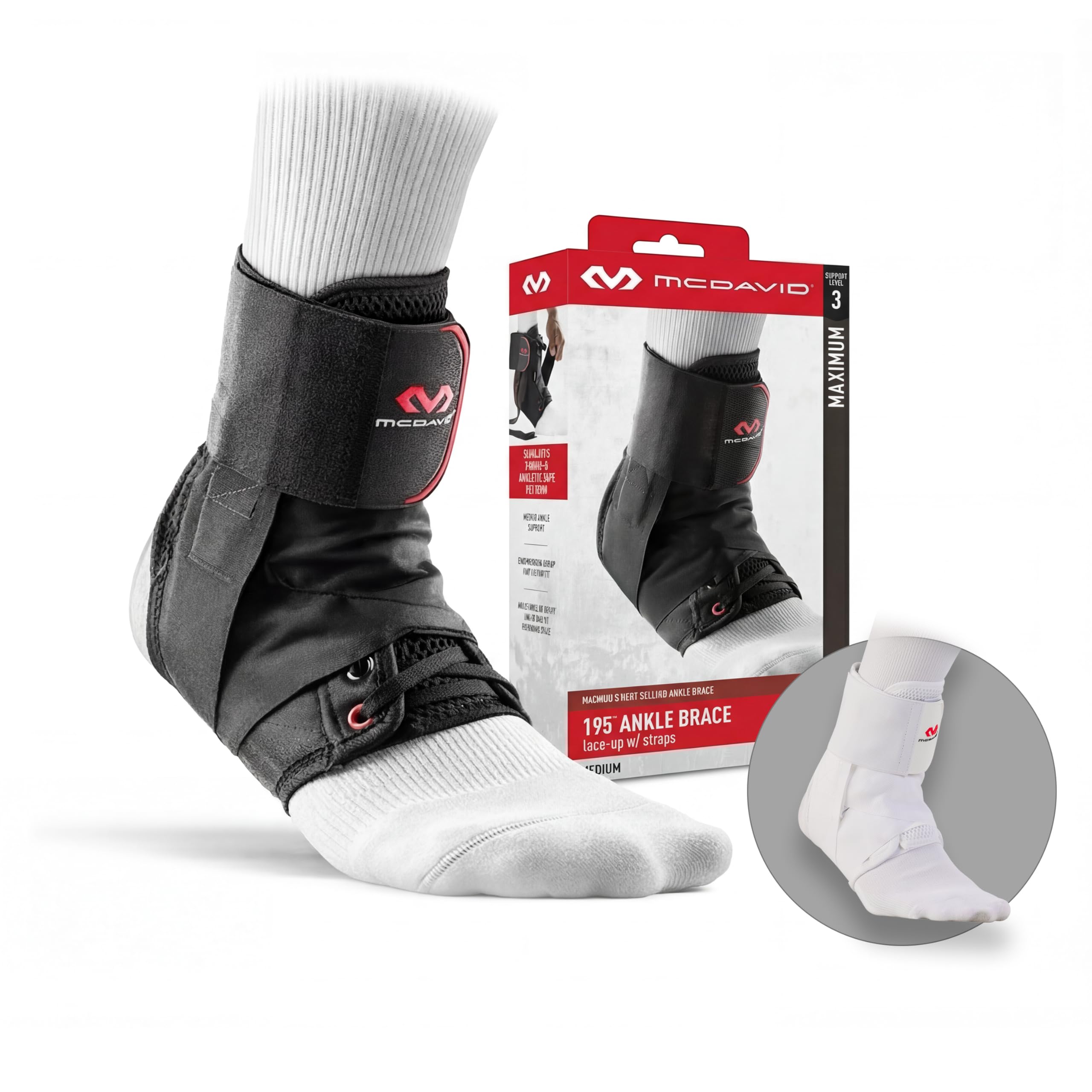
McDavid’s 195 model uses a figure-6 strapping pattern that was developed and validated in a university study—athletes wearing it had three times fewer injuries. This is not a generic ankle sleeve; the cross-straps lock the talus to prevent the excessive anterior translation that stresses the ATFL. The single-layer polyester fabric keeps weight low, which matters during dynamic movements like jumping and cutting.
A standout feature is the ability to tighten the figure-8 straps without unlacing or removing your shoe. This allows you to re-apply compression mid-game when you feel the ankle loosening. The brace stays locked in place during lateral shuffles and bad landings, providing that “ol’ reliable” confidence active users report.
The main trade-off is the figure-8 straps can dig into the skin if worn without socks. Some users trim the rubber logo on the Velcro to prevent scratching. The brace also runs slightly larger than the sizing chart suggests, so measure your ankle circumference carefully before ordering.
Why it’s great
- Proven to reduce injury risk in independent study
- Adjustable without unlacing or removing shoe
- Ultralight single-layer polyester construction
Good to know
- Straps may scratch bare skin without socks
- Sizing runs slightly large
- Bulky for very narrow shoes
3. DonJoy Stabilizing PRO Ankle Brace

DonJoy’s Stabilizing PRO is built around 800D ballistic nylon and articulated medial/lateral stays. The stays enhance proprioception—your brain’s ability to sense ankle position—which is critical after an ATFL tear where ligament feedback is lost. This brace is designed for Grade 2 and recovering Grade 3 injuries where rigid support is non-negotiable.
The full circumferential elastic strap adds tibia and fibula compression, reducing swelling and stabilizing the entire ankle complex. Many users with peroneal tendon or posterior tibial tendon issues also find this brace effective because the stays prevent the foot from collapsing into eversion or inversion. The low-profile shape fits inside boots and standard sneakers.
The lacing system takes longer to set up, and the stiff eyelet area can shred the lining of expensive athletic shoes over time. Some users report the heel binding digging in during long wear. For acute ATFL tears where maximum stabilization is required, the DonJoy is a powerhouse, but it’s less forgiving for casual daily use.
Why it’s great
- 800D ballistic nylon for extreme durability
- Articulated stays enhance proprioception
- Circumferential strap compresses tibia/fibula
Good to know
- Heel binding can dig in during long wear
- Laces and straps require time to adjust
- May shred shoe lining over time
4. Ultra 360 Lace Up Ankle Brace
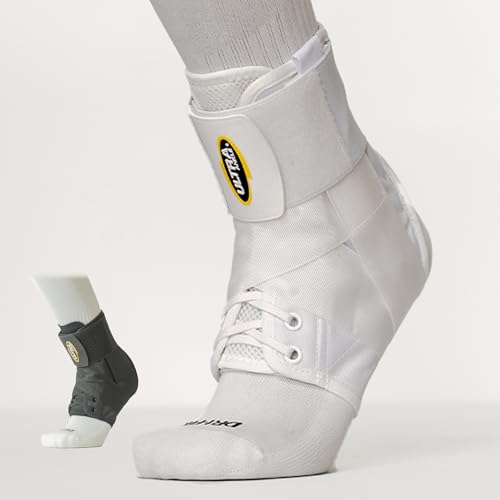
The Ultra 360 combines a full lace-up chassis with adjustable figure-8 straps to mimic the exact taping protocol trainers use for ATFL injuries. The lace-up element locks the heel, preventing forward translation of the talus, while the figure-8 straps control inversion and eversion forces. It’s specifically designed for volleyball and basketball players who need reliable protection during explosive movements.
The low-profile construction means it fits inside cleats and high-tops without bulk. The breathable nylon material prevents overheating, even during long tournaments. Users repeatedly mention that this brace immediately takes the pain away during daily activities and yard work after an ATFL injury.
The small size fits youth athletes, which is a bonus for parents of active teens. Some users note that overtightening the laces causes foot cramping, while undertightening sacrifices support—there’s a learning curve to find the sweet spot. For pure court-sport protection, the Ultra 360 is a strong mid-range competitor.
Why it’s great
- Lace + figure-8 hybrid for dual stabilization
- Low profile fits in cleats and boots
- Youth/adult sizing options
Good to know
- Learning curve to balance lace tension
- Too loose or too tight compromises support
- Small size may not fit larger ankles
5. Fitomo Triple-Lock Ankle Brace
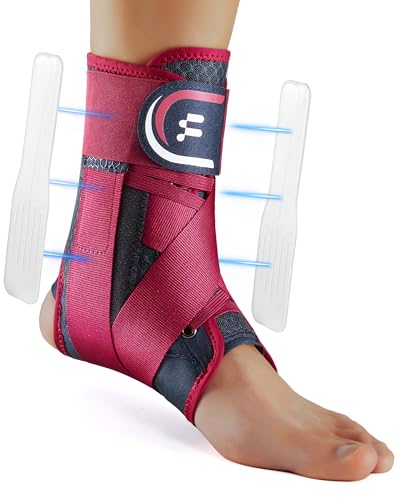
Fitomo’s Triple-Lock system uses top strap compression, dual removable side stabilizers, and cross straps to address the ATFL from three directions. The removable stabilizers are a smart feature: keep them in during the acute phase and remove them once your ligament strength returns. This brace saves you from buying separate products for different recovery stages.
The figure-8 strap allows fine-tuned compression control, and the low-profile nylon-polyester blend fits inside most sneakers without squeaking or sliding. Several users report using this brace after ORIF surgery and while transitioning from a CAM boot, which indicates its structural integrity. The FSA/HSA eligibility is a bonus for those with flexible spending accounts.
Some users with stroke-related inversion or foot drop found the brace excellent for one-handed application. The sizing runs large—a medium fits closer to a small in other brands—so measuring your ankle circumference is essential. A few buyers noted skin irritation after all-day wear, suggesting a thin sock or gauze layer underneath.
Why it’s great
- Removable stabilizers adapt to recovery phase
- FSA/HSA eligible
- Works well for post-surgery transition
Good to know
- Sizing runs large—measure carefully
- May cause skin irritation without sock
- Not as low-profile as ultra-thin models
6. Fitomo 1.5mm Ultra Thin Ankle Brace
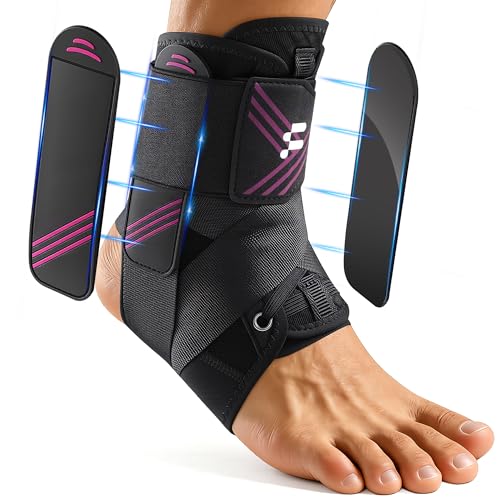
At just 1.5mm thick, this Fitomo brace prioritizes shoe compatibility above all else. It’s engineered with a visible ventilation grid to dissipate heat and moisture, making it the most breathable option for long days on your feet. The 3-layer system—inner silicone grip, figure-8 stabilizing strap, and flexible support panel—adds dynamic stability without the bulk of a lace-up design.
The invisible fit inside dress shoes, casual sneakers, and work boots is its biggest selling point. Users who need ankle support for jobs that require steel-toe boots or for sports like pickleball and running find this brace nearly undetectable. The silicone grip prevents slipping inside the shoe, which is a common failure point for thinner braces.
However, 1.5mm microfiber lacks the rigid sidewalls needed for moderate to severe ATFL tears. The removable stabilizers that other models offer are absent here. This brace is best suited for mild instability, prevention during sports, or late-stage rehab where you need gentle proprioceptive feedback rather than heavy-duty mechanical support.
Why it’s great
- Fits in virtually any shoe without bulk
- Visible air vents for all-day breathability
- Silicone grip prevents slipping inside shoe
Good to know
- Too thin for moderate/severe ATFL tears
- No removable rigid stabilizers
- Can be tricky to put on correctly
7. AGPTEK Ankle Brace
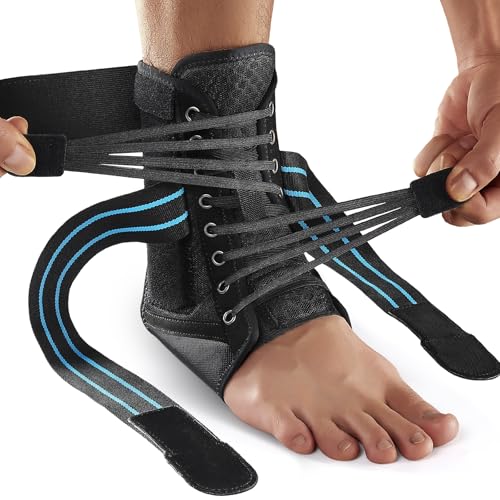
AGPTEK delivers a triple-support system—reinforced dual side stabilizers, X-cross compression straps, and a top wrap—at a budget-friendly price point that rivals more expensive models. The quick-lace system with dual-direction hook-and-loop fasteners lets you secure the brace in seconds, which is helpful when you need to change tightness after swelling fluctuates throughout the day.
The honeycomb ventilation zones in the nylon Oxford fabric keep air moving, and the open heel design prevents Achilles irritation. Users recovering from foot surgery and fractures have reported that this brace outperformed the one provided by their orthopedic surgeon in terms of comfort and support. The blue color option is less medical-looking than standard black or white braces.
The main limitation is that the hook-and-loop straps may not hold as securely over months of heavy use compared to a full lace-up system like the ASO. Some users found the sizing ran small—if you’re between sizes, size up. For the price, this brace offers impressive initial support, but you may need to replace it sooner than a premium model.
Why it’s great
- Triple-support system at an entry-level price
- Quick-lace fastening for easy adjustments
- Honeycomb ventilation keeps foot dry
Good to know
- Velcro may weaken with heavy daily use
- Sizing runs slightly small
- Less long-term durability than lace-up models
FAQ
Can I wear an ankle brace for an ATFL tear inside my regular shoes?
How tight should an ATFL tear brace be?
Should I wear my ATFL brace while sleeping?
How long does an ATFL tear take to heal with a brace?
Final Thoughts: The Verdict
For most users, the ankle brace for atfl tear winner is the Med Spec ASO Ankle Stabilizer because its figure-8 strapping system delivers the exact inversion/eversion control this ligament needs, and it fits comfortably inside athletic shoes for day-long wear. If you want maximum proprioceptive feedback and rigid stabilization for a Grade 2 tear, grab the DonJoy Stabilizing PRO. And for a value-friendly option that adapts to your recovery phase with removable stabilizers, nothing beats the Fitomo Triple-Lock Ankle Brace.