
Our readers keep the lights on and the weekend projects moving. As an Amazon Associate, I earn from qualifying purchases.
The sharp pivot, the sudden stop, the opponent’s foot under yours — one wrong move and a rolled ankle can bench you for weeks. For basketball players, the ankle is the most vulnerable joint, and the right brace is the difference between finishing the season on the court or watching from the sideline. This guide breaks down the specific support features, strap systems, and fit considerations that separate a true game-ready stabilizer from a mere sleeve.
I’m Rikta — the co-founder and writer behind FitlyFast. I’ve spent years analyzing sports medical hardware, comparing lace-up patterns, figure-8 strap tension, and shell rigidity to identify which braces actually resist inversion and eversion during high-impact cutting and jumping.
Whether you are recovering from a sprain or looking to prevent one, this detailed guide will help you confidently choose the right ankle brace for basketball that matches your level of play and injury history.
How To Choose The Best Ankle Brace For Basketball
Basketball demands a unique combination of explosive lateral movement, vertical jumping, and hard landings. This puts the ankle at constant risk of inversion sprains — the most common basketball injury. A brace designed for general walking or hiking often fails to provide the targeted support needed on a hardwood court, so it’s critical to understand the specific design elements that matter for this sport.
Support System: From Basic Sleeves to Competition-Grade Stabilization
Not all ankle braces offer the same level of protection. A basic neoprene sleeve provides compression and warmth for mild soreness but offers almost no resistance against a roll. For basketball, look for a lace-up base combined with figure-8 or circumferential straps. This “basket weave” imitation locks the heel and limits inversion and eversion. The most advanced options, like the DonJoy Performance POD, use a molded TPU shell with “on-demand” technology that stiffens only during a roll, preserving natural motion for the rest of the game.
Fit and Shoe Compatibility
An ankle brace is useless if it doesn’t fit inside your basketball shoes. Many budget models are bulky, creating pressure points that alter your stride and reduce comfort. The best braces for basketball are designed with a low-profile build that slips into high-top or mid-top shoes without forcing you to size up. Also pay attention to the sizing — most high-quality brands rely on ankle circumference (measured around the bony bumps) rather than shoe size, so always measure before ordering.
Durability and Material
Basketball involves constant sweat, friction, and repeated washing. A brace made from polyester, nylon, or neoprene blends with reinforced stitching will last longer. Look for speed lacing eyelets that resist fraying and non-slip silicone strips on the sole to keep the brace from riding up inside the shoe. The removable splints or stays should be aluminum or molded plastic — lightweight but strong enough to resist bending under a full-speed lateral cut.
Quick Comparison
On smaller screens, swipe sideways to see the full table.
| Model | Category | Best For | Key Spec | Amazon |
|---|---|---|---|---|
| DonJoy Performance POD | Premium | Competition-grade roll prevention | Molded TPU shell, 0.16 kg | Amazon |
| MUELLER The One | Mid-Range | Fast lace-up for active recovery | Speed lacing system | Amazon |
| Med Spec ASO | Mid-Range | Trainer-recommended taper support | Figure-8 straps, CoolFlex padding | Amazon |
| Active Ankle AS1 Pro | Mid-Range | Low-profile basketball brace | Non-stretch vertical straps | Amazon |
| Ossur FormFit | Mid-Range | Achilles tendonitis and high sprains | Single-pull Speedlace | Amazon |
| McDavid Bio-Logix | Premium | Construction and multi-sport use | Flex-link hinge, neoprene foam | Amazon |
| AGPTEK Adjustable | Budget | Post-injury immobilization | Removable aluminum splints | Amazon |
In‑Depth Reviews
1. DonJoy Performance POD Ankle Brace
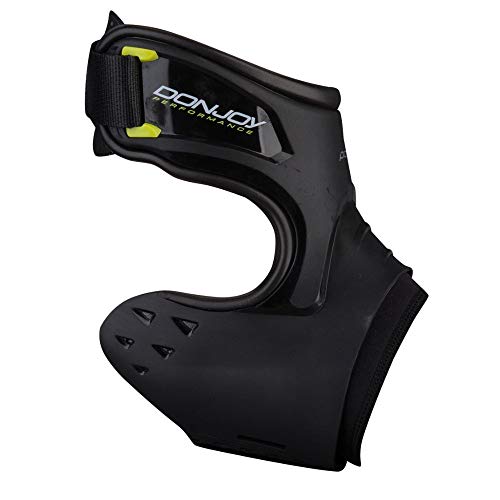
The DonJoy Performance POD represents the peak of ankle brace engineering for basketball. Its “On Demand” technology uses a molded TPU shell that remains flexible during normal cutting and jumping but instantly stiffens when it detects the foot entering an inversion or eversion position. This means you don’t sacrifice natural range of motion for protection. The low-profile design fits inside most basketball shoes without excessive bulk, and the super-soft EVA underlayer lining prevents chafing during long games.
Real-world feedback from athletes recovering from reinjured sprains confirms that the POD allows confident running, pickleball, and even trail use without a recurrence of the injury. The right-foot orientation and adjustable hook-and-loop closure provide a customizable fit that stays secure even during explosive lateral movements. For players who need maximum stability without feeling like they are wearing a cast, this is the gold standard.
The POD is not the cheapest option, but its build quality and material science justify the investment for serious competitors. The few users who were disappointed had sizing issues — measure your ankle circumference carefully, as the medium fits a shoe size 11 with an ankle circumference of roughly 13 inches. For high-instep feet, the brace is snug on and off, but the support once locked in is unmatched.
Why it’s great
- On-demand TPU shell resists rolling without limiting motion
- Low-profile design fits comfortably in basketball shoes
- Excellent for chronic instability and post-sprain recovery
Good to know
- Sizing is critical — measure ankle circumference, not shoe size
- Requires breaking in for tight lace-up feel
2. MUELLER Sports Medicine The One Ankle Brace

Mueller has been a trusted name in sports medicine for over 60 years, and The One ankle brace encapsulates that experience into a single, well-engineered package. The standout feature is the integrated speed lacing system with flat laces and fewer eyelets, which dramatically cuts down the time needed to get the brace on and tightened before tip-off. The unique figure-8 strapping system then targets the exact ligaments most vulnerable to inversion and eversion sprains.
Customer reports from a full year of use across three sports seasons highlight the durability of the build — it survived a re-injury with only top-of-foot soreness, protecting the ankle itself. The brace is also washable (soak in hot water and hang dry) and dries in about a day, which is practical for players who need to wear it daily. The grip coating on the sole prevents the brace from shifting inside the shoe.
One noted issue is that the trim piece under the foot may begin to rip at the seam after months of daily wear. For the price, however, this is a minor trade-off for a brace that offers both comfort and high-level support. Sizing is straightforward for shoe sizes 11-13, and the brace fits both left and right ankles, adding to its convenience.
Why it’s great
- Fast speed lacing system for quick game-day application
- Figure-8 strap design effectively prevents inversion sprains
- Comfortable enough for 24/7 wear after injury
Good to know
- The under-foot trim may wear out after prolonged daily use
- Sizing runs large — check size chart carefully
3. Med Spec ASO Ankle Stabilizer
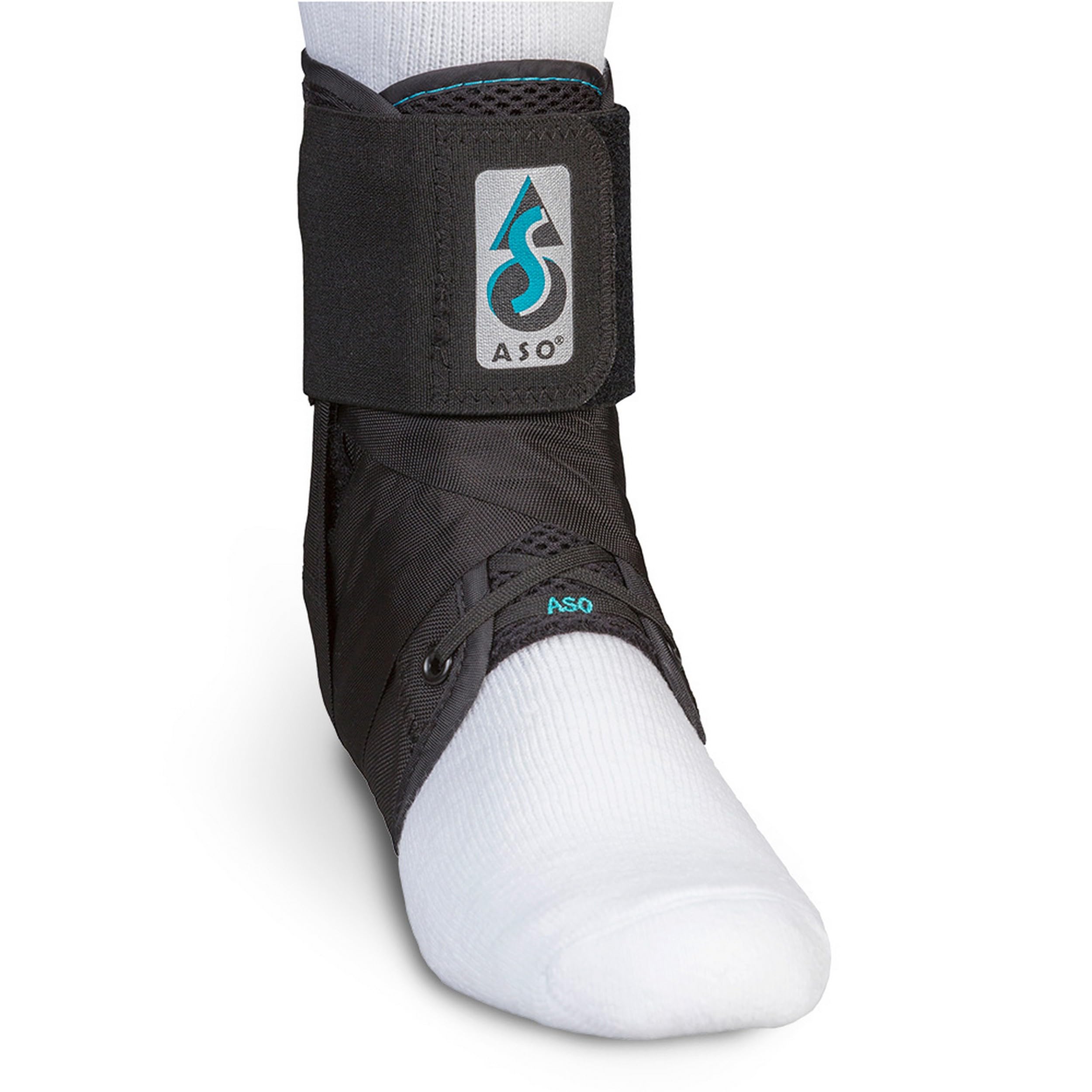
The Med Spec ASO (Active Ankle Stabilizer) is a staple in athletic training rooms and physical therapy clinics. Its design is straightforward but proven: a lace-up foundation that allows precise tension control, combined with bilateral figure-8 straps that mimic a professional ankle tape job. The CoolFlex padding and tongue system keep the brace breathable and irritation-free during intense play, and the durable nylon construction resists stretching over time.
Users recovering from Grade 2 sprains report that the ASO provides excellent support while still allowing a functional range of motion for basketball. The lace-up closure centers at a midpoint that even tension on both sides of the brace, while the figure-8 straps lock the heel and prevent the foot from rolling over. The brace is lightweight enough to fit inside gym shoes, though it works best with socks and may require a second person to tighten the straps properly the first time.
One thing to note: the sizing is critical. Most users find that following the ankle circumference guide yields the best fit — a size small corresponds to a shoe size 9, for example. Over time, the Velcro on the figure-8 straps remains durable, with reports of lasting through years of intermittent use. It is less supportive than athletic tape but much faster to apply, making it a solid daily option.
Why it’s great
- Widely recommended by athletic trainers and orthopedists
- Figure-8 straps effectively limit inversion and eversion
- Breathable CoolFlex padding for all-day comfort
Good to know
- May require assistance to put on for first-time users
- Does not fit inside slip-on shoes
4. Active Ankle AS1 Pro Lace Up
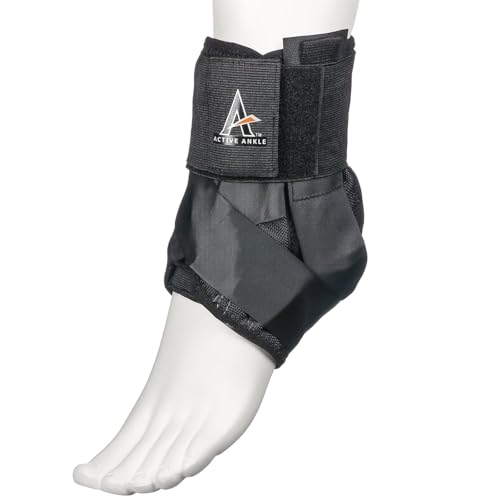
The Active Ankle AS1 Pro is specifically designed for court sports like volleyball, basketball, and rugby. Its pro-fit design removes excess material at the forefoot for a sleek silhouette that fits easily into high-top basketball shoes without creating uncomfortable pressure points. The speed lacing eyelets reduce friction points on the brace body, and the laces themselves are reinforced to stand up to the repeated tightening and loosening of a full season.
What sets the AS1 Pro apart is its non-stretch vertical straps, which imitate the basket weave and heel lock technique of traditional ankle taping. The figure-8 and circumferential straps further stabilize the brace, preventing the dreaded “slippage” that can make a brace useless mid-game. The non-slip silicone printing on the sole ensures the brace stays anchored inside the shoe, even during sweaty fourth quarters.
Many users who tried semi-rigid braces from other brands came back to the AS1 Pro because it offers a better balance of flexibility and protection. The one consistent criticism is that the criss-cross straps can loosen over time and may need periodic re-tightening. But for a brace that has lasted some players five years with only two purchases, it is a durable and well-rounded option for players who want a secure, low-profile fit.
Why it’s great
- Low-profile forefoot design fits easily into basketball shoes
- Non-stretch vertical straps mimic athletic tape heel lock
- Non-slip silicone sole prevents brace movement
Good to know
- Criss-cross straps may loosen with extended use
- Less rigid than shell-based braces for severe sprains
5. Ossur FormFit Ankle Brace

Ossur is a leader in orthopedic bracing, and the FormFit reflects that medical-grade approach. It uses a single-pull Speedlace system with a figure-8 strap design that cinches the heel securely, offering excellent immobilization for post-injury recovery. The removable semi-rigid stays allow you to dial in the level of support — wear them for maximum protection during the early healing phase and remove them later for lighter prophylactic use.
For basketball players dealing with high ankle sprains or Achilles tendonitis, the FormFit provides firm support that allows confident running on a sprained ankle. The brace is thicker than some competitors, but it still fits into most athletic shoes with a little extra room. Users report that the heel stitching may wear out after a year of daily use, but the overall build quality is top-notch for an over-the-counter brace.
Sizing can be tricky — the brace is based on ankle circumference rather than shoe size, and a shoe size 8.5 may fit into an extra-small. Be sure to measure carefully. The pain relief reported by users with bone spurs and tendonitis is significant, and the ease of putting it on (once you learn the strap routing) makes it a practical choice for everyday practice and games.
Why it’s great
- Medical-grade build with excellent stabilization for high ankle sprains
- Removable stays allow transition from recovery to prevention
- Speedlace closure is fast and secure once learned
Good to know
- Sizing is not based on shoe size — measure ankle circumference
- Heel stitching can wear out after extended daily use
6. McDavid Bio-Logix Ankle Brace
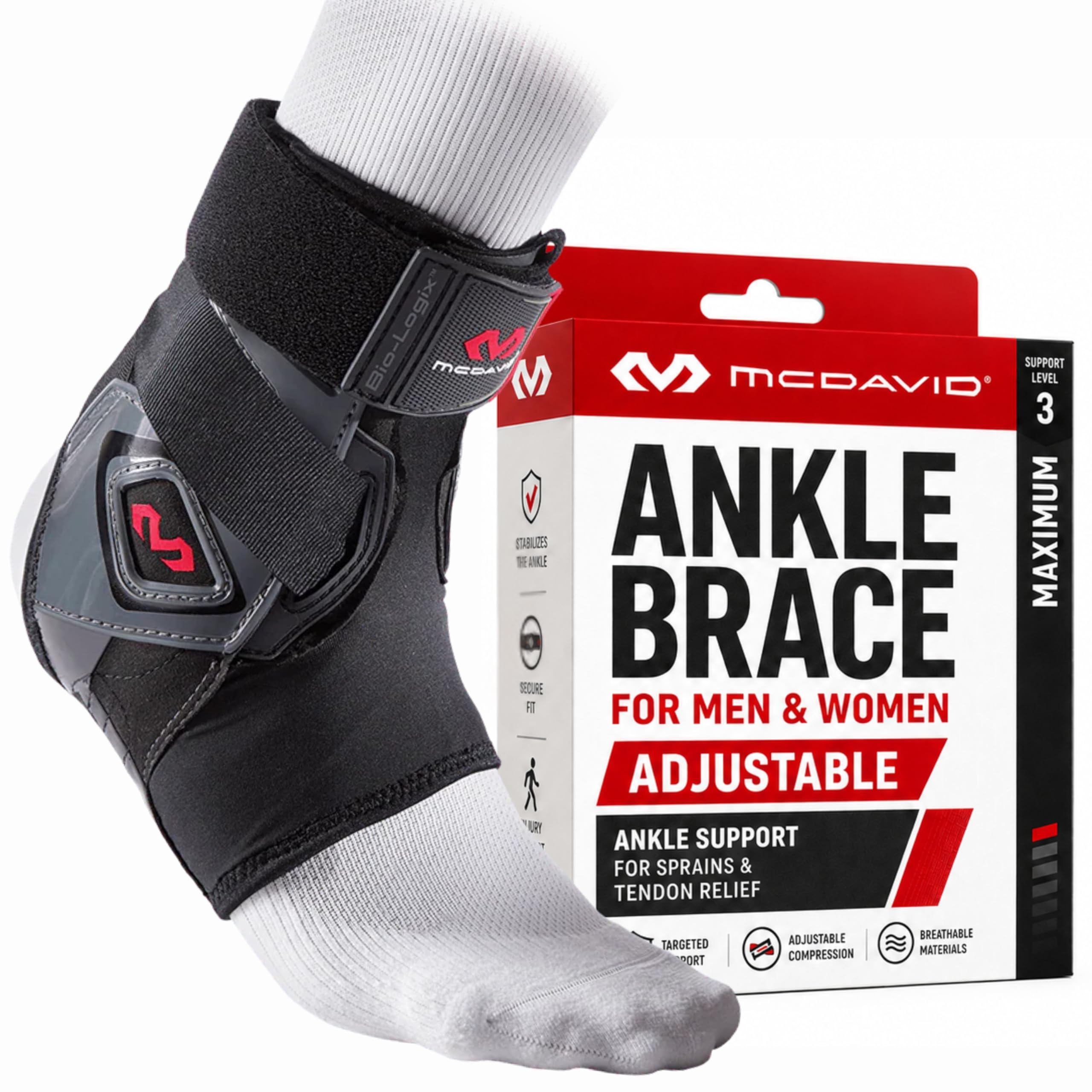
The McDavid Bio-Logix is a competition-grade brace that uses a flex-link hinge design to provide increased support without completely immobilizing the ankle. The memory foam padding and multiple anchor straps offer a truly adjustable fit, and the neoprene-nylon-spandex blend is comfortable for extended wear. This brace is anatomically designed for the right or left ankle, so be sure to order the correct side.
Real-world feedback from a construction worker recovering from a broken talus bone shows that the Bio-Logix holds up to daily ladder climbing and rough terrain, which speaks to its durability. For basketball players, the brace offers good stability for cutting and jumping, though some users note that the side splints are not as rigid as those found on the DonJoy POD. The brace is best for players who need moderate support with a high degree of comfort.
One point of caution: the design does not allow for much ankle adjustability at the subtalar joint, and the vertical tube can feel loose on thinner ankles even with the straps tightened. Some users also report that the brace does not provide enough resistance for a full Grade 3 sprain. Consider this a strong mid-level option for players who want a comfortable brace for daily wear without the bulk of a full shell.
Why it’s great
- Flex-link hinge preserves natural motion while adding support
- Memory foam padding provides all-day comfort
- Durable construction for daily, high-impact use
Good to know
- Side splints lack rigidity for severe sprain prevention
- Not ideal for very active basketball players needing max support
7. AGPTEK Ankle Brace with Removable Splints
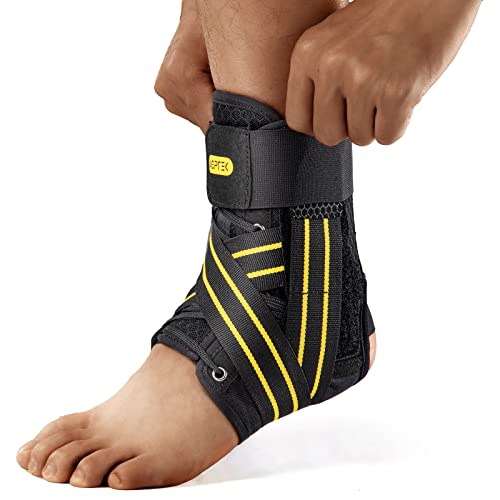
The AGPTEK Ankle Brace is a budget-friendly option that punches above its weight class. It features a cross shoelace design (abandoning traditional straps for a more secure, even tension distribution) and lightweight aluminum splints that can be removed once the ankle has healed. This makes it a versatile choice for both post-injury immobilization and sports protection after recovery. The polyester and nylon build is breathable and sweat-free, which is a welcome feature for sweaty basketball games.
Customer reviews consistently note that the AGPTEK brace performs better than braces provided by orthopedic doctors, with one user calling it “better than the one from the doctor” for a fractured ankle. The Velcro straps on the lace-up system are easy to adjust and save time compared to traditional lacing. For players recovering from a sprain, the aluminum splints offer 360-degree protection that keeps the ankle immobile during the early healing phase. Once the splints are removed, the brace becomes a lightweight stabilizer for casual play.
The primary downside is sizing — the brace runs small, so a large fits a shoe size 9 but may not accommodate larger ankles comfortably. It also needs stretchable shoes to fit properly. For players on a tight budget or those in the middle of recovery who want a brace that can adapt from full support to light protection, the AGPTEK is a solid choice that outperforms its price point.
Why it’s great
- Removable aluminum splints allow transition from immobilization to prevention
- Breathable polyester-nylon build resists sweat buildup
- Cross shoelace design provides even, adjustable tension
Good to know
- Sizing runs small — size up for a comfortable fit
- Requires stretchable basketball shoes for proper fit
FAQ
Can I wear an ankle brace inside high-top basketball shoes without discomfort?
How do I know if I need a lace-up brace or a shell-based brace?
How tight should an ankle brace be for basketball?
Do moisture-wicking socks help with ankle brace fit during games?
Final Thoughts: The Verdict
For most users, the ankle brace for basketball winner is the DonJoy Performance POD because its on-demand TPU shell provides the best balance of roll prevention and natural motion for competitive play. If you want a faster lace-up system with proven figure-8 support, grab the MUELLER The One. And for a budget-friendly brace that transitions from post-injury immobilization to sports use, nothing beats the AGPTEK Adjustable with its removable aluminum splints.