
Our readers keep the lights on and the weekend projects moving. As an Amazon Associate, I earn from qualifying purchases.
Peroneal tendonitis makes every step on uneven ground feel like a gamble—the tendon that stabilizes the outside of your ankle is inflamed, and without the right brace, a simple walk can re-aggravate the injury. The ideal brace doesn’t just squeeze; it locks the lateral side against inversion while leaving your natural gait mostly intact.
I’m Rikta — the co-founder and writer behind FitlyFast. My research process tracks real-user data on tendon-specific bracing, figuring out which lace-up tension profiles and removable stabilizer configurations best offload the peroneal tendons without cutting circulation.
For anyone dealing with that telltale outer-ankle ache, finding the right ankle brace for peroneal tendonitis means balancing rigid lateral stabilization against enough mobility to walk and train comfortably.
How To Choose The Best Ankle Brace For Peroneal Tendonitis
Peroneal tendonitis requires a brace that specifically resists inversion—rolling the ankle outward—without being so rigid that you compensate with a limp. The brace needs to hug the lateral malleolus area and the peroneal tendon sheath.
Look for Figure-8 or Cross-Strap Systems
Figure-8 strapping wraps over the top of the foot and around the heel, creating a dynamic cradle that controls inversion and eversion. This is the single most effective feature for peroneal tendonitis because it directly limits the tendon’s painful stretch during gait.
Consider Removable Splints for Stage-Based Recovery
Acute inflammation calls for rigid lateral side stabilizers. As the tendon calms down, removing those splints lets you transition to a more active brace that still offers compression and proprioceptive feedback. A brace with removable stays gives you two devices in one.
Prioritize Low Bulk and Breathability
Peroneal braces are worn for hours—sometimes during sports. A low-profile design that slots into your regular athletic shoe without rubbing the tendon attachment point is critical. Look for breathable honeycomb or mesh ventilation to prevent moisture build-up inside the brace.
Quick Comparison
On smaller screens, swipe sideways to see the full table.
| Model | Category | Best For | Key Spec | Amazon |
|---|---|---|---|---|
| Med Spec ASO Ankle Stabilizer | Lace-Up / Figure-8 | All-around peroneal support | Figure‑8 elastic straps, CoolFlex padding | Amazon |
| Fitomo Quick Lace Up Brace | Lace-Up / Removable Splints | Sports & rapid changeouts | Triple‑Lock system with dual side stabilizers | Amazon |
| Bauerfeind MalleoTrain | Compression Knit | Daily comfort & chronic tendinopathy | Viscoelastic massage pads, medical‑grade knit | Amazon |
| Vive Lace Up Ankle Brace | Lace-Up / Dual Straps | Budget-friendly stabilization | Figure‑eight finger‑loop straps, bilateral design | Amazon |
| AGPTEK Ankle Brace | Quick Lace-Up / Splints | Versatile rehab to sport | 360° triple‑support, honeycomb ventilation | Amazon |
| medi Achimed Knit Support | Compression Pull-On | Achilles & lower peroneal relief | Silicone heel wedges, elastic knit fabric | Amazon |
| Bauerfeind Sports Achilles Support | Compression Knit | High-impact sports & running | Achilles pad with massage nubs, 3D Airknit | Amazon |
In‑Depth Reviews
1. Med Spec ASO Ankle Stabilizer
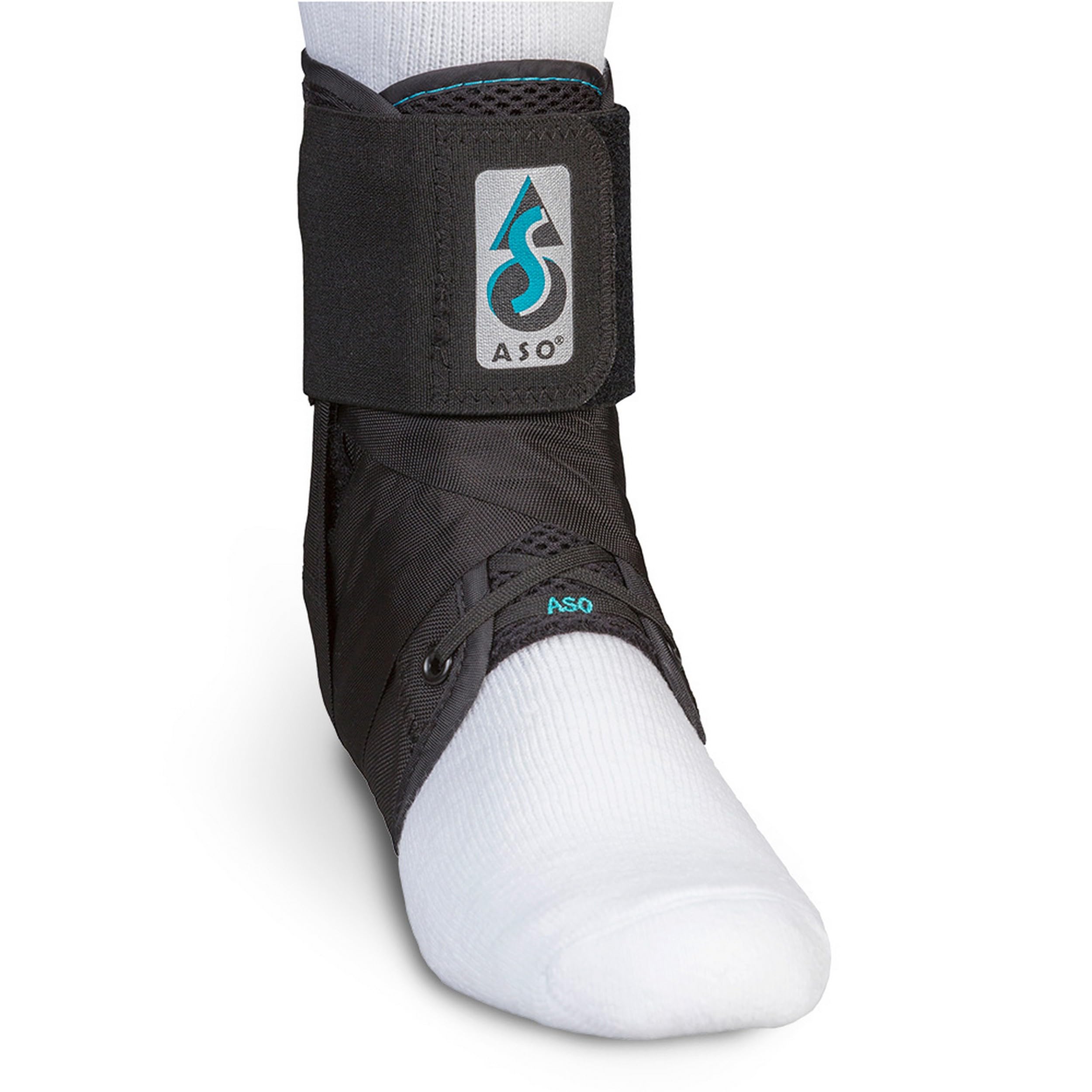
The Med Spec ASO is the gold standard that athletic trainers reach for. Its figure-8 elastic straps mimic the tension of athletic tape, directly stabilizing the lateral ankle against the inversion that torques the peroneal tendons. The lace-up base lets you dial in compression from the ankle shaft to the instep, and the CoolFlex padding prevents irritation during all-day wear.
Real users recovering from grade 2 sprains and persistent peroneal soreness report that the ASO offers noticeably more lateral control than compression sleeves. The bilateral design works on either foot, and the low-profile nylon build fits inside most basketball and running shoes without adding painful bulk around the tendon attachment.
Repeated reviews from PTs and podiatrists confirm this is one of the few braces that limits both inversion and eviction effectively. The sizing guide is accurate—measure your ankle circumference before ordering. The lace-up process takes a bit longer than hook-and-loop options, but the stability payoff is worth the extra ten seconds.
Why it’s great
- Figure-8 straps provide targeted peroneal tendon offloading
- Breathable CoolFlex lining reduces heat buildup during sports
- Trusted by athletic trainers and orthopedic docs
Good to know
- Lace-up system takes more effort than quick-velcro braces
- May need help putting it on if flexibility is limited
2. Fitomo Quick Lace Up Brace
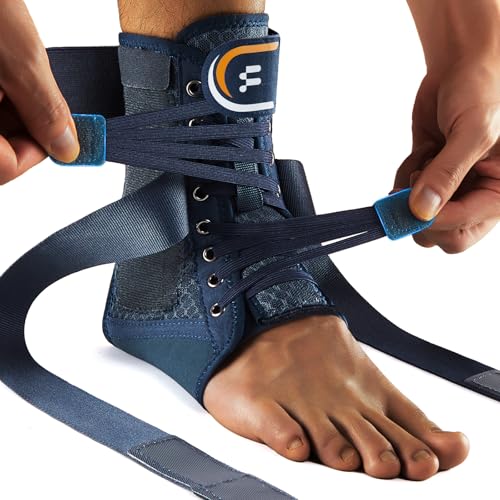
The Fitomo brace uses a triple-lock system—top strap, cross straps, and dual removable side stabilizers—that gives you three points of contact against lateral roll. That cross-strap configuration is particularly effective for peroneal tendonitis because it cinches the midfoot and locks the heel down without compressing the tendon directly.
Users transitioning out of a CAM boot for post-ORIF recovery found this brace easier to put on than bulkier alternatives. The removable stabilizers let you start with rigid protection and graduate to a more flexible fit as the peroneal sheath calms down. The low-profile polyester-nylon blend slips into most athletic shoes without the need for a full-size-up.
Several reviewers noted that the hook-and-loop system stays secure during basketball and running without constant readjustment—a common complaint with cheaper velcro-only designs. The medium size runs slightly large for skinny ankles, so measure carefully. FSA/HSA eligibility makes it easier on the wallet for medical spending accounts.
Why it’s great
- Triple-lock straps prevent brace shifting during lateral movement
- Removable stabilizers enable stage-based recovery
- Breathable fabric reduces sweat during prolonged wear
Good to know
- Side stabilizers can feel stiff around the malleoli initially
- Sizing runs slightly large; measure ankle circumference
3. Bauerfeind MalleoTrain Ankle Support

The MalleoTrain is a different philosophy—no laces, no splints, just medical-grade compression knit with anatomically contoured viscoelastic pads that hug the inner and outer ankle. For chronic peroneal tendinopathy, the pad massages the tendon area during movement, improving circulation and reducing the swelling that drives the pain cycle.
Users recovering from old sprains and mild ligament insufficiency report that the compression feels snug without the pressure points that lace-up braces sometimes create at the tendon sheath. The comfort zone over the instep prevents constriction, and the low-profile knit fits into shoes easily—a major plus for daily wear.
The German-made knit is machine washable and maintains its shape after dozens of cycles. The sizing is precise; a size 3 fits a US women’s 8 snugly. Some users find the initial pull-on effort high, but a silk sleeve helps. For chronic peroneal pain that doesn’t need rigid stabilization, this is the quietest, most comfortable option.
Why it’s great
- Viscoelastic pads reduce peroneal sheath swelling
- Medical-grade knit provides consistent graduated compression
- Fits discreetly under most shoes without adding bulk
Good to know
- No rigid stabilization for acute severe injury
- High initial cost; premium investment for long-term support
4. Vive Lace Up Ankle Brace

The Vive brace gives you that classic lace-up with figure-8 stabilizing straps at a price point that makes it easy to buy two. The finger loops on the dual straps let you pull for precise tension, which matters for peroneal tendonitis because you need enough lateral support without strangling the tendon.
Real-world feedback from users with OA-related instability and peroneal tendon issues highlights the solid feel when walking on uneven surfaces. The bilateral design works on either foot, and the low-profile open-heel construction lets it nest inside Vans and sneakers. The small size is genuinely small—measure your ankle before ordering.
Some users reported that the brace is bulkier than expected, especially with running shoes. But for home use, daily walking, and light activity, it provides reliable stabilization. The elastic cuff holds laces and straps in place, reducing the need for mid-day re-tightening. Durability after months of use is solid per long-term reviews.
Why it’s great
- Finger-loop figure-8 straps for fine-tuned lateral compression
- Low open-heel design fits in sneakers
- Good for peroneal tendon stabilization during daily walking
Good to know
- Runs bulky; may not fit in narrower athletic shoes
- Sizing can be tricky; small is very small
5. AGPTEK Ankle Brace
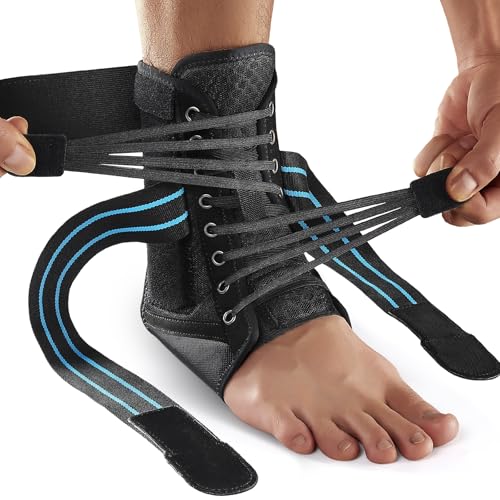
AGPTEK’s 360° support system wraps the ankle with dual side stabilizers, X-cross compression straps, and a top wrap that locks everything down. The honeycomb ventilation zones along the side panels keep the peroneal area cool, which is a real benefit during extended wear in warm weather or high-intensity sports.
Users transitioning from post-surgery recovery to light sports found the quick-lace system saves time compared to traditional laces, and the elastic cord adapts to swelling fluctuations—a common issue with peroneal tendonitis flare-ups. The removable splints give you the option to drop rigidity once the acute phase passes.
Some reviewers noted that the medium runs small for a women’s 10W, so size up if you have a wider foot or plan to wear thick socks. The Oxford nylon fabric resists abrasion well after two months of daily use. For the price, this is one of the most feature-packed braces, combining quick adjustability with full lateral stabilization.
Why it’s great
- Honeycomb ventilation prevents heat and moisture buildup
- Quick-lace system adapts to swelling changes
- Removable splints offer rehab-to-sport flexibility
Good to know
- Runs small; size up for wider feet or thicker socks
- Lateral splints may feel stiff during first few wears
6. medi Achimed Knit Ankle Support

The medi Achimed targets the Achilles and the posterior aspect of the ankle, but its compressive knit and silicone inlays also support the lower peroneal region. The integrated silicone heel wedges lift the tendon to reduce tension, which can indirectly relieve the peroneal tendons by improving overall ankle alignment during gait.
Users with acute Achilles inflammation and achillodynia reported significant pain relief within two days, allowing them to resume short walks. The Clima Comfort fabric wicks moisture, and the comfort zone over the instep eliminates the constriction that can aggravate peroneal issues near the lateral malleolus.
The pull-on design means no straps to adjust, but getting it on initially is a fight—the tight compression requires some patience. Size III fits a size 12 shoe. If your peroneal tendonitis is paired with Achilles tightness, this brace addresses both, but it offers less lateral inversion resistance than a lace-up stabilizer.
Why it’s great
- Silicone heel wedges reduce tension on lower tendons
- Highly elastic fabric provides graduated compression
- Comfort zone over instep prevents pressure points
Good to know
- Difficult to pull on; requires significant effort initially
- Less effective for inversion control than lace-up braces
7. Bauerfeind Sports Achilles Support
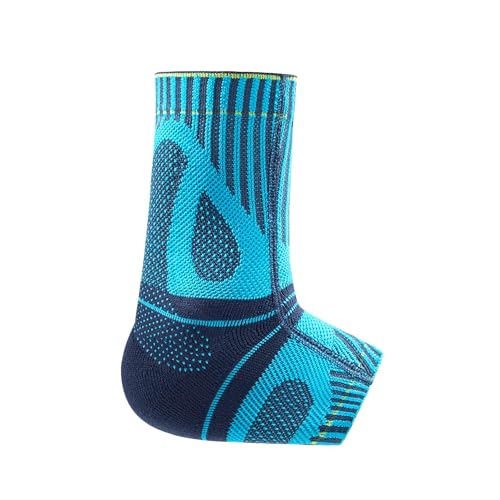
Bauerfeind’s Sports Achilles Support is engineered for high-impact movement—the Achilles pad encloses the tendon and uses small nubs to massage the area during motion, improving local metabolism and reducing peroneal tendon inflammation indirectly by stabilizing the posterior chain.
Reviewers in basketball and volleyball found this brace superior to KT tape for managing tendonitis flare-ups during games. The 3D Airknit is exceptionally lightweight and breathable, and the offset seam prevents friction under the foot. The proprioceptive feedback from the knit zones helps the peroneal muscles react faster to uneven terrain.
Some users noted that the support is not enough for severe peroneal tendonitis—it’s a compression garment, not a rigid stabilizer. If you need active, sport-specific protection during running and jumping, this brace excels. But for daily walking with a painful tendon, the MalleoTrain or a lace-up option will serve better. Machine washable and durable.
Why it’s great
- Massage nubs improve circulation around the tendon sheath
- Lightweight 3D Airknit is ideal for high-intensity sports
- Offset seam prevents foot friction during dynamic movement
Good to know
- Provides compression only; no rigid inversion control
- May not sufficiently support severe or acute peroneal tears
FAQ
Can an ankle brace fully fix peroneal tendonitis?
Should I wear a brace with rigid stabilizers or a soft compression sleeve for peroneal issues?
How tight should a peroneal tendonitis brace be?
Final Thoughts: The Verdict
For most users, the ankle brace for peroneal tendonitis winner is the Med Spec ASO Ankle Stabilizer because its figure-8 straps and lace-up base deliver the lateral control that peroneal tendons need without sacrificing mobility. If you value stage-based recovery with removable splints, grab the Fitomo Quick Lace Up Brace. And for chronic, mild peroneal tendinopathy that requires discreet all-day compression, nothing beats the Bauerfeind MalleoTrain.