
Whether you are recovering from a grade 2 sprain or trying to prevent your chronically wobbly ankle from rolling on the pickleball court, the difference between a functional brace and a loose sleeve is the line between playing on and sitting out. The wrong guard limits motion without actually stabilizing the lateral ligaments, while the right one disappears into your shoe and lets you plant, cut, and pivot with confidence.
I’m Rikta — the co-founder and writer behind FitlyFast. I’ve spent years analyzing orthopedic supports, comparing lace-up stabilizers against sleeve-style compression guards, and studying how material choices like ballistic nylon versus knitted elastic affect long-term durability and daily comfort. My focus is on the real specs that separate effective ankle protection from gear that shifts or loosens mid-game.
After evaluating dozens of models on stabilizing hardware, adjustability depth, and how well they fit inside standard athletic shoes, I’ve narrowed the field to the top-performing ankle guards that deliver real lateral restraint without sacrificing mobility or turning your sneaker into a tight squeeze.
How To Choose The Best Ankle Guards
Choosing an ankle guard comes down to your injury history and the activity level you plan to return to. A chronic instability sufferer needs rigid side support, while a mild sprain patient can get away with a compression sleeve. The key is matching the brace’s stabilizing mechanism — lace-up, figure-8 strap, or removable splint — to your specific vulnerability.
Locking Down Lateral Motion: Splints vs. Straps
Removable aluminum or plastic splints on both sides of the ankle provide the highest level of protection against inversion sprains by physically blocking the joint from rolling past its safe range. Figure-8 straps offer a more flexible alternative that still resists twisting while allowing natural dorsiflexion, making them better for cutting sports where heel lift is necessary for explosive starts.
Material and Fit Inside Your Shoe
A guard that does not fit inside your sneaker is useless. Bulky braces with thick padding create pressure points and will force you to size up or go shoeless. Look for low-profile designs using high-tensile nylon or lightweight aluminum stays that maintain structure without the bulk. A snug fit is critical — any slipping under the heel or around the Achilles negates the guard’s stabilizing purpose.
Quick Comparison
On smaller screens, swipe sideways to see the full table.
| Model | Category | Best For | Key Spec | Amazon |
|---|---|---|---|---|
| Med Spec ASO Ankle Stabilizer | Lace-Up | Ligament instability & peroneal tendonitis | Figure-8 straps + CoolFlex padding | Amazon |
| DonJoy Stabilizing Speed Pro | Lace-Up | High-impact sports & Achilles tendonitis | 800D Ballistic nylon + speed laces | Amazon |
| Fitomo Quick Lace Up Brace | Hybrid | Post-injury transition from boot | Triple-Lock system + removable splints | Amazon |
| AGPTEK Adjustable Lace-Up | Lace-Up | Fracture recovery & daily stability | Cross-lace design + 2 stabilizing straps | Amazon |
| Pure Compression Sleeve Pair | Sleeve | Mild sprains & swelling reduction | Adjustable X-strap + anti-odor fabric | Amazon |
| McDavid Elastic Ankle Brace | Sleeve | Neoprene-sensitive users | Non-neoprene knitted elastic construction | Amazon |
| ACE Ankle Brace with Side Stabilizers | Lace-Up | Cost-effective moderate support | Reinforced side stabilizers | Amazon |
In‑Depth Reviews
1. Med Spec ASO Ankle Stabilizer
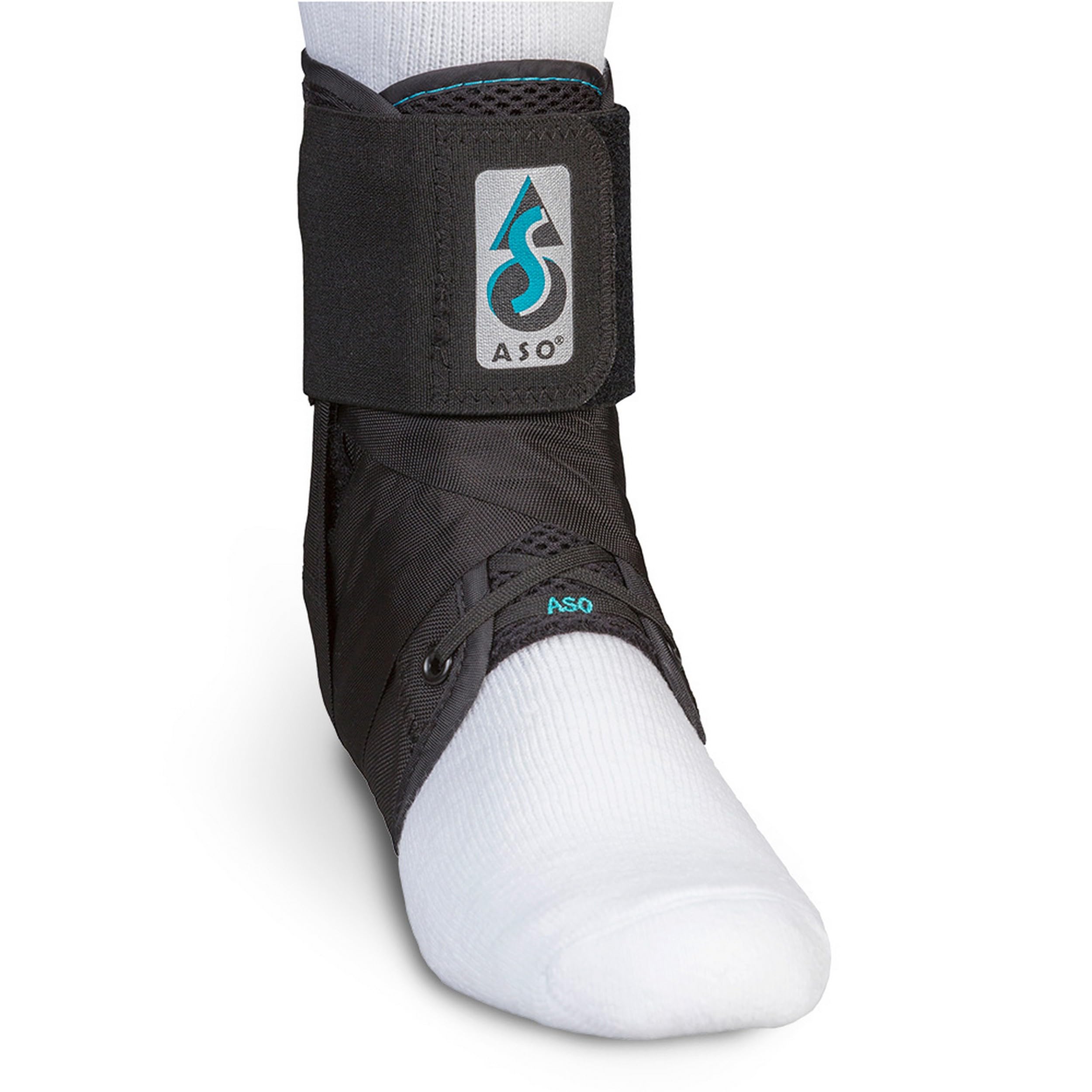
The ASO is the orthopedic gold standard because its dual figure-8 straps attack the most common failure point of ankle guards: the inability to resist inversion without also restricting heel rise. By wrapping independently around the heel and across the forefoot, these straps let you maintain a natural walking gait while locking out the rolling motion that causes reinjury. The CoolFlex padding on the tongue prevents the lace pressure from digging into the top of the foot during prolonged wear, and the bilateral design means you only need one unit regardless of which side you are protecting.
Real users consistently report that the ASO outlasts cheaper alternatives, with the Velcro holding firm through hundreds of cycles — a critical metric given that softening closures are the number one reason athletic braces get retired early. The lace-up base provides a customizable fit around the midfoot, which is essential if you have swelling that changes throughout the day.
Downsides are minor: the brace has a slightly thicker profile than minimalist sleeves, so it will not fit into narrow dress shoes or minimalist trainers. And while the nylon shell is durable, washing it frequently is necessary to prevent odor buildup from heavy sweat sessions. For anyone returning from a ligament sprain or dealing with chronic peroneal tendonitis, this is the most reliable starting point.
Why it’s great
- Independent figure-8 straps limit inversion while allowing dorsiflexion
- Durable nylon build resists stretching and holds shape after repeated washing
- PT-recommended and widely trusted by athletic trainers for high-impact sports
Good to know
- Bulky profile may not fit narrow or slip-on shoes
- Lace adjustment requires a complete retie when swelling changes
2. DonJoy Stabilizing Speed Pro Ankle Support

DonJoy addresses the biggest annoyance of lace-up braces — the time it takes to get them on and off — with a speed-lace system that uses two Velcro tabs to simultaneously tension four lace segments. Combined with a full circumferential elastic strap that wraps the calf, this design provides added compression around the tibia and fibula, which enhances proprioceptive feedback for athletes who need to feel their joint position during rapid cutting movements. The removable articulated medial and lateral stays can be taken out once the injury heals, allowing the brace to transition from a rigid stabilizer to a flexible support.
The 800D ballistic nylon body is noticeably tougher than the standard fabrics used on most guards, making this model ideal for users who train daily and put their gear through abrasive conditions like turf, gym mats, or trail gravel. Anecdotally, some heavy users report that the speed-lace system can wear down after several months of forty-hour weeks, but the convenience during the brace’s prime years is unmatched.
On the comfort side, the heel material can bunch slightly in some shoe models, and the brace runs warm due to its robust layering. Users with sensitive Achilles tendons may need to pair the Speed Pro with a slightly looser shoe to avoid pressure spots.
Why it’s great
- Speed-lace Velcro system cuts on and off time by over half versus traditional laces
- Ballistic nylon frame is exceptionally resistant to abrasion and stretching
- Articulated stays are removable for transitioning from recovery to prevention
Good to know
- Speed laces may lose tension after extended daily use
- Heel material can bunch depending on shoe volume
3. Fitomo Quick Lace Up Ankle Brace
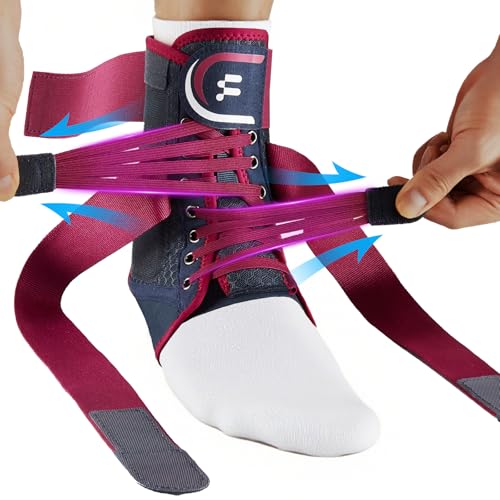
The Fitomo brace uses what it calls a Triple-Lock system: a top compression strap, dual removable side stabilizers, and cross straps that create a figure-8-like effect. This layered approach gives you the ability to fine-tune support based on the phase of recovery. During the early post-boot stage, you keep the stabilizers in and strap the brace tightly; later, when you are building strength, you remove the splints and loosen the straps for a more flexible feel that still offers some twisting resistance.
Users coming from a CAM boot or post-surgical rigid cast have noted that this brace is easier to put on than many lace-only alternatives, specifically because it features fewer Velcro tabs — a meaningful improvement for people with reduced hand dexterity during recovery. The figure-8 strap design also stays put during dynamic movement without needing constant readjustment, a common complaint with cheaper strap-only braces.
The profile is reasonably low and fits inside most sneakers without requiring a half-size up, though individuals with very narrow ankles may find that the medium setting leaves a bit of slack. The color options (including rose) add a welcome break from the standard all-black brace.
Why it’s great
- Triple-Lock layers can be adjusted from rigid recovery to daily prevention
- Fewer Velcro tabs simplify application for post-op users
- Figure-8 strap angles stay secure without mid-activity retightening
Good to know
- Strap coverage may be slightly too loose for very narrow ankles
- Single brace per purchase; no option for a pair at this price point
4. AGPTEK Adjustable Lace-Up Ankle Support
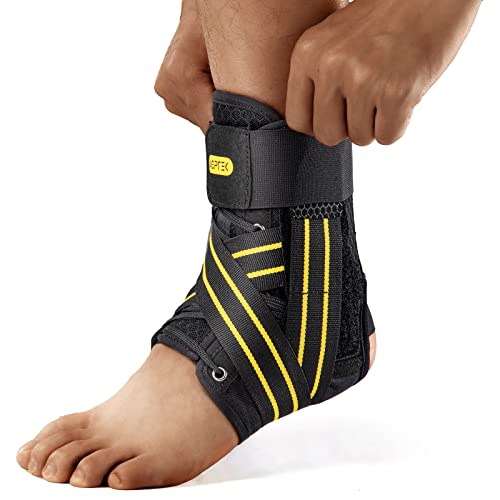
AGPTEK takes a traditional lace-up boot design and upgrades it with lightweight aluminum splints that fix to both sides of the ankle. The metal stays provide 360-degree containment without the heft of plastic-based guards, making this a strong choice for users who need serious immobilization during fracture healing but do not want to haul around extra weight. The cross-lace system uses a shoelace channel running from the base of the foot up to the calf, distributing tension evenly and preventing localized pressure spots that cause discomfort during long wear.
Multiple user reports confirm that this brace outperforms the rigid plastic guards issued by orthopedic surgeons, particularly because the aluminum splints contour better to the ankle’s natural shape and do not dig into the bone. The two stabilizing straps that wrap over the lace section add another layer of lateral lockout without compressing the Achilles. Sizing runs slightly small, so users with larger calf diameters should size up.
The main limitation is the bulky visual profile — this is not a brace you can hide under tapered pants, and it may require loosening shoe laces to accommodate the increased volume. But for anyone prioritizing stability over stealth, the AGPTEK delivers premium-level protection at a mid-range price.
Why it’s great
- Aluminum splints provide rigid lateral support without excessive weight
- Cross-lace tension system avoids hot spots during extensive wear
- Rated better than doctor-issued braces by multiple post-fracture users
Good to know
- Runs small; order one size up for a comfortable lockdown
- Bulky construction stands out under slim-fit pants or leggings
5. Pure Compression Ankle Brace Support Pair
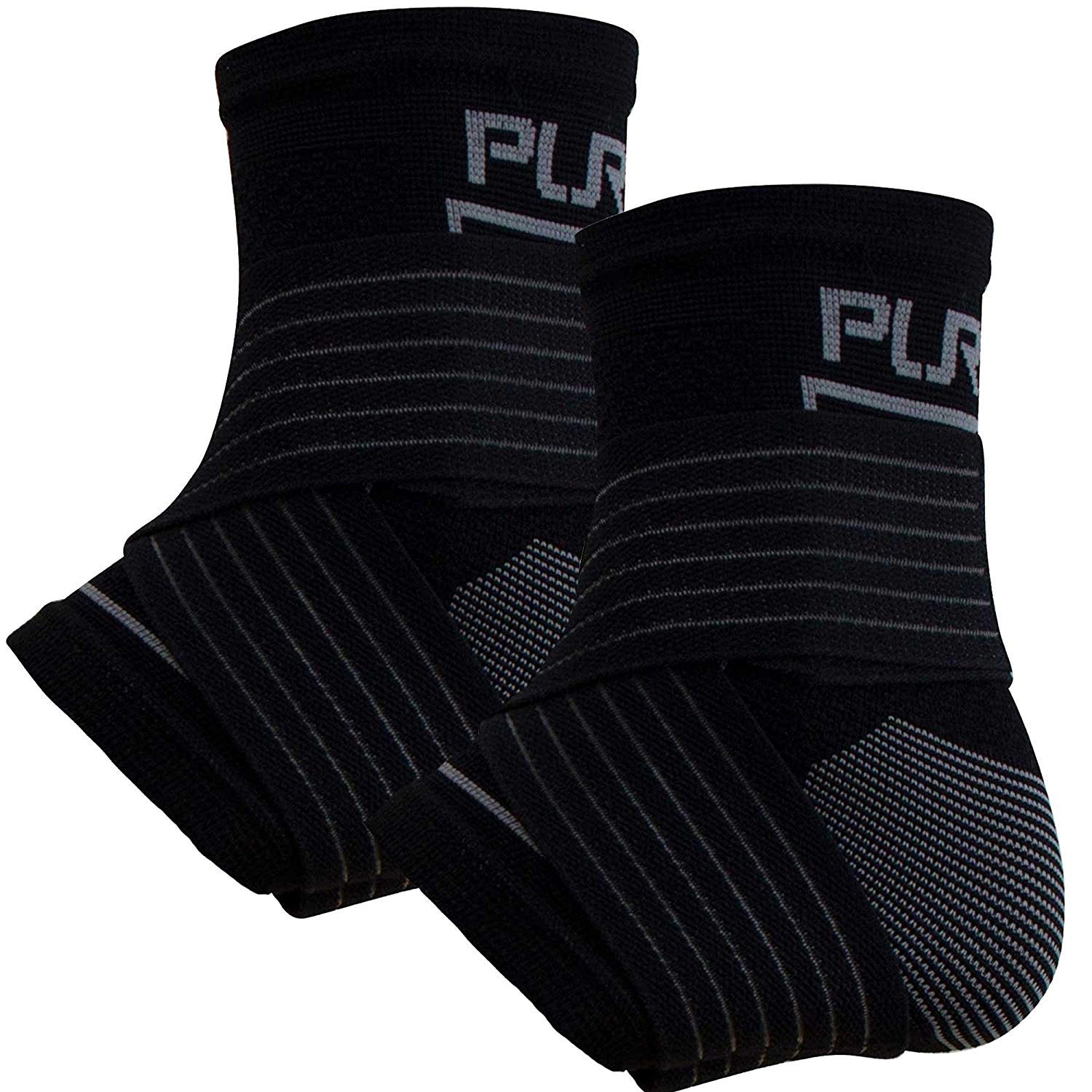
If your primary need is compression and mild swelling management rather than rigid stabilization, the Pure Compression sleeve pair is the most practical option. Each sleeve features an integrated adjustable X-strap that cinches around the ankle for targeted compression without being part of a bulky boot structure. The fabric blend of nylon and spandex is moisture-wicking and treated for anti-odor properties, which matters when you are wearing these throughout a full workday under socks.
Being sold as a pair is a significant convenience — you get two sleeves for the price of one, making it easy to rotate between washes or support both ankles simultaneously if you have bilateral tendinitis. The compression level is strong enough to stimulate circulation and reduce fluid retention without cutting into the skin, and the strap fastener uses two hook-and-loop sides for a secure hold that does not loosen during walking or light jogging.
These are not intended for severe sprains or lateral instability. Users coming from a lace-up brace will find the X-strap provides far less resistance against rolling, so this pair works best during the later stages of recovery when you need proprioceptive feedback and light support, not a mechanical block.
Why it’s great
- Two sleeves per purchase for rotating or supporting both ankles
- Moisture-wicking and anti-odor fabric is ideal for all-day wear
- Adjustable X-strap allows tailored compression without bulk
Good to know
- Not suitable for moderate to severe lateral instability
- Sleeve design offers less precise fit than lace-up systems
6. McDavid Elastic Ankle Brace

McDavid’s knitted elastic brace is specifically designed for users who react to neoprene — a surprisingly common sensitivity that rules out many compression sleeves on the market. The open knitted construction breathes significantly better than solid neoprene wraps, and the thin seam edges prevent the skin irritation that many users experience along the top of the foot or behind the Achilles. This is a Level 1 primary protection device, meaning it provides light compression and basic joint awareness rather than mechanical blocking.
Longevity is a standout feature here: multiple users report that the material holds its elasticity and shape even after years of regular washing, without the fraying or sagging that affects cheaper elastic braces. The low ankle profile fits easily under socks and into any shoe silhouette, including narrower court shoes and casual sneakers. For sports like basketball and pickleball, it serves as an effective preventer — users over forty in particular find it stops minor ankle twists that would otherwise escalate.
The trade-off is that this brace does not offer enough resistance for anyone with a true sprain or ligament laxity. It is a support garment, not a stabilizer; buyers expecting rigid lateral control will need to look at the lace-up options in this guide.
Why it’s great
- Knitted elastic design is neoprene-free for allergy-sensitive users
- Retains shape and tension after years of machine washing
- Extremely low profile that disappears inside any shoe
Good to know
- Level 1 support only; not intended for injury recovery
- Sizing can run loose on slender ankles — measure carefully
7. ACE Ankle Brace with Side Stabilizers
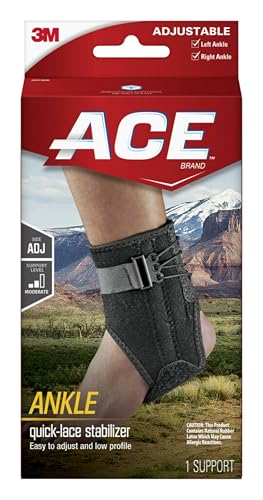
ACE offers a straightforward lace-up brace with reinforced side stabilizers that aim to limit lateral motion without needing a complex multi-strap setup. The design relies on adjustable compression via a simple lacing system and a single wrap-around strap, making it one of the easiest braces to put on for users who are not yet experienced with orthopedic gear. The breathable material allows airflow around the joint, which helps keep the skin dry during extended wear.
Customer experiences highlight that this brace performs well for “lighter moderate support” — users with minor chronic instability or those returning from a mild sprain. It holds the ankle snugly without being restrictive for walking or light jogging. The Velcro closure holds securely, and the stabilizer pockets are firm enough to provide noticeable resistance against casual rolling.
The limitations are clear at higher activity levels. For competitive sports involving sudden lateral cuts, the ACE does not offer the same rigid block as the ASO or the AGPTEK. It is best viewed as an entry-level guard for mild support or as a backup brace to keep in a sports bag. The value proposition is strong for its price tier.
Why it’s great
- Simple lace-up design with side stabilizers for moderate support
- Breathable construction keeps the joint cooler during long wear
- Good value for users with mild instability or as a backup brace
Good to know
- Not sufficient for high-impact sports or severe ligament damage
- Single strap may not be enough for users with larger calf sizes
FAQ
Can I wear an ankle guard under my shoes without buying a half-size up?
How do I know if I need a sleeve or a lace-up stabilizer?
How often should I replace an ankle guard?
Final Thoughts: The Verdict
For most users, the ankle guard winner is the Med Spec ASO Ankle Stabilizer because its figure-8 strap system provides the best balance of lateral resistance and natural motion for returning athletes. If you want a speed-lace convenience and ballistic nylon durability for high-frequency training, grab the DonJoy Stabilizing Speed Pro. And for budget-conscious buyers seeking rigid support without the premium price, the AGPTEK Adjustable Lace-Up Support delivers aluminum splint stability that rivals far more expensive options.