
Our readers keep the lights on and the weekend projects moving. As an Amazon Associate, I earn from qualifying purchases.
A damaged ankle ligament is a fragile thing—one wrong step on uneven ground and you’re back to square one. The right brace doesn’t just compress; it actively mimics the work of those torn fibers, preventing the inversion or eversion roll that re-injures you.
I’m Rikta — the co-founder and writer behind FitlyFast. My research focuses on the mechanical engineering of medical recovery gear, specifically how lace-up tension, figure-8 strap vectors, and stay rigidity translate to real-world stability for ligament damage.
After analyzing seven top contenders on build materials, strap geometry, and clinical support levels, this guide will give you the clear, no-fluff breakdown to find the best ankle support for ligament damage.
How To Choose The Best Ankle Support For Ligament Damage
Ligament damage—whether a Grade 1 sprain or a chronic instability issue—demands a brace that controls the ankle’s talar tilt and anterior drawer. You are not looking for a simple sleeve; you need a support system with mechanical countermeasures against rolling.
Strap Architecture: Figure-8 vs. Simple Wrap
The figure-8 strap that crosses over the anterior talofibular ligament is the most critical feature. A single wrap strap cannot deliver the same targeted anti-inversion force. For ligament damage, a brace without true figure-8 strapping is functionally incomplete.
Lacing System Rigidity
Full lace-up braces allow micro-adjustments along the entire foot and ankle, locking the heel into the brace’s heel cup. Speed-lace systems offer convenience but can compress unevenly. For severe instability, a traditional lace-up with separate figure-8 straps provides the most precise fit.
Stay Material and Placement
Removable semi-rigid stays (plastic or metal) on the medial and lateral sides add structural resistance against rolling. Softer auto-adaptive pads trade some rigidity for comfort. If you need maximum ligament protection, look for articulated stays that enhance proprioception without fully immobilizing you.
Quick Comparison
On smaller screens, swipe sideways to see the full table.
| Model | Category | Best For | Key Spec | Amazon |
|---|---|---|---|---|
| DonJoy Stabilizing Speed Pro | Lace-Up/Hybrid | High-impact sports, Achilles support | 800D Nylon / Removable Articulated Stays | Amazon |
| Med Spec ASO Ankle Stabilizer | Lace-Up + Figure-8 | Peroneal tendonitis, chronic instability | CoolFlex Padding / Bilateral Fit | Amazon |
| MUELLER The One Ankle Brace | Speed Lace + Figure-8 | Daily recovery, arthritis, post-fracture | Grip Coating / Flat Speed Laces | Amazon |
| Ossur FormFit Ankle Brace | Speedlace + Removable Stays | Achilles tendonitis, high ankle sprains | Single Pull Speedlace / Removable Semi-Rigid Stays | Amazon |
| Ultra 360 Lace Up Ankle Brace | Lace-Up + Figure-8 | Volleyball, basketball, running | Low-Profile / Mimics Athletic Taping | Amazon |
| ZOELION Auto-Adaptive Ankle Brace | Hook & Loop Lace | Slim fit, daily walking, nerve damage | Auto-Adaptive Side Pads / 600+ Vents | Amazon |
| Neo-G Figure 8 Ankle Brace | Neoprene Wrap | Mild support, arthritis, warmth therapy | Class 1 Medical Device / Neoprene Construction | Amazon |
In‑Depth Reviews
1. DonJoy Stabilizing Speed Pro Ankle Support Brace

The DonJoy Speed Pro is built for the athlete who demands instant, reliable lockdown. Its speed-lace system tightens evenly across the foot in seconds, and the two hook-and-loop gathers stow the laces cleanly. The full circumferential elastic strap adds tibia-fibula compression, a detail often missing on lesser braces, which helps stabilize the syndesmosis area—critical after high-ankle sprains.
The removable articulated stays on the medial and lateral sides are a standout feature. They enhance proprioception, meaning your brain gets better feedback about where your ankle is in space, reducing the chance of a roll before it happens. Multiple reviewers note this brace was recommended by surgeons and physical therapists for post-fracture and Achilles tendonitis recovery.
It is slightly bulkier than a slim fit brace, but it fits well inside standard tennis shoes. The 800D ballistic nylon used in the construction resists fraying and stretching far longer than softer fabrics. A minor trade-off is that the heel material can bunch with certain shoe profiles, and the D-ring anchors may press into the foot if overtightened.
Why it’s great
- Speed-lace system with Velcro gathers for quick on/off.
- Removable articulated stays improve stability feedback.
- Full circumferential strap compresses the tibia/fibula.
Good to know
- Heel fabric can bunch inside certain shoes.
- D-rings may cause pressure points with heavy use.
2. Med Spec ASO Ankle Stabilizer
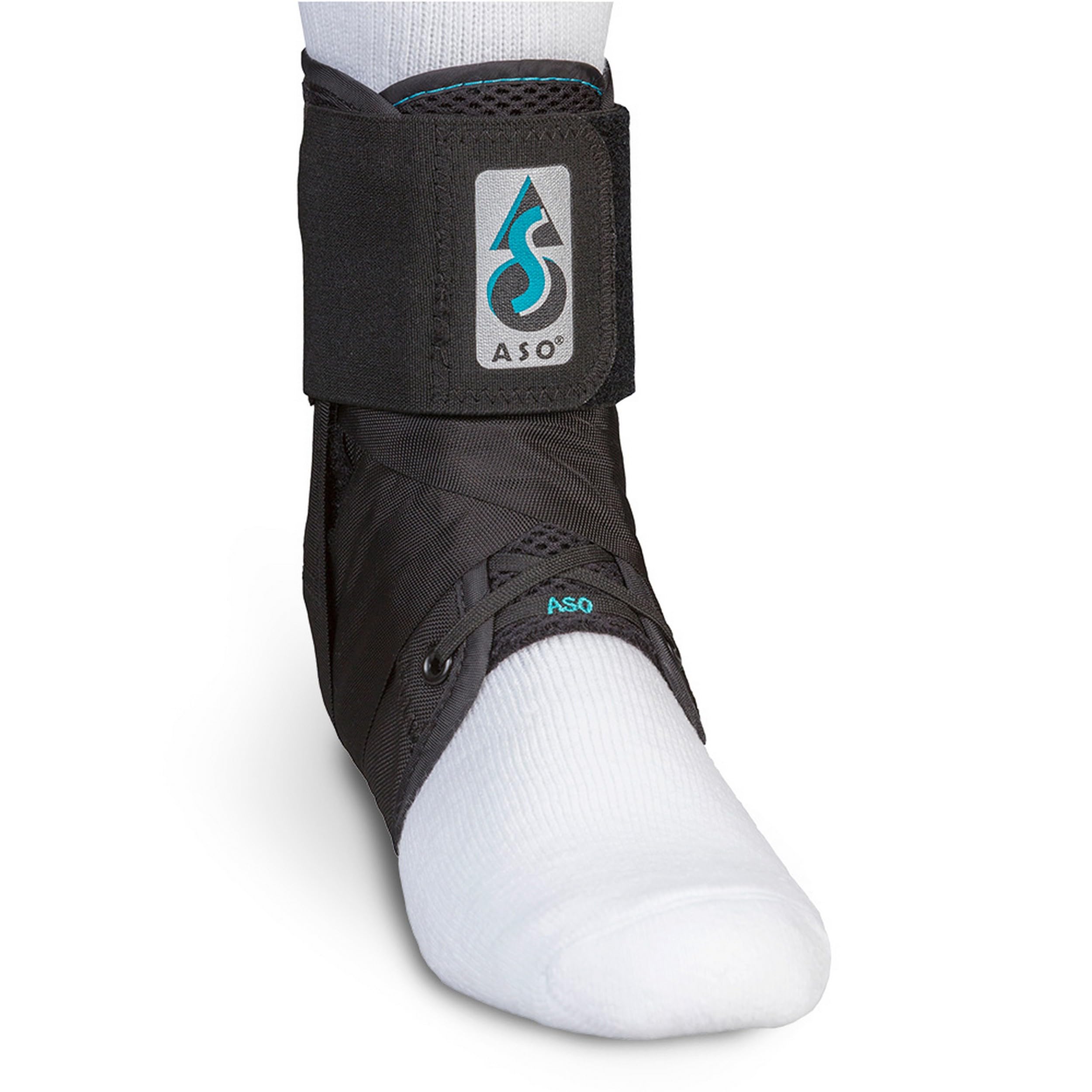
The Med Spec ASO is arguably the most trusted ankle stabilizer among athletic trainers and physical therapists. Its design philosophy is simple: a full lace-up base that locks the foot into the heel cup, combined with two figure-8 straps that independently target the subtalar joint. This dual-strap system is what makes it so effective for ligament damage—it directly counters the inversion and eversion that tear ligaments.
The CoolFlex padding on the tongue reduces irritation across the top of the foot, and the bilateral fit means one brace works for either ankle. Users consistently report that it provides the highest level of support among OTC braces, rivaling custom-fitted options. It is particularly effective for peroneal tendonitis and chronic instability, with many reviewers calling it a recovery essential after multiple failed braces.
It does require more time to put on compared to a speed-lace brace—you have to lace it fully and then apply the figure-8 straps. It also will not fit into slip-on dress shoes; it needs the volume of a gym shoe or sneaker. The laces are long, but that length is necessary for even tension distribution across the foot.
Why it’s great
- PT-recommended dual figure-8 strap system for ligament control.
- Bilateral fit works on left or right ankle.
- Breathable CoolFlex padding reduces top-of-foot irritation.
Good to know
- Longer to put on than speed-lace alternatives.
- Bulky design unsuitable for dress shoes or slip-ons.
3. MUELLER Sports Medicine The One Ankle Brace

Mueller’s “The One” brace is designed for people who need reliable ligament protection without a complicated donning ritual. The integrated speed-lacing system uses fewer eyelets and flat laces, which lets you tighten and release the brace faster than a traditional lace-up. The figure-8 strapping system is built into the design, not as an afterthought, and the grip coating on the interior helps keep the brace from migrating during movement.
It sits in a sweet spot between comfort and stability. The brace is less stiff than the DonJoy Speed Pro but more supportive than a neoprene sleeve. Reviewers with arthritis and post-fracture recovery found it comfortable enough for all-day wear, including yoga modifications. One user reported that after a re-injury during sports, the brace absorbed the impact with only top-of-foot soreness—a testament to its mechanical restraint.
The medium size fits men’s shoe 9-11, but the sizing is quite specific. If you are between sizes or have significant swelling, measure carefully. The brace can be hand-washed and air-dries quickly, which is important for daily use. Some users noted that the fabric seam under the foot can tear after a full year of heavy use.
Why it’s great
- Fast speed-lacing system with fewer eyelets.
- Integrated figure-8 straps that do not require separate wrapping.
- Grip coating prevents slipping during dynamic movement.
Good to know
- Under-foot seam can wear out after consistent daily use.
- Sizing is specific—measure ankle circumference carefully.
4. Ossur FormFit Ankle Brace with Speedlace & Figure 8 Straps

Ossur is a heavyweight in orthopedic bracing, and the FormFit reflects that engineering pedigree. The single-pull speedlace system is one of the simplest closure mechanisms on the market—pull one tab and the entire brace tensions evenly. Combined with separate figure-8 straps, it provides a level of immobilization typically reserved for more rigid walker boots.
The removable semi-rigid stays are the key here. They can be taken out if you need more flexibility, but when left in, they provide substantial resistance against talar tilt. Reviewers with high ankle sprains and Achilles tendonitis reported immediate pain reduction and the confidence to return to yard work and running sooner. The brace is thick enough to be effective but still fits under most boots and sneakers.
Durability is a mixed note. Many users report the brace holds up well for months, but the heel stitching can fray after a year of daily wear. The sizing is based on ankle circumference, not shoe size, so measure before buying. It is also worth noting that this brace is designed for recovery, not prophylactic use during high-intensity court sports.
Why it’s great
- Single-pull speedlace for effortless even tension.
- Removable semi-rigid stays for adjustable support levels.
- Proven effective for Achilles tendonitis and high ankle sprains.
Good to know
- Heel stitching may wear out with extended daily use.
- Not ideal for high-intensity court sports like basketball.
5. Ultra 360 Lace Up Ankle Brace with Figure-8 Straps
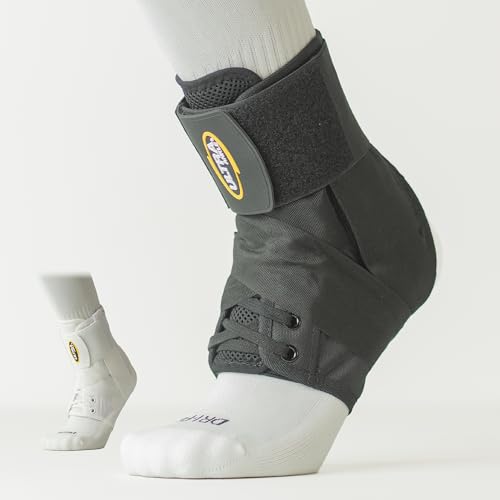
The Ultra 360 is engineered specifically for court sports where ankle rolls are a constant threat. Its lace-up design is built to mimic the feel of athletic taping, and the figure-8 straps add a second layer of mechanical protection. The low-profile construction is a major advantage here—it slides into volleyball sneakers and basketball high-tops without causing pressure points on the sides.
Reviewers consistently praise it for preventing severe sprains after an awkward landing. The breathable nylon material keeps the foot cooler than neoprene, which matters during a tournament. Parents of teen athletes have noted it provides enough adjustability to accommodate growing feet and changing sock thicknesses. It is FSA/HSA eligible, which makes it a practical investment for ongoing instability.
The support level is solid for mild to moderate ligament damage, but it does not offer the same rigid stay protection as the Ossur or DonJoy. If you have Grade 3 instability, you may want a brace with semi-rigid stays. The fit can also feel tight across the ball of the foot if the laces are pulled too aggressively.
Why it’s great
- Low-profile design fits easily into court shoes and cleats.
- Mimics athletic taping for natural movement feel.
- Breathable nylon prevents overheating during play.
Good to know
- No rigid stays—less suitable for Grade 3 instability.
- Overtightening laces can compress the forefoot.
6. ZOELION Ankle Brace with Auto-adaptive Side Pads
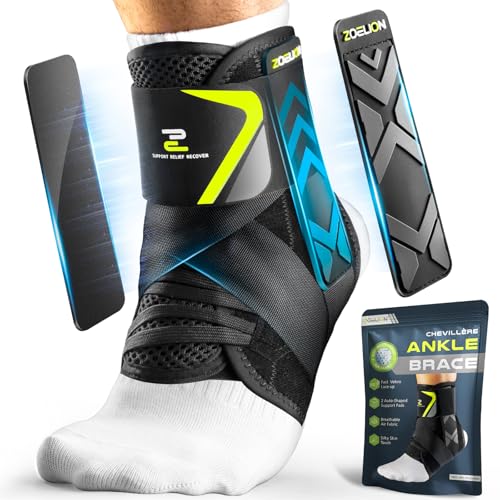
The ZOELION brace takes a different approach to ligament protection. Instead of rigid stays, it uses auto-adaptive stability pads on the medial and lateral sides that conform to the ankle’s shape while providing anti-roll resistance. This makes it one of the most comfortable braces for all-day wear, especially for people with nerve damage or sensitivity around the malleolus.
The triple-lock system—an inner ankle wrap, figure-8 stabilizing straps, and a wide top closure—works together to envelop the joint without digging in. The hook-and-loop lace design replaces traditional shoelaces, so you can slip it on and off in seconds. Over 600 micro-vents keep the foot dry, and the slim profile means it fits easily into most casual shoes and even some sandals.
This brace is best for moderate support needs—daily walking, mild instability, and recovery from low-grade sprains. It does not provide the same rigid protection as a lace-up brace with stays, so athletes playing high-impact court sports may need more. The Velcro closure is rated for thousands of cycles, but heavy sweaters may eventually need to replace the straps.
Why it’s great
- Auto-adaptive pads mold to the ankle without bone pressure.
- Quick hook-and-loop lace system for easy on/off.
- Highly breathable with over 600 micro-vents.
Good to know
- Not rigid enough for severe Grade 3 instability.
- Velcro straps may lose grip after extended heavy use.
7. Neo-G Ankle Brace with Figure of 8 Strap

The Neo-G is a Class 1 registered medical device that prioritizes thermal therapy and moderate compression. The neoprene material traps body heat, which increases blood flow to the joint—helpful for arthritis pain and chronic stiffness. The figure-8 strap provides targeted support to reduce excessive plantarflexion and inversion, making it more functional than a basic sleeve.
One unique advantage is its one-size design and ease of use. It is the simplest brace on this list to put on, and the adjustable strap lets you dial in compression without a complex lacing process. Reviewers with peroneal tendonitis specifically noted that this brace does not dig into the sensitive area around the maleolar tip, which is a common complaint with harder braces.
The trade-off is that it offers the least mechanical stability of any brace here. The neoprene stretches over time, and the cuff can feel loose on smaller ankles. It is best suited for mild ligament laxity, daily comfort, and situations where warmth is as important as support. It will not prevent a hard roll during sports, but it is excellent for post-workout recovery.
Why it’s great
- Therapeutic neoprene warms muscles and increases blood flow.
- Easy one-size design with simple figure-8 strap.
- Does not aggravate peroneal tendon or malleolus sensitivity.
Good to know
- Neoprene stretches—less support over time.
- Not sufficient for high-impact sports or severe instability.
FAQ
Is a lace-up brace always better than a sleeve for ligament damage?
Can I wear a ligament support brace while sleeping?
How do I know if my brace has enough support for a Grade 2 sprain?
Final Thoughts: The Verdict
For most users, the ankle support for ligament damage winner is the Med Spec ASO Ankle Stabilizer because it combines a full lace-up base with two independent figure-8 straps, offering the best balance of mechanical stability and breathable comfort for daily recovery and sports. If you want instant on/off with removable stay protection, grab the DonJoy Stabilizing Speed Pro. And for mild instability or warmth therapy without bulk, nothing beats the Neo-G Figure 8 Ankle Brace.