
Our readers keep the lights on and the weekend projects moving. As an Amazon Associate, I earn from qualifying purchases.
A sharp lateral cut with a weak ankle is a match-ending event. The wrong court shoe lets your foot slide inside the sole, forcing your ankle to absorb forces it was never designed to handle. The right pair locks the heel, stabilizes the midfoot, and gives you the confidence to plant and pivot without hesitation.
I’m Rikta — the co-founder and writer behind FitlyFast. I’ve spent hundreds of hours analyzing lateral stability chassis designs, outsole compounds, and heel cup geometries to separate the true ankle-locking shoes from the ones that just look supportive.
This guide delivers a data-driven breakdown of the best ankle support tennis shoes on the market, matching each model to a specific foot type, width, and playing style.
How To Choose The Best Ankle Support Tennis Shoes
Ankle injuries on the court are rarely from a trip or fall — they are almost always from unstable lateral loading that the shoe failed to resist. Choosing the right shoe means looking past marketing hype and focusing on the chassis, the heel counter, and the outsole geometry that keeps your foot flat inside the shoe.
Heel Counter Stiffness and Depth
The external heel counter is the plastic or TPU piece wrapped around the back of the shoe. A soft counter allows the heel to tilt inside the shoe during cuts, transferring rotational force straight to the ankle. A stiff, deep heel counter locks the calcaneus in place and prevents that lateral roll.
Midfoot Chassis Design
Shoes without a full-length or wrap-around chassis rely on the upper’s stitching alone to resist torsion. A rigid chassis — like Wilson’s 4D Support Chassis or K-Swiss’s 180 PSC Plantar — connects the heel to the forefoot and actively resists the shoe from twisting under load. This is the single biggest differentiator between a shoe that protects an ankle and one that just feels secure standing still.
Foot Volume and Toe Box Width
A narrow toe box forces the toes to compress, which can cause the foot to slide forward and sideways inside the shoe during aggressive stops. A generous toe box, especially in the Wilson Rush Pro Ace, allows the foot to spread naturally and maintain a stable base. If your foot slides, your ankle takes the punishment.
Quick Comparison
On smaller screens, swipe sideways to see the full table.
| Model | Category | Best For | Key Spec | Amazon |
|---|---|---|---|---|
| Adidas Barricade 13 | Premium | Serious players needing max stability | Geofit Sensepods + REPETITOR midsole | Amazon |
| adidas Women’s Barricade | Premium | All-court performance with lateral lock | Adiwear outsole + Bounce cushioning | Amazon |
| Nfinity Mid-Top Athletic | Specialty | Mid-top ankle wrap for multidirectional play | Mid-top design + breathable mesh | Amazon |
| WILSON Men’s Rush Pro Ace | Mid-Range | Wide feet needing a stable chassis | 4D Support Chassis + Duralast outsole | Amazon |
| WILSON Rush Pro Ace (Women’s) | Mid-Range | Players with bunions or wide forefoot | 4D Support Chassis + wider toe box | Amazon |
| K-Swiss Bigshot Light 4 | Mid-Range | Balanced support with lightweight build | 180 PSC Plantar Chassis + DragGuard | Amazon |
| K-Swiss Women’s Court Express | Entry-Level | Budget-friendly court shoe with solid build | Leather upper + shaped sole traction | Amazon |
In‑Depth Reviews
1. Adidas Mens Barricade 13
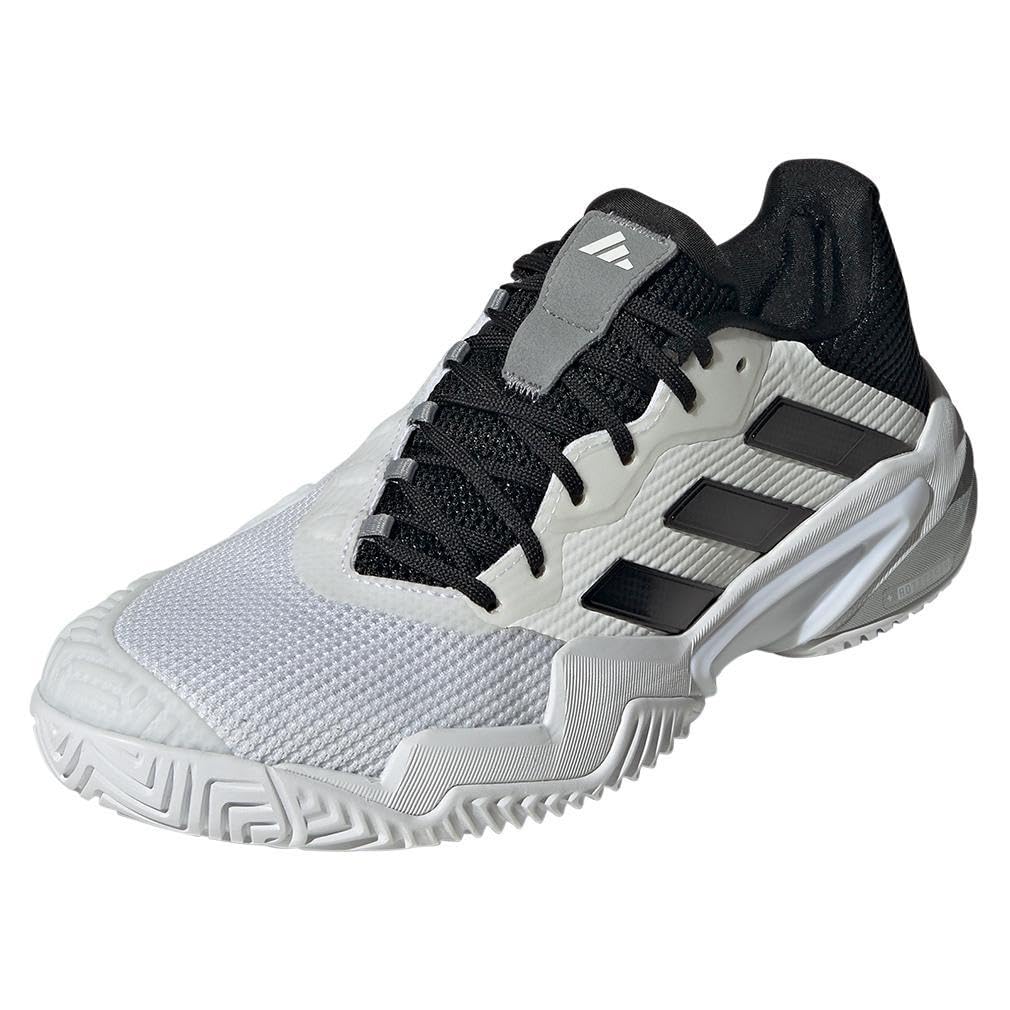
The Barricade 13 is the current gold standard for ankle-locking stability in a men’s court shoe. The Geofit Sensepods in the heel actively mold around the calcaneus, creating a custom-like lock that prevents heel lift during aggressive lateral movements. The REPETITOR midsole delivers responsive energy return without sacrificing the rigid torsion control needed for hard court cuts.
Multiple reviewers confirm this shoe eliminates foot strain during long matches and pickleball sessions, with the heel cup locking in place even after hours of play. The standard width fits medium-to slightly-wide feet best, and the Adiwear outsole provides predictable traction on hard and clay courts without excessive grab that could torque the knee or ankle.
One durability note: the interior heel padding texture can pill socks over time, but this is a minor functional issue in an otherwise elite-level stability shoe. The Barricade 13 is built for players who want to move without fear of rolling an ankle.
Why it’s great
- Heel cup locks the ankle in place during hard cuts
- Excellent torsional rigidity from the chassis
- True-to-size fit with room for orthotics
Good to know
- Interior heel padding may pill socks
- Premium price point limits accessibility
2. adidas Women’s Barricade

The women’s Barricade inherits the same legendary lateral stability as the men’s version, with an angled lace system that reduces pressure on the top of the foot. This specific lace geometry is a critical detail for players with high insteps who have been sidelined by nerve pain from traditional eyelet layouts.
Reviewers who play 3-5 times a week on hard courts report the toe protection and sole durability outlast competing models by a full season. The Bounce cushioning is less plush than some gel-based competitors, but this trade-off allows for a lower center of gravity and better court feel, which translates directly to faster reaction cuts.
One recurring caution: some users with narrower ankles report blistering on the ankle bone within the first 20 minutes of wear. This appears to be a fit issue specific to the ankle collar shape, so players with bony ankles should test the fit before committing to long matches.
Why it’s great
- Angled laces relieve high-instep pressure
- Superior outsole durability for frequent hard court play
- Stable platform with low-to-ground feel
Good to know
- Ankle collar can cause blistering for some foot shapes
- Cushioning is firmer than plush alternatives
3. Nfinity Mid-Top Athletic Shoes for Women
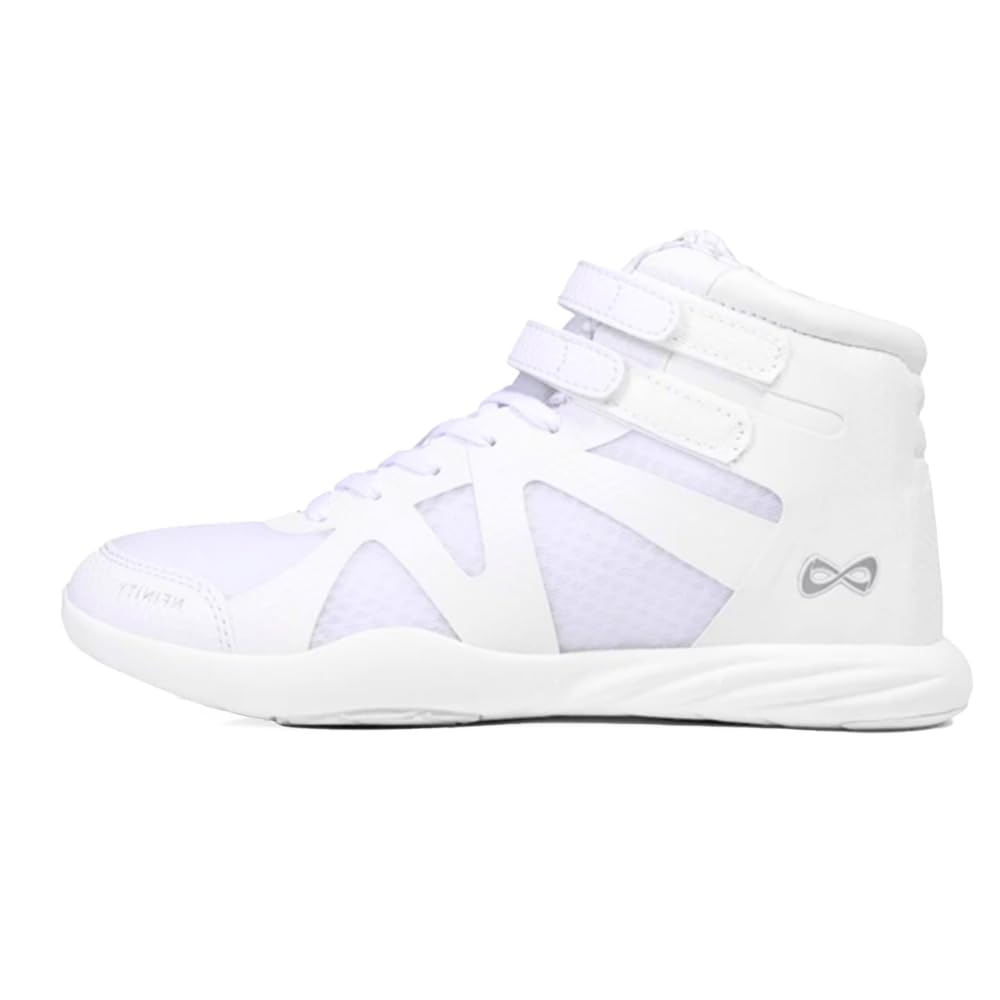
Nfinity takes a different approach to ankle support: a mid-top collar that physically wraps above the ankle bone, providing a brace-like feel without the rigidity of a full orthotic. This design is borrowed from cheer and dance footwear, where lateral landings and sudden directional changes are constant demands.
The trade-off is significant in terms of sizing. The Nfinity sizing chart is critical — multiple users report needing to go two sizes up from their normal athletic shoe size. Once the correct fit is established, the ankle lock is genuinely impressive, offering more containment than many low-top tennis-specific shoes.
Durability is a concern for hard court players. The outsole is optimized for indoor mats and gym floors, not abrasive concrete or asphalt hard courts. For competitive tennis on hard surfaces, the tread wears faster than traditional tennis-specific outsoles, making this a better fit for indoor court players or cross-training athletes.
Why it’s great
- Mid-top collar provides active ankle wrap support
- Feather-light feel for quick multidirectional movement
- Excellent for indoor court and gym floor use
Good to know
- Requires sizing up significantly from normal shoe size
- Outsole durability limited on abrasive hard courts
4. WILSON Men’s Rush Pro Ace Tennis Shoes
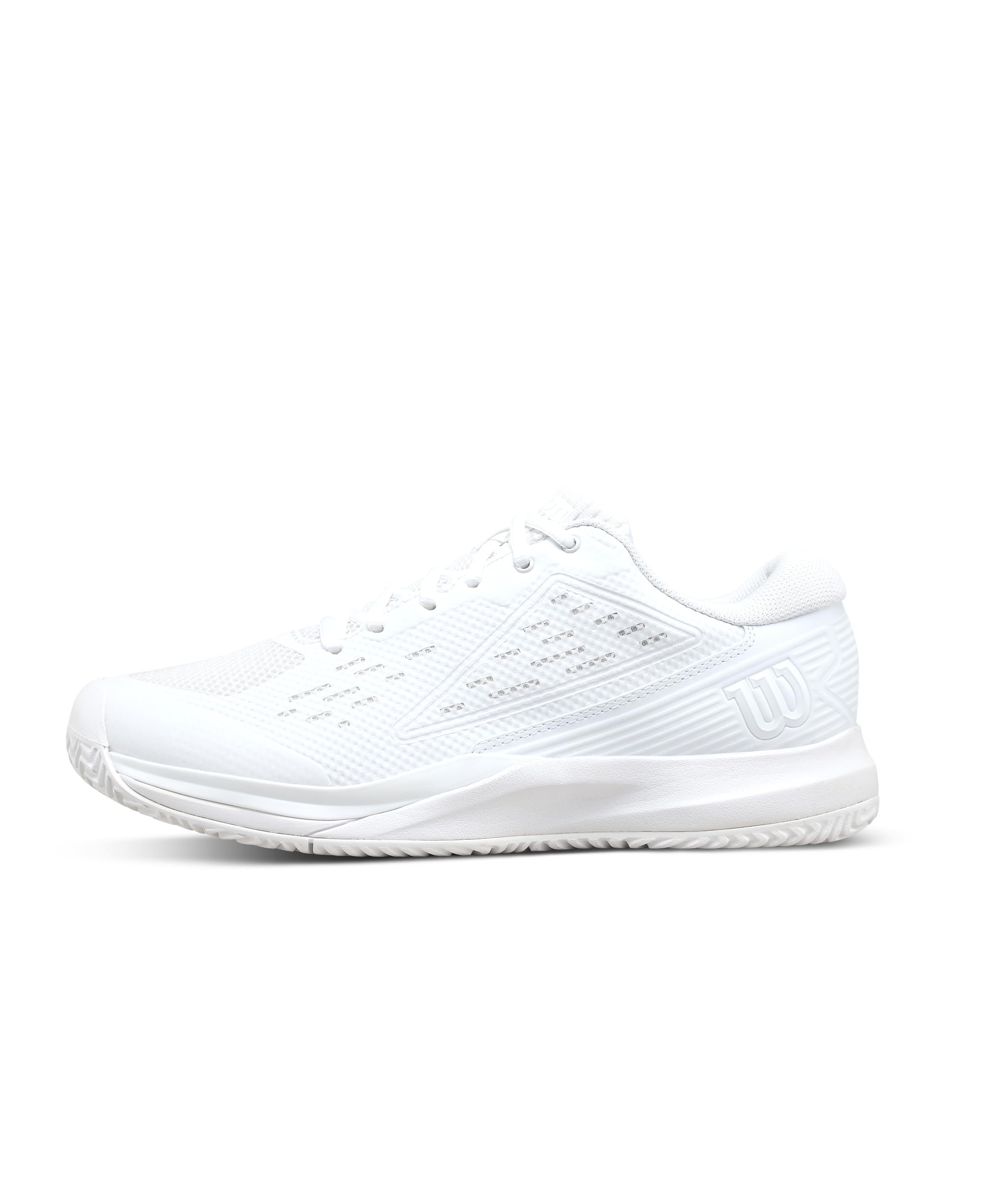
The Wilson Men’s Rush Pro Ace delivers the same 4D Support Chassis found in Wilson’s premium models, but at a mid-range price point. This asymmetrical heel-to-toe chassis resists supination and torsion during pivot movements, which is exactly the failure mode that causes lateral ankle sprains.
The wide toe box is the standout feature for players with bunions or simply wider forefeet. The internal volume prevents the foot from sliding forward into the toe cap during stops, which indirectly protects the ankle by keeping the foot planted on the midsole platform. The Duralast outsole provides reliable traction on hard courts without being overly sticky.
Reviewers note that for aggressive players who drag their toes, the Duralast outsole may not last a full season of heavy play. This is a durability trade-off for the excellent stability and generous fit the shoe provides at the price point.
Why it’s great
- 4D Support Chassis delivers elite-level lateral stability
- Generous toe box prevents foot slide inside the shoe
- Excellent value for wide-foot players
Good to know
- Outsole durability may not last a full hard court season
- Heel fits slightly wider than some competing models
5. WILSON Rush Pro Ace (Women’s)
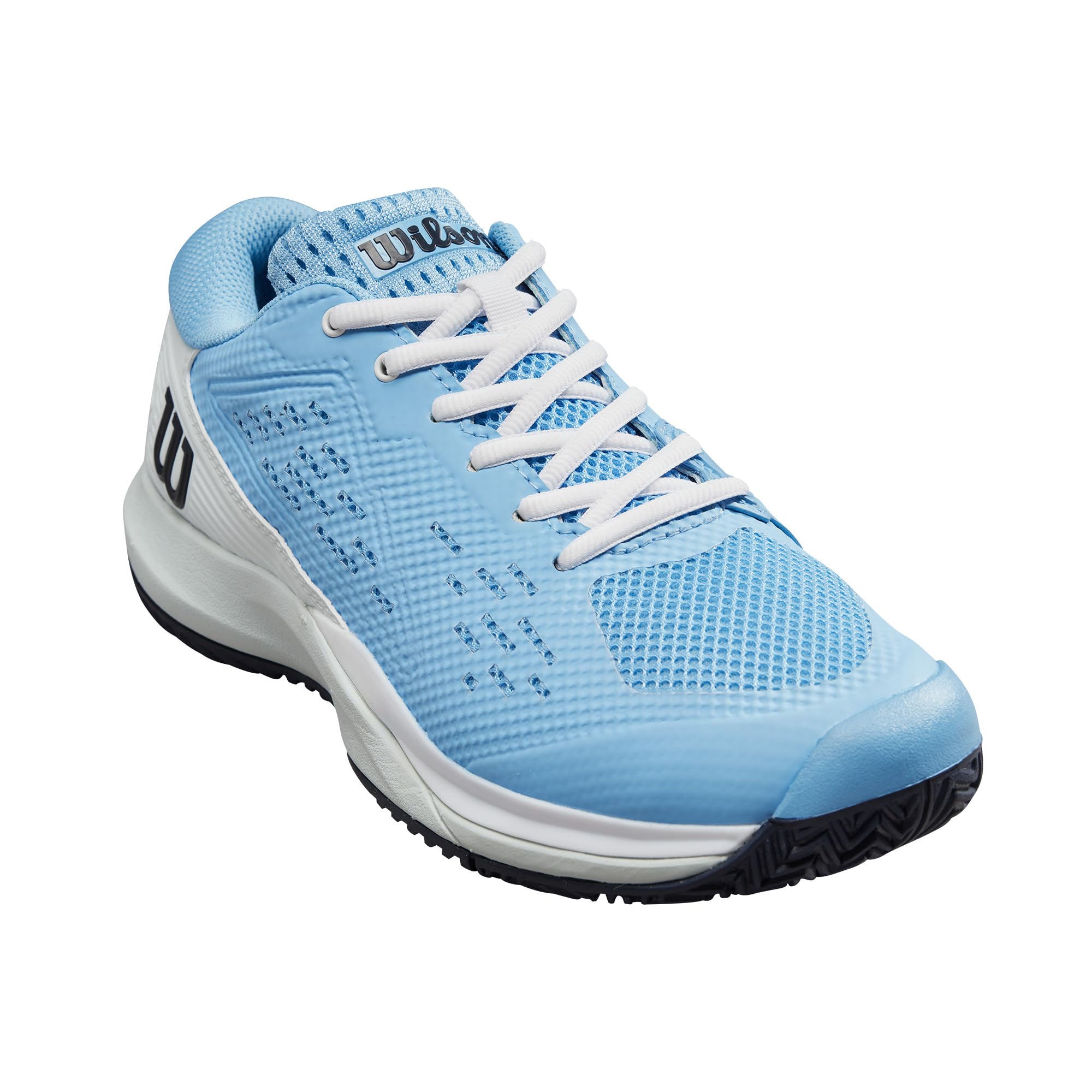
The women’s Wilson Rush Pro Ace mirrors the men’s version in its core stability architecture, with the same 4D Support Chassis and wide toe box. This is the shoe that multiple reviewers with bunions and wide forefeet point to as the solution that finally stopped their foot pain and ankle instability during play.
The breathable mesh upper balances ventilation with enough structural support to work in tandem with the chassis. The R-DST+ midsole adds a layer of dynamic cushioning that absorbs ground impact without creating a mushy, unstable platform for lateral pushes.
Reviewers consistently report that this shoe is comfortable straight out of the box, with no break-in period required. The main critique is that the cushioning is moderate rather than plush, so players who prioritize maximum impact absorption may want to add an aftermarket insole.
Why it’s great
- Specifically designed for wide feet and bunions
- No break-in period required for comfortable wear
- 4D Support Chassis provides excellent lateral control
Good to know
- Midsole cushioning is moderate, not plush
- Upper may feel less supportive than full-leather models
6. K-Swiss Bigshot Light 4 Tennis Shoe
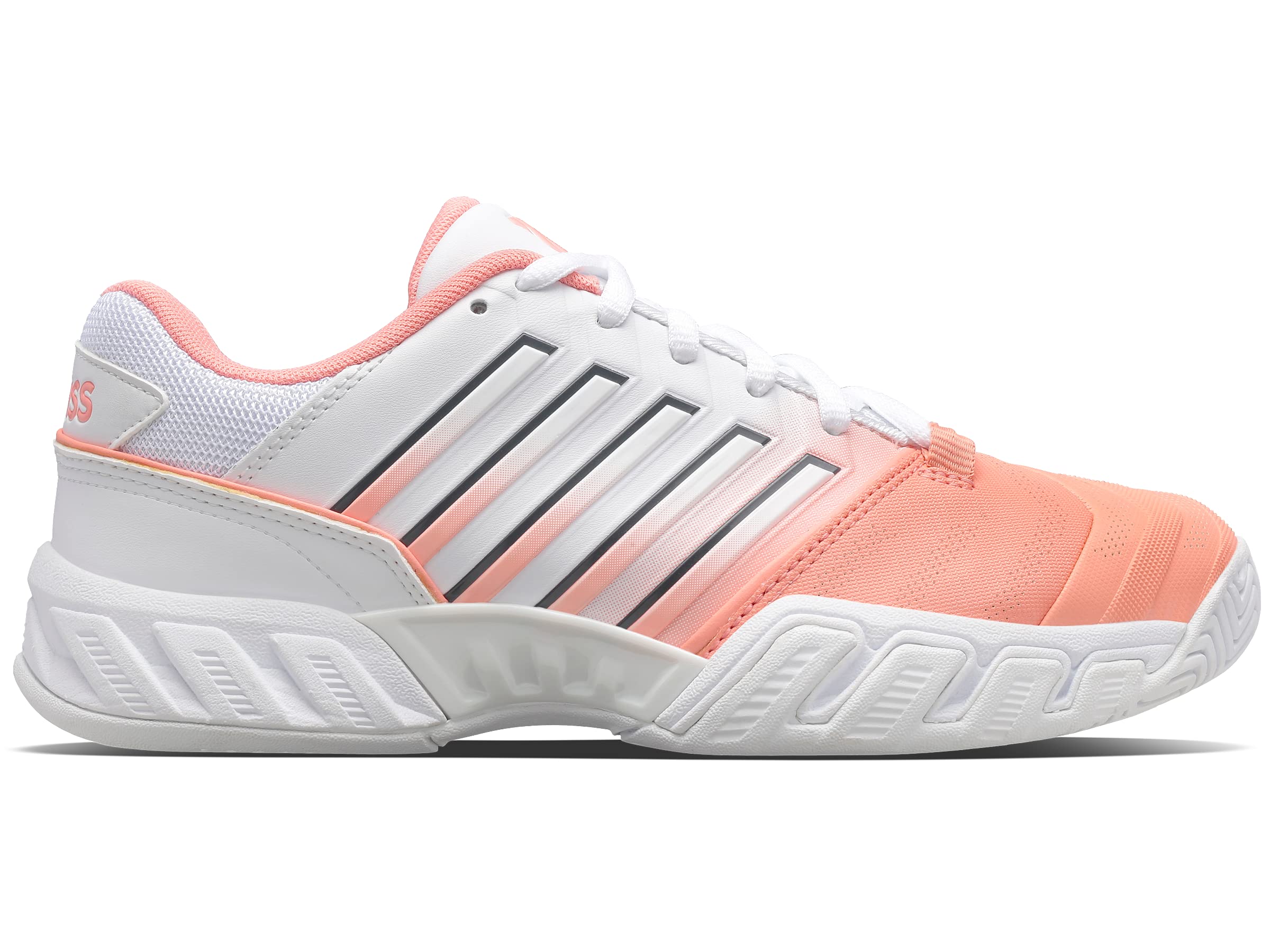
The K-Swiss Bigshot Light 4 uses the 180 PSC Plantar Chassis — a full-length thermoplastic support structure that wraps from heel to forefoot. This chassis is the key to its stability, providing resistance to torsion without adding significant weight to the shoe. The DragGuard reinforcement at the toe and heel adds abrasion resistance for players who drag their feet during serves or slides.
Multiple reviewers note this shoe is comfortable straight out of the box, with good lateral support that prevents the feeling of tipping over during aggressive cuts. The K-EVA midsole delivers maximum cushioning while maintaining a stable platform, which is a hard balance to achieve.
The Bigshot Light 4 is a solid mid-range option for players who need reliable ankle support without the weight or cost of premium models. The main trade-off is that the toe box is standard width, so players with wider feet may find it slightly snug compared to the Wilson Rush Pro Ace.
Why it’s great
- 180 PSC Chassis provides full-length torsional stability
- Lightweight build for its level of support
- DragGuard improves toe and heel durability
Good to know
- Standard width may be snug for wide feet
- Maximum cushioning reduces court feel for some players
7. K-Swiss Women’s Court Express Tennis Shoe
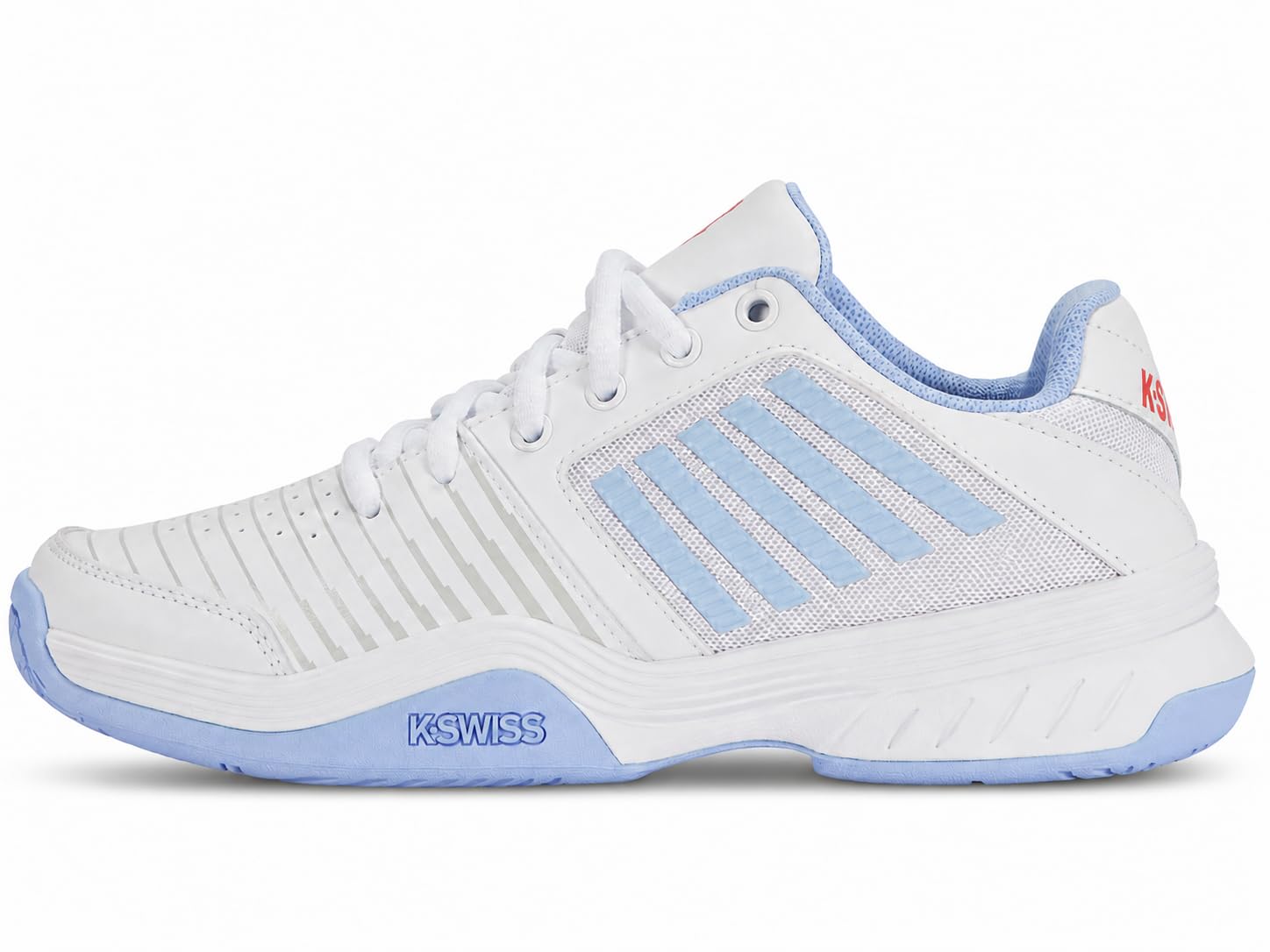
The K-Swiss Court Express is an entry-level shoe that trades the advanced chassis systems of its mid-range siblings for a simpler, more traditional construction. The leather upper provides a structured fit that supports the foot, but the lack of a dedicated torsional chassis means lateral stability relies more on the upper’s material stiffness and the outsole shape.
Reviewers who use this shoe for work rather than competitive tennis — standing and walking on hard surfaces — appreciate the sturdy build and good traction. The wide toe box is a positive for comfort, though the shoe runs slightly stiff out of the box and requires a brief break-in period.
For casual recreational play or players who prioritize affordability over advanced stability features, the Court Express is a functional choice. It is not designed for aggressive lateral cutting at high intensity, but for steady movement and general foot protection, it gets the job done.
Why it’s great
- Sturdy leather upper provides structured support
- Wide toe box for comfortable fit
- Good traction for casual court use
Good to know
- Lacks a dedicated torsional chassis for high-intensity stability
- Feels stiff and clunky out of the box
FAQ
Do high-top tennis shoes provide better ankle support than low-top ones?
Can I use the K-Swiss Bigshot Light 4 for pickleball and tennis?
Final Thoughts: The Verdict
For most users, the best ankle support tennis shoes winner is the Adidas Mens Barricade 13 because its Geofit Sensepods and REPETITOR midsole deliver the most reliable heel lock and energy return combination for serious players. If you need a wider toe box for bunions or flat feet, grab the WILSON Men’s Rush Pro Ace. And for an excellent mid-range balance of weight and lateral stability, nothing beats the K-Swiss Bigshot Light 4.