
Our readers keep the lights on and the weekend projects moving. As an Amazon Associate, I earn from qualifying purchases.
Specs are compiled from manufacturer listings and verified buyer reviews and can change over time — please confirm the key details on the product page before buying.
To feed bees, butterflies, and hummingbirds, the seed mix you scatter makes all the difference. The best pick here wins on variety and reliability, but the real trick is knowing which blends are pure seed and which are padded with filler that never sprouts.
I’m Rikta — the founder and writer behind FitlyFast. This guide is built by comparing the manufacturers’ published specifications and the patterns across verified customer reviews, so you get each pick’s real strengths and trade-offs instead of marketing spin.
For a thriving pollinator patch, focus on seed count, variety, and germination success in the best annuals for pollinators you can plant this season.
Our Picks at a Glance


How To Choose The Best Annuals For Pollinators
Pollinator gardens work when blooms are plentiful, nectar-rich, and staggered so something is always flowering. The easiest way to get that is a seed mix with many varieties, but not every bag delivers what the label promises.
Look at real seed count, not bag weight
A heavy bag can be mostly filler or inert material. Compare the stated seed count instead — a mix claiming 89,400 seeds in 3 ounces tells you far more than a vague “bulk” label. Small seeds like poppy or flax are naturally tiny, so a light bag can still hold tens of thousands of viable seeds.
Check whether it includes milkweed for monarchs
Monarch butterflies need milkweed (Asclepias) as the host plant for their caterpillars. If supporting monarchs matters to you, look for a mix that names milkweed in its variety list rather than a generic wildflower blend that only feeds adult butterflies.
Match the mix to your hardiness zone
Most pollinator mixes state a USDA hardiness zone range, usually zones 3-10. Confirm your zone falls inside that range before buying, because a mix bred for one climate may struggle in another. Full sun is the common requirement across nearly all these blends.
Quick Comparison
| Model | Best For | Seed Count | Varieties | Weight | Amazon |
|---|---|---|---|---|---|
| Gardeners Basics 35 Variety★ Best Overall | Organized planting | 23,000+ | 35 | 5.3 oz | Amazon |
| BUZZY Pollinator MixMeadow Maker | Large meadows | Not stated | 18 | 1 lb | Amazon |
| Survive Seed Co. 100,000 | Monarch support | 100,000 | 45 | Not stated | Amazon |
| LUOJIBIE Wildflower Mix | Quick sprouts | 89,400+ | 30 | 3 oz | Amazon |
| Eden Brothers All Annual | Bulk ground cover | 120,000+ | 20 | 4 oz | Amazon |
| Eden Brothers Southeast | Southern gardens | 120,000+ | 25 | 4 oz | Amazon |
| BBB Seed Honey Bee Mix | Bee-focused beds | Not stated | Mix | 4 oz | Amazon |
In-Depth Reviews
1. Gardeners Basics 35 Variety Heirloom Flower Seeds
Our pick — 4.5★ from 800+ verified ratings; the strongest balance of quality and price.
The organized starter kit that turns seed scattering into a labeled, learn-as-you-grow experience for pollinator lovers.
This set stands apart because every one of the 35 varieties arrives in its own paper packet with a matching plant marker, so you know exactly what you are sowing and where. With roughly 23,000 seeds total and a 5.3-ounce weight, it is noticeably heavier than the Eden Brothers All Annual mix at 4 ounces, and that weight goes into 35 individually packed species rather than one blended bag.
What wins people over is the germination rate — the top praise across owner experiences, with fast sprouting reported regularly. As buyers report: “Awesome seeds, germinate fast, good quality flowers.” The mix spans marigolds, zinnias, sunflowers, cosmos, daisies, poppies, calendula, columbine, phlox, and asters, giving you spring-to-fall color across USDA zones 3-11.
The honest trade-off is seed quantity per packet. Some owners found individual packs light on seeds, so treat this as a variety-first kit rather than a bulk coverage mix. All 35 varieties are heirloom, non-GMO, and open-pollinated, so you can save seeds for next season if you follow proper isolation.
What owners love
- Fast, reliable germination that beginners can count on
- 35 labeled packets and plant markers keep beds organized
- Heirloom, non-GMO, open-pollinated seeds throughout
What to weigh
- Per-packet seed quantities run light for some varieties
- No plant height info printed on the packets
Reach for this kit if: you want a guided, label-everything approach to your first pollinator bed.
Look elsewhere if: you need dense ground coverage from a single scattered bag.
2. BUZZY Wildflower Pollinator Seed Mix (1 lb)
The big-bag gambit that covers up to 1,000 square feet — if you read the fine print first.
This is the heavy hitter for covering serious ground, with a full 1-pound bag mixing 18 pollinator-friendly varieties including coneflower, sunflower, calendula, cosmos, black-eyed Susan, borage, and purple coneflower. The brand promises a “throw and grow” meadow that can stretch up to 1,000 square feet, which beats the coverage of any 4-ounce competitor hands down.
The catch is real and it is the most-discussed point in owner feedback: germination is the single biggest negative theme, and some owners mention the bag contains over 80% filler material. Owners who followed the directions with consistent watering and tilling did see many varieties come up and look great, so this is a mix where preparation decides your outcome. The quality of the varieties themselves earns solid praise, with beautiful, healthy plants when they do establish.
For a large meadow project where coverage matters more than precision, this delivers the square footage. Just be ready to be generous with water and patient through the first few weeks — and understand you are paying for volume as much as for seed.
Volume play: the 1-pound bag spreads over a big sunny patch quickly, so you can cover a large area in one pass.
Read first: germination is the recurring weak spot, so follow watering instructions closely or risk a thin patch.
3. Survive Seed Co. 100,000 Wildflower Seeds

A 45-variety powerhouse with milkweed front and center for monarch lovers who want continuous color.
This is the pick for anyone who wants monarchs specifically, because milkweed, poppy, and lupine all make the 45-variety list alongside nectar-rich cosmos and zinnias. The 100,000 seeds spread across huge beds, and the mix is bred to bloom from early summer through fall so pollinators always find something open.
The germination story here is the opposite of the BUZZY bag — it is the top praise in owner feedback, with seeds reported sprouting within five days and some plantings blooming in about four weeks. Customers note massive numbers of hummingbirds drawn to established beds, and the plants have shown resilience through drought. One note: these can grow tall, up to 5-6 feet, so give them room or place them where height is welcome.
Value opinions are mixed, but the sheer seed count and variety make this a strong premium choice for dedicated pollinator patches. The blend is pure heirloom, non-GMO, and gluten-free, thriving naturally without synthetic treatments.
Fast start: quick germination is the defining strength, with sprouts in as little as five days.
Space needed: expect tall growth up to 5-6 feet, so plan the placement with care.
4. LUOJIBIE Wildflower Seeds Mix (3 oz)
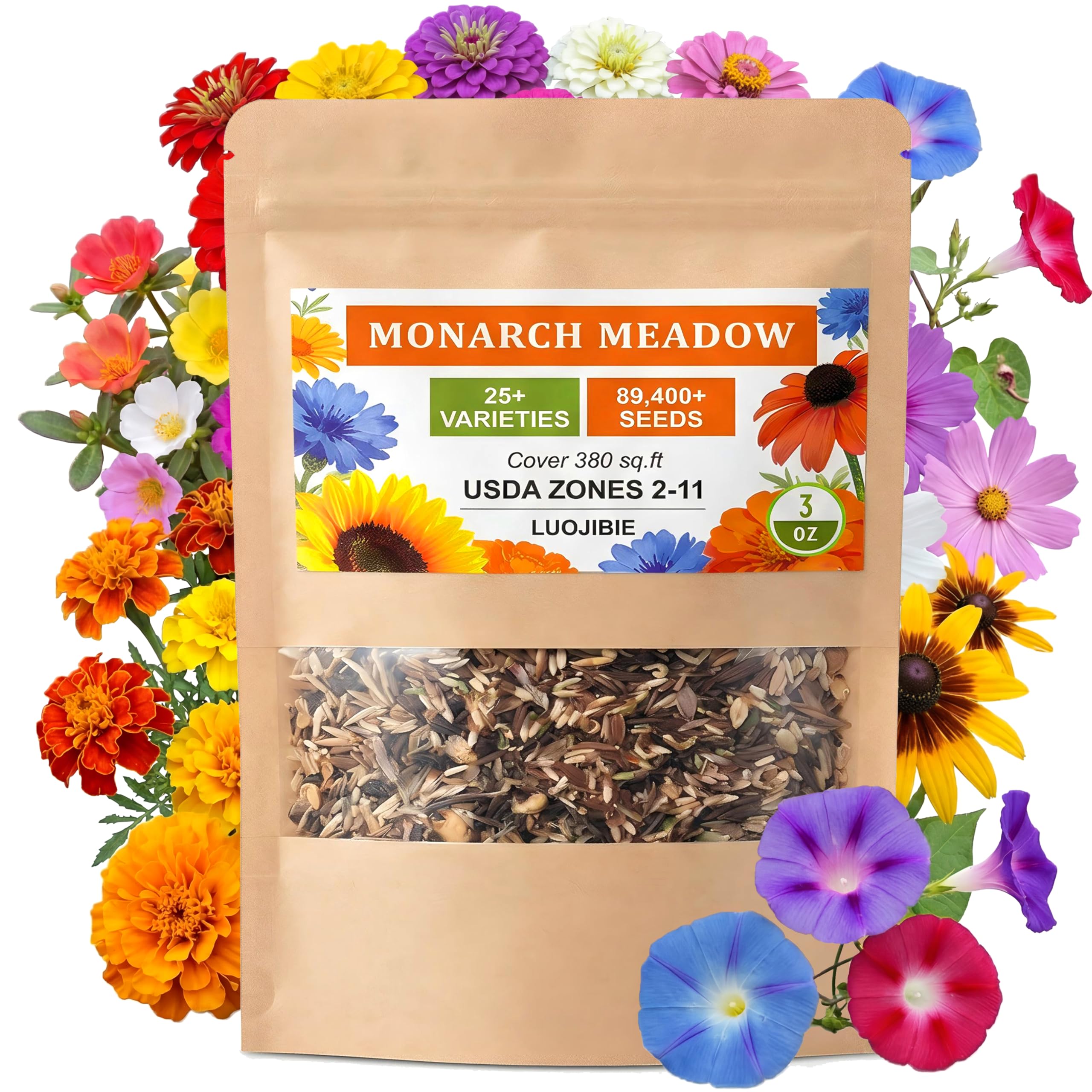
The speed demon that promises sprouts in 7-14 days and delivers a 30-variety rainbow for the impatient gardener.
If you want results fast, this 3-ounce mix with over 89,400 seeds claims quick germination in just 7-14 days, and owner feedback backs up the speed with strong, healthy blooms after planting. The 30+ varieties include zinnia, cosmos, snapdragon, morning glory, marigold, and milkweed — the last being essential for monarch caterpillars.
The color range is the draw: red, yellow, purple, pink, white, and even green blooms from spring through fall. It is drought-tolerant and thrives across zones 2-11 in full sun, so it forgives beginner mistakes. The milkweed inclusion plus nectar-rich annuals means this one genuinely supports both monarch larvae and adult pollinators.
The honest caveat is that a small number of owners reported no sprouting at all, which is the risk with any seed mix. Most feedback praises the quality, germination, and value, with one happy owner buying a second bag for the backyard after the front yard took off.
Why it shines
- 7-14 day germination window is among the fastest here
- Milkweed included for monarch caterpillars
- Drought-tolerant across wide zones 2-11
Keep in mind
- A few owners saw no sprouts at all
- 3-ounce bag covers less area than 1-pound options
Choose this if: fast visible growth and a wide color palette are your top priorities.
skip it if: you need to blanket a very large meadow in one pass.
5. Eden Brothers All Annual Wildflower Mixed Seeds (1/4 lb)
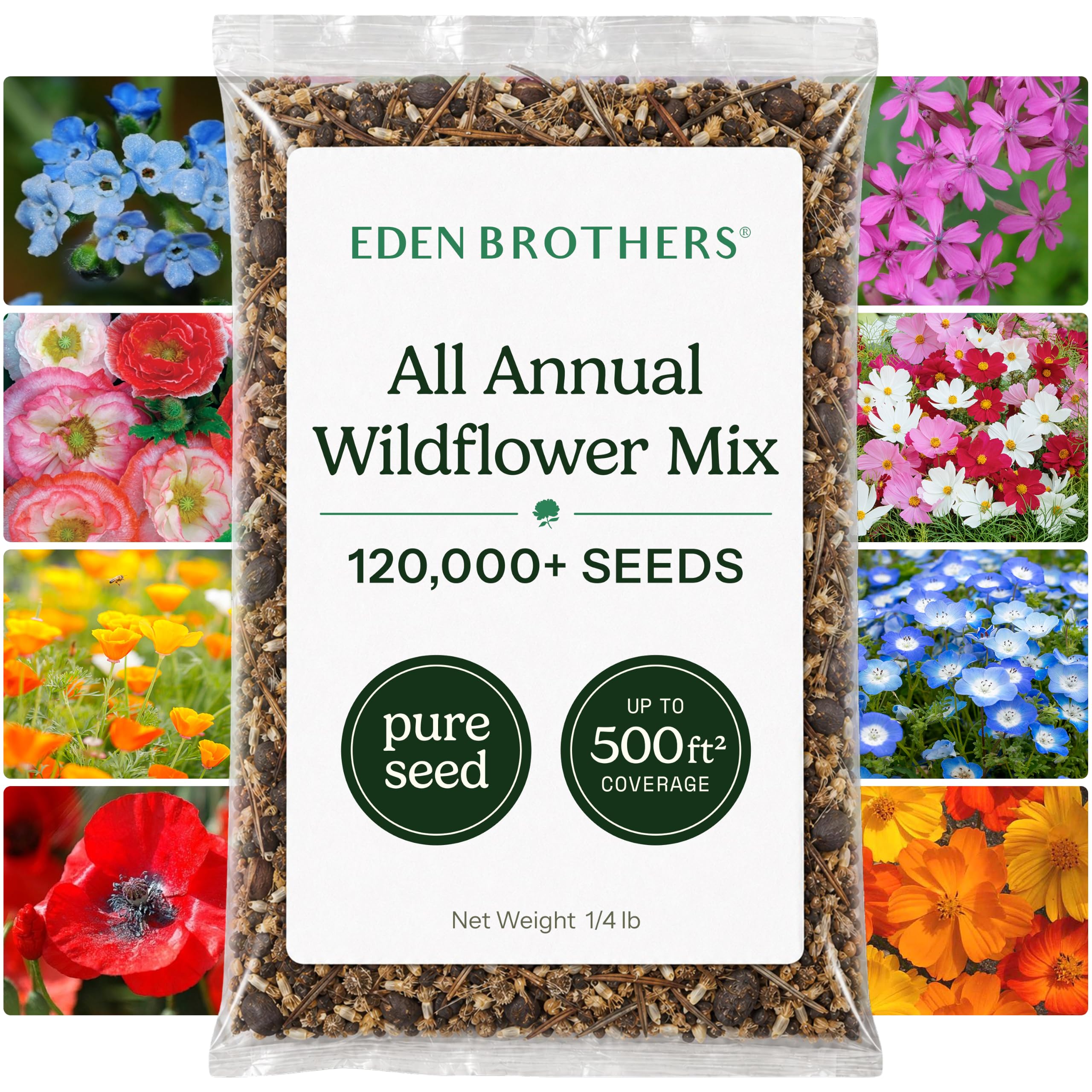
A pure 4-ounce scatter bag of 20 annual species that covers 250-500 square feet with zero filler.
This is the no-nonsense bulk option: 120,000+ seeds across 20 easy annual species like cornflower, cosmos, scarlet flax, Indian blanket, and wild annual sunflower. At 4 ounces it is lighter than the Gardeners Basics kit’s 5.3 ounces, but the trade is pure coverage — this bag is meant to be thrown over a large dirt area and lightly raked.
Reviewers point out fast growth, with one planting sprouting within three weeks and producing so many flowers that a 7×20 front garden ended up overfull. The mix is 100% pure and non-GMO with no fillers, and it is bred for zones 3-10 to bring bees, butterflies, and hummingbirds through summer into fall. As shoppers say: “I planted these seeds about 3 weeks ago and they have been growing so fast!”
The honest caveat is that germination and blooming results are mixed — while many see excellent sprouts, others report barely any growth. This is a straightforward, low-cost way to test a large area, but be prepared to reseed if a patch comes up thin.
Pure coverage: 120,000+ seeds with no filler makes the math simple for big beds.
Variable results: germination splits opinion, so expect to reseed thin spots.
6. Eden Brothers Southeast Wildflower Mixed Seeds (1/4 lb)

The region-tuned blend for southeastern gardens, mixing annuals and perennials for spring-to-summer color.
This 4-ounce mix swaps the straight-annual lineup for 25 species tailored to southeastern climates, including cornflower, blanket flower, black-eyed Susan, purple coneflower, and scarlet flax. The annual and perennial combination means some plants return year after year, giving your pollinator patch a head start each spring.
The visual payoff is the thing owners praise most — varied and vibrant colors that steadily change through the season. One owner called it one of the best purchases they ever made, noting second-year flowers looked even better than the first. The mix suits full sun or partial shade across zones 3-10, and it stands out from the All Annual version for gardeners in the Southeast who want lasting structure.
Be honest about the trade-off: germination is the most-discussed aspect and it is genuinely mixed, with a few owners reporting zero sprouts. The appearance and mix earn consistent praise, but this is a blend where careful watering and patience during establishment matter.
What stands out
- 25 species tuned for southeastern climates
- Annuals and perennials for year-over-year regrowth
- Vibrant, season-changing color praised by owners
What to expect
- Germination results are mixed with some no-show reports
- Perennial blooms may look better in year two
Best for: southeastern gardeners who want perennials to build on each season.
Not for: anyone needing guaranteed first-year coverage in a single throw.
7. BBB Seed Honey Bee Wildflower Mix (4 oz)

A 4-ounce blend engineered for honey bees and native solitary bees, from a seed house with roots in 1985.
This mix is built specifically for bee health, combining annual and perennial flowers selected to attract honey bees, bumblebees, butterflies, and beneficial insects. The 4-ounce bulk bag provides generous coverage for larger pollinator gardens, and the brand has been testing seeds since 1985 with every lot checked for germination and weed seed quality.
The long bloom window is the standout — one owner planted in late April, saw flowers by early June, and kept blooms until mid-September. The mix is 100% pure wildflower seed with no fillers, open-pollinated, and non-GMO. Appearance is what owners praise most, with the flowers described as beautiful and long-lasting through the season.
The honest fit note is that sprout quality is the most-discussed aspect and it is mixed — several owners reported nothing grew at all. For beekeepers and pollinator-focused gardeners who want a nectar-rich, no-filler blend, this is a solid choice, but treat it as a mix that rewards proper soil prep and consistent moisture.
Bee-first design: a no-filler 4-ounce blend aimed squarely at honey bees and native pollinators.
Variable sprouting: some owners saw zero germination, so prep the soil well and keep it damp.
Understanding the Specs
Seed Count vs. Bag Weight
Seed count tells you how much actual planting material you get, while bag weight can be misleading because some mixes add filler. A 1-pound bag might hold less viable seed than a 3-ounce bag with 89,400 tiny seeds. Compare the stated seed count first, then use weight to judge density.
Variety and Bloom Windows
More varieties usually means a longer, more continuous bloom season because different flowers peak at different times. A mix with 35 or 45 varieties keeps pollinators fed from spring through fall, while a 20-species blend may have a shorter overall window. Check the expected blooming period listed on the package.
FAQ
What is the difference between annual and perennial pollinator seeds?
Do these seed mixes really attract bees and butterflies?
How many seeds do I need to cover a large garden area?
What does non-GMO and open-pollinated mean for wildflower seeds?
Why did some of my seeds not germinate?
Is milkweed included in these pollinator mixes?
What does “filler” mean in a seed mix and why should I avoid it?
Can I plant these seeds in partial shade or do they need full sun?
Final Thoughts: The Verdict
For the majority of shoppers, the annuals for pollinators winner is the Gardeners Basics 35 Variety because its labeled packets, reliable germination, and 35 heirloom varieties make pollinator gardening simple to use for beginners. If you want a 45-variety powerhouse with milkweed for monarchs, grab the Survive Seed Co. 100,000. And for covering a huge meadow in one pass, the BUZZY 1-pound bag is the one to reach for — just follow the watering directions closely.
How We Picked
We do not accept paid placement. Every pick is matched to a real buyer and a real use-case; we do not hands-on test units.
Sources & Methodology
Specifications: manufacturer listings and product documentation. Review insights: verified customer reviews, as of August 2026. Pricing: not shown on this page (it changes often); check the current price via the retailer link.
As an Amazon Associate, FitlyFast earns from qualifying purchases. This does not affect which products we feature.