
Our readers keep the lights on and the weekend projects moving. As an Amazon Associate, I earn from qualifying purchases.
Watching a colony of ants carve their first tunnel in fresh sand is one of those rare quiet marvels that pulls a child—or an adult—away from a screen for hours. The problem is that most entry-level ant farms turn into a foggy box of dead sand within weeks, either because the habitat breeds mold, the ants escape, or the kit lacks the basic tools to keep the colony thriving. A well-designed ant farm eliminates those variables so you can focus on the biology, not the cleanup.
I’m Rikta — the co-founder and writer behind FitlyFast. I’ve spent dozens of hours comparing ant habitat designs, reading research on nesting and tunneling behavior, and analyzing customer reports across the most popular ant farm models to find the ones that actually support a healthy colony.
That is why I put together this hands-on breakdown of the best ant farm kits available right now, with honest detail on what works, what molds, and which features are actually worth your money.
How To Choose The Best Ant Farm
An ant farm is a living ecosystem, not a static display. The wrong habitat starves the colony of moisture, creates condensation that collapses tunnels, or traps mold under the substrate where you cannot clean it. These are the critical specs to check before you buy.
Substrate Type: Sand vs. Gel
Gel habitats look clean and futuristic, but the gel is the ants’ only food and moisture source. The colony slowly suffocates in its own waste as the gel shrinks and cracks. Sand is the superior substrate because ants are natural excavators; sterilized quartz or play sand allows them to tunnel freely, and you can control moisture and food separately.
Hydration Without a Flood
Ants need humidity, not a swamp. Look for an automatic water supply system that lets you refill through a dedicated port. Habitats without a water tower or reservoir force you to spray the sand directly, which compacts the tunnels and encourages mold growth behind the viewing wall.
Escape-Proof Build and Viewing Clarity
A single ant-sized gap turns your farm into a room-wide ant hunt. Thick acrylic walls with tight seams and a child-lock mechanism prevent escapes. Transparent or double-sided panels with built-in magnifiers give you a clear, close-up view of the tunnel system without opening the lid.
Modularity for Long-Term Colonies
Basic all-in-one ant farms are fine for a 6-week observation, but a colony will outgrow a fixed chamber. Modular systems let you connect new nest chambers, outworlds, and trash boxes without transferring ants. If you plan to keep ants for more than a season, modular expansion is the single feature that extends the habitat’s useful life indefinitely.
Quick Comparison
On smaller screens, swipe sideways to see the full table.
| Model | Category | Best For | Key Spec | Amazon |
|---|---|---|---|---|
| National Geographic Light-Up Ant Terrarium | Mid-Range | Unobstructed day-and-night viewing | Built-in LED illumination + dual magnifiers | Amazon |
| Educational Insights GeoSafari Ant Factory | Mid-Range | Easy classroom setup with specialized sand | Large viewing area with magnification spots | Amazon |
| Lansber Ice City Series Starter Kit | Premium | Serious hobbyists looking for modular expansion | Dual-hydration core + magnetic modular connections | Amazon |
| ELNMLHT Ant Farm Castle | Mid-Range | Double-sided viewing and colony room separation | Auto water supply + dedicated egg-laying area | Amazon |
| WodGod Illuminated Ant Habitat | Mid-Range | Detailed top-down study of tunneling patterns | LED strip lighting + 500g sterilized quartz sand | Amazon |
| Kahopy Ant Farm Castle | Budget-Friendly | Deep colony viewing with flood and child-lock protection | Thickened acrylic + automatic water supply system | Amazon |
| Tigerific Ant Farm for Live Ants | Budget-Friendly | First-time buyers who want a complete learning kit | Real sand substrate + extensive 24-page learning booklet | Amazon |
In‑Depth Reviews
1. National Geographic Light-Up Ant Terrarium
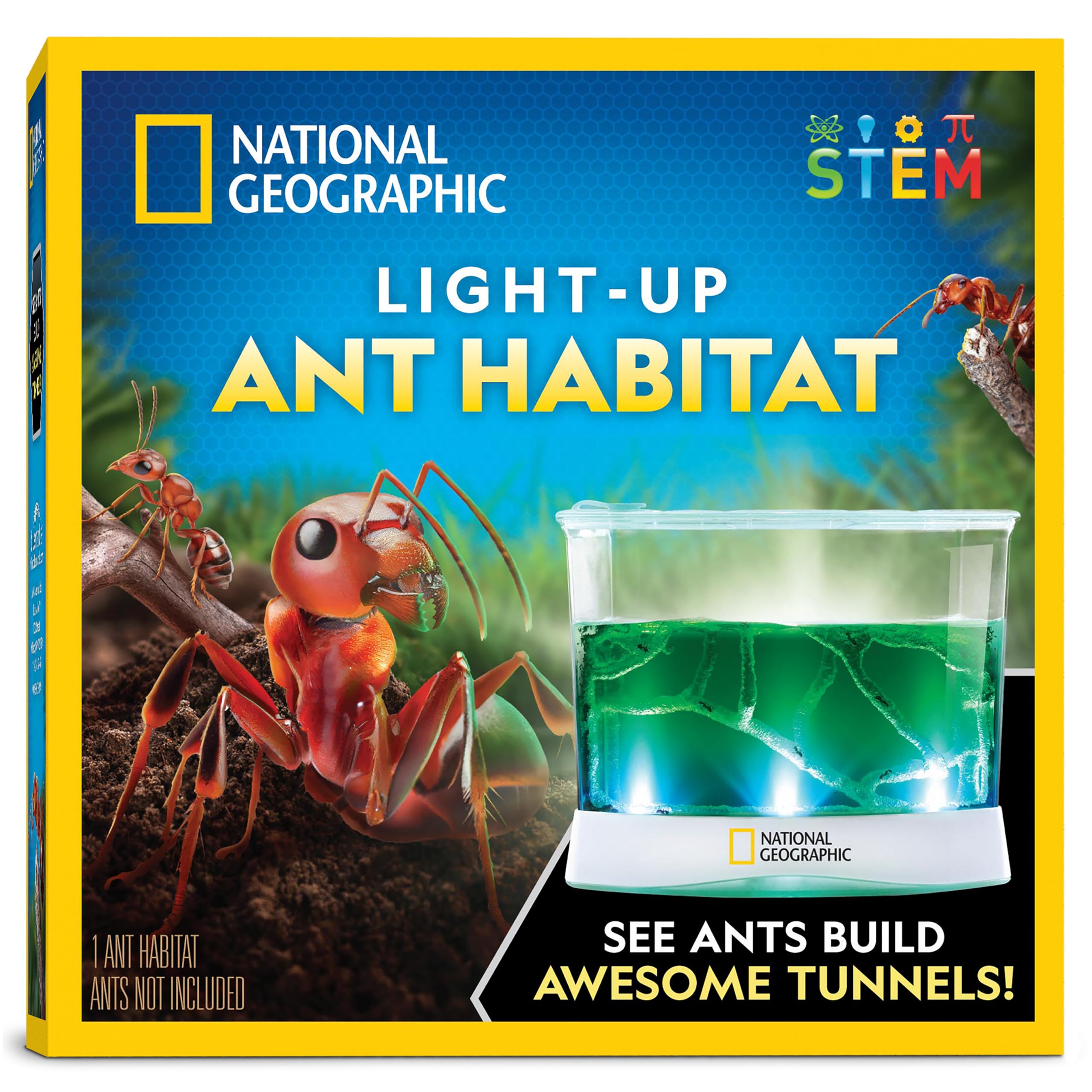
The National Geographic Ant Habitat kit earns the top spot because it solves the two problems that kill most ant farms: poor lighting and limited visibility. The built-in LED lamp illuminates the gel or sand from the top so you can watch tunnel construction at night without opening the lid. Two magnifying glasses built directly into the lid—plus a third handheld magnifier—let you zoom in on individual ants carrying sand grains without the glare and fog that plague cheaper clear-plastic lids.
Unlike basic kits that feed ants with loose seeds that rot within days, this habitat uses a translucent nutrient-rich gel that doubles as both food and substrate. The gel keeps ants alive for weeks without any manual feeding, which is ideal for classroom settings or families who travel on weekends. The Blue Marble brand also includes a detailed educational booklet that walks through colony hierarchy and tunnel engineering, making this a strong pick for STEM-driven households.
On the downside, the gel shrinks as the ants consume it, so the habitat has a finite life span—usually 2 to 4 months—before you need to replace the entire insert. Ants are sold separately, and the gel-only design means species that prefer dry sand (like harvester ants) may not tunnel as aggressively. For a clean, observation-focused experience that requires almost no daily maintenance, this terrarium leads the category.
Why it’s great
- LED backlight provides crystal-clear viewing even in a dark room
- Magnification system rivals a basic jeweler’s loupe for surface detail
- Gel substrate eliminates feeding guesswork for the first several weeks
Good to know
- Gel shrinks over time, capping the habitat’s usable life
- Not compatible with dry-sand-only ant species
- Ants must be purchased separately through a mail-order vendor
2. ELNMLHT Ant Farm Castle
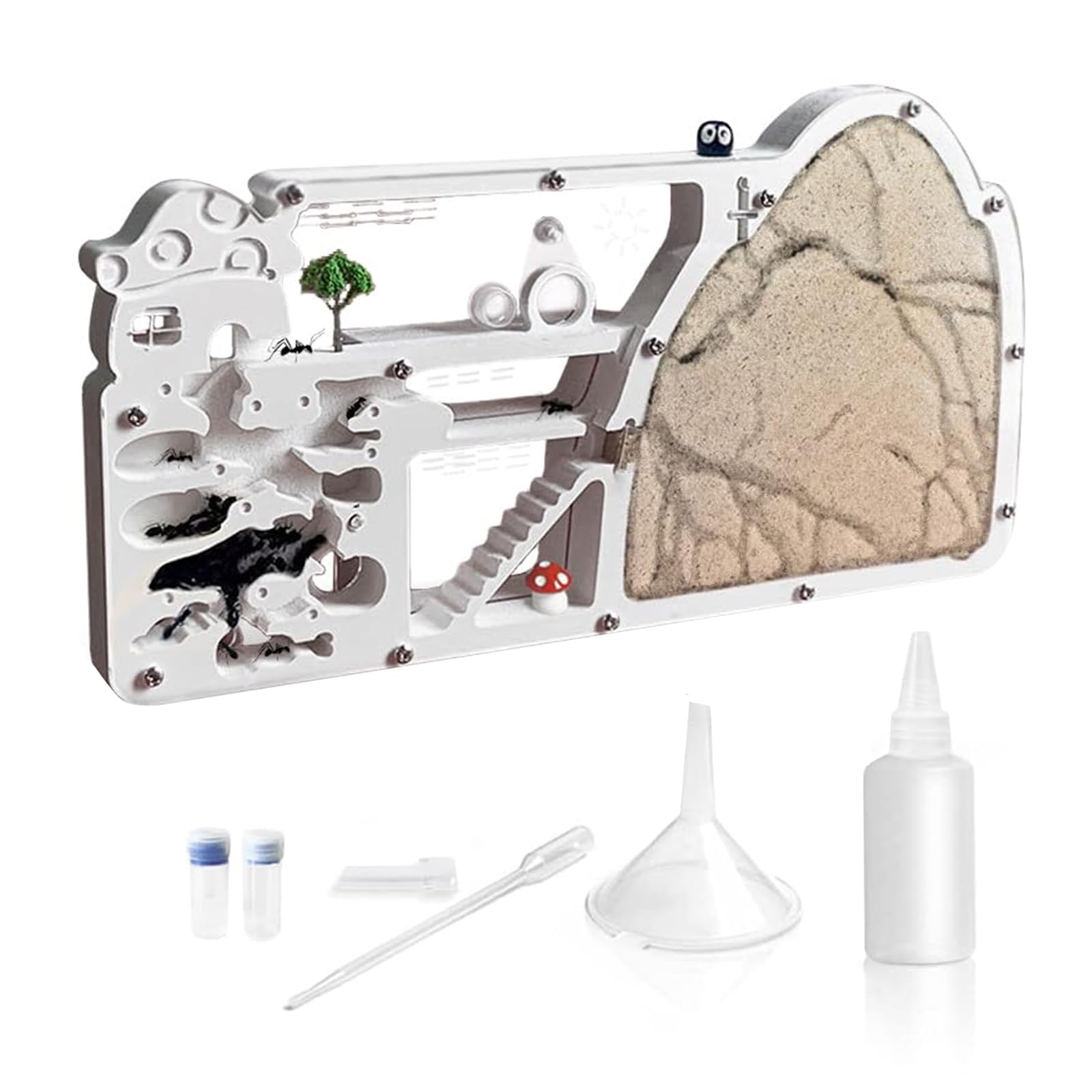
The ELNMLHT Ant Farm Castle packs premium-grade features—double-sided transparent walls, a dedicated egg-laying chamber, and an automatic water tower—into a mid-range price bracket that undercuts most comparable kits by a significant margin. The 10.8-inch-wide acrylic tank gives ants more horizontal run space than the typical 7-inch castle, and the colored yellow sand contrasts well against the clear walls so you can actually see tunnel depth without squinting.
The automatic water supply system is the standout feature here. A refill hole on top lets you add water every 7 to 10 days instead of misting the sand directly, which keeps the substrate from compacting into a mud cake. The kit also includes a separate egg-laying and dump area, a thoughtful touch that mimics the castes found in a natural colony. The included tweezers and funnel make initial setup straightforward, though the instructions are minimal—this is a learn-as-you-go habitat.
Colony separation is a legitimate concern. The open feeding area can become a burial ground for leftover fruit if you overfeed, and some customers report that the acrylic seams can separate under heavy water pressure if you overfill the tower. Still, with consistent care, this castle supports a colony for several months, and the double-sided viewing makes it easy to spot mold before it gets out of control.
Why it’s great
- Expansive 10.8-inch viewing area that fits on a standard desk
- Dedicated hydration system prevents overwatering and collapsed tunnels
- Functional room separation (egg-laying area, dump zone, feeding station)
Good to know
- Instructions are vague; you will need to experiment with moisture levels
- Acrylic can warp or separate if water is added carelessly
- Ants are not included and must be ordered separately
3. Educational Insights GeoSafari Ant Factory
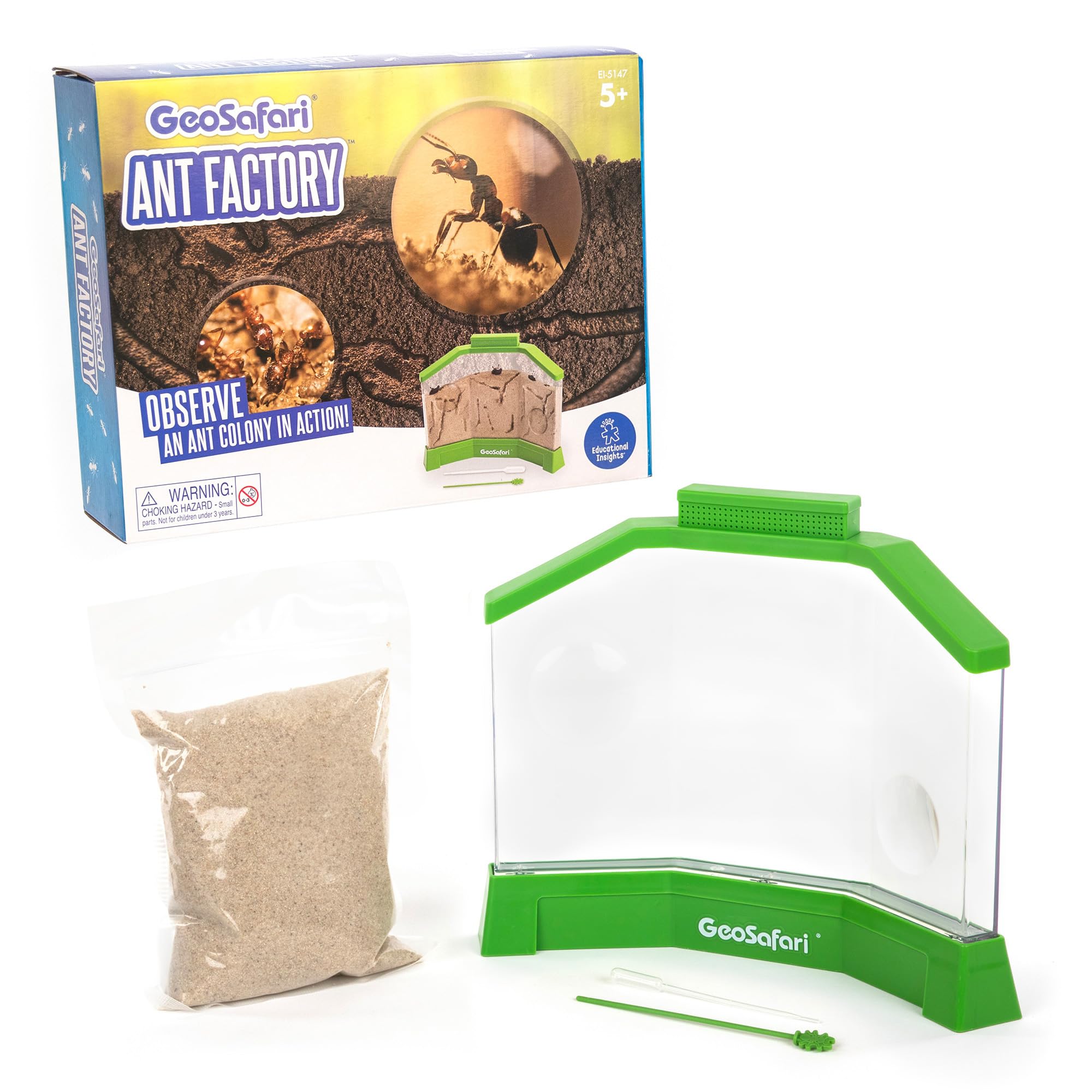
The Educational Insights GeoSafari Ant Factory has been a classroom staple for decades, and the current version refines that legacy with a precision-sanded habitat that supports fast, stable tunneling. Unlike generic play sand that collapses into dust, the included “special ant sand” is pre-sifted to a grade that holds tunnel walls without extra moisture. This is the single biggest differentiator: ants start digging within hours, and the tunnels rarely cave in during the first month.
The factory features a wide escape-proof habitat with multiple magnification spots built into the viewing surface, plus a removable stand that keeps the unit upright on a lab table. The included feeding tool and activity guide are straightforward enough for a 6-year-old to follow, and the journaling prompts turn the colony into a biology project rather than just a pet. The kit also comes with a redemption card for ordering live ants, though you still pay a small shipping fee.
On the practical side, the habitat is not as large as the modular kits, and the single sand reservoir limits the colony size. Some customers report that ants struggle to access the top feeding port when sand settles, so you need to periodically tap the tank to redistribute the substrate. But for an entry-level observation kit that balances durability with quick setup, the Ant Factory remains a top-shelf choice for educators and parents alike.
Why it’s great
- Pre-screened sand promotes immediate tunneling with minimal cave-ins
- Activity guide includes journaling prompts for structured STEM learning
- Redemption card makes ant ordering easy for first-time buyers
Good to know
- Single sand chamber limits colony density long-term
- Feeding port can become buried under settled sand over time
- Live ants still require a separate shipping fee to receive
4. Lansber Ice City Series Starter Kit (Small)

The Lansber Ice City Starter Kit is a different animal from the all-in-one ant farms above. This is a modular nest system built with 3D-printed components, magnetic connectors, and brass-threaded inserts that allow you to expand the colony in four directions over time. The core C Module uses a dual hydration system: an air evaporation reservoir holds 13ml of water that keeps the nest chamber stable for up to 22 days per refill, while the secondary medium-based moisture regulation works for wood-nesting species that require higher humidity.
The kit includes a small outworld (9 × 9 × 8.3 cm), a separate nest chamber, an external water feeder, and a dedicated trash box—all connected via magnet-sealed tubes that prevent escapes. The carbon-fiber-texture shell and red acrylic panel let you observe ants under red light, which is invisible to most ant species and keeps them active without stress. This is the only product on the list that supports true colony management: you can close tunnel inserts during maintenance, move the trash box without opening the nest, and add drawer-style expansion frames later.
With that sophistication comes a learning curve. The instructions are near-useless, the threaded 3D-printed connectors for the water tube and trash box are loose and require glue or tape to secure, and the setup time is significant. If you only want a weekend science project, this kit will frustrate you. But if you are building a long-term ant keeping hobby and value modularity over plug-and-play convenience, the Ice City delivers the most flexible habitat system at this price level.
Why it’s great
- Dual hydration system maintains stable humidity for up to three weeks
- True modular expansion with magnetic connections and brass inserts
- Red acrylic panel allows stress-free observation under low light
Good to know
- Setup is complex—plan for an hour of assembly and testing
- 3D-printed tube connectors are loose and need adhesive reinforcement
- Premium price point, overshooting casual buyers
5. WodGod Illuminated Ant Habitat
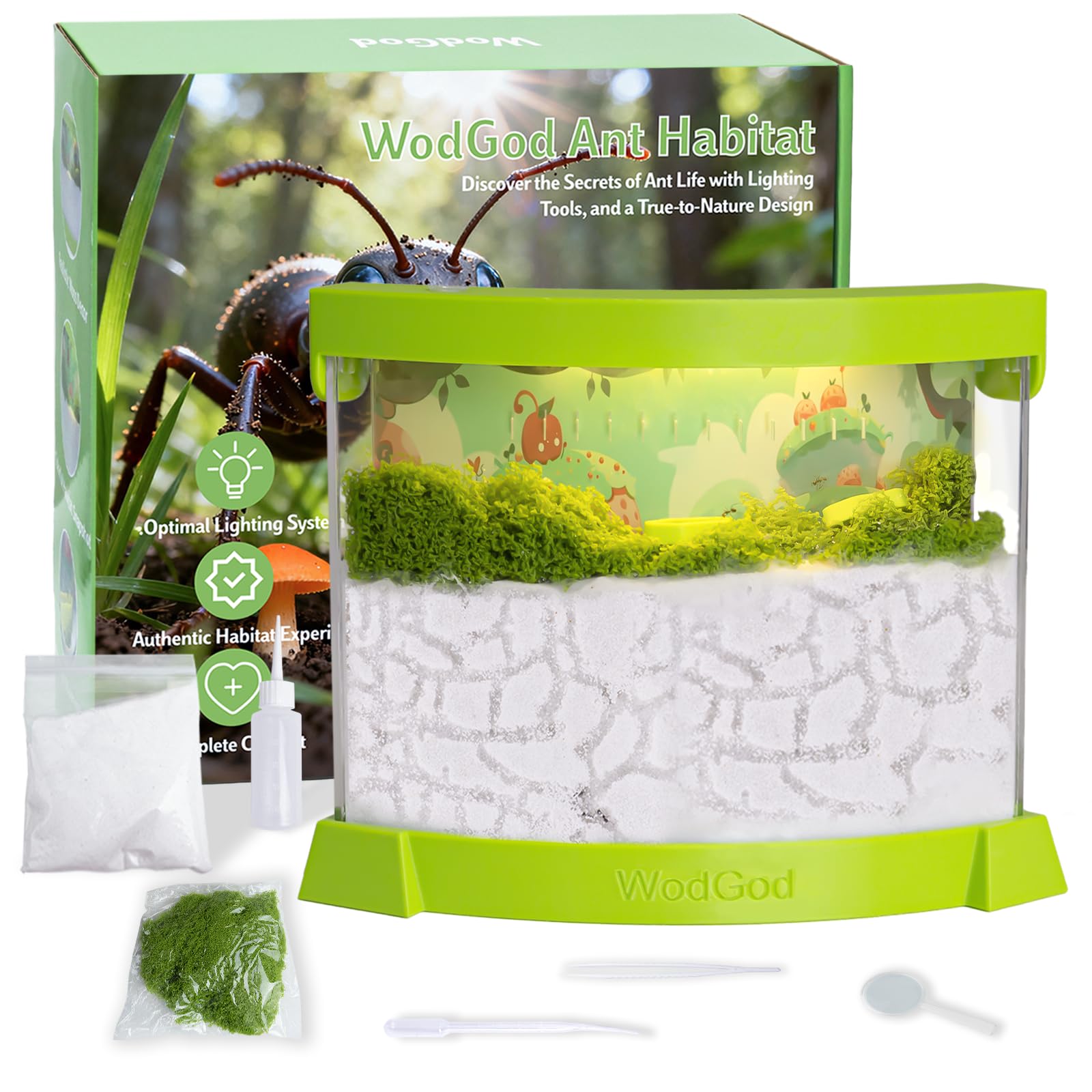
The WodGod Illuminated Ant Habitat stands out for its top-down LED lighting system, which is designed for serious observation of tunnel engineering rather than ambient decoration. The LED strip wraps around the rim of the 8.66-inch tank and casts even light across the entire sand surface, eliminating the shadows that make it hard to distinguish active tunnels from abandoned dead ends. The kit ships with 500g of sterilized quartz sand that is pre-washed to reduce dust, and the realistic moss decor gives the colony a more naturalistic layout than the typical barren box.
The included anti-escape tweezers and calibrated dropper are small touches that make a real difference—the tweezers have a rubberized tip that reduces the chance of crushing ants during transfer, and the dropper lets you add water in 1ml increments so you do not oversaturate the sand. The top feeding hole allows you to drop food into the colony without removing the lid, which is critical because opening the lid on any ant farm causes a panic response that collapses newly dug tunnels.
Several customers note that the acrylic arrived cracked or with visible fingerprints on the interior, which suggests quality control issues at the factory. The lid seal is also inconsistent—some units have a tight fit, while others allow ants to escape through a hairline gap at the hinge. If you get a defect-free unit, this is a solid mid-range habitat with excellent lighting; if not, the return process is the only recourse.
Why it’s great
- Top-down LED eliminates viewing shadows for clear tunnel tracking
- Sterilized quartz sand creates stable tunneling conditions from day one
- Feeding hole allows lid-closed care that preserves ant behavior
Good to know
- Quality control is inconsistent—some units arrive cracked or dirty
- Lid seal is not reliably escape-proof across all production batches
- Moss decor can trap food waste and become a mold hotspot
6. Kahopy Ant Farm Castle
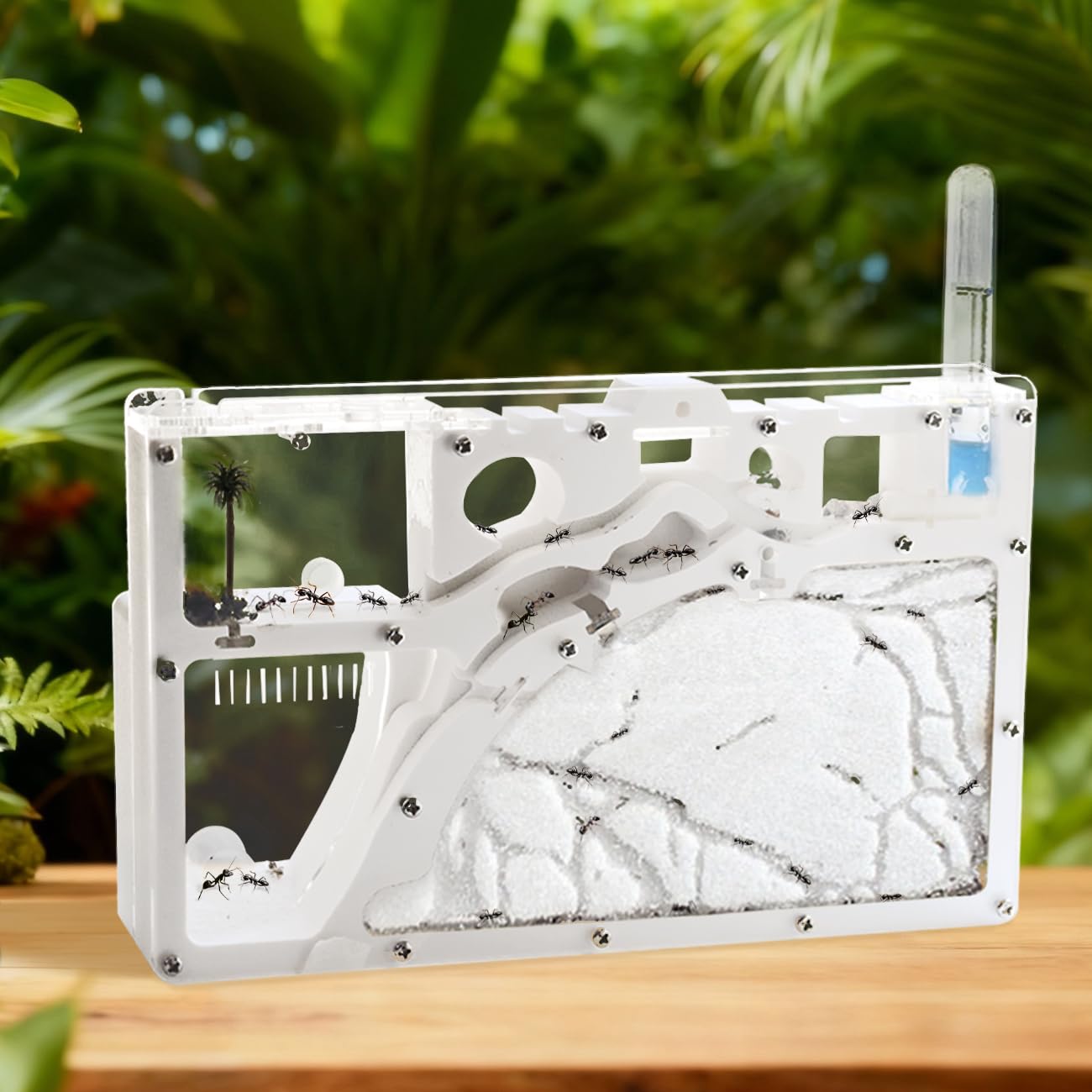
The Kahopy Ant Farm Castle prioritizes structural durability with thickened acrylic walls that resist the cracking and warping common in budget ant farms. The castle design includes a child-lock mechanism on the top cover that prevents ants from escaping if the unit is knocked over, plus a flood outlet at the rear that drains excess water so you do not drown the colony by accident. The automatic water supply system uses a dedicated tower that you refill through a separate port—a major upgrade over budget kits that require you to dump water directly onto the sand.
The castle comes with an impressive array of accessories: a 40ml drip bottle, funnel, dropper, magnifier, tweezers, decorative tree, food basin, and a flag. The food basin sits on a raised platform that ants can climb into, which reduces the amount of debris dragged back into the nest chamber. The overall footprint (9.37 x 5.67 inches) is large enough for a reasonable colony but compact enough to fit on a standard shelf without dominating the room.
The standing criticism is that the castle is almost impossible to clean once the colony is established. Ants drag food scraps into the sand and bury them, and the sealed design gives you no way to dig out the waste without dismantling the entire unit. Mold tends to develop within a few weeks, particularly around the water tower seam. For a science experiment that runs 8 to 12 weeks, this is manageable; for a long-term colony, this design becomes a hygiene problem.
Why it’s great
- Thickened acrylic resists cracking better than comparable castle models
- Flood outlet prevents accidental drowning when overwatering
- Child-lock lid and secure seal keep ants contained during bumps
Good to know
- Enclosed design makes waste removal a destructive process
- Mold develops within weeks near the water tower seam
- Requires assembly (funnel and tower installation) before setup
7. Tigerific Ant Farm for Live Ants

The Tigerific Ant Farm is the most affordable kit on the list that uses real sand instead of gel, making it the best entry point for families who want a genuine tunneling experience without a large upfront investment. The 9 x 2 x 7-inch habitat uses two bags of sterilized sand that ants can dig through immediately, and the included AntWay Connector Tube lets you attach a secondary escape-proof tube so ants can move between chambers without climbing the walls.
The standout feature is the comprehensive 24-page learning booklet that covers ant anatomy, colony hierarchy, foraging behavior, and the evolutionary history of ants. It is written at a level that engages an 8-year-old while still containing facts (like certain ant species can swim) that surprise most adults. The kit also includes a coupon for discounted live ants and a link to an exclusive ant documentary, making this a complete educational bundle rather than just a plastic box with sand.
On the hardware side, several customers report that the connector tube arrives badly bent, which confuses the ants and prevents them from using the secondary chamber. The sand is also prone to mold because the kit does not include any drainage or water management system—you are expected to mist the sand manually, and over-misting leads to visible mold within 2 to 3 weeks. This is a capable learning tool for a 6 to 8-week colony observation, but it is not built for long-term colony husbandry.
Why it’s great
- Real sand substrate supports natural tunneling from day one
- Comprehensive 24-page booklet makes this a complete STEM lesson
- Discounted ant coupon and documentary add value beyond the hardware
Good to know
- Connector tube is often bent during shipping, blocking ant movement
- No drainage system—mold develops quickly with manual misting
- Small footprint limits colony size and long-term viability
FAQ
What type of ants work best for an ant farm?
How often should I clean a sand-based ant farm?
Will the ants escape if I use a gel habitat?
Final Thoughts: The Verdict
For most users, the best ant farm winner is the National Geographic Light-Up Ant Terrarium because it combines excellent lighting, built-in magnifiers, and a low-maintenance gel substrate that works for beginners and classroom settings without daily fuss. If you want a sand-based habitat with long-term colony viability, grab the ELNMLHT Ant Farm Castle for its automatic hydration system and double-sided viewing. And for serious ant keepers building a permanent modular colony, nothing beats the Lansber Ice City Series Starter Kit.