
Our readers keep the lights on and the weekend projects moving. As an Amazon Associate, I earn from qualifying purchases.
An ant colony isn’t a pet you watch from behind glass — it’s an underground civilization you glimpse through acrylic. The difference between a dying tunnel and a thriving network comes down to one decision: the nest you buy. A poorly sealed formicarium turns your queen’s first brood into an escape drill, while the right one lets you track every chamber, every grain moved, every egg laid.
I’m Rikta — the co-founder and writer behind FitlyFast. My research for this guide involved cross-referencing over thirty ant-keeping forum threads, analyzing customer assembly complaints across 200 reviews, and comparing humidity-retention specs of fourteen different nest designs to separate the hobbyist-grade builds from the weekend toys.
Whether you are a first-time keeper starting with harvester ants or an experienced enthusiast ready for an expandable modular system, finding the best ant formicarium means understanding hydration, escape-proofing, and acrylic thickness before the colony moves in.
How To Choose The Best Ant Formicarium
A formicarium’s primary job is replicating the stable humidity and darkness of underground soil while giving you a front-row view. Beginners often grab the cheapest nest only to discover gaps, impossible assembly, or desiccated brood within a week. Focus on three structural anchors before anything else.
Hydration System Design
Ant brood needs 60–80 percent humidity to develop, but a wet chamber grows mold that kills the colony. Look for a built-in water tower or dual-hydration core that releases moisture through evaporation rather than pooled water. The best designs let you refill through an external port without opening the lid — opening the lid triggers panic and breaks scent trails.
Escape-Proof Construction
The smallest worker can squeeze through a 0.5mm gap. Every joint, corner, and feeder port must be flush. Acrylic nests with 0.01mm ventilation holes stop escapes while allowing airflow. Modular systems with magnetic snap connectors or brass screw brackets deliver tighter tolerances than friction-fit plastic. If a reviewer mentions “gaps in the outhouse,” that nest will empty itself overnight.
Modular Expansion vs. All-in-One
A single-chamber nest works for founding colonies under 50 workers, but a growing colony will need more nest volume and a separate foraging arena. Modular systems that connect via tubing or magnetic ports allow you to add chambers, outworlds, and trash boxes without buying a whole new setup. All-in-one units with built-in feeding and digging zones simplify maintenance at the cost of future expandability.
Quick Comparison
On smaller screens, swipe sideways to see the full table.
| Model | Category | Best For | Key Spec | Amazon |
|---|---|---|---|---|
| Lansber Ice City Starter Kit | Modular | Enthusiast expansion | 13ml dual-hydration core | Amazon |
| Anthouse.ES 3D Natural Sand Farm | Aquarium-Style | Naturalistic display | 20x10x10 cm acrylic | Amazon |
| Ants Footsteps DIY Science Nest | Expandable | Custom layouts | Sunshade + water tower | Amazon |
| WodGod Illuminated Habitat | All-in-One | Kids and classrooms | LED top-down lighting | Amazon |
| ELNMLHT Ant Farm Castle | Castle-Style | Family education | Auto water supply system | Amazon |
| wtsyant Ant Farm Castle | Castle-Style | Mid-range viewing | 0.01mm ventilation holes | Amazon |
| ANT GRAPE Large Acrylic Nest | Entry-Level | Budget start | 9.45 x 7.09 inch arena | Amazon |
In‑Depth Reviews
1. Lansber Ice City Series Starter Kit

The Lansber Ice City Starter Kit redefines what a hobbyist formicarium can achieve at this price point. Its C Core Module uses dual-hydration technology — air evaporation plus medium-based moisture regulation — that holds 13 ml of water and maintains stable humidity for up to 22 days per refill. For species like Camponotus or Messor that need constant 60–80 percent humidity without soggy substrate, this is the difference between a thriving brood pile and a mold disaster.
The modular architecture supports unlimited expansion on all four sides using integrated magnets and brass screw connectors. Tolerances are tight enough that even the smallest worker stays sealed inside. A carbon-fiber textured 3D-printed shell with a movable glass panel and semi-transparent red acrylic section balances light exposure — ants feel secure in the dark red zone while your viewing window stays crystal clear.
Assembly instructions are notoriously sparse, and the 3D-printed threaded pieces may require a dab of glue or tape for a snug fit. That one-time frustration is offset by the included outworld, dry nest chamber, external water feeder, and trash box that make daily maintenance nearly hands-off. For keepers planning a multi-year colony, this is the only starter kit you will not outgrow.
Why it’s great
- 22-day humidity stability from dual hydration core
- Magnetic and screw-based modular expandability on four sides
- External water feeder and trash box reduce lid openings
Good to know
- Assembly instructions are useless — expect trial-and-error setup
- Threaded connectors may need glue or tape to stay tight
- Small footprint; large species will need expansion modules quickly
2. Anthouse.ES 3D Natural Sand Ant Farm

Anthouse.ES delivers a formicarium that prioritizes natural aesthetics without sacrificing function. The 20x10x10 cm acrylic enclosure uses a 3D aquarium-style build with double walls spaced 1.5 cm apart, creating a deep sand bed where ants can tunnel in three dimensions rather than the flat two-dimensional paths typical of cheaper nests. Mixed sand and decorative stone granules give the colony a substrate that holds tunnel structure without collapsing.
The kit includes a feeder, water dispenser, and pipette for humidity control, so you do not need to hunt down accessories separately. Side plugs allow direct connection to additional foraging boxes or another ant farm, making this a scalable starter for small and medium colonies. For a colony of 50+ workers in small species or 25 in larger species, the internal volume feels generous and open.
Several buyers note the unit is smaller than expected — roughly 7.9 x 3.9 x 3.9 inches — and the lack of a comprehensive instruction booklet or ant voucher frustrates first-time givers. The price sits at a premium tier for its physical footprint, so weigh whether the natural sand display and European craftsmanship justify the investment over a larger mid-range alternative.
Why it’s great
- 3D aquarium-style acrylic with 1.5cm gap for deep tunneling
- Includes feeder, water dispenser, pipette, and natural sand substrate
- Side plugs for expansion to additional outworlds or nests
Good to know
- Small footprint — only 7.9 inches wide
- No instructions or ant voucher included in the box
- Premium price relative to physical size
3. Ants Footsteps DIY Science Nest Set 4
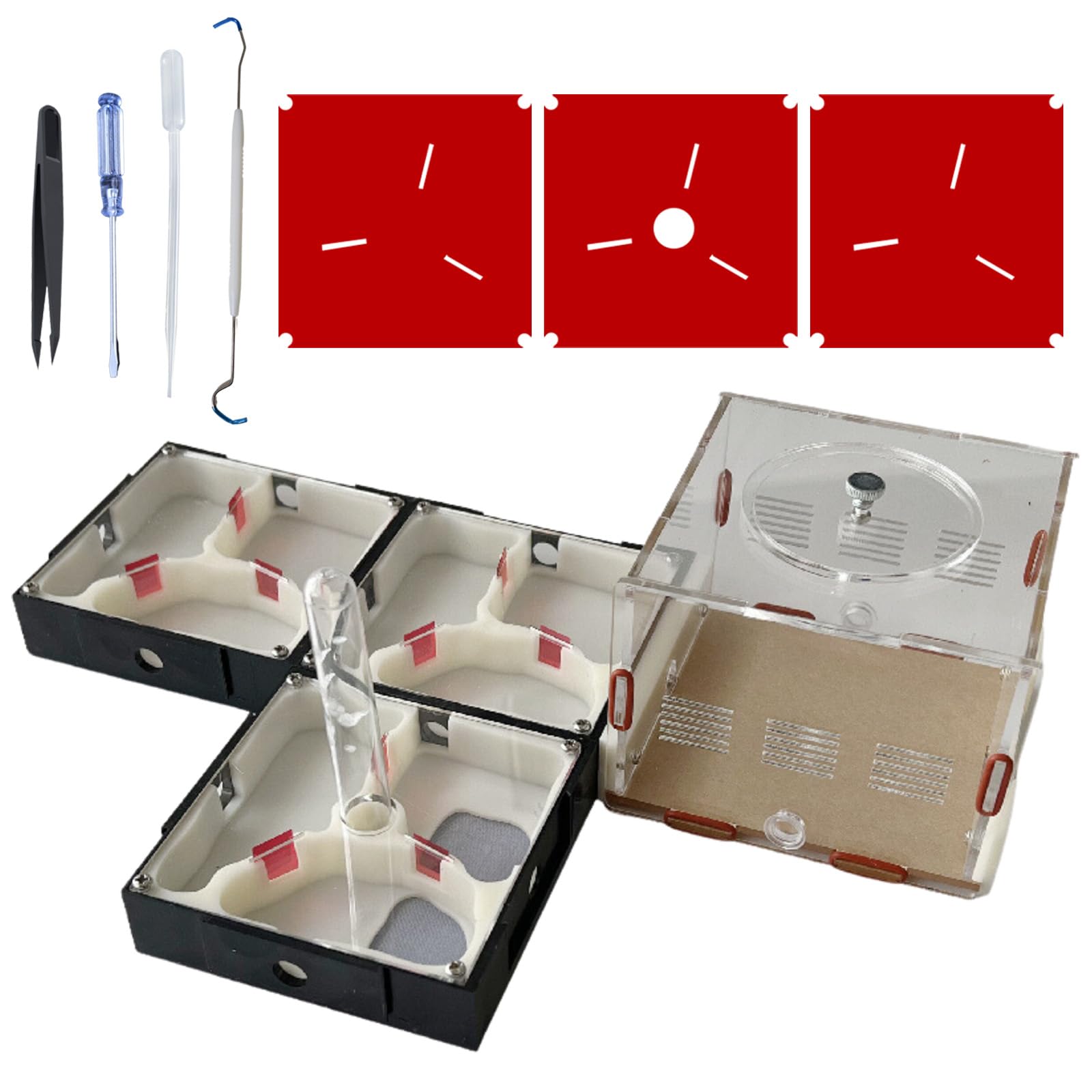
The Ants Footsteps nest is designed for keepers who want to build a custom layout without committing to a single brand’s closed ecosystem. The kit includes a farm nest, water tower nest, and activity area that can be arranged in multiple configurations. The acrylic is highly transparent and 4mm thick, giving you distortion-free viewing of brood, foraging, and social interaction.
A sunshade lid covers the nest chambers because ants instinctively avoid light and will dig deeper when a dark refuge exists. The water tower system uses cotton balls to wick moisture, so the brood chamber stays humid without flooding. Lids feature slots for direct access to individual chambers, letting you drop in food or replace water without disturbing the entire colony.
Assembly takes under 30 minutes if you ignore the booklet — the printed instructions skip critical steps like how to use the blue mat under the screens for water retention. Some users report that unbonded corner joints can flex under pressure, so pre-applying aquarium-grade silicone along the seams before introducing ants is recommended. For a build-your-own enthusiast, this expandable platform offers the most creative freedom in the mid-range.
Why it’s great
- 4mm crystal-clear acrylic with sunshade for dark nesting zones
- Separate water tower nest using cotton-wick hydration
- Customizable chamber layout with slotted access lids
Good to know
- Instructions are incomplete — skip them and use forum guides
- Corner seams may require silicone reinforcement
- Blue mat under screens is easily mistaken as superfluous
4. WodGod Illuminated Ant Farm Habitat
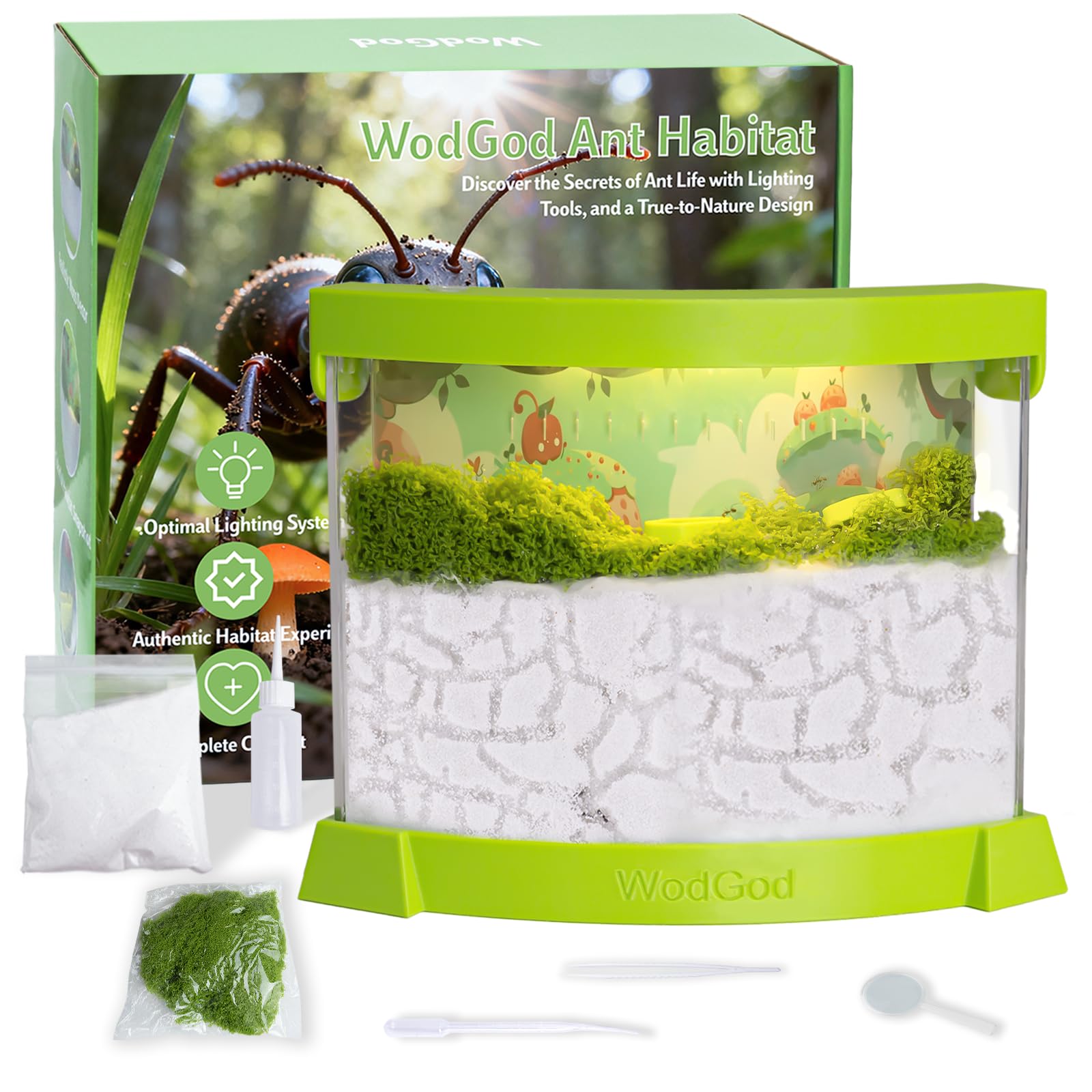
The WodGod Illuminated Habitat stands out in the crowded all-in-one category because of its top-down LED lighting system. Most ant farms rely on ambient room light that casts shadows across the tunnels; this one places a cool LED strip directly over the sand bed so you can see every gallery and chamber with no glare. The 500 grams of sterilized quartz sand promotes stable tunnel engineering without collapsing on the ants.
Included accessories cover nearly every need: a magnifier for close inspection, an anti-escape tweezers, a calibrated dropper, moss decor, and a complete habitat base. No assembly is required — pour the sand, insert the light strip, and introduce the ants. For classrooms or young keepers, this out-of-box readiness eliminates the frustration that kills interest before the colony has settled.
The habitat lacks expansion ports, so the 8.66 x 11.02 inch footprint is your colony’s permanent home. Some units arrive with hairline cracks in the acrylic due to shipping pressure, and the sand substrate is fine enough that ants may bury the food dish within hours. Keep the light off during initial tunneling to encourage deeper excavation, and test the lid seal before any ants are introduced.
Why it’s great
- Top-down LED lighting eliminates shadow glare on tunnels
- No assembly required — just pour sand and add ants
- Includes magnifier, dropper, tweezers, and moss decor
Good to know
- No expansion ports — your colony outgrows this unit
- Fine quartz sand can bury food dishes quickly
- Lid removal may cause escapes; shipping cracks reported
5. ELNMLHT Ant Farm Castle
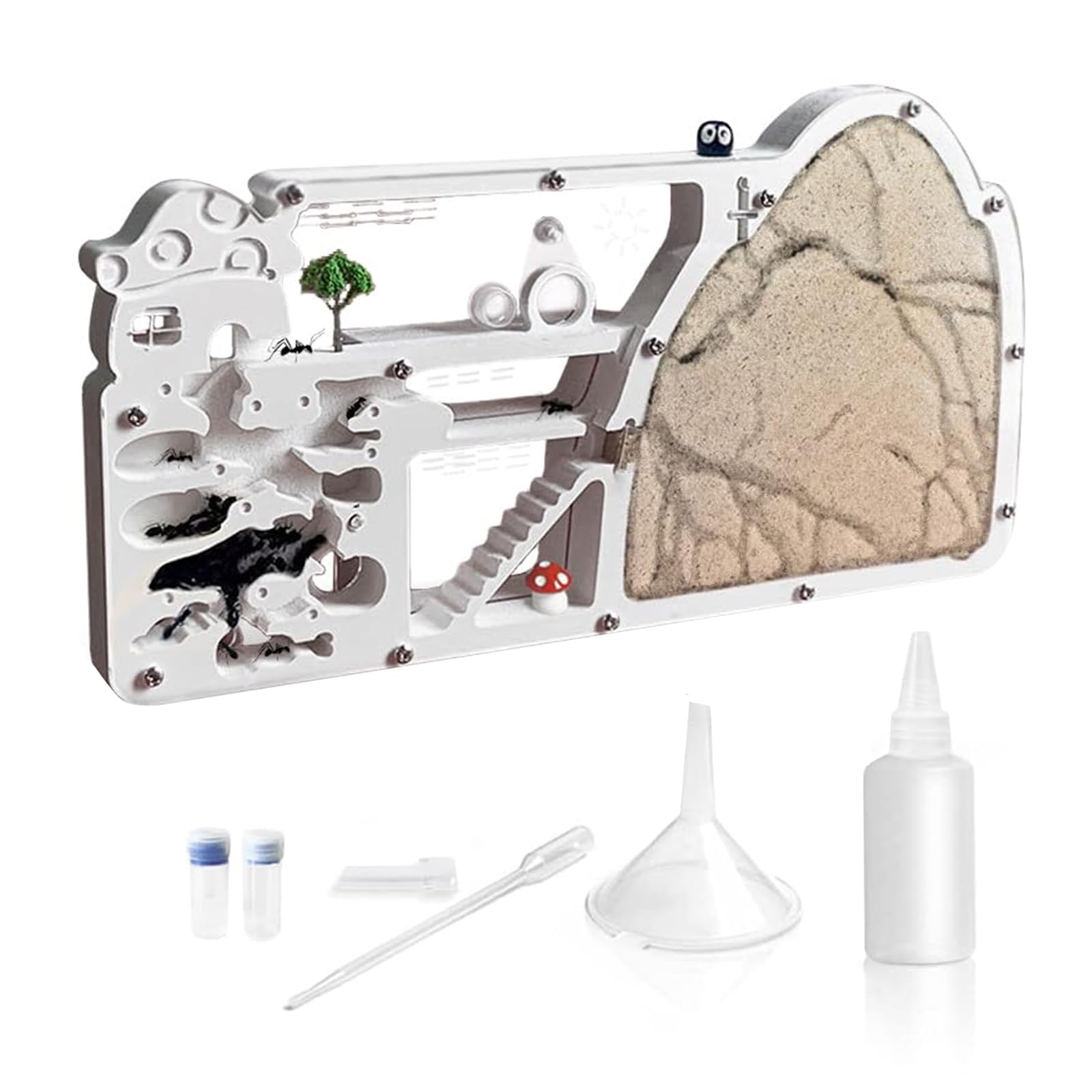
The ELNMLHT Ant Farm Castle delivers the most complete accessory bundle in the budget-conscious tier: a dedicated sand pack, drip bottle, funnel, water tower, and dropper — everything except the ants themselves. The automatic water supply system lets you pour a refill through a top hole every ten days, maintaining consistent moisture in the digging area without disassembly.
Double-sided acrylic panels give a wide-angle view of the colony from both the front and back, which is critical when ants build their main chamber against one wall. Sectioned zones for digging, feeding, egg-laying, and waste dumping mirror a real nest’s spatial organization, making it easier to spot which chamber is under stress. The slim 1.6-inch depth keeps the nest compact enough to fit on a classroom shelf or bedroom desk.
Vague instructions cause most setup errors — the water refill hole and its relationship to the water tower are not clearly explained, leading to over-soaking or dry zones in the first week. The castle also lacks escape-proof lip or double-seal edges, so small carpenter ant species may push through slight gaps. Once the colony stabilizes, however, this unit reliably supports active tunneling for months.
Why it’s great
- Ten-day automatic water refill system through top port
- Complete kit: sand, drip bottle, funnel, water tower, dropper
- Double-sided viewing with dedicated behavioral zones
Good to know
- Instructions are vague — especially around water refill procedure
- Lacks double-seal edges; small species may escape
- Only 1.6 inches deep; limits large colony expansion
6. wtsyant Ant Farm Castle
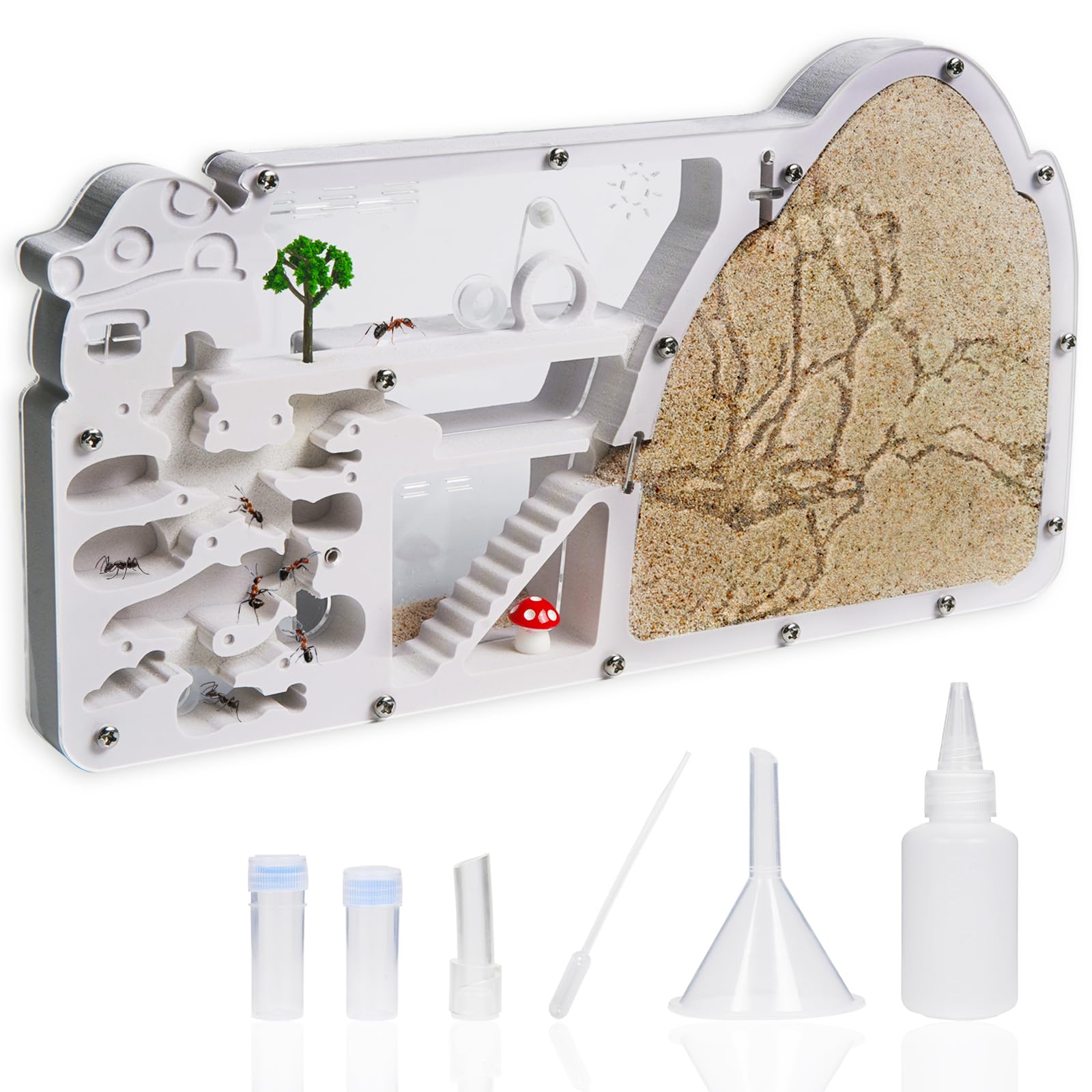
The wtsyant Ant Farm Castle earns its family-friendly reputation through small engineering details that beginners ignore at their peril. The 0.01mm ventilation holes — small enough to block even the tiniest thief ant escape — line the entire viewing surface, allowing constant airflow without gifting your colony freedom. Its 10.8 x 5.8 inch acrylic body is the largest in the castle-style category, giving workers room to build a wide tunnel network instead of stacking galleries.
Multiple zones for digging, feeding, watering, and egg-laying make maintenance straightforward. The automatic water system needs only a ten-day refill, and the instruction manual is refreshingly clear compared to competitors in the same tier. Harvester ant keepers report immediate tunneling activity within hours of introducing their colony, with zero escape incidents over several months.
The slim 1.6-inch depth means the nest is easy to tip if bumped during feeding, and the acrylic feels slightly thin against intentional pressure from older children. Some first graders’ classrooms have reported ants inside the feeding tube looking for a way back into the nest — a sign that the seal between tube and entry port could be tighter. For a mid-range option with minimal frustration, this castle hits the sweet spot between price and performance.
Why it’s great
- 0.01mm ventilation holes block escapes while enabling airflow
- Clear instructions — rare for this category
- Largest viewing area in the castle-style tier
Good to know
- Slim 1.6-inch depth makes the nest easy to tip over
- Feeding tube seal is not escape-proof against smallest workers
- Acrylic may flex under repeated kid handling
7. ANT GRAPE Large Acrylic Nest
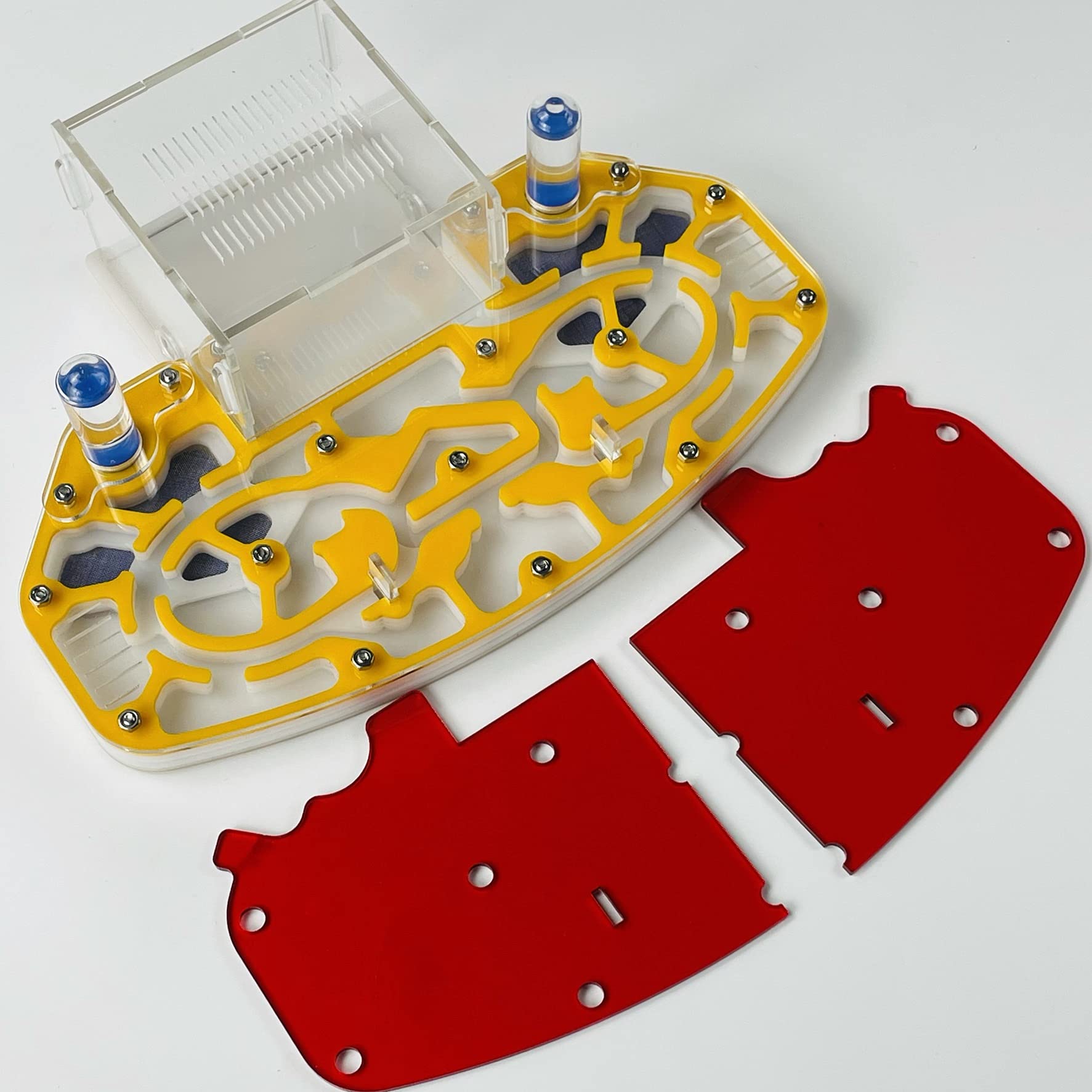
The ANT GRAPE nest is the entry-level acrylic formicarium that gets you started for the lowest upfront cost. Its 24 x 18 cm arena includes a built-in platform for feeding and decoration placement, plus a yellow printed top that adds a playful aesthetic for younger keepers. The transparent PC bottom lets you see tunneling activity from below, giving you a two-angle view of the colony.
Assembly requires patience — the kit comes unassembled with small acrylic pieces that need careful alignment. Several buyers report the joints are not perfectly flush, leading to gaps that worker ants exploit within hours of introduction. Sealing the perimeter with a thin bead of aquarium silicone before adding any substrate is mandatory, not optional. Once sealed, the 0.57-kilogram unit is lightweight enough to move between rooms for convenient observation.
This nest lacks any hydration system beyond what you manually inject through a dropper. Without a water tower or evaporation wick, you will need to monitor sand moisture daily, especially for brood-rearing species. For a temporary grow-out chamber or a weekend science project, the price is hard to beat — just understand that the assembly frustration and escape risk make it unsuitable for serious long-term colony keeping.
Why it’s great
- Largest footprint in the budget tier at 24×18 cm
- Clear bottom panel allows under-view of tunnels
- Lightweight and easy to reposition
Good to know
- Assembly takes hours and gaps are common without silicone
- No built-in hydration — daily manual monitoring needed
- Workers escape through unsealed joints quickly
FAQ
Can I use playground sand in my ant formicarium?
How often should I refill a water tower in a modular nest?
Why do my ants refuse to tunnel in the new formicarium?
How do I connect two modular ant nests without leaks?
Should I add a heating cable to my ant formicarium?
Final Thoughts: The Verdict
For most users, the best ant formicarium winner is the Lansber Ice City Starter Kit because its dual-hydration core and modular expandability let you start small and grow with the colony without buying a second nest. If you want a natural sand display with European craftsmanship, grab the Anthouse.ES 3D Natural Sand Farm. And for a classroom-ready, no-assembly-required observation kit, nothing beats the WodGod Illuminated Habitat.