
Our readers keep the lights on and the weekend projects moving. As an Amazon Associate, I earn from qualifying purchases.
Cutting the cord on cable starts with one decision: which antenna actually pulls in your local channels without the constant dropouts and pixelation that drive viewers back to their provider. The difference between a frustrating OTA setup and a reliable one comes down to your antenna’s ability to handle your specific terrain, tower distance, and building materials — not just a printed range number on a box.
I’m Rikta — the co-founder and writer behind FitlyFast. After spending countless hours analyzing real user reception reports, signal strength comparisons, and build quality across dozens of OTA antenna models, I’ve narrowed down exactly what separates a solid buy from a disappointment.
The guide ahead breaks down the top contenders across different range needs and budgets, so you can confidently pick the best antenna for ota tv for your home and finally enjoy free high-definition TV without monthly fees.
How To Choose The Best Antenna For OTA TV
Choosing an OTA antenna isn’t about picking the one with the biggest number on the box. Real-world reception depends on your distance from broadcast towers, the terrain between you and them, and whether your home is made of wood, brick, or stucco. Focus on these three factors first.
Understand Your Signal Environment
Input your address into a site like AntennaWeb or FCC DTV Reception Maps to see the exact direction, distance, and signal strength of the towers you need to hit. This tells you whether you need a unidirectional antenna (pointed at one cluster of towers) or a multi-directional model (if towers sit in different directions). If you are more than 40 miles from most towers or have hills and trees blocking the path, you need a higher-gain, amplified model.
Prioritize VHF Reception
Many antennas claim “HDTV” reception but only handle UHF channels (14-51). If your local networks like CBS, NBC, or ABC broadcast on VHF (channels 2-13), a UHF-only antenna will miss them entirely. Look for models that explicitly list VHF elements (longer rods or loops) for reliable reception on all major networks. The difference between a “UHF-only” and a “VHF/UHF” antenna is the difference between half a lineup and a complete one.
Decide on Amplification Carefully
A built-in amplifier boosts weak signals, which helps in fringe areas or when splitting the signal to multiple TVs. But if you live within 10-15 miles of strong towers, amplification can overload your tuner and cause reception problems. Some premium antennas like the Televes line handle this with automatic gain control that adjusts amplification per band. For most suburban setups within 25 miles, a high-quality passive antenna often works as well or better than an amplified one.
Quick Comparison
On smaller screens, swipe sideways to see the full table.
| Model | Category | Best For | Key Spec | Amazon |
|---|---|---|---|---|
| Televes Ellipse Mix 148883 | Premium Compact | Reliable reception with minimal dropouts | 75 mi range, 40 dBi UHF gain, AGC | Amazon |
| Televes DAT BOSS LR 149884 | Fringe Hunter | Extreme long-range fringe reception | 100 mi range, 46 dBi UHF gain, stacked boom | Amazon |
| Antennas Direct ClearStream 2V | Versatile Multi-Dir | Suburban homes, multi-directional towers | 60+ mi range, dual-loop VHF/UHF, reflector | Amazon |
| RCA Compact Yagi ANT751Z | Budget Yagi | Compact install, strong value | 75 mi range, pre-assembled, signal finder app | Amazon |
| Five Star Outdoor HDTV Antenna | Motorized Rotator | Changing tower direction, large install kit | 200 mi range, 360° IR remote rotation | Amazon |
| Five Star Outdoor Antenna | Multi-TV Split | Feeding 4 TVs with long cable runs | 200 mi range, 46″ long, ATSC 3.0 ready | Amazon |
| ANTOP Big Boy AT-400BV | Easy Install Amp | Simple roof/attic hookup, smart amplification | 85 mi range, Smartpass amp, VHF enhancer rods | Amazon |
In‑Depth Reviews
1. Televes Ellipse Mix 148883
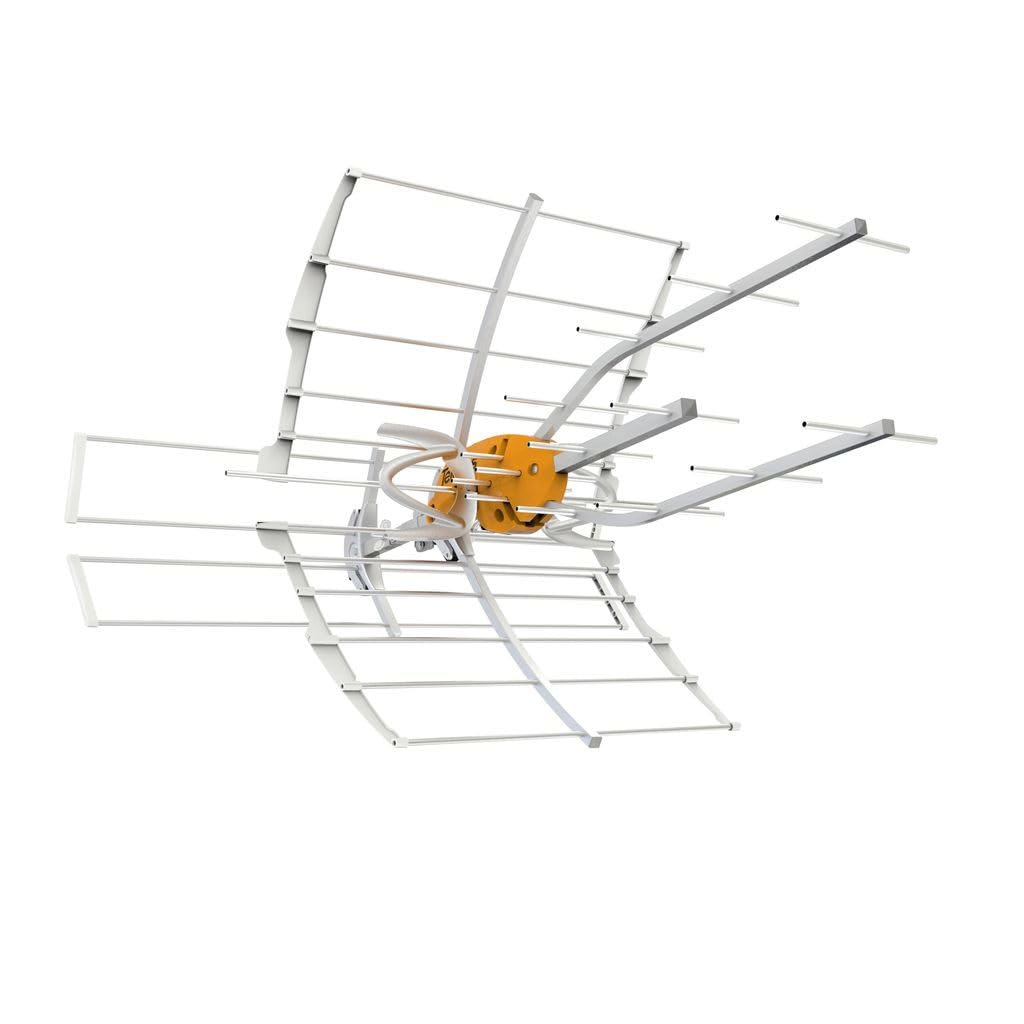
The Televes Ellipse Mix represents the sweet spot where professional-grade engineering meets accessible installation. Its patented triple-boom design with curved reflectors focuses reception into a 40-degree beamwidth, dramatically reducing multipath interference from buildings and trees. The built-in TForce preamplifier with automatic gain control adjusts amplification independently for High VHF and UHF bands, meaning you get a stable 36.5 dBi to 40 dBi boost without overloading your tuner when towers are strong.
Real-world users report gains of 20 to 30 additional channels over their previous antennas, even in difficult suburban terrain with hills and mixed woodlands. The tool-free assembly takes under a minute, and the weather-resistant aluminum and ABS construction laughs off rain and UV exposure. Its compact 38.8-inch width fits neatly in most attics without looking like a industrial structure.
The 4G, 5G, and FM filtering is a critical feature for anyone near cell towers — it prevents the interference that causes pixelation on stations you should receive clearly. For most cord-cutters within 40 to 70 miles of towers, this is the one antenna that reliably works without tinkering.
Why it’s great
- Automatic gain control prevents overload from strong signals
- Integrated LTE/5G filtering cleans up cellular interference
- Compact triple-boom design with easy 60-second assembly
- Stable reception on both High VHF and UHF bands
Good to know
- Not ideal for Low VHF channels (ch 2-6)
- Premium price point reflects the advanced electronics
- Requires a mast for mounting; included mast clamp works well
2. Televes DAT BOSS LR 149884
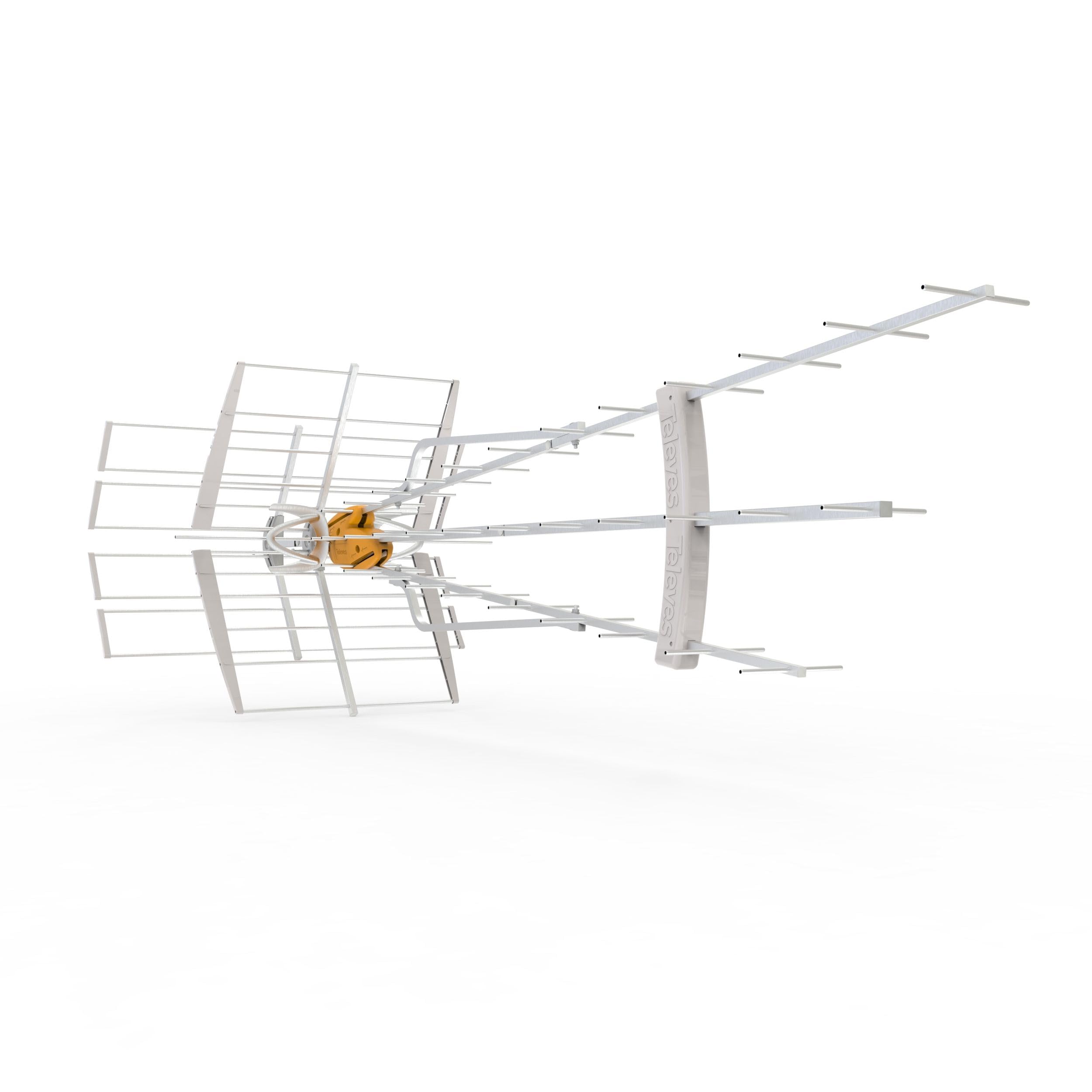
When you live at the edge of broadcast range — 60, 70, even 100 miles from the nearest cluster of towers — the Televes DAT BOSS LR is the antenna you turn to when everything else has failed. Its stacked triple-boom design with multiple directors delivers a staggering 46 dBi of UHF gain and a front-to-back ratio of 25 dB, meaning it literally ignores signals coming from behind it while locking onto the weak ones in front. This is not a subtle improvement; this is the difference between pixelated chaos and clear network TV.
Users in fringe areas across Wisconsin, Texas, and the Pacific Northwest report picking up 80 to 114 channels after installation, often doubling their previous count. The built-in TForce amplifier with independent band gain control handles the extreme conditions where lesser antennas struggle, and the integrated 4G/5G/LTE filtering is essential for those far from towers but close to cell infrastructure. The massive 84-inch width demands a solid mount and a clear line of sight, but the result is the most reliable fringe reception available at this price tier.
Construction is all aluminum and stainless steel, with ABS plastic enclosures that shrug off decades of weather. It ships with a UL-listed power inserter, mast clamps, and a weather boot for a professional-grade installation. This is the endgame antenna for rural cord-cutters.
Why it’s great
- Highest gain in its class for extreme fringe reception
- Superior 25 dB front-to-back ratio blocks unwanted signals
- Full 5G/LTE filtering prevents cellular tower interference
- Professional-grade weatherproof build
Good to know
- Large footprint requires significant mounting space
- Overkill for urban or close suburban setups
- Installation time is longer due to its size
3. Antennas Direct ClearStream 2V
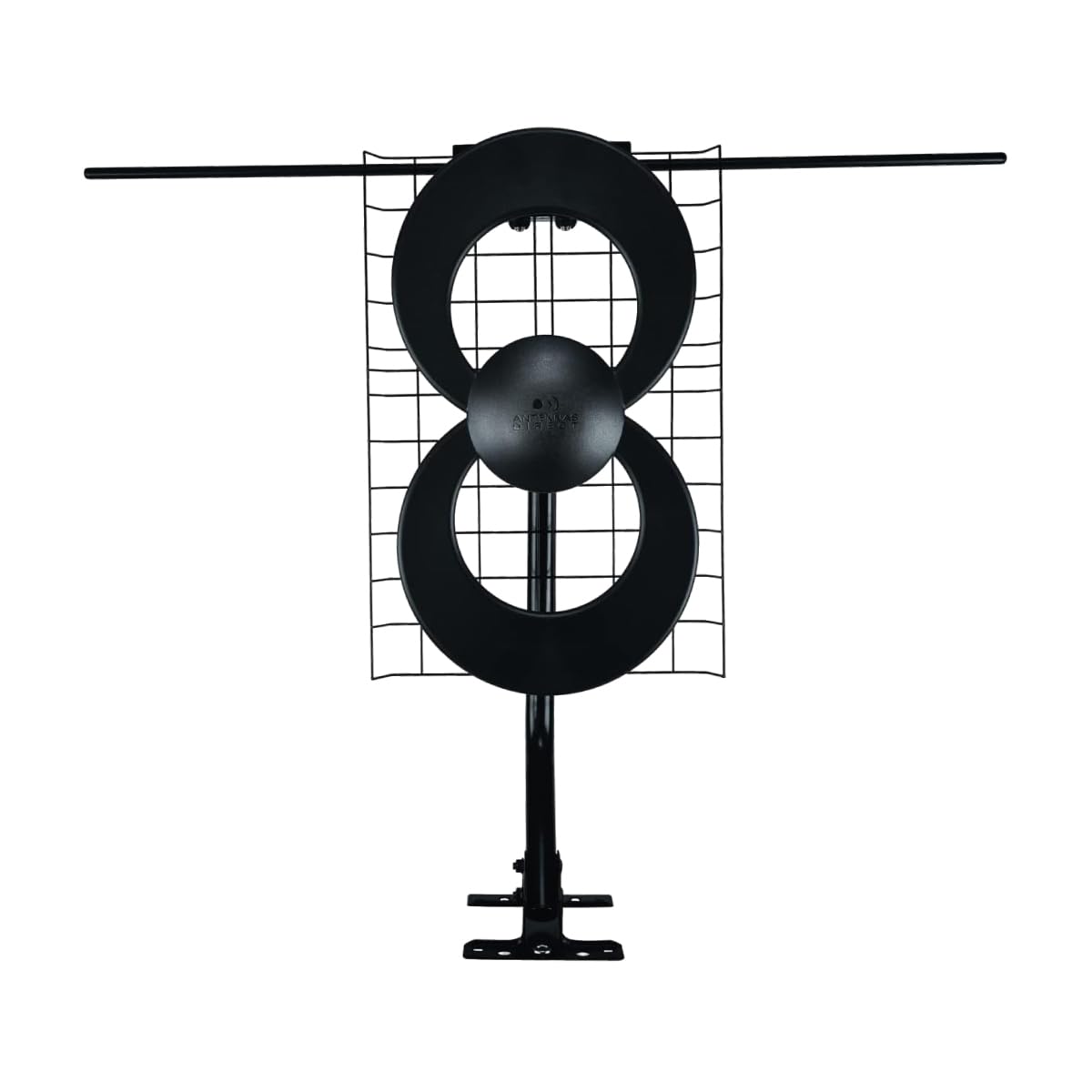
The ClearStream 2V occupies a unique position: it works as a multi-directional antenna out of the box (picking up signals from multiple directions), but adding the included reflector turns it into a focused directional antenna with improved forward gain. This flexibility is invaluable for suburban homes where towers sit at different angles. The double-loop design captures UHF channels cleanly, and the longer VHF elements handle channels 7-13 reliably for a complete network lineup.
Real-world reports from users in hilly Seattle suburbs and rural Pennsylvania show consistent capture of 60 to 85 clear channels when mounted in an attic or on a roof. The 20-inch mast with pivoting base allows mounting on vertical or horizontal surfaces, and the all-weather hardware is built for years of outdoor exposure. Many users pair it with a preamplifier for longer cable runs, but it performs admirably as a passive antenna for those within 30 miles of towers.
The lifetime manufacturer warranty on the antenna itself is a vote of confidence you don’t see from every brand. It lacks integrated 5G filtering, so users near cell towers may need an external filter, but for most setups the 2V delivers exceptional value and reliable daily performance.
Why it’s great
- Multi-directional mode with reflector for focused use
- Lifetime warranty on the antenna elements
- Strong VHF reception with dedicated VHF loop
- Compact 31-inch width fits many mounting locations
Good to know
- Coaxial cable not included in the box
- Low VHF (ch 2-6) reception is weak
- No built-in amplifier or filtering
4. RCA Compact Yagi ANT751Z

RCA’s ANT751Z proves you don’t need to spend a premium to get solid performance. This pre-assembled Yagi design with snap-lock UHF reflector elements and fold-out VHF rods goes from box to mounted in minutes. The 75-mile range rating is realistic for suburban and semi-rural areas, with users within 30 miles of towers reporting 50+ channels with full signal strength. The integrated matching transformer (75 ohm) means you connect coax directly without hunting for adapters.
The RCA Signal Finder app is a genuinely useful companion — it shows the direction of local towers using your phone’s compass and helps you align the antenna for maximum signal. Attic installations are common, with users reporting 80-90% signal strengths on major networks through roof materials. The compact 2-pound weight and included mast clamp make mounting straightforward, even on a balcony or chimney.
Customer feedback does note that the included mounting screws are not provided for the mast base, and the antenna requires proper grounding for outdoor safety. It lacks any built-in amplification or filtering, so users in challenging fringe environments may need to add a separate preamp. For the price, it is the most reliable entry point into cord-cutting.
Why it’s great
- Pre-assembled design installs in under 15 minutes
- Signal Finder app simplifies alignment
- Lightweight 2 lbs for easy mounting
- Excellent VHF/UHF reception within 40 miles
Good to know
- No coax cable or wood screws included
- Requires separate preamp for long cable runs
- Not recommended for extreme outdoor weather exposure
5. Five Star Motorized Rotation Antenna
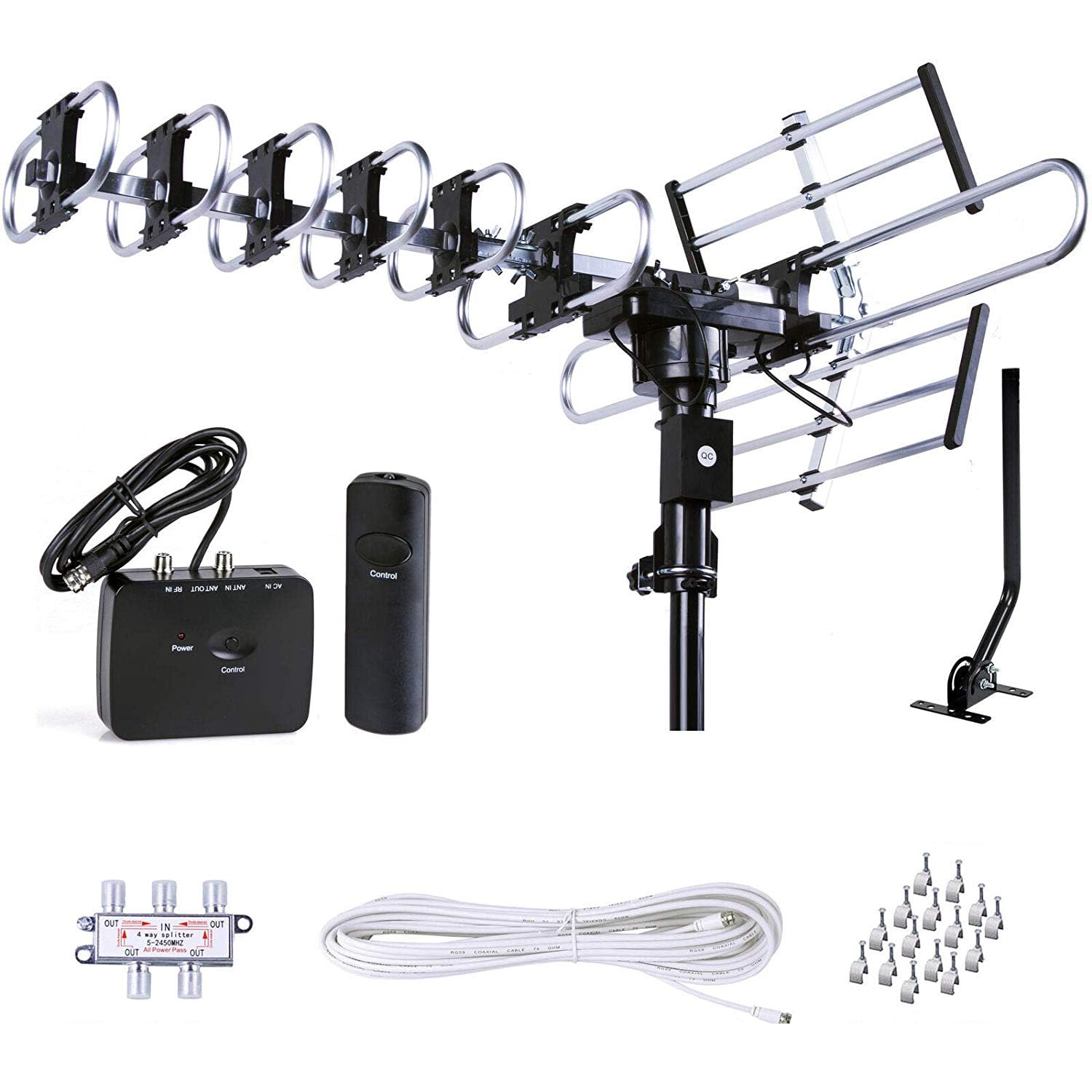
If your local towers are scattered across different directions, a fixed-direction antenna will leave you permanently choosing one group of stations at the cost of others. Five Star’s motorized model solves that with an infrared remote that rotates the antenna 360 degrees, letting you point at different tower clusters from the couch. The built-in super low-noise amplifier with 15-35 dB gain and an LTE filter cleans up signal before it reaches the tuner, and the 200-mile claim is best read as “strong for very long range” — real-world users at 40-60 miles report excellent results.
The installation kit is comprehensive: 40 feet of RG6 coaxial cable, a 4-way splitter, 15 cable clips, and a J-pole for mounting. This means fewer trips to the hardware store. Users in Northeast Tennessee report 58 channels clear through mountain terrain, and the ease of rotating the antenna from indoors is a game-changer for those with towers in multiple directions. The included high-quality copper cable enhances signal transmission over longer runs.
Build quality concerns appear in some reviews — one user reported the cable strap rusting after a few months, and the plastic components of the motorized base feel less premium than fixed models. For those with complex tower layouts who value convenience over absolute signal purity, this is a practical solution.
Why it’s great
- Motorized rotation lets you aim at different tower clusters
- Complete kit with 40ft coax, 4-way splitter, and J-pole
- Built-in amplifier with LTE filter for cleaner reception
- IR remote control from indoors for easy adjustment
Good to know
- Some reports of rust on cable straps after exposure
- Motorized base components feel less durable than fixed antennas
- Plastic parts may degrade under constant sun
6. Five Star Outdoor HDTV Antenna (B0B7R81MFX)

This Five Star model is built for homes that want to feed multiple TVs from a single antenna. The 46-inch extended length with larger receiving elements provides stronger signal capture than shorter designs, and the included 4-way splitter lets you distribute that signal to up to four televisions without needing a distribution amplifier for average-length cable runs. The ATSC 3.0 readiness means it will work with next-generation broadcast standards as they roll out in your market.
Users in Houston and Colorado report pulling in 90 to 128 channels from distances of 45 to 46 miles, with clear reception even through building shadows and challenging terrain. The assembly is straightforward but the instructions have one critical gap: the VHF vibrator alignment, where the screw heads must face the same way. Once installed, the 11 dB VHF gain handles channel 7-13 reliably, and the included J-pole and mounting bracket simplify roof or eave installation.
The biggest appeal here is the value-to-coverage ratio. For the price, you get a long-range antenna that can serve an entire household without additional equipment. The all-metal construction is sturdy, though the antenna is noticeably longer than many competitors — ensure your mounting location has enough clearance. It is a solid backbone for a whole-house cord-cutting setup.
Why it’s great
- Designed to feed up to 4 TVs with included splitter
- ATSC 3.0 ready for future broadcast standards
- Extended 46-inch length with larger UHF/VHF elements
- Includes J-pole, bracket, and 40ft coax cable
Good to know
- Assembly instructions miss alignment detail for VHF elements
- Longer size requires more mounting space
- No built-in amplifier for extremely long cable runs
7. ANTOP Big Boy AT-400BV

ANTOP’s “Smartpass” amplifier sets this antenna apart from basic amplified models. Unlike traditional amps that apply a blanket gain boost regardless of signal conditions, the Smartpass circuit analyzes incoming signal strength and adjusts amplification dynamically to prevent overload from strong towers while still boosting weak distant stations. The built-in 4G LTE filter is standard and effectively blocks cell tower noise that causes pixelation. The VHF enhancer rods extend to strengthen channels 7-13, addressing the most common complaint about many amplified antennas.
User reports are split between those who love it and those who found it underwhelming. On a hill with clear line of sight, one user pulled in 62 channels indoors — an impressive result for a non-attic installation. Others with challenging terrain found it performed no better than a simple flat antenna, and some returned it. The difference often comes down to exact signal conditions: the automatic gain control works best when towers are at moderate distances (20-50 miles) and struggles with very weak fringe signals.
The tool-free assembly is genuinely fast, and the modern white design looks less industrial than traditional Yagi antennas. It includes a 30-foot coaxial cable and mounting hardware, making it a near-complete solution out of the box. For suburban users who want a clean look and built-in smarts, the AT-400BV is a compelling option — but fringe-area users should look at the Televes models instead.
Why it’s great
- Smartpass amplifier dynamically adjusts to prevent overload
- Built-in 4G LTE filter for cleaner reception
- Tool-free assembly with modern white design
- Includes 30ft coaxial cable and mounting hardware
Good to know
- Performance varies significantly by location and terrain
- Not as effective in extreme fringe areas over 60 miles
- Some users found it no better than simpler antennas
FAQ
Should I mount my OTA antenna in the attic or on the roof?
Why do I need a 4G/5G filter on my TV antenna?
What does ATSC 3.0 mean for my OTA antenna?
Final Thoughts: The Verdict
For most users, the best antenna for ota tv winner is the Televes Ellipse Mix because it combines automatic gain control, built-in 4G/5G filtering, and exceptional build quality in a compact package that works reliably across suburban and near-fringe conditions. If you live in an extreme rural location and need every decibel of gain, grab the Televes DAT BOSS LR for its unmatched 46 dBi UHF performance. And for a budget-friendly entry point that still delivers strong reception, nothing beats the RCA Compact Yagi ANT751Z for sheer value and ease of installation.