
Every new parent knows the cycle: feed, burp, fuss, repeat. The wrong bottle introduces air with every swallow, turning a feeding session into a long battle against gas pains and spit-up, leaving both baby and parent exhausted.
I’m Rikta — the co-founder and writer behind FitlyFast. I’ve analyzed the internal vent systems, flow rate precision, and material safety across dozens of newborn bottles to separate genuine anti-colic engineering from clever marketing.
The right bottle delivers a consistent, vacuum-free flow that mimics breastfeeding, reducing swallowed air before it reaches the tummy. That’s why we’ve researched and compared the top options available now to help you find the absolute best anti colic bottles for newborns.
How To Choose The Best Anti Colic Bottles For Newborns
Not every bottle labeled “anti-colic” works the same way. The mechanism that prevents air ingestion — whether an internal straw, a vented disc, or a pressure-equalizing nipple — defines how effective the bottle actually is for a newborn, whose suck is weak and uncoordinated.
Vent System Design: Passive vs. Active Air Removal
The two main designs are internal vent tubes (Dr. Brown’s style) and nipple slit vents (Philips Avent style). Internal tubes physically channel air down the side and away from the milk, creating a vacuum-free environment. Nipple vents use a small hole in the nipple skirt to equalize pressure. Internal vents are generally more aggressive at reducing colic symptoms but add cleaning steps.
Nipple Flow Rate: Matching Your Newborn’s Suck Strength
A standard Level 1 flow nipple can overwhelm a newborn, causing gulping and air swallowing. Look for a “slow flow” or “extra slow flow” nipple, and consider bottles that offer a preemie flow level — the slowest possible rate. A nipple that drips when inverted is too fast; a true slow flow nipple should release milk only when the baby actively sucks.
Quick Comparison
On smaller screens, swipe sideways to see the full table.
| Model | Category | Best For | Key Spec | Amazon |
|---|---|---|---|---|
| Dr. Brown’s Preemie Flow | Premium/Vent | Premature & weak-suck newborns | Internal vent system + Preemie flow nipple | Amazon |
| Dr. Brown’s Options+ Glass | Premium/Glass | Parents wanting borosilicate glass durability | Borosilicate glass + Level 1 vent system | Amazon |
| Philips Avent Natural | Mid-Range/Response | Breastfeeding transition & paced feeding | Natural Response nipple (Flow 2) | Amazon |
| Comotomo Gen 2 Silicone | Mid-Range/Silicone | Dual anti-colic vents + breast-like feel | True slow-flow laser-punctured nipple | Amazon |
| Gulicola Natural Glass 5oz | Mid-Range/Glass | Budget-friendly borosilicate glass set | Borosilicate glass + slow flow nipple | Amazon |
| Gulicola Glass 3oz | Entry/Glass | Smallest volume for early newborn days | 3 oz borosilicate glass + extra slow flow nipple | Amazon |
| Pigeon PPSU Wide Neck | Premium/PPSU | Lightweight, unbreakable & anti-colic | Wide neck PPSU + SS nipple (0m+) | Amazon |
In‑Depth Reviews
1. Dr. Brown’s Preemie Flow Bottle Set

This 3-pack is specifically engineered for the most vulnerable feeders: preemies and newborns with an underdeveloped suck. The Preemie Flow nipple is the slowest flow rate in Dr. Brown’s lineup, which dramatically reduces the risk of overfeeding and the air gulping that triggers colic. The internal vent system here is identical to the full-size Options+ line, meaning you get the same clinically proven air-separation technology in a smaller 4 oz bottle.
The packaging includes both Preemie Flow and Level T nipples, allowing a gradual flow progression as the baby’s feeding endurance matures. Parents report that NICU nurses specifically request these bottles for premature infants, and the consistent, vacuum-free flow preserves more of the milk’s natural nutrients by preventing agitation during feeding.
Cleaning does require the small vent tube and collar pieces, but the reduction in gas and spit-up reported by verified buyers makes the extra minute of washing worthwhile. For any newborn, especially those born early or with reflux tendencies, this is the most targeted anti-colic solution on the market.
Why it’s great
- Preemie flow nipple is the slowest available, ideal for weak suck
- Internal vent system is clinically proven to reduce colic and gas
- Level T nipple provides a gentle flow transition as baby grows
Good to know
- More components to clean with the internal vent tube
- 4 oz size may be outgrown quickly by heavier eaters
2. Dr. Brown’s Options+ Narrow Glass Baby Bottles 4 oz
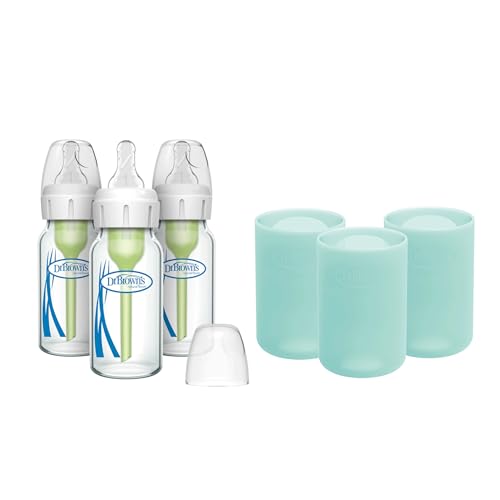
This 3-pack combines the same internal vent technology of the Options+ line with thick borosilicate glass that resists thermal shock — important for parents who move bottles directly from fridge to warmer. The narrow shape fits standard bottle warmers and the included mint silicone sleeves provide grip and drop protection while still letting you see the milk level clearly.
The Level 1 slow flow nipple works well for full-term newborns, and the breast-like nipple shape encourages a proper latch for babies transitioning between breast and bottle. Verified buyers who tested both plastic and glass versions consistently report that the glass bottles heat more evenly and hold temperature longer, reducing cold-spot fussiness during middle-of-the-night feeds.
All five components (bottle, nipple, collar, vent tube, vent insert) need to be washed, but the reduction in burping and spit-up is a consistent trade-off parents accept. The durable glass construction means these bottles survive multiple children without staining or odor retention, adding long-term value.
Why it’s great
- Borosilicate glass is heat-resistant and odor-free
- Silicone sleeve adds grip and drop protection
- Clinically proven vent system reduces colic symptoms
Good to know
- Narrow shape may not fit all bottle warmers
- Five-piece assembly requires thorough cleaning
3. Philips Avent Natural Baby Bottles 4oz (4-Pack)
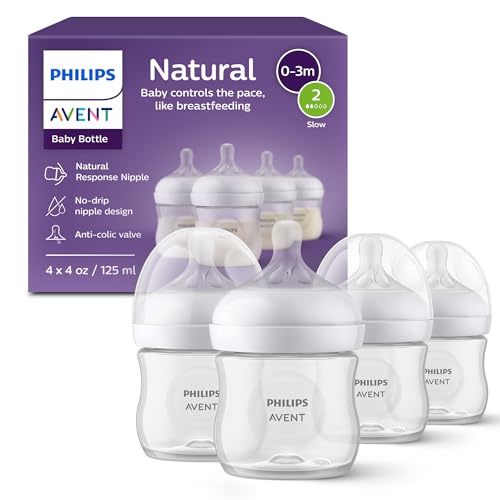
The Natural Response nipple is the defining feature here — it releases milk only when the baby actively sucks and stops flowing when the baby pauses to breathe or swallow. This mimics breastfeeding more closely than any vent-tube system, making it the top choice for parents who want to combine breast and bottle feeding without nipple confusion. The Flow 2 (slow) nipple is calibrated for newborns.
The anti-colic valve is integrated into the nipple skirt, keeping air bubbles away from the milk during feeding. The wide, breast-shaped nipple encourages a deep latch, and the bottle body is BPA-free and easy to grip. Verified reviews emphasize that the no-drip design prevents wasted milk, and the 4-pack format is ideal for staggered bottle prep across a full day.
The bottle has only three main pieces to clean — nipple, collar, and body — significantly simpler than vent-tube systems. Some parents note that the valve can be slightly tricky to seat properly the first time, but once seated, it prevents both colic and leakage. For paced feeding and breast-to-bottle transitions, this is the most intuitive design.
Why it’s great
- Natural Response nipple only flows during active sucking
- Simple three-piece design is easy to clean
- Anti-colic valve integrated into the nipple skirt
Good to know
- Valve may need adjustment to prevent leaks
- Flow 2 may be too fast for some premature newborns
4. Comotomo Silicone Baby Bottle Gen 2 (5oz, 2-Pack)
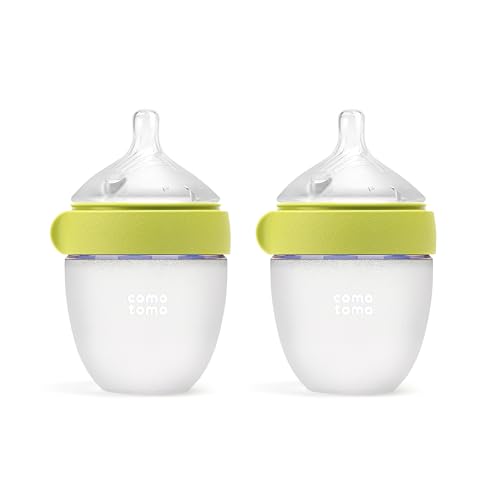
The Gen 2 Comotomo refines the original’s popular silicone body with a wider base (40% wider than v1) for tip-over stability, a redesigned ring for easier leak-proof assembly, and a laser-punctured true slow-flow nipple that delivers a consistent rate without dripping. The interior ensures milk contacts only premium food-grade silicone, eliminating any plastic aftertaste that can turn newborns off feeding.
The dual anti-colic vents are located in the nipple collar, allowing air to enter the bottle without passing through the milk. The wide-neck design means you can clean every surface with a standard bottle brush in under 30 seconds. Verified parents switching from Avent or Dr. Brown’s to Comotomo consistently report that their babies finished larger volumes per feed with less fussing, likely due to the combination of breast-like silicone texture and optimized flow.
The 5 oz size is a sweet spot for the first 3-4 months, and the drop-proof silicone body makes it a safer choice than glass when baby starts holding the bottle independently. The one trade-off: the silicone can be slightly tacky, attracting lint, but it provides a secure grip for both parent and baby.
Why it’s great
- Full silicone body eliminates plastic aftertaste
- Laser-punctured nipple provides true slow-flow rate
- Dual anti-colic vents reduce gas without extra parts
Good to know
- Silicone surface may attract dust and lint
- Nipple may collapse if vent holes are not cleaned properly
5. Pigeon PPSU Nursing Baby Bottle Wide Neck (5 oz, 2-Pack)
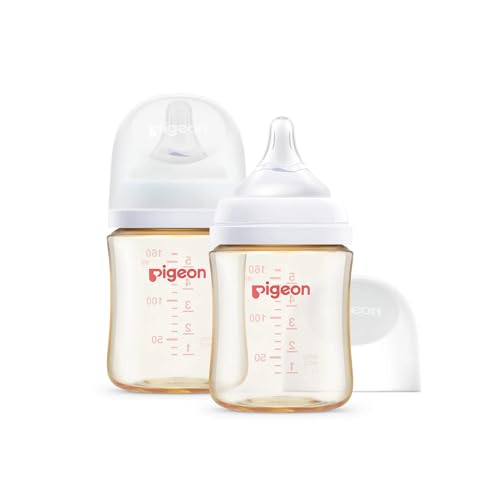
Pigeon’s PPSU (polyphenylsulfone) bottles offer a unique material advantage: PPSU is lighter than glass, more durable than standard plastic, and can withstand repeated sterilization without degrading or clouding. The amber-tinted PPSU also resists odor and staining from formula or breast milk better than clear plastics. This 2-pack comes with SS (extra slow flow) nipples designed for newborns 0 months+, based on research into baby’s natural sucking movements.
The wide neck and streamlined body are easy to grip, and the latch-on line on the nipple guides the baby’s tongue placement for effective adsorption. The anti-colic vents are integrated into the nipple platform, and the SS flow rate is genuinely slow — verified buyers note that it significantly reduced both milk leakage from the mouth and the need for mid-feed burping compared to bottles with faster nipples.
The 5 oz capacity is appropriate for the newborn period, and the bottle transitions well up to 8 months with larger nipples (sizes S, M, L available separately). The main consideration is the premium pricing, but the PPSU construction outlasts multiple children without replacement, making the per-use cost very low for families planning more than one child.
Why it’s great
- PPSU is lightweight, shatterproof, and sterilization-safe
- SS nipple flow is genuinely slow for newborn safety
- Wide neck design easy to clean and reassemble
Good to know
- Premium price compared to standard plastic bottles
- Nipple size upgrade needed as baby grows
6. Gulicola Natural Glass Baby Bottle 5 oz (2-Pack)
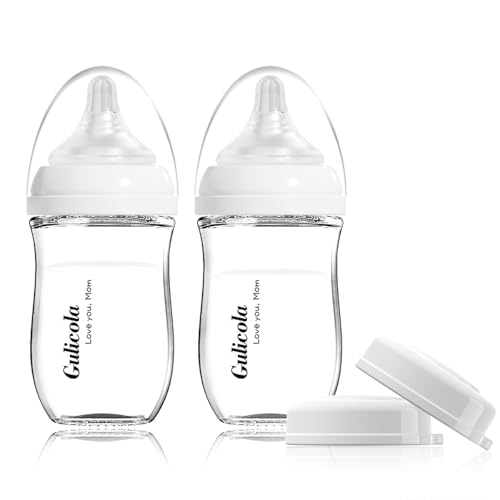
This Gulicola set delivers borosilicate glass bottles at a price point that competes with mid-range plastic options, making it a smart entry point for parents committed to glass without overspending. The 5 oz volume hits the ideal size for most newborns’ feeds, and the slow flow nipple is specifically designed to reduce air intake for breastfed babies transitioning to bottle feeding.
The ultra-soft nipple mimics the natural feel and flexibility of breastfeeding, and the anti-colic vents are positioned to allow continuous drinking without gasping. The wide neck design means only four components to clean, and the bottles can be sterilized in warmers, microwaves, boiling water, or steam sterilizers without risk of thermal shock. Verified buyers compare the feel favorably to more expensive glass alternatives, noting the same durable construction and no-leak seal.
One minor trade-off: the vent system is less sophisticated than Dr. Brown’s internal tube design, and some users report minor air bubble buildup in the nipple during feeds. However, for the price, the Gulicola set offers a practical, toxin-free feeding solution that prioritizes simplicity and material purity over mechanical complexity.
Why it’s great
- Durable borosilicate glass resists thermal shock
- Simple four-piece assembly is easy to clean
- Ultra-soft nipple supports breast-to-bottle transition
Good to know
- Vent system may allow slight air bubble buildup
- Slow flow nipple may still be too fast for some preemies
7. Gulicola Small Glass Baby Bottle 3 oz (2-Pack)

This 2-pack uses the smallest practical feeding volume — 3 oz — which is specifically useful for the first weeks when a newborn’s stomach capacity is tiny and feeding volumes are measured in milliliters. The extra slow flow (SS) nipple is calibrated for newborns with a weak or uncoordinated suck, reducing the risk of choking and air swallowing that standard slow flow nipples can still cause.
The borosilicate glass construction resists drops and temperature changes, and the nipple design includes guidance points that train the baby to use a correct suction pattern, which can help maintain breastfeeding latch quality. The wide neck allows easy cleaning, and the 4-piece assembly (bottle, collar, nipple, cap) is one of the simplest on the market. Verified reviews specifically note that the true extra slow flow rate makes these bottles effective for breastfed babies who struggle with larger, faster nipples.
The 3 oz capacity is the main limitation — many babies will outgrow the volume within 6-8 weeks and parents will need to purchase larger bottles. But for the narrow window of early newborn feeding, having bottles that prevent overpowering a tiny stomach is worth the temporary size constraint.
Why it’s great
- 3 oz volume matches newborn stomach capacity perfectly
- Extra slow flow nipple prevents choking and overfeeding
- Borosilicate glass is chemical-free and heat-safe
Good to know
- Small size is outgrown quickly as feeding volumes increase
- Vent system less effective at removing air than tube-based designs
FAQ
How does an anti-colic bottle differ from a regular bottle?
Can I use an anti-colic bottle for a breastfed baby?
Are glass anti-colic bottles better than plastic ones?
How many anti-colic bottles do I need for a newborn?
What does “vacuum-free feeding” mean in anti-colic bottles?
Final Thoughts: The Verdict
For most users, the best anti colic bottles for newborns winner is the Dr. Brown’s Preemie Flow Bottle Set because its preemie flow nipple and internal vent system provide the most aggressive air-separation for fragile feeders. If you want a simpler cleaning routine and a bottle that supports paced, breastfeeding-mimicking feeding, grab the Philips Avent Natural 4-Pack. And for parents who prioritize lightweight, shatterproof material with a nutrient-safe PPSU body, nothing beats the Pigeon PPSU Wide Neck Bottle.