
Our readers keep the lights on and the weekend projects moving. As an Amazon Associate, I earn from qualifying purchases.
Whether it’s road salt eating your car’s undercarriage, coastal humidity attacking your tools, or moisture locking up your motorcycle’s bolts, the right spray turns bare metal into an impenetrable fortress. This guide breaks down the top performers that won’t quit.
I’m Rikta — the co-founder and writer behind FitlyFast. I’ve spent countless hours analyzing chemical formulations, reading corrosion test data, and comparing real-world user results to find the spray that truly protects metal surfaces.
Each product below was selected based on its formulation, application ease, and proven ability to halt oxidation. This is your complete resource for finding the absolute best anti corrosion spray for your specific needs.
How To Choose The Best Anti Corrosion Spray
Not all anti-corrosion sprays are created equal. A product that works wonders on electronics might run off a vertical chassis panel, and a heavy-duty wax that seals a frame rail could be useless for freeing a seized bolt. Understanding the chemistry and application method is the key to getting the right protection.
Coating Type: Wax, Lanolin, or Polymer
Wax-based sprays like cavity waxes form a thick, non-hardening barrier that re-flows into scratches, making them ideal for enclosed box sections and door sills. Lanolin-based products, such as Fluid Film, penetrate deeply and offer excellent creep, but can remain tacky and attract dirt. Polymer-bonding sprays, like ACF-50 and CorrosionX, create a thin, molecular-level film that is dielectric and safe for sensitive electronics. Your environment and application will dictate which layer is best.
Dielectric Strength and Electrical Safety
If you plan to spray battery terminals, wiring harnesses, or circuit boards, the dielectric rating is non-negotiable. A true anti-corrosion spray displaces moisture and insulates connections without conducting electricity. Look for ratings in the thousands of volts (e.g., 39,000V) to ensure safety on sensitive electronics. Waxy or conductive coatings can cause shorts, so confirm the product is explicitly marked as dielectric safe.
Self-Healing and Penetration Ability
For vehicles and machinery, a spray that self-heals after being scratched or punctured provides long-term protection without constant reapplication. Products like JENOLITE Waxoil and 3M Cavity Wax Plus are designed to re-flow into damaged areas. For freeing rusted parts, a penetrating formula like CorrosionX excels at creeping into tight spaces, while a thicker converter like the Meuvcol Rust Converter chemically neutralizes rust and creates a paintable primer surface.
Quick Comparison
On smaller screens, swipe sideways to see the full table.
| Model | Category | Best For | Key Spec | Amazon |
|---|---|---|---|---|
| CorrosionX Aviation (16 oz) | Aviation-Grade | Aircraft & electronics | Self-healing FTFC tech | Amazon |
| 3M Cavity Wax Plus (18 oz) | Cavity Wax | Enclosed panels & frames | Non-hardening & self-healing | Amazon |
| ACF-50 Anti-Corrosion (13 oz) | Polymer Compound | Motorcycles & electronics | Non-flammable & dielectric | Amazon |
| CorrosionX Rust Inhibitor (6 oz) | Dielectric | Marine & electrical terminals | 39,000V dielectric rating | Amazon |
| JENOLITE Waxoil (500ml) | Wax Coating | Underbody & chassis | Self-sealing waxy film | Amazon |
| Meuvcol Rust Converter (35 oz) | Converter | Active rust treatment | 35 fl oz brush-on coverage | Amazon |
| Fluid Film (1 Gal) | Lanolin | Undercarriage & mowers | 128 oz bulk value | Amazon |
In‑Depth Reviews
1. CorrosionX Aviation (16 oz)
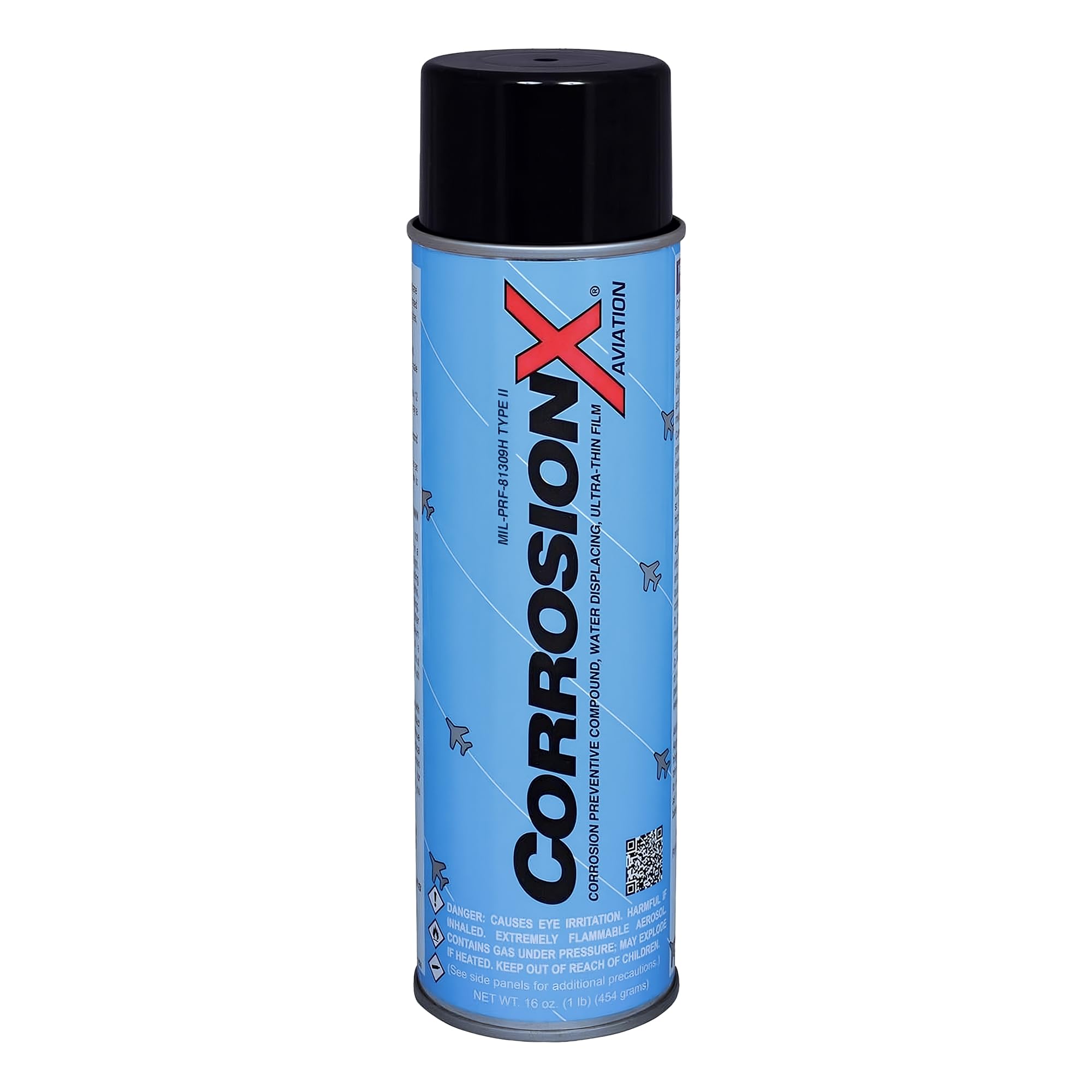
This is the gold standard for anyone who cannot afford failure. The exclusive Polar Bonding and Fluid Thin Film Coating (FTFC) technology displaces moisture on a molecular level, climbing rivets and penetrating lap seams to stop corrosion before it starts. It is used by U.S. military and NATO forces and holds an official National Stock Number, which speaks volumes about its reliability in extreme conditions.
Unlike wax or lanolin coatings, the FTFC is a self-healing film that does not harden, meaning it continues to protect exposed metal even after surface scratches. It is completely safe for avionics, battery terminals, and circuit boards because it is non-conductive and contains no waxes or silicones. Users report freeing stuck pistons on old outboard motors and protecting airframes for over 20 years.
This is a premium investment, but for long-term protection of expensive vehicles, aircraft, or sensitive electronics, it is the most advanced solution on the market. The 16 oz aerosol provides good coverage for critical components.
Why it’s great
- Self-healing molecular bond for continuous protection
- Certified safe for all electronics and avionics
- Trusted by U.S. military and NATO forces
Good to know
- Premium pricing compared to standard sprays
- Thin film may not be ideal for thick, visible underbody coatings
2. 3M Cavity Wax Plus (18 oz)
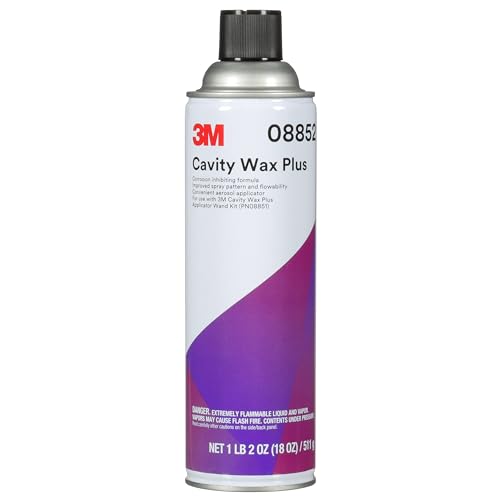
If you are serious about protecting internal body panels, frame rails, and structural enclosures from the inside out, 3M’s Cavity Wax Plus is the professional standard. This aerosol delivers a non-hardening wax that stays pliable forever, so it never chips, peels, or cracks as the metal flexes. The self-healing formula reflows into scratches and crevices, maintaining a continuous barrier against moisture.
Users note it sprays thin enough to work deep into crevices but sets to a robust, non-flaking film. Applying two coats with a few hours between ensures complete coverage. It is specifically designed for use with the 3M Cavity Wax Plus Applicator Wand Kit for precise injection into blind areas, making it the go-to for collision shops and rust-proofing specialists.
While it is a premium product with a price to match, a little goes a long way. It is purpose-built for automotive internal corrosion protection and is not the best choice for visible external surfaces.
Why it’s great
- Professional non-hardening formula for lifetime flexibility
- Self-healing properties protect scratches in enclosed spaces
- Industrial-grade for maximum cavity wax protection
Good to know
- Requires wand kit (sold separately) for best application
- High cost per can for budget-conscious buyers
3. ACF-50 Anti-Corrosion (13 oz)
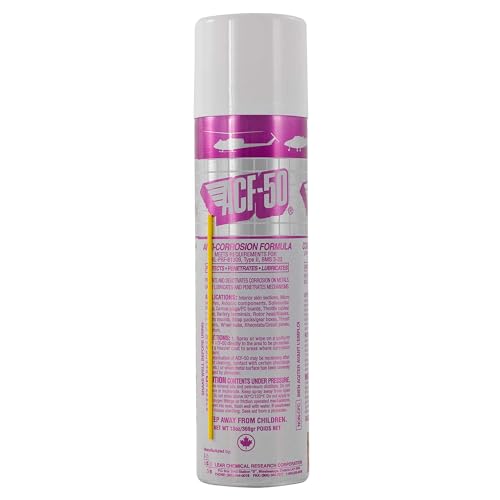
ACF-50 has built a legendary reputation in the aviation and motorcycle communities for a reason: it kills existing corrosion and prevents new rust with a single application. The formula is non-flammable, non-carcinogenic, and virtually non-toxic, making it safe to spray directly onto electronics, alternators, wiring, and battery terminals without any risk of short circuits.
It provides excellent low-shear lubrication for moving parts and cables, penetrating deep into connections. Users report it bonding chemically to metal, leaving a non-greasy film that lasts through harsh weather. Many have used it effectively on pellet grills, tools, and aircraft engines, noting it outlasts and outperforms lanolin-based products that can remain tacky.
It is a mid-range investment that punches above its weight. The single negative is that some users report broken nozzles on arrival, but the product inside is considered the best in its class for corrosion control.
Why it’s great
- Kills active corrosion and prevents new rust
- Safe for all electronics and electrical components
- Non-flammable and low-toxicity formula
Good to know
- Nozzle quality can be inconsistent
- May require annual reapplication in harsh environments
4. CorrosionX Rust Inhibitor (6 oz)
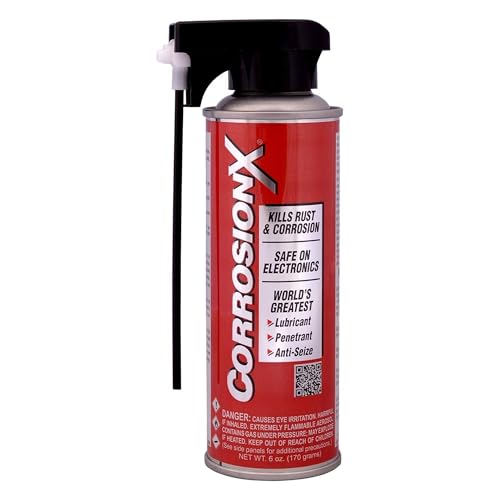
This is the original industrial-strength CorrosionX that earned its stripes by being qualified by the U.S. Navy as an Advanced Corrosion Preventive Compound. It forms a dielectric barrier rated over 39,000 volts, molecularly bonding to metal and subsurfaces to block moisture and stop galvanic corrosion between dissimilar metals. It is the go-to for marine engines, boat trailers, and coastal equipment.
Users have used it for decades to fix corroded electrical terminals, clean 50-year-old audio equipment, and protect outboard motors. It also functions as a deep-penetrating lubricant that frees rusted bolts and hardware. The 6 oz aerosol is perfect for toolboxes and glove compartments, though users warn the spray nozzle can be messy and hard to control for precise application.
For the price, it delivers huge value as a multi-purpose protectant, lubricant, and penetrant. It does leave a protective film that some find slightly oily compared to wax-based options.
Why it’s great
- Qualified by U.S. Navy for marine corrosion protection
- 39,000V+ dielectric rating for safe electronics use
- Penetrates and lubricates while protecting
Good to know
- Spray nozzle is imprecise and can be messy
- Small 6 oz can may not cover large areas
5. JENOLITE Waxoil (500ml)

JENOLITE Waxoil offers a thick, waxy protective layer that drives out moisture and kills existing rust. The advanced formulation self-seals when scratched or punctured, providing ongoing protection even after minor damage. It sprays on easily and dries to a clear, hard film that stays on vertical surfaces without running, making it ideal for underbody and chassis protection.
Users in the rust belt confirm it outperforms lanolin-based products that can leave a sticky residue, and they appreciate that it stays clean and does not attract dirt. It has been used successfully on suspension components, camper slide rails, and frame rails. Many prefer it because it does not have the strong, unpleasant odor associated with lanolin sprays.
It is a mid-range option that competes directly with cavity waxes but at a lower cost per ounce. It works best as a topcoat protectant rather than a deep-penetrating oil for freeing rusted parts.
Why it’s great
- Self-sealing formula repairs scratches automatically
- Dries clear with a clean, non-greasy finish
- Strong adhesion on vertical and hard-to-reach areas
Good to know
- Not suitable for electronics or electrical connections
- Waxy residue can be difficult to remove if over-applied
6. Meuvcol Rust Converter (35 oz)
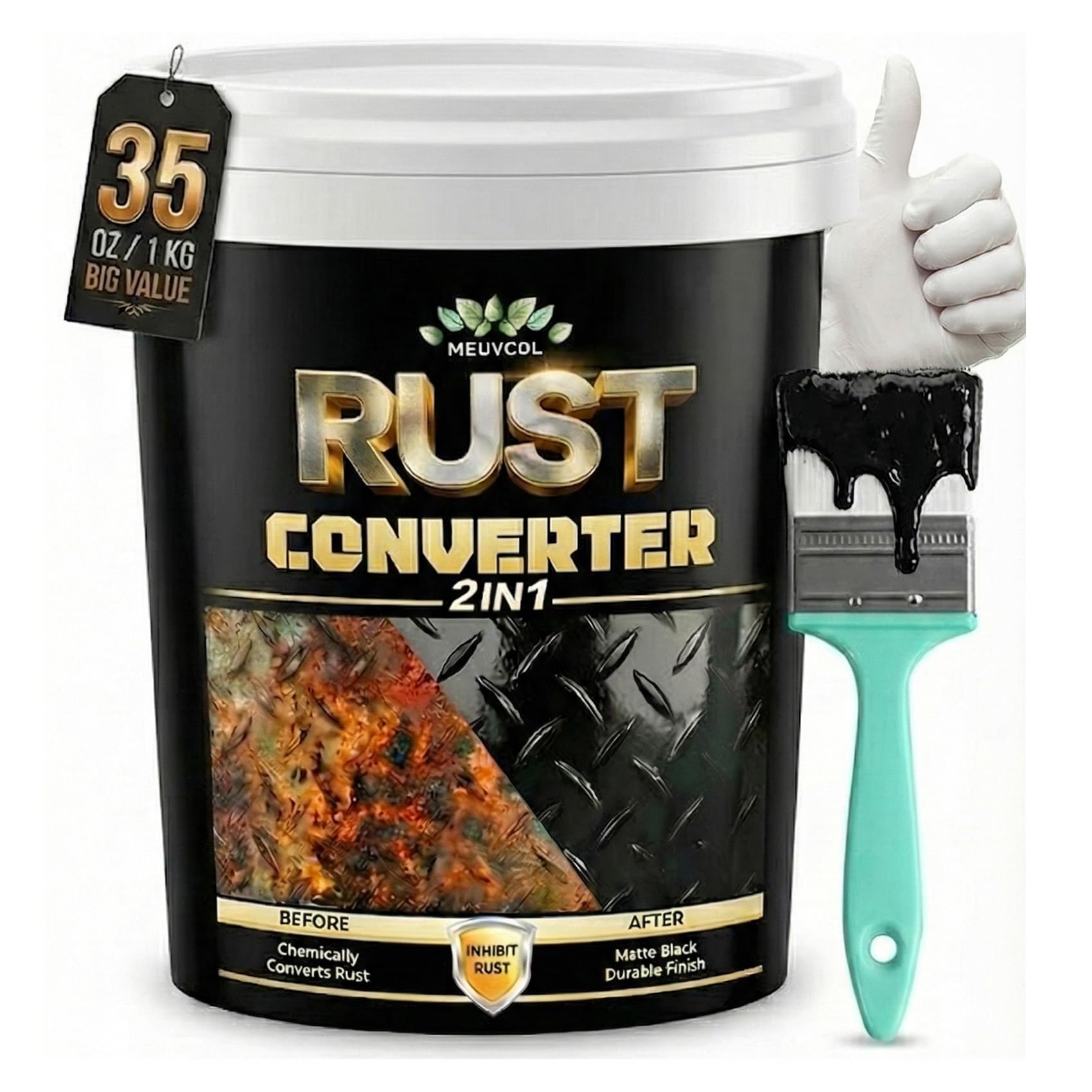
This product is a rust treatment and primer in one, designed to chemically neutralize active rust and convert it into a stable, paintable black surface. It is a two-in-one solution that locks out oxygen and moisture, preventing further oxidation. The 35 oz can provides massive coverage for large surfaces like truck frames, trailers, and chassis.
Application is simple: clean the surface, brush on a thin coat, and let it dry for 24 hours. Users report that it completely stops rust on RV underbellies, railings, and tools, turning bright orange rust into a matte black finish. The kit includes a brush and gloves for convenience. It is particularly effective for areas where existing rust is already present.
It is resin-based rather than a true penetrating oil, so it creates a thick, durable coating. Some users note that it has a strong chemical smell and requires good ventilation, and that the long-term flexibility of the coating is unknown compared to waxes.
Why it’s great
- Combines rust converter and primer for easy application
- Excellent large-coverage value with 35 oz volume
- Creates a durable, matte black finish perfect for painting
Good to know
- Strong odor requires good ventilation
- Not ideal for moving parts or electrical connections
7. Fluid Film (1 Gal)

Fluid Film is a classic lanolin-based corrosion inhibitor that has been trusted for decades to protect vehicles from winter road salt. The one-gallon bulk option provides exceptional value for those who need to treat large areas like the entire undercarriage of a truck or a farm tractor. It works as a penetrant, lubricant, and rust preventative all in one.
Users in harsh climates like Wisconsin and New England swear by it, reporting that 80% of the coating remains on a truck frame after ten winter washes. It is also a favorite for preventing grass from sticking to mower decks. The lanolin base is very thick — almost a paste — so warming it in a crock pot or using a compressor with a spray gun is recommended for even coverage.
While it is extremely effective, the lanolin smell can be off-putting to some, and the sticky finish can attract dust and dirt. It is a budget-friendly choice for bulk applications but is not the best option for clean, cosmetic finishes on visible parts.
Why it’s great
- Best cost-per-ounce for large-scale rust protection
- Excellent winter salt resistance and wash durability
- Multi-purpose as penetrant, lubricant, and protectant
Good to know
- Very thick lanolin requires warming for spray application
- Sticky finish attracts dirt and can be messy to apply
FAQ
Can I use an anti corrosion spray on my car’s electrical connectors?
How often should I reapply an anti corrosion spray to my vehicle underbody?
What is the difference between a rust converter and a rust inhibitor spray?
Final Thoughts: The Verdict
For most users, the best anti corrosion spray winner is the CorrosionX Aviation (16 oz) because it delivers unmatched molecular-level protection, self-healing technology, and is completely safe for electronics and avionics. If you want a professional-grade barrier for enclosed body panels, grab the 3M Cavity Wax Plus (18 oz). And for budget-conscious buyers who need to treat a whole vehicle underbody year after year, nothing beats the bulk value of Fluid Film (1 Gal).