
Our readers keep the lights on and the weekend projects moving. As an Amazon Associate, I earn from qualifying purchases.
You’ve just dropped into a coral garden, ready to breathe slow and take in the reef, only to have your view turn into a blurry milk bath. That’s the frustration of a mask that fogs the second you hit the water. The right anti-fog diving mask doesn’t just rely on a factory coating—it uses the right lens material, skirt design, and low-volume geometry to make fog an afterthought before you even equalize.
I’m Rikta — the co-founder and writer behind FitlyFast. I’ve spent countless hours analyzing the seal behavior, lens clarity, and customer-reported fogging patterns across dozens of masks to separate the ones that hold up on actual dives from the ones that need constant clearing.
Whether you’re a spearfisher, an instructor, or a weekend snorkeler, this guide breaks down the best anti fog diving mask options that deliver real clarity, comfortable seals, and a field of view that keeps the ocean fully visible.
How To Choose The Best Anti Fog Diving Mask
An anti-fog diving mask isn’t a magic accessory—it’s a product of smart engineering. The single biggest factor is internal volume: a low-volume mask traps less warm, moist air against the lens, which means fewer opportunities for condensation to form. Equally important is the skirt’s material and seal quality—a soft, hypoallergenic silicone with a double-feathered edge keeps water out, preventing the temperature swings that trigger fog. And no coating can survive factory residue; proper pre-treatment with toothpaste or a dedicated anti-fog solution is non-negotiable for long-term clarity.
Lens Material and Optical Clarity
Tempered glass is the industry standard for any serious dive mask. It resists scratches, handles pressure at depth, and provides a clear, distortion-free view. Polycarbonate lenses are lighter but scratch easily and can lose optical clarity over time. For fog resistance, glass also heats and cools more evenly, reducing the condensation spots that plague plastic lenses.
Skirt Design and Fit
The skirt is the interface between your face and the mask. Premium silicone—not PVC or rubber—creates a watertight seal without leaving pressure marks. Double-feathered edges are particularly effective because they create two sealing points, reducing the chance of a leak that lets in cold water and triggers fog. A good skirt also contours around the nose pocket, allowing easy equalization without pinching.
Volume and Field of View
Low-volume masks sit closer to your eyes, minimizing air space and making equalization effortless—key for freediving and deep scuba. But a smaller volume shouldn’t mean tunnel vision. The best masks use inclined or inverted teardrop lenses to push the field of view outward and downward, so you can check your instruments or spot reef life without turning your head.
Quick Comparison
On smaller screens, swipe sideways to see the full table.
| Model | Category | Best For | Key Spec | Amazon |
|---|---|---|---|---|
| Cressi Focus | Mid-Range | Prescription lens compatibility | 0.55 lb / 0.25 kg | Amazon |
| Cressi Matrix | Mid-Range | Downward instrument visibility | 0.4 lb / 180 g | Amazon |
| ScubaPro Spectra | Premium | Quick-adjust comfort | 0.5 lb / 227 g | Amazon |
| Kraken Aquatics | Budget | Wide single-lens value | 7.3 oz / 207 g | Amazon |
| SeaDive Superview/HD | Premium | Glare reduction & sharpness | 4 oz / 113 g | Amazon |
| TUSA Freedom M-1001 | Premium | Maximum field of view | 1 lb / 454 g | Amazon |
| Hollis M-1 | Premium | Frameless comfort & low volume | 0.8 lb / 363 g | Amazon |
In‑Depth Reviews
1. Cressi Focus Dive Mask
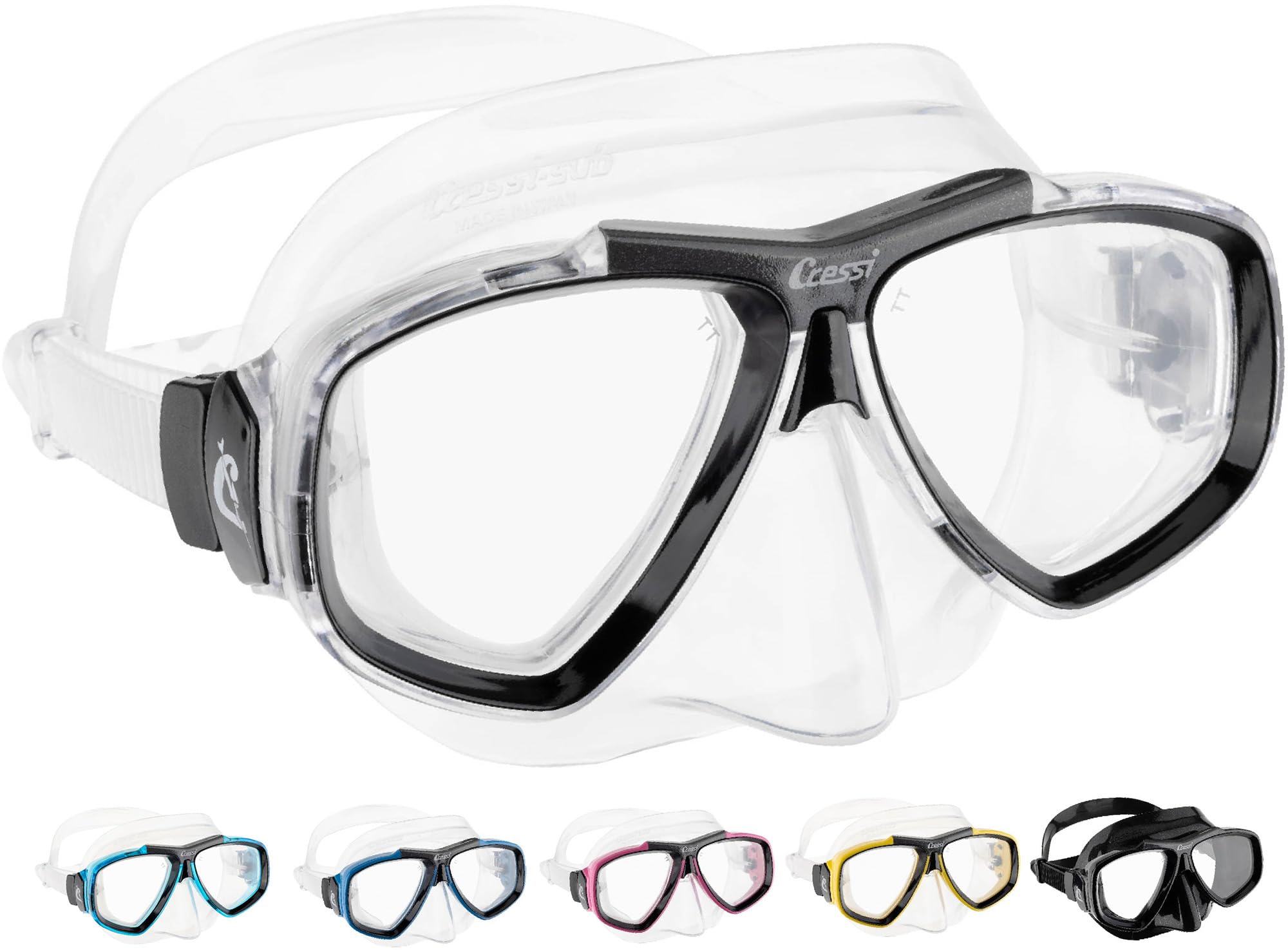
The Cressi Focus has been a staple in the diving community for decades, and its patented inclined lens design is the reason. By angling the tempered glass lenses downward, it naturally reduces the air pocket that traps humidity—one of the primary causes of fog. The hypoallergenic silicone skirt uses a double feathered edge seal that conforms tightly to different face shapes without leaving deep pressure lines after a long dive.
At a very low internal volume, the Focus excels at equalization. Flipping the strap buckles allows instant micro-adjustment, so you can dial in the fit even with gloved hands. Several long-term users report zero fog issues after a single toothpaste pre-treatment, and the mask holds up well against scratching from sand and salt.
The dual-lens design also opens the door for Cressi prescription lenses, making it a rare mid-range mask that adapts to nearsighted divers. Customers consistently highlight the comfort on smaller to medium faces, and the build quality—made in Italy—backs up the price point with real durability. For a balance of fog prevention, optical clarity, and long-term comfort, this is the benchmark.
Why it’s great
- Patented inclined lenses reduce internal air volume
- Available prescription lens inserts for vision correction
- Soft double-feathered silicone seal prevents leaks
Good to know
- Nose pocket can feel snug for wider noses
- Compact frame may not suit very broad faces
2. Cressi Matrix Adult Scuba Diving Mask

The Cressi Matrix borrows the same patented inclined lens technology as the Focus but adds inverted tear-drop lenses specifically engineered to improve downward visibility—a critical feature for scuba divers who need to read pressure gauges and manage buoyancy without craning their neck. The low internal volume rivals many freediving-specific masks, making equalization smooth and fog-prone airspace minimal.
The skirt is made from hypoallergenic soft silicone with a wide sealing surface, and user feedback confirms it fits a surprisingly broad range of face shapes—from adults to children as young as six. The black skirt option reduces glare from the inside of the lens, which some divers prefer for brighter surface conditions.
Multiple customers note that the Matrix stays fog-free after a proper break-in, even in warm tropical water where condensation typically spikes. The tempered glass lenses resist scratching well, and the overall build makes it a strong contender for instructors who want a durable, low-volume mask that still gives them the peripheral vision to supervise students.
Why it’s great
- Inverted tear-drop lenses enhance downward view
- Low-volume design equals easier clearing and less fog
- Sealing surface fits a wide range of face sizes
Good to know
- Frame may feel slightly wider on narrow faces
- Black skirt can feel warmer in surface intervals
3. ScubaPro Spectra Low Volume Dive Mask
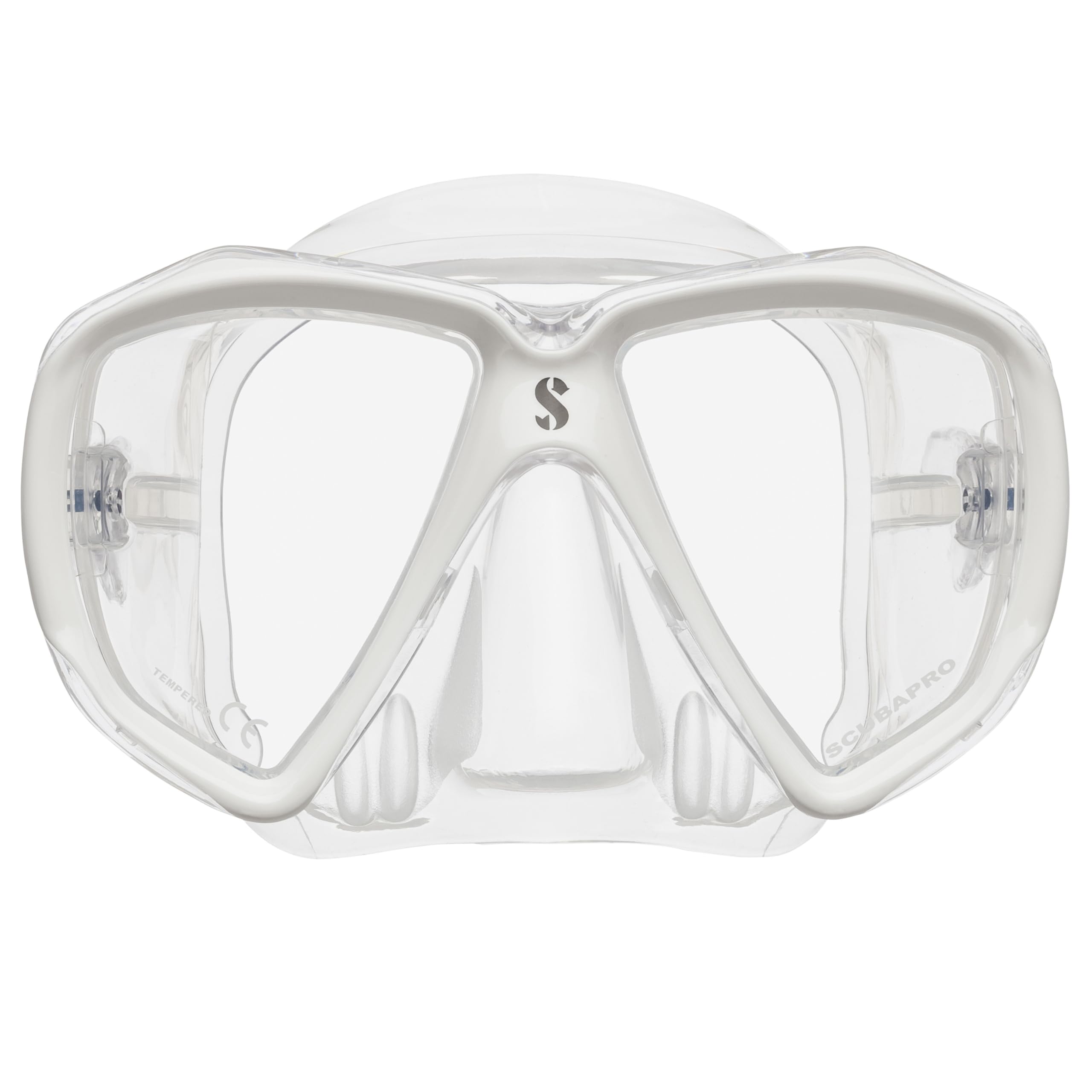
The ScubaPro Spectra is engineered around the EZ Equalize nose pocket, which gives you easy pinch access without having to stretch the skirt away from your face. This design detail directly reduces the amount of air you need to force into the mask during descent, keeping the interior volume stable and minimizing the humidity gradient that produces fog. The push-button buckle system attaches directly to the skirt, allowing you to adjust tension without pulling the mask off.
It’s a framed dual-lens design with tempered glass, and the polycarbonate frame keeps the overall weight down to half a pound. A mirrored lens option is available for glare-heavy surface intervals, though the standard clear version still offers excellent optical clarity. Users with mustaches report that the soft skirt seals effectively—a common pain point where many masks fail.
The included protective case and two-year warranty add peace of mind, and the Spectra has proven durability—multiple customers report owning their previous ScubaPro mask for eight years or more. Fog complaints are virtually absent after a proper toothpaste burn-in, making this a reliable choice for divers who prioritize consistent seal performance and easy adjustment over the course of many dives.
Why it’s great
- EZ Equalize nose pocket allows effortless clearing
- Push-button buckles enable quick fit changes
- Soft silicone skirt seals well on mustaches
Good to know
- Polycarbonate frame is less flexible than frameless designs
- Mirrored lens may reduce clarity in low-light conditions
4. Kraken Aquatics Scuba Diving Mask

The Kraken Aquatics mask proves that you don’t need to spend top dollar to get a tempered glass single-lens mask with a leak-proof silicone skirt. The single-lens design removes the central frame bar, giving you an unobstructed panoramic view that’s especially useful for spearfishing and reef exploration where peripheral movement catches your eye. The hypoallergenic silicone skirt is soft enough to mold to the face without leaving deep imprints after extended use.
Many customers report using this mask for three to five hours of daily snorkeling without pressure marks or fogging issues, though they note that proper pre-treatment with toothpaste or baby shampoo is essential. The quick-adjust buckle system works well even with gloves, and the mask is light enough—just over seven ounces—to pack flat in a carry-on.
One limitation is that the outer seal works well even if the inner seal doesn’t fit perfectly on every face shape. Users with thick mustaches may struggle to get a complete seal, though Kraken specifically advises using silicone skirt goggles for that case. For the price, the build quality and clarity are impressive, and the compatibility with clip-on corrective lenses makes it a solid entry-level or backup mask.
Why it’s great
- Unobstructed single-lens panoramic view
- Very lightweight at 7.3 oz
- Clip-on corrective lenses available for prescription use
Good to know
- Inner seal may not fit all face contours perfectly
- Thick facial hair can compromise the watertight seal
5. SeaDive Oceanways Superview/HD Anti-Fog Mask

The SeaDive Superview/HD stands apart because of its SeeSharp HD lens technology, which uses an orange or blue tint to sharpen faint edges and filter out UV and surface glare. This reduces the harsh white-light scatter that can cause eye strain and indirectly contributes to fog perception—when you can see clearly, your brain doesn’t register the minor condensation that would normally distract you. The single-lens design is frameless, keeping the weight down to just four ounces.
The silicone skirt creates a tight seal, and customers diving in demanding conditions like the Red Sea report that the mask stays clear even at depths exceeding 100 feet with only minor adjustments. The included plastic storage box protects the lens from sand scratches between dives. Multiple users with over 500 dives rank this as the best mask they’ve ever used for sharpness and color reproduction.
One reported trade-off is that the top edge can rub against prominent eyebrow ridges on certain face shapes—a fit issue rather than a design flaw. For divers willing to test the fit, the optical payoff is significant. The anti-fog performance is reinforced by the HD coating, and no customer reports persistent fogging after the initial break-in period.
Why it’s great
- SeeSharp HD lenses reduce glare and sharpen underwater contrast
- Ultra-light frameless design at 4 oz
- Exceptional color clarity for reef and wreck diving
Good to know
- Top edge may press on prominent brow ridges
- Tinted lens reduces brightness in low-light environments
6. TUSA M-1001 Freedom HD Scuba Diving Mask
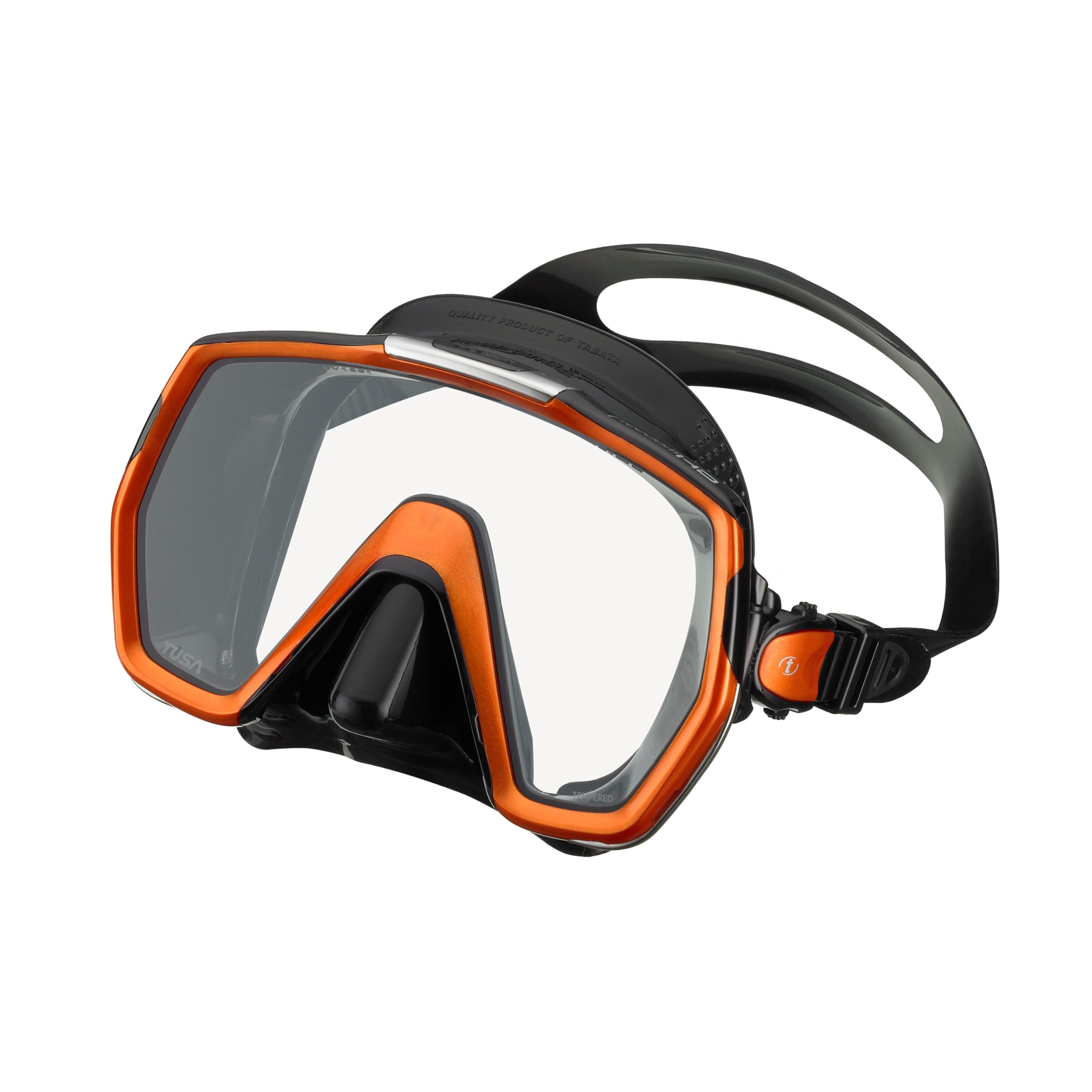
The TUSA Freedom M-1001 is built around a massive single-lens frame that provides one of the widest fields of view in this class—ideal for divers who want to take in the entire reef without turning their head. Despite the large lens surface area, the internal volume is kept surprisingly low thanks to the round-edged skirt design that sits close to the face. This direct geometry reduces the warm air pocket where fog forms.
The 180-degree rotational buckle system allows the strap angle to be micro-adjusted across five positions, so the mask sits flush against the cheekbones regardless of head shape. The silicone skirt has a rounded edge that many users report as more comfortable than traditional feathered edges, especially for longer dive sessions. Customers with larger faces specifically highlight the M-1001 as one of the few masks that fits without pinching.
Initial fogging is easily resolved with the burn method, and once treated, the mask stays clear through freediving and scuba sessions. A bright mask strap cover is recommended by users for safety visibility. The only minor complaint is that the large single lens creates more surface area for potential scratches if not stored in the included case, though the tempered glass holds up well to normal wear.
Why it’s great
- Very wide single-lens field of view
- Five-position strap adjuster for a custom fit
- Low internal volume despite large lens area
Good to know
- Large lens area requires careful storage to avoid scratches
- Round-edged skirt may not seal as tightly on very narrow faces
7. Hollis M-1 Frameless Silicone Mask
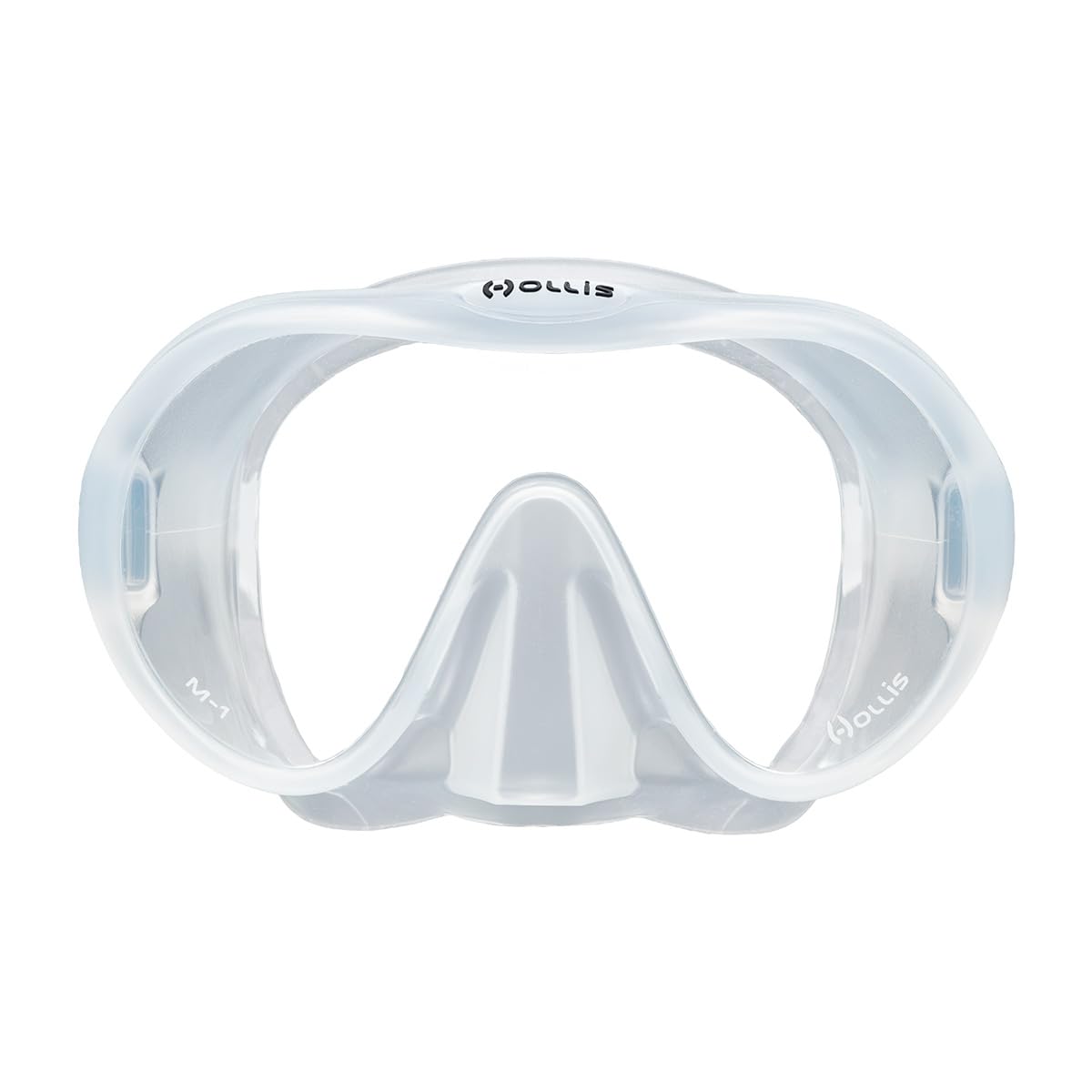
The Hollis M-1 goes frameless, which directly reduces weight and internal volume while maximizing the lens area relative to the skirt. The ultra-clear tempered glass provides distortion-free visibility, and the pure silicone skirt creates a seal that users describe as “barely there” during long dives. The frameless construction also makes the mask highly packable and less prone to frame cracking on impacts.
Low volume is the hallmark here—Hollis targets technical divers who need to equalize quickly and clear the mask with minimal air use. Customers note that the nose pocket is larger than many low-volume masks, accommodating wider or roman noses without pressure pain. The black skirt version helps reduce internal glare, and the single lens eliminates the center post that can obstruct vision in traditional dual-lens masks.
Some users report that the nose pocket can occasionally seal shut during equalization (about once in ten dives), which is easily corrected by pulling the skirt away. Fit testing is recommended for those with narrow faces, as the skirt extends close to the outer eye edge. For divers who value lightweight packability and a true low-volume feel, the M-1 delivers a premium frameless experience with minimal fogging after proper preparation.
Why it’s great
- Frameless construction reduces weight and volume
- Large nose pocket for easy equalization
- Ultra-clear tempered glass with true color visibility
Good to know
- Nose pocket may inadvertently seal on some face shapes
- Narrow skirt width may reduce peripheral field for broad faces
FAQ
How do I stop my diving mask from fogging permanently?
Can I use a single-lens anti-fog mask if I need prescription glasses?
Why does my mask fog more when I equalize?
How tight should a diving mask be to prevent leaks and fog?
Final Thoughts: The Verdict
For most users, the best anti fog diving mask winner is the Cressi Focus because it combines a patented low-volume inclined lens design with prescription lens compatibility and a leak-proof silicone seal that satisfies both beginner and veteran divers. If you want the absolute widest field of view, grab the TUSA Freedom M-1001—its oversized single lens and rotational buckle system make every dive feel like a IMAX experience. And for the technical diver who needs a frameless, packable low-volume mask that clears instantly, nothing beats the Hollis M-1.