
Our readers keep the lights on and the weekend projects moving. As an Amazon Associate, I earn from qualifying purchases.
Unlike a simple paint layer, an effective rust spray must penetrate existing corrosion, convert it into a stable compound, and leave a moisture-proof barrier that prevents oxygen from rekindling the reaction.
I’m Rikta — the co-founder and writer behind FitlyFast. I’ve spent dozens of hours analyzing chemical formulations, comparing military-grade specifications, and reading thousands of field reports to understand exactly what separates a temporary cover-up from a genuine corrosion cure in the world of anti-rust sprays.
This guide breaks down the best options across every use case—from preserving a daily driver to safeguarding marine electronics—so you can confidently choose the right anti rust spray for your specific metal asset.
How To Choose The Best Anti Rust Spray
Choosing the wrong spray means your metal looks protected for a week, then the rust returns under a false film. The right product depends on whether you are neutralizing existing rust, preventing new corrosion, or both.
Conversion vs. Prevention vs. Combination
A pure rust converter chemically transforms iron oxide (red rust) into a stable black layer (magnetite or tannate), creating a paintable base—ideal for surface rust on exposed panels. Prevention sprays, like wax oils or dielectric compounds, seal out oxygen and moisture without reacting with existing rust. Combination sprays do both: they convert corrosion on contact and then leave a protective barrier. Your choice depends on whether you are treating active rust or protecting clean metal.
Film Type: Hard, Waxy, or Dielectric
Hard films (like acrylics) cure to a paintable solid but can crack under vibration. Waxy films (cavity wax, lanolin, or paraffin-based sprays) stay pliable and self-heal if scratched—critical for frame rails and enclosed box sections where flaking would leave metal exposed. Dielectric films, such as those used on electronics, form a thin non-conductive barrier that displaces moisture without interfering with circuit operation. For interior panels and electronics, a dielectric spray is safer; for underbody and exposed chassis, a waxy self-healing film lasts longer.
Application Method and Reach
Aerosol sprays are convenient for small areas and touch-ups. For enclosed spaces like frame cavities, rocker panels, or door sills, you need a spray that comes with an extension tube or a wand kit. Some products, like 3M Cavity Wax Plus, require a separate applicator wand to reach deep inside box sections. Others, like Eastwood’s Internal Frame Coating, include a 360-degree spray nozzle that coats all four sides of a cavity without rotating the can. If you are spraying large open surfaces, a trigger-spray bottle gives better control and less overspray than an aerosol.
Quick Comparison
On smaller screens, swipe sideways to see the full table.
| Model | Category | Best For | Key Spec | Amazon |
|---|---|---|---|---|
| LPS 3 Premier Rust Inhibitor | Waxy Barrier | Long-term storage & firearms | 11 oz aerosol, wax-like film | Amazon |
| Eastwood Internal Frame Coating | Converter + Barrier | Frame rails & chassis cavities | 14 oz, 360° spray wand | Amazon |
| 3M Cavity Wax Plus | Self-Healing Wax | Automotive cavity protection | 18 oz, non-hardening | Amazon |
| CorrosionX Rust Inhibitor | Dielectric | Marine & electronics protection | 16 oz, 39,000V dielectric | Amazon |
| ACF-50 Anti-Corrosion | Dielectric | Aircraft & sensitive electronics | 13 oz, non-flammable | Amazon |
| JENOLITE Waxoil | Waxy Prevention | Underbody & wheel arches | 16.9 oz, self-sealing film | Amazon |
| Seymour 16-45 Rust Converter | Chemical Converter | Surface rust prep for paint | 16 oz, black conversion layer | Amazon |
In‑Depth Reviews
1. LPS 3 Premier Rust Inhibitor
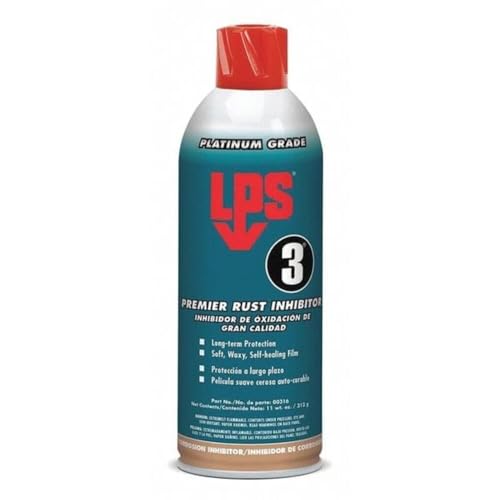
The LPS 3 has earned its spot as the gold standard for long-term metal preservation, used by military depots for decades. Its hazy brown aerosol leaves a thick, wax-like coating that does not harden or crack, meaning it can flex with thermal expansion and resist chipping on tools, auto parts, and even firearms. The film is removable with soap and water, which is a major advantage if you need to inspect or re-treat the surface later.
Outdoor testing shows LPS 3-treated panels remain rust-free through two weeks of direct weather exposure while untreated metal corrodes within days. On firearms, the wax film does not interfere with wood stocks, polymers, or bore accuracy, making it a favorite for collectors storing valuable pieces. The flip side is that the same thick film can impede moving parts if applied too liberally—trigger mechanisms or slide actions may need a lighter pass.
For automotive applications, spraying inside door panels and along brake lines provides an effective barrier against road salt and winter moisture. Users report that annual reapplication extends vehicle life by at least a full season in salt-belt regions. At 11 oz aerosol, it is a smaller can, but the coverage per coat is impressive due to the high solids content.
Why it’s great
- Thick, self-healing wax film that does not crack or peel under vibration
- Military-tested for long-term storage; versatile on metal, wood, and polymer
- Removable with soap, allowing easy reapplication and inspection
Good to know
- Thick film can hinder moving parts if over-applied
- Smaller 11 oz can size; frequent users will buy multiple
2. Eastwood Internal Frame Coating Aerosol

Eastwood engineered this aerosol specifically for the nightmare scenario of treating rust inside a vehicle frame rail or rocker panel—enclosed spaces where you cannot see, sand, or brush. The spray is a dual-action formula that chemically converts existing rust into a stable black layer while simultaneously depositing a gloss coating to prevent new corrosion. The included 360-degree extension wand ensures every side of the cavity gets covered in a single pass, which is a huge time saver over rotating the tube manually.
The coating dries to the touch within minutes and reaches full cure in 24 hours. Users on Jeep and truck builds note that the black gloss finish looks professional through drain holes and inspection ports. The 14 oz can covers roughly 50 feet of frame rail per coat, though heavy rust conversion may require two passes. The fumes are potent—this is absolutely an outdoor or well-ventilated-space product, and a respirator is non-negotiable.
One thing to plan for: the wand is flexible but unsupported mid-length, so it can flail when pressurized. Taping it to a straightened clothes hanger solves that issue and gives you better control. Also, residual pressure in the tube means you get 3-4 seconds of spray after releasing the button, so pull the wand back before you stop pressing.
Why it’s great
- 360-degree wand coats all four sides of a cavity without rotating the tube
- Combines rust conversion and prevention in one application
- Fast-drying gloss finish that looks professional through inspection holes
Good to know
- Very strong fumes require a respirator and outdoor application
- Wand is flexible and may flail without a support rod attached
3. 3M Cavity Wax Plus Aerosol Spray
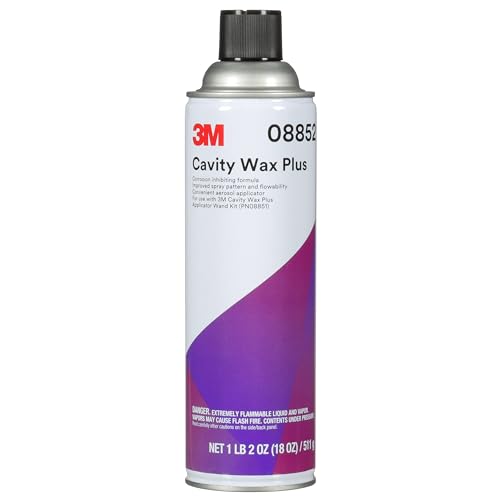
When a manufacturer like 3M labels a product “Cavity Wax Plus” and specifies it is for industrial/occupational use, you know the formulation is serious. This 18 oz aerosol sprays on thin enough to penetrate deep into spot-weld seams and box-section corners, then reflows into any scratches or gaps that appear over time. The material never hardens, so it absorbs vibration and thermal cycling without cracking—a common failure point with acrylic-based undercoatings.
The aerosol format requires the 3M Cavity Wax Plus Applicator Wand Kit (sold separately) to reach inside door sills, frame rails, and structural enclosures. Without the wand, you are limited to open surfaces. Once applied, the wax remains translucent and flexible, which means it does not flake off when the metal flexes during driving. Two light coats applied a few hours apart give the best coverage, as the first coat acts as a primer for the second to bond onto.
Yes, the price per can is noticeably higher than many competitors. But the self-healing property means you are not re-treating hairline scratches every season. The can goes a long way—users report covering an entire unibody undercarriage with three cans. The one downside: if a can arrives damaged (the thin valve stem is vulnerable during shipping), Amazon customer service swaps it quickly.
Why it’s great
- Self-healing formula reflows into scratches and crevices automatically
- Non-hardening wax absorbs vibration without cracking or peeling
- Penetrates deep into spot-weld seams and tight box-section corners
Good to know
- Requires separate applicator wand kit for cavity use
- Premium pricing; shipping damage can occur on the valve
4. CorrosionX Rust Inhibitor

CorrosionX is the only product on this list qualified under the U.S. Navy’s Advanced Corrosion Preventive Compound specification—a certification that demands real salt-spray performance. Its 16 oz trigger spray bottle delivers a dielectric barrier rated at over 39,000 volts, meaning it will protect battery terminals, sensors, and circuit boards without shorting them. The trigger pump solves the “can-spray-or-drip” dilemma: you can adjust between a fine mist for electronics or a direct stream for bolts and hinges.
The oil-based formula clings to metal tenaciously, resisting washout from rain, tide, or high-pressure spray. For marine environments—outboards, trailer bearings, fishing gear—this is the go-to because it displaces moisture on contact and leaves a film that does not wash off with the first wave. Users also use it on RC electronics, dunking receiver boards directly into the liquid before installation, and report zero electrical issues despite full immersion.
One trade-off: the bottle format means you cannot direct spray into tight frame cavities without a separate applicator. The dielectric film is also thinner than a waxy barrier, so for exposed underbody parts that scrape against gravel, you may need a thicker product on top. For electronics and marine corrosion, however, there is no more trusted civilian-grade formula.
Why it’s great
- Navy-qualified for advanced marine corrosion protection
- 39,000V dielectric rating safe on sensitive electronics
- Trigger spray with adjustable mist-to-stream pattern
Good to know
- Thinner film may need reinforcement for underbody abrasion
- Bottle format lacks a wand for deep cavity application
5. ACF-50 Anti-Corrosion Lubricant Compound
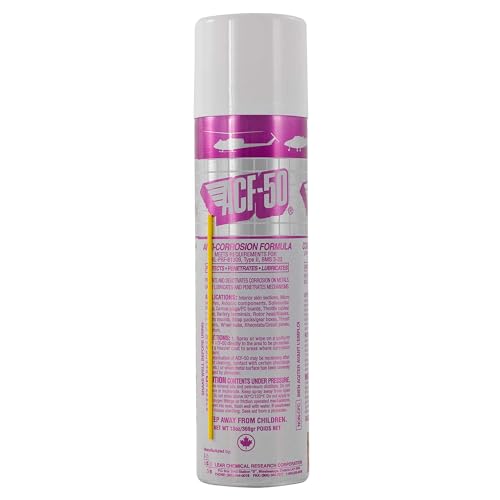
ACF-50 stands apart because it was originally developed for the aviation industry, where spraying a flammable or conductive compound near ignition systems and avionics is simply not an option. The formula is non-flammable, non-carcinogenic, and virtually non-toxic, with a PTFE (Teflon) base that provides low-shear lubrication alongside corrosion protection. You can spray it directly onto alternator windings, battery terminals, wire harness plugs, and even circuit boards without any risk of shorting or fire.
The application method is key: ACF-50 kills active corrosion on contact and leaves a thin, clear film that does not attract dust like oil-based sprays. Pilots use it on Piper Cherokee and Cessna airframes to protect control cables and landing gear from humidity and electrolyte buildup. The same logic applies to boats, off-road vehicles, and outdoor power equipment—any environment where electronics are exposed to the elements.
The 13 oz aerosol can is more compact than other options, and the product is noticeably more expensive per ounce than general-purpose alternatives. However, for sensitive applications where you cannot afford a dielectric failure or a fire hazard, ACF-50 is the safest and most effective choice. The film does not dry out or gum up over a season, and annual reapplication is sufficient even in coastal climates.
Why it’s great
- Non-flammable and non-carcinogenic—safe on avionics and engine bays
- PTFE-based lubrication protects moving cables and small mechanical parts
- Kills active corrosion on contact without attracting dust
Good to know
- Higher per-ounce cost compared to general-purpose rust sprays
- Compact 13 oz can may require multiple cans for large projects
6. JENOLITE Waxoil Rust Prevention Aerosol

JENOLITE Waxoil delivers the same waxy corrosion barrier concept as premium UK cavity waxes but at a much more accessible price point. The 16.9 oz aerosol sprays on clear and dries to a pliable, waxy film that does not attract dirt. Unlike lanolin-based products, it has no barnyard smell, and the film does not leave greasy smudges on your hands when you reach into treated wheel wells or door sills.
The key differentiator here is the self-sealing property: if the film gets scratched by a rock or underbody contact, the wax reflows around the damage to reseal the metal. This is critical for suspension components and chassis rails that endure constant abrasion. Users report it sticks to vertical surfaces without dripping, and it can be used on both clean metal and light surface rust with good adhesion.
One full can covers the front suspension of a full-size SUV. It does not work as a rust converter—if you already have deep pitting or heavy scale, you must mechanically remove it first. For preventative maintenance on a vehicle that is already solid, Waxoil is a high-value option that outperforms many products costing twice as much.
Why it’s great
- Self-sealing wax film that reflows over scratches
- No lanolin smell and no greasy residue on hands
- Excellent value for full underbody coverage
Good to know
- Not a rust converter—mechanical removal of heavy rust needed first
- Film is thinner on first coat; two coats recommended for exposed areas
7. Seymour 16-45 Rust Converter, Black

The Seymour 16-45 is a chemical conversion spray that does not just sit on top of rust—it penetrates into the iron oxide and chemically changes it into a protective black coating (magnetite/primer). This is the most cost-effective way to treat surface rust on metal storage tanks, fences, railings, trailer frames, and vehicle body panels before applying a topcoat. The conversion layer is durable and tough, reducing the amount of wire brushing and sanding you need to do.
The 16 oz aerosol sprays evenly right out of the can with no drips or runs, as long as you apply multiple light coats rather than one heavy pass. It dries to a clean, matte black finish that is ready for paint within a few hours. Users have successfully used it on lawn mower decks, outdoor grills, and zero-turn mowers, with the black coating holding up well even to the heat of exhaust components.
The primary limitation is that the conversion works best on light to moderate surface rust—where the red rust has not yet pitted deep into the metal. For heavy, flaking rust, you must knock off the loose material first. Also, the black finish is not UV-stable, so if it is left exposed to direct sunlight for months, the coating may chalk or fade before you topcoat it.
Why it’s great
- Chemically converts rust into a stable, paint-ready black primer
- Saves significant time on wire brushing and sanding
- Even spray pattern with no drips when applied in light coats
Good to know
- Best on light to moderate surface rust; heavy scale requires manual removal
- Black coating may chalk in direct sun if not topcoated
FAQ
Can I paint over a rust spray or do I need to remove it first?
Is a dielectric spray safe to use on circuit boards and sensor connectors?
How often do I need to reapply a rust prevention spray?
Can I use a rust spray on exhaust components or hot engine parts?
Final Thoughts: The Verdict
For most users, the best anti rust spray winner is the Eastwood Internal Frame Coating because it combines chemical conversion with a protective barrier and an intelligent 360-degree wand for cavity work. If you need military-grade long-term storage protection, grab the LPS 3 Premier Rust Inhibitor. And for sensitive electronics and marine components where safety is paramount, nothing beats the CorrosionX Rust Inhibitor with its Navy-qualified dielectric film.