
Our readers keep the lights on and the weekend projects moving. As an Amazon Associate, I earn from qualifying purchases.
Stepping out of a shower onto a wet tile floor shouldn’t feel like a game of chance. The nagging fear of a sudden slip is a daily reality for anyone with smooth, glazed ceramic, porcelain, or natural stone tiles in their bathroom, kitchen, or around the pool. Most anti-slip solutions fail by looking ugly, feeling rough underfoot, or peeling off within weeks.
I’m Rikta — the co-founder and writer behind FitlyFast. I’ve spent hundreds of hours analyzing chemical formulations, application methods, and real-world durability data across dozens of non-slip coatings to identify which ones truly bond to tile without destroying its finish.
This guide ranks the best treatments available today, from invisible etchants to clear coatings, so you can find the safest anti slip coating for tiles that fits your surface and your tolerance for reapplication.
How To Choose The Best Anti Slip Coating For Tiles
The right choice depends on your tile material, the location (wet or dry), and your tolerance for changing the tile’s appearance. The three main approaches are chemical etching (invisible and long-lasting), clear coatings (adds a textured layer), and slip-resistant additives mixed into sealers. Each has a specific best-use scenario.
Identify Your Tile Type First
Glazed ceramic and porcelain are non-porous and require a coating that bonds via mechanical adhesion or an etching agent. Natural stone like travertine, slate, or unsealed concrete is porous and reacts well to chemical etchants that microscopically pit the surface. Using the wrong type can lead to immediate peeling or permanent staining.
Invisible vs. Textured Finish
Chemical etching treatments like those from SlipDoctors or Stone Grip are virtually invisible and create microscopic grip points. Clear coatings add a physical layer of grit or texture that can be felt underfoot. For bathrooms where you walk barefoot, an invisible etch is usually preferred. For high-traffic outdoor areas, a textured coating may offer superior durability.
Durability and Maintenance
Chemical etchants typically last 1-2 years before reapplication is needed, but require no special maintenance. Clear coatings can peel or wear off in high-traffic zones and often need yearly recoating. Always check if the coating can withstand regular cleaning with household cleaners or a soft-bristle brush without degrading.
Quick Comparison
On smaller screens, swipe sideways to see the full table.
| Model | Category | Best For | Key Spec | Amazon |
|---|---|---|---|---|
| SlipDoctors Bathtub & Shower Kit | Chemical Etch | Ceramic/porcelain tubs & shower tile | Invisible micro-treads | Amazon |
| Stone Grip Industrial | Chemical Etch | Natural stone & unsealed concrete | 75 sq. ft. per quart | Amazon |
| Trip Guard Clear Coating | Clear Coating | Multi-surface indoor/outdoor | 32 oz. covers up to 75 sq. ft. | Amazon |
| SlipDoctors Anti-Slip Spray | Aerosol Coating | Fiberglass, acrylic, small tile areas | Epoxy aerosol formula | Amazon |
| Foundation Armor Additive | Sealer Additive | Stamped concrete and pool decks | 16 oz. per 5 gallons sealer | Amazon |
| H&C Sharkgrip Additive | Sealer Additive | Concrete driveways & sidewalks | 1 lb. 16 oz. bottle | Amazon |
| Liberon Anti-Slip Coating | Clear Coating | Wood & stone stairs, floors | 1 Litre, matte finish | Amazon |
In‑Depth Reviews
1. SlipDoctors Bathtub & Shower Kit
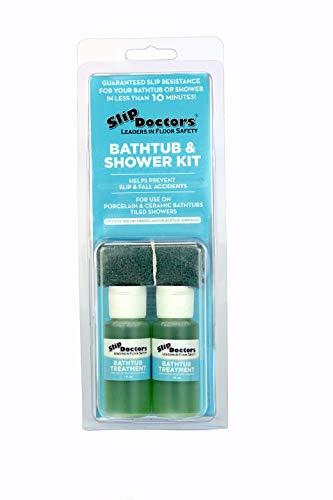
This is the gold standard for bathroom tile safety. It’s a chemical etching treatment, not a coating, so it creates microscopic treads directly into the porcelain or ceramic surface rather than laying a layer on top. The result is completely invisible—no gritty texture, no cloudy haze, no change in gloss. One 1-ounce bottle covered a standard 60-inch bathtub, and the second bottle is a spare for later or a second tub.
Application is straightforward: clean the surface, apply the liquid with the included applicator pad, keep it wet for six minutes, then rinse. There is no dry time—your tub is immediately usable. The grip improvement is dramatic on smooth glazed surfaces that were previously like ice when wet. Users report it lasts well over a year with regular cleaning.
The formula is biodegradable and low-odor, making it far more pleasant to apply than aerosol sprays or solvent-based coatings. It is not for fiberglass or acrylic—the chemical etch won’t bond to those materials. For anyone with a ceramic or porcelain shower floor or tub, this is the safest, most elegant solution on the market.
Why it’s great
- Completely invisible, no texture change
- Immediate use after 10-minute application
- Biodegradable and low odor
- Long-lasting, up to multiple years
Good to know
- Not for fiberglass or acrylic surfaces
- Requires thorough cleaning before application
2. Stone Grip Industrial (Quart)

Stone Grip is specifically formulated for natural stone—porcelain, ceramic, terrazzo, slate, travertine, and unsealed concrete. It’s a chemical etching solution that creates microscopic slip-resistant pores in mineral surfaces without changing their color or shine. A single quart covers up to 75 square feet, and the treatment only takes 5-15 minutes to apply before neutralizing with baking soda and water.
The key advantage here is longevity. Users on outdoor Saltillo tile and indoor ceramic shower floors report the slip resistance holding up for over two years when applied correctly. The grip is subtle—you won’t feel it underfoot, but your foot won’t slide. It’s also safe for use around pools and in kitchens.
Preparation is critical. Any existing sealers, polishes, or wax must be removed before application, or the etch won’t penetrate. The instructions are sparse, so watching a tutorial video is recommended. It requires protective gear (gloves, mask) and careful neutralization to avoid over-etching. For large stone areas, this is the most cost-effective long-term solution.
Why it’s great
- Invisible finish on natural stone
- Long-lasting, up to 2+ years
- Covers up to 75 sq. ft. per quart
- Works on unsealed concrete
Good to know
- Requires removal of existing sealers
- Needs baking soda neutralization
- Not for polished tile or synthetic floors
3. Trip Guard Clear Anti-Slip Coating
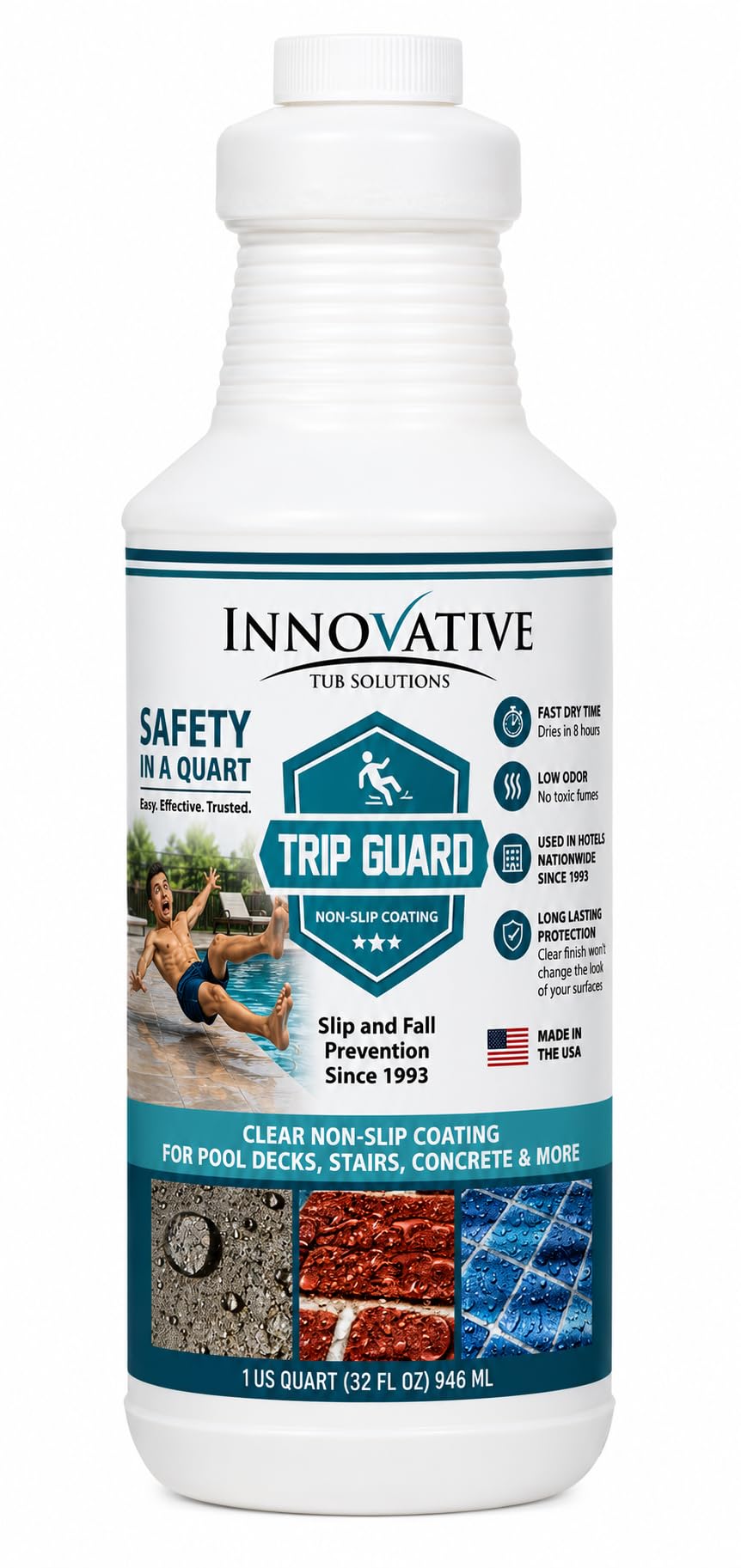
Trip Guard is a clear, finely textured coating designed for maximum versatility. It works on concrete, brick, stone, granite, marble, porcelain, ceramic, cast iron, acrylic, and fiberglass. That’s a broader surface compatibility list than almost any other product in this guide. It’s also commercial-grade, formulated for heavy foot traffic on both interior and exterior floors, including pool decks, stairs, and pickleball courts.
The coating is applied with a foam roller and dries to a low-sheen, textured finish. It has low odor and is non-toxic once cured. One quart covers up to 75 square feet, and no prior etching is needed. Users report excellent results on 1-inch shower tiles and large pool deck concrete, with two coats providing a noticeable increase in traction that doesn’t look gluey.
However, the texture is visible and can feel gritty underfoot, which may not be ideal for barefoot areas. A minority of users experienced streaking or globbing when using a foam roller without proper technique. It’s a strong choice when you need one product to handle multiple surface types and are okay with a visible coating.
Why it’s great
- Works on the widest range of surfaces
- Commercial-grade durability
- Low odor and non-toxic cured
- No prior etching needed
Good to know
- Texture is visible and gritty
- Application technique matters
- May need two coats for full coverage
4. SlipDoctors Anti-Slip Spray
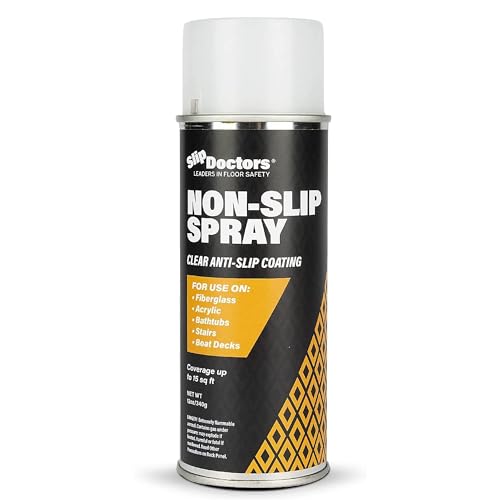
This aerosol epoxy spray is ideal for small, irregularly shaped areas where a roller or brush can’t reach. It forms a clear, textured, durable coating on fiberglass, acrylic, concrete, tile, porcelain, metal, and prepared wood. A single 11-ounce can covered a 3.5-foot by 3-foot shower pan. The coating is barefoot-friendly and resistant to chemicals and oil.
The spray is easy to apply—clean the surface, mask off the surrounding area, spray a light even coat, and let it cure for 24 hours. Users on fiberglass shower floors and tile entryways report a significant reduction in slipperiness without any change in the tile’s color. The texture is noticeable but not abrasive.
The major drawbacks are the strong fumes (a respirator is essential) and mixed durability reports. Some users experienced peeling after a few weeks on ceramic tubs, while others reported the coating holding up well for months on fiberglass. The smell is strong and lingers, so ventilation is non-negotiable. It’s a good fix for small areas where other methods won’t work, but not a permanent solution for large tile floors.
Why it’s great
- Great for small/complex shapes
- Clear, barefoot-friendly texture
- Works on fiberglass and acrylic
- Chemical and oil resistant
Good to know
- Strong fumes, needs respirator
- May peel on ceramic surfaces
- 24-hour cure time
5. Foundation Armor Non-Slip Additive (Fine)
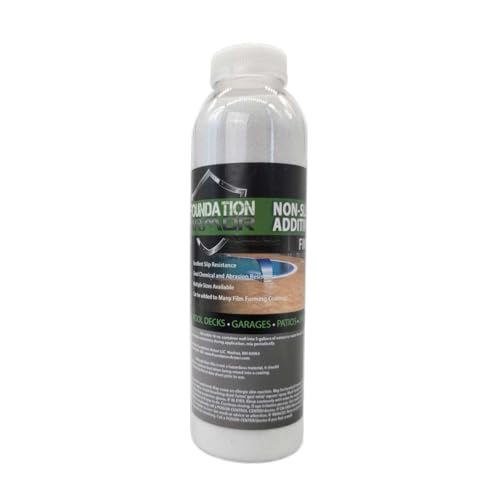
This is not a standalone coating but a fine grit additive you mix into your existing acrylic sealer, epoxy, or urethane coating. The fine grade creates an almost invisible texture that eliminates slipperiness on stamped concrete and pool decks without the ugly, coarse look of larger aggregates. A 16-ounce container is enough for up to 5 gallons of sealer.
Users consistently praise how easy it is to mix with a drill attachment and roll onto concrete, brick, or stone. The additive doesn’t clump or cloud the sealer when properly mixed. On a second coat of AR350 sealer, it provides excellent traction for trip-prone areas like porches, steps, and sidewalks. The subtle grip is barely visible, making it ideal for decorative concrete where aesthetics matter.
The primary failure mode is application method—some users tried mixing it into a sprayer, which clogged immediately. It must be applied with a roller or spreader. Also, it only works when added to a compatible sealer; you cannot apply it directly to tile. For homeowners who are already sealing their concrete or tile floors, this is a seamless way to add grip.
Why it’s great
- Nearly invisible when mixed into sealer
- Easy roller application
- Good coverage per container
- Works with multiple sealer types
Good to know
- Requires compatible sealer (not standalone)
- Cannot be applied with sprayer
- Mix must be uniform to avoid patches
6. H&C Sharkgrip Slip-resistant Additive
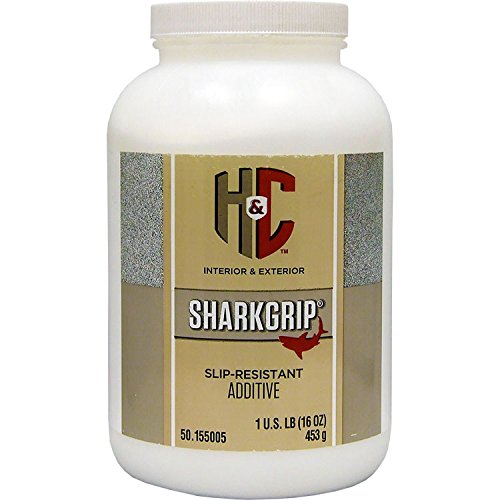
Sharkgrip is a budget-friendly silica-based additive designed to be mixed into concrete sealer, epoxy, or paint to create a non-skid surface. It’s most commonly used on concrete driveways, sidewalks, and pool decks. A 1-pound bottle can treat a standard driveway when mixed properly. Users report that it works as described, adding grip without altering the appearance of the sealer.
The additive is easy to use—just follow the recommended mixing ratio and apply with a roller or brush. It provides just the right amount of grip for pool areas and walkways that get slippery in the rain. You can control the level of traction by adding more or less. Some users in the epoxy coating business rely on it for their commercial projects, which speaks to its consistency.
The main downside is that it’s a powder, and if not mixed thoroughly, you can get spotty patches of white residue where the additive clumps. It also only works when added to a sealer or coating—it’s not effective on bare tile. For large concrete areas where you’re already sealing, it’s a reliable and cheap way to add traction.
Why it’s great
- Very budget-friendly for large areas
- Controls grip level by dosage
- Doesn’t alter sealer appearance
- Proven for commercial use
Good to know
- Can leave white patches if not mixed well
- Requires sealer/coating to mix into
- Not for bare tile
7. Liberon Anti-Slip Coating 1 Litre

Liberon is a clear, water-resistant, UV-stable coating intended for both wood and stone. It’s a varnish-like liquid containing fine sand particles that create a matte, non-slip finish. One liter covers approximately 10 square meters per 2.5 liters of coating. It’s suitable for interior and exterior use, including bathroom floor tiles, stairs, and patios.
Users on oak stairs and bathroom tiles report that the coating dries clear and provides a noticeable improvement in grip, especially with two coats. The finish is matte, which reduces glare on glossy tiles. The included brush makes application straightforward, though using a roller for larger areas is more efficient. The coating is waterproof and holds up to outdoor exposure.
The drawbacks are significant. Some users found the coating ineffective on smooth slate—the surface remained slippery when wet—and the liquid can turn milky white in spots if not applied perfectly. It also has a satin sheen that the product listing doesn’t mention. It’s a niche choice for wood surfaces, but for tile, there are more reliable options in this guide.
Why it’s great
- Works on both wood and stone
- UV and water resistant
- Matte finish reduces glare
- Easy roller application
Good to know
- May not work on very smooth stone
- Can turn milky white if applied poorly
- Unexpected satin sheen
- Less reliable than dedicated tile coatings
FAQ
Will an anti-slip coating ruin the glossy finish on my ceramic tiles?
How long does an anti-slip coating typically last on shower tiles?
Can I apply a non-slip coating over existing tile sealers or waxes?
Is it safe to use these coatings on bathroom floors where I walk barefoot?
Final Thoughts: The Verdict
For most users, the anti slip coating for tiles winner is the SlipDoctors Bathtub & Shower Kit because it delivers invisible, long-lasting grip on ceramic and porcelain with minimal effort. If you need to treat large natural stone areas, grab the Stone Grip Industrial. And for the widest surface compatibility where a visible texture is acceptable, nothing beats the Trip Guard Clear Coating.