
Our readers keep the lights on and the weekend projects moving. As an Amazon Associate, I earn from qualifying purchases.
A sheet of black ice turns every sidewalk into a hazard, and the wrong footwear leaves you one misstep away from a bruised tailbone or a twisted ankle. The solution isn’t a cautious shuffle — it a pair of traction aids engineered to bite into frozen surfaces.
I’m Rikta — the founder and writer behind FitlyFast. I spend each winter analyzing traction hardware, spike materials, and rubber polymer performance so you don’t have to guess which design actually keeps you upright.
After combing through specs and real-world feedback on metal composition, sole coverage, and attachment mechanisms, these are the anti slip ice boots that deliver reliable grip when the temperature drops and the pavement glazes over.
How To Choose The Best Anti Slip Ice Boots
Every winter traction device aims to solve one problem: turning slick frozen surfaces into walkable ground. But the engineering behind that bite varies wildly, and picking the wrong design can mean slipping through even the most expensive pair of boots. Here are the three factors that separate a secure stride from a fall risk.
Spike Material and Configuration
The metal that meets the ice is the single most important component. Military-grade tungsten carbide spikes offer the hardest, most wear-resistant bite on solid ice and refrozen crust. Stainless steel teeth, common on mid-range models, provide excellent grip on packed snow and soft ice but wear faster against abrasive concrete or exposed asphalt. Heat-treated steel cleats, seen on industrial-tier options, balance hardness with ductility, reducing the risk of snapping on uneven ground. Pay attention to the number and arrangement of spikes — a staggered pattern with at least 12 contact points under the ball and heel delivers a more stable platform than a single row of cleats along the edge.
Foot Coverage and Binding Security
Full-foot coverage — a rubber or elastomer sole that wraps under the entire boot — provides the most predictable traction because it spreads spike contact across every step. Partial designs that expose the mid-sole or heel work well for ladder climbing but reduce stability on flat ice. The binding system matters just as much. Thermoplastic rubber uppers that stretch over the boot offer quick on/off convenience but can slide off during aggressive side-to-side movement. Hook-and-loop strap systems, like the SureFit binding, lock the device to a specific boot and stay secure even when wet, making them the safer choice for industrial work or long hikes on variable terrain.
Cold‑Weather Flexibility and Durability
Rubber compounds stiffen in extreme cold, and a rigid sole will crack, lose grip, or pop off mid-stride. Look for devices tested to remain flexible down to negative-45 degrees Fahrenheit. Natural rubber and high-grade thermoplastic elastomers maintain their elasticity in sub-zero temperatures better than cheaper synthetic blends. Replaceable spikes are a reliability feature, not a luxury — they let you refresh the bite without buying a new pair of cleats. A water-channeling tread pattern also helps by clearing slush from underfoot, preventing the device from losing contact with the hard ice layer beneath fresh snow.
Quick Comparison
On smaller screens, swipe sideways to see the full table.
| Model | Category | Best For | Key Spec | Amazon |
|---|---|---|---|---|
| Winter Walking Low-Pro Ice Cleat | Traction Cleat | All-day wear on mixed surfaces | 26 permanent tungsten carbide studs | Amazon |
| STABILicers Maxx 2 | Industrial Cleat | Heavy-duty job site safety | 15 heat-treated steel cleats | Amazon |
| Yaktrax Adventure Grip | Winter Cleat | Hiking on ice and packed snow | 19 stainless steel triangular teeth | Amazon |
| Due North All Purpose Ice Cleats | Spike Cleat | Work on ice with replaceable spikes | 12 replaceable tungsten carbide spikes | Amazon |
| XPETI Winter Snow Slip-on Loafers | Snow Boot | Quick errands and dog walks | Waterproof, slip-on moc design | Amazon |
| Jakcuz Men Snow Boots | Winter Boot | Daily wear with mild winter conditions | Fuzz-lined, non-slip rubber outsole | Amazon |
| Men’s Winter Snow Boots | Snow Boot | Budget-friendly warmth and traction | 7.1-inch height, non-slip outsole | Amazon |
In‑Depth Reviews
1. Winter Walking Low-Pro Ice Cleat

The Low-Pro Ice Cleat from Winter Walking is built around a simple, brutal premise: 26 permanent tungsten carbide studs pressed into a rubber sole that stays low to the ground. The lack of spring coils or raised platforms means you feel every step as close to bare-boot as a traction device can get, which translates to natural walking motion on flat ice, packed snow, and even dry concrete. The patent-pending dual elasticity design uses a firmer compound in the sole for abrasion resistance while keeping the upper flexible enough to stretch over a boot without wrestling.
Out on a daily three-mile loop of icy sidewalks, the cleats earned their place here as the most consistent performer across mixed terrain. Reviewers who wore size 13 boots in the XXL size reported a secure hold with zero slip on re-frozen crust, and the minimal stud exposure means you can walk across linoleum or hardwood without scratching floors — a rare feature in an industrial-grade cleat. The trade-off is that the upper rubber does require some effort to pull over a thick winter boot, especially if you have limited hand strength, but the integrated pull tabs make the process smoother than most.
Durability is the headline. After 12 miles of pavement and ice, the studs showed no measurable wear, and the rubber held its shape without cracking. The Low-Pro is the strongest option for anyone who needs one traction device for ice, concrete, and indoor transitions without swapping gear mid-route.
Why it’s great
- Permanent tungsten carbide studs do not need replacement
- Safe on concrete and indoor floors without slipping
- Dual-elasticity rubber sole resists abrasion
Good to know
- Upper can be tight on boots with thick insulation
- Pull tab may require two hands to stretch over larger boots
2. STABILicers Maxx 2 Heavy-Duty Traction Cleats

STABILicers Maxx 2 is the traction device that postal carriers, delivery drivers, and construction crews rely on when an eight-hour shift in freezing rain is the baseline, not an exception. The STABIL Traction System packs 15 heat-treated steel cleats into a full-sole thermoplastic elastomer binding that remains flexible down to negative-45 degrees Fahrenheit — the widest cold-weather operating range of any cleat on this list. The adjustable SureFit binding uses hook-and-loop straps that run from heel to toe, creating a custom fit that stays locked even after hours of soaking in slush.
On an icy parking lot or a frozen construction site, the Maxx 2 delivers aggressive bite that inspires genuine confidence. The steel cleats dig deep into hard ice without the wobble that plagues spring-coil competitors, and the full-foot contact area ensures you don’t lose grip on angled surfaces. Reviewers who work in railroad yards and emergency response confirm these cleats survive regular abuse without detaching. The main caveat is sizing: the redesigned rubber sides run narrower than previous versions, so heavy insulated boots in size 12 or larger may feel compressed, and some users found the straps too short for their oversized work boots.
These are not casual walkers. The Maxx 2 is the correct choice for anyone who needs maximum traction over long hours on ice, who can tolerate a slightly bulkier fit in exchange for industrial reliability. The hook-and-loop system also makes them faster to put on and remove than stretch-only designs, which is critical when you’re stepping out of a truck onto a frozen loading dock.
Why it’s great
- Full-sole heat-treated steel cleats for maximum bite
- Adjustable strap system prevents slipping during long shifts
- Tested to remain flexible down to -45°F
Good to know
- Narrower fit may not accommodate wide insulated boots
- Slippery on indoor linoleum and polished concrete
3. Yaktrax Adventure Grip

Yaktrax is the name most winter hikers know, and the Adventure Grip model refines the formula with 19 half-inch stainless steel triangular teeth arranged across a full-coverage thermoplastic rubber sole. The teeth are angled to bite into frozen slopes from any direction, which makes this cleat particularly effective on trails that transition between hard-packed snow, exposed roots, and granite slabs. The rubber upper stretches over standard hiking boots without requiring straps, and the carry bag included in the box adds convenient storage for rotating between trails and car.
On a Maine winter hike that mixed powder over ice, steep wet granite, and packed trail, the Adventure Grip held every step without a single slide. Reviewers wearing size 14 snow boots found the traction reliable on ice and packed snow, and the cleats stayed attached during descents that would have peeled cheaper units off. The design is minimalist — no extra velcro strap or heel lock — which means the device relies entirely on the rubber’s tension to stay put. A few users reported that the entire cleat pulled off when a root snagged the underside during a backwards step, requiring a stop to retrieve it.
For hikers and mountaineers who prioritize low weight and quick installation over maximum security, the Adventure Grip delivers dependable traction on ice and snow without the weight of a full industrial cleat. It is less suitable for jobs that demand absolute retention on uneven terrain, but for trail days and neighborhood walks, it’s a strong, balanced performer.
Why it’s great
- Lightweight and easy to slip on over boots
- Triangular teeth grip well on steep, icy terrain
- Includes a carry bag for storage
Good to know
- No strap means the unit can pull off on roots or rocks
- Not ideal for polished concrete or indoor surfaces
4. Due North All Purpose Ice Cleats
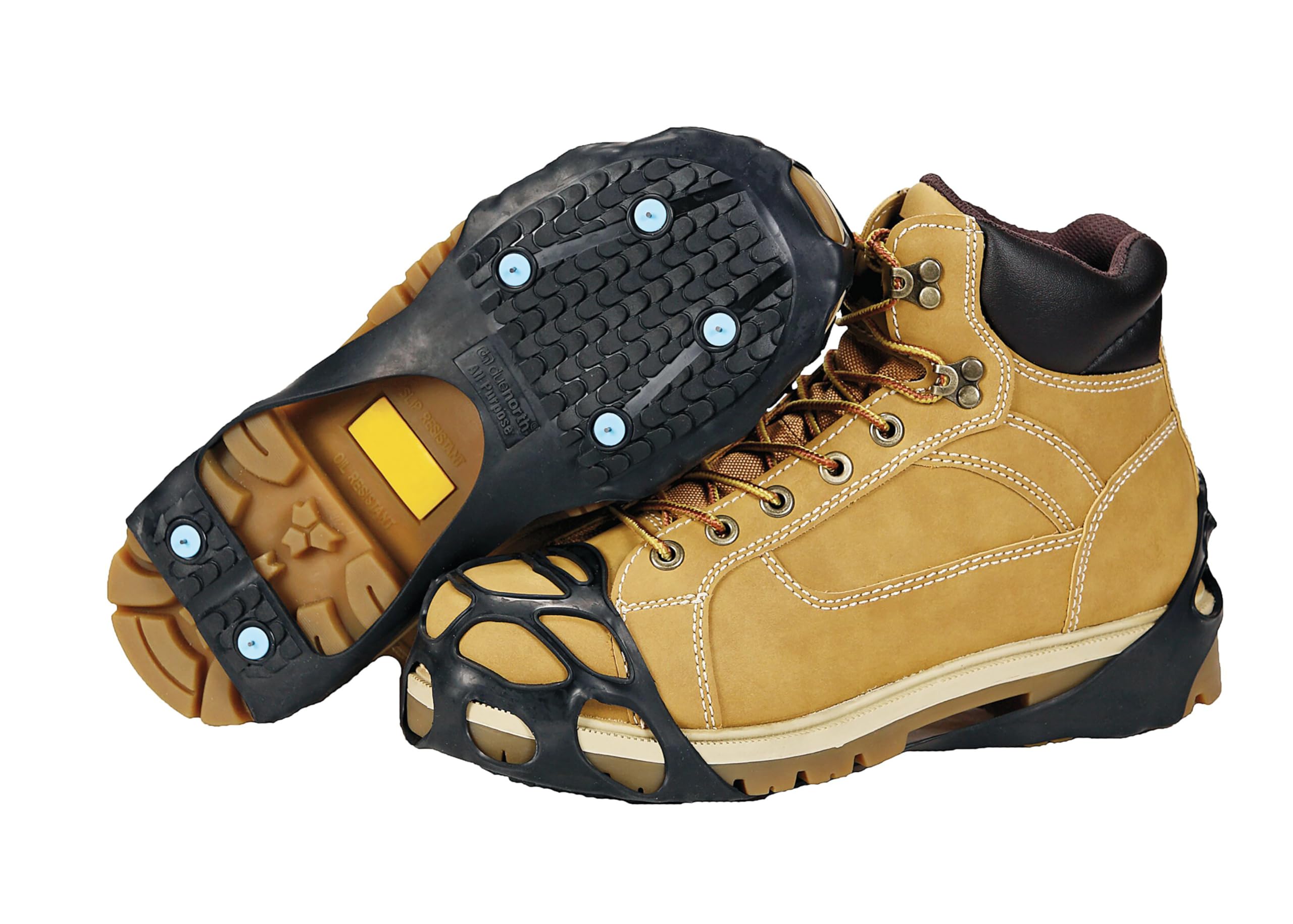
Due North takes a pragmatic approach to winter traction: use military-grade tungsten carbide spikes, embed them in a 100% natural rubber sole, and make the spikes replaceable so the cleat lasts multiple seasons. The staggered spike pattern places 12 contact points across the forefoot and heel, and the water-channeling tread design helps clear slush away from the sole to maintain metal-to-ice contact. The webbed toe-box is cut to fit work boots, and the exposed heel and mid-sole allow ladder climbing without the spikes interfering with rungs.
For industrial workers and anyone who spends their day walking on frozen outdoor surfaces, the Due North cleats hold up to heavy use. A women’s size 8 boot fit snugly into a size medium, and reviewers who tested the cleats on ice and packed snow reported traction that felt as secure as dry pavement. The natural rubber remained flexible during a sub-zero stretch, and the replaceable spikes mean you are not throwing away the entire device when a few studs wear down. The sizing runs slightly small, especially in the Large/XL range — a size 11 boot required some stretching before the cleat seated properly, and the four front cleats may feel sparse compared to full-coverage competitors.
This is the most cost-effective way to get replaceable tungsten carbide spikes on your boots without stepping up to a premium price point. The trade-off is a slightly narrower forefoot platform that may feel less stable on steep or uneven ice than a full-coverage design.
Why it’s great
- Tungsten carbide spikes provide durable bite on solid ice
- Replaceable spikes extend the cleat’s usable life
- Natural rubber stays flexible in extreme cold
Good to know
- Sizing may run small for larger boot sizes
- Fewer contact points under the forefoot than full-sole designs
5. XPETI Winter Snow Casual Slip-on Loafers
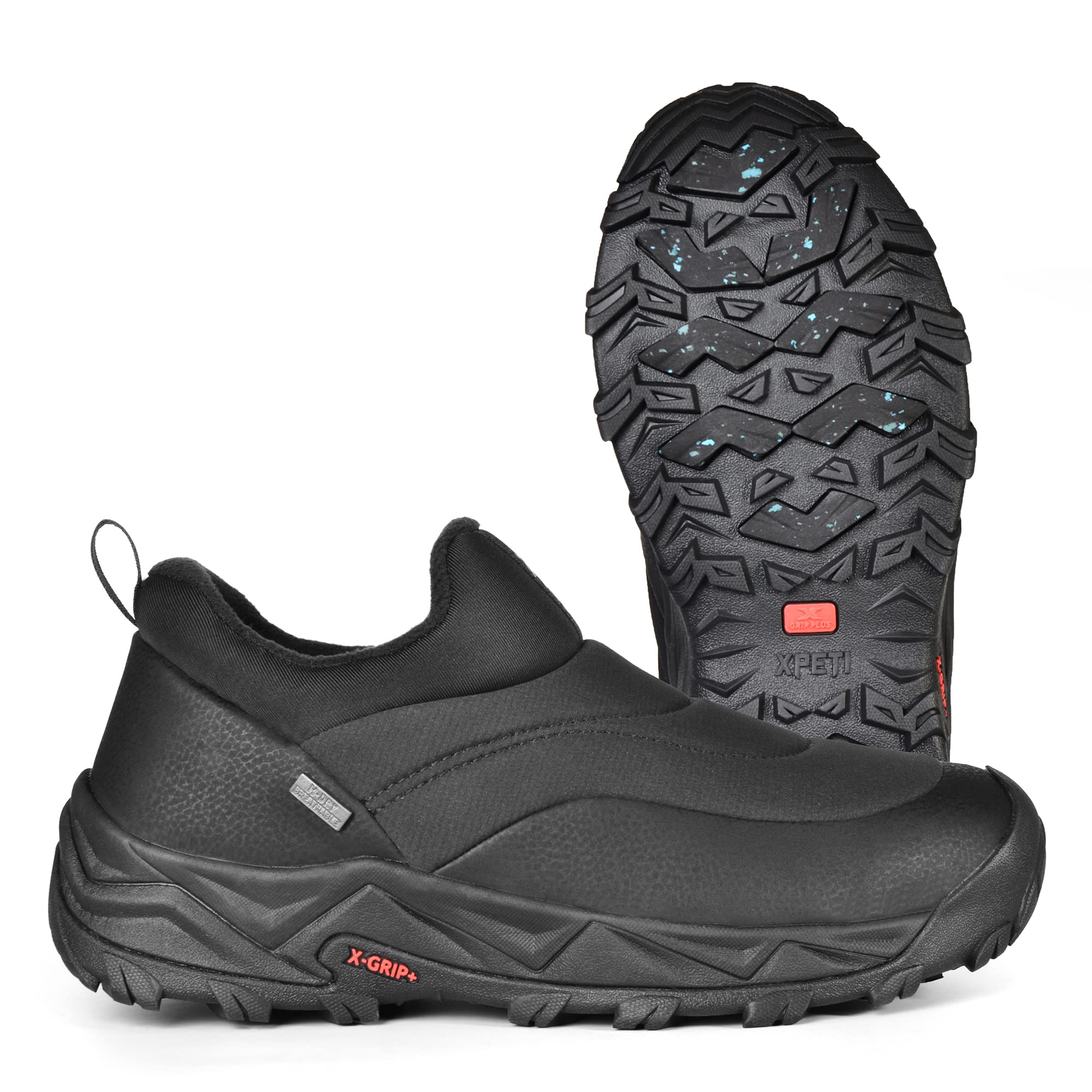
XPETI’s Cocoon moc flips the script on winter footwear by offering a waterproof, slip-on loafer that handles snow and slush without laces or zippers. The design is essentially a winter clog with a closed heel, allowing you to step into the boot and go — no bending over, no frozen fingers fighting with knots. The outsole provides reasonable traction on snow and light ice, and the interior warmth is strong enough for sub-zero dog walks without requiring thick socks.
Reviewers who used the XPETI loafers for early-morning walks in snow and freezing temperatures praised the easy on/off convenience and the reliable traction on packed snow. The waterproof construction kept feet dry through rain and slush, and the slip-on design stayed secure during movement without heel slop. The trade-off is that the traction is not aggressive enough for solid ice or steep frozen hills — on glare ice, the rubber outsole offers limited bite, and the boot is better suited for groomed paths and paved surfaces with a dusting of snow.
These are not a replacement for crampons or cleats. They are the right choice for anyone who wants a warm, waterproof boot that slips on quickly for short errands, casual walks, and shoveling the driveway. If you face solid ice daily, pair these with a separate traction cleat rather than relying on the outsole alone.
Why it’s great
- True slip-on design for fast winter exits
- Waterproof construction keeps feet dry in slush
- Warm enough for sub-zero temperatures with normal socks
Good to know
- Outsole lacks aggressive bite on solid ice
- Narrow fit may not suit wide feet or thick socks
6. Jakcuz Men Snow Boots
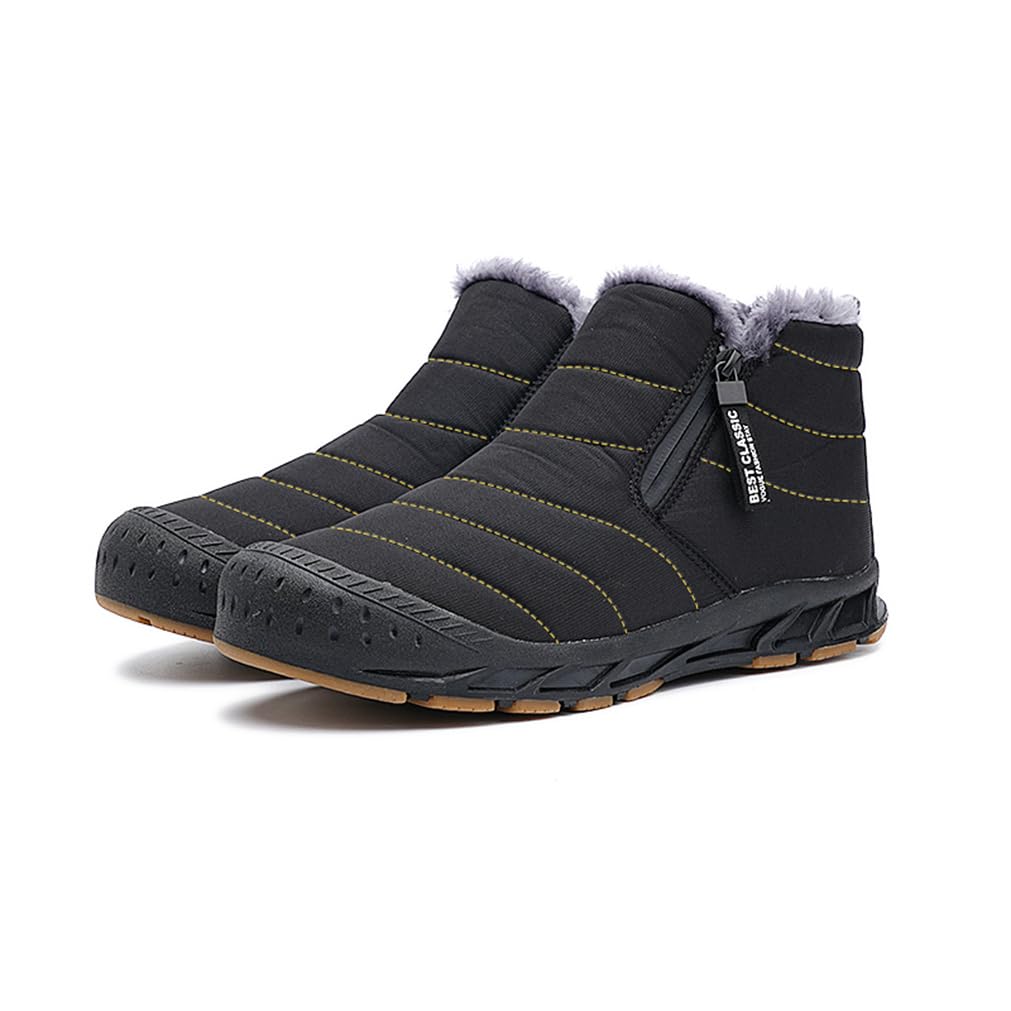
The Jakcuz Men Snow Boots aim squarely at the entry-level winter boot buyer who needs warmth, water resistance, and a non-slip outsole without spending a significant amount. The high-top design uses a fuzzy lining that traps heat effectively, and the rubber outsole features a shallow tread pattern that provides grip on snow and light slush. The slip-on construction with a drawstring collar makes these easy to pull on before heading out for a short walk or a trip to the store.
Reviewers who tested these boots on snowy hikes and daily dog walks reported that the interior stays warm and the water resistance holds up against moderate snow and rain. The non-slip sole handles packed snow well, but multiple users noted that the tread pattern is not aggressive enough to prevent slipping on solid ice or wet, mopped floors. The insole is flat and offers minimal arch support, which means these boots are better suited for short durations rather than all-day wear on hard pavement.
At this price point, the Jakcuz boots deliver decent winter performance for light use, but the shallow tread and low cushioning limit their utility beyond casual errands and quick outdoor tasks. Buyers who face icy sidewalks daily should invest in separate traction cleats to pair with these boots.
Why it’s great
- Warm fuzzy lining for cold weather comfort
- Easy slip-on design with drawstring closure
- Water resistant against snow and light rain
Good to know
- Tread lacks sufficient bite on ice and wet floors
- Flat insole offers minimal arch support
7. Men’s Winter Snow Boots

This anonymous snow boot, sold under a generic listing, packs a surprising amount of performance into a budget-friendly package. The 7.1-inch shaft height provides decent coverage for shallow snow, and the water-resistant upper keeps feet dry during slushy conditions. The non-slip outsole uses a lugged tread pattern that grips well on snow and slush, though it struggles on icy surfaces where the rubber compound offers limited bite. The interior is lined with a soft fabric that traps heat effectively, and the boot’s flexible construction makes it comfortable for casual walks without feeling stiff or heavy.
Reviewers who wore these boots through a full winter of snow, slush, and sub-freezing temperatures praised the warmth and the easy on/off convenience of the loose-lacing design. The boots kept feet warm during extended outdoor time, and the flexible sole allowed natural walking motion. The grip on snow and slush was reliable, but multiple users warned that icy sidewalks and wet indoor floors remained hazardous, with the outsole failing to hold on polished surfaces. The water resistance is adequate for light snow but may not hold up during prolonged exposure to deep slush or standing water.
These boots are a strong entry-level choice for casual users who need winter warmth without the price of premium insulation. If your daily path includes packed snow and occasional slush, they deliver. If you regularly walk on solid ice, budget for a separate traction cleat to pair with these boots.
Why it’s great
- Warm, flexible construction for comfort in cold weather
- Good grip on snow and slush
- Easy to put on and take off with loose lacing
Good to know
- Limited traction on solid ice and wet floors
- Water resistance may not hold up in deep slush
FAQ
Can I wear traction cleats indoors without damaging floors?
How do I know what size traction device fits my boots?
Are traction cleats safe to wear while driving?
How long do tungsten carbide spikes last compared to steel?
Can I use ice cleats with any type of winter boot?
Final Thoughts: The Verdict
For most users, the anti slip ice boots winner is the Winter Walking Low-Pro Ice Cleat because its 26 permanent tungsten carbide studs deliver consistent bite on solid ice while staying safe on concrete and indoor floors — a versatility that no other device in this lineup matches. If you need industrial-strength retention for an eight-hour shift on frozen ground, grab the STABILicers Maxx 2. And for hikers who want lightweight instability-free traction on snow-covered trails, nothing beats the Yaktrax Adventure Grip.