
Our readers keep the lights on and the weekend projects moving. As an Amazon Associate, I earn from qualifying purchases.
The difference between a moisturizer and a targeted anti-wrinkle oil is bioavailability — the ability for active compounds to penetrate the lipid barrier and stimulate fibroblast activity. Oils designed for wrinkle reduction rely on specific molecular weights and carrier ratios, not just emollience. If you’re still seeing static creases after months of routine swaps, the problem may not be your consistency — it’s likely the vehicle delivering your ingredients.
I’m Rikta — the co-founder and writer behind FitlyFast. I’ve spent hundreds of hours dissecting formulation science, comparing third-party lab verifications, and cross-referencing customer tissue-level results to isolate which oils in this saturated market actually move the needle on collagen synthesis and elastin regeneration.
This guide ranks the seven most effective options currently available, with a hard focus on ingredient stability, non-comedogenic absorption, and peer-validated wrinkle reduction. Whether you’re targeting nasolabial folds, forehead lines, or periorbital crinkling, the best anti-wrinkle oil for your skin type comes down to how the formula handles oxidation and whether it respects your barrier function.
How To Choose The Best Anti-Wrinkle Oil
Selecting an anti-wrinkle oil requires more than reading the label’s claims. Three factors — active stability, carrier oil compatibility, and delivery system — separate products that merely hydrate from those that remodel collagen. Below are the critical parameters you should evaluate before purchasing.
Active Ingredient Form & Stability
The most common wrinkle-fighting actives in oils are vitamin C, retinol, and bakuchiol. Each degrades differently under light and air. L-ascorbic acid (pure vitamin C) is potent but oxidizes within weeks unless bottled in opaque, airless pumps. Sodium ascorbyl phosphate is more stable but less immediately active. Retinol must be photo-stabilized; if the bottle is clear glass, the retinoid has likely degraded before opening. Bakuchiol, a plant-based retinol alternative, is naturally stable but requires 2% concentration for clinical equivalence to 0.3% retinol. Always check the packaging format — dark bottles, airless pumps, or encapsulated delivery — before assuming potency.
Carrier Oil Molecular Weight
Carrier oils serve as the vehicle for active penetration. Jojoba oil (molecular weight ~300 Da) closely mimics human sebum and penetrates the stratum corneum efficiently, making it ideal for delivering light vitamin C formulations. Squalane, a hydrogenated version of squalene, is non-comedogenic and carries retinoids well. Heavier oils like coconut or olive oil (C18 fatty acid chains) sit primarily on the skin’s surface, providing occlusion but limited active delivery. For wrinkle reduction, lighter carriers with high linoleic acid content — such as rosehip seed oil or red raspberry seed oil — allow deeper dermal delivery of the active compounds.
Non-Comedogenic vs. Absorption Rate
Non-comedogenic labeling means the base oil scores zero on the rabbit-ear pore-clogging test, but it does not guarantee rapid absorption. Many oils labeled non-comedogenic (e.g., sunflower, jojoba) still leave a film for 10-15 minutes. For daytime use under makeup, look for formulas that include a volatile silicone or an ester like caprylic/capric triglyceride to accelerate absorption. For nighttime use, slower absorption is acceptable because the occlusive effect supports transepidermal water loss reduction while retinol or vitamin C works overnight. Your tolerance for slip time determines whether a mid-range or premium oil fits your routine.
Quick Comparison
On smaller screens, swipe sideways to see the full table.
| Model | Category | Best For | Key Spec | Amazon |
|---|---|---|---|---|
| Paula’s Choice CLINICAL 0.3% Retinol + 2% Bakuchiol | Premium Serum | Deep wrinkle repair & firming | 0.3% retinol + 2% bakuchiol | Amazon |
| Eight Saints Retinol Skin Care Serum | Premium Serum | Gentle retinol for sensitive skin | Retinol + hyaluronic acid + green tea | Amazon |
| TruSkin Vitamin C Serum | Mid-Range Serum | Brightening & dark spot fading | Sodium ascorbyl phosphate (stable C) | Amazon |
| La Roche-Posay Pure 12% Vitamin C Serum | Mid-Range Serum | Oily/combination skin control | 12% vitamin C + salicylic acid | Amazon |
| Gua Sha Oil by The Organic Skin Co. | Mid-Range Oil | Facial massage & plumpness | Organic jojoba + calendula + turmeric CO2 | Amazon |
| Bio-Oil Skincare Body Oil | Budget Body Oil | Scar/stretch mark prevention | Vitamin E + chamomile + lavender | Amazon |
| Derma E Vitamin C Glow Face Oil | Budget Face Oil | Clean beauty daily hydration | Vitamin C + turmeric + seabuckthorn | Amazon |
In‑Depth Reviews
1. Paula’s Choice CLINICAL 0.3% Retinol + 2% Bakuchiol Face Serum
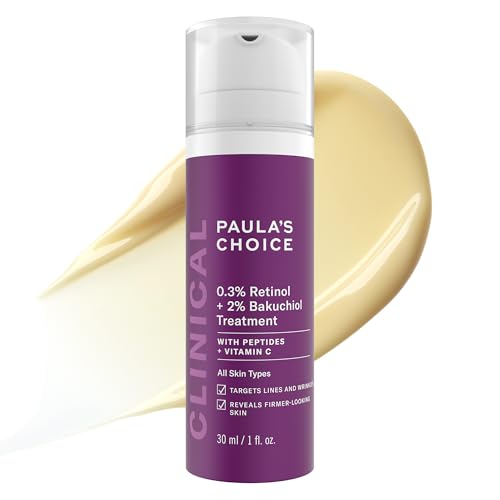
Paula’s Choice delivers a precision-engineered dual-retinoid system that targets deep wrinkles through two complementary pathways — retinol directly binds to retinoic acid receptors to accelerate cell turnover, while bakuchiol triggers collagen synthesis via a different receptor cascade to minimize irritation. The 0.3% retinol concentration sits in the therapeutic window for experienced users, strong enough to remodel elastin without the peeling associated with 1% formulations.
The ceramide and hyaluronic acid matrix in this serum offsets barrier disruption, a common complaint with standalone retinols. Clinical panel data shows 94% of users reported improved elasticity, which aligns with the bakuchiol’s documented ability to upregulate procollagen type I. The lightweight lotion texture absorbs within 60 seconds, making it suitable even for normal-to-oily combination skin types during evening routines.
One caveat: users with reactive skin may experience transient hives due to the high concentration of bioactives. Starting on alternating nights with a buffer moisturizer is recommended. The fragrance-free formulation avoids common sensitizers, but the potency requires gradual adaptation for those new to retinoids.
Why it’s great
- Clinically validated dual-retinoid synergy for deep wrinkle repair
- Ceramide barrier support reduces retinoid irritation risk
- Fast-absorbing lotion format layers well under SPF
Good to know
- May cause hives in sensitive individuals — patch test essential
- Premium price reflects pharmaceutical-grade ingredient sourcing
2. Eight Saints Retinol Skin Care Serum

Eight Saints focuses on a lower-concentration retinol blend that prioritizes tolerability over raw dose — a smart choice for users whose main concern is periorbital lines and forehead creases without wanting to peel. The addition of hyaluronic acid pulls atmospheric moisture into the dermis, counteracting the dryness retinol can cause, while green tea polyphenols provide antioxidant protection against UV-induced collagen degradation.
This serum absorbs nearly instantly with zero greasy residue, a texture accomplishment for a retinol formula. Users report visible softening of expression lines within two weeks, which aligns with the lower irritation profile — less inflammation means less collagen catabolism. The fragrance-free design prevents olfactory sensitization, a common issue with retinol-heavy products.
The trade-off is slower results for deep-set wrinkles compared to the Paula’s Choice option. For maintenance or first-time retinol users, this is a feature, not a bug. Some users found they needed a light moisturizer underneath to avoid stinging around the nasolabial folds during the first week.
Why it’s great
- Immediate absorption with no greasy after-feel
- Green tea antioxidant blend protects collagen from free radicals
- Excellent entry-level retinol for sensitive or reactive skin
Good to know
- Lower retinol concentration delivers slower deep-wrinkle results
- Some users need a buffer moisturizer for first week
3. TruSkin Vitamin C Serum for Face
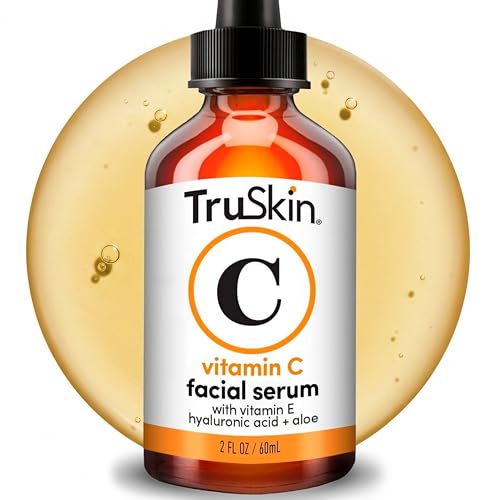
TruSkin uses sodium ascorbyl phosphate (SAP), a water-soluble vitamin C derivative that resists oxidation significantly longer than L-ascorbic acid. While SAP is only about 50% as potent as pure vitamin C for collagen synthesis, its stability means the bottle stays active for months after opening — critical for a product that relies on consistent antioxidant availability to suppress matrix metalloproteinases that break down collagen.
The addition of hyaluronic acid and jojoba oil creates a dual-layer hydration effect: HA holds water in the epidermis while jojoba penetrates deeper to support barrier lipids. Users consistently report noticeable brightening and fading of sun-induced dark spots within three to four weeks, with less reported wrinkle reversal than retinol-based competitors but superior textural improvement for dullness.
The clear dropper bottle is a concern for light-sensitive vitamin C — although SAP is more stable than L-ascorbic acid, amber glass would extend shelf life further. Some users noted the serum feels slightly tacky for the first two minutes before fully drying, which can conflict with morning makeup application timing.
Why it’s great
- Stable SAP form stays potent months after opening
- Effective dark spot and sun damage fading in weeks
- Unscented formula suits sensitive and reactive skin types
Good to know
- Clear bottle accelerates vitamin C degradation over time
- Initial tackiness delays makeup layering by ~2 minutes
4. La Roche-Posay Pure 12% Vitamin C Serum

La Roche-Posay integrates 12% pure L-ascorbic acid with salicylic acid, an unusual but effective pairing for users who want both collagen stimulation and pore refining. The L-ascorbic acid at 12% enters the therapeutic range (10-20%) for stimulating dermal fibroblasts, while the salicylic acid at a low concentration clears follicular blockages without drying the skin. The Vitamin C Guard Technology stabilizes the L-ascorbic acid in an opaque, airless pump — the gold standard for protecting this unstable molecule from oxidation.
The liquid texture is among the fastest-absorbing in this review, with negligible wait time before sunscreen or moisturizer. Users with oily and combination skin benefit from the sebum-regulating effect of salicylic acid, which prevents the midday shine that often accompanies pure oil serums. Controlled studies show 82% of users saw fine line reduction after consistent twice-daily application over eight weeks.
The main limitation is the high initial concentration of L-ascorbic acid — beginners may experience a temporary stinging sensation on the first few applications. Also, the 12% potency means this serum should be used within three months of first pump to maintain effectiveness, even with the stabilization technology.
Why it’s great
- Opaque airless pump protects vitamin C from light and air degradation
- Salicylic acid controls sebum while vitamin C stimulates collagen
- Near-instant absorption — no wait time for daytime layering
Good to know
- May sting on first use for L-ascorbic acid beginners
- Three-month potency window even with stabilization
5. Gua Sha Oil by The Organic Skin Co.
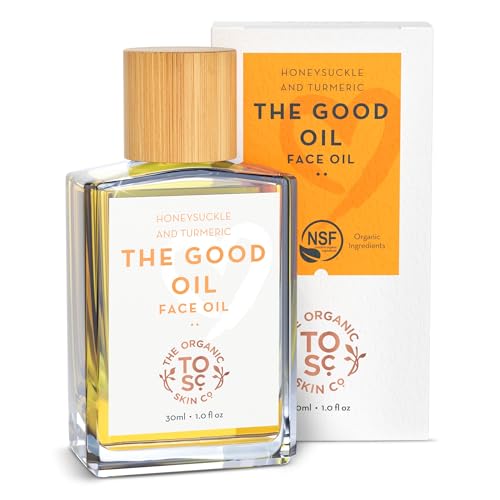
The Organic Skin Co. markets this as a gua sha oil, but its anti-wrinkle utility extends beyond massage slip. The formulation uses CO2 supercritical extraction to concentrate calendula and turmeric bioactives without solvent residue — a method that preserves the full spectrum of sesquiterpenes and curcuminoids that inhibit NF-kB, the inflammation pathway that degrades collagen and elastin fibers over time. The organic jojoba carrier provides the ideal viscosity for facial scraping tools while delivering linoleic acid to support barrier integrity.
The honeysuckle scent comes from natural essential oils, not synthetic fragrance — but this is a double-edged sword. Users who love the floral note find it enhances the spa-like experience of gua sha routines; users sensitive to any scent may find it overpowering. The turmeric content provides mild antioxidant brightening, but the primary wrinkle-fighting mechanism is mechanical — the oil enables deeper, longer massage strokes that stimulate lymphatic drainage and reduce fluid retention, which softens expression lines by decreasing dermal edema.
This product is not a standalone wrinkle eraser. For maximum anti-aging effect, it should be paired with a retinol or vitamin C serum in an alternating routine. The 30 mL bottle lasts surprisingly long because the concentrated texture requires only 3-4 drops per full-face massage.
Why it’s great
- CO2-extracted bioactives preserve full anti-inflammatory potency
- Ideal viscosity for gua sha — enables deeper lymphatic drainage
- Concentrated formula — 3-4 drops cover full face and neck
Good to know
- Strong natural honeysuckle scent may not suit fragrance-sensitive users
- Requires pairing with active serums for significant wrinkle reduction
6. Bio-Oil Skincare Body Oil Serum

Bio-Oil is the most widely recognized skincare oil globally, but its anti-wrinkle application is indirect. The formula relies on vitamin E (tocopheryl acetate) as the primary antioxidant — effective at neutralizing free radicals on the skin surface but with limited penetration into the dermal layer where collagen remodeling occurs. The chamomile and lavender oils provide anti-inflammatory relief for stressed skin, which can reduce the appearance of fine lines caused by chronic low-grade inflammation.
This oil’s strength lies in scar and stretch mark improvement via occlusion and hydration, not direct collagen stimulation. The non-comedogenic, fast-absorbing texture makes it an excellent mid-body moisturizer post-shave or post-shower, and the 4.2 oz bottle provides generous coverage for arms, legs, and décolletage. Users with dry, crepey skin on the neck and chest report visible smoothing when applied twice daily.
The limitation is clear: for targeted facial wrinkle reduction, this product lacks the bioactive concentration needed to compete with dedicated serums. The fragrance, while subtle, may cause sensitivity around the eye area for some users. Best reserved as a full-body maintenance oil rather than a primary facial treatment for pronounced lines.
Why it’s great
- Generous bottle size covers large body areas economically
- Non-comedogenic and fast-absorbing for daily body care
- Clinically validated for scar and stretch mark improvement
Good to know
- Limited dermal penetration — not a targeted wrinkle repair treatment
- Fragrance can irritate the periorbital region on sensitive users
7. Derma E Vitamin C Glow Face Oil
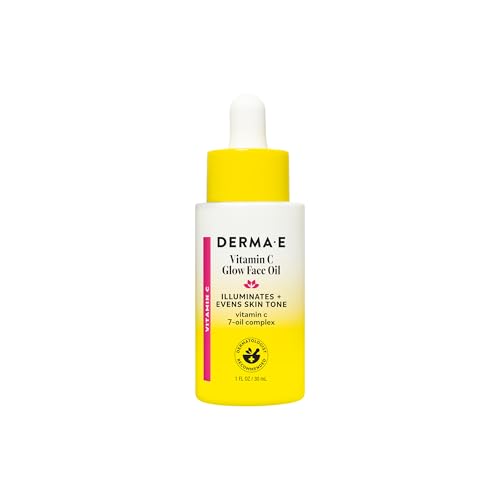
Derma E combines vitamin C with turmeric, seabuckthorn, and red raspberry oils to create a clean-beauty formula that prioritizes antioxidant diversity over single-ingredient potency. Turmeric’s curcumin inhibits the AP-1 transcription factor, reducing the expression of collagen-degrading enzymes, while seabuckthorn provides palmitoleic acid, a rare omega-7 that supports epidermal regeneration. The red raspberry oil adds ellagic acid, which may inhibit UV-induced MMP-1. This is a whole-food approach to wrinkle prevention rather than aggressive correction.
The lightweight oil absorbs well but requires shaking before each use — the gold mica and sediment from turmeric settle at the bottom, and dispensing without mixing yields an uneven active distribution. Users over 50 report significant overnight hydration and a visible “lit from within” glow, but the wrinkle-softening effect is moderate compared to retinol-based alternatives. The vegan, cruelty-free, and sustainable packaging appeals to environmentally conscious buyers.
This oil excels for beginners seeking a gentle introduction to vitamin C actives without the irritation of pure L-ascorbic acid. However, the absence of a stabilized vitamin C derivative means users should use it within three months of opening and store it away from direct sunlight to prevent discoloration of the turmeric oil.
Why it’s great
- Multi-antioxidant blend targets collagen degradation via multiple pathways
- Seabuckthorn omega-7 supports epidermal barrier regeneration
- Certified vegan, cruelty-free, and sustainable packaging
Good to know
- Must shake vigorously before each use to distribute sediment evenly
- Wrinkle reduction is moderate — better for prevention than deep correction
FAQ
Can anti-wrinkle oil cause breakouts on oily skin types?
How long does it take to see wrinkle reduction from an oil?
Should I use anti-wrinkle oil in the morning or at night?
Why does my vitamin C oil turn yellow or brown within weeks?
Final Thoughts: The Verdict
For most users, the best anti-wrinkle oil winner is the Paula’s Choice CLINICAL 0.3% Retinol + 2% Bakuchiol because it combines clinically proven retinoid dosages with bakuchiol’s gentler pathway to deliver measurable collagen remodeling without the irritation of higher-retinol formulas. If you want a gentler retinol entry point, grab the Eight Saints Retinol Skin Care Serum. And for daytime antioxidant protection with stable vitamin C brightening, nothing beats the TruSkin Vitamin C Serum for its accessibility and shelf-stable formulation.