
Our readers keep the lights on and the weekend projects moving. As an Amazon Associate, I earn from qualifying purchases.
A surgical incision is an open invitation for bacteria, and standard hand soap is not formulated to handle the resilient pathogens that thrive near wounds. Using a soap with a proven, persistent antimicrobial agent like chlorhexidine gluconate or povidone-iodine is critical during recovery to prevent a localized infection from turning your healing timeline into a medical setback.
I’m Rikta — the co-founder and writer behind FitlyFast. I have spent years analyzing medical-grade hygiene products, comparing active ingredient concentrations, residual kill times, and formulation gentleness to find the soaps that actually protect post-surgical patients without causing excessive skin irritation.
After extensive cross-referencing of clinical data, hospital usage protocols, and user experience reports, I’ve built a practical guide to the best antibacterial soap after surgery that balances infection control with skin tolerance during critical recovery days.
How To Choose The Best Antibacterial Soap After Surgery
Selecting the right post-surgical soap requires more than grabbing any bottle labeled “antibacterial.” You need to match the active ingredient to your specific skin condition, incision location, and surgeon’s protocol. The wrong choice can either fail to protect against resistant bacteria or dry out skin around the wound too aggressively.
Active Ingredient: CHG vs. Povidone-Iodine
Chlorhexidine gluconate (CHG) at 2% to 4% is the most common hospital recommendation because it kills a broad spectrum of bacteria and leaves a residue that continues working for up to six hours after washing. Povidone-iodine, at 7.5% to 10%, is also effective but offers shorter residual protection and may cause more stinging on raw tissue. CHG is typically preferred for daily pre-operative and post-operative showers, while povidone-iodine works well for spot-cleansing around a heavily draining wound.
Residual Activity and Reapplication
Not all antibacterial soaps leave a protective residue. Dial Complete, for example, uses benzalkonium chloride to kill germs on contact, but the effect fades almost immediately after rinsing. A soap with residual kill—like Hibiclens (4% CHG)—keeps reducing bacterial counts even after you towel off, which is critical during the vulnerable first 48 hours after surgery when infection risk peaks. If your surgeon mandates “persistent” antimicrobial activity, confirm the product label mentions a cumulative or residual effect.
Fragrance and Dye Content
Fresh surgical incisions are sensitive to chemical irritants. Fragrance, dyes, and harsh surfactants can trigger contact dermatitis or prolong inflammation around the suture line. A fragrance-free, dye-free formulation like Dial Complete Clean + Gentle reduces this risk. Medical-grade soaps such as Hibiclens and chlorhexidine scrubs are naturally fragrance-free and avoid added irritants entirely. If you have known allergies or eczema, prioritize a soap that lists zero fragrance and zero dyes on its ingredient panel.
Quick Comparison
On smaller screens, swipe sideways to see the full table.
| Model | Category | Best For | Key Spec | Amazon |
|---|---|---|---|---|
| Hibiclens | CHG Liquid | Gold standard pre-op wash | 4% CHG, up to 6 hrs residual | Amazon |
| Betadine Skin Cleanser | Iodine Liquid | Broad-spectrum iodine protection | 7.5% Povidone-iodine | Amazon |
| Dynarex Povidone-Iodine | Iodine Liquid | Affordable iodine alternative | 7.5% Povidone-iodine USP | Amazon |
| Antiseptic Surgical Scrub 4% CHG | CHG Liquid | Compact CHG for travel | 4% CHG, 4 oz bottle | Amazon |
| Sage 2% CHG Cloths | CHG Wipes | No-rinse body prep wipes | 2% CHG, no rinse needed | Amazon |
| Medi-Stat Antimicrobial Soap | Medical Soap | Unscented clinical wash | Ecolab medical formulation | Amazon |
| Dial Complete Clean + Gentle | Gentle Foam | Sensitive skin with low germ risk | Benzalkonium chloride, dye-free | Amazon |
In‑Depth Reviews
1. Hibiclens Antimicrobial Skin Cleanser (32 oz)

Hibiclens is the clinical benchmark for post-surgical hygiene because it delivers 4% chlorhexidine gluconate—the same concentration used in hospital pre-operative showers worldwide. The residual activity is the key differentiator: it continues killing gram-positive and gram-negative bacteria on the skin for up to six hours after you rinse, creating a protective shield that standard soaps cannot provide. This endurance matters most in the first 72 hours post-op when the incision is still open to contamination.
The 32-ounce pump bottle offers a practical volume for twice-daily pre- and post-surgery washes that can last several weeks of recovery. The formula is fragrance-free and dye-free, reducing the risk of contact irritation around the suture line. Users report that occasional dilution with water helps prevent skin dryness during frequent use, and the foaming action makes coverage easy even on hard-to-reach areas like the back or shoulders.
For overall infection prevention power combined with medical-grade reputation, Hibiclens is the strategic choice for anyone who has just undergone a surgical procedure. The long residual kill window provides a peace of mind that simple hand soaps cannot match, making it the product most likely to keep your recovery on track without unnecessary complications.
Why it’s great
- 4% CHG leaves protective residue that lasts hours after washing
- Fragrance-free and dye-free minimizes irritation at incision site
- Backed by 40 years of hospital and surgeon recommendations
Good to know
- Pump packaging can vary; some batches arrive without a full seal
- Higher concentration may dry skin if used undiluted multiple times daily
2. Betadine Skin Cleanser (4 oz)

Betadine relies on povidone-iodine at a 7.5% concentration to kill viruses, fungi, and bacteria on contact. This broad-spectrum activity makes it suitable for cleansing the skin around a healing wound, especially if you need to address a wider microbial range than CHG alone can cover. The formula has been trusted in hospitals for over 40 years, which speaks to its reliability in clinical environments.
The 4-ounce bottle is compact enough to store in a bathroom cabinet without taking up space, but it runs out relatively fast if you are washing multiple times per day. Users note that the iodine color can temporarily stain light-colored towels or clothing, so use a designated dark towel during the recovery period. Some people with sensitive skin report a mild stinging sensation on raw tissue, which is typical for iodine-based products.
Betadine is a strong option when you need a contact-kill antiseptic rather than a residual protectant. It is also a good backup to have on hand for cleaning around a PICC line, drain site, or any wound that requires spot-decontamination before dressing changes.
Why it’s great
- Broad-spectrum kill covers bacteria, fungi, and some viruses
- Compact travel-friendly size for bedside or on-the-go use
- Proven hospital-grade formulation with decades of clinical use
Good to know
- Iodine can stain clothing, towels, and bathroom surfaces
- May cause transient stinging on open or heavily excoriated skin
3. Dynarex Povidone-Iodine Scrub Solution (16 oz)

Dynarex provides a povidone-iodine scrub at 7.5% in a 16-ounce bottle that delivers the same active ingredient as Betadine at a more accessible overall value. The USP-grade formulation is identical to what hospitals use for surgical site preparation and preoperative scrubbing, so you are getting medical-grade disinfection without the typical markup of branded medical supplies.
The larger volume is a practical advantage if you need to perform full-body pre-operative showers as directed by your surgeon. Users mention that the solution is less sudsy than typical hand washes, but it foams adequately for coverage over large areas. The antiseptic smell is distinct but not overwhelming, and the bottle is designed with a simple flip-top cap that dispenses easily even with one hand while holding a surgical dressing.
Dynarex is an excellent choice if your surgeon has specifically recommended povidone-iodine and you want a stock-up quantity that will last through the entire recovery period. Just be aware that the intense brown color can temporarily discolor skin and requires careful rinsing to avoid staining.
Why it’s great
- Larger 16 oz bottle provides better volume for extended use
- USP-grade povidone-iodine matches hospital-standard concentration
- Excellent broad-spectrum pathogen coverage at a practical price point
Good to know
- Low sudsing action may feel less effective than it actually is
- Strong iodine odor lingers on hands and can stain light fabrics
4. Antiseptic Surgical Scrub 4% CHG (4 oz)

This compact 4-ounce bottle packs the same 4% chlorhexidine gluconate concentration found in larger surgical scrubs, making it a convenient option for short-term post-op use or as a travel companion. The active ingredient matches the hospital standard, so it provides the same duration of residual protection against bacterial regrowth as much larger containers.
The smaller size is ideal if your recovery plan involves limited washing—perhaps just pre-surgery prep or a few days of post-op care—and you do not want to commit to a full 32-ounce bottle. Users report that the formulation is slightly thicker than standard liquid soaps, which helps it stay on the skin during the mandatory one-minute contact time before rinsing. However, the price per ounce is significantly higher than purchasing a bulk CHG product, so it is not the most cost-effective for long-term daily use.
Pick this if you need a CHG scrub for a specific short window—like a same-day surgery prep kit—or if you are traveling and cannot bring a larger bottle. The small footprint also works well for keeping in a guest bathroom for anyone who enters the recovery space.
Why it’s great
- Same 4% CHG concentration as full-size surgical scrubs
- Portable size fits in a travel bag or overnight kit
- Thicker viscosity improves contact time and coverage
Good to know
- Small volume means frequent repurchasing for extended recovery
- Higher per-ounce cost compared to larger CHG options
5. Sage 2% CHG Cloths (3-Pack)

Sage CHG cloths deliver a 2% chlorhexidine gluconate application in a pre-moistened, no-rinse format that simplifies pre-operative body preparation or spot-decontamination around a wound. The wipe design eliminates the need for water and towels, making it especially useful for bed-bound patients or anyone with limited mobility after surgery who cannot easily reach a shower.
Each cloth is thick and saturated enough to cover a full torso or total body area without leaving dry patches. Since it requires no rinsing, you simply wipe the skin and let it air dry for about two minutes, allowing the CHG to form its protective residual barrier. Healthcare providers frequently introduce these wipes in hospital settings for patients with PICC lines, central lines, or drain sites because the application is less effort-intensive than a full soap-and-water scrub.
The premium price per pack is the main trade-off—each 3-pack covers roughly one to three uses depending on body size—so they are best reserved for targeted pre-op showers, travel, or situations where conventional washing is physically challenging.
Why it’s great
- No-rinse application ideal for limited mobility after surgery
- Pre-moistened cloths are pre-measured for consistent dosing
- Creates residual CHG protection without requiring a shower
Good to know
- Very expensive per use compared to liquid CHG alternatives
- Package of three cloths can run out quickly if using daily
6. Medi-Stat Antimicrobial Soap (8.5 oz)
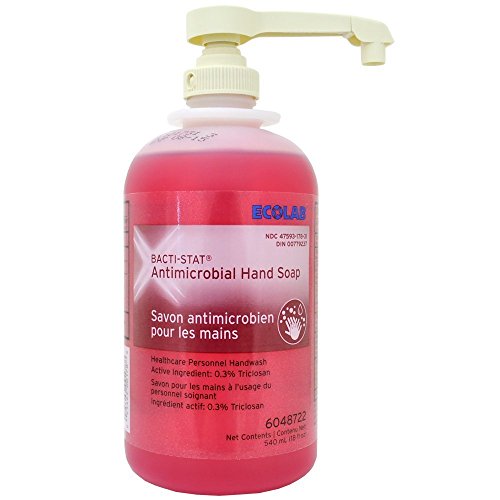
Medi-Stat from Ecolab is an unscented, heavy-duty antimicrobial soap often used in clinical settings for hand hygiene and wound-area cleansing. The formula is designed to be effective against a range of microorganisms while maintaining a viscosity that signals complete rinsing—the soap clings until rinsed away, giving you an audible and tactile cue that you have washed thoroughly.
Users note that it is slightly more drying than consumer hand washes because of its clinical-strength surfactants, so it is best used as a targeted surgical hand scrub rather than an all-over body wash. The unscented nature makes it safe for sensitive noses and reduces the chance of allergic skin reactions around the incision. The 8.5-ounce pump bottle is a practical in-between size that lasts longer than travel versions without taking up too much counter space.
Consider Medi-Stat if you want a dedicated clinical soap from a trusted medical supplier (Ecolab) that prioritizes function over cosmetic appeal. It works well for pre-surgery hand scrubbing and for washing the area around a drain or catheter site where you need reliable germ reduction without added fragrance.
Why it’s great
- Unscented clinical formulation reduces irritation risk at incision
- Viscous texture gives clear feedback on when rinsing is complete
- Trusted Ecolab medical brand used in hospitals and clinics
Good to know
- Can be drying with multiple daily uses on sensitive skin
- Smaller bottle size may require repurchasing for long recoveries
7. Dial Complete Clean + Gentle Foaming Hand Wash (8-Pack)
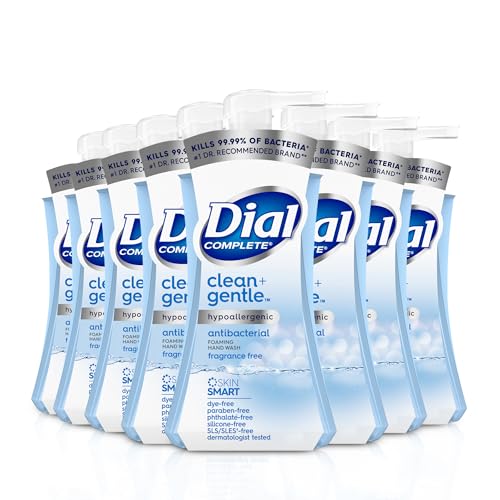
Dial Complete Clean + Gentle is a benzalkonium chloride-based antibacterial foaming hand wash that kills 99.99% of common household bacteria on contact. While it does not offer the same residual protection as CHG or iodine-based soaps, it is a practical option for general hand hygiene in the recovery household—especially for family members and caregivers who wash their hands frequently before entering the patient’s room.
The formula is fragrance-free, dye-free, paraben-free, and phthalate-free, which makes it one of the gentlest antibacterial options available for people with sensitive or dermatitis-prone skin. It is also pH-balanced and hypoallergenic, so it will not dry out or sting hands that are already chapped from repeated washing. The 8-count bulk pack is ideal for stocking bathroom, kitchen, and bedside areas so that clean hands are always within reach.
Dial is not a substitute for medical-grade CHG or iodine scrubs directly at the incision site, but it serves an important supporting role in reducing environmental contamination around the patient. For anyone managing a post-surgical home environment, having a gentle, fragrance-free antibacterial hand soap for everyone in the house is a smart infection-control layer.
Why it’s great
- Fragrance-free and dye-free minimizes irritation for sensitive skin
- Foaming dispenser encourages thorough lathering without waste
- Bulk 8-pack provides enough soap for the entire household recovery
Good to know
- No residual antimicrobial activity after rinsing
- Not suitable as a direct wound or incision-side scrub
FAQ
Can I use regular antibacterial hand soap after surgery?
How soon after surgery can I shower with antibacterial soap?
Should I use CHG soap or iodine soap for my post-surgical incision?
Is fragrance-free really necessary when using antibacterial soap after surgery?
Final Thoughts: The Verdict
For most users, the antibacterial soap after surgery winner is the Hibiclens because it provides the 4% CHG concentration, a six-hour residual kill window, and fragrance-free gentleness that matches hospital pre-op standards. If you want the convenience of no-rinse application for limited-mobility recovery, grab the Sage 2% CHG Cloths. And for a household-friendly option that keeps your caregivers protected without irritating sensitive skin, nothing beats the bulk Dial Complete Clean + Gentle. Choose your primary scrub based on your surgeon’s protocol, and layer in a gentle hand soap for visitors to keep the whole recovery environment clean.