
Our readers keep the lights on and the weekend projects moving. As an Amazon Associate, I earn from qualifying purchases.
Choosing the wrong ointment for an open wound can lead to stinging pain, allergic reactions, or even a slower healing process. The ideal formula needs to deliver potent antimicrobial protection without irritating the sensitive tissue of a fresh cut, scrape, or burn. It must create a moist barrier that keeps out contaminants while allowing the skin to breathe and regenerate.
I’m Rikta — the co-founder and writer behind FitlyFast. This guide is built on countless hours of cross-referencing dermatological guidelines with real-world user experiences to find the most reliable options for treating open wounds.
Whether you need a standard triple-antibiotic, a gentle single-ingredient option, or a natural alternative, these are the picks that define the best antibiotic ointment for open wounds available today.
How To Choose The Best Antibiotic Ointment For Open Wounds
An open wound is a direct route for bacteria. The right ointment does more than just coat the injury — it actively suppresses microbial growth while maintaining a moist, oxygen-permeable environment that speeds up healing and reduces scar formation.
Active Ingredient Profile: Single vs. Triple vs. Antiseptic
Triple-antibiotic ointments contain bacitracin, neomycin, and polymyxin B, offering broad-spectrum coverage. However, neomycin is a common allergen. For those with sensitive skin or known allergies, a single-antibiotic formula with bacitracin zinc, or a non-antibiotic antiseptic like medical-grade Manuka honey or povidone-iodine, provides effective infection control without the irritation risk.
Vehicle Matters: Ointment, Gel, or Solution
For an open wound, an occlusive ointment creates a barrier that locks in moisture and prevents scab formation, which is crucial for minimizing scars. A gel is better for wounds that are already oozing, as it won’t trap excess fluid. A solution like povidone-iodine is ideal for the initial cleaning and disinfection phase before applying a longer-lasting barrier agent.
Quick Comparison
On smaller screens, swipe sideways to see the full table.
| Model | Category | Best For | Key Spec | Amazon |
|---|---|---|---|---|
| Betadine Antiseptic Solution | Antiseptic Solution | Deep wound cleaning & prep | 10% Povidone-Iodine | Amazon |
| Aquaphor Healing Ointment | Skin Protectant | Post-procedure & dry wound healing | 41% Petrolatum | Amazon |
| Bacitraycin Plus First Aid | Single-Antibiotic Ointment | Allergy-prone skin & tattoo aftercare | Bacitracin Zinc + Aloe Vera | Amazon |
| Cicatricure Triple Antibiotic | Triple Antibiotic Ointment | Painful wounds & scrapes | Bacitracin + Neomycin + Polymyxin B | Amazon |
| First Honey Manuka Ointment | Natural Honey Ointment | Chemical-free infection prevention | Medical Grade Manuka Honey | Amazon |
| MED PRIDE Triple Antibiotic Packets | Individual Packet | Travel & bulk first-aid kits | 144 Single-Use Packets | Amazon |
| Silver Miracles Colloidal Gel | Colloidal Silver Gel | Burns & eczema on sensitive skin | 99.999% Pure Silver | Amazon |
In‑Depth Reviews
1. Betadine Antiseptic Solution

Betadine is the gold standard for prepping an open wound before applying a barrier ointment. Its 10% povidone-iodine concentration kills a broad spectrum of germs on contact, and it delivers a direct “no-sting” advantage over alcohol and hydrogen peroxide, which can damage fragile tissue.
Users report that it doesn’t burn on application, making it a top choice for children or for treating raw, painful abrasions. The amber tint is actually useful — it lets you see exactly where you’ve applied it, preventing missed spots. It flows easily, so it works well in irregular wound cavities.
The only real drawback is the packaging: the cap can loosen during travel, leading to messy leaks. The brown residue it leaves can also stain fabrics and skin, so you’ll want to handle it carefully. An excellent first step in wound care, but it should be paired with an occlusive ointment for long-term protection.
Why it’s great
- Broad-spectrum microbial kill without the sting
- Trusted in hospitals for over 50 years
- Visible amber color ensures full coverage
Good to know
- Cap can leak during travel
- Stains skin and fabric temporarily
2. Aquaphor Healing Ointment
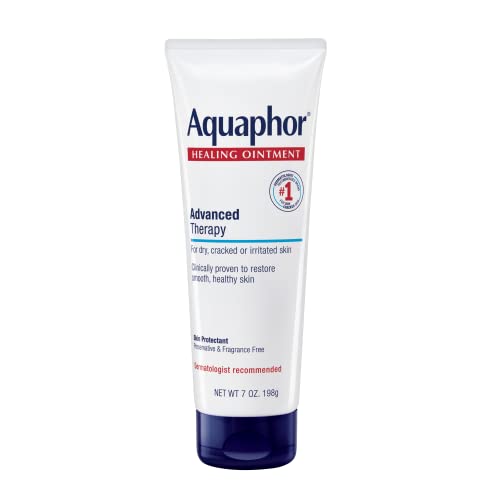
Aquaphor is more than just a moisturizer — it’s a wound protectant built around a 41% petrolatum base. What makes it a top-tier choice for open wounds is its ability to create a semi-occlusive barrier that locks in moisture while allowing oxygen flow, which dermatologists confirm is critical for reducing scar formation.
Users praise it for post-surgical incision care, cryotherapy aftercare, and treating chafed, cracked skin that has broken open. It’s unscented and extremely thick, so a little goes a long way. It doesn’t contain antibiotics, but its barrier function is what makes it effective for preventing contamination of wounds that are already clean.
The main limitation: because it lacks active antimicrobial agents, it should not be used on wounds that show signs of active infection. It’s best for sealing a wound that has already been disinfected. The 7-ounce tube is generous and hygienic, making it a staple for any medicine cabinet.
Why it’s great
- Creates an ideal moist healing environment
- Dermatologist-recommended for incisions
- Thick, long-lasting, and unscented
Good to know
- Contains no active antibiotics
- Feels greasy on the skin
3. Bacitraycin Plus First Aid Antibiotic Ointment

Bacitraycin Plus is a single-antibiotic ointment featuring bacitracin zinc, which is a gentler alternative for people who react to neomycin, a common allergen in triple-antibiotic blends. Its unique addition of aloe vera provides a moisturizing benefit that helps counteract the drying effect of a standard wound-healing environment.
It is highly recommended for tattoo and piercing aftercare, where skin is already inflamed and highly sensitive. Users recovering from thyroid surgery reported that it minimized scarring effectively. The 2-pack format lets you store one tube at home and keep the other in a travel bag or hiking pack.
Because it relies on a single active ingredient, its antimicrobial spectrum is narrower than that of a triple antibiotic. It is best for clean, minor wounds where the primary goal is to prevent common surface bacteria like staph, rather than fighting a polymicrobial infection.
Why it’s great
- Low risk of allergic reaction
- Aloe vera soothes the wound site
- Doctor-recommended for tattoo care
Good to know
- Narrower bacterial coverage
- Tube cap can be cumbersome
4. Cicatricure Triple Antibiotic Ointment with Pain Relief
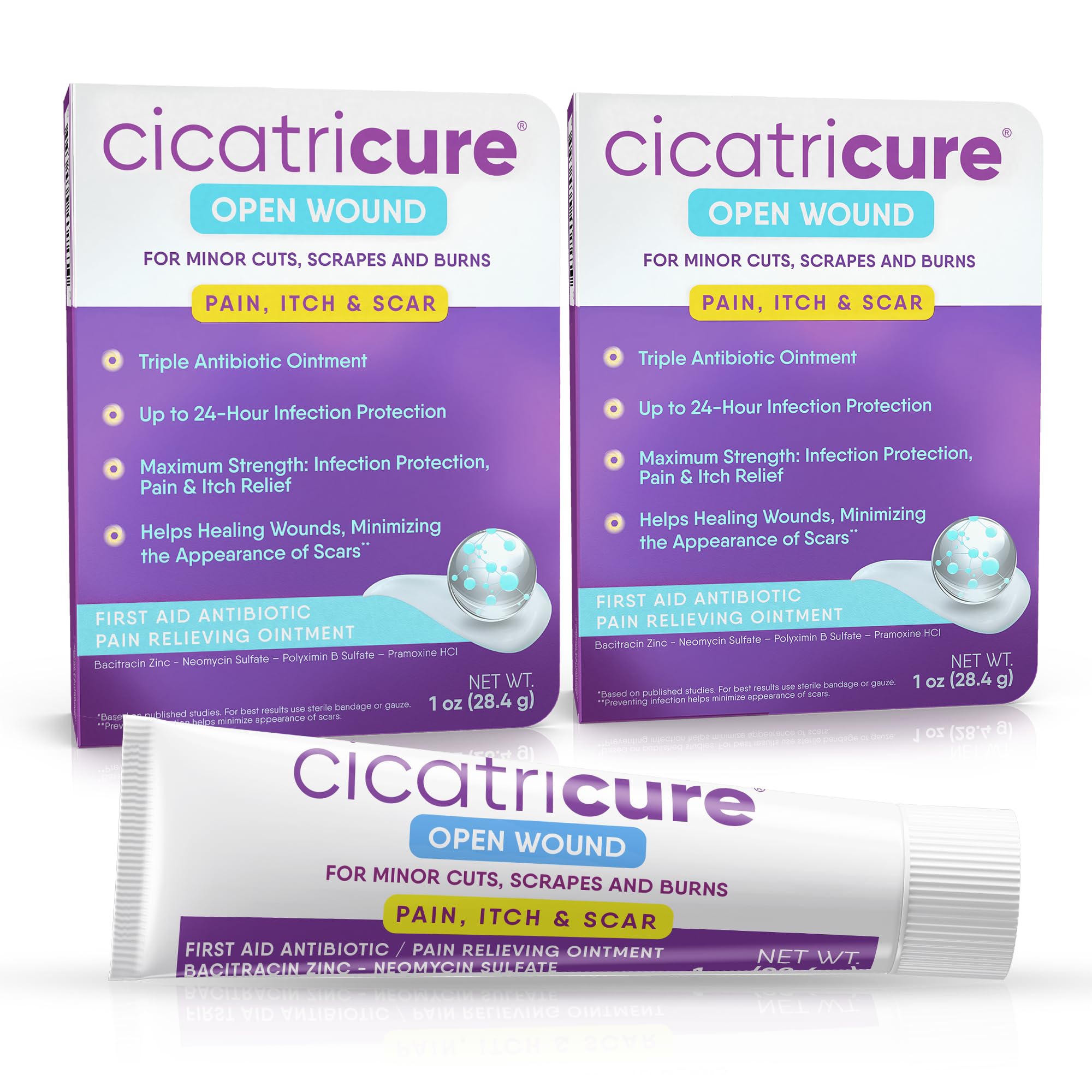
This formula packs a complete triple-antibiotic punch — bacitracin zinc, neomycin sulfate, and polymyxin B sulfate — and adds pramoxine HCl, a topical analgesic that numbs the area. For an open wound that is raw and exposed, this dual action treats the infection risk and the pain simultaneously.
The reviews highlight its ability to reduce the itching and stinging sensation from road rash and insect bites. The ointment consistency feels less greasy than standard petrolatum-based products, which helps it absorb better on weeping wounds. It is maximum-strength and designed to be applied one to three times daily for effective coverage.
The inclusion of neomycin means it is not suitable for everyone, particularly those with a known sensitivity to neomycin, which manifests as contact dermatitis. It’s best used on small, localized wounds rather than large areas of broken skin to minimize the risk of an allergic reaction.
Why it’s great
- Pain relief integrated with infection protection
- Reduces itching from bites and scrapes
- Promotes faster, less scarred healing
Good to know
- Contains neomycin, a common allergen
- Not recommended for large surface areas
5. FIRST HONEY Manuka Wound Ointment

This is a sterile, antibiotic-free alternative that leverages the bioactive properties of medical-grade Manuka honey. Its low pH and sugar content create an environment that is inhospitable to bacteria, while the thick, viscous texture forms a protective seal over the wound without needing artificial chemicals.
Users have reported remarkable results on stubborn wounds, including dehiscence (a reopening of a surgical incision) where standard treatments failed. It works well on burns, ant bites, and skin that is breaking down from eczema. The honey gel stays in place well, but its sticky consistency makes application with a Q-tip the smart approach.
The biggest complaint is the tube volume versus the price. Some users feel the tube is underfilled, and it costs more than standard triples. However, for someone actively avoiding antibiotics or with a wound that isn’t responding to standard care, the potency and sterility of this option are compelling.
Why it’s great
- Antibiotic-free natural infection protection
- Powerful for stubborn, non-healing wounds
- ISO 13485 certified medical device quality
Good to know
- Very sticky texture makes application messy
- High cost per ounce of product
6. MED PRIDE Triple Antibiotic Ointment Packets
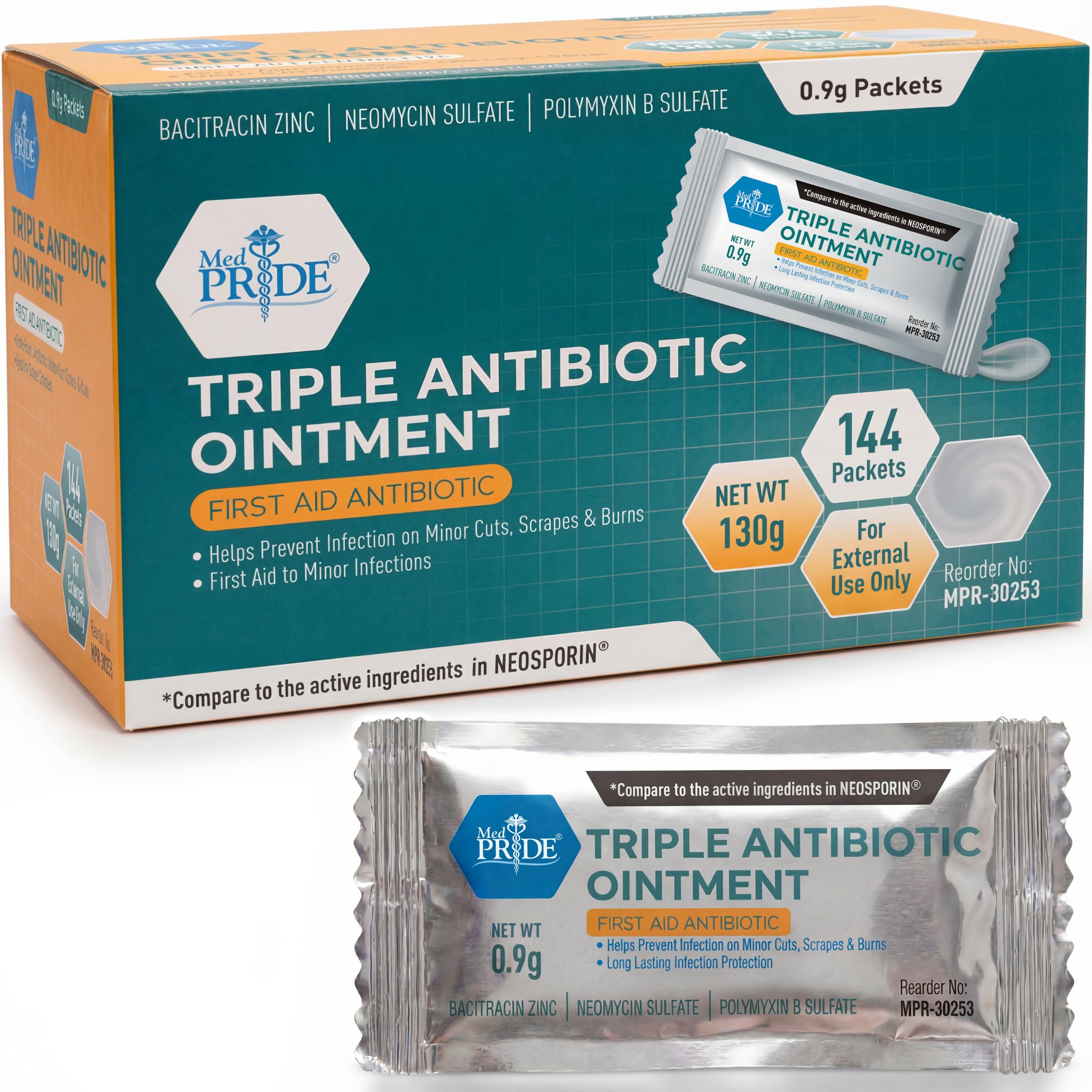
This bulk pack of 144 individually sealed packets solves the hygiene problem of dipping a finger into a shared tube of ointment. Each packet contains a pre-measured dose of triple antibiotic cream, keeping the remainder sterile and reducing cross-contamination risks, which is critical when treating open wounds on multiple family members.
They are perfect for refilling home, car, and work first-aid kits. Users love the convenience of tossing a few packets into a sports bag or purse. The application is direct and clean — tear the top and squeeze onto the wound. It’s hard to beat for families with active kids who get scrapes daily.
The single-use format generates more waste than a tube, and each packet contains a standard triple antibiotic formula, which includes neomycin. If you have a known sensitivity, these are not the right option. But for bulk cost-effectiveness and hygiene, this format is the leader.
Why it’s great
- Hygienic single-use portions prevent cross-contamination
- Ideal for stocking multiple first-aid kits
- Convenient for pockets, bags, and glove boxes
Good to know
- Single-use packs produce more plastic waste
- Contains neomycin, which can cause contact allergies
7. Silver Miracles Colloidal Silver Gel

Colloidal silver has a long history as a topical antimicrobial, and this gel formulation delivers 99.999% pure nano silver in a gentle, unscented base. Unlike occlusive ointments, this clear gel has a cooling, lightweight feel that makes it a standout for burns and sunburns where heat and irritation are the primary concerns.
Users with eczema and cracked, weeping skin report immediate soothing relief without the greasiness of an ointment. It absorbs quickly and doesn’t block air flow to the wound, which is a key advantage for a blistering burn that needs to dry out without sticking to a bandage. It is also fragrance-free and gluten-free, suitable for extremely sensitive skin.
It’s not a drug that has gone through FDA approval as an antibiotic, so its strength is more anecdotal than clinically standardized. For serious burns, it is a useful cooling compress, but should not replace proper medical burn treatment. For minor thermal burns and everyday skin irritation, it performs impressively.
Why it’s great
- Cools and soothes burns on contact
- Lightweight gel absorbs quickly, no residue
- Safe for extremely sensitive and eczema-prone skin
Good to know
- Not an FDA-regulated antibiotic
- Gel texture can be messy for deeper cuts
FAQ
Can I use triple antibiotic ointment on every open wound?
How often should I reapply ointment to an open wound?
Does antibiotic ointment help reduce scarring?
Final Thoughts: The Verdict
For most users, the best antibiotic ointment for open wounds winner is the Aquaphor Healing Ointment because it creates the ideal moist healing environment dermatologists endorse for scar reduction and it works on nearly every skin type without causing irritation. If you want active infection-fighting power and pain relief, grab the Cicatricure Triple Antibiotic with Pain Relief. And for a natural, antibiotic-free approach that works on stubborn wounds, nothing beats the FIRST HONEY Manuka Wound Ointment.