
Our readers keep the lights on and the weekend projects moving. As an Amazon Associate, I earn from qualifying purchases.
When a food triggers hives, facial swelling, or that unmistakable throat itch, you need an antihistamine that matches the speed and severity of the reaction. The wrong choice delays relief or leaves you fighting symptoms for hours. This guide breaks down the active ingredients, onset times, and sedation profiles that actually matter when your body is in crisis mode after eating.
I’m Rikta — the co-founder and writer behind FitlyFast. I’ve spent countless hours analyzing over-the-counter antihistamine labels, cross-referencing ingredient lists with clinical onset data, and reading real-world accounts of how these medications perform during acute food-related allergic reactions to build this guide.
Whether you carry an EpiPen and need backup symptom control or simply want rapid relief from a mistaken bite, understanding the difference between sedating and non-drowsy antihistamines is critical. This guide ranks the best antihistamine for allergic reaction to food based on onset speed, potency, and suitability for food-triggered histamine cascades.
How To Choose The Best Antihistamine For Allergic Reaction To Food
Food allergies involve a rapid release of histamine from mast cells in the gut, skin, and airways. Unlike seasonal pollen exposure, the histamine burst from a food allergen is typically abrupt and can escalate quickly. The goal of an antihistamine during a food reaction is to block peripheral H1 receptors before the cascade triggers systemic symptoms. Speed of onset matters more here than duration of action.
First-Generation vs. Second-Generation Antihistamines
First-generation antihistamines like diphenhydramine cross the blood-brain barrier freely, causing sedation but also reaching peak plasma concentration faster — around 1 to 2 hours versus 2 to 4 hours for most second-generation drugs. For an active food reaction where hives are spreading rapidly, the faster brain penetration and stronger H1 blockade of diphenhydramine often provides quicker visible symptom relief. Second-generation options like cetirizine and loratadine are safer for daily use but may not arrest an escalating reaction as decisively.
Liquid Gels vs. Tablets
During a food reaction, gastric motility can slow due to histamine release in the gut, making tablet dissolution unreliable. Liquid gel capsules already contain the drug in a dissolved state, allowing for faster absorption even in a compromised digestive environment. This makes liquid gel formulations of both diphenhydramine and cetirizine a smarter choice when minutes matter.
Dosage Strength and Tapering
Standard adult doses for acute reactions are 25 to 50 mg of diphenhydramine or 10 mg of cetirizine. The 50 mg extra-strength version of diphenhydramine is often reserved for breakthrough symptoms or larger body weights. Starting with a lower dose and re-dosing after 4 to 6 hours is safer than taking a high dose upfront, especially if you need to remain awake to monitor symptom progression.
Quick Comparison
On smaller screens, swipe sideways to see the full table.
| Model | Category | Best For | Key Spec | Amazon |
|---|---|---|---|---|
| Zyrtec Liquid Gels | Liquid Gel | Fast daily defense | Cetirizine 10 mg liquid gel | Amazon |
| Zyrtec Tablets 75ct | Tablet | Doctor-recommended brand | Cetirizine 10 mg tablet | Amazon |
| Benadryl Ultratabs | Tablet | Rapid acute symptom relief | Diphenhydramine 25 mg | Amazon |
| WELMATE 50mg Capsules | Capsule | Extra-strength bulk supply | Diphenhydramine 50 mg capsules | Amazon |
| Claritin Tablets | Tablet | Non-drowsy daily use | Loratadine 10 mg tablet | Amazon |
| Amazon Basic Care Cetirizine | Tablet | Budget-friendly daily dose | Cetirizine 10 mg, 300 count | Amazon |
| Herbs Etc. Allergy ReLeaf | Herbal | Plant-based allergy comfort | Mullein, Eyebright, Nettle | Amazon |
In‑Depth Reviews
1. Zyrtec 24 Hour Allergy Relief Liquid Gels
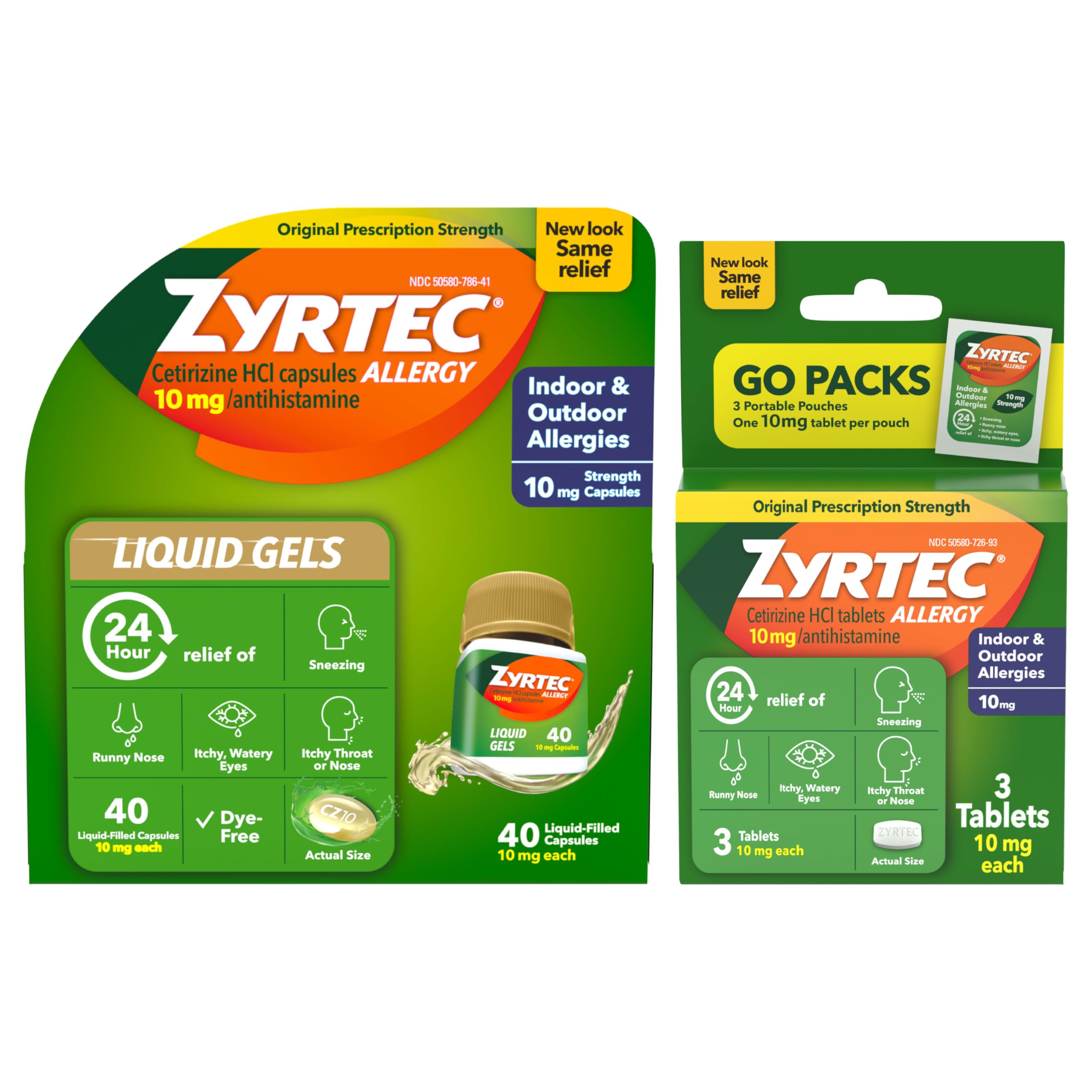
The liquid gel format of cetirizine offers a meaningful absorption advantage during a food reaction. Because the drug is already dissolved in the gel matrix, it bypasses the slow tablet disintegration step that can be unreliable when histamine has already started affecting gastric function. Users report noticeable symptom reduction — sneezing, itchy eyes, throat irritation — within an hour of ingestion, which aligns with cetirizine’s faster onset among second-generation antihistamines.
This value pack includes three single-dose travel strips alongside the main 40-count bottle, making it practical to keep a dose in a purse, car glovebox, or carry-on for emergency backup. The liquid gel shell is smooth and easy to swallow even when your throat feels tight or irritated from the reaction — a small but critical detail when you are already uncomfortable.
Cetirizine is non-drowsy for most users, though a minority of individuals experience mild sedation at the 10 mg dose. For food allergy management, this is a solid daily maintenance option but should not replace diphenhydramine for severe reactions where rapid brain-level H1 blockade is needed. It works best when taken at the earliest sign of a mild to moderate reaction to stop symptoms from escalating.
Why it’s great
- Liquid gel format absorbs faster than tablets during active gut reaction
- Includes travel packs for on-the-go emergency access
- Non-drowsy for most users, allowing daytime symptom management
Good to know
- Not sedating enough to stop a severe, escalating reaction
- Onset still slower than diphenhydramine by about 30-60 minutes
2. Zyrtec Allergy Medicine Tablets 75 Count
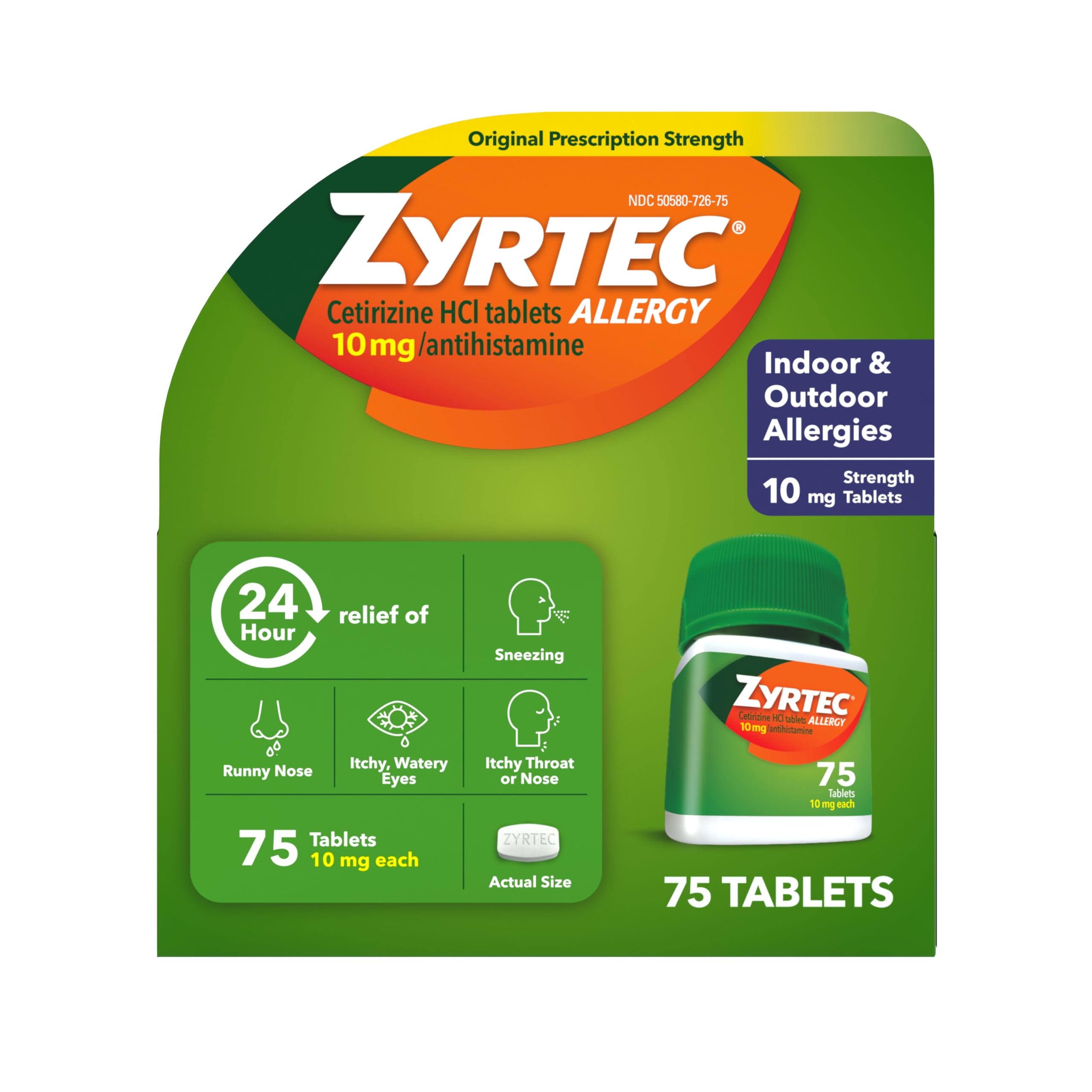
Zyrtec in tablet form is the most frequently recommended oral antihistamine by physicians for daily allergy management, including food-related triggers. The 10 mg cetirizine dose strikes a balance between efficacy and safety — it blocks histamine at the H1 receptor for a full 24 hours with fewer central nervous system side effects than diphenhydramine. This makes it a practical choice for individuals who experience delayed or mild food allergy symptoms and need consistent coverage.
The tablet itself is small and coated for easy swallowing, with no bitter aftertaste or chalkiness. Users consistently report that it starts working within the first hour for sneezing and runny nose, though skin symptoms like hives may take closer to two hours to fully subside. For food reactions involving facial swelling or lip tingling, this drug is better suited as a follow-up after initial rapid intervention with diphenhydramine.
At 75 tablets per bottle, this is a mid-range value that balances brand trust with reasonable cost per dose. It is HSA and FSA eligible, which helps if you manage allergies as a recurring medical expense. The main trade-off is that cetirizine is not recommended for acute anaphylactic management — it supports symptom control but does not replace epinephrine or fast-acting antihistamines in a crisis.
Why it’s great
- Doctor-recommended OTC antihistamine with proven H1 blockade
- 24-hour single-dose efficacy for consistent daily coverage
- Small, easy-to-swallow tablet with no taste or smell
Good to know
- Onset slower than diphenhydramine for acute hives or swelling
- May cause mild drowsiness in some individuals
3. Benadryl Allergy Ultratablets 25 mg
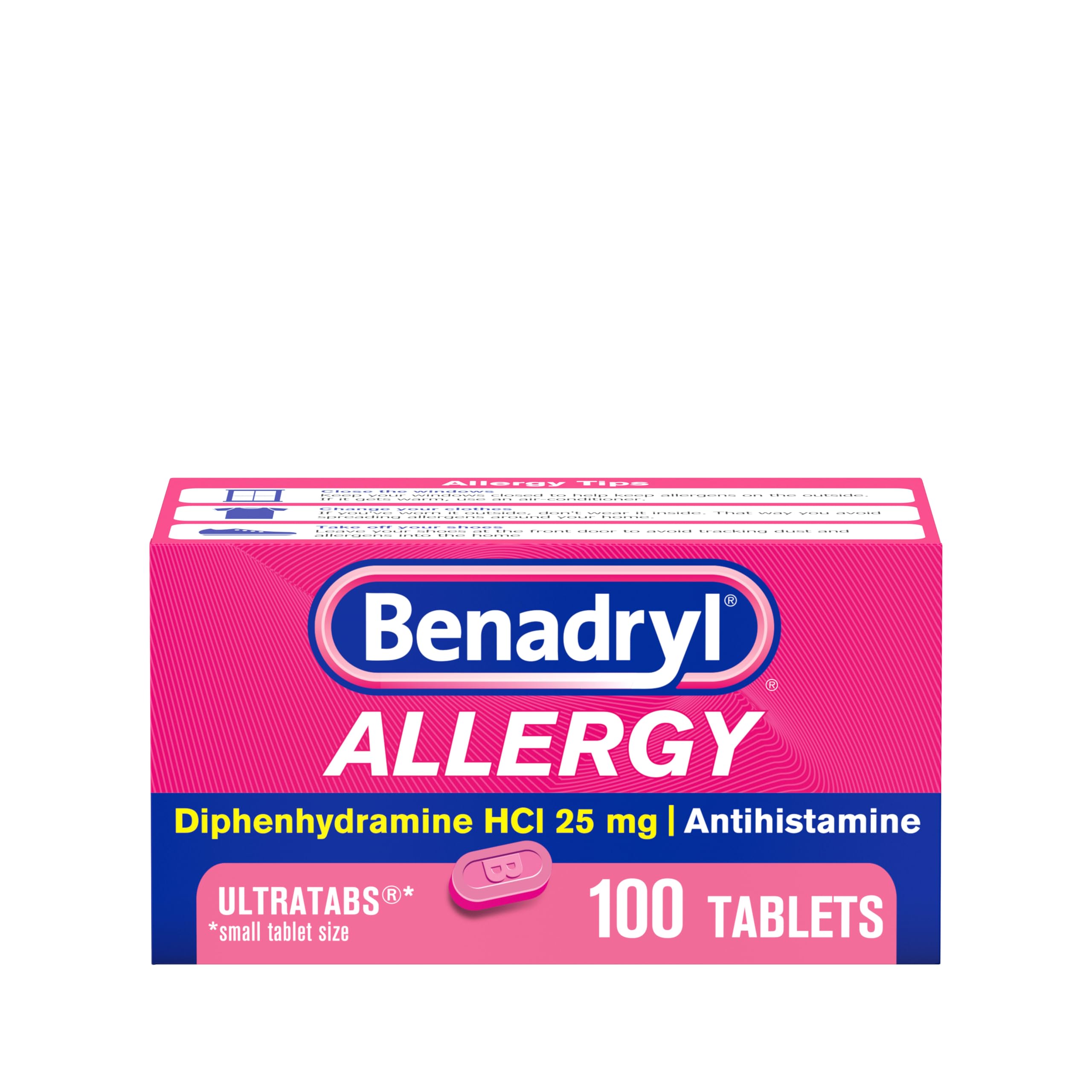
Benadryl remains the standard-bearer for acute allergic reaction management precisely because of diphenhydramine’s pharmacology. This first-generation antihistamine crosses the blood-brain barrier readily, which is what causes drowsiness but also what makes it so effective at rapidly shutting down the histamine cascade. For a food reaction that produces sudden hives, facial flushing, or generalized itching, Benadryl at 25 mg typically halts symptom progression within 20 to 30 minutes when taken on an empty stomach.
The Ultratab format is a small, coated tablet that dissolves quickly in the stomach. Each tablet contains exactly 25 mg of diphenhydramine HCl, the standard adult starting dose. You can take up to two tablets (50 mg) for more severe symptoms, but the sedation at that higher dose is substantial — expect to be non-functional for 4 to 6 hours. This makes Benadryl a nighttime rescue tool rather than a daytime solution for most people.
Users consistently praise this product for reliability during seasonal allergy flares, but for food reactions the same mechanism applies. The short half-life of about 4 to 6 hours means you can re-dose if symptoms return, though the drowsiness accumulation with multiple doses is real. Keep a single dose in your pocket if you are eating out and have known triggers — this is the OTC antihistamine that emergency rooms still stock for allergic reactions.
Why it’s great
- Fastest OTC onset for acute hives and itching from food triggers
- Doctor-recommended brand for reaction management
- Small tablets are easy to carry and swallow during a reaction
Good to know
- Significant drowsiness limits daytime usability
- Short duration requires re-dosing every 4-6 hours
4. WELMATE Allergy Relief Diphenhydramine 50 mg

For individuals who experience more intense food allergy symptoms — such as widespread urticaria or angioedema — the 50 mg diphenhydramine dose provides the extra histamine-blocking power needed without taking multiple pills. WELMATE packages this extra-strength dose in gelatin capsules that are easier to swallow than compressed tablets, and each capsule contains the same active ingredient found in Benadryl Extra Strength at a fraction of the per-dose cost.
The 1000-count bottle is a bulk solution for households where multiple members require allergy management. At a dosing schedule of one capsule every 4 to 6 hours, this supply can last several months even with frequent use. The capsules are uniform in size and fill, with consistent potency batch to batch according to user feedback. The 50 mg dose is also commonly used as a sleep aid since the sedation effect is pronounced, so be aware that this is not a medication you take and then drive or operate machinery.
Founded by former pharmacy employees, WELMATE focuses on making OTC medications accessible without sacrificing quality. The diphenhydramine in these capsules meets USP standards for purity and potency. For food allergy management, this product is best kept as a heavy-hitter for breakthrough symptoms — use the lower 25 mg dose first if you are new to diphenhydramine, then escalate to the 50 mg capsule only if your reaction demands stronger intervention.
Why it’s great
- Extra-strength dose for severe breakthrough symptoms
- Extremely cost-effective per dose at 1000 capsules
- Easy-to-swallow gelatin capsule format
Good to know
- 50 mg dose causes heavy drowsiness for most people
- Bulk size may expire before heavy users finish the bottle
5. Claritin 24 Hour Allergy Tablets 70 Count

Claritin’s active ingredient loratadine is the least sedating of the major OTC antihistamines, making it the safest choice for people who need to remain fully alert during a food allergy response. Loratadine has a very low affinity for brain H1 receptors, which means it effectively blocks peripheral histamine — stopping hives and itching at the skin level — without making you drowsy. For mild to moderate food reactions that manifest as localized rash or oral itch, this drug provides symptom control without cognitive impairment.
The 10 mg tablet is tiny — about the size of a pencil eraser — and dissolves rapidly in the mouth. This is a practical feature when your throat feels tight or you have difficulty swallowing larger pills during a reaction. Claritin’s 24-hour duration also means a single dose can cover a full day of potential cross-contamination reactions if you are eating out frequently.
However, loratadine has the slowest onset among second-generation antihistamines — typically 2 to 4 hours to peak plasma concentration. This makes it unsuitable as a first-line treatment for an active, escalating food reaction. Think of Claritin as the preventive daily layer you take to reduce baseline histamine load, not the emergency button you press when symptoms start. Users who take it daily report fewer breakthrough incidents, but when a reaction does occur, they still reach for diphenhydramine.
Why it’s great
- Virtually non-drowsy for all-day functionality
- Extremely small tablet is easy to swallow during throat discomfort
- 24-hour coverage for preventive daily use
Good to know
- Slowest onset of all major oral antihistamines
- Not effective for acute or severe food reactions
6. Amazon Basic Care All Day Allergy Cetirizine 300 Count

This 300-count bottle of cetirizine 10 mg tablets is the most economical way to maintain daily antihistamine coverage for food allergy prophylaxis. The manufacturer explicitly states it is the generic equivalent of Zyrtec, using the same active ingredient at the same dosage. For individuals who experience mild food allergies that cause persistent low-level hives or eczema flare-ups, taking one tablet each morning can significantly reduce baseline reactivity.
Users report that cetirizine in this generic form works identically to the branded version — the same onset of around 1 hour, the same 24-hour duration, and the same mild drowsiness experienced by a minority of users. The tablets are medium-sized and have a slightly bitter aftertaste if you let them dissolve on the tongue, but swallowed whole they are unobjectionable. Many users note that splitting the 10 mg tablet in half still provides effective relief for milder symptoms, effectively doubling the value.
The gluten-free formulation is verified, which is relevant for individuals managing food allergies who also have celiac disease or gluten sensitivity. The main limitation for food reaction use is the same as any cetirizine tablet — it is not fast enough for acute symptom interception. This product shines as a daily foundation dose that reduces the frequency and severity of minor food reactions, not as an emergency intervention.
Why it’s great
- Highest tablet count at the lowest per-dose cost
- Generic Zyrtec with identical active ingredient and dosage
- Gluten-free and suitable for daily preventive use
Good to know
- Bitter aftertaste if tablet is not swallowed quickly
- Tablet format slower to absorb than liquid gel during active reaction
7. Herbs Etc. Allergy ReLeaf System
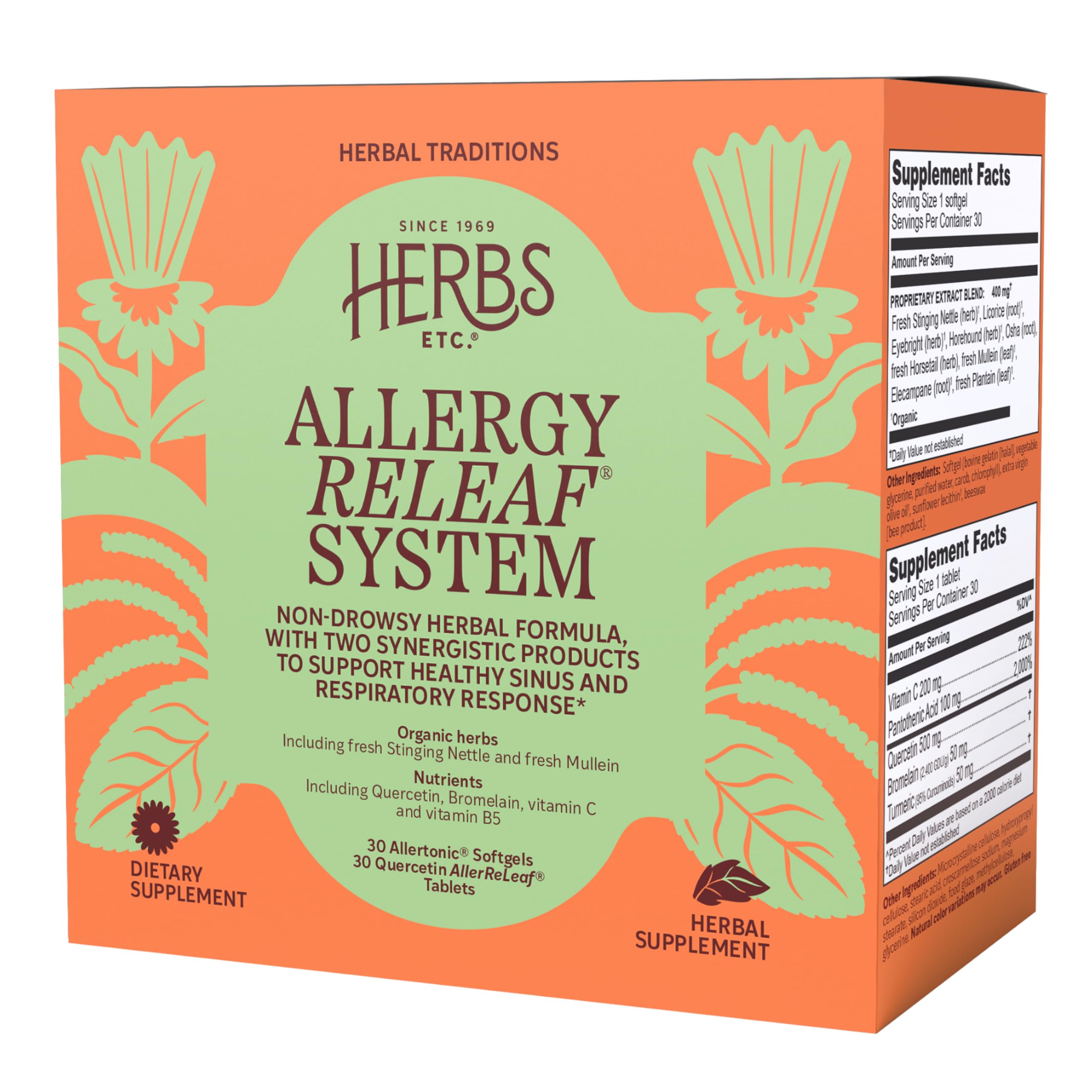
This plant-based system combines a liquid softgel and a tablet featuring fresh mullein, organic eyebright, stinging nettle, and quercetin — a flavonoid with mast-cell stabilizing properties. Unlike pharmaceutical antihistamines that block H1 receptors after histamine has been released, quercetin works upstream by inhibiting the degranulation of mast cells, potentially reducing the total amount of histamine that gets released in the first place. This makes it a complementary approach for food allergy management, not a replacement for emergency medication.
Users with chronic throat irritation, mucus overproduction, and reactive airways from food sensitivities report significant symptom reduction after several days of use. The non-drowsy profile is a major advantage for daytime use, and some reviewers have successfully replaced prescription antihistamines that caused adverse side effects. The dosing regimen is more involved — one softgel and one tablet every 2 to 3 hours until comfort is achieved — which requires more planning than a single pill.
For an acute food reaction that produces rapid swelling or breathing difficulty, this herbal system is not appropriate. It lacks the potency and speed of diphenhydramine or cetirizine. However, for individuals who experience low-grade symptoms like post-nasal drip, mild facial flushing, or digestive discomfort after eating trigger foods, this product offers a side-effect-free alternative that addresses the inflammatory cascade at an earlier stage.
Why it’s great
- Mast-cell stabilizing quercetin may reduce histamine release
- Completely non-drowsy with no cognitive side effects
- Small, ethical company with high-quality plant sourcing
Good to know
- Not fast or potent enough for acute food reactions
- Dosing every 2-3 hours is less convenient than a single daily pill
FAQ
Which antihistamine works fastest for an acute food allergy reaction?
Can I take a non-drowsy antihistamine for a food allergy?
What is the difference between 25 mg and 50 mg diphenhydramine for a food reaction?
Is it safe to take antihistamines daily for food allergy prevention?
Final Thoughts: The Verdict
For most users, the antihistamine for allergic reaction to food winner is the Benadryl Ultratabs 25 mg because its diphenhydramine base provides the fastest and most reliable relief for acute food-triggered hives and itching. If you want a non-drowsy daily defense that reduces your baseline reactivity, grab the Zyrtec Liquid Gels for their faster-absorbing format. And for extra-strength symptom control at a bulk-friendly price, nothing beats the WELMATE 50 mg Capsules.