
Our readers keep the lights on and the weekend projects moving. As an Amazon Associate, I earn from qualifying purchases.
When hives appear, your throat tightens, or your eyes swell shut from a sudden allergic reaction, every second of delay in choosing the right relief feels like an eternity. The first-generation antihistamines you might remember cause heavy sedation, while newer options vary dramatically in how fast they kick in, how long they last, and whether they tackle skin symptoms or just nasal congestion. Picking the wrong one can leave you miserable and stuck waiting another full day for relief.
I’m Rikta — the co-founder and writer behind FitlyFast. My approach to this guide involves hundreds of hours combing through clinical research on oral antihistamine onset times, half-life data, and real-world symptom comparisons across first- and second-generation options to separate marketing hype from evidence-based relief.
Whether you need immediate help for a sudden flare-up or daily maintenance against chronic triggers, this guide breaks down seven leading options to help you confidently choose the best antihistamine for allergic reaction based on your specific symptoms, lifestyle, and tolerance for side effects.
How To Choose The Best Antihistamine For Allergic Reaction
Not all antihistamines are created equal when your body mounts a sudden histamine response. The active ingredient determines whether you get relief in 30 minutes or need to wait 90, and whether that relief comes with brain fog or a clear head. Here are the criteria that matter most during an active allergic reaction.
Onset Speed — How Fast Does It Absorb?
For a reaction already in progress, onset time is everything. Fexofenadine (Allegra) typically starts working within one hour but may take longer for skin symptoms. Cetirizine (Zyrtec) also begins at hour one, with some users feeling partial relief within 45 minutes. Liquid gel formulations tend to absorb faster than standard compressed tablets because the active ingredient is already dissolved. If you need immediate control of hives or facial swelling, faster absorption is non-negotiable.
Sedation Profile — Second-Generation vs. First-Generation
First-generation antihistamines like diphenhydramine (Benadryl) cross the blood-brain barrier freely, causing significant drowsiness — useful for sleep, dangerous for driving. All seven products in this guide are second-generation, which are engineered to minimize brain penetration. However, cetirizine causes sedation in roughly 10-14% of users, while fexofenadine and loratadine have much lower drowsiness rates. If you’re sensitive to sedating meds, loratadine or fexofenadine are the safer bets.
Duration — Does It Cover a Full Allergic Episode?
Most modern oral antihistamines provide 24-hour relief from a single dose, but the clinical half-life varies. Cetirizine maintains stable blood levels for about 21 hours, while levocetirizine (the isolated active isomer) stays active slightly longer. Fexofenadine has the shortest half-life at roughly 14-15 hours, though the standard 180 mg tablet still delivers 24-hour symptom control for most people. If your reaction tends to return late at night before your next dose, a longer-duration option like levocetirizine may be preferable.
Quick Comparison
On smaller screens, swipe sideways to see the full table.
| Model | Category | Best For | Key Spec | Amazon |
|---|---|---|---|---|
| Zyrtec Liquid Gels | Liquid Gel | Fast absorption in acute reactions | Cetirizine HCl 10 mg liquid gel | Amazon |
| Allegra 24-Hour Tablets | Tablet | Non-drowsy all-day relief | Fexofenadine HCl 180 mg | Amazon |
| Zyrtec Tablets 75 ct | Tablet | Doctor-recommended daily use | Cetirizine HCl 10 mg tablet | Amazon |
| Claritin 24-Hour Tablets | Tablet | Lowest sedation risk | Loratadine 10 mg | Amazon |
| Curist Levocetirizine 5 mg | Split-Score Tablet | Customizable dosing | Levocetirizine 5 mg (split-tablet) | Amazon |
| Amazon Basic Care Cetirizine | Tablet | Budget-friendly high count | Cetirizine HCl 10 mg, 365 count | Amazon |
| Pack Pharmaceuticals Cetirizine | Tablet | Bulk family supply | Cetirizine HCl 10 mg, 200 count | Amazon |
In‑Depth Reviews
1. Zyrtec 24 Hour Allergy Relief Liquid Gels
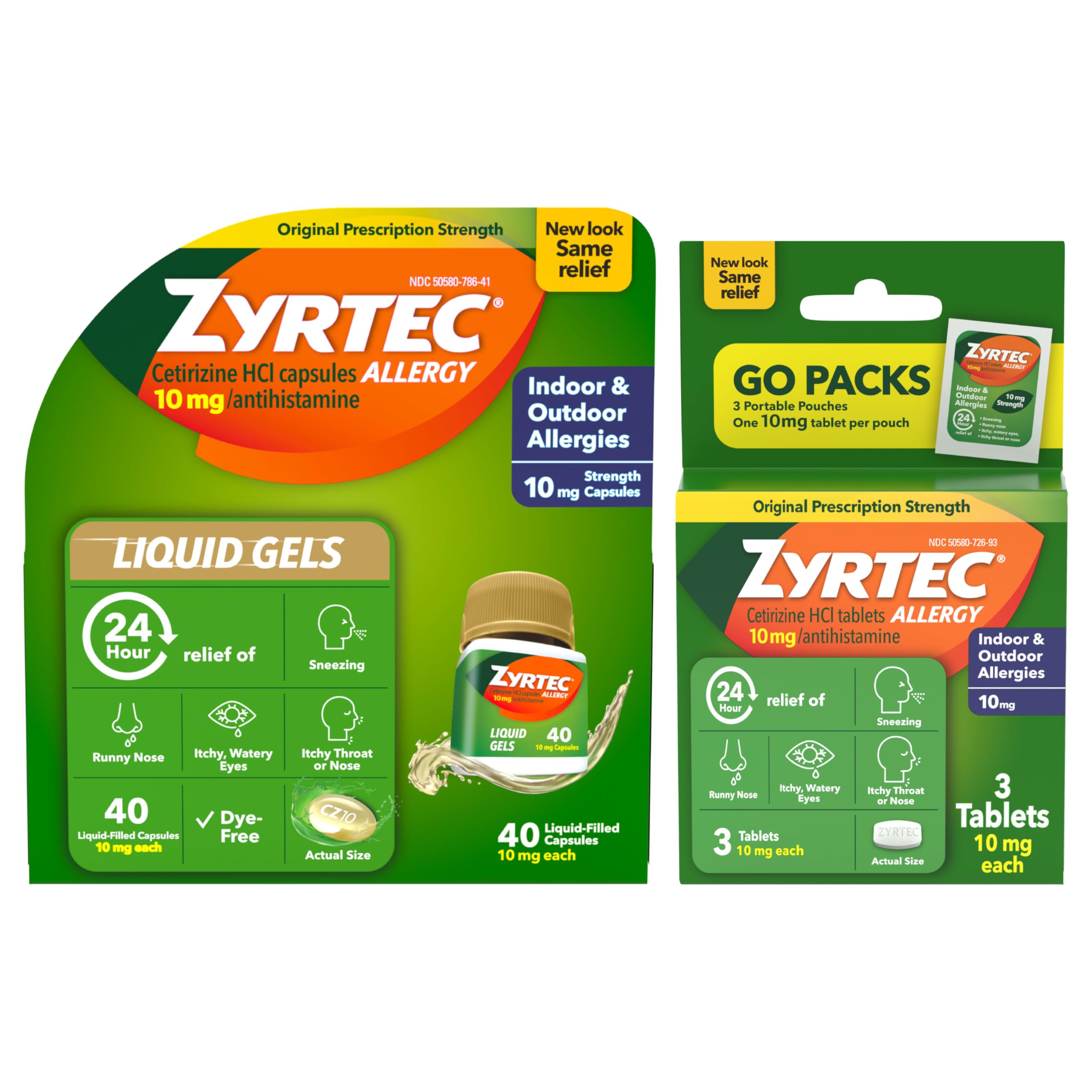
The pre-dissolved liquid gel formulation of cetirizine absorbs faster than standard tablets, making this our top pick for an allergic reaction already underway. Each 10 mg capsule starts delivering measurable relief at hour one according to clinical data, and users regularly report noticeable improvement in sneezing, itchy eyes, and nasal congestion within that window. The three bonus travel packs add genuine utility for keeping emergency doses in your bag or car.
Cetirizine is the most studied second-generation antihistamine for acute skin reactions — hives, angioedema, and general urticaria — which matters when your reaction presents primarily on the skin rather than just the sinuses. The liquid gel format means no chewing or crushing required; the capsule dissolves rapidly in the stomach for faster systemic absorption compared to a compressed tablet that must disintegrate first.
The sedation trade-off is real: roughly one in seven users experiences some drowsiness with cetirizine, and this liquid gel version is no exception. For severe reactions where immediate symptom control outweighs mild sedation, this remains the fastest-acting option in the lineup. Avoid taking it right before driving until you know your personal tolerance.
Why it’s great
- Liquid gel format provides faster absorption than tablets
- Proven efficacy for skin-based allergic reactions like hives
- Includes travel packs for on-the-go dosing
Good to know
- Cetirizine causes drowsiness in a notable subset of users
- Bottle count is moderate compared to bulk options
2. Allegra Adult 24-Hour Allergy Relief Tablets
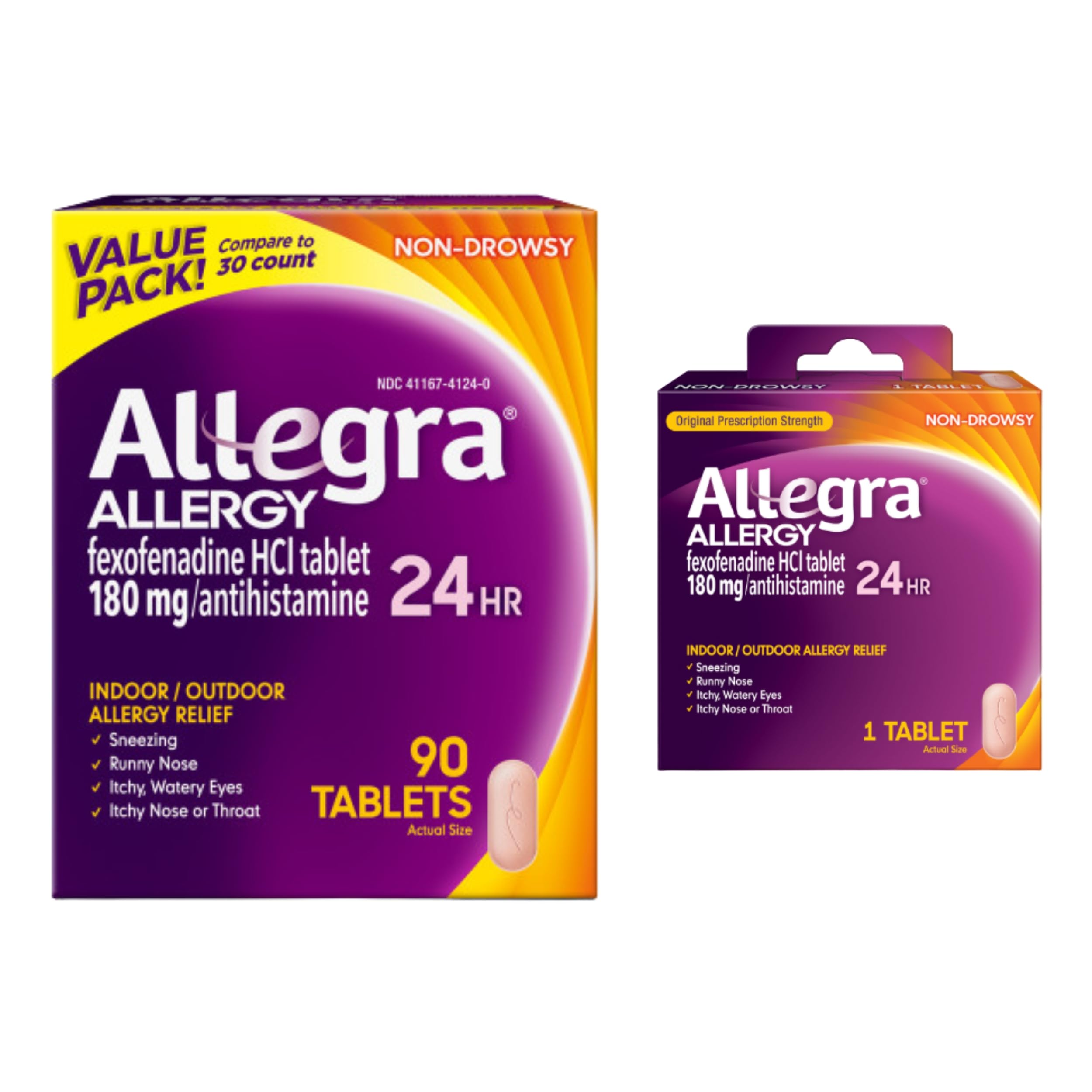
Allegra’s active ingredient, fexofenadine 180 mg, is the only second-generation antihistamine that is virtually non-sedating across the general population. Clinical trials show no significant difference in drowsiness compared to placebo, which makes it the premier choice for anyone operating heavy machinery or needing to stay alert during a reaction. It is also the number one allergist-recommended non-drowsy oral antihistamine on the market.
Fexofenadine works primarily on nasal symptoms and ocular itching, but its efficacy on acute skin reactions like hives is slightly less robust than cetirizine in head-to-head comparisons. If your allergic reaction involves significant skin inflammation or welts, you may find that fexofenadine reduces the itching but takes longer to flatten the physical rash. The 180 mg once-daily dose is the maximum approved strength for adults.
The bonus single-count travel pack included with this package gives you one immediate dose without opening the main bottle — a small but thoughtful detail for people prone to sudden reactions away from home. The tablet itself is uncoated and dissolves relatively quickly in the stomach, though not as fast as a liquid gel. Plan to take it with water and wait about an hour for full effect.
Why it’s great
- Nearly zero sedation risk — safe for driving and daytime use
- Top allergist-recommended non-drowsy formula
- Includes a bonus travel dose for emergencies
Good to know
- Less effective for acute skin reactions compared to cetirizine
- Shorter half-life may not cover a full 24 hours for some users
3. Zyrtec Allergy Medicine, Cetirizine Tablets, 75 Count
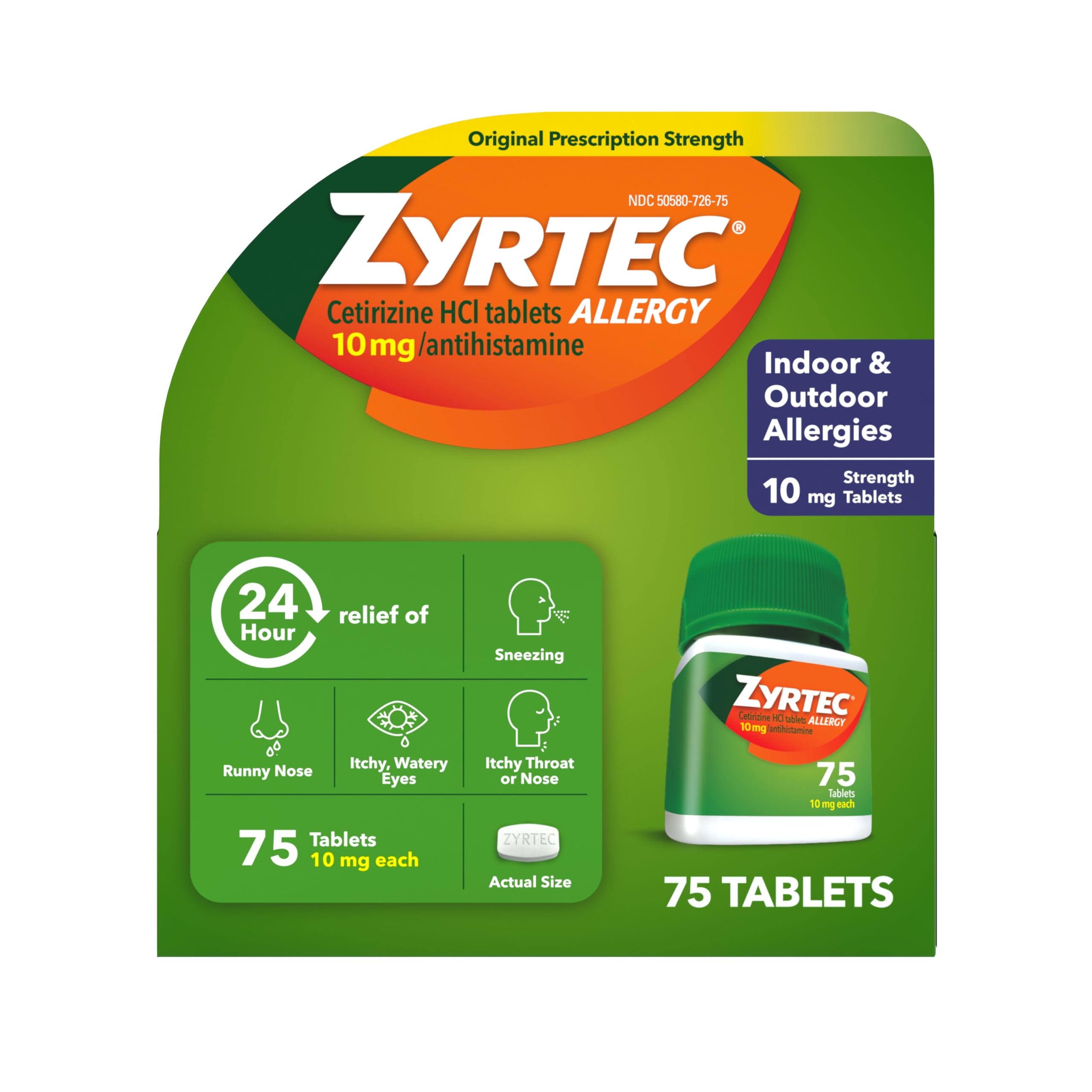
The number-one doctor-recommended OTC oral antihistamine brand earns its reputation through consistent, well-documented efficacy against over 200 indoor and outdoor allergens. Each 10 mg cetirizine tablet starts working at hour one and keeps symptoms suppressed for 24 hours, covering everything from tree pollen to pet dander to dust mites. The 75-count bottle provides two and a half months of daily use at standard dosing.
Cetirizine’s dual action on both histamine H1 receptors and eosinophil recruitment gives it an edge for allergic reactions involving inflammation beyond simple histamine release — think swelling around the eyes or persistent post-nasal drip. Users with chronic urticaria consistently report better control with cetirizine than with loratadine, which is why this remains the clinical benchmark for moderate to severe allergies.
The tablet form is slightly slower to absorb than the liquid gel version above, but the margin is modest — roughly 15 to 20 minutes. This is a better pick for daily maintenance rather than emergency reaction control. Some users also report withdrawal symptoms if they miss multiple doses, including intense itching and runny nose, so consistent daily use is important.
Why it’s great
- Doctor-recommended brand with proven 24-hour control
- Effective for both nasal and skin-related allergic reactions
- Large count suitable for daily use
Good to know
- Tablet absorption is slower than liquid gel version
- Cetirizine withdrawal symptoms possible with missed doses
4. Claritin 24 Hour Allergy Medicine, Loratadine Tablets

Claritin uses loratadine, the antihistamine with the lowest reported sedation rate among the second-generation class — roughly 2% in clinical trials, comparable to placebo. This makes it the default recommendation for pilots, drivers, and anyone who cannot afford even mild cognitive slowing during an allergic episode. Many users also appreciate the tiny tablet size, which slides down easily without water.
Loratadine’s onset is slower than cetirizine, typically taking 60 to 90 minutes to reach peak plasma concentration, and its efficacy against acute skin reactions is slightly weaker. For mild seasonal allergies presenting as sneezing and runny nose, it works beautifully. For hives or facial swelling that demands rapid intervention, you may find cetirizine or levocetirizine more reliable. Claritin is also the least likely to interact with other medications due to minimal liver enzyme metabolism involvement.
The 70-count bottle offers a solid two-month supply at a reasonable cost per dose. Keep in mind that loratadine’s 24-hour coverage can fray in the last few hours for some people, especially during high-pollen seasons. Splitting the dose is not recommended because the tablet is not scored, so if you need stronger coverage, consider the active ingredient alternatives with longer effective duration.
Why it’s great
- Lowest sedation risk of any second-generation antihistamine
- Small, easy-to-swallow tablet
- Minimal drug interaction potential
Good to know
- Onset time is slower than cetirizine or levocetirizine
- 24-hour coverage may weaken before the next dose for some users
5. Curist 24 Hour Allergy Relief, Levocetirizine 5 mg
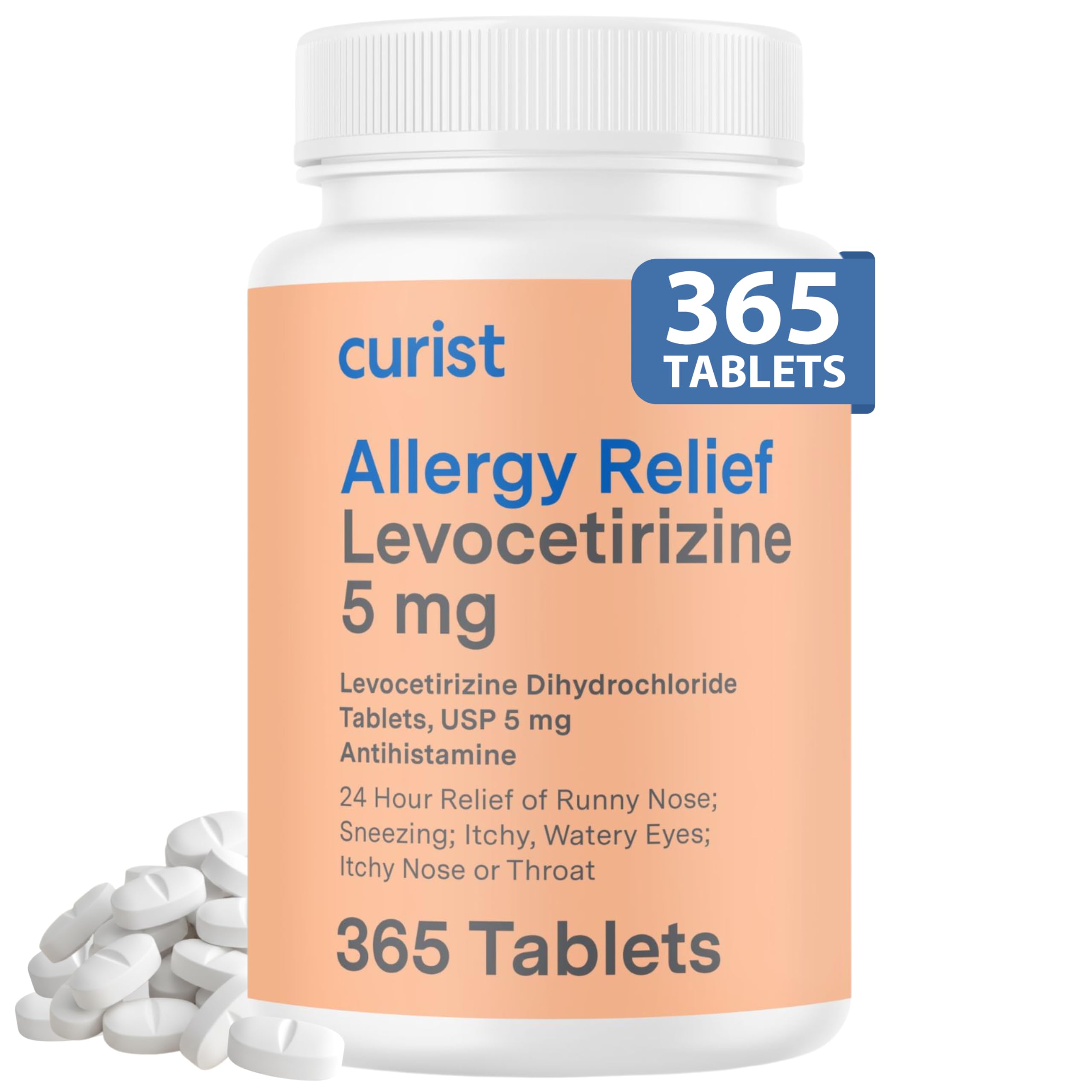
Levocetirizine is the purified active isomer of cetirizine, meaning it delivers the same antihistamine effect at half the dose — 5 mg instead of 10 mg — with slightly longer duration and marginally less sedation. This bulk 365-count bottle provides a full year of daily allergy control, and the tablets are scored so you can split them for a 2.5 mg half-dose when symptoms are milder, effectively doubling your supply.
Clinically, levocetirizine has a half-life of about 24 hours, the longest of any second-generation oral antihistamine, which means more stable symptom suppression throughout the day and night. It is particularly effective for chronic urticaria and perennial allergic rhinitis. The split-tablet design is rare in this category and genuinely useful for people whose symptoms vary by season or exposure level.
The manufacturer Curist positions this as a direct alternative to Xyzal, the name-brand levocetirizine, and users consistently confirm identical efficacy. The tablet is small and uncoated, dissolving within minutes in the stomach. The only catch is that levocetirizine is still a cetirizine derivative, so if you are in the subset that gets drowsy from Zyrtec, you may still experience some sedation here — though users generally report it as milder.
- Scored tablets allow customizable half-dose adjustments
- Longest half-life for stable 24-hour control
- One-year supply in a single bottle
Good to know
- May still cause drowsiness in cetirizine-sensitive individuals
- Newer brand with less long-term user data than legacy brands
6. Amazon Basic Care All Day Allergy, Cetirizine Hydrochloride Tablets

Amazon’s house brand delivers the same 10 mg cetirizine hydrochloride found in Zyrtec at a dramatically lower per-tablet cost, and the 365-count bottle covers an entire year of daily use. This is the best entry-level option for budget-conscious households where multiple family members need regular allergy medication. The tablets are gluten-free and manufactured to FDA-equivalent standards, either in India or the U.S.
Generic cetirizine is the most clinically validated antihistamine for acute allergic reactions, and Amazon Basic Care’s formulation has accumulated overwhelmingly positive user feedback confirming identical performance to the name brand. Users report complete relief from sneezing, runny nose, itchy eyes, and seasonal headaches. The tablet is medium-sized and easy to swallow without scoring or special coating.
The main consideration is that this is a basic compressed tablet, not a liquid gel or rapid-dissolve format, so absorption is standard rather than accelerated. If you need faster symptom control, pair this with a liquid gel option for emergency use and use the Amazon bottle for daily maintenance. Some users also note that the bottle is packed densely, requiring careful dispensing to avoid spilling.
Why it’s great
- Lowest per-tablet cost in the cetirizine category
- Full year supply in one purchase
- Identical active ingredient to name-brand Zyrtec
Good to know
- Standard tablet absorption is slower than liquid gels
- Bottle density makes tablet retrieval slightly tricky
7. Cetirizine 10 mg Tablets, Generic for Zyrtec, 200 Count Pack of 2

This two-bottle pack from Pack Pharmaceuticals gives you 200 tablets of 10 mg cetirizine, making it a strong alternative to the Amazon Basic Care option if you prefer to split your supply across two sealed bottles. Each bottle holds 100 tablets, which is appropriate for a single user for about three months or a family for shorter-term coverage. The active ingredient matches Zyrtec exactly, and the manufacturer has been producing this generic since 2014 with consistent quality.
Users with high-dose requirements — such as those using antihistamines off-label for conditions like mast cell activation syndrome or chronic idiopathic urticaria — will appreciate the two-bottle format for easier distribution between home and work bags. The tablets are standard size and uncoated, dissolving predictably. Many reviewers note that this is the go-to for families with multiple allergy sufferers because of the per-unit savings compared to store brands.
One notable real-world review mentioned using these tablets for a mule’s respiratory cough under veterinary guidance, which underscores the high volume needed for large animal dosing. For human use, the caution is the same as any cetirizine product: about 10-14% of users experience drowsiness, and some report withdrawal itching if they stop abruptly. The tablets are not scored, so adjusting dose requires a pill cutter.
Why it’s great
- Two sealed bottles for convenient splitting between locations
- Matches Zyrtec exactly at a lower cost per tablet
- Proven reliability since 2014 with thousands of positive reviews
Good to know
- Cetirizine drowsiness still affects a significant minority of users
- Tablets are not scored for easy splitting
FAQ
Which antihistamine works fastest for hives during an allergic reaction?
Can I take cetirizine every day for chronic allergic reactions?
Is fexofenadine or loratadine better for a reaction that causes brain fog?
Final Thoughts: The Verdict
For most users, the antihistamine for allergic reaction winner is the Zyrtec Liquid Gels because the pre-dissolved liquid gel format provides the fastest absorption and most reliable control for both skin and nasal symptoms during an acute flare-up. If you want zero sedation risk and a clear head all day, grab the Allegra 24-Hour Tablets. And for customizable dosing and longest-lasting coverage at a bulk-year supply, nothing beats the Curist Levocetirizine 5 mg.