
Our readers keep the lights on and the weekend projects moving. As an Amazon Associate, I earn from qualifying purchases.
Finding allergy relief when you also manage high blood pressure means avoiding decongestants that can spike your readings. Standard cold and allergy aisles are packed with medications containing ingredients like pseudoephedrine and phenylephrine, which narrow blood vessels and elevate heart rate — a dangerous combination for anyone on antihypertensive medication. The right antihistamine should target sneezing, runny nose, and itchy eyes without introducing cardiovascular strain.
I’m Rikta — the co-founder and writer behind FitlyFast. My research focuses on unpacking the pharmacological interactions between over-the-counter medications and chronic conditions like hypertension, analyzing active ingredients and clinical guidelines to separate safe options from risky ones.
Balancing allergy season with blood pressure management requires a careful approach to active ingredients. After reviewing dozens of products verified by pharmacists and cardiology guidelines, this guide identifies the decongestant-free antihistamines that deliver real symptom relief without compromising your numbers. Start here with the best antihistamine for high blood pressure.
How To Choose The Best Antihistamine For High Blood Pressure
The critical first step is checking the “active ingredients” panel. If you see pseudoephedrine, phenylephrine, or any nasal decongestant, put it back — these work by constricting blood vessels, which directly counteracts blood pressure management. Beyond that, you need to match the specific antihistamine type to your allergy profile and existing medication list.
Second-Generation vs. First-Generation Antihistamines
First-generation antihistamines like diphenhydramine (Benadryl) can cause sedation and have been linked to increased fall risk in older adults, which is especially concerning for those with cardiovascular instability. Second-generation options — loratadine, cetirizine, and fexofenadine — are designed to be non-drowsy and have a much lower incidence of cardiac side effects, making them the standard recommendation for people managing high blood pressure.
The Decongestant-Free Rule
Many cold and flu products combine an antihistamine with a decongestant. Even if the label says “HBP” or “for people with high blood pressure,” you must independently verify the ingredient list. A decongestant-free formula ensures the active antihistamine can work without vasoconstriction effects, keeping your systolic and diastolic readings stable during allergy season or a cold.
Quick Comparison
On smaller screens, swipe sideways to see the full table.
| Model | Category | Best For | Key Spec | Amazon |
|---|---|---|---|---|
| Coricidin HBP Cold & Flu | Multi-Symptom | Cold & Flu with HBP | Decongestant-Free Formula | Amazon |
| Coricidin HBP Multi-Symptom Flu | Maximum Strength | Flu symptom coverage | 2x24ct Bundle | Amazon |
| Zyrtec 24 Hour Tablets | Cetirizine | Allergen-specific relief | 10mg Cetirizine HCl | Amazon |
| Allegra 24-Hour Gelcaps | Fexofenadine | Non-drowsy daytime use | 180mg Fexofenadine HCl | Amazon |
| Major Cetirizine Hydrochloride | Cetirizine | Budget bulk cetirizine | 500 Count Bottle | Amazon |
| Major Allergy Loratadine | Loratadine | Bulk generic alternative | 300 Tablets | Amazon |
| Quality Choice HBP Tablets | Chlorpheniramine | First-gen alternative | 4mg Chlorpheniramine | Amazon |
In‑Depth Reviews
1. Coricidin HBP Cold & Flu 40ct
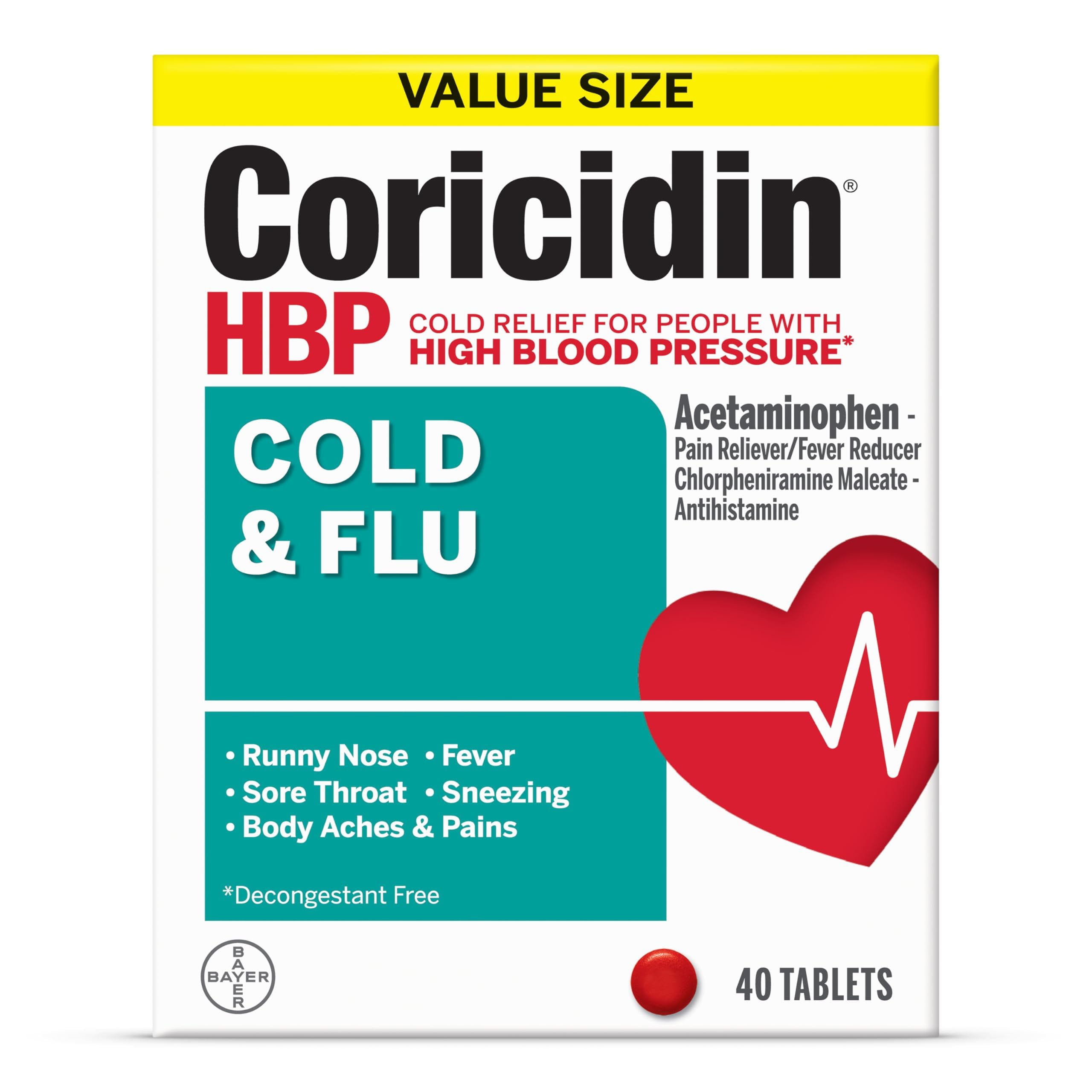
Coricidin HBP Cold & Flu is the most direct answer to the question of safe cold relief for hypertensive patients. It contains chlorpheniramine maleate (an antihistamine) and acetaminophen for fever and body aches — with zero decongestants. The formula targets sneezing, runny nose, chest congestion, and sore throat without vasoconstriction.
The maximum strength label applies to the symptom-fighting ingredients, not the danger. Each liquid gel is compact and easy to swallow, and the 40-count bottle provides enough coverage for several cold cycles. Customers consistently report effective relief for sinus congestion and flu symptoms while maintaining stable blood pressure readings.
For those who need a medication that explicitly says “for people with high blood pressure” on the label, Coricidin HBP removes all guesswork. It is the benchmark that other HBP-targeted cold medicines measure against, and the decongestant-free formulation should be the standard for anyone in this demographic.
Why it’s great
- Explicitly formulated for high blood pressure patients
- Decongestant-free, so no risk of vasoconstriction
- Covers cold and flu symptoms comprehensively
Good to know
- Chlorpheniramine is a first-generation antihistamine, so mild drowsiness is possible
- Not an allergy-specific medication; better for cold-season use
2. Coricidin HBP Multi-Symptom Flu 48ct

This two-pack of 24-count boxes effectively doubles your supply of the same trusted Coricidin HBP formulation. The only difference from the 40ct bottle is the packaging format, offering the same decongestant-free, multi-symptom relief for sore throat, cough, fever, runny nose, sneezing, and body aches.
The bundle format is ideal for stocking during flu season or sharing between household members who both manage blood pressure. Each box is compact enough for a medicine cabinet, and the blister packs make it easy to track dosing. The customer feedback consistently highlights how these tablets deliver effective relief without compromising hypertension management.
If you already know Coricidin HBP works for you, the 48ct bundle is the most efficient way to secure a season’s worth of protection. It offers the same pharmacological safety profile as the 40ct bottle but gives you two separate boxes for distribution or travel.
Why it’s great
- Two separate packs for travel or distribution
- Same clinically safe HBP formula as the 40ct bottle
- Maximum strength symptom relief in a decongestant-free base
Good to know
- Chlorpheniramine may still cause sedation in sensitive individuals
- Not suitable for daily allergy maintenance
3. Zyrtec 24 Hour Allergy Relief 90ct
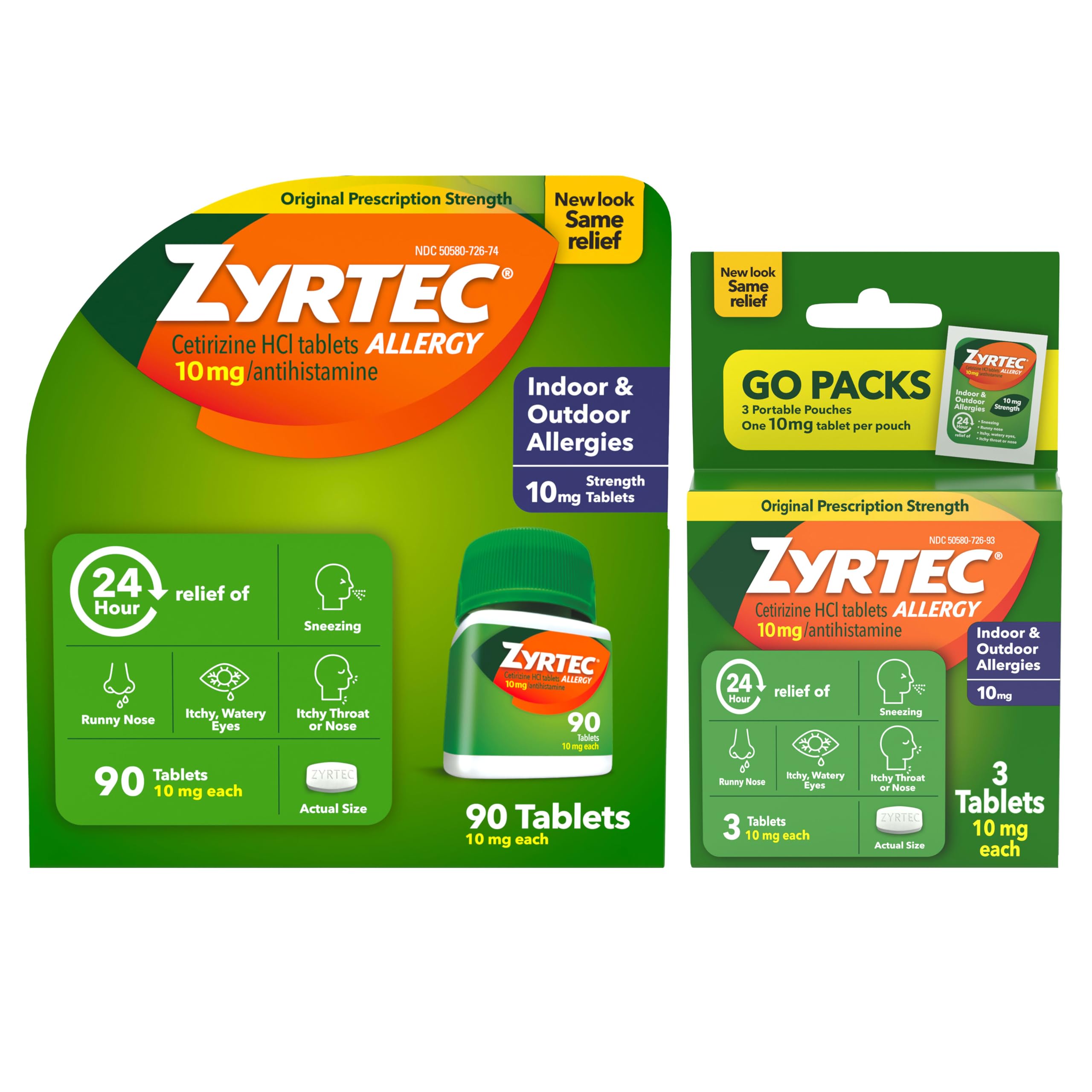
Zyrtec uses cetirizine hydrochloride, a second-generation antihistamine that is non-drowsy for most users and has a strong track record for controlling sneezing, runny nose, and itchy watery eyes caused by over 200 allergens. It starts working within one hour and delivers 24-hour coverage, making it a top choice for daily allergy management in hypertensive patients.
The 90-count bottle includes three 1-count travel packs, which is a thoughtful addition for anyone who needs portability. Because Zyrtec contains no decongestants, it poses no vasoconstriction risk — just a pure antihistamine effect. It is the number one physician-recommended OTC oral antihistamine, which adds a layer of clinical confidence for those managing multiple health conditions.
For people with high blood pressure who suffer from seasonal or indoor allergies, Zyrtec is the most widely validated option. Its cetirizine base is the most studied second-generation antihistamine for cardiovascular safety, and the once-daily dosing simplifies compliance with existing medication schedules.
Why it’s great
- Non-drowsy second-generation antihistamine with strong safety data
- Works within one hour for fast symptom relief
- Travel packs included for on-the-go use
Good to know
- May cause drowsiness in some individuals despite being labeled non-drowsy
- Higher tier for a single medication bottle
4. Allegra 24-Hour Allergy Relief Gelcaps 60ct

Allegra uses fexofenadine hydrochloride, a second-generation antihistamine that is widely regarded as the least sedating option on the market. The 180 mg dose provides 24-hour coverage, and the gelcap form is easier to swallow than standard tablets. It targets sneezing, runny nose, and itchy eyes from both indoor and outdoor allergens.
What makes Allegra particularly attractive for hypertensive users is its minimal drug interaction profile. Fexofenadine does not cross the blood-brain barrier as readily as other antihistamines, meaning less potential for drowsiness or interaction with central nervous system depressants. It is the number one allergist-recommended non-drowsy brand among OTC oral antihistamines.
For those who prioritize alertness during allergy season, Allegra is the strongest choice. It starts working in one hour and sustained full-day coverage without the brain fog that can accompany cetirizine for some users. The decongestant-free base keeps the focus purely on antihistamine relief.
Why it’s great
- Lowest drowsiness profile among second-generation antihistamines
- Gelcaps are easier to swallow than tablets
- Allergist-recommended with strong safety data
Good to know
- May not be as potent for severe allergies compared to cetirizine
- 60-count supply requires more frequent repurchasing
5. Major Cetirizine Hydrochloride 10 mg 500ct
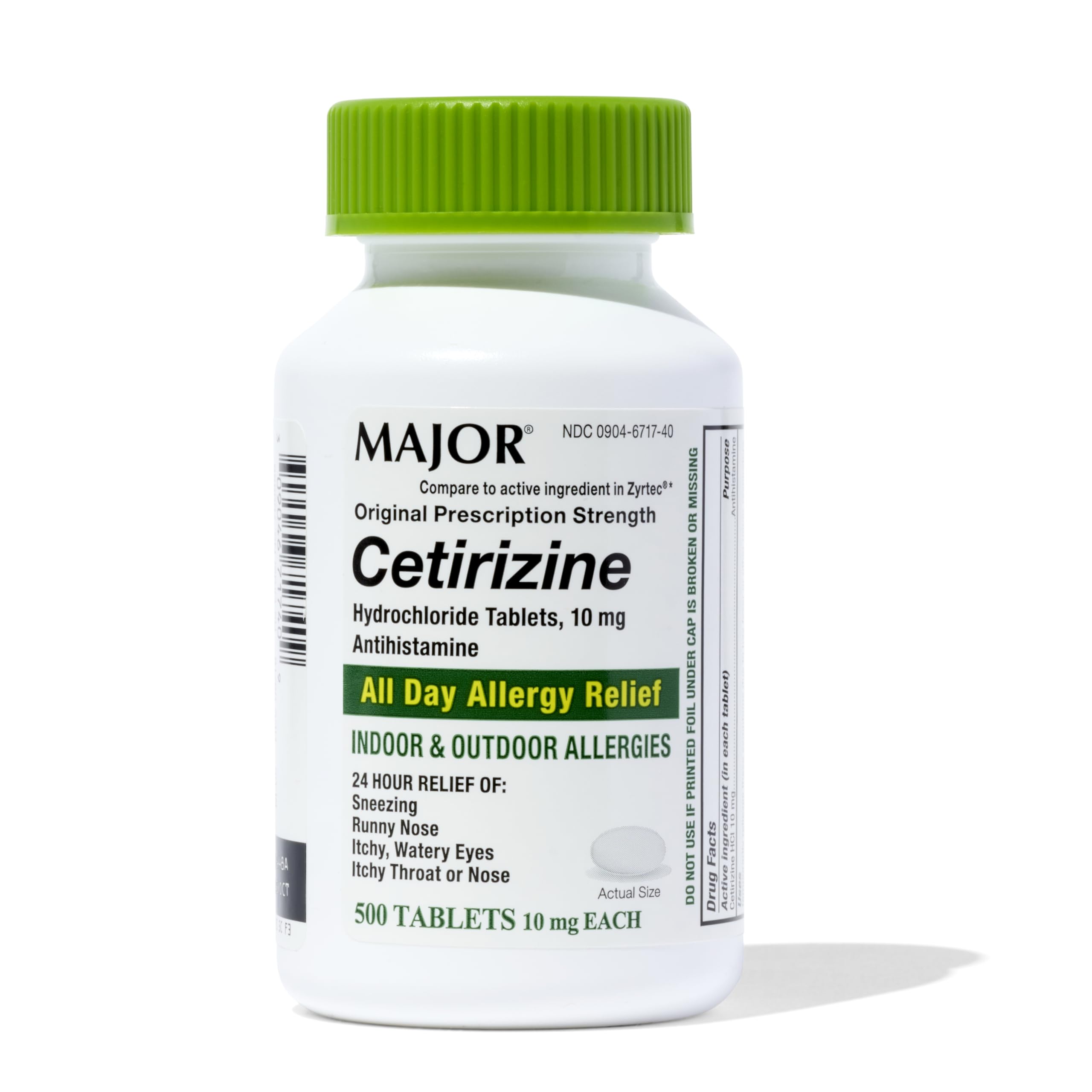
This bulk bottle of cetirizine hydrochloride delivers the exact same active ingredient as Zyrtec at a significantly lower per-tablet cost. Each 10 mg tablet provides 24-hour allergy relief for sneezing, runny nose, and itchy eyes. The 500-count bottle lasts well over a year for most users, making it the most economical entry-level option for daily antihistamine needs.
Because cetirizine is a second-generation antihistamine, it avoids the vasoconstriction issues of decongestants and is considered safe for hypertensive patients when taken as directed. Customers consistently report that it works just as well as prescription-strength allergy medications, and the large supply eliminates the need for frequent pharmacy runs.
For anyone managing high blood pressure and needing a reliable, affordable daily antihistamine, Major Cetirizine is the most budget-conscious way to secure year-round coverage. The only trade-off is the potential for drowsiness in some users — test your response on a non-driving day before committing to daily use.
Why it’s great
- Extremely low cost per dose with 500 tablets
- Same active ingredient as Zyrtec
- Decongestant-free, safe for HBP management
Good to know
- Cetirizine can cause drowsiness in some users
- No travel-friendly packaging for portability
6. Major Allergy Loratadine 10 mg 300ct

Major Allergy Loratadine is the generic equivalent of Claritin, offering 10 mg of loratadine per tablet for 24-hour non-drowsy allergy relief. Loratadine is a second-generation antihistamine that is widely considered the best starting point for hypertensive patients because it has the lowest incidence of sedation and is well-tolerated in studies of cardiovascular patients.
The 300-tablet bottle covers nearly ten months of daily use, making it the most efficient supply for allergy season. It is formulated without gluten, preservatives, peanuts, or soy, and customer feedback consistently points to its effectiveness for cat allergies, outdoor allergies, and general hay fever without the drowsiness that sometimes accompanies cetirizine.
For those who want a true non-drowsy experience — meaning they can take it before work or driving without any risk of sedation — loratadine is the safest bet. Combined with the HBP-safe profile, Major Allergy Loratadine is the most predictable daily antihistamine for hypertensive users who prioritize mental clarity.
Why it’s great
- Non-drowsy with the lowest sedation profile among second-generation options
- Excellent value with 300 tablets per bottle
- Gluten-free, preservative-free, peanut-free, soy-free formulation
Good to know
- Loratadine may be slightly less potent than cetirizine for severe allergies
- Not packaged for travel; you’ll need your own pill case
7. Quality Choice HBP Decongestant-Free 24ct (Pack of 3)
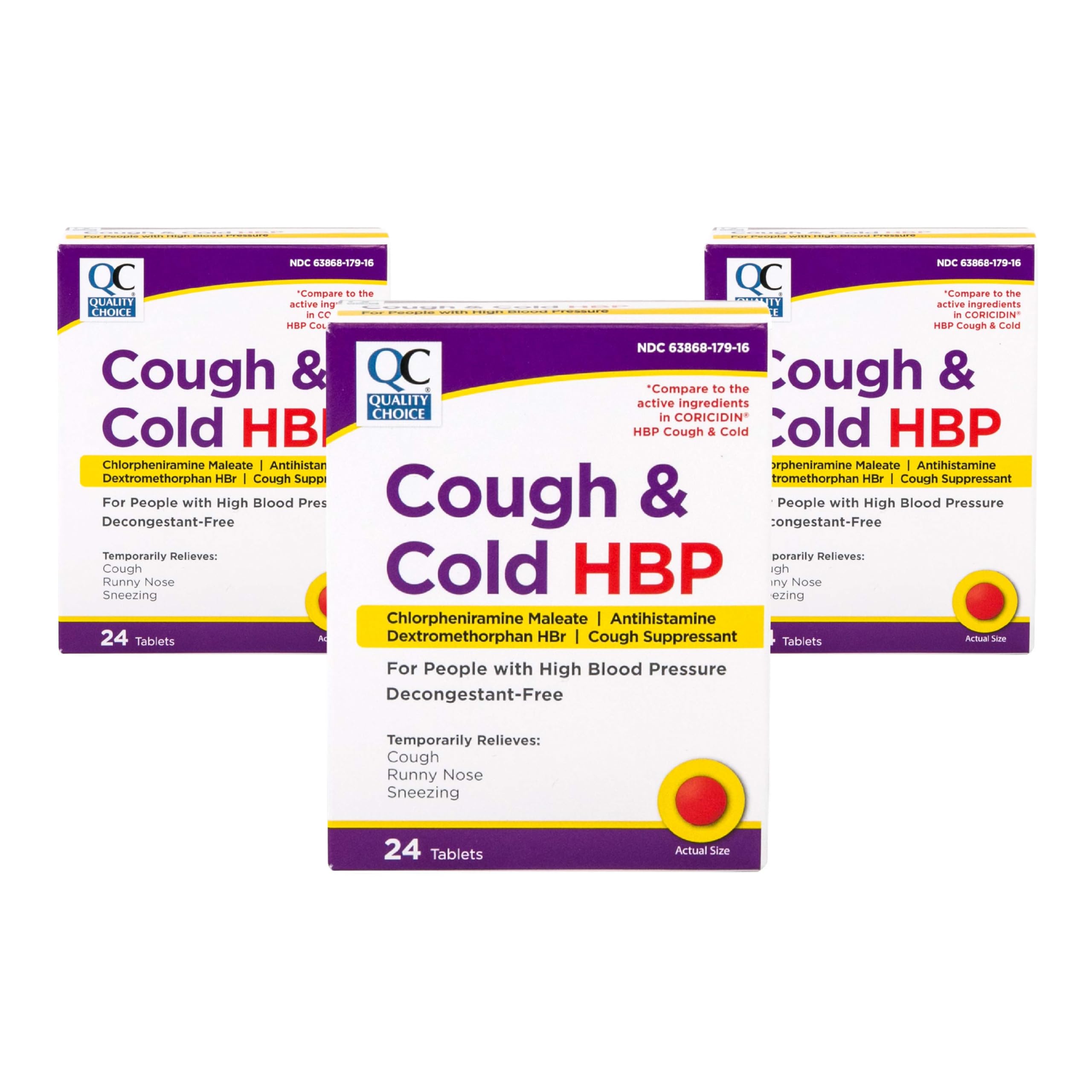
Quality Choice HBP tablets use chlorpheniramine maleate, a first-generation antihistamine that is common in cold symptom formulas. Each 4 mg tablet includes dextromethorphan as a cough suppressant, targeting cough, runny nose, and sneezing. The three-pack (24 tablets each) provides 72 total tablets, which is useful for a cold season.
While the product is explicitly labeled for high blood pressure and is decongestant-free, the first-generation antihistamine class means a higher likelihood of drowsiness compared to loratadine or fexofenadine. Customers report it is effective for cold symptoms and cost-effective compared to local pharmacies, but the sleepiness factor may limit daytime use.
This option is best suited as a backup cold medication rather than a daily allergy maintenance choice. For acute cold episodes where congestion is the main complaint, Quality Choice HBP provides a decongestant-free solution — just be prepared for potential sedation, especially if you take it during the day.
Why it’s great
- Explicitly marketed for high blood pressure patients
- Includes cough suppressant for multi-symptom cold relief
- Decongestant-free and affordable
Good to know
- Chlorpheniramine is a first-gen antihistamine with significant drowsiness risk
- Not ideal for daily allergy maintenance
FAQ
Can I take antihistamines if I take blood pressure medication?
Is Benadryl safe for people with high blood pressure?
What ingredients in allergy medicine raise blood pressure?
Should I avoid antihistamines if I have heart palpitations?
How often should I take antihistamines for high blood pressure safety?
Final Thoughts: The Verdict
For most users, the best antihistamine for high blood pressure winner is the Coricidin HBP Cold & Flu because it is explicitly formulated for hypertensive patients, targeting cold and flu symptoms with zero decongestants and maximum-strength symptom relief. If you want daily allergy maintenance without any risk of sedation, grab the Allegra 24-Hour Gelcaps with fexofenadine. And for budget-conscious bulk supply that rivals name-brand effectiveness, nothing beats the Major Allergy Loratadine 300ct for loratadine-based non-drowsy coverage.