
Our readers keep the lights on and the weekend projects moving. As an Amazon Associate, I earn from qualifying purchases.
The gap between a smartphone snapshot and a print-worthy photograph is measured in sensor surface area and lens light-gathering power. An APS-C sensor sits at the sweet spot — it delivers the shallow depth of field and low-light capability that tiny phone sensors cannot touch, yet keeps the body and glass smaller and lighter than full-frame alternatives. Choosing your first serious interchangeable-lens camera means deciding which sensor, autofocus system, and lens ecosystem matches the way you actually shoot.
I’m Rikta — the co-founder and writer behind FitlyFast. I’ve spent hundreds of hours cross-referencing sensor readout speeds, burst buffer depths, AF point coverage, and lens roadmap depth across every major APS-C mount to build a comparison that separates real-world performance from marketing noise.
This guide covers the strongest bodies and lens combinations available today, from hybrid video-focused rigs to high-resolution stills machines, to help you find the best aps-c camera for your creative work.
How To Choose The Best APS-C Camera
An APS-C sensor measures roughly 23.6 x 15.6 mm — about 60 percent of a full-frame sensor’s area, but still twelve to fifteen times larger than a typical smartphone sensor. That physical size gives you real control over depth of field, genuine light sensitivity in dim conditions, and enough resolution to crop or print at large sizes. The challenge is matching the body’s strengths to the type of photography or video you actually produce.
Sensor Resolution and Readout Speed
Resolution ranges from 20 to 40 megapixels across current APS-C bodies. Higher pixel counts give you more crop headroom and larger print potential, but they also demand sharper glass and produce larger files. Readout speed — how fast the sensor can capture and transfer data — determines rolling shutter artifacts in video and burst shooting depth. Stacked CMOS sensors, like those in the Sony FX30 or Fujifilm X-H2, deliver significantly faster readouts than traditional CMOS designs, which matters for electronic shutter stills and slow-motion clips.
Autofocus System Coverage and Intelligence
The number of phase-detect points tells only part of the story. What matters more is how many of those points are cross-type (sensitive in both horizontal and vertical planes) and whether the camera uses AI-based subject recognition. Sony’s Real-time Tracking with Eye AF for humans and animals, Canon’s Dual Pixel CMOS AF with subject detection, and Nikon’s deep-learning-based 3D tracking each process focus information differently. A cam with 651 AF points like the Canon EOS R10 can outperform a higher-count system if its tracking algorithm handles erratic movement better.
Lens Ecosystem and Mount Future
The body is a long-term investment in a lens mount. Sony’s E-mount has the deepest third-party lens support from Tamron, Sigma, and Samyang. Canon’s RF-S mount currently has a smaller native lens lineup but accepts EF-S and EF lenses with an adapter. Nikon’s Z-mount offers native Z DX optics plus full-frame Z lenses. Fujifilm’s X-mount has a mature, high-quality native lens catalog tailored specifically to its APS-C sensor size. Choose the mount whose lens range fits your budget and focal length needs first; the body can be upgraded without abandoning your glass.
Quick Comparison
On smaller screens, swipe sideways to see the full table.
| Model | Category | Best For | Key Spec | Amazon |
|---|---|---|---|---|
| Tamron 18-300mm | Lens | All-in-one travel zoom | 16.6x zoom ratio | Amazon |
| Nikon Z50 II | Mirrorless | Beginner stills & sharing | 20.9 MP DX sensor | Amazon |
| Canon EOS R10 | Mirrorless | Hybrid content creation | 24.2 MP, 15 fps burst | Amazon |
| Sony Alpha 6700 | Mirrorless | AI tracking hybrid shooter | 26 MP, AI Processor | Amazon |
| Sony RX100 VII | Compact | Pocketable travel camera | 20.1 MP 1-inch sensor | Amazon |
| Canon EOS 80D | DSLR | Optical viewfinder enthusiast | 24.2 MP, 45 cross-type AF | Amazon |
| Sony FX30 | Cinema | Professional 4K video | 20.1 MP Super 35 | Amazon |
| Canon EOS 90D | DSLR | High-res action stills | 32.5 MP, 10 fps burst | Amazon |
| Fujifilm X100VI | Mirrorless | Street style & stills | 40.2 MP, 23mm f/2 | Amazon |
| Fujifilm X-H2 | Mirrorless | High-res stills & 8K | 40.2 MP, 8K/30p | Amazon |
| Nikon Z 9 | Flagship | Pro sports & wildlife | 45.7 MP stacked Full-Frame | Amazon |
In‑Depth Reviews
1. Sony FX30

The Sony FX30 is built around a 20.1 MP Exmor R APS-C sensor tuned for video-first workflows. S-Cinetone delivers a filmic look without color grading, and dual base ISO (800 and 2500) keeps noise low across lighting conditions. The 14+ stop dynamic range and Cine EI modes give you the latitude to push shadows and highlights in post without banding.
Active cooling via an internal fan means this body records 4K 60p in All‑Intra 4:2:2 10‑bit for hours without a thermal shutdown — a critical differentiator for long interviews, podcasts, or event coverage. The 495-point phase-detect AF system with Eye Tracking stays locked on moving subjects reliably, and the full-size HDMI port allows clean output to external recorders without a breakout cable.
The FX30 is heavier than a hybrid stills camera because the cooling and pro I/O add mass. Battery life runs about one to two hours of continuous recording, so a V-mount plate or external USB-C power is practical for all-day shoots. Pair it with Tamron or Sigma glass for a cinema rig that costs a fraction of a full-frame equivalent.
Why it’s great
- Active cooling prevents overheating during long 4K recordings
- Dual base ISO provides clean low-light video at 2500
- S-Cinetone color science reduces post-grading time
Good to know
- Mediocre battery life; external power is recommended for extended shoots
- No mechanical viewfinder; designed primarily for video composition on the LCD
2. Fujifilm X-H2

The X-H2’s 40.2 MP backside-illuminated X-Trans CMOS 5 HR sensor is the highest-resolution APS-C sensor on the market. It records 8K/30p video oversampled from the full sensor width, giving you flexibility to crop into a 4K timeline without losing detail. The X-Processor 5 drives 15 fps mechanical burst and 20 fps electronic burst with the electronic shutter using a 1.29x crop.
Pixel Shift Multi-Shot captures 20 frames with 0.5-pixel sensor shifts to produce a single 160 MP DNG file — practical for product photography and archival reproduction where moiré suppression and color fidelity matter. The 425-point hybrid AF system now includes subject detection for animals, birds, cars, and trains, though early firmware releases had occasional focus misses that later updates smoothed out.
The body is larger than the X-T5, with a deeper grip that accommodates larger zoom lenses comfortably. The 7-stop in-body stabilization makes handheld video smooth without a gimbal for static shots. The lens kit includes the XF 16-80mm f/4, which is a solid walk-around zoom but not the sharpest option for fully exploiting the 40 MP sensor’s resolving power.
Why it’s great
- World’s highest-resolution APS-C sensor at 40.2 MP
- Internal 8K/30p recording with ProRes options
- 7-stop IBIS aids handheld video and low-light stills
Good to know
- Requires the sharpest X-mount lenses to resolve 40 MP fully
- No built-in flash; add an external unit for fill light
3. Sony Alpha 6700

The Sony a6700 packs a 26 MP back-illuminated Exmor R sensor with a dedicated AI processing unit that offloads subject recognition from the BIONZ XR processor. Real-time Recognition tracks human eyes, animal eyes, bird bodies, insects, cars, and trains with sticky precision — the AI chip lets the camera predict motion rather than just react to it, which is a real advantage for erratic subjects like pets or kids.
Video specs include 4K/60p from a 6K oversampled readout in 4:2:2 10-bit, plus 4K/120p with a 1.58x crop for slow motion. S-Log3 and S-Cinetone profiles give color grading flexibility, and the 759-point phase-dense AF array covers 93 percent of the sensor area. The menu system still has Sony’s characteristic labyrinth of options, but the touchscreen and customizable Fn menu compensate after initial setup.
Build quality is compact but dense — the magnesium-alloy chassis and weather sealing inspire confidence in light rain or dust. In-body stabilization is decent for stills but visibly insufficient for smooth handheld walking video without gimbal support. Battery life is excellent, comfortably exceeding 500 shots per charge in mixed use.
Why it’s great
- Dedicated AI processor for unmatched subject tracking accuracy
- 6K oversampled 4K/60p with 10-bit color depth
- 759 AF points with 93% frame coverage
Good to know
- IBIS is marginal for walking video; a gimbal helps
- Complex menu structure takes time to learn
4. Fujifilm X100VI
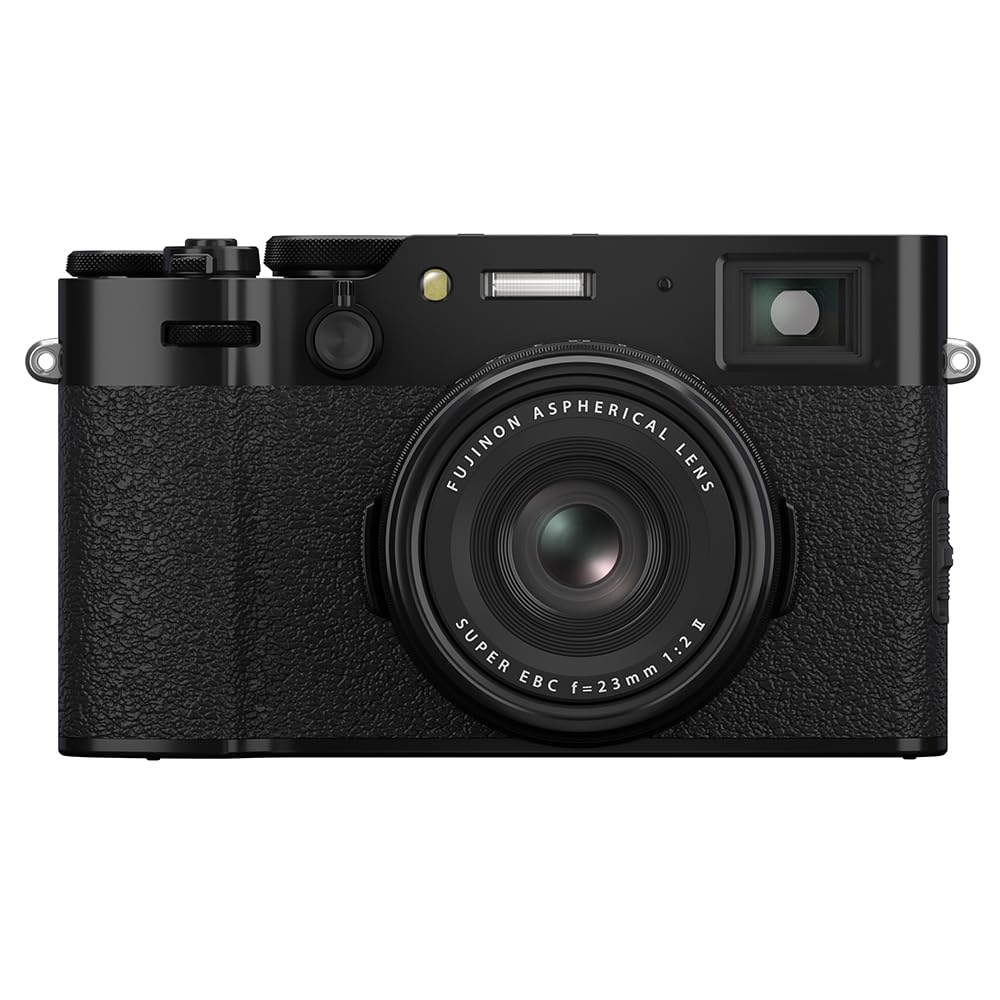
The X100VI is the sixth iteration of Fujifilm’s fixed-lens rangefinder-style camera, now with a 40.2 MP X-Trans CMOS 5 HR sensor and 5-axis in-body stabilization offering up to 6 stops of compensation. The 23mm f/2 lens — equivalent to a 35mm field of view on full-frame — delivers edge-to-edge sharpness and a fast maximum aperture for shallow depth of field and indoor available-light shooting.
The hybrid viewfinder lets you switch between a 3.69M-dot OLED electronic viewfinder and an optical finder that shows the shooting frame against a wider real-world view. The two-way tilting LCD makes waist-level street photography and high-angle compositions easier. The 20 film simulations including the new Reala Ace produce JPEGs that require minimal post-processing — a key selling point for shooters who want to edit less and share more.
The fixed 23mm lens means no zoom flexibility, so this is a dedicated camera for a single focal length. Some units have been reported with finicky autofocus in low contrast scenes, though firmware updates have improved consistency. The battery lasts about 450 shots per charge, which is average for a mirrorless body of this class.
Why it’s great
- 40.2 MP sensor with IBIS in a compact rangefinder body
- Hybrid OVF/EVF suits street and travel photography perfectly
- Film simulations reduce or eliminate the need for RAW processing
Good to know
- Fixed 23mm lens limits compositional flexibility
- Autofocus can struggle in low contrast, high-speed scenes
5. Canon EOS R10

The EOS R10 pairs a 24.2 MP APS-C CMOS sensor with Canon’s DIGIC X image processor, the same engine found in the flagship EOS R3. This allows mechanical burst shooting at 15 fps with continuous AF and electronic shutter speeds up to 23 fps. The 651 phase-detect AF points cover the full sensor area, with subject detection for people, animals, and vehicles that stays sticky even when a subject moves behind partial obstruction.
Video output reaches 4K/30p from the full sensor width with no crop, plus 4K/60p from a 1.56x crop. The RF-S 18-150mm kit lens provides a 28.8-240mm full-frame equivalent range with optical image stabilization that pairs well with the body’s digital IS. The 1.62M-dot vari-angle LCD is anti-smudge coated for outdoor visibility, and the body weighs just 15.5 ounces with battery and card — light enough for one-handed vlogging.
The kit lens is weak in low light at the telephoto end, where f/6.3 forces higher ISO. Battery life runs about 350 shots per charge, so a second LP-E17 or a USB-C power bank is practical for full-day shoots. The flash hot shoe accepts older Canon Speedlites via the adapter, which is a cost saving if you already own Canon glass.
Why it’s great
- DIGIC X processor delivers burst speeds comparable to much costlier bodies
- 651 AF points with reliable subject detection for humans and animals
- Very lightweight and compact for a hybrid interchangeable-lens system
Good to know
- Kit lens aperture narrows to f/6.3 at telephoto, limiting low-light reach
- Battery requires spare for all-day shooting
6. Nikon Z50 II

The Z50 II is Nikon’s entry-level APS-C mirrorless body with a 20.9 MP DX-format sensor. The 231 phase-detect AF points cover the sensor with subject detection for people, dogs, cats, birds, and vehicles, including dedicated bird and airplane modes. The Picture Control button gives instant access to 31 built-in color presets, and you can download additional Cloud Picture Controls from Nikon Imaging Cloud to match specific looks.
Video features include 4K UHD/60p and in-camera 120p slow motion at Full HD. Built-in electronic VR stabilizes handheld walk-around video, and the product review mode automatically sets near focus for small items. The SnapBridge app transfers JPEGs to a smartphone in seconds over Bluetooth Low Energy. The body has a built-in pop-up flash for fill light in indoor or nighttime portraits.
It has only one SD card slot, which eliminates the option for simultaneous backup recording. Battery life is below average at around 300 shots per charge, which is noticeable compared to the Sony a6700. There is no automatic sensor cleaning, so manual dust removal via the menu is required when changing lenses in dusty environments.
Why it’s great
- 31 built-in Picture Control presets for quick JPEG sharing
- Bird and airplane-specific AF modes
- Compact body weight of 17 oz with built-in flash
Good to know
- Single SD card slot limits redundancy
- Below-average battery life for its class
7. Canon EOS 90D

The EOS 90D is the highest-resolution APS-C DSLR with a 32.5 MP CMOS sensor. The optical viewfinder with 45 all cross-type AF points supports up to 27 points at f/8, which means it retains autofocus even when using telephoto lenses with teleconverters — a rare capability for APS-C. The burst rate reaches 10 fps with full AF and AE tracking, which is competitive for sports and wildlife.
Video reaches 4K UHD 30p from the full sensor width and 1080p/120p for slow motion. The DIGIC 8 processor provides Dual Pixel CMOS AF for smooth video focus transitions, and the vari-angle 3.0-inch touch LCD allows flexible composition. The body is weather-sealed against dust and moisture, and the battery life exceeds 1,300 shots per charge — the best endurance in this guide.
The 90D is bulkier than any mirrorless body here because the optical viewfinder and mirror mechanism add depth and weight. The 4K video uses only a small portion of the sensor in some modes, which effectively crops the field of view by about 1.3x. The kit lens (18-135mm IS USM) is competent for daylight shooting but produces noticeable softness in the corners at the telephoto end.
Why it’s great
- 32.5 MP sensor offers significant crop headroom for stills
- 45 cross-type AF points include f/8 support for teleconverters
- Exceptional battery life exceeding 1,300 shots per charge
Good to know
- DSLR bulk is larger and heavier than mirrorless alternatives
- 4K video mode introduces a crop factor on the sensor
8. Canon EOS 80D

The Canon EOS 80D uses a 24.2 MP CMOS sensor with Dual Pixel CMOS AF, making it one of the most responsive DSLRs for live-view shooting. The intelligent viewfinder displays AF points, grid lines, and an electronic level inside the optical finder — a feature that helps manual exposure composition without looking away from the scene. The 45 all cross-type AF sensors work down to EV -3, which is valuable for focusing in dim indoor lighting.
The 80D has an ergonomic grip that suits larger hands during long shooting days. The EF-S 18-135mm f/3.5-5.6 IS USM kit lens includes the Nano USM motor for near-silent and fast autofocus, and the Power Zoom Adapter PZ-E1 enables smooth zoom control for video recording. Wi-Fi with NFC and Canon’s Camera Connect app enable quick wireless photo transfer to a paired smartphone.
The 80D’s 7 fps burst is slow compared to the 90D or any mirrorless body in this list. The 1080p/60fps video is adequate for general use but lacks the 4K resolution that most entry-level mirrorless bodies now offer. The optical viewfinder is a legacy technology at this point that provides zero subject-recognition intelligence — what you see through the glass is purely optical.
Why it’s great
- Dual Pixel CMOS AF ensures fast live-view focusing
- Intelligent viewfinder with exposure info overlay
- Comfortable, deep grip and excellent build quality
Good to know
- 7 fps burst is slower than mirrorless competitors
- No in-body stabilization; relies on lens-based IS
9. Sony RX100 VII
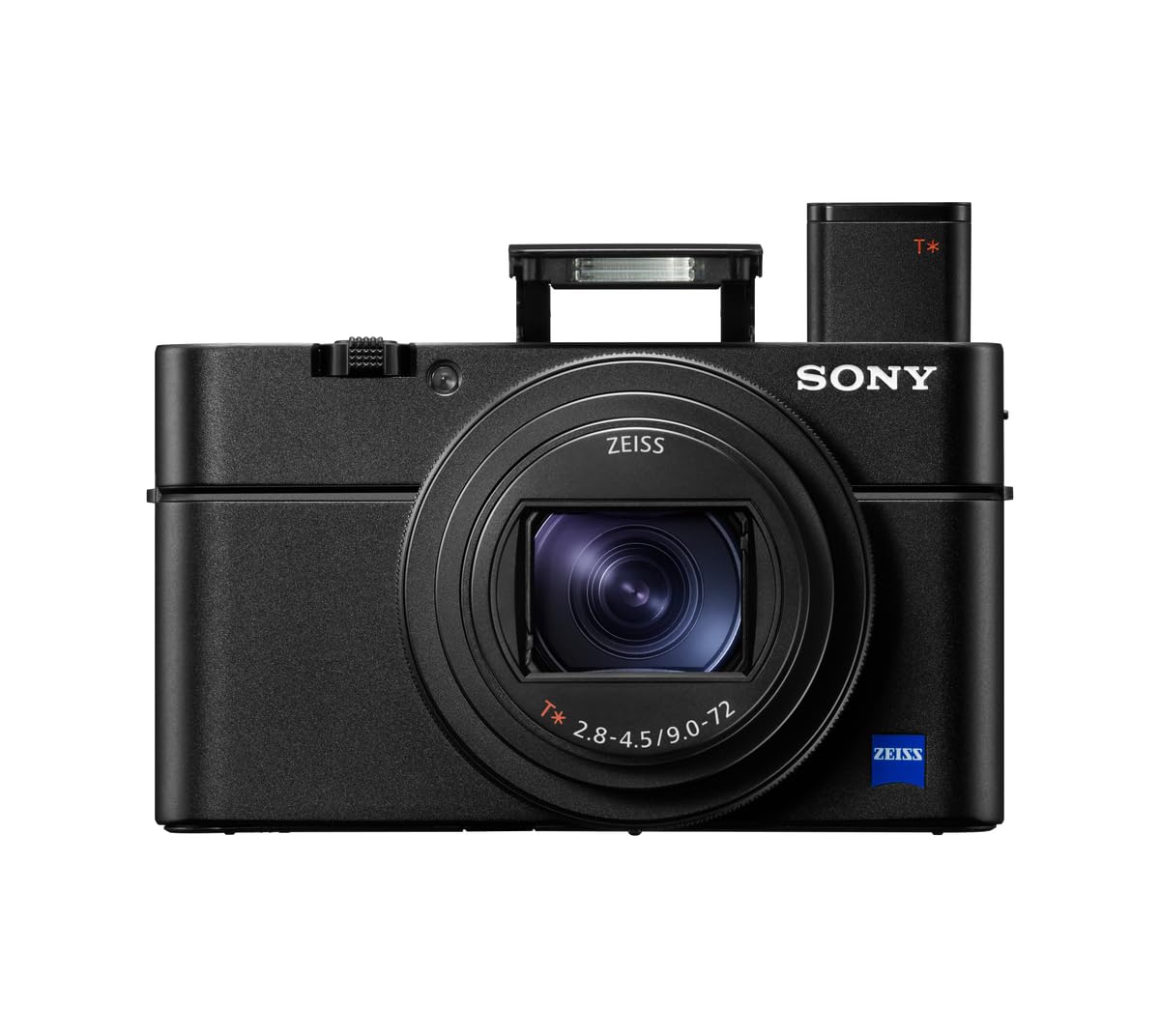
The RX100 VII uses a 1-inch stacked CMOS sensor — smaller than a true APS-C chip but contained in a body weighing just 10.7 oz that slides into a jacket pocket. The 24-200mm f/2.8-4.5 Zeiss Vario-Sonnar T* zoom lens provides an 8.3x reach in a package that collapses flat when powered off. The stacked sensor enables blackout-free burst shooting at 20 fps with full AF/AE tracking.
The 357-point focal-plane phase-detection AF and 425-point contrast-detection AF work together for real-time tracking with Eye AF for humans in stills and video. 4K recording includes S-Log3 for color grading and active image stabilization for handheld video. The microphone jack allows external audio capture, and the pop-up electronic viewfinder lets you compose in bright sunlight.
Image quality in good light is excellent for a compact, but the smaller sensor shows more noise than APS-C bodies at ISO 3200 and above. The body has no weather sealing, and the grip surface is slippery, so an add-on grip or a case is recommended for confident one-handed operation. Battery life is average at about 300 shots per charge.
Why it’s great
- True pocket-size with a powerful 24-200mm zoom range
- 20 fps blackout-free burst with AE/AF tracking
- Real-time Eye AF and 4K with S-Log3 in a compact body
Good to know
- 1-inch sensor produces more noise than APS-C at high ISO
- No weather sealing and slippery body finish
10. Tamron 18-300mm Lens

The Tamron 18-300mm f/3.5-6.3 Di III-A VC VXD is the world’s first 16.6x all-in-one zoom for Sony APS-C mirrorless bodies, covering an effective 27-450mm full-frame equivalent. The VXD (Voice-coil eXtreme Drive) linear motor delivers near-silent, fast autofocus that locks onto birds, moving pets, and street subjects without hunting. The optical image stabilization — Tamron’s VC (Vibration Compensation) — produces consistently sharp handheld shots at the telephoto end down to 1/60 second.
The lens barrel is 4.9 inches long and weighs 21.9 oz, which balances well on the Sony a6700 or a6xxx-series bodies. Moisture-resistant construction with a fluorine coating on the front element repels water droplets and smudges. The zoom ring is smooth throughout most of the range but has been noted to stiffen slightly in the middle section on some copies, which affects manual zoom for video.
The only native competition is Sony’s 18-135mm f/3.5-5.6, which offers significantly less reach. The Tamron trades about a full stop of aperture on the long end for that extra 165mm of reach. The minimum focus distance of 5.9 inches at the wide end allows semi-macro close-ups. This is not the sharpest lens at any single focal length, but its versatility eliminates the need to carry a second body or swap lenses in dusty or fast-moving environments.
Why it’s great
- Unmatched 16.6x zoom ratio covers wide to super-telephoto
- VXD motor provides fast, silent autofocus with close tracking
- Moisture-resistant build with fluorine coating
Good to know
- Zoom ring can feel slightly stiff in the middle range on some units
- Variable aperture f/3.5-6.3 limits low-light performance at telephoto
11. Nikon Z 9
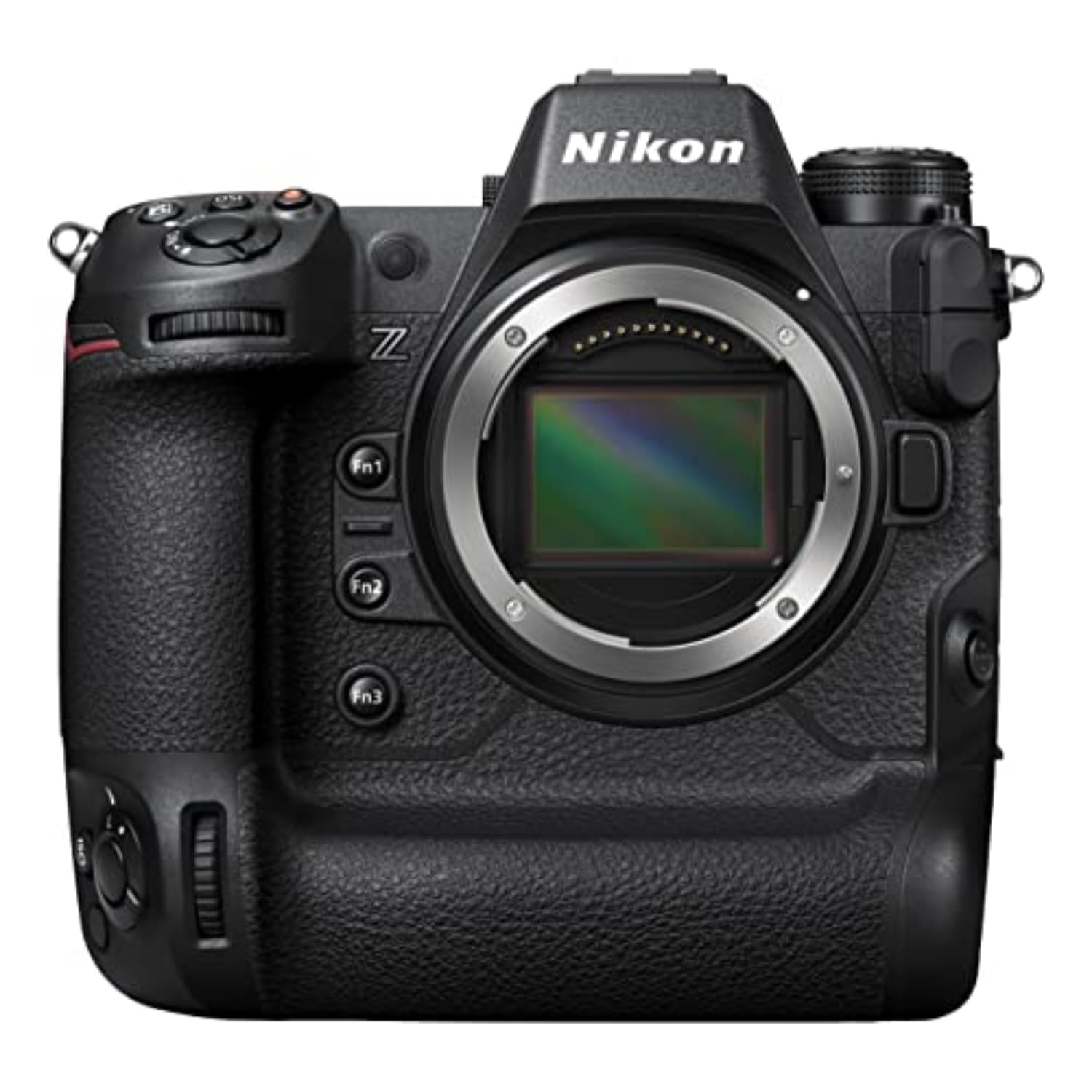
The Nikon Z 9 is a full-frame flagship that competes at a different sensor-size tier, but it’s included here as the reference for speed and AF reliability that APS-C cameras aim to approximate. The stacked 45.7 MP CMOS sensor with EXPEED 7 reads out fast enough to support 20 fps stills with full AF and no viewfinder blackout, and 30 fps at full resolution using the electronic shutter. Subject detection uses deep learning to identify and track nine subject types across the frame without menu switching.
Video recording reaches 8K/30p with in-camera capture for over two hours using the internal fanless heat dissipation design. Internal 4K/120p slow motion and 10-bit ProRes 422 HQ recording allow high-quality post production without an external recorder. The high-efficiency RAW format files are one-third the size of uncompressed RAW while retaining the same dynamic range and color depth — a practical benefit for managing storage across long shoots.
The Z 9 weighs about 34.8 oz with battery, which is lighter than a professional DSLR like the Nikon D6 but still significantly heavier than any APS-C mirrorless body. Battery life is exceptional, delivering between 1,800 and over 4,000 stills per charge depending on usage patterns. The base ISO of 64 produces stills that appear grain-free and glass-like in good light. The Z 9 establishes the performance ceiling against which all APS-C action cameras are judged, though the full-frame sensor and bulk make it a different category for most buyers.
Why it’s great
- Stacked 45.7 MP sensor with 20 fps full-resolution blackout-free burst
- Internal 8K/30p and 4K/120p with ProRes options
- Industry-leading subject detection AI across nine categories
Good to know
- Heavier and larger than any APS-C body; a full-system carry
- High-efficiency RAW format not yet fully supported by all editing suites
FAQ
Can I use full-frame lenses on an APS-C mirrorless body?
How many megapixels do I actually need for printing large?
Does in-body stabilization replace a tripod for long exposures?
What does the crop factor mean for lens focal lengths?
Final Thoughts: The Verdict
For most users, the best aps-c camera winner is the Sony Alpha 6700 because it combines the most mature lens ecosystem, AI-driven autofocus that actually sticks to fast-moving subjects, and high-quality 4K video specs in a compact weather-sealed body. If you want the highest possible resolution with 8K capability and Fujifilm’s color science, grab the Fujifilm X-H2. And for dedicated video production with active cooling and cinema-oriented codecs, nothing beats the Sony FX30.