
Our readers keep the lights on and the weekend projects moving. As an Amazon Associate, I earn from qualifying purchases.
A canopy of floating plants transforms a bare aquarium into a complete ecosystem, yet many hobbyists struggle with species that melt away or refuse to propagate. The difference between a lush green carpet and a tank full of dying leaves comes down to selecting the right species from a reliable source and understanding their specific light and nutrient needs.
I’m Rikta — the co-founder and writer behind FitlyFast. I spent hundreds of hours dissecting customer feedback, live-arrival guarantees, packaging methods, and propagation rates across seven distinct floating plant offerings to separate the healthy shipments from the disappointing ones.
Whether you need dense cover for shy bettas, natural nutrient absorption to fight algae, or vibrant red roots for visual drama, this guide to the best aquarium floating plants breaks down exactly what each package delivers so you can buy with confidence.
How To Choose The Best Aquarium Floating Plants
Floating plants are not all the same. Some are aggressive growers that can choke out a tank in weeks, while others require specific light intensity to maintain color and shape. Before you add a species to your cart, consider your tank’s lighting, your willingness to thin growth weekly, and the specific benefit you want — nitrate reduction, fry shelter, or visual contrast.
Growth Rate and Maintenance Commitment
Duckweed and Water Spangles multiply so rapidly that they can cover the entire surface within days under moderate light. Beginners often underestimate the manual thinning required. Slower-growing options like Red Root Floaters or Amazon Frogbit offer a more manageable pace while still providing excellent nutrient export and shade.
Lighting Requirements
Red Root Floaters need moderate to high light to develop their signature crimson roots and leaves, while Salvinia Minima and Dwarf Water Lettuce tolerate low-light conditions. If your tank uses a standard LED hood rather than a high-output planted tank light, stick with low-light species to avoid melting and browning.
Root Length and Livestock Impact
Long, dangling roots from Frogbit and Dwarf Water Lettuce create perfect hiding spots for shrimp and fry but can entangle bottom-dwelling fish or block filter intakes. Water Spangles and Duckweed have short, feathery roots that minimize interference in smaller tanks while still offering surface cover that reduces fish stress.
Quick Comparison
On smaller screens, swipe sideways to see the full table.
| Model | Category | Best For | Key Spec | Amazon |
|---|---|---|---|---|
| Red Root Floater (Midnight Glo) | Premium Single Species | Display tanks needing red contrast | 80+ leaves per portion | Amazon |
| Floating Plant Package #2 (G & Z) | Variety Pack | Exploring multiple species | 4 species × 12 leaves each | Amazon |
| Floating Plant Combo (Aquarigram) | Variety Pack | Pest-free starter pack | 4 popular species included | Amazon |
| Dwarf Water Lettuce (Aquarigram) | Mid-Range Single Species | Shrimp and fry shelter | 12+ leaves minimum | Amazon |
| Giant Duckweed + Mystery Plant (Aquarigram) | Budget Single Species | Fast nutrient absorption | 60+ leaves plus bonus | Amazon |
| Water Spangles (Generic / 60+ Leaves) | Budget Single Species | Dense mat formation | 60+ Salvinia Minima leaves | Amazon |
| Water Spangles (TMDFishKeeping / 50 Count) | Budget Single Species | Small tank or pond top-up | 50 individual plants | Amazon |
In‑Depth Reviews
1. Live Red Root Floater (80+ Leaves) — Midnight Glo
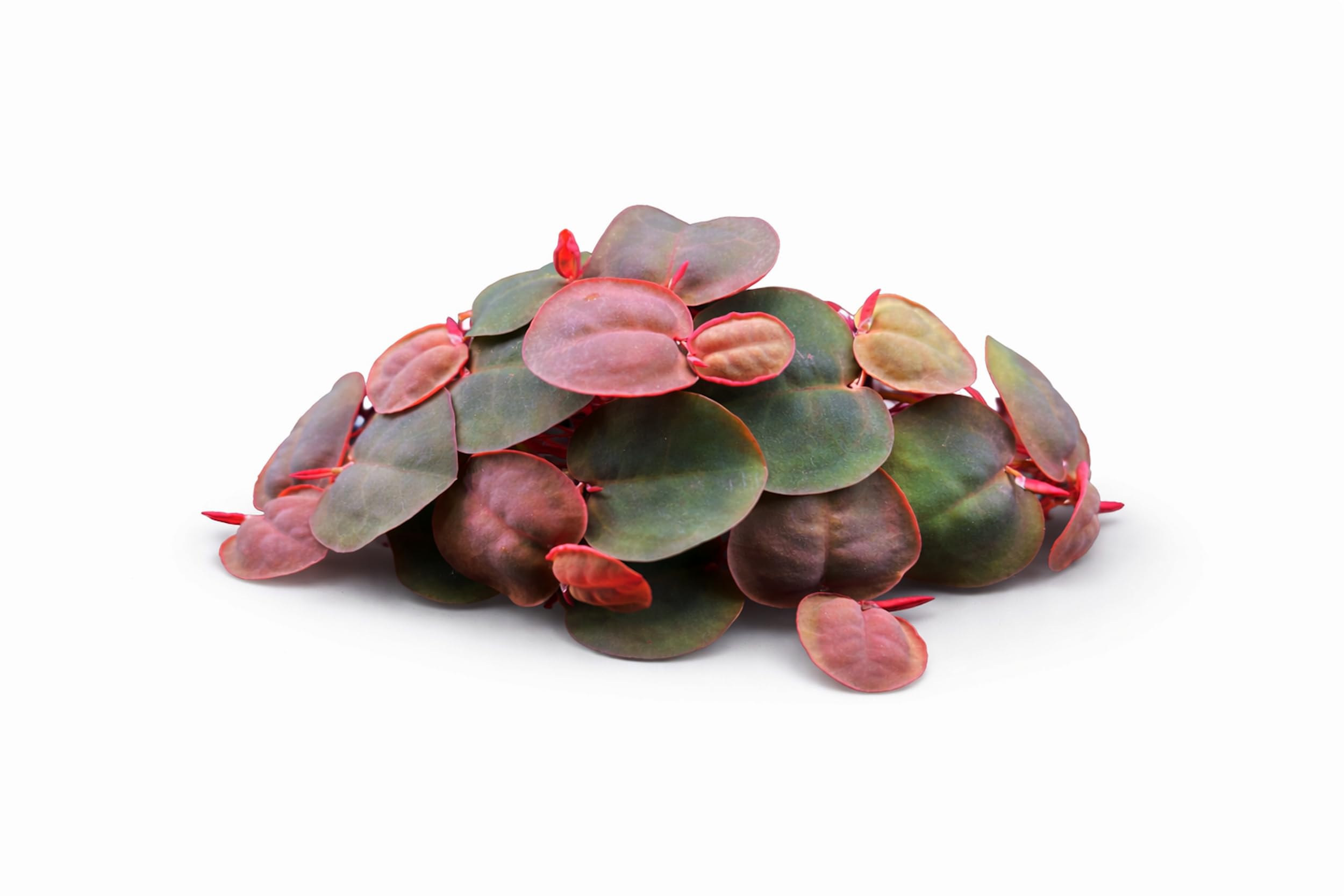
Midnight Glo’s Red Root Floater delivers the most visually striking floating plant in this comparison, with deep crimson roots and rounded green leaves that intensify under moderate to high lighting. The 80+ leaf count provides ample coverage from day one, and the snail-free guarantee removes the hidden pest risk that plagues many live plant orders. Customer reviews consistently praise the careful packaging and the vibrant coloration upon arrival.
This species thrives in low light but rewards stronger LEDs with richer red tones, making it a flexible choice for both beginner shrimp tanks and advanced planted displays. The dangling roots create a natural refuge for fry and shy fish without growing so aggressively that weekly thinning becomes a chore. Growth rate is moderate compared to Duckweed, giving you more control over surface coverage.
The only real question is leaf count accuracy — a few buyers felt the portion ran slightly lighter than 80 leaves, though the overall health and visual payoff still earned top marks. If you want one species that combines filtration benefits with undeniable aesthetic impact, this is the clear winner.
Why it’s great
- Vibrant red roots create standout visual contrast
- Grown snail-free with no unwanted hitchhikers
- Moderate growth rate is easy to manage
Good to know
- Needs moderate to high light for best red coloration
- Some customers reported slightly fewer leaves than advertised
2. Floating Plants Package #2 — G & Z

G & Z’s variety package delivers 12 leaves each of Amazon Frogbit, Dwarf Water Lettuce, Water Spangles, and Red Root Floater — a curated mix that lets you test four popular species in one purchase. The generous portions and careful insulation with heat packs during shipping have earned repeat buyers, particularly for axolotl and betta tanks where surface cover reduces stress. Multiple reviewers noted that Frogbit roots grew nearly an inch per day after settling in.
The real strength here is the ability to see which species performs best in your specific water parameters and lighting without buying four separate orders. Red Root Floaters arrived in bloom for some customers, while Water Lettuce survived multi-day shipping delays without melting. The 100% live-arrival guarantee and responsive replacement policy add peace of mind for first-time floating plant buyers.
The downside is the parasite and snail risk — several buyers reported hitchhiker snails that later overran their tanks, and one customer experienced fish illness after adding the plants. A preventive dip or quarantine before introducing these to a display tank is strongly advised.
Why it’s great
- Four different species let you find the best fit for your tank
- Kelp packaging and heat packs for safe arrival in cold weather
- Frogbit roots grow very fast with proper light
Good to know
- Risk of snail or parasite hitchhikers requires quarantine
- One of four species may outcompete the others quickly
3. Floating Plant Combo Pack — Aquarigram

Aquarigram’s combo pack mirrors the G & Z variety approach but with a different reputation — multiple buyers explicitly noted zero snails or unwanted plants, a significant advantage if you want to avoid a tank takeover. The four included species — Amazon Frogbit, Red Root Floater, Water Spangles, and Water Lettuce — are individually bagged for easy distribution across multiple tanks or aquascaping zones.
Customer reports describe healthy arrivals with fast shipping and good seller communication. The self-multiplying nature of all four species means that even a small portion can fill out a tank within a few weeks under adequate lighting. The plants also help remove ammonia, nitrates, and heavy metals from the water column, contributing to overall water quality.
The main criticism is quantity — some buyers felt the portion of each species was too small, with only 2–3 leaves of certain types, making it difficult to judge true potential if a few leaves melt during shipping. For the price, you are paying for variety and pest-free assurance rather than bulk volume.
Why it’s great
- Consistently reported as snail and pest-free
- Each species bagged separately for easy placement
- All plants self-propagate under normal conditions
Good to know
- Portions can be very small per species
- May need patience while plants multiply to fill the surface
4. Dwarf Water Lettuce (12+ Leaves) — Aquarigram

Dwarf Water Lettuce delivers the iconic rosette form that many aquascapers prize — each leaf cluster sits above the waterline while a thick bundle of roots dangles below, creating a natural nursery for shrimp and baby fish. Aquarigram’s offering consistently arrives in good condition with minimal die-off, and the moderate growth rate means you will not be scooping out handfuls every weekend.
The dwarf variety stays compact enough for smaller tanks while still providing significant nutrient export. Customer reports highlight that the plants quickly send out runner leaves once acclimated, gradually expanding coverage without overwhelming the surface. The live-arrival guarantee covers weather-related shipping risks, though the temperature threshold is stricter — do not order if temperatures exceed 85°F.
Some shipments arrived with slight yellowing or stale-smelling water, but soaking and separating individual buds revived the plants within days. A few leaves may break off during handling, but the resilient nature of this species means new growth usually outpaces the initial die-off.
Why it’s great
- Beautiful rosette form with long, shelter-providing roots
- Compact growth suitable for small to medium tanks
- Good nutrient absorption for algae control
Good to know
- Sensitive to shipping temperatures above 85°F
- Some arrivals need cleaning and separation before adding to tank
5. Water Spangles (60+ Leaves) — Generic
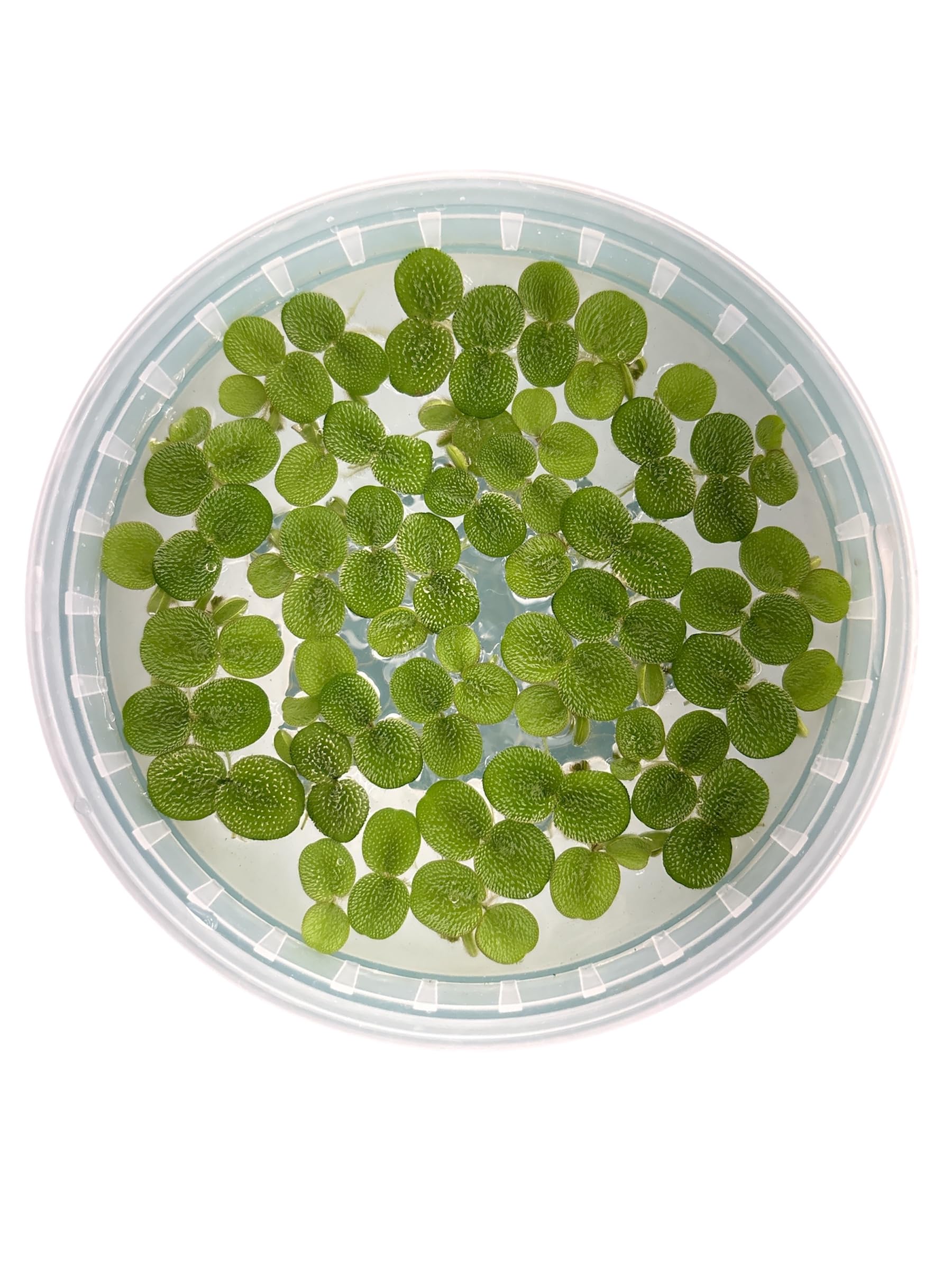
This Salvinia Minima offering from a generic seller punches well above its price tier, with customer reviews consistently praising the health and quantity of leaves received. Multiple buyers described these as the healthiest floating plants they had ever ordered — vibrant green, intact roots, and no signs of melt during shipping. The compact leaf size creates a dense, carpet-like surface cover that blocks excess light and reduces algae growth.
Water Spangles are among the easiest floating plants to keep, thriving in medium to high lighting without CO2 injection or specialized fertilizers. The short, feathery roots do not interfere with filter intakes or swimming space, making this a safe choice for nano tanks and community setups alike. The package ships with a warning about extreme temperatures, so planning your order around mild weather is essential.
There is no live-arrival guarantee listed, which carries some risk if your local temperatures are borderline. For the price and density offered, this is an excellent entry point for floating plant beginners.
Why it’s great
- Exceptional health ratings from verified buyers
- Compact growth creates thick surface coverage
- Low-maintenance and no CO2 required
Good to know
- No explicit live-arrival guarantee
- Generic listing may have batch inconsistency
6. Giant Duckweed + Mystery Plant (60+ Leaves) — Aquarigram

Giant Duckweed (Spirodela polyrhiza) is a step up from common Duckweed — the leaves are larger and easier to manage, reducing the “annoying speck” problem that makes traditional Duckweed a nuisance. Aquarigram’s offering includes 60+ leaves plus a mystery bonus plant, adding a small element of surprise to your purchase. The plants are advertised as natural ammonia and nitrate removers, contributing to a balanced aquarium.
Buyers who received healthy shipments reported rapid multiplication and perfect sizing relative to listing photos. The live-arrival guarantee provides a safety net, though a few customers received portions that felt small for the price — minimal roots and sparse coverage. The mystery plant can be hit or miss, but it adds variety for hobbyists willing to experiment.
The main risk is shipping stress. Some reviews described all leaves and roots arriving broken, with plants turning yellow and dying regardless of the water source used for recovery. Using expedited shipping and acclimating immediately upon arrival improves survival chances significantly.
Why it’s great
- Larger leaf size than common Duckweed, easier to handle
- Live-arrival guarantee included for peace of mind
- Fast propagation once acclimated to tank conditions
Good to know
- Some shipments arrive sparse with minimal root growth
- Shipping delays can cause complete die-off
7. Water Spangles (50 Count) — TMDFishKeeping

TMDFishKeeping’s 50-count Water Spangles offer a slightly lower leaf count than the generic competitor above, but the 50 individual plants provide good starting density for smaller aquariums or pond top-ups. Positive reviews describe the plants arriving green and undamaged, multiplying quickly in shrimp tanks, and surviving aggressive treatment like bleach soaks. The full sun tolerance also makes this a viable option for outdoor water gardens.
However, this listing shows the most review variance in the comparison. While some buyers received generous, thriving portions, others reported a tiny amount — described as only a “teaspoon” of plant material — that was barely visible in a pond. The dead-on-arrival reviews suggest that packaging quality may vary between shipments, and the lack of a strong live-arrival guarantee is a notable gap.
Goldfish keepers noted that their fish ate the roots but left the leaves intact, limiting the plant’s ability to absorb nutrients. If you have plant-eating fish, consider a species with tougher leaves. The inconsistent portion size makes this a slightly riskier bet compared to the more consistent 60+ leaf generic option above.
Why it’s great
- Full sun tolerant for outdoor pond use
- Can survive handling and even bleach dips
- Multiplies rapidly in suitable conditions
Good to know
- Portion size varies significantly between orders
- No strong live-arrival guarantee listed
FAQ
How do I prevent floating plants from dying during shipping?
Why are my Red Root Floaters turning green instead of red?
Can I keep floating plants with a lid and LED light?
Final Thoughts: The Verdict
For most users, the best aquarium floating plants winner is the Midnight Glo Red Root Floater because it delivers unmatched visual impact with its crimson roots while remaining easy enough for beginners to manage. If you want to experiment with multiple species in one purchase, grab the G & Z Variety Package. And for an affordable, low-risk introduction to floating plants that covers the surface fast, nothing beats the 60+ Leaf Water Spangles pack.