
Our readers keep the lights on and the weekend projects moving. As an Amazon Associate, I earn from qualifying purchases.
Setting up a planted shrimp tank means choosing species that won’t trigger ammonia spikes, don’t require CO₂ injection, and offer plenty of surface area for biofilm grazing. The wrong plant melts, fouls the water, and stresses your colony.
I’m Rikta — the co-founder and writer behind FitlyFast. I’ve spent years analyzing how aquatic plants interact with sensitive invertebrates, from rhizome depth to nitrate uptake rates.
This guide breaks down the top-rated live varieties backed by verified buyer feedback so you can confidently pick the right aquarium plants for shrimp without losing a single berried female to melting leaves.
How To Choose The Best Aquarium Plants For Shrimp
Shrimp are sensitive to water parameter swings and rely heavily on biofilm that grows on plant surfaces. The ideal plant thrives in low to moderate light, doesn’t require root tabs, and won’t decay rapidly under submersed conditions. Prioritize species with a strong rhizome or robust floating habit rather than heavy root feeders.
Rhizome vs. Root-Feeder
Rhizome plants like Anubias and Java Fern attach to wood or rock and pull nutrients from the water column, not the substrate. This keeps the gravel clean and prevents anaerobic pockets that could kill shrimp. Stem plants that demand root tabs often rot if planted incorrectly in sand or fine gravel.
Growth Rate and Nitrate Uptake
Fast-growing floaters such as Salvinia Minima and Red Root Floater consume ammonia and nitrates quickly, helping maintain stable water chemistry. Slower growers like Anubias Petite provide long-lasting leaf surfaces for biofilm but won’t outcompete algae on their own. A mix of fast and slow balance is ideal.
Quick Comparison
On smaller screens, swipe sideways to see the full table.
| Model | Category | Best For | Key Spec | Amazon |
|---|---|---|---|---|
| Anubias Petite on Driftwood | Rhizome | Nano shrimp tanks | Pre-attached driftwood | Amazon |
| Greenpro Lava Stone Combo | Multi-species | Instant hardscape decor | Anubias + Java Fern + Moss | Amazon |
| Marcus Java Fern 3-Pack | Rhizome | Shaded breeding zones | 7–12 in plant height | Amazon |
| Marcus Anubias Nana Petite | Foreground | Driftwood accents | 20–30 leaves per pot | Amazon |
| Red Root Floater 60+ leaves | Floating | Nitrate reduction | 60+ leaves per cup | Amazon |
| Salvinia Minima 60+ leaves | Floating | Fast coverage | Forms dense surface mat | Amazon |
| Aquarigram Giant Duckweed 60+ | Floating | Budget starter pack | Includes mystery bonus plant | Amazon |
In‑Depth Reviews
1. Anubias Petite on Driftwood

The Aquarium Plants Factory Anubias Petite arrives already attached to a small piece of boil-treated driftwood, so you can drop it into a shrimp tank immediately without worrying about burying the rhizome — a common mistake that rots most beginner plants. Each piece comes wrapped in rockwool for root security, and the driftwood has been pre-drilled for optional thread or glue anchoring. Verified buyers consistently report vibrant green arrivals with zero melting, even after shipping in cold weather.
From a shrimp perspective, the small leaf surface is ideal for grazing biofilm without obstructing swimming lanes. The compact size (about 3 inches tall) fits perfectly in 5- to 10-gallon nano tanks where juvenile shrimp spend most of their time foraging. The driftwood base also releases negligible tannins, keeping water clear for light penetration to any moss or floaters in the same tank.
Multiple reviewers note that this plant has outlived six months in their tanks with only minimal leaf loss, and several mention that the Anubias began pushing new leaves within two weeks under standard LED lighting. The only trade-off is that the entire piece is petite — buyers with 20-gallon or larger tanks may need two or three to fill the foreground.
Why it’s great
- Zero soil or glue required; driftwood is pre-treated and ready to place
- Rhizome stays above substrate — safe for shrimp that dig
- Boil-treated wood minimizes tannins and fungus
Good to know
- Driftwood piece is small — best for tanks under 10 gallons
- Rockwool should be removed if shrimp can burrow into it
2. Greenpro Lava Stone Combo

Greenpro’s combination ships an Anubias, a Java Fern, and Java Moss all secured to a single lava rock — giving you three different leaf textures on one hardscape piece that shrimp can immediately explore. The lava rock is porous, which provides extra surface area for biofilm bacteria and gives newborn shrimplets hiding spots inside the crevices. The company grows its plants in a digitally controlled nursery, and verified buyers confirm that the plants arrived pest- and snail-free.
Because all three species are rhizome-based, there is no need for root tabs or deep substrate — you simply place the rock where you want it and let the plants draw nutrients from the water column. This is especially useful in bare-bottom shrimp breeding tanks where the only substrate is a thin layer of sand. The Java Fern alone can reach several inches tall, creating a natural canopy that diffuses light for the moss below.
A few customers noted that the lava rock was smaller than a palm and the Anubias Petite was very tiny, so the overall visual presence is subtle in tanks larger than 15 gallons. One reviewer reported that the plant lost leaves after a few weeks, which may indicate that the string used to tie the roots was too tight — always check binding after arrival. Still, the majority of feedback praises the health of the moss and the convenience of an all-in-one hardscape.
Why it’s great
- Three species on one rock provide varied leaf structure for grazing
- Lava rock porosity boosts beneficial bacteria colonization
- No glue or thread work needed — ready to drop in
Good to know
- Plant grouping is quite small; large tanks may need multiple rocks
- Binding string can be too tight — inspect and loosen if necessary
3. Marcus Fish Tanks Java Fern 3-Pack

Marcus Fish Tanks delivers three individual Java Fern plants ranging from 7 to 12 inches tall, making this one of the better options for creating shaded zones in medium to large shrimp tanks. Java Fern (Microsorum Pteropus) is a classic choice for shrimp keepers because its broad leaves gather significant biofilm and its tough structure withstands the constant cleaning activity of Amano and Neocaridina shrimp. The plants shipped with clear root systems and were reported by nearly all reviewers as undamaged and snail-free.
Because Java Fern does not require planting in substrate, you can tie or wedge these between driftwood branches or rocks to build vertical depth. The height range means the taller plants can be positioned in the background while the smaller ones fill mid-ground gaps. Many buyers mentioned that after a month in the tank, the leaves had turned a vibrant green and started showing new growth even under basic aquarium LED bars without CO₂ injection.
The main drawback is that the plants can arrive slightly yellow if shipped in very cold weather — a few customers noted initial yellowing that resolved within a week once the plant stabilized. Also, the 3-pack is priced at a mid-range point, so if you only need one small plant for a nano tank, you may end up with more than necessary. Still, for a colony tank with multiple shrimp species, three large Java Ferns provide ample cover and biofilm real estate.
Why it’s great
- Large leaf surface holds more biofilm than most foreground plants
- Can be positioned vertically without substrate — ideal for shrimp that dig
- Strong live-arrival guarantee with photo verification
Good to know
- May arrive slightly yellow in winter; usually recovers within a week
- Three plants may be too many for a 5-gallon nano setup
4. Marcus Fish Tanks Anubias Nana Petite

This potted Anubias Nana Petite from Marcus Fish Tanks ships with 20 to 30 compact leaves and strong roots packed in rock wool, making it a clean foreground or mid-ground addition for shrimp tanks. The petite size — each leaf is about the diameter of a dime — means shrimplets can easily crawl over and under the foliage without getting trapped. Verified buyers consistently praise the vibrant color and the fact that the plant breaks apart into multiple smaller starts if you gently separate the rhizome.
The organic material used in the pot is safe for sensitive invertebrates, and the plant tolerates a wide range of water parameters including the slightly higher pH and GH that Caridina shrimp require. Unlike many tissue-cultured plants that melt upon submersion, this potted version has already been grown submerged, so the transition into a shrimp tank is immediate and stress-free. Several reviewers noted that their shrimp began grazing on the leaves within hours of introduction.
One common feedback point is that the plant is genuinely petite — a single pot will not fill a large gap. For a 20-gallon tank that already has driftwood or stone, this acts as a detail accent rather than a centerpiece. Also, because the plant ships in rock wool, you should gently rinse the roots to remove any fine particles that could cloud the water in a small tank.
Why it’s great
- Pre-submerged leaves avoid melting during transition
- Small leaf size perfect for juvenile shrimp to explore
- Can be split into multiple plants if the rhizome is healthy
Good to know
- Very small plant — use as accent, not background filler
- Rock wool should be removed or rinsed before planting
5. Red Root Floater 60+ Leaves
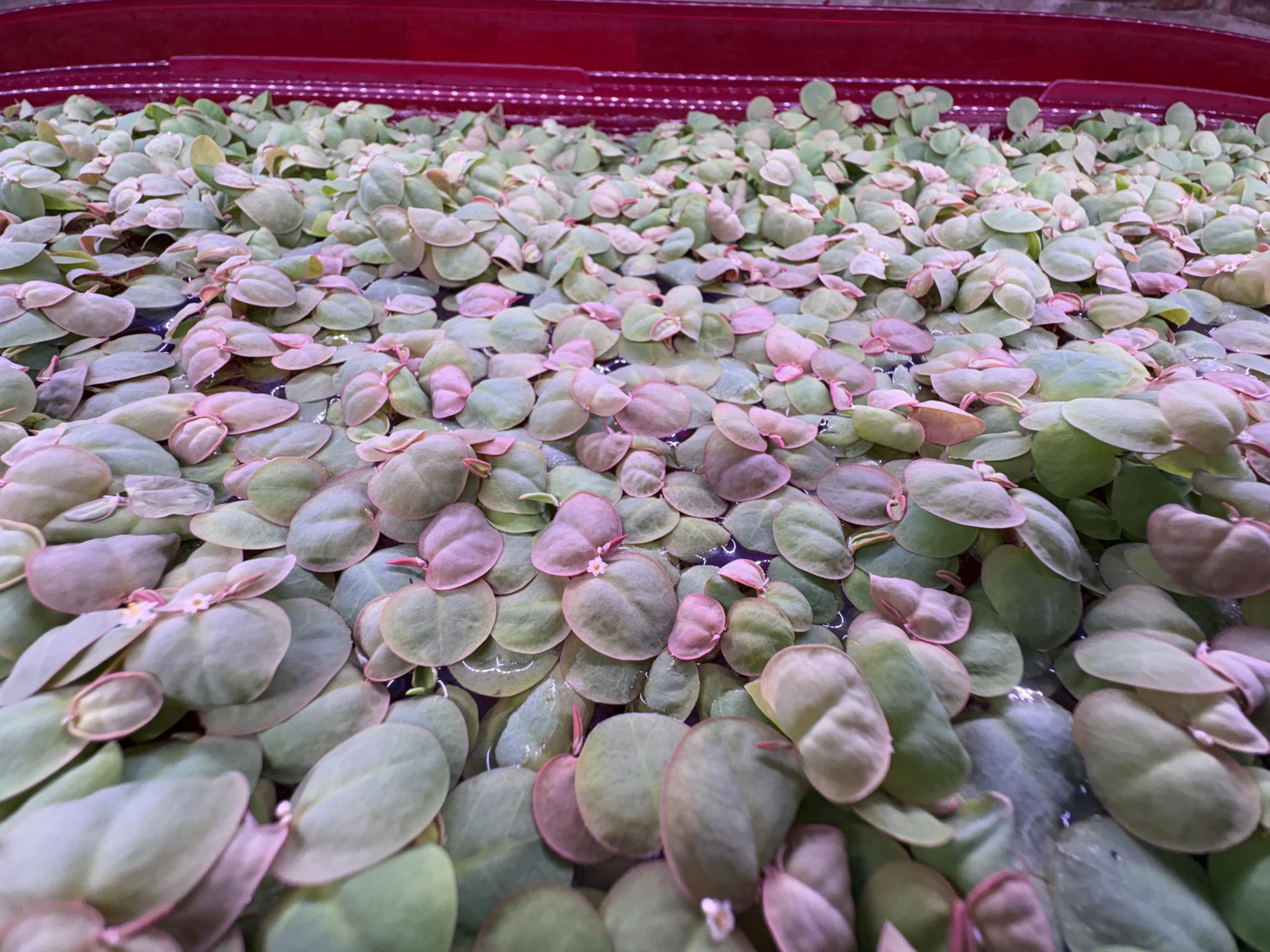
Red Root Floater (Phyllanthus Fluitans) ships in a 4-ounce cup with at least 60 healthy leaves that develop striking red-purple undersides under moderate to high light. For shrimp keepers, the real value lies in the long, dangling roots that provide a massive surface area for biofilm growth — shrimplets will hang upside down from these roots for hours. The plant also consumes nitrates and ammonia directly from the water column, which helps maintain the low-nitrogen environment that shrimp prefer.
This floater does have a specific care requirement: it hates surface agitation. Strong filter outflow or aeration that splashes water onto the top of the leaves will cause the plant to rot. Verified buyers emphasize placing this in a gentle-flow section of the tank or using a sponge filter outlet diffuser. When conditions are right, the plant spreads through runners and can cover a 6×6-inch area within a couple of weeks, providing shade that reduces algae growth on the substrate below.
Reviewers consistently mention that the shipment arrived early and well-packaged, with leaves still fully hydrated and roots intact. The one caveat is that turning the leaves deep red requires high light and low nitrate levels — if your tank has moderate feeding, the top leaves may stay more green than red. Even so, the root structure remains a prime shrimp habitat regardless of color.
Why it’s great
- Long root system creates dense biofilm for shrimplets
- Actively removes nitrates, helping stabilize water parameters
- Shade coverage reduces algae in lower tank regions
Good to know
- Does not tolerate strong surface agitation — needs still water
- Deep red color only appears under high light and low nitrate
6. Salvinia Minima 60+ Leaves
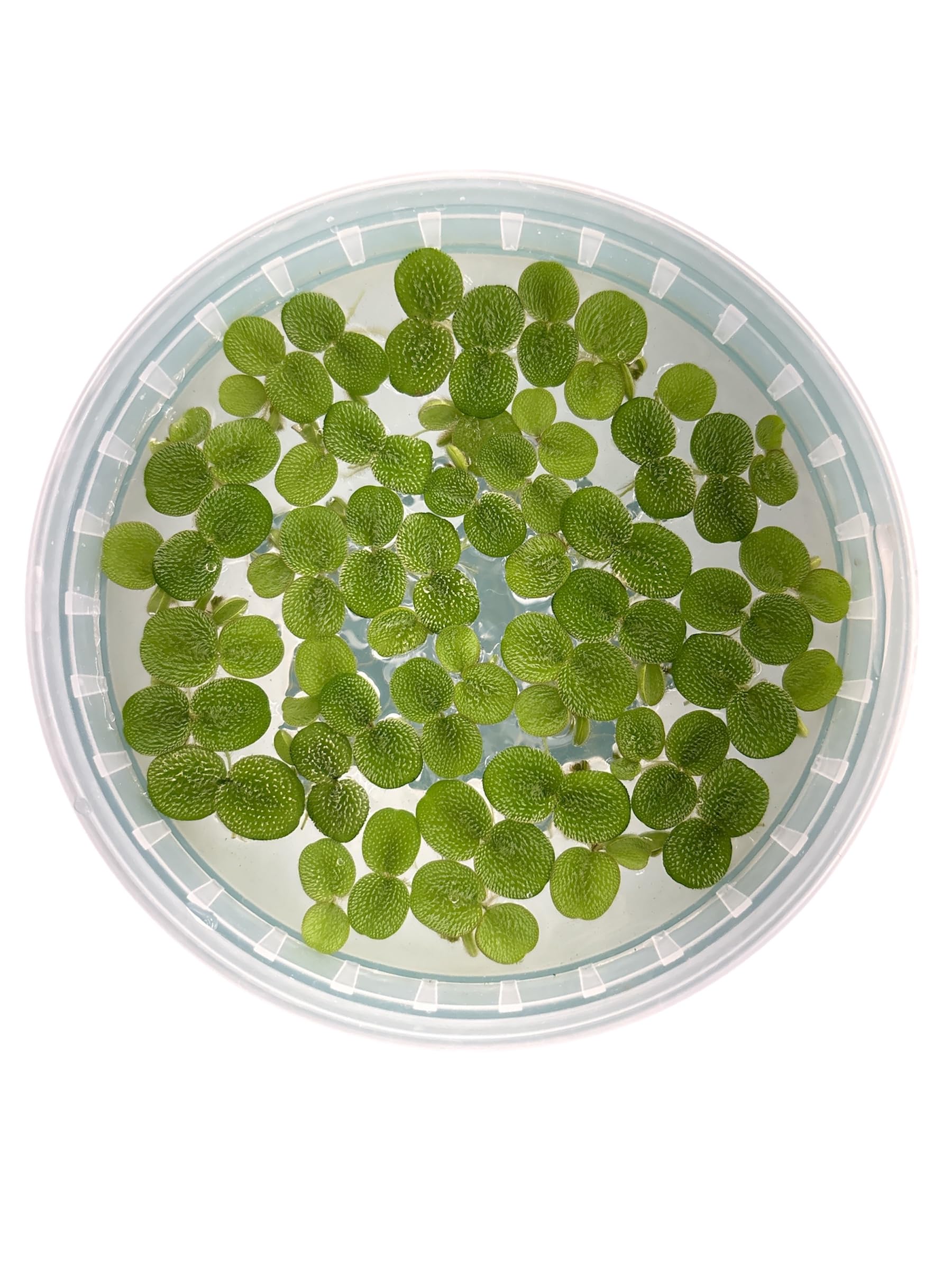
Salvinia Minima, commonly called Water Spangles, arrives with over 60 individual plants that quickly form a dense floating carpet on the water’s surface. Unlike Duckweed which can become invasive, Salvinia has slightly larger leaves that are easier to thin out and less likely to end up stuck on your shrimp’s filter intake. The compact leaf structure provides excellent shade for light-sensitive shrimp like Crystal Reds, and the dangling roots create a foraging zone for mid-water shrimp activity.
Maintenance is straightforward — medium to high light encourages rapid growth, and you can remove handfuls weekly to prevent the mat from blocking oxygen exchange. Verified buyers rave about the initial health of these plants, noting that the majority of shipments arrived with no leaf damage and vibrant green coloration. The roots in particular were described as “beautiful” and “more robust than expected” for the price point.
The main limitation is that Salvinia Minima does not tolerate temperatures below freezing or above 90°F, so shipping windows are narrower in extreme climates. A few customers on the West Coast noted longer transit times and some browning on arrival, though most still reported recovery after a few days in the tank. If you need a fast-growing nitrate sponge that shrimp can immediately use, this is a solid entry-level floater.
Why it’s great
- Forms a dense shade canopy quickly — reduces algae
- Roots provide biofilm grazing area for shrimp
- Easy to thin compared to Duckweed
Good to know
- Needs medium to high light to stay compact and healthy
- Not frost-tolerant; avoid ordering in extreme winter
7. Aquarigram Giant Duckweed 60+

Aquarigram’s Giant Duckweed (Spirodela polyrhiza) pack promises 60+ leaves plus a mystery bonus plant, making it an entry-level floating option for shrimp keepers on a tight budget. Duckweed is one of the most efficient nitrate and ammonia absorbers in the hobby, and the larger leaf size of this variety makes removal easier than common duckweed. Shrimp will occasionally pick biofilm off the undersides, though the roots are shorter than those of Salvinia or Red Root Floater.
The product ships with a live-arrival guarantee, and most verified buyers report that the majority of the leaves survived the journey and began multiplying within a week under standard lighting. A few customers, however, received packages that arrived yellowed and melted after extended transit in heat — this is a risk with any live plant mail-order, but it appears slightly more common here based on the review spread. The inclusion of a mystery plant (often a small stem plant) adds a bit of fun for curious hobbyists.
The biggest disadvantage of Duckweed in a shrimp tank is that it tends to coat the entire surface if not vigorously culled, blocking light to lower plants. Shrimp do not mind heavy cover, but if you have Anubias or Java Fern below, you will need to scoop out excess Duckweed weekly. For a dedicated shrimp-only tank floating cover that requires almost zero care, this is a cost-effective starting point.
Why it’s great
- One of the most effective nitrate sponges available
- Large leaf variety is easier to control than standard duckweed
- Live-arrival guarantee with a free bonus plant included
Good to know
- May arrive yellowed if shipped in extreme temperatures
- Requires frequent thinning to prevent total surface coverage
FAQ
Can I keep Anubias and Java Fern together in a shrimp tank?
Why do my floating plants keep dying in a shrimp tank?
Final Thoughts: The Verdict
For most users, the aquarium plants for shrimp winner is the Anubias Petite on Driftwood because it arrives ready to place with zero substrate work, provides immediate biofilm real estate, and its compact size fits any nano shrimp tank. If you want a multi-species hardscape that covers more visual ground, grab the Greenpro Lava Stone Combo. And for fast nitrate reduction with floating cover, nothing beats the Red Root Floater.