
Our readers keep the lights on and the weekend projects moving. As an Amazon Associate, I earn from qualifying purchases.
You have the light cycle dialed, the CO2 injection tuned, and the liquid fertilizer schedule memorized, but your stem plants keep detaching from the bottom and your carpet plants refuse to spread. The culprit is almost always the substrate bed — standard gravel lacks the cation exchange capacity to hold nutrients, and a layer of inert play sand compacts into an anaerobic tomb. Choosing a grain that balances root anchorage, nutrient availability, and water chemistry sets the foundation for everything else in the tank.
I’m Rikta — the co-founder and writer behind FitlyFast. I’ve spent many hours analyzing grain size distribution, buffering capacity, and nutrient profiles across dozens of substrates to determine which textures actually support robust root systems without clouding your water column.
This guide isolates the best performing options based on particle consistency, pH influence, and long-term fertility so you can confidently select the ideal aquarium sand for plants.
How To Choose The Best Aquarium Sand For Plants
The substrate you choose directly dictates root development, nutrient retention, and the long-term stability of your planted aquarium. Focusing on three core characteristics will narrow your options dramatically.
Grain Size and Shape
Particles between 0.5 mm and 2 mm offer the best balance of root anchorage and water flow. Oversized gravel allows nutrients to wash through before roots can absorb them, while ultra-fine sand (below 0.2 mm) compacts and creates dead zones where hydrogen sulfide builds up. Look for slightly irregular shapes rather than perfectly round beads — angular grains lock together and prevent plants from floating up during initial rooting.
Nutrient Content and CEC
Cation Exchange Capacity (CEC) measures how well the substrate holds onto positively charged nutrient ions like ammonium, potassium, and iron. Active soils with high CEC can store and release fertilizer gradually, reducing the need for daily dosing. Inert sands require root tabs or liquid fertilization from day one. Volcanic-based substrates naturally score high on CEC, while silica or quartz sands score near zero.
pH and Hardness Buffering
Many planted tank species prefer slightly acidic water in the 6.0–6.8 range. Some active substrates contain compounds that gently lower pH and soften water, creating a favorable environment for plants and reducing algae pressure. If your source water is already soft and acidic, an inert sand capped over a nutrient-rich base layer can work equally well without shifting chemistry unpredictably.
Quick Comparison
On smaller screens, swipe sideways to see the full table.
| Model | Category | Best For | Key Spec | Amazon |
|---|---|---|---|---|
| LANDEN THRIVA Natural Soil | Active Soil | Nutrient-rich aquascapes | 3mm irregular porous clay | Amazon |
| Ultum Nature Systems Controsoil | Volcanic Ash | Low ammonia cycling | 1mm extra fine grain | Amazon |
| Fluval Plant and Shrimp Stratum | Porous Granules | Shrimp breeding tanks | 2–4 mm porous pellet | Amazon |
| Seachem Fluorite Black Sand | Natural Mineral | Fine textured root beds | 0.3–0.8 mm black powder | Amazon |
| Aqua Natural Galaxy Sand | Sparkle Inert | Dramatic aquascape contrast | 0.5–1 mm reflective black | Amazon |
| Imagitarium Black Aquarium Sand | Inert Matte | Large budget tanks | Fine matte black grain | Amazon |
| LANDEN Namale Natural Sand | Riverbed Inert | Natural biotope aesthetics | 0.3–0.5 mm uniform grain | Amazon |
In‑Depth Reviews
1. LANDEN THRIVA Natural Soil Substrate

The THRIVA Rainforest Black formula wraps organic matter and humic acid inside a porous clay pellet fired at high temperature. The 3 mm irregular shape locks together to prevent floating, and the slow-release technology meters out nutrients over months rather than dumping everything during the first water change. Multiple reviewers noted that plants rooted firmly within a week and that crystal clear water returned within hours after initial setup when they used a slow fill technique.
This substrate actively reduces water hardness and drops pH into the 6.0–6.5 range, which is precisely where most foreground carpet plants and stem plants absorb iron and potassium most efficiently. Users consistently reported no nitrate or ammonia spikes after filling, meaning you can add shrimp or fish sooner than with nutrient-dense soils that leach heavily during the first cycle.
One common observation across reviews was that the bag contains a small amount of organic debris — dried grass fragments and tiny leaf pieces — that may require a gentle rinse or manual removal. This is a minor trade-off for a substrate that delivers sustained fertility without the need for constant dosing, making it the strongest all-around choice for serious planted aquariums.
Why it’s great
- Wrapping slow-release technology provides months of even nutrient delivery
- Irregular porous shape prevents plants from floating and encourages bacterial colonization
- Efficient acid reduction softens water and lowers pH to ideal planted levels
Good to know
- Bag contains some organic debris (dried grass, leaves) that may need removal
- Lightweight pellets can float if water is added too aggressively
2. Ultum Nature Systems Controsoil

Controsoil is made from sintered volcanic ash, which gives it a lightweight, porous structure with high internal surface area for beneficial bacteria. The manufacturer explicitly states no rinsing is needed — you can pour it directly from the bag into a dry tank, then fill slowly. This eliminates the cloudiness headache that plagues many other active substrates. The extra fine grain size (around 1 mm) is particularly gentle on bottom dwellers like corydoras catfish.
Unlike many nutrient-loaded soils, Controsoil does not contain added fertilizers. The low ammonia formulation means cycling proceeds faster because there is no massive nitrogen spike to manage. Users combined it with APT Starter Bacteria and reported fully cycled tanks in two to three weeks. The lack of embedded nutrients also means you have full control over fertilizer levels — add root tabs where specific plants need them rather than accepting a fixed nutrient ratio.
A minor preparation consideration: despite the “no rinse” label, several users found that skipping the rinse produced a muddy brown cloud that settled within four to six hours of filtration. Others preferred to give it a quick rinse anyway to avoid any floating fines. Once settled, the color shifts from a light brown to a deep, almost black tone over several months, providing excellent contrast for green foliage.
Why it’s great
- Volcanic ash base doesn’t release excess ammonia during cycling
- Extra fine grain is safe for delicate bottom feeders and root systems
- pH and kH buffering maintains slightly acidic water without drifting
Good to know
- No embedded nutrients means root tabs are required for heavy root feeders
- Initial cloudiness may appear if water is poured too quickly without a diffuser
3. Fluval Plant and Shrimp Stratum
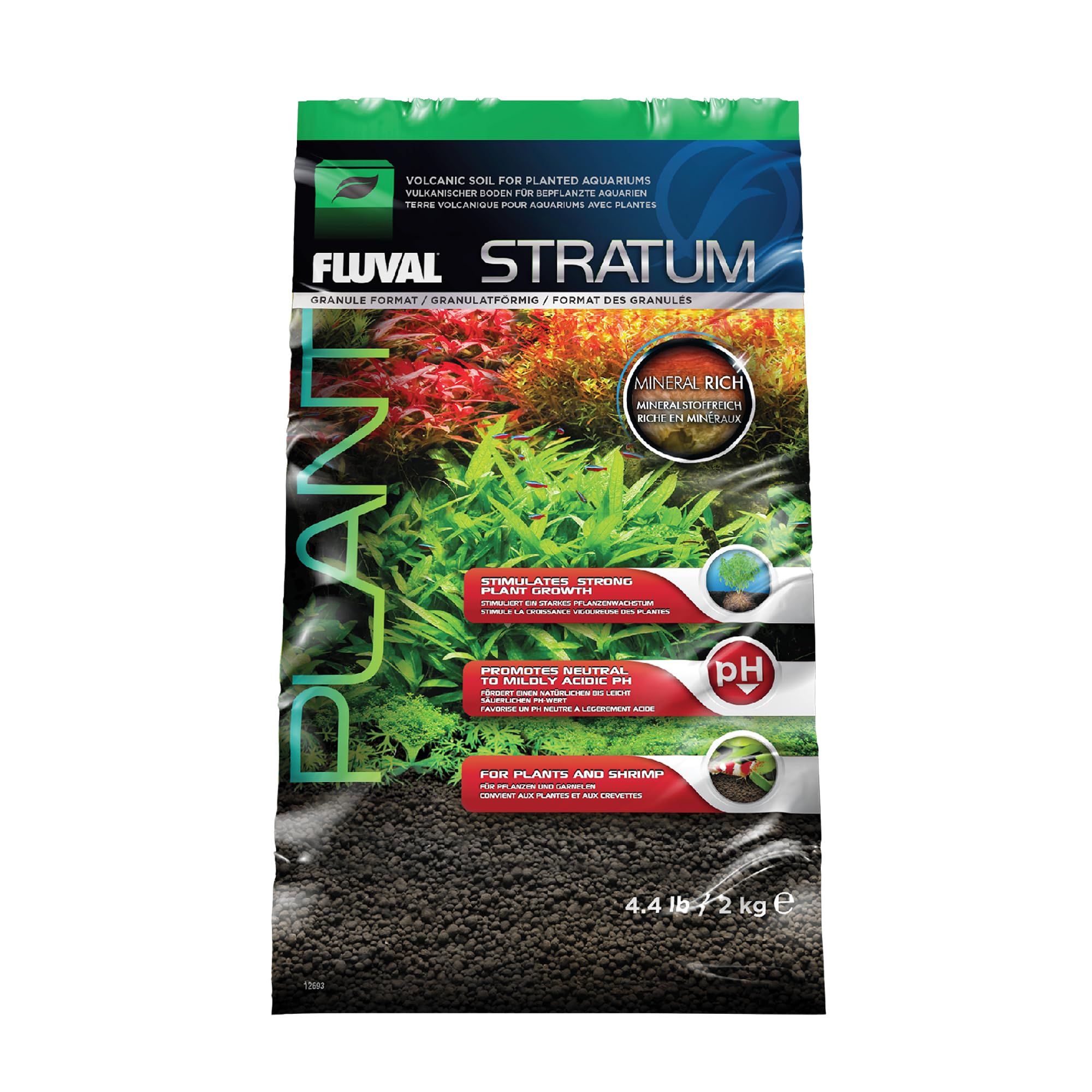
Fluval Stratum is built around lightly fired clay pellets that are extremely porous — each granule acts as a tiny sponge for nitrifying organisms. The 2–4 mm diameter provides excellent water flow while still allowing stem plants to anchor securely. The product is specifically formulated to sustain neutral to slightly acidic pH, which matches the preferences of most tropical plants and crystal red shrimp. Several reviewers noted that shrimp populations boomed after switching to this substrate because newborn shrimp could hide within the porous gaps.
The absolute golden rule with Stratum: never rinse it. The pellets break down into mud if agitated with water. Empty the bag directly into the tank, level it with your hand or a dry tool, then place a plate on top and pour water onto the plate to avoid disturbing the bed. Even with this careful method, expect milky water for the first 6 to 48 hours — running fine filter floss and changing it every 30 minutes speeds up clarity considerably.
One quirk of the lightweight pellets is that plants with small root systems may float upward initially. Weighing them down with planting tweezers or using plant anchors for the first week solves this. Many users also discovered that Stratum doubles as an excellent propagation medium for houseplants — Alocasia and Monstera cuttings root faster in this substrate than in standard potting mix.
Why it’s great
- Ultra-porous structure supports massive beneficial bacteria colonization
- Maintains ideal neutral-to-slightly-acidic pH for shrimp and tropical plants
- Provides natural hiding crevices for newborn shrimp and fry
Good to know
- Cannot be rinsed — pellets disintegrate into mud when agitated with water
- Lightweight granules may cause small plants to float; use anchors initially
4. Seachem Fluorite Black Sand

Fluorite Black Sand is a natural mineral substrate that has been heat-treated to create a porous structure with high CEC. The texture is remarkably fine — many users described it as “powdery” when they first opened the bag. Once settled in the tank, it presents as a rich, deep black color that makes fish and plant colors pop. This sand does not decompose or break down over time, meaning it lasts the entire life of the aquarium without needing replacement.
The fine grain size creates a dense root bed that holds Amazon swords, crypts, and Vallisneria firmly in place. However, that same fine texture demands thorough rinsing before use. Multiple rinses with vigorous stirring are required to remove the dust particles; otherwise, the tank will remain cloudy for days. Users who spent 10 to 15 minutes rinsing in a bucket reported that the cloudiness cleared within hours of filling.
One point that appears consistently in reviews is the sand’s natural gray-black undertone rather than a pure jet black. It photographs as dark charcoal rather than true black, which some aquascapers prefer for a more organic look. The smooth, rounded edges of the grains make it completely safe for burrowing fish and shrimp that sift through the substrate.
Why it’s great
- High CEC from heat-treated mineral structure holds nutrients for root uptake
- Extremely fine grain creates a dense, stable rooting environment
- Never decomposes or breaks down over the aquarium’s lifetime
Good to know
- Requires repeated rinsing to remove fine dust before adding to the tank
- Color reads as charcoal-gray rather than true jet black in most lighting
5. Aqua Natural Galaxy Sand

Galaxy Sand is a naturally sourced black sand that contains tiny reflective particles, creating a shimmering, starry effect when light hits the tank. The grain size sits consistently in the 0.5–1 mm range — coarse enough to avoid compaction but fine enough for foreground plants like dwarf baby tears to spread roots. Multiple users commented that this sand arrived noticeably cleaner than other black sands, requiring only a single rinse to run clear.
As an inert substrate, Galaxy Sand provides zero nutritional value and no pH buffering. This is an advantage for aquascapers who want complete control over water chemistry and fertilization. You can layer this sand over a nutrient-rich base soil (like the LANDEN THRIVA or Fluval Stratum) to create a capped system that holds root tabs in place while keeping the visual top layer consistent. Corydoras keepers specifically praised the smooth, rounded grain texture that doesn’t damage barbels.
The sparkle effect is subtle rather than overwhelming — it looks natural and elegant rather than artificial or glittery. Users pairing it with Seiryu stone and driftwood reported that the deep black background made the hardscape stand out dramatically. The only recurring complaint was that some bags arrived with a small amount of floating debris that required skimming off the surface after filling.
Why it’s great
- Natural sparkle particles create a beautiful light-catching effect without looking fake
- Arrives very clean compared to other black sands — minimal rinsing needed
- Smooth, rounded grains are safe for bottom-dwelling fish like corydoras
Good to know
- Inert material provides no nutrients for plants without added fertilizers
- Some floating debris may require surface skimming after initial fill
6. Imagitarium Black Aquarium Sand
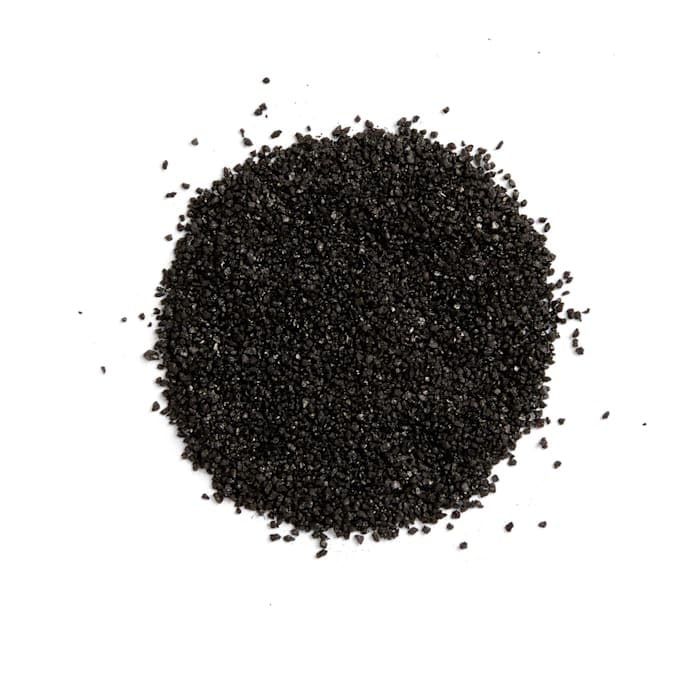
The Imagitarium black sand offers a true matte finish — no sparkles, no shimmer, just a flat, deep black that recedes visually and makes your fish the center of attention. The 20-pound bag provides substantial coverage for larger tanks (two bags give roughly a 1-inch depth in a 90-gallon). Several users reported that they dumped the sand directly into their tanks without any rinsing and experienced only minor floating particles that were easily removed with a net.
Quality control appears somewhat variable between production batches. The consensus strategy is to test a handful in a bucket first — if the water runs clear after a quick rinse, the entire bag is safe to use directly. If it remains muddy, run it through a mesh colander under cold water until it runs clear before adding it to the display.
The fine, lightweight texture means the sand can be sucked up during gravel vacuuming and may clog filter intakes if the inflow is positioned too low. This is a characteristic of most fine inert sands and can be managed by raising the filter intake a few inches above the substrate line. For the price per pound, this remains the most economical option for planted tanks that rely on root tabs rather than nutrient-rich soil.
Why it’s great
- Excellent value for covering large tanks with a consistent matte black finish
- Non-toxic materials are fish-safe and provide a natural bacterial surface
- Many bags arrive clean enough for direct use without rinsing
Good to know
- Batch quality varies — some bags require extensive rinsing to remove fines
- Fine lightweight grains can be pulled into filters during water changes
7. LANDEN Namale Natural Sand

Namale sand is a pure natural product sourced without dyes or paints. The color sits in a warm natural tan spectrum, closely matching the riverbed sediments found in blackwater biotopes. The grain diameter is tightly controlled between 0.3 and 0.5 mm, producing a uniformly fine texture that still allows water flow. Users transitioning from standard gravel to this sand reported that their fish became noticeably more active and spent hours sifting through the substrate — a sign that the texture mimics their natural foraging environment.
The vacuum packaging is a thoughtful detail: it prevents moisture contamination during storage and keeps the sand free of dust and debris. Despite this, a thorough rinse is still recommended before use. Several users washed the sand for 45 to 60 minutes in hot water, followed by an overnight soak, to ensure zero cloudiness. Even after this extended prep, the final color remained true and did not wash away or fade, confirming the absence of artificial coloring.
One caveat is that the listing photos show a lighter, almost sugar-white tone, while the actual product arrives distinctly darker — closer to a natural woodland soil color. This discrepancy disappointed some buyers who expected a bright substrate, but most who valued authenticity over brightness considered the deeper tan a better fit for natural scapes. The sand is completely inert, so it pairs well with root tab fertilizers or as a capping layer over nutrient soil.
Why it’s great
- Pure natural sand with no dyes — safe for all aquatic life including blackwater species
- Tightly controlled grain size provides uniform texture ideal for sifting fish
- Vacuum packaging keeps the product clean and protects against moisture damage
Good to know
- Color is significantly darker than listing photos (deep tan vs. light beige)
- Inert composition provides no nutritional support — requires root tabs or a nutrient base layer
FAQ
Can I mix active soil with inert sand in the same tank?
How do I prevent cloudiness when adding sand to an already filled tank?
Will aquarium sand raise or lower my pH over time?
Final Thoughts: The Verdict
For most users, the best aquarium sand for plants winner is the LANDEN THRIVA Natural Soil Substrate because its slow-release technology, pH buffering, and irregular porous structure provide everything a planted tank needs without demanding constant fertilization. If you want extra fine grain that is gentle on bottom feeders and gives you full control over nutrient dosing, grab the Ultum Nature Systems Controsoil. And for a dramatic, budget-friendly inert sand that pairs beautifully with root tabs and highlights your hardscape, nothing beats the Aqua Natural Galaxy Sand.