
Our readers keep the lights on and the weekend projects moving. As an Amazon Associate, I earn from qualifying purchases.
Aquarium sand isn’t just a backdrop for your fish; it’s the foundation of your entire underwater ecosystem. Get the grain size wrong, and you’ll battle constant cloudiness or trap dangerous pockets of gas that can crash your tank.
I’m Rikta — the co-founder and writer behind FitlyFast. I’ve spent countless hours researching substrate composition, grain uniformity, and how specific sand blends interact with different filter systems and bottom-dwelling species.
Whether you’re aquascaping a planted biotope or setting up a goldfish sanctuary, you need a substrate that settles fast, stays clean, and keeps your fish healthy. This guide breaks down the seven best options for aquarium sand that actually deliver on those promises.
How To Choose The Best Aquarium Sand
Choosing the wrong sand can lead to cloudy water that never clears, trapped anaerobic gas pockets, or a substrate that’s too sharp for bottom-dwellers like corydoras. You need to match the sand to your tank’s specific biology and your aquascaping goals.
Grain Size and Texture
Ultra-fine sand (less than 0.5 mm) looks beautiful but can compact into a hard layer, trapping detritus and creating dead zones. Medium grain sand (around 1-2 mm) allows water flow, prevents gas pockets, and is still fine enough for burrowing fish. Always check the texture: smooth, rounded grains are safe for fish barbels, while sharp, jagged particles can cause injury.
Bio-Active vs. Inert
Inert sands like pure silica or play sand are chemically neutral and won’t alter your water parameters, but they offer no nutritional benefit to plants. Bio-active sands are seeded with live nitrifying bacteria that instantly start processing fish waste, reducing the need for a long cycle. Clay-based substrates like Fluorite release iron and other trace minerals, feeding root-feeding plants without the need for additional fertilizers.
Rinsing Requirements
All aquarium sand creates dust from broken particles during shipping. Some sands rinse clear in one or two washes, while others require extensive rinsing to avoid turning your tank into a milky mess. Bio-active sands explicitly tell you not to rinse to preserve the bacterial culture. Always read the product directions before dumping sand into your tank.
Quick Comparison
On smaller screens, swipe sideways to see the full table.
| Model | Category | Best For | Key Spec | Amazon |
|---|---|---|---|---|
| CaribSea SuperNaturals Peace River | Natural Gravel | Comfortable substrate for botom-dwellers | 1-2 mm smooth grains | Amazon |
| Aqua Natural Galaxy Sand | Sparkling Black | High-contrast aquascaping | Fine shimmering texture | Amazon |
| Imagitarium Black Sand | Matte Black | Color contrast in large tanks | 20 lb bag, fine grain | Amazon |
| Seachem Fluorite Black Sand | Clay Sand | Rooted plant growth | Active clay, very fine | Amazon |
| Seachem Fluorite Black Clay Gravel | Clay Gravel | Planted tanks with undergravel filters | Heavier granular clay | Amazon |
| Aqua Natural Delta Sand Bio-Substrate | Bio-Active | Instant tank cycling | Seeded with nitrifying bacteria | Amazon |
| Estes 28199 Aqua Sand | Classic White | Budget-friendly goldfish tanks | Larger grain, 5 lb bag | Amazon |
In‑Depth Reviews
1. CaribSea SuperNaturals Peace River
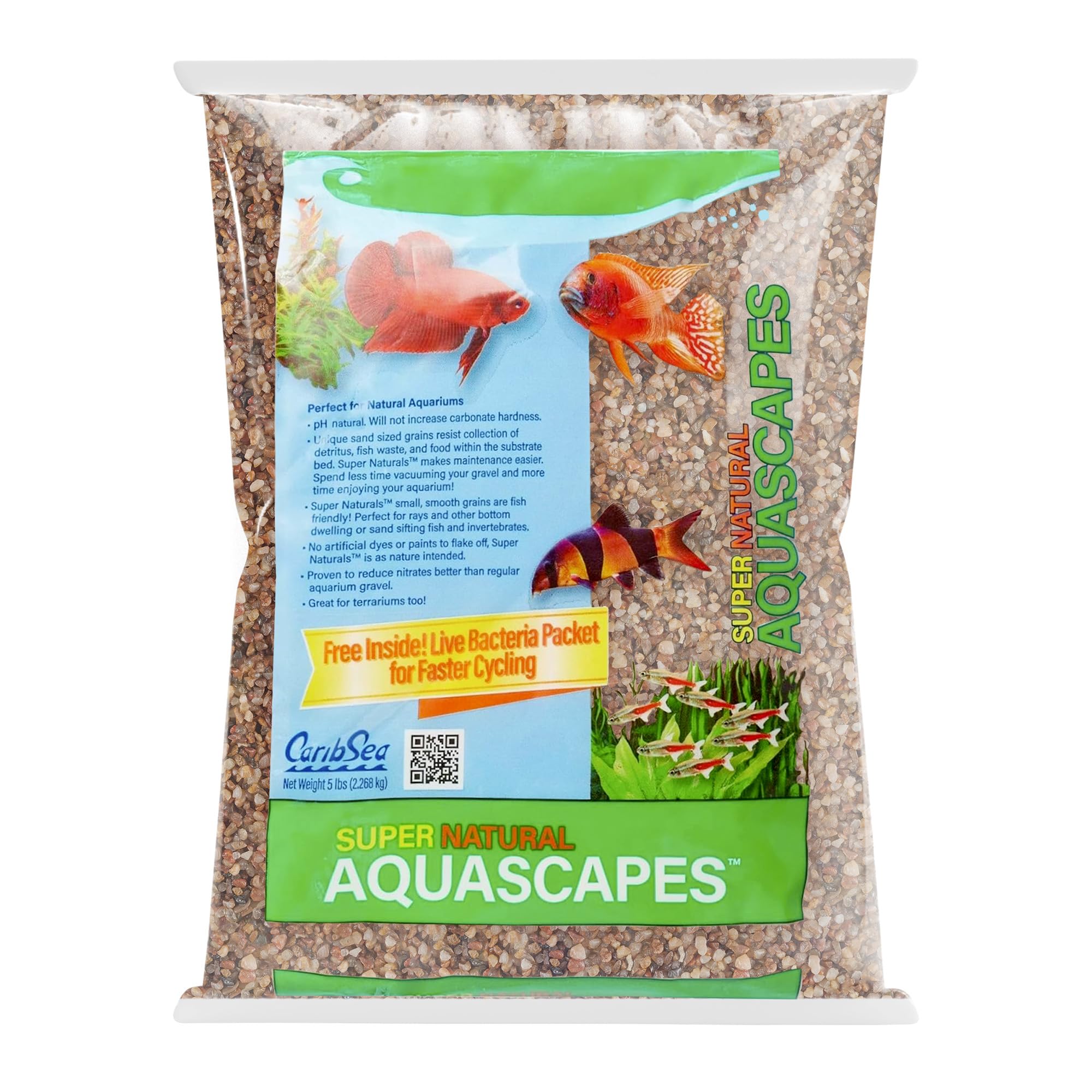
This 20 lb bag lands in the sweet spot between fine sand and gravel with its 1-2 mm grain size, offering the smoothness corydoras and loaches need without the compaction issues of ultra-fine sand. The natural chestnut color variation creates an authentic riverbed look that doesn’t scream artificial.
Customers report minimal cloudiness even without pre-rinsing, though thorough washing is still recommended to remove dust. The included water clarifier is a nice touch for those in a rush, but most experienced keepers skip it entirely after a proper rinse.
The weight and grain size make it easy to siphon during water changes without sucking up the substrate itself, a common pain point with lighter, finer sands. It’s versatile enough for planted tanks with undergravel filters and even doubles as an additive for cactus soil mixes.
Why it’s great
- Perfect 1-2 mm size prevents gas pockets and compaction.
- Safe for sensitive fish barbels with smooth, rounded grains.
Good to know
- Requires thorough washing despite claims of low dust.
- Natural color variation may not match all aquascaping themes.
2. Aqua Natural Galaxy Sand 20lb

The Galaxy Sand lives up to its name with a deep black base and subtle shimmering particles that catch light exactly like a starry night sky. It’s a premium choice for high-contrast aquascaping where plants and driftwood need to pop against a dark background.
At 20.4 pounds, this bag provides substantial coverage for a 20-gallon tank at a standard 1-2 inch depth. The sand is ethically sourced under license in the USA, and customers consistently praise its fine, even texture that requires minimal rinsing compared to other black sands.
While the sparkle is stunning, some users note the fine dust needs two to three washes to fully clear. Once settled, it creates a stable base that is soft enough for bottom-dwelling fish and easy to shape for slopes and valleys in your scape.
Why it’s great
- Beautiful deep black with subtle shimmer for dramatic contrast.
- Ethically sourced and sustainably collected under license in the USA.
Good to know
- Still requires 2-3 rinses to remove fine dust and floating debris.
- Shimmer effect may not suit natural biotope aquascapes.
3. imagitarium by Petco Black Aquarium Sand 20 lbs.
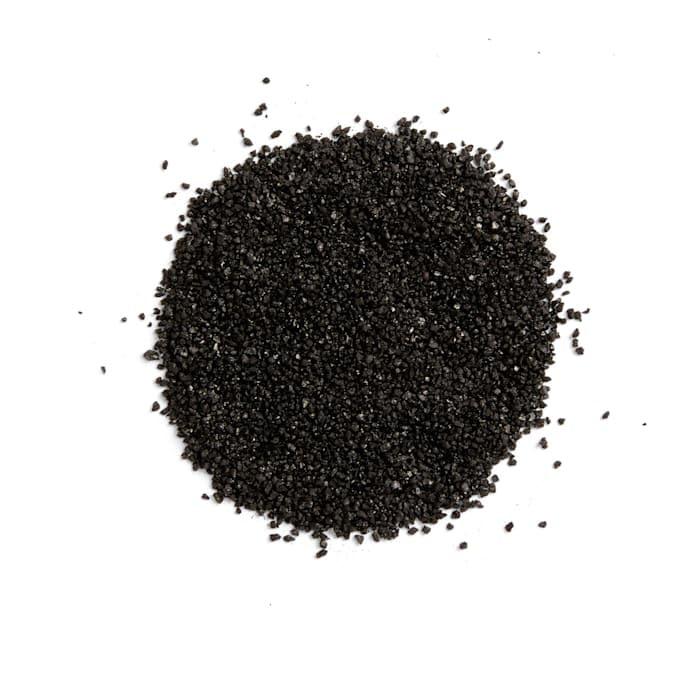
This 20-pound bag of matte black sand offers the lowest cost per pound among the premium options, making it a go-to for aquarists covering large tanks. The fine grain settles into a uniform, non-reflective surface that makes your fish colors vividly stand out without any distracting sparkle.
Many buyers report that this sand rinses extremely clean, with several customers dumping entire bags directly into their tanks with no cloudiness. However, some batches have been inconsistent — a small number of users experienced persistent cloudiness that wouldn’t clear even after a week of rinsing.
The sand is lightweight, which can cause it to get sucked up during siphoning or clog filters if disturbed. It’s an inert substrate, so you’ll need root tabs or liquid fertilizers for a planted aquarium, but for a simple show tank, it’s a reliable choice.
Why it’s great
- Extremely clean product — many bags pour straight in with no cloudiness.
- True matte black color makes fish and plants pop with zero shimmer.
Good to know
- Batch quality can vary; some bags cause persistent cloudiness.
- Lightweight fines get sucked into filters and siphons easily.
4. Seachem Fluorite Black Sand Substrate, 7.7lb

Seachem’s Fluorite Black Sand is technically a clay-based substrate that acts like sand, providing essential iron and trace minerals for root-feeding plants. It’s incredibly fine — almost powdery when dry — which creates a lush, dense root zone for heavy root feeders like Amazon swords and crypts.
The trade-off is the dust: this is one of the dustiest substrates on the market, and skipping the rinse step will turn your tank cloudy for days. Multiple washes are mandatory, and even then expect some initial haze that will settle overnight.
Once settled, the dark gray-black color creates a dramatic background that contrasts beautifully with bright green plants and colorful fish. It’s gluten-free and nut-free for anyone concerned about allergens, and a single 7.7 lb bag can cover a 10-gallon tank to a depth of about 1-1.5 inches.
Why it’s great
- Clay composition delivers iron and minerals directly to plant roots.
- Extremely fine texture allows dense root development.
Good to know
- Requires extensive rinsing to avoid severe initial cloudiness.
- 7.7 lb bag runs small for larger tanks needing deeper coverage.
5. Seachem Flourite Black Clay Gravel, 7.7 lb

This sibling to the Fluorite sand is a heavier clay gravel with a slightly larger particle size, making it ideal for planted tanks using undergravel filter systems. It’s true black material — not painted — so the color will never fade or chip over the life of your aquarium.
The clay base is inert and won’t buffer your water pH, but it does require root tabs or fish waste to provide nutrients for plants. Rinsing is tricky: the fine dust clouds water easily, and the bucket method takes forever. Experienced users recommend pouring water over the gravel in a tray instead.
At a consistent size that’s heavier than sand, it won’t get sucked up during water changes, and it provides excellent mechanical grip for plant roots. A single 7.7 lb bag covers a 6-gallon corner tank with a 1.5-2 inch layer, making it cost-effective for smaller setups.
Why it’s great
- True black material that won’t fade or chip over years of use.
- Heavier than sand, so it stays put during siphoning.
Good to know
- Dust clouds easily during rinsing; use a tray method for best results.
- Inert clay requires root tabs or fish waste for plant nutrition.
6. Aqua Natural Delta Sand Bio-Substrate 5lb

What sets this 5 lb bag apart is the live nitrifying bacteria seeded into the sand, which can cycle a new aquarium almost instantly. The bacteria target ammonia directly, meaning you can add fish much sooner than with traditional inert substrates.
The brown color is a natural sandy-rocky mix that hides fish waste and leftover food far better than white or black sand, reducing the visual need for constant cleaning. Customers love how the medium grain size works as a cap for aqua soil while also holding plants in place.
There’s one catch: the sand arrives wet to keep the bacteria alive, which makes it sticky and harder to spread evenly. The manufacturer explicitly says do not rinse, but some users find the bacterial mud clumpy and choose to rinse anyway, sacrificing the bio-activity for easier placement.
Why it’s great
- Live nitrifying bacteria cycle tanks instantly with no waiting period.
- Natural brown color hides debris better than white or black alternatives.
Good to know
- Wet, sticky texture makes spreading and sculpting more difficult.
- Rinsing destroys the active bacteria; follow the no-rinse instruction exactly.
7. Estes 28199 Aqua Sand, White, 5 lb

The Estes Aqua Sand in white is a classic budget-friendly entry point for new aquarists. It has a larger grain size than typical sand, which means it rinses quickly (often clear in just a couple of bucket washes) and settles fast with minimal cloudiness.
The color is a natural off-white, not blindingly bright, which gives tanks a clean, bright aesthetic without looking sterile or artificial. Long-time goldfish keepers swear by this sand because its larger grain prevents the compaction that traps noxious gases, a common problem with finer substrates in goldfish tanks.
At only 5 lb, the bag is physically small, and several customers commented they underestimated how little coverage that weight provides. For a standard 10-gallon tank, you’ll likely need two or three bags to reach a 2-inch depth. Also, some very fine dust particles may rise into the water column initially, but they settle under the larger grains over time.
Why it’s great
- Larger grain size prevents gas pocket formation common in fine sands.
- Rinses clear quickly with minimal cloudiness after settling.
Good to know
- 5 lb bag is small; larger tanks will need multiple bags for adequate depth.
- Fine particles may float initially before eventually settling under larger grains.
FAQ
How many pounds of sand do I need for my aquarium?
Why is my aquarium sand still cloudy after rinsing?
Can I use play sand from a hardware store instead of aquarium sand?
Final Thoughts: The Verdict
For most users, the aquarium sand winner is the CaribSea SuperNaturals Peace River because its 1-2 mm grain size perfectly balances drainage, fish safety, and ease of cleaning. If you want a dramatic black contrast for a planted tank, grab the Aqua Natural Galaxy Sand. And for instant tank cycling with live bacteria, nothing beats the Aqua Natural Delta Sand Bio-Substrate.