
Our readers keep the lights on and the weekend projects moving. As an Amazon Associate, I earn from qualifying purchases.
Adding live plants to an aquarium is one of the best ways to create a thriving ecosystem, but the wrong substrate turns that vision into a chronic battle against cloudy water, stunted root growth, and fluctuating water chemistry. The base layer of your planted tank determines everything from how well your plants absorb nutrients to whether your shrimp feel safe enough to breed.
I’m Rikta — the co-founder and writer behind FitlyFast. My research for this guide involved analyzing hundreds of customer experiences across seven different soil formulations to identify which products deliver real root penetration, stable pH buffering, and minimal dust without demanding a second mortgage.
After comparing granule texture, ammonia release patterns, buffering capacity, and ease of setup, I’ve narrowed the field to the formulations that actually perform. This is the definitive breakdown of the best aquarium soil for planted tanks, shrimp colonies, and first-time aquascapers.
How To Choose The Best Aquarium Soil
Picking the wrong substrate is the single fastest way to ruin a planted aquascape. You need to match soil chemistry, granule size, and nutrient profile to the specific plants and livestock you keep. Here is what matters most.
Granule Sintering and Dust Control
The single biggest headache beginners face is black or brown water that refuses to clear. Soils processed with high-temperature sintering hold their shape and release almost no dust, while cheaper raw clay soils break down into fine particulate that clouds your tank for days. Look for granules that stay intact when you squeeze them.
Ammonia Leeching Curve
Nearly all active aquarium soils release an initial ammonia spike as the material stabilizes. Premium nutrient-dense formulas like ADA Amazonia can leech 4-8 ppm of ammonia for over two weeks, which means you cannot add fish immediately. Low-ammonia soils such as UNS Controsoil cycle in two to three weeks with less risk to livestock.
pH and KH Buffering
Most aquatic plants and Caridina shrimp thrive in slightly acidic water between pH 6.0 and 6.8. Buffered soils absorb alkaline ions to lower both pH and total hardness. If you keep Neocaridina shrimp or hard-water fish, choose a soil with milder buffering to avoid shocking your stock with rapid pH swings.
Nutrient Density Versus Root Tabs
Some soils pack organic matter and minerals directly into the granules, giving heavy root feeders like Cryptocoryne and swords an immediate boost. Others, like UNS Controsoil, provide no added nutrients, letting you control fertilization exactly. Nutrient-loaded soils can trigger algae in the first month, while inert soils require diligent root tab placement.
Quick Comparison
On smaller screens, swipe sideways to see the full table.
| Model | Category | Best For | Key Spec | Amazon |
|---|---|---|---|---|
| ADA Aqua Soil Amazonia Ver 2 | Premium Active Soil | High-tech planted tanks with CO2 | 9L volume, heavy ammonia spike | Amazon |
| FZONE Aquarium Soil | Sintered Granules | Dust-free planted tank setups | 3mm porous granules, 4L bag | Amazon |
| CaribSea Samurai Soil | Cycle-Ready | Shrimp and betta tanks | 9lb, no ammonia spike | Amazon |
| Ultum Nature Systems Controsoil | Low Ammonia | Bottom feeders and cory catfish | 1L, volcanic ash base | Amazon |
| Fluval Stratum | Shrimp Breeder | Shrimp breeding and carpet plants | 17.6 lbs, porous structure | Amazon |
| LANDEN Aqua Soil | Affordable Knockoff | Budget planted tanks | 5L, 3-5mm grain size | Amazon |
| Avalution Lava Rock Mix | Horticultural Grade | Top dressing or semi-hydro | 18lb pumice and lava mix | Amazon |
In‑Depth Reviews
1. ADA Aqua Soil Amazonia Ver 2

ADA’s Amazonia Ver 2 remains the gold standard for serious aquascapers, and the reasons are deeply rooted in its composition. Made from rare Japanese plant-based black soil, each irregular granule provides the density and texture needed for fast root penetration, and the included Amazon concentrate supplement lets you spot-feed organic compounds to demanding carpet species like Dwarf Baby Tears and Monte Carlo. This soil buffers pH down to the ideal 6.0-6.5 range and lowers KH significantly, which is why it dominates high-tech setups with pressurized CO2.
The trade-off is a notorious ammonia spike — expect 4-8 ppm for the first two weeks, making it impossible to add fish immediately without risking gill damage. Ver 2 intentionally reduces nutrient content compared to V1 to curb algae, meaning you will likely need root tabs after six months. The granules are lightweight and can float during initial flooding, so pre-soaking or careful water addition is mandatory. Each 9L bag weighs roughly 15 pounds and covers a 60cm tank with a 5-6cm depth.
For hobbyists committed to frequent water changes, CO2 injection, and liquid fertilization, the payoff is unmatched plant vigor and that crystal-clear, dark substrate look that defines award-winning aquascapes. Beginners who skip the cycling phase will struggle, but experienced keepers know this soil is the undisputed foundation of high-end planted tanks.
Why it’s great
- Superior pH buffering to 6.0-6.5 range
- Irregular granules anchor roots of carpet plants
- Included concentrate supplement for targeted nutrition
Good to know
- Heavy ammonia leeching for first two weeks
- Lower nutrient content than Ver 1 requires root tabs later
- Lightweight granules float if not pre-soaked
2. FZONE Aquarium Soil
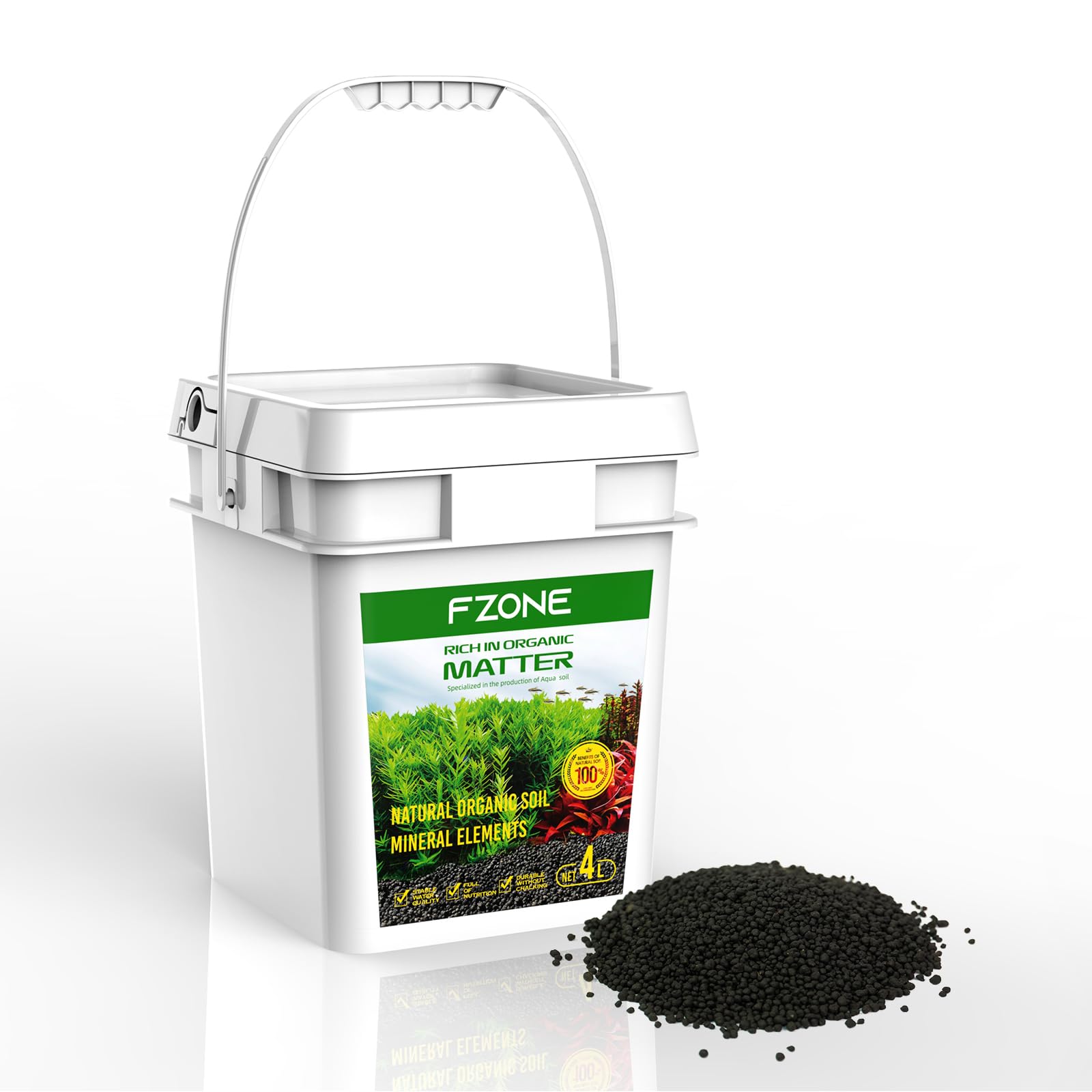
FZONE’s formula uses high-temperature sintering to lock granules into a stable, non-dusting form, which directly addresses the number one complaint from new planted-tank owners: hours of waiting for black water to clear. Reviewers consistently report zero cloudiness from the moment of filling, and the 3mm porous structure captures suspended debris while allowing roots to weave through easily. The blend of organic matter, activated carbon, silica, and minerals provides a broad nutrient base without the extreme ammonia spike common to premium Japanese soils.
Water testing shows a gentle pH drop as the granules absorb alkaline ions, stabilizing around 6.5-6.8 — perfect for most tropical fish and Neocaridina shrimp. The dust-free claim holds true even after months underwater; granules maintain their shape and do not break down into mush. However, the soil is very light: many users note that Monte Carlo and other carpet plants can float away unless roots are buried deeply during a dry start. A GH booster may be necessary for hard-water species like Vallisneria.
The reusable plastic container is a thoughtful touch that doubles as a storage bucket, and the 4L bag covers roughly a 45cm tank to a 4cm depth. For anyone who wants the performance of ADA or Fluval without the dust storm and ammonia anxiety, FZONE delivers a genuinely plug-and-play experience that gets plants growing fast.
Why it’s great
- Completely dust-free, no clouding at fill
- Moderate nutrient release without extreme ammonia
- Reusable packaging for storage
Good to know
- Lightweight granules require deep planting to prevent floating
- May need GH booster for hard-water plants
- Smaller bag size limits coverage for larger tanks
3. CaribSea Samurai Soil
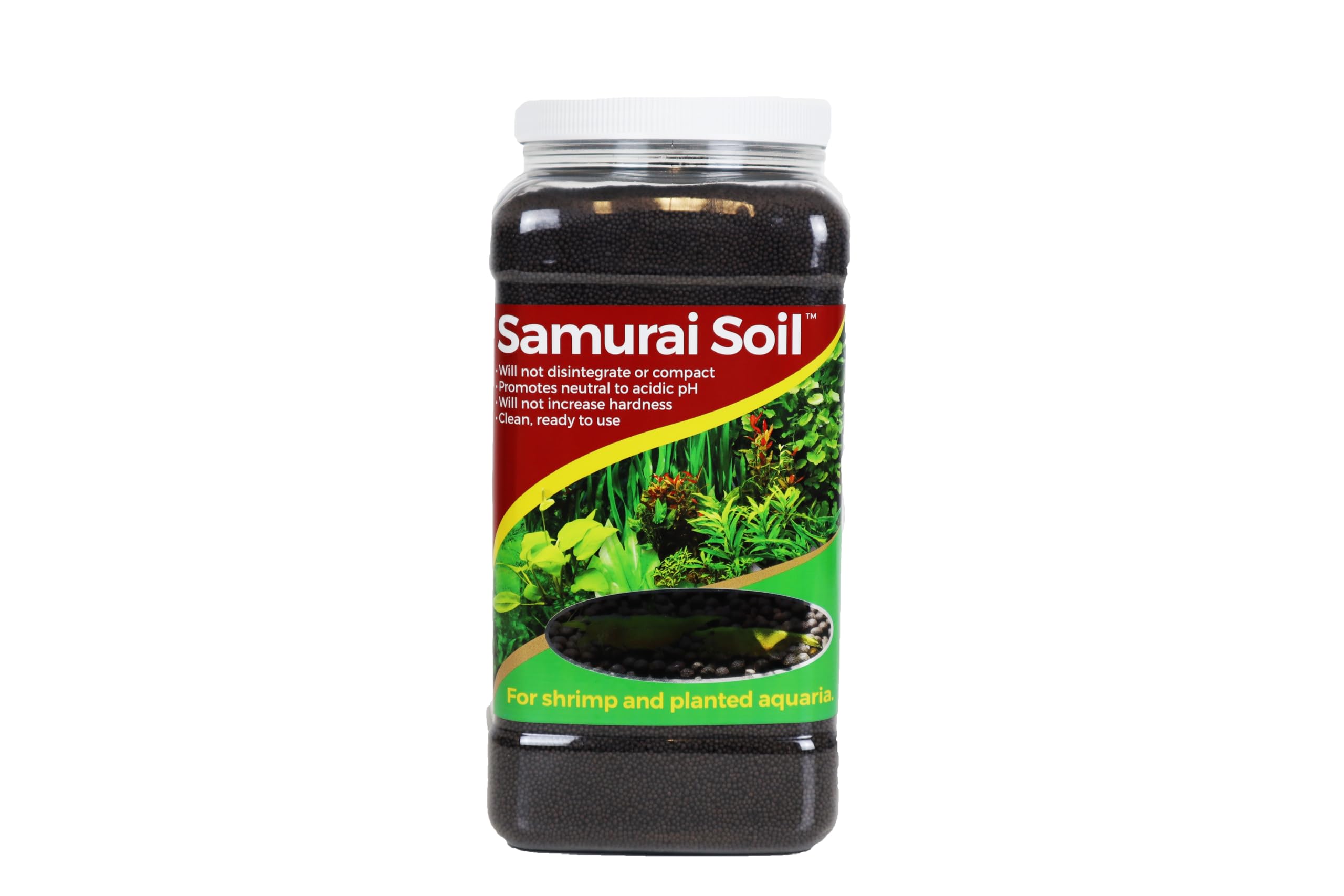
CaribSea’s Samurai Soil stands apart because it contains a built-in dose of biological starters that accelerate the nitrogen cycle without the heavy ammonia spike typical of active soils. Multiple reviews confirm that this substrate allows same-day livestock introduction for hardy species like bettas and Neocaridina shrimp, with zero cloudiness reported during or after setup. The granules are pre-washed and ready to use straight from the bag, and they maintain a neutral to slightly acidic pH without crashing KH values.
Each granule is engineered to resist disintegration and compaction over time, which is a common failure point for cheaper clay-based soils that turn into a hard pan after six months. The 9lb bag provides enough depth for a 10-gallon standard tank with a 2-3 inch layer, though larger aquascapes will need multiple bags. The buffering is milder than Japanese soils, so it works well for harder-water species like guppies and mollies that cannot tolerate extreme pH drops.
The only drawback is the packaging itself: the bucket lid has a known fragility issue, with several customers receiving units with cracked or broken lids during shipping. The soil itself is excellent, and the biological dose makes it the safest option for anyone who wants to add fish on day one without weeks of cycling anxiety.
Why it’s great
- Biological starters enable immediate fish addition
- Zero ammonia spike and no clouding
- Granules resist compaction and disintegration
Good to know
- Bucket lid frequently arrives cracked
- Mild buffering not ideal for ultra-finely plants
4. Ultum Nature Systems Controsoil

UNS Controsoil is made from sintered volcanic ash, which gives it a uniquely soft, lightweight texture that corydoras and other bottom feeders absolutely love to sift through without damaging their barbels. The 6.8 pH formulation releases very low ammonia compared to nutrient-dense soils, allowing tanks to cycle in just two to three weeks with a starter bacteria supplement. This makes it the preferred substrate for breeders who need stable, slightly acidic water without the aggressive ammonia spike that would harm fry.
The granules are porous enough to support massive beneficial bacteria colonies, and customers consistently report fast, lush growth from stem plants like Ludwigia Repens and hornwort. However, because Controsoil contains no added nutrients, you must supplement with crushed root tabs for heavy root feeders. The brown color transforms to a deep black after several months underwater, and the soil can create significant dust if not handled carefully during filling — a shallow dish or running water over a plastic bag is essential to avoid muddy water.
One liter covers a relatively small footprint, so larger tanks require multiple bags. The lack of nutrients is actually a plus for aquascapers who want complete control over fertilization levels without triggering algae blooms from excess nitrogen in the substrate.
Why it’s great
- Soft granules safe for corydoras and bottom feeders
- Low ammonia means faster, safer cycling
- Volcanic ash absorbs impurities effectively
Good to know
- No nutrients included; root tabs required
- Dusty if not filled with caution
- Small bag size limits value for big tanks
5. Fluval Stratum

Fluval Stratum is arguably the most recognized name in the planted-tank community, and its combination of high porosity, neutral-to-slightly-acidic pH buffering, and sufficient minerals for easy root growth has earned it a dedicated following among shrimp breeders. The 17.6-pound bag provides substantial coverage for tanks up to 20 gallons, and the porous granules create ideal microhabitats for nitrifying bacteria. Shrimp breed heavily in Stratum-enriched tanks, and plants like carpeting glossostigma establish quickly without CO2.
The primary complaint is dust control: the soil releases significant cloudiness on the first fill, and it can take 6 to 48 hours for a filter with mechanical media to clear the water completely. Customers stress that you should never pre-rinse Stratum because the granules will break apart. Another nuance is that Stratum pellets are light, causing stem plants and carpet runners to float unless weighted down with rocks or plant anchors. A minimum 3-inch depth (two bags for a 10-gallon tank) helps keep plants secured.
Once settled, Stratum maintains water clarity remarkably well, even with natural driftwood that typically causes tannin discoloration. The pH buffering is gentle enough for Neocaridina shrimp while still low enough for Caridina species, and the frequent breeder reports confirm it creates the stable, low-stress environment shrimp need to multiply.
Why it’s great
- Excellent for shrimp breeding and carpet plants
- High porosity supports massive bacteria colonies
- Large bag offers good coverage for medium tanks
Good to know
- Significant dust cloud on first fill
- Light pellets cause plants to float easily
- Cannot be pre-rinsed without granule breakdown
6. LANDEN Aqua Soil

LANDEN positions itself as an affordable alternative to premium brands, and for the price, you get a 5L bag of natural clay-and-soil granules that bring pH down to 6.0-6.5 and fix KH issues effectively. Customers who compared it side by side with UNS Controsoil found it to be a decent knockoff after a thorough rinse to remove embedded dried grass, leaves, and gravel particles that occasionally make it through quality control. The porous structure absorbs impurities and supports bacteria growth, and plant growth reports are overwhelmingly positive for both stem plants and root feeders.
The trade-off is dust management: even after three rinses, some users report cloudy water for 24 hours, and floating granules are common during the initial fill. The soil is very light, so carpet plants and small clippings will dislodge easily unless planted deep. LANDEN recommends waiting a full week before adding any livestock, and frequent partial water changes during the first two weeks are necessary to manage ammonia levels.
Despite these quirks, the value proposition is clear: you get active buffering and enough nutrients for good initial plant growth at roughly half the cost-per-liter of ADA or UNS. For budget-conscious hobbyists who are willing to invest extra effort in rinsing and water changes, LANDEN provides a functional foundation without breaking the bank.
Why it’s great
- Effective pH and KH buffering at low cost
- Porous structure supports bacteria colonization
- Good initial nutrient content for plant growth
Good to know
- Contains organic debris; requires thorough rinsing
- Dusty and cloudy for first day even after rinsing
- Light granules float and need deep planting
7. Avalution Lava Rock Mix

Avalution’s 18lb mix of horticultural lava rock, pumice, and pebbles is not a true aquarium soil in the active buffering sense — it contains no clay, no organic nutrients, and does not lower pH. Instead, it functions as an inert drainage layer or top dressing that prevents soil compaction and improves water flow through the root zone. Succulent and cactus growers dominate the reviews, but aquarists have successfully used it as a thin cap over active soil or as a semi-hydro medium for emergent plants growing above the water line.
The mix requires thorough rinsing to remove dust, after which the natural colors (ranging from deep grey to rust red) create an attractive, natural-looking surface that does not break down over time. The 18lb bag offers exceptional volume for the price, making it a cost-effective option for large terrariums or as a base layer in deep planted tanks where you want to save active soil for the top. Because the granules are sharp and irregular, they are not suitable for bottom feeders like corydoras that sift through substrate.
This product fills a niche role: it is not a complete substrate for a planted aquarium, but it excels as a structural additive for improving drainage in Wabi-Kusa setups, paludariums, and succulent top dressings. Do not expect it to buffer water chemistry or feed plants.
Why it’s great
- Excellent drainage for semi-hydro and terrariums
- Large bag provides massive volume at low cost
- Will not break down or compact over time
Good to know
- Not an active soil; no pH buffering or nutrients
- Sharp granules unsafe for bottom-feeder fish
- Requires thorough rinsing to remove dust
FAQ
Do I need to rinse aquarium soil before using it?
How long does aquarium soil take to cycle before adding fish?
Can I mix aquarium soil with regular gravel or sand?
What is the difference between active aquarium soil and inert substrate?
How often should I replace aquarium soil?
Final Thoughts: The Verdict
For most users, the best aquarium soil winner is the FZONE Aquarium Soil because it delivers dust-free, sintered granules with moderate nutrients and a gentle pH buffer that works for both beginners and experienced aquascapers without the nightmare ammonia spike. If you want the absolute best for high-tech planted tanks with CO2, grab the ADA Amazonia Ver 2 for its unmatched buffering and plant response. And for a shrimp tank where you need immediate cycle readiness and zero ammonia risk, nothing beats the CaribSea Samurai Soil.