
Our readers keep the lights on and the weekend projects moving. As an Amazon Associate, I earn from qualifying purchases.
A planted tank’s success begins below the surface. The wrong substrate can turn your aquascape into a cloudy chemistry experiment, stunt root growth, or lock nutrients away from your plants. Choosing the right one is the single most impactful decision you’ll make for a lush, stable underwater garden.
I’m Rikta — the co-founder and writer behind FitlyFast. I’ve spent extensive hours analyzing the chemistry, grain structure, and nutrient profiles of commercial aquasoils to help aquascapers cut through marketing noise and find what actually works for a planted tank.
This guide breaks down the key specs — ammonia release, pH buffering, porosity, and grain size — so you can confidently choose the best aquarium substrate for planted tank for your setup.
How To Choose The Best Aquarium Substrate For Planted Tank
Not all black dirt is created equal. The substrate you choose dictates your water chemistry for months, determines how easily your plants root, and can either jumpstart your cycle or cause a headache of algae and cloudiness. Focus on these three factors to match a substrate to your tank goals.
Ammonia Release & Cycling Timeline
Many premium aquasoils, especially those rich in organic matter like ADA Amazonia, leach significant ammonia during the first two weeks. This can fuel a fast cycle if you plan ahead, but it will kill shrimp and fish if added too early. Soils like Tropica and Ultum Nature Systems Controsoil are formulated for low ammonia output, making them safer for immediate stocking after a short cycle.
Grain Size & Root Penetration
Fine grains (1-3mm) are ideal for delicate foreground plants like Monte Carlo and dwarf baby tears, allowing roots to anchor easily. Larger grains (3-5mm) provide better water flow through the substrate bed and are easier for stem plants to push through. Mixed-grain soils offer a balance but can make planting more fiddly. Match grain size to your plant selection.
pH & KH Buffering Capacity
Most plant-focused substrates are designed to lower pH and soften water, targeting the slightly acidic range (6.0-6.8) that aquatic plants prefer. If you keep shrimp like Caridina that require very soft water, a strong buffering soil is essential. For Neocaridina or hard-water fish, a less aggressive buffer like Fluval Stratum may be a better fit to avoid pH crashes.
Quick Comparison
On smaller screens, swipe sideways to see the full table.
| Model | Category | Best For | Key Spec | Amazon |
|---|---|---|---|---|
| ADA Amazonia Ver 2 | Premium Soil | High-tech planted tanks | High ammonia leach (2 weeks) | Amazon |
| Tropica Plant Care Soil | Premium Soil | Low-tech & high-tech tanks | Zero ammonia leach | Amazon |
| LANDEN Aqua Soil | Mid-Range | Budget-friendly planted tanks | 3-5mm grain size | Amazon |
| Ultum Nature Systems Controsoil | Premium Soil | Low ammonia sensitive setups | Volcanic ash base, low ammonia | Amazon |
| Dennerle Shrimp King Active Soil | Specialty | Caridina shrimp tanks | Double-baked, pH under 6 | Amazon |
| Fluval Plant & Shrimp Stratum | Mid-Range | Beginner planted communities | Porous, neutral-slightly acidic pH | Amazon |
| Hygger CO2 Aquarium Soil | Budget | Entry-level planted tanks | Porous sintered soil, pH 6.5-7.5 | Amazon |
In‑Depth Reviews
1. ADA Aqua Soil Amazonia Ver 2 (9L)

ADA Amazonia Ver 2 is the gold standard for high-tech planted tanks. It uses rare Japanese plant-based black soil blended with an Amazon concentrate supplement that allows localized nutrient boosting for different layout patterns. The granules are irregular and naturally shaped, which both looks authentic and provides excellent anchorage for root systems.
The trade-off is a significant ammonia spike during the first one to two weeks, meaning this substrate is not safe for immediate stocking. You must cycle the tank fully before adding fish or shrimp. Experienced aquascapers plan around this spike to fuel a fast cycle, then enjoy exceptional plant growth—especially for finicky carpeting species like dwarf baby tears and Monte Carlo.
Its pH and KH buffering is strong, dropping water to the acidic range that demanding plants crave. This is not a set-and-forget substrate; it requires CO2 injection and liquid fertilization to reach its full potential. But for those chasing award-winning scapes, the foundation starts here.
Why it’s great
- Exceptional plant growth for demanding species
- Strong pH buffering to acidic range
- Natural irregular granules for root support
Good to know
- High ammonia leach requires 2-week cycle before stocking
- Must be paired with CO2 and fertilization for best results
2. Tropica Plant Care Freshwater Planted Aquarium Soil (9L)

Tropica Plant Care Soil is the direct competitor to ADA Amazonia, but with a critical difference: it does not leach ammonia. This makes it far safer for immediate or rapid stocking, and it performs equally well in both high-tech and low-tech setups. The granules are durable and hold their shape well during repeated replanting, a major plus for aquascapers who tweak layouts.
Users report that capping this soil with sand is necessary to avoid initial algae blooms caused by nutrient release into the water column. The dry start method with a sand cap has proven especially effective, leading to explosive plant growth within weeks. The grain size and weight make planting straightforward, and it can even be crushed to create a finer texture for foreground plants.
Its dark brown color is uniform and aesthetically pleasing. While it lacks the same extreme buffering strength as ADA, it still maintains stable acidic conditions. For anyone wanting premium performance without the ammonia management headache, this is the superior choice.
Why it’s great
- No ammonia leach — safe for quicker stocking
- Durable granules withstand replanting
- Works in both low-tech and high-tech tanks
Good to know
- May require sand capping to prevent initial algae
- Premium price point
3. LANDEN Aqua Soil Substrate 5L (10lbs)

LANDEN Aqua Soil delivers the features of a premium soil at a mid-range price. Made from specially processed natural material, it provides fundamental minerals and trace elements while buffering water to a mildly acidic condition that most aquatic plants prefer. The 3-5mm grain size is a versatile middle ground, suitable for both stem plants and carpeting species.
The porous structure supports beneficial bacteria colonization, and users report stable water parameters after an initial one-week settling period. Some bags contain organic debris like dried grass and small gravel pieces, so a gentle rinse (despite the manufacturer’s no-rinse claim) is recommended. Initial cloudiness is common but clears within a day with good filtration.
Planting can be tricky because the lightweight, porous granules don’t hold stems firmly—plants may float up initially. However, once roots establish, growth is vigorous. For budget-conscious aquascapers who still want buffering and nutrient support, this is the most compelling option.
Why it’s great
- Good buffering to mildly acidic pH
- Porous structure supports beneficial bacteria
- Affordable for the volume
Good to know
- May contain organic debris — consider rinsing
- Light granules make initial planting difficult
4. Ultum Nature Systems Controsoil (3L)

Ultum Nature Systems Controsoil is built on a volcanic ash base that provides excellent porosity and water clarity. Its standout feature is low ammonia release, allowing the tank to cycle in just two to three weeks with the right bacteria starter. The granules absorb impurities actively, clarifying water faster than most competing soils.
That said, the soil arrives very dusty. While the manufacturer says no rinsing is required, many users find that rinsing or capping with sand is essential to avoid weeks of muddy water. The color is lighter than advertised at first—a brownish tan—but darkens to black over several months as it ages in the tank.
Controsoil is not nutrient-rich on its own; crushed root tabs are recommended to support heavy root feeders. The low algae profile is a major benefit, and the soft, light pellets are gentle on bottom-dwelling fish like Corydoras. For those prioritizing a fast, safe cycle with minimal ammonia risk, this is a top contender.
Why it’s great
- Very low ammonia release for safe cycling
- Volcanic ash base absorbs impurities
- Soft granules safe for bottom feeders
Good to know
- Very dusty — rinsing or capping recommended
- Not nutrient-rich; requires root tabs
5. Dennerle Shrimp King Active Soil (4L)

Dennerle Shrimp King Active Soil is purpose-built for Caridina shrimp and soft-water plant species. Made from 100% natural volcanic soil and double-baked for durability, it provides excellent filter capacity that keeps water crystal clear. The nutrient formula is designed to not promote algae, a common struggle in shrimp tanks.
The pH buffering is aggressive—this soil can drop pH to 6.0 or below, which is perfect for crystal shrimp and bee shrimp but unsuitable for Neocaridina or fish that prefer neutral conditions. Users report the granules are lightweight and settle quickly, and the water remains clear after a slow fill. It does not discolor water.
The main drawback is the limited volume per bag. For larger tanks, you will need multiple bags, and the price per liter is higher than general-purpose soils. If you keep soft-water shrimp and want a substrate that maintains stable acidic conditions with zero algae issues, this is the targeted solution.
Why it’s great
- Aggressive pH buffering down to 6.0 for Caridina
- No water discoloration
- Algae-resistant nutrient formula
Good to know
- pH too low for Neocaridina or hard-water fish
- Limited volume per bag; expensive per liter
6. Fluval Plant & Shrimp Stratum (17.6 lbs)

Fluval Plant and Shrimp Stratum is one of the most popular entry-level aquasoils for good reason. Its porous structure promotes rapid colonization of beneficial bacteria, and it buffers water to a neutral to slightly acidic pH range that suits a wide variety of tropical fish, shrimp, and beginner plants. The lightweight granules make planting easy, though they can cause plants to float until roots establish.
Users consistently report that water clarity improves dramatically within 24 to 48 hours if you follow the no-rinse, slow-fill method. A paper towel in the HOB filter changed every 30 minutes for the first few hours accelerates the clearing process. The soil does not discolor water and handles organic waste well in the presence of driftwood.
The pellets are very light, so achieving a deep 3-inch substrate bed requires two bags for most standard tanks. For planted shrimp communities and general freshwater aquascaping, the Stratum offers the best balance of performance and forgiveness for beginners.
Why it’s great
- Wide pH range suitable for community tanks
- Rapid bacterial colonization
- No water discoloration
Good to know
- Very light pellets; plants may float initially
- Requires two bags for adequate depth in larger tanks
7. Hygger CO2 Aquarium Soil (8.8 lbs)
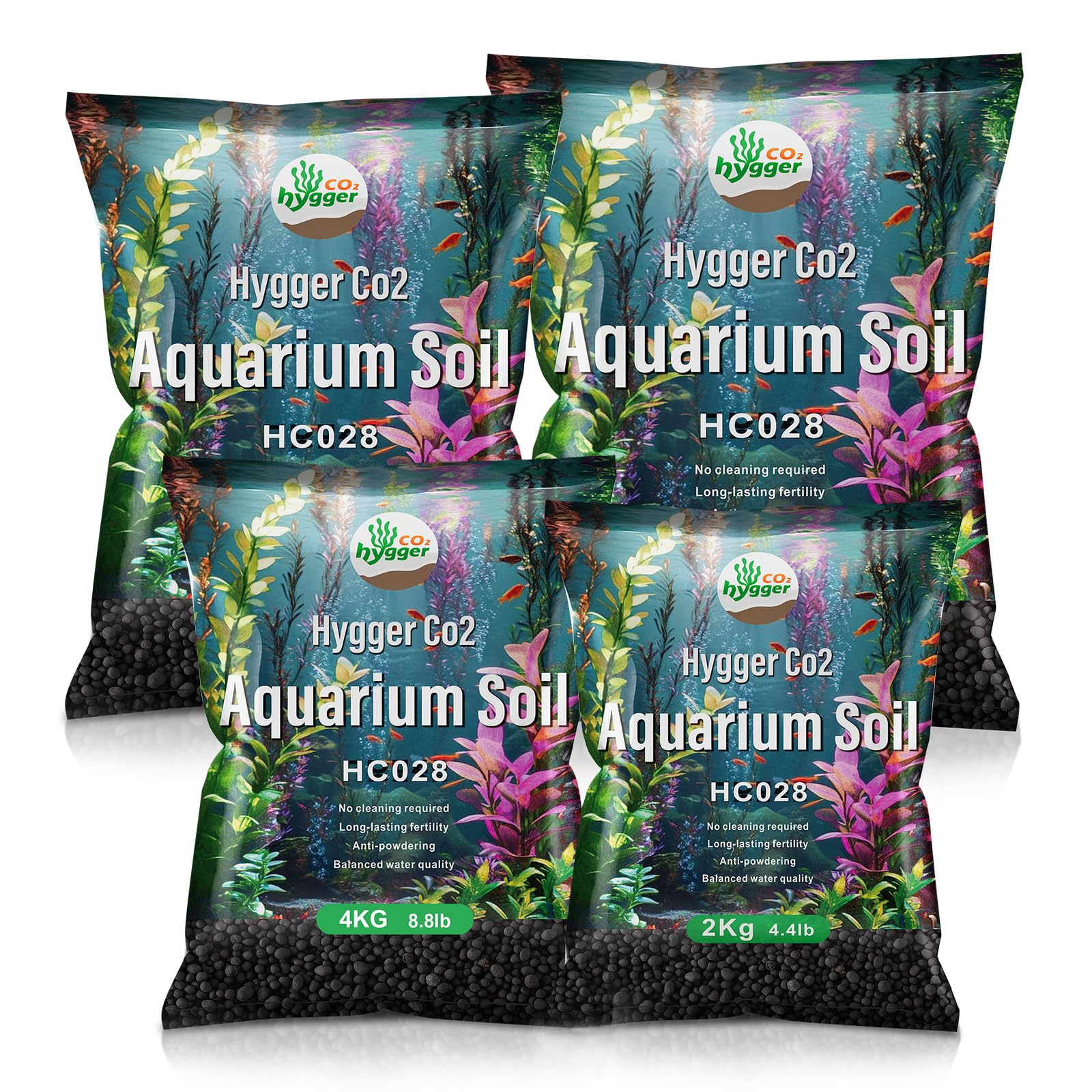
The Hygger CO2 Aquarium Soil is a budget-friendly option that uses a porous sintered soil structure to promote beneficial bacteria colonization while naturally acidifying and softening water. It targets a stable pH of 6.5 to 7.5, making it suitable for a broad range of freshwater fish and shrimp. The fine texture does not scatter easily, which helps maintain a tidy aquascape.
Customer experiences are mixed. Some report excellent plant growth and clear water after a brief cloudy period, while others describe white mineral deposits on the glass within hours and a rocky, soil-like texture that required a full tank reset. The manufacturer explicitly warns against rinsing, yet unrinsed bags have caused significant cloudiness and deposits in some setups.
For the price, two bags provide a solid layer for a standard 40-gallon tank, and many users have seen great plant growth. However, the inconsistency in quality control makes it a gamble. It works best for experienced hobbyists who can manage potential water issues, rather than absolute beginners.
Why it’s great
- Very affordable for the volume
- Fine texture doesn’t scatter easily
- Promotes beneficial bacteria growth
Good to know
- Inconsistent quality; some bags cause white deposits
- Cannot be rinsed; initial cloudiness is common
FAQ
Do I need to rinse aquasoil before adding it to the tank?
How deep should my substrate layer be for a planted tank?
Can I use aquarium soil with a hang-on-back filter?
Final Thoughts: The Verdict
For most users, the best aquarium substrate for planted tank winner is the Tropica Plant Care Soil because it combines zero ammonia leach with durable granules and excellent plant growth across high-tech and low-tech setups. If you want the absolute best for demanding high-tech scapes, grab the ADA Amazonia Ver 2. And for a budget-friendly option that still buffers pH, nothing beats the value of the LANDEN Aqua Soil.