
Our readers keep the lights on and the weekend projects moving. As an Amazon Associate, I earn from qualifying purchases.
The foundation of a healthy aquarium is invisible to the casual observer—it’s the substrate bed that anchors your hardscape, feeds your plant roots, and hosts the biological filter that processes fish waste. Picking the wrong grain size, mineral composition, or porosity can lock you into months of cloudy water, pH instability, or stunted plant growth from the start.
I’m Rikta — the co-founder and writer behind FitlyFast. I’ve spent countless hours analyzing grain profiles, buffering capacities, and ammonia-leaching curves across dozens of substrate formulations to separate the products that genuinely support aquatic life from those that just look pretty in a bag.
Whether you are setting up a planted aquascape, a shrimp breeding colony, or a cichlid biotope, the substrate you choose directly determines water chemistry stability and root development success. This guide breaks down the best aquarium substrate options across every major category so you can match your tank’s specific biological needs.
How To Choose The Best Aquarium Substrate
Selecting a substrate isn’t just about aesthetics—it’s a biological decision that affects water chemistry, plant viability, and fish health. The wrong choice can lead to chronic pH swings, nutrient lockout, or anaerobic dead zones that produce hydrogen sulfide pockets.
Understand Your Livestock’s pH Requirement
Substrates made from crushed coral or aragonite are alkaline and actively buffer pH upward—essential for African cichlids and marine tanks but disastrous for soft-water species like discus or most Caridina shrimp. Active soils like volcanic aqua soils buffer downward and soften water, creating the slightly acidic conditions most tropical plants and South American fish prefer. Inert sands and gravels do not change pH and are safe for any community where you adjust chemistry through other means.
Match Grain Size to Tank Use
Fine sand (0.5–1 mm) suits bottom-dwellers like corydoras and loaches but compacts easily and can trap detritus if not maintained. Medium grains (1–3 mm) balance plant root penetration with water flow and are the safest all-around choice. Extra-fine powders and very large pebbles (>5 mm) are specialty picks for specific aquascaping styles or heavy-rooting plants. Always consider that larger grains create more open space for debris to fall through, making mechanical filtration more important.
Check for Ammonia Leaching in Active Soils
Many nutrient-rich aqua soils release an initial ammonia spike during the first one to two weeks. This is normal and actually accelerates the nitrogen cycle, but it means you cannot add fish or shrimp immediately. Some brands mitigate this with low-ammonia formulations or pre-seeding bacteria. If you need to stock quickly, look for substrates that explicitly advertise low initial ammonia or fast cycling times.
Quick Comparison
On smaller screens, swipe sideways to see the full table.
| Model | Category | Best For | Key Spec | Amazon |
|---|---|---|---|---|
| Fluval Plant & Shrimp Stratum 17.6 lbs | Active Soil | Rooted planted tanks & shrimp breeding | Porous granules; pH neutral to slightly acidic | Amazon |
| LANDEN Aqua Soil Substrate 5L | Active Soil | Budget planted aquascapes & shrimp | 3–5 mm grain; porous clay gravel | Amazon |
| Ultum Nature Systems Controsoil | Active Soil | Low-ammonia planted tanks & bottom feeders | Volcanic ash; pH 6.8 low ammonia | Amazon |
| Carib Sea Crushed Coral 15 lbs | Aragonite | Raising pH; African cichlids & marine | 100% aragonite; buffers pH upward | Amazon |
| Aqua Natural Galaxy Sand 20 lbs | Inert Sand | Dramatic black aquascapes & corydoras | Fine black sand; sparkle finish | Amazon |
| Imagitarium Black Sand 20 lbs | Inert Sand | Budget-friendly black sand for community tanks | Fine matte black sand; non-toxic | Amazon |
| Imagitarium Blue Jean Gravel 20 lbs | Inert Gravel | Colored decorative tanks & goldfish | Non-toxic coated gravel; 2–4 mm | Amazon |
In‑Depth Reviews
1. Fluval Plant and Shrimp Stratum 17.6 lbs

Fluval’s Stratum is the gold standard for planted freshwater tanks because its porous volcanic granules provide an ideal surface area for nitrifying bacteria while allowing delicate root systems to spread effortlessly. The material is exceptionally lightweight, meaning a full 17.6-pound bag covers more volume than the same weight of sand or gravel—critical for achieving the three-inch depth many stem plants require.
Users report that water clears within 6 to 48 hours when the substrate is placed dry and filled slowly over a plate. The neutral-to-slightly-acidic pH buffering is exactly what most tropical plants, neon tetras, and Caridina shrimp need to thrive. Several long-term reviewers noted abnormally large plant growth and accelerated shrimp breeding after switching to this stratum.
Do not rinse this product before use; doing so pulverizes the soft granules and creates excessive dust. The bag is heavy enough for a 20-gallon tank at a two-inch depth but you will need two units for a 40-gallon breeder. The initial cloudiness is normal and resolves faster with a fine-polishing pad in the filter.
Why it’s great
- Superior porosity for bacterial colonization and root growth
- Stable pH buffer in the ideal range for most planted communities
- Lightweight—covers more volume per pound than inert substrates
Good to know
- Cannot be rinsed or agitated during setup
- Pellets are light enough that floating plants may shift them
2. LANDEN Aqua Soil Substrate 5L

LANDEN’s aqua soil offers a remarkably similar profile to more expensive Japanese brands at roughly half the cost per liter. The 3–5 mm clay gravel is porous enough to establish a robust biological filter and releases trace minerals that promote steady plant growth. Multiple users have reported that the black color deepens over time, creating a rich backdrop for green foliage and brightly colored fish.
The bag does contain some organic debris—dried grass and small wood fragments—so you may want to pick through it or give a gentle rinse if the dust bothers you, although the brand advises no rinsing. Water parameters tend to stabilize pH between 6.0 and 6.5, and several reviewers noted zero nitrate spikes after a one-week cycle with daily partial water changes.
One common observation is that the granules are light and can float if poured aggressively. Use the bowl-and-gentle-fill method to keep them in place. A single 5-liter bag provides roughly a two-inch depth in a 10-gallon tank; larger tanks require multiple bags to maintain a planted bed.
Why it’s great
- Excellent price-to-volume ratio for active soil
- Stabilizes pH in the 6.0–6.5 range effectively
- Porous structure supports long-term bacterial colonization
Good to know
- Contains some natural organic debris that needs removal
- Lightweight granules may shift during water changes
3. Ultum Nature Systems Controsoil (Extra Fine)

Controsoil stands out because it uses volcanic ash as its base material and is formulated with a reduced initial ammonia load compared to many other active soils. This allows the tank to cycle faster—some users report zero ammonia or nitrite within two to three weeks when used with a starter bacteria supplement. The extra-fine grain size is particularly gentle on bottom-dwelling fish like corydoras and loaches.
The granules are brownish-tan straight from the bag but darken to a near-black hue over several months as biofilm and algae establish on the surface. Because the soil contains no added fertilizers, you have full control over nutrient dosing with root tabs or liquid fertilizers. This is ideal for advanced aquascapers who want to avoid the nutrient spikes that can trigger algae blooms.
Rinsing is not required but many users warn that the dust is significant—expect cloudy water for four to twelve hours after filling. The 1-liter bag is best suited for nano tanks or as a top dressing; larger setups will need multiple bags to achieve a meaningful depth.
Why it’s great
- Low initial ammonia release speeds up the cycle
- Volcanic ash granules absorb impurities effectively
- Extra-fine texture is safe for sensitive bottom dwellers
Good to know
- Small bag size requires multiple units for larger tanks
- Significant dust cloud on initial fill
4. Carib Sea Crushed Coral 15 lbs

Crushed aragonite is the go-to substrate for anyone needing to raise pH and alkalinity. Carib Sea’s version is 100 percent aragonite, which dissolves slowly to release calcium carbonate and buffer the water toward a pH of 7.5 to 8.2. This makes it indispensable for African cichlid tanks, marine setups, and any system where source water is too soft for the intended livestock.
The grain size is large enough to prevent compacting, allowing detritus to settle through rather than sitting on top. Many cichlid keepers use it in mesh bags inside canister filters rather than as a full substrate bed, giving them the ability to remove the buffer if pH rises too high. Users report a measurable pH change within three to seven days when using 2–3 pounds per 30 gallons of water.
Expect significant dust in the bag—plan to rinse it thoroughly in a mesh strainer before adding it to the tank. The material also contains occasional small seashells, which are natural and harmless but may be visible if you use the coral as a visible substrate layer rather than in a filter.
Why it’s great
- Effectively raises pH and kH for hard-water species
- Can be used in filter bags for removable buffering
- Grain size prevents compaction and debris buildup
Good to know
- Very dusty—requires thorough rinsing
- Not suitable for soft-water fish or planted tanks
5. Aqua Natural Galaxy Sand 20 lbs

Galaxy Sand delivers a deep, shimmery black that catches light and makes plant greens and fish colors pop dramatically. The fine grains are soft enough for corydoras barbels and rounded enough that they do not compact into a solid layer—roots and burrowing invertebrates can still move through the bed. It is inert, meaning it will not alter your water chemistry.
Multiple reviewers praised how clean the sand arrives compared to other black sands; most bags require only one or two rinses before the water runs clear. The particles are consistent in size with no sharp edges, making it an excellent choice for tanks with bottom-feeding fish that sift through the substrate. The 20-pound bag covers roughly a one-inch depth in a 20-gallon long tank.
Because the sand is fine, it can be sucked up during gravel vacuuming if you are not careful. Use a gentle siphon with a wide head to avoid removing too much material during water changes. The natural sparkle fades slightly over time as biofilm coats the grains, but this is normal for any natural sand substrate.
Why it’s great
- Stunning sparkle finish that enhances aquascapes
- Very clean out of the bag—minimal rinsing needed
- Soft, rounded grains are safe for bottom feeders
Good to know
- Fine particles can be sucked up during siphoning
- Sparkle diminishes as biofilm naturally develops
6. Imagitarium Black Aquarium Sand 20 lbs
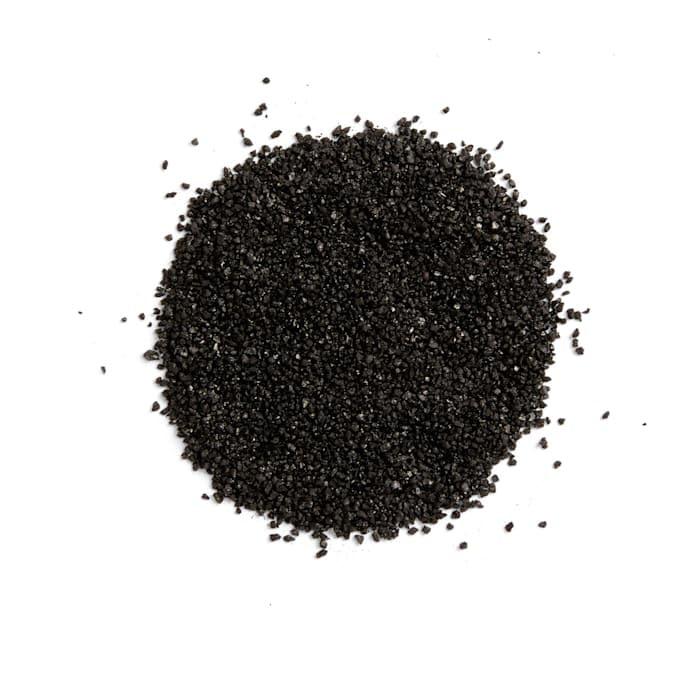
Imagitarium’s black sand is one of the most affordable ways to get a uniform black substrate in a medium-to-large tank. The matte finish does not have the sparkle of Galaxy Sand but it provides a neutral, dark canvas that works well with any decor style. Multiple users have successfully used it in planted tanks, noting that roots spread easily through the fine grains.
Consistency between bags can be an issue—one reviewer received a bag that would not clear after a week of rinsing, while three other bags from the same order went in without any issue. The sand is fine enough that it can be pulled into filter intakes and siphon tubes, so use a pre-filter sponge on your intake and siphon slowly to prevent excessive loss.
The sand does have a mild acrylic odor when first opened that dissipates after rinsing. It contains no added nutrients, so you will need root tabs or liquid fertilizers for heavy root-feeding plants like crypts and swords. For simple community or cichlid tanks that just need a dark base, this is a solid entry-level choice.
Why it’s great
- Very budget-friendly for large tank coverage
- Matte black finish provides a neutral planting base
- Fine texture allows easy root penetration
Good to know
- Quality control varies between bags
- Fine particles clog filters and siphon tubes easily
7. Imagitarium Blue Jean Gravel 20 lbs
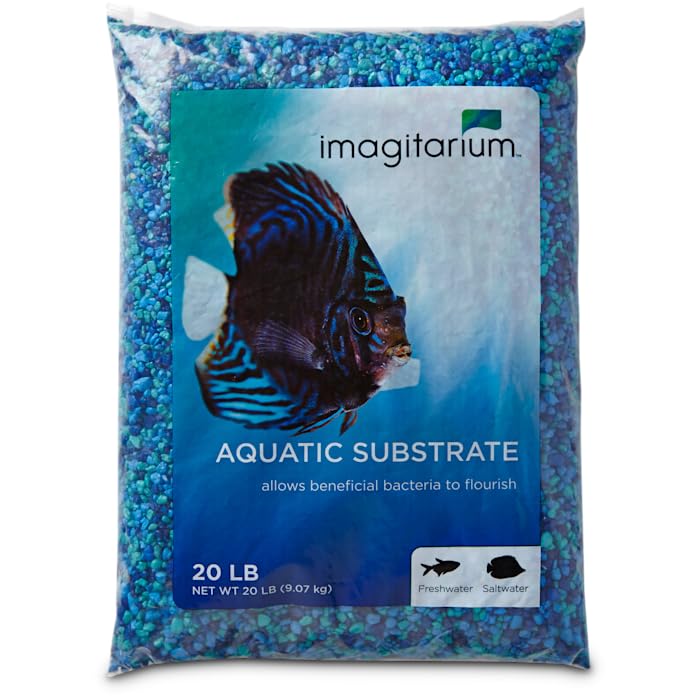
Blue Jean Gravel is a coated decorative option that holds its color remarkably well—several users report that the vibrant blue remains intact after multiple years underwater. The 2–4 mm grain size is large enough to allow good water flow through the bed while staying heavy enough that it will not get sucked into filters. It is completely inert and non-toxic, making it safe for goldfish, livebearers, and community tanks.
The coating is durable but not indestructible. Aggressive scrubbing during cleaning can cause minor chipping, so rinse the gravel gently in a colander rather than rubbing the pieces together. Some bags contain a small amount of fine dust and a few floating chips that can be removed by rinsing the last quarter of the bag separately in a mesh strainer.
This gravel is not suitable for planted tanks that rely on root absorption because the coated surface does not release any nutrients. It works best as a decorative cap over an active soil layer or in tanks with artificial plants. The 20-pound bag covers about a two-inch depth in a 10-gallon standard tank.
Why it’s great
- Color stays vibrant for years without fading
- Heavy grains stay in place during water changes
- Non-toxic and safe for all freshwater fish
Good to know
- Coating can chip if scrubbed aggressively
- No nutritional value for live plants
FAQ
How deep should I layer my aquarium substrate?
Do I need to rinse active aquarium soils before using them?
Can I mix two different types of substrate in the same tank?
Why is my active substrate making the water cloudy?
Final Thoughts: The Verdict
For most users, the best aquarium substrate winner is the Fluval Plant and Shrimp Stratum because its porous volcanic structure supports both vigorous plant growth and a healthy biological filter while buffering pH to the ideal range for most tropical communities. If you want a budget-friendly active soil for planted tanks, grab the LANDEN Aqua Soil Substrate. And for hard-water species like African cichlids that need elevated pH and alkalinity, nothing beats the Carib Sea Crushed Coral for effective and controllable buffering.