
Our readers keep the lights on and the weekend projects moving. As an Amazon Associate, I earn from qualifying purchases.
Frame rates, field of view, and motion-to-photon latency define whether a pair of AR glasses feels like a gaming monitor strapped to your face or a nausea-inducing blur-fest. The difference between a winning session and a refund request often comes down to a single digit in the refresh rate column or a few degrees of FOV that push the virtual screen past your peripheral vision.
I’m Rikta — the founder and writer behind FitlyFast. I analyze the optical engines, spatial chips, and display specs that separate genuine gaming-grade AR hardware from glorified media viewers.
After combing through nine contenders across mid-range and premium tiers, I’ve settled on the models that earn the title of best ar glasses for gaming based on real measured refresh rates, spatial tracking stability, and input latency.
How To Choose The Best AR Glasses For Gaming
Gaming on AR glasses asks more from the hardware than movie watching. Every millisecond of latency becomes a missed headshot. Every degree of FOV determines whether the virtual screen feels like an IMAX or a postage stamp. Here are the four specs that separate gaming-ready glasses from the rest.
Refresh Rate: 60Hz is a Dealbreaker
A 60Hz panel in AR glasses creates visible stutter during fast camera pans in first-person shooters or racing sims. 120Hz is the baseline for smooth motion clarity, and several models in this roundup deliver it natively. Some even offer 120Hz in 3DoF mode, which keeps the spatial screen anchored while maintaining full fluidity. If the spec sheet says 60Hz, move on.
Spatial Tracking: 3DoF vs 6DoF
3DoF locks a virtual screen to your head movement — the screen follows your gaze like a helmet-mounted display. This works for casual gaming and media. 6DoF anchors the screen to a fixed point in the room so you can walk around it. Native 3DoF (no external puck required) is the minimum for gaming; dedicated 6DoF matters for titles where you lean, dodge, or physically reposition.
Field of View and Perceived Screen Size
Numbers like 201 inches or 500 inches sound impressive but depend entirely on the distance at which the virtual image is projected. The real metric is FOV. Below 46 degrees, the screen feels like a floating monitor. Above 50 degrees, it starts to fill your peripheral vision. The XREAL One Pro leads here with 57 degrees, which is the widest currently available in a consumer AR form factor.
Diopter Adjustment and Prescription Support
If your eyes need correction and the glasses lack built-in myopia dials, you will need to buy separate prescription lens inserts or wear contacts. Models like the VITURE Luma Ultra and Rokid Max 2 include up to -4.0D or -6.0D adjustment directly on the frame. For astigmatism, you will always need custom inserts regardless of the model.
Quick Comparison
On smaller screens, swipe sideways to see the full table.
| Model | Category | Best For | Key Spec | Amazon |
|---|---|---|---|---|
| XREAL 1S | Premium Spatial | Native 3DoF & Real 3D | 52° FOV, 120Hz, X1 Chip | Amazon |
| XREAL One Pro | Premium Wide FOV | Widest FOV & 6DoF Ready | 57° FOV, 120Hz, X1 Chip | Amazon |
| VITURE Luma Ultra | Premium 6DoF | 6DoF & Highest Brightness | 1500 nits, 52° FOV | Amazon |
| VITURE Luma Pro | Premium Sharp | Sharpest Text & Audio | 1200p, Harman Audio | Amazon |
| Rokid AR Joy Pack 2 | Premium Standalone | Google TV & Cloud Gaming | 5000mAh Station | Amazon |
| Rokid Max 2 | Mid-Range | Built-in Myopia Dial | 50° FOV, 600 nits | Amazon |
| RayNeo Air 4 Pro | Mid-Range | HDR10 & Bang & Olufsen | 46° FOV, 120Hz | Amazon |
| AOC Air Mega | Budget | Lightweight Plug-and-Play | 63g, Micro-OLED | Amazon |
| TCL Nxtwear S+ | Budget | Affordable 120Hz Entry | 49° FOV, 120Hz | Amazon |
In‑Depth Reviews
1. XREAL 1S AR/XR Glasses
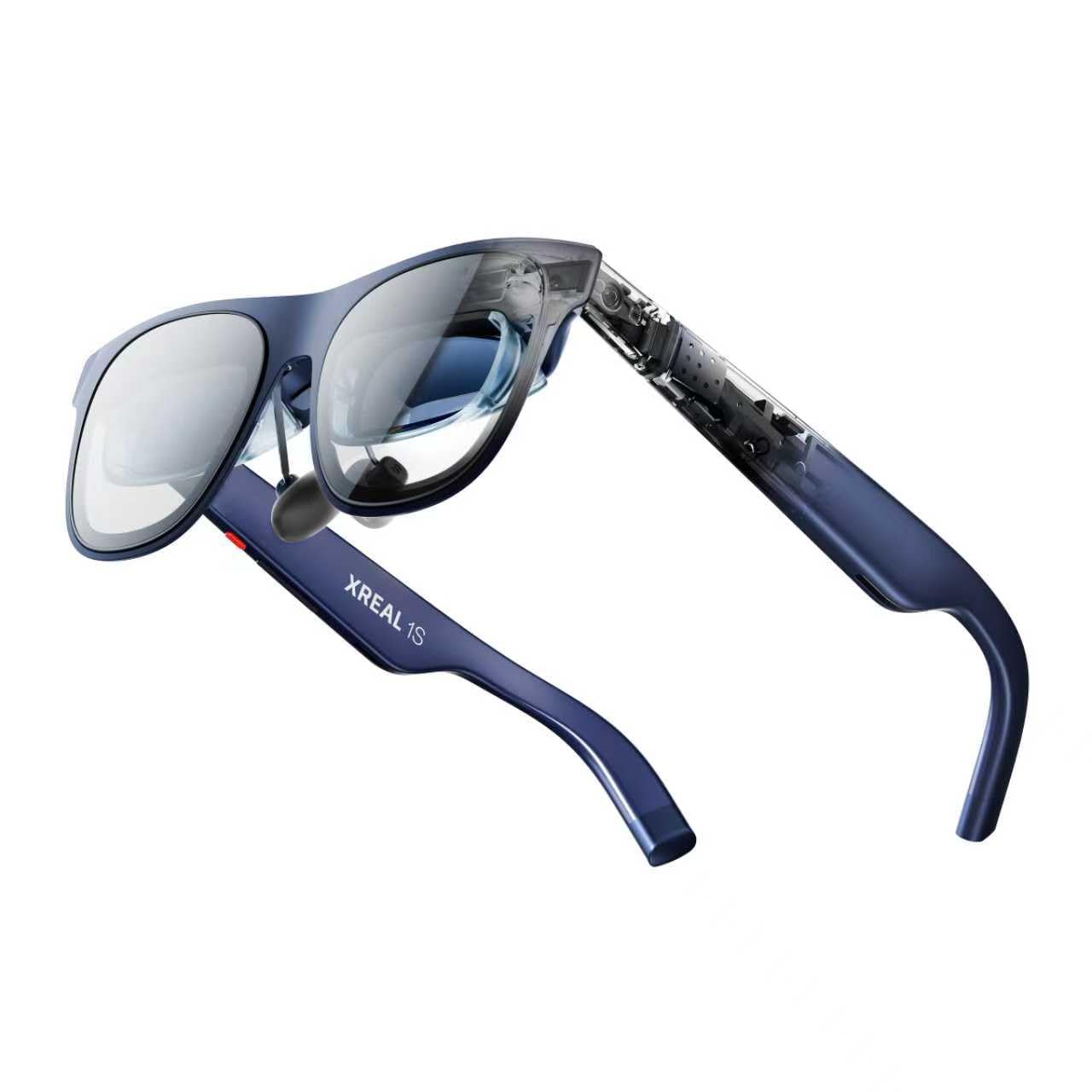
The XREAL 1S earns the top spot because its self-developed X1 chip delivers native 3DoF spatial tracking with 3ms motion-to-photon latency at 120Hz — no external puck, no app setup, just plug-and-play anchored screens. That latency figure is the lowest in this roundup and directly translates to zero perceptible drift during fast-paced shooters or racing titles.
The 52-degree FOV paired with Sony Micro-OLED panels produces a sharp 1080p image that reviewers consistently describe as clear enough for readable text and vibrant enough for HDR gaming. Bose-tuned audio adds spatial depth without requiring separate headphones, and the TÜV Rheinland eye comfort certification means extended sessions don’t cause the fatigue reported on cheaper displays.
Real 3D mode converts standard content into spatial depth at up to 30fps — subtle enough to avoid nausea but present enough to add immersion. The main tradeoff is that anchor mode can drift slightly over time, and the settings reset on every boot, though the programmable quick button mitigates that inconvenience. Battery drain on the host device is noticeable, and simultaneous charging requires an optional adapter.
Why it’s great
- Native 3DoF with ultra-low 3ms M2P latency at 120Hz
- Bose audio delivers spacious, clear sound without earbuds
- Ultrawide mode and Real 3D add genuine gaming versatility
Good to know
- Anchor mode can drift in longer sessions
- Settings reset each boot unless using quick button
- Charging while playing requires optional hub
2. XREAL One Pro AR Glasses

The XREAL One Pro pushes the category forward with a 57-degree FOV — the widest available in consumer AR glasses today — which makes a 171-inch perceived screen feel genuinely immersive without requiring you to move your head to see corners. The X-Prism optics engine and Sony 0.55-inch Micro-OLED display deliver 120Hz refresh rates with the same 3ms M2P latency as the 1S, but the wider FOV changes the gaming experience fundamentally.
Pairing with the optional XREAL Eye unlocks full 6DoF spatial anchoring, allowing the virtual screen to stay locked to a real-world position even as you walk around. The dual IPD design comes in M and L sizes covering 95 percent of users, plus three-stage adjustable arms and zero-pressure nose pads that prevent the pinching reported on narrower frames.
Reviewers praise the electrochromic dimming for handling bright sunlight without glare, and the Bose-tuned audio remains consistent at 700 nits peak brightness. The main complaints center on the lack of volume controls on the glasses themselves and the requirement for prescription inserts since there is no built-in diopter adjustment. Stability issues like occasional drifting and polarization interference patterns on Windows have been noted by some users.
Why it’s great
- Industry-leading 57-degree FOV for true peripheral immersion
- Optional 6DoF with XREAL Eye for spatial anchoring
- Dual IPD sizes and ergonomic nose pads for broad fit
Good to know
- No built-in myopia adjustment; requires prescription inserts
- Occasional drifting and polarization artifacts reported
- Audio quality shifts when lying down
3. VITURE Luma Ultra XR Glasses
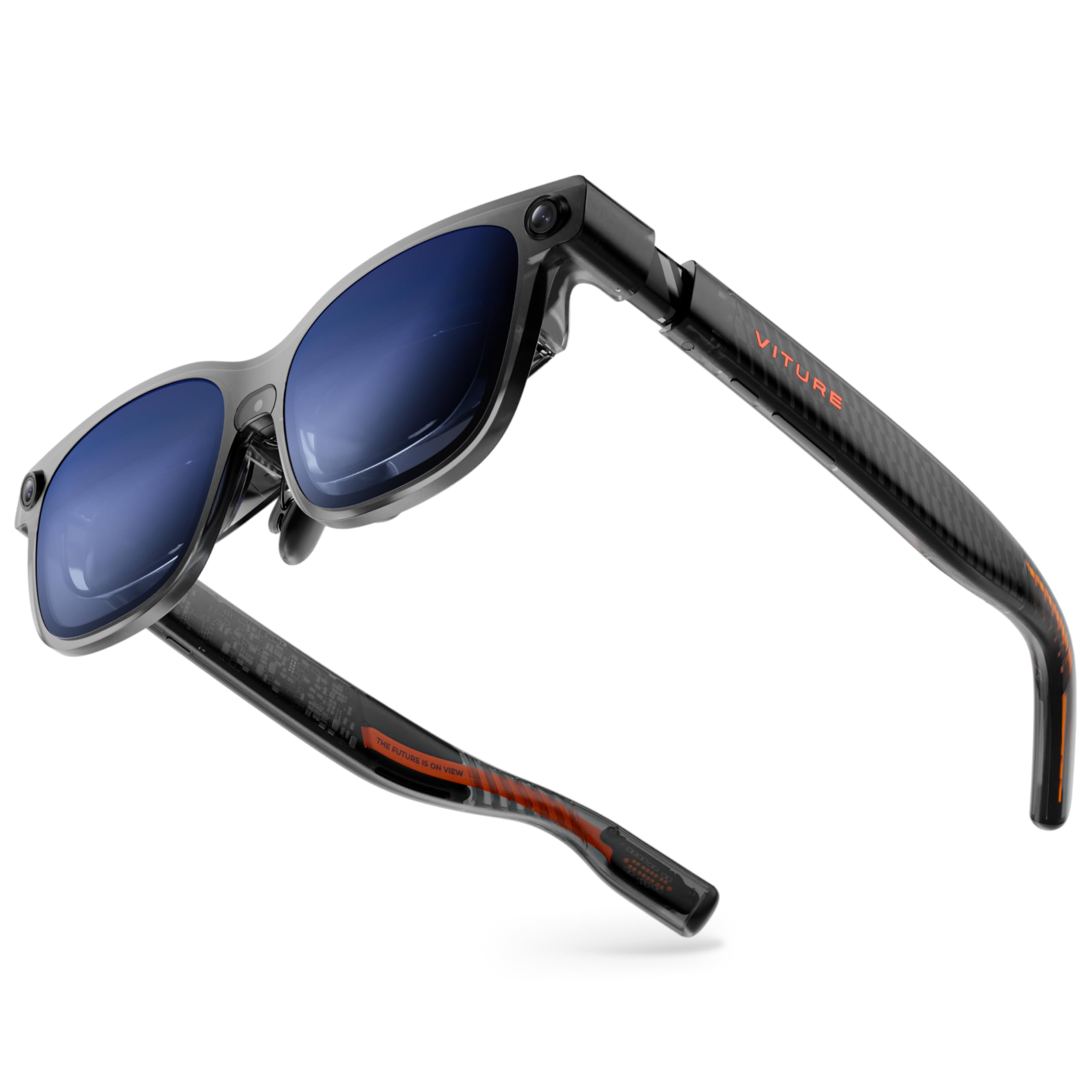
The VITURE Luma Ultra brings 1500 nits of peak brightness to the gaming table, making it the only model in this roundup that remains usable outdoors in direct sunlight without squinting. The 1200p Micro-OLED panel delivers text sharpness that approaches 4K perception, and the 120Hz refresh rate keeps motion smooth — though note that 1200p resolution is 1920×1200, not native 4K.
The triple-camera system (front RGB plus dual depth) enables zero-drift 6DoF tracking and hand gesture recognition when paired with the VITURE Pro Neckband. This is the only glasses in this list that offer full 6DoF out of the box without needing an external camera accessory. Built-in myopia adjustment up to -4.0D eliminates the need for prescription inserts for nearsighted users.
Harman-tuned audio provides deeper bass than the previous generation, and the electrochromic film darkens lenses with one tap. User reviews consistently highlight the large, bright, sharp image as the standout feature, but multiple users report that the glasses can cause motion sickness during productivity tasks and that the magnetic power attachment disconnects too easily. The frame also slides down the nose during extended wear.
Why it’s great
- 1500 nits brightness for outdoor gaming without glare
- Full 6DoF tracking with hand gesture support
- Built-in myopia adjustment up to -4.0D
Good to know
- Can induce motion sickness for some users
- Magnetic power connector disconnects too easily
- Frame slides down the nose during longer sessions
4. VITURE Luma Pro XR Glasses
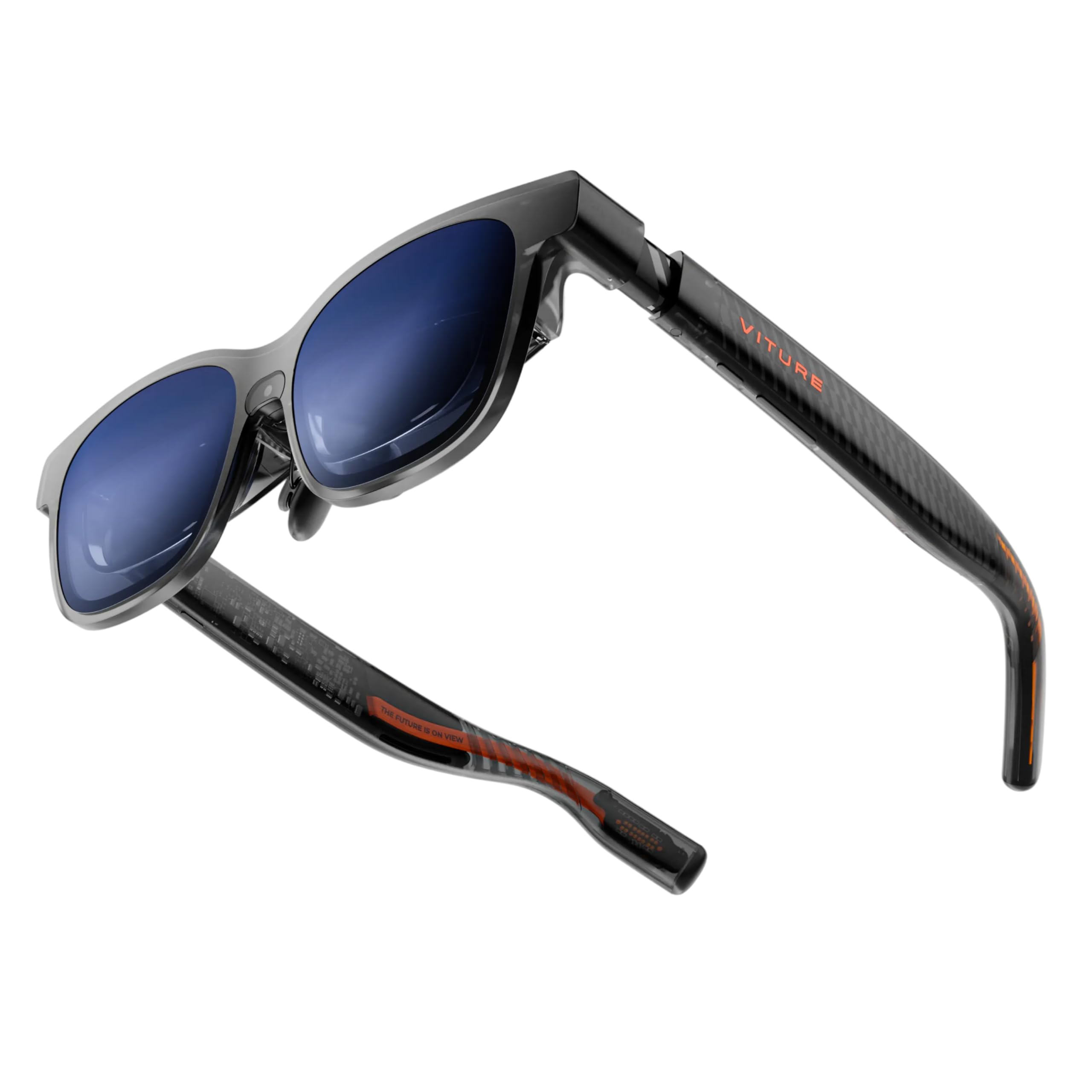
The VITURE Luma Pro uses the same 1200p Micro-OLED panel as the Ultra but caps brightness at 1000 nits, which still outperforms most competitors. The real differentiator here is the proprietary optics that produce the sharpest text clarity in this category — reviewers consistently call it “razor-sharp” even when displaying small UI elements in productivity apps or in-game HUDs.
Harman-tuned audio delivers fuller bass and crisper highs than the standard VITURE Pro, and the first-ever programmable RGB lighting on XR glasses adds visual flair for LAN parties or streaming setups. The electrochromic film and built-in myopia adjustment up to -4.0D mirror the Ultra’s convenience, though the Luma Pro does not include the camera array for 6DoF tracking — it relies on 3DoF native tracking via the SpaceWalker app.
Reviewers praise the fit adjustments (two sizes, flexible arms, magnetic nose pads) and the strong customer service reputation. The main drawbacks are the lack of native head tracking at launch — causing some users to report image jitter and vertigo — and the fact that the magnetic power attachment shares the same easy-disconnect issue as the Ultra. The lowest brightness setting is still too harsh for dark-room use.
Why it’s great
- Sharpest text clarity of any AR gaming glasses tested
- Programmable RGB lighting and Harman audio
- Built-in myopia adjustment up to -4.0D
Good to know
- No native head tracking at launch; jitter reported
- Lowest brightness still too bright for dark rooms
- Magnetic power connector disconnects easily
5. Rokid AR Joy Pack 2
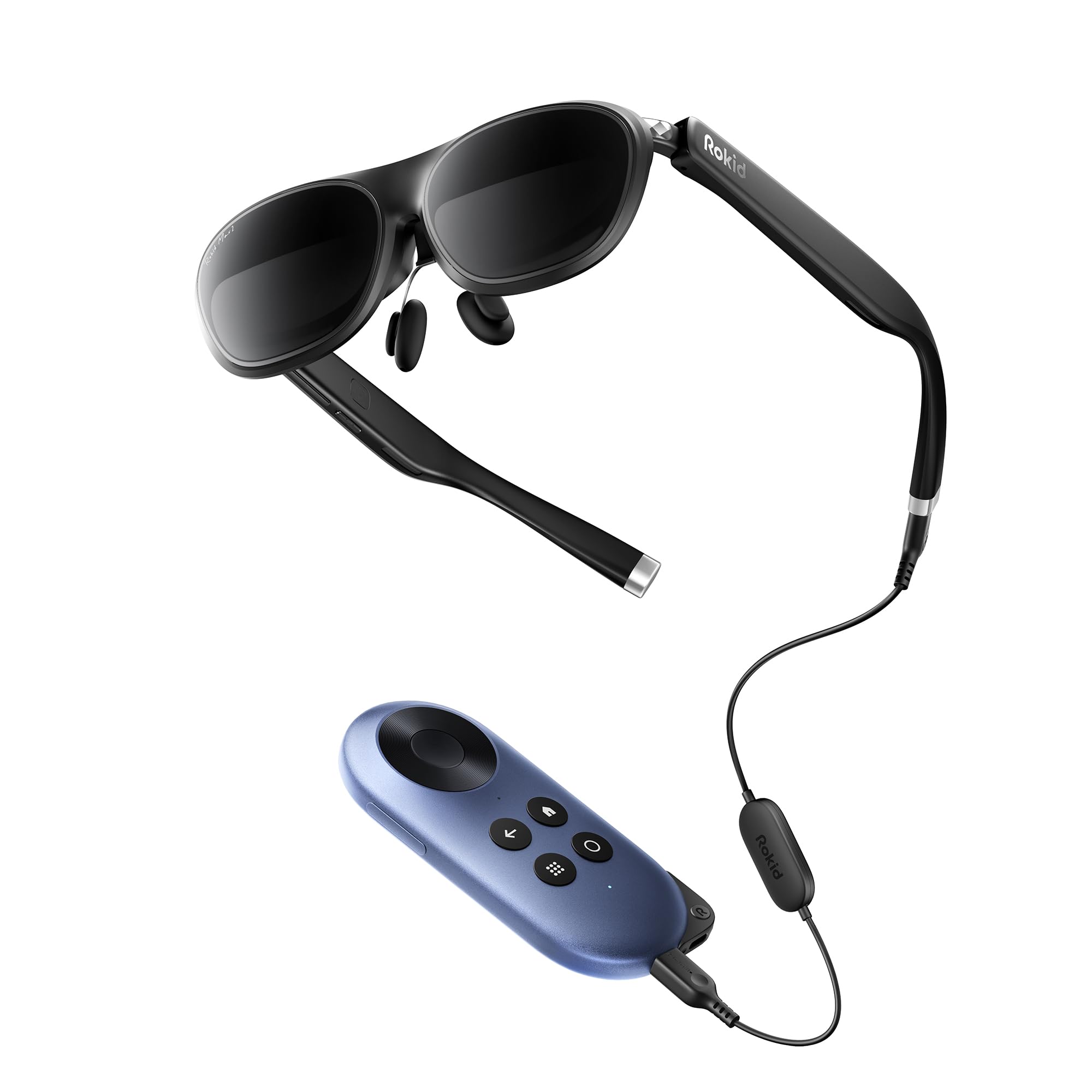
The Rokid AR Joy Pack 2 takes a different approach by bundling the Rokid Max 2 glasses with a Google-certified Android TV Station that packs a 5000mAh battery. This means you can stream games via Steam Link or cloud gaming services without tethering to a phone or laptop — a genuine standalone experience that no other product in this roundup offers natively.
The glasses themselves deliver a 215-inch virtual OLED screen at 50 degrees FOV with 120Hz refresh rate and 600 nits brightness, plus built-in diopter adjustment up to -6.0D. The Station supports Chromecast wireless casting and HDCP for secure streaming, and the 5000mAh battery provides up to 7 days of standby time.
User reviews highlight the convenience of the all-in-one package for travel and the effectiveness of the diopter dials. However, several issues hold it back: the Station does not support EAC3 audio format (no sound on Apple TV without workarounds), screen mirroring quality is poor according to some users, and the glasses shipped without the nose piece in one verified case. The system also lacks Netflix support on the Station itself.
Why it’s great
- Standalone Google TV Station with 5000mAh battery
- Built-in diopter adjustment up to -6.0D
- Wireless casting via Chromecast and Steam Link
Good to know
- EAC3 audio format unsupported on the Station
- Screen mirroring quality reported as poor
- No Netflix on the Google TV interface
6. Rokid Max 2 AR Glasses
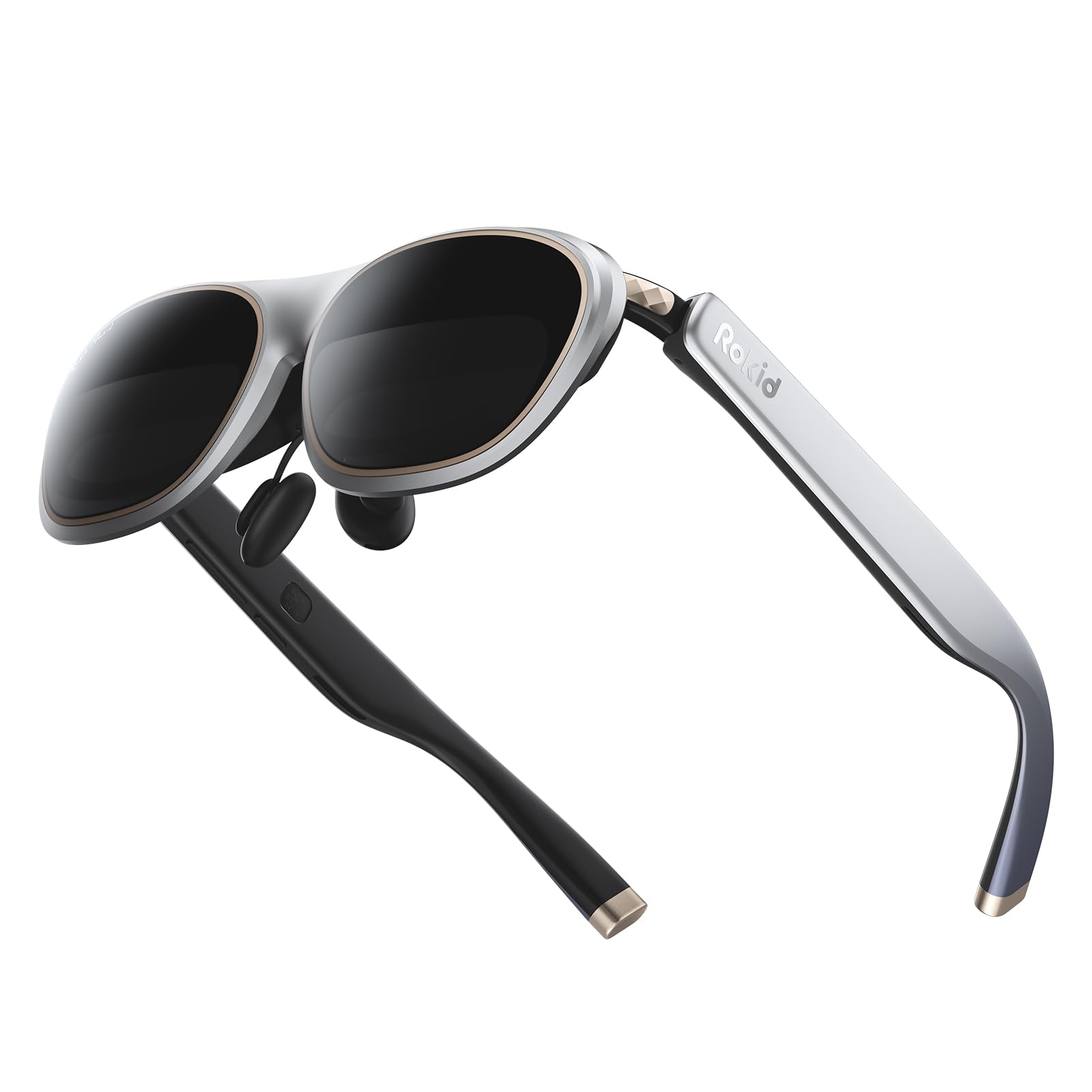
The Rokid Max 2 earns its mid-range position by offering a 215-inch perceived screen at 50 degrees FOV with 120Hz refresh rate and a built-in diopter dial that adjusts up to -6.0D — the highest direct adjustment range in this roundup. Users with myopia up to 600 degrees do not need any prescription inserts or contact lenses to see clearly.
At 75 grams with an air-cushioned nose pad, it is among the lightest gaming-focused AR glasses available. The Micro-OLED display hits 600 nits peak brightness, which is adequate for indoor gaming but falls short in direct sunlight compared to the VITURE Luma Ultra. The single USB-C connection powers the glasses directly without internal batteries, keeping the weight down.
Reviews are limited but positive regarding the visual quality and fit. The main downsides are the lack of any spatial tracking — this is a pure screen-mirroring device with no 3DoF or head anchoring — and the fact that astigmatism and presbyopia are not supported by the diopter dial. Prescription lenses for those conditions must be purchased separately.
Why it’s great
- Built-in diopter adjustment up to -6.0D
- Lightweight 75g with air-cushioned nose pad
- 120Hz refresh rate at 50-degree FOV
Good to know
- No spatial tracking (3DoF or 6DoF) whatsoever
- Astigmatism and presbyopia require separate lenses
- 600 nits brightness is only adequate for indoor use
7. RayNeo Air 4 Pro AR/XR Glasses
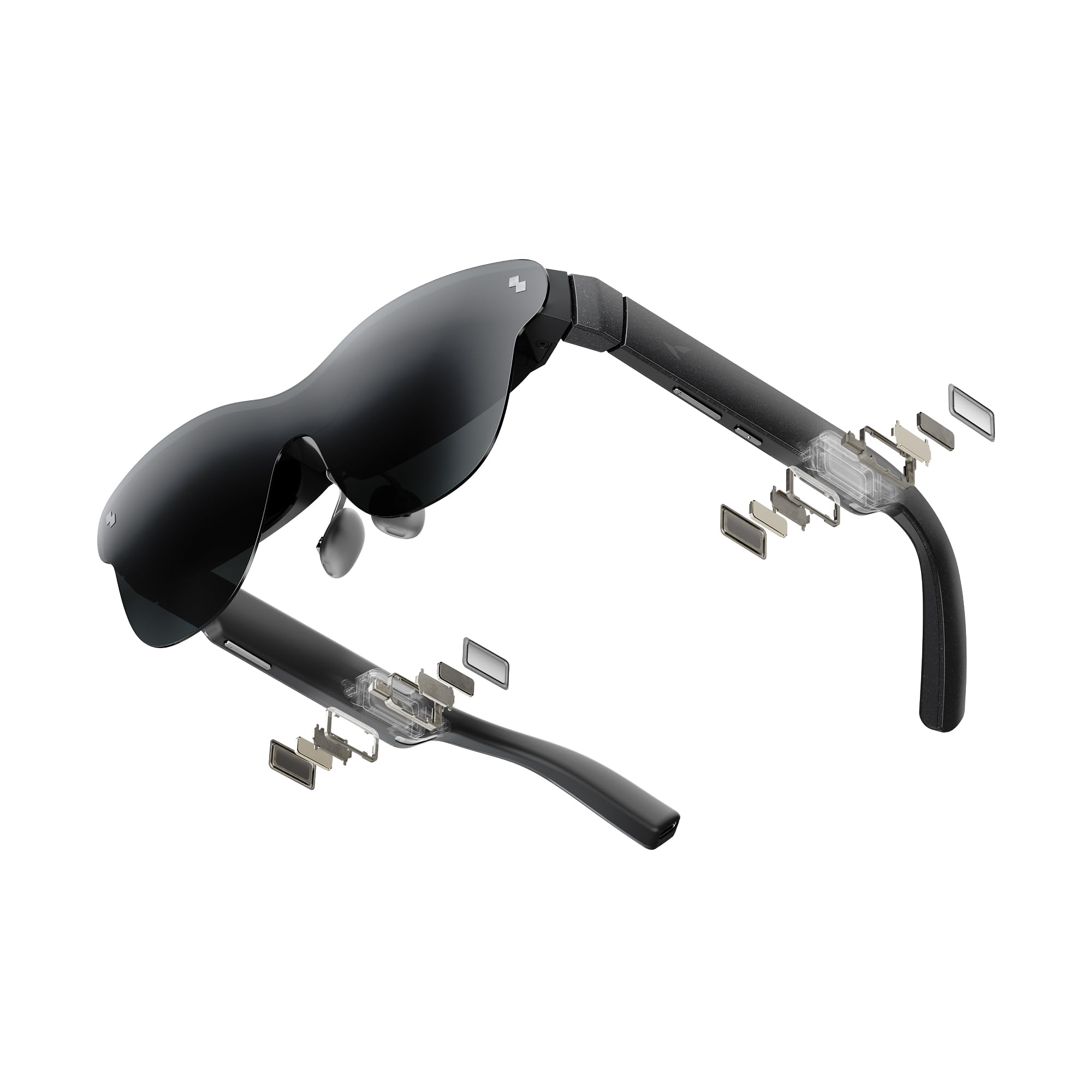
The RayNeo Air 4 Pro is the world’s first AR glasses with HDR10 certification, which delivers over 10 billion colors and deeper contrast than standard SDR displays. The Vision 4000 chip co-developed with Pixelworks performs real-time AI upscaling of SDR content to HDR, and the 120Hz refresh rate keeps motion clear during fast-paced titles on PS5, Steam Deck, or Switch 2.
Bang & Olufsen four-speaker array delivers 360-degree spatial sound that reviewers consistently rank as best-in-class, competitive with the Ray-Ban Meta audio quality. The optional Sound Tube accessory boosts volume and clarity for louder environments. At 76 grams with 9-way fit adjustment (adjustable temples and interchangeable nose pads), it is designed for all-day wear without pressure points.
User reviews highlight the edge-to-edge sharpness of the display, the responsiveness at 120fps with PS5, and the value proposition at its price point. The main drawbacks are the 46-degree FOV, which is narrower than the XREAL and Rokid competitors, and the 1080p resolution that some users wish was 1440p. Users with larger noses reported the screen appearing too high and causing bottom-edge blur.
Why it’s great
- First AR glasses with HDR10 certification
- Best-in-class audio from Bang & Olufsen
- AI SDR-to-HDR upscaling via Vision 4000 chip
Good to know
- 46-degree FOV is narrower than premium competitors
- 1080p resolution; some users want 1440p
- Screen positioning can cause blur for larger noses
8. AOC Air Mega AR/XR Glasses
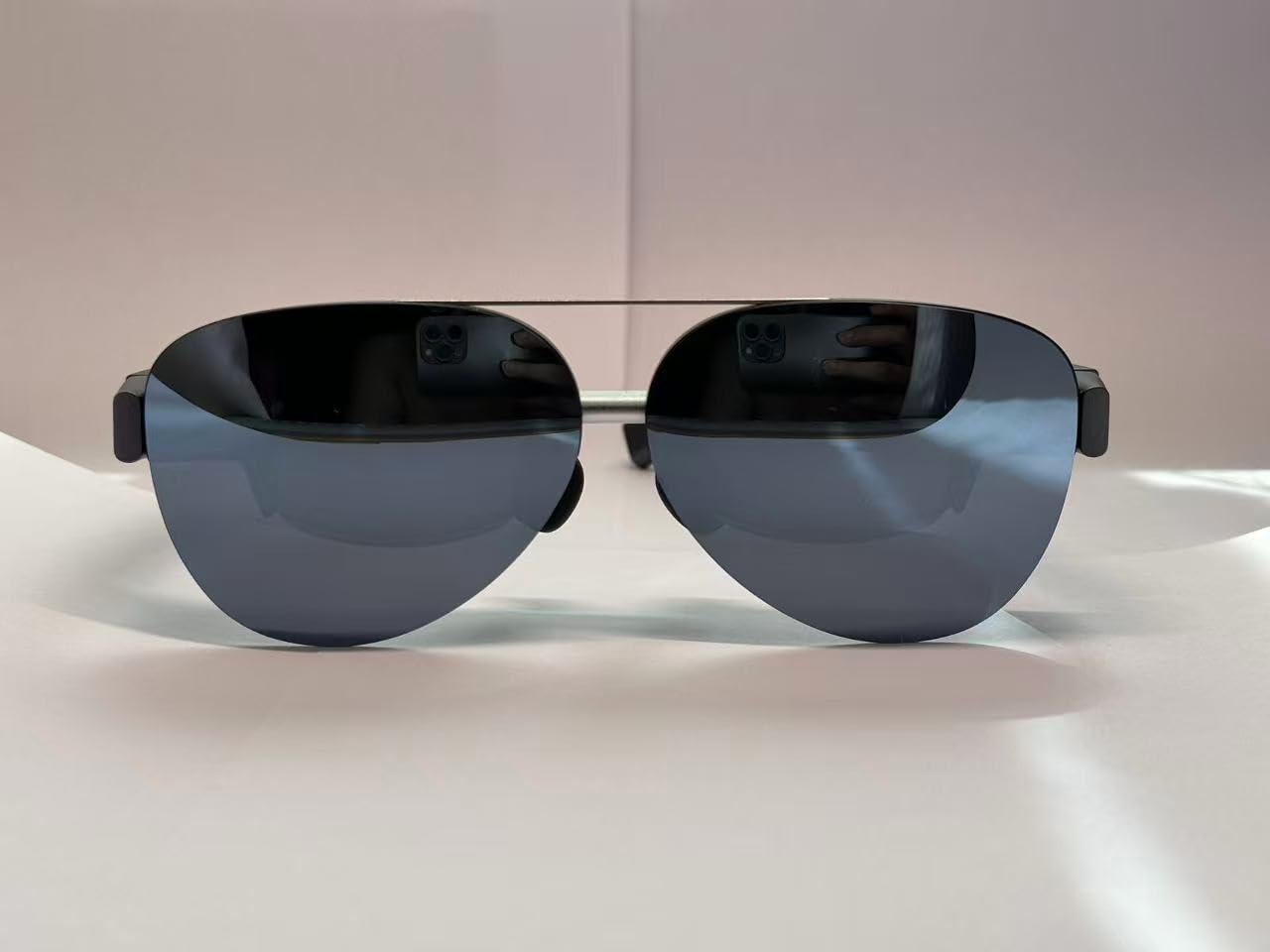
The AOC Air Mega is the lightest gaming-focused AR glasses in this roundup at just 63 grams, making it the most comfortable option for marathon sessions where weight causes fatigue on other frames. The Micro-OLED panel delivers 1080p resolution at 120Hz with plug-and-play USB-C connectivity — no software or app required, just connect and play.
The design mimics aviator sunglasses with a mirror finish that hides the internal display, so you can use them in public without drawing attention. Volume and brightness controls are integrated into the temple for quick adjustments. User reviews confirm the image is bright, clear, and sharp for movies and gaming on phones, tablets, and laptops via USB-C DP Alt mode.
However, the Air Mega is a pure external display with no spatial tracking capability — no 3DoF, no screen anchoring, no head tracking. Multiple users reported that the stiff frame and nose piece caused discomfort and that the small screens sit in the upper part of the vision, requiring you to look up. One user noted that the glasses caused nausea within 10 minutes, and another found the experience suitable only for users with strong stomachs. No IPD adjustment is available.
Why it’s great
- Lightest option at 63 grams for fatigue-free wear
- True plug-and-play with no software required
- Mirror finish for discreet public use
Good to know
- No spatial tracking (3DoF/6DoF) whatsoever
- Stiff frame and nose piece cause discomfort
- Small screens sit high in vision; requires looking up
9. TCL Nxtwear S+ AR Glasses

The TCL Nxtwear S+ offers the lowest entry price for a 120Hz AR gaming display, using Sony OLED micro-displays to produce a 49-degree FOV virtual screen. The air-filled capsule nose pads are a genuine innovation — they are lightweight, skin-friendly, and adjustable to different nose shapes — and the 30-degree temple angle accommodates various face shapes without pinching.
TÜV Rheinland triple eye protection certification (low blue light, flicker-free, eye comfort) means the S+ meets the same eye safety standards as far more expensive models. The magnetic prescription lens attachment makes it easy to add corrective lenses for users who need them, and the hard carrying case with magnetic cable is a nice touch for portability.
User reviews paint a mixed picture. The display is praised for its 3D rendering and large perceived screen size, but a significant number of users report blurry edges, buggy firmware in the TCL app, drifting view, and intermittent flashing. One user noted that the left display was misaligned, causing headaches, while another found the speakers distort at low frequencies. The TCL app itself is described as “terrible” with no usable content. This is a functional 120Hz display at the lowest price, but the software and build quality issues are real compromises.
Why it’s great
- Most affordable 120Hz AR gaming glasses
- Air-filled capsule nose pads for pressure-free fit
- TÜV Rheinland triple eye protection certified
Good to know
- Blurry edges and misaligned displays reported
- TCL app has buggy firmware and drifting view
- Speakers distort at low frequencies
FAQ
Do AR glasses for gaming require a separate computer or console?
Can I use AR glasses for competitive multiplayer gaming?
What is the difference between 3DoF and 6DoF for gaming?
Will AR glasses work with my prescription if I have astigmatism?
Do AR glasses support 3D gaming like VR headsets?
Final Thoughts: The Verdict
For most gamers, the best ar glasses for gaming winner is the XREAL 1S because it delivers native 3DoF spatial tracking with 3ms M2P latency at 120Hz, Bose audio, and a sharp 52-degree FOV — all without requiring an external puck or app setup. If you want the widest immersive field of view for racing and flight sims, grab the XREAL One Pro with its 57-degree FOV and optional 6DoF via the XREAL Eye. And for outdoor gaming or full 6DoF hand tracking without extra accessories, nothing beats the VITURE Luma Ultra with 1500 nits brightness and the only built-in triple-camera spatial system in this class.